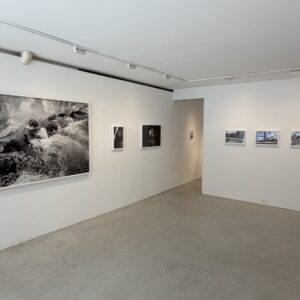
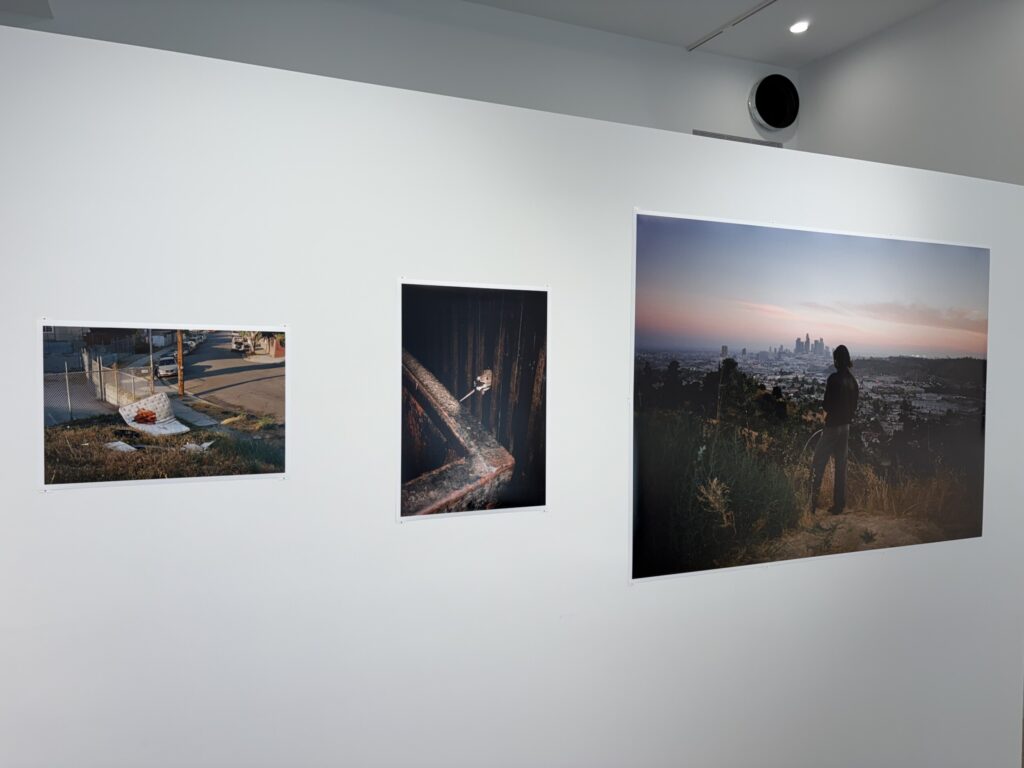
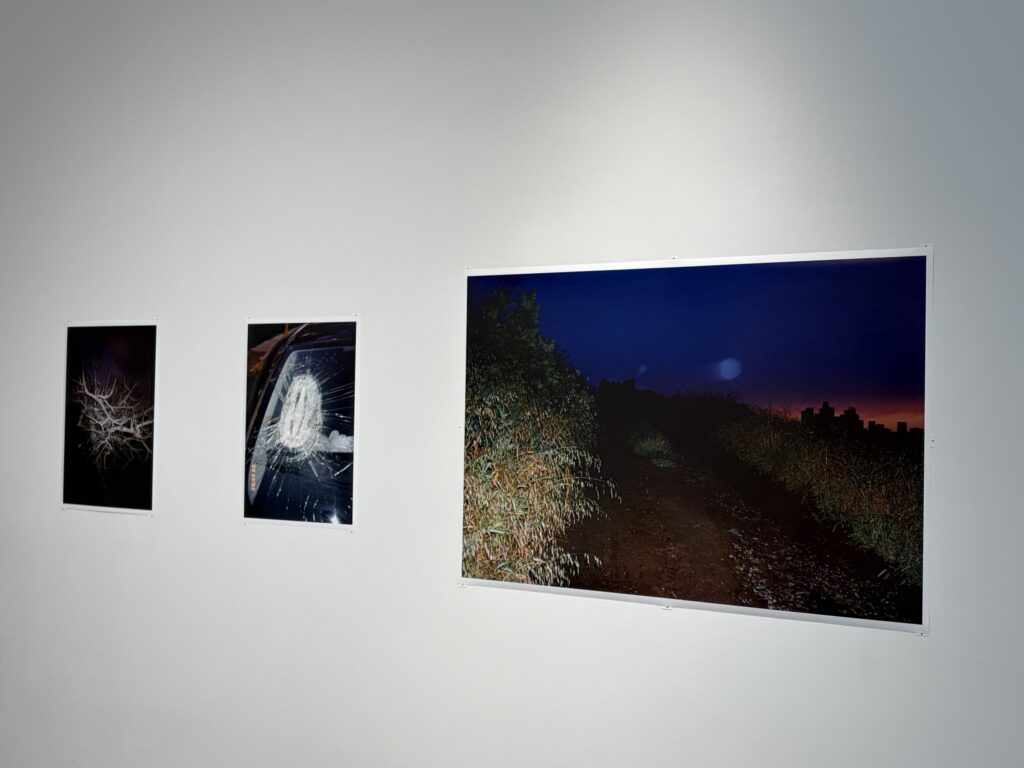
JTF (just the facts): A total of 19 color and black-and-white photographs, hung unframed and pinned to white walls in the main gallery space and in the back hallway. (Installation shots below.)
The following works are included in the show:
- 2 archival pigment prints, 2020, 2025, sized 42×60 inches, in editions of 3
- 6 archival pigment prints, 2012, 2021, 2023, 2024, sized 28×40 inches, in editions of 3
- 2 archival pigment prints, 2019, 2023, sized 21×30 inches, in editions of 3
- 5 archival pigment prints, 2019, 2021, 2022, 2023, sized 17×24 inches, in editions of 3
- 4 archival pigment prints, 2015, 2017, 2021, 2022, sized 14×20 inches, in editions of 3
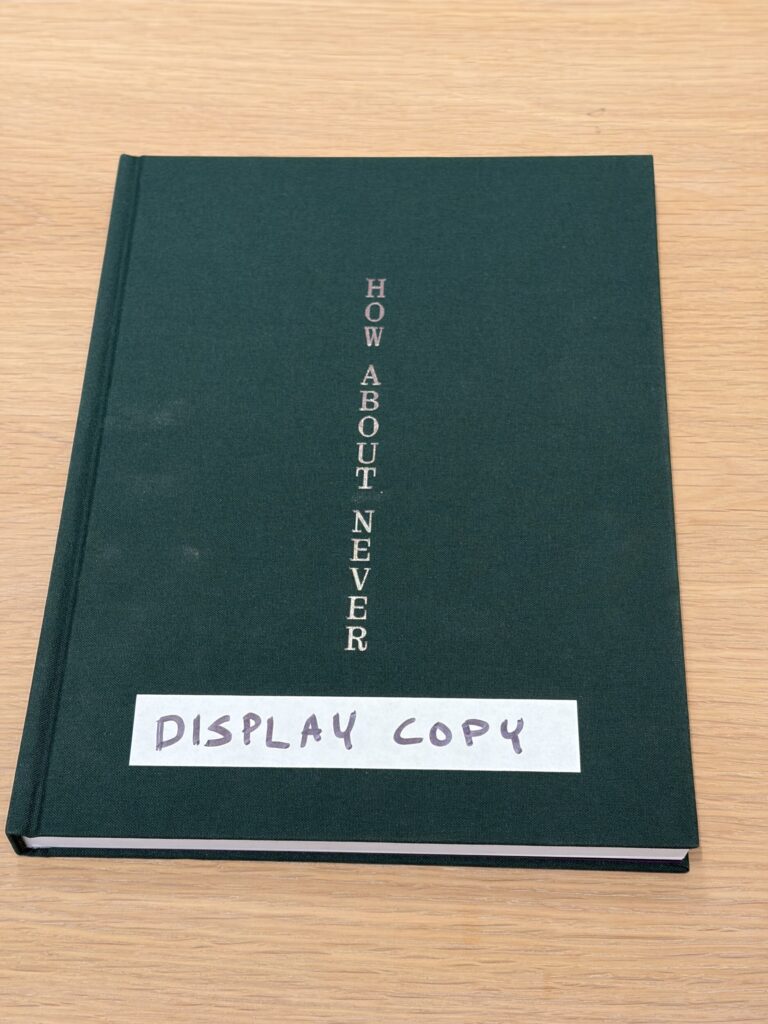
A monograph of Hsu’s work has also been published recently by MACK Books (here). Debossed hardcover, 20.5 x 27.5 cm, 176 pages. (Cover shot below.)
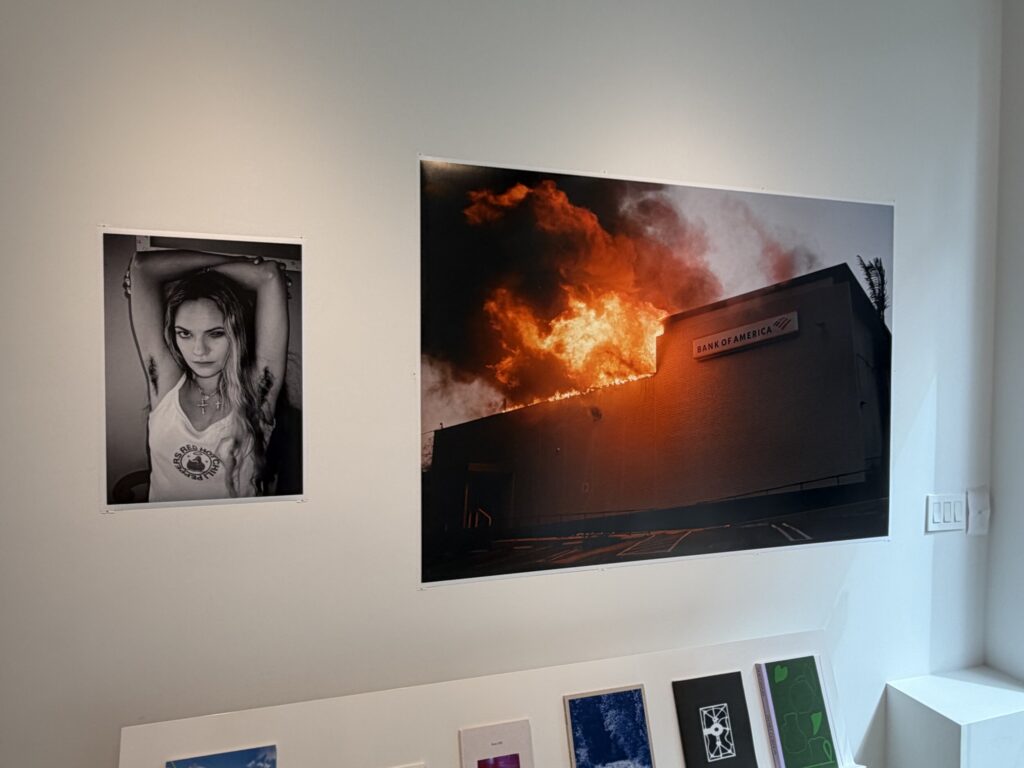
Comments/Context: A peek through the storefront window of the Rectangle Room offers an unexpectedly dystopian view – a photograph of a Bank of America branch with flames and black smoke billowing from its flat rooftop. It’s a compositional relative of Ed Ruscha’s 1964 painting “Norm’s, La Cienega, on Fire”, but with an even darker, 21st century mood – less stylized and surreally melodramatic, and perhaps more bleakly prophetic. It seems to say we’re gonna stand and watch the world burn.
Jerry Hsu’s unique brand of street photography consistently leans into this kind of swaggering California noir atmosphere. Raised in San Jose, now based in Los Angeles, and likely best known as long-time professional skateboarder, Hsu has slowly built a fervent underground following with his brash imagery. And while we might expect an artist with his background to offer up raw pictures from inside the skateboard subculture (shoes, decks, fashions, tricks, bloody injuries, sex, friends, etc.), “How About Never” offers much less of this subject matter than we might assume. Instead, Hsu has essentially appropriated that chaotic visual energy and used it to filter what he finds in the streets, leading to photographs that consistently simmer with uncertainty.
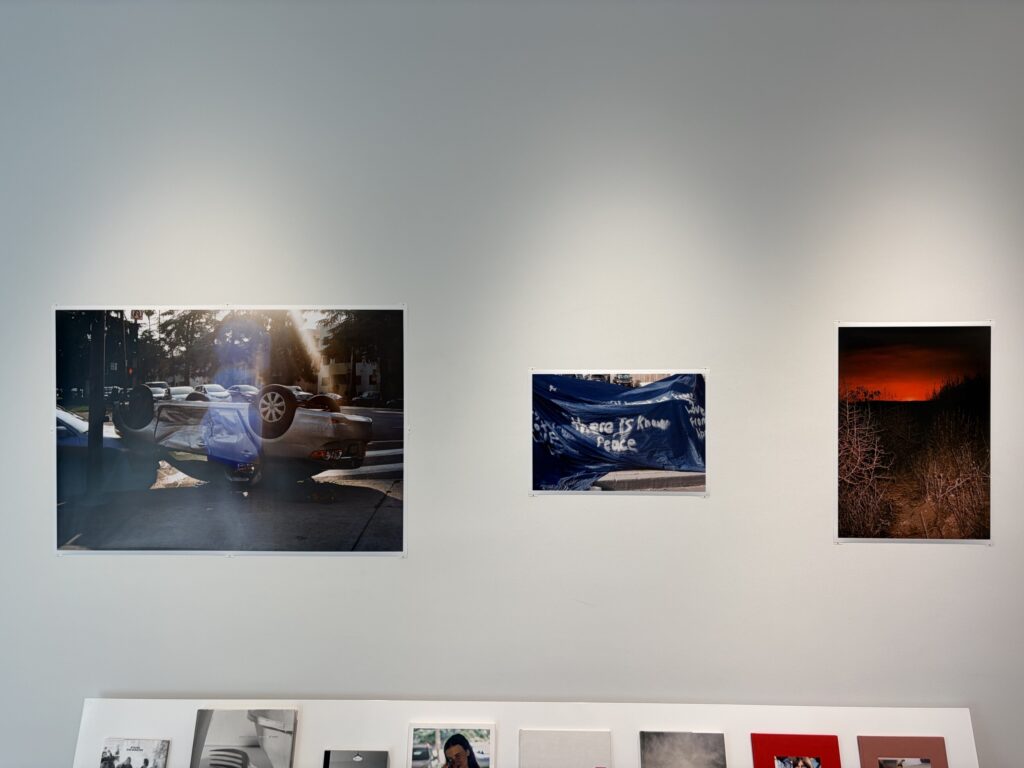
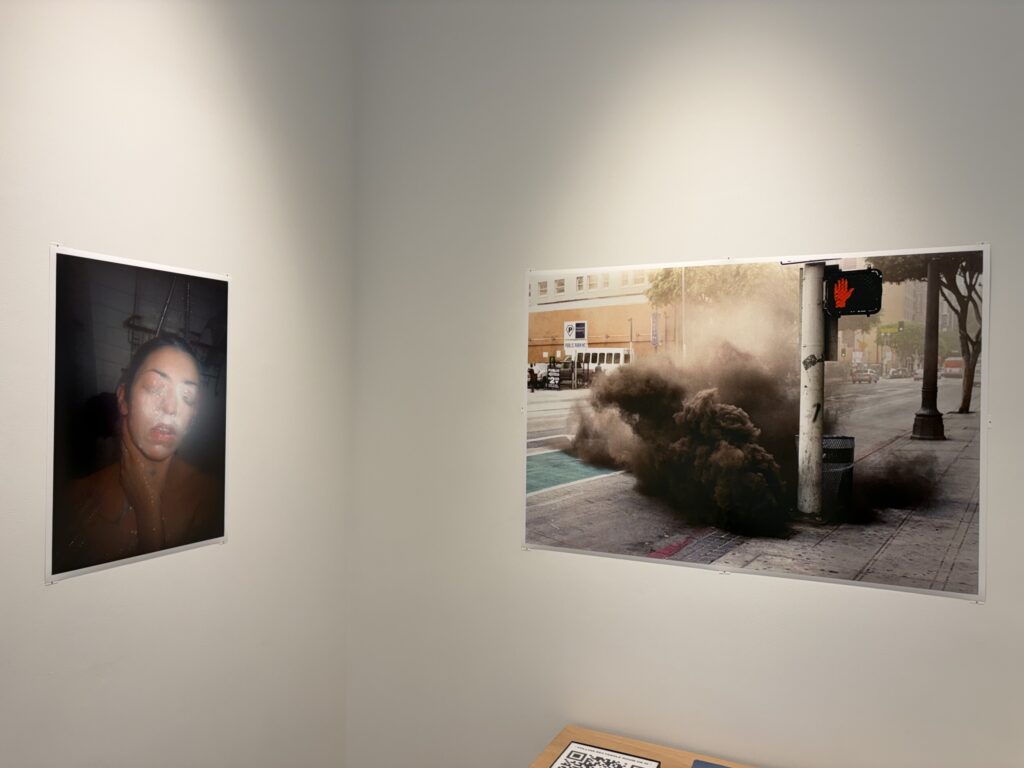
The fiery glow of the burning bank building makes a return across the gallery in a deep red sunset that rises over the scrub like the end of the world. And as Hsu pulls his attention back down into the city, his eye is drawn to a parade of urban mayhem and destruction: an overturned car, a mysterious cloud of black smoke rising from a grate in the street, and a smashed car windshield. Still other pictures allude to similar unseen traumas, like a blood stained mattress left in vacant lot and a cascade of grimy water coming out of a rough opening some inspired graffiti artist has marked the HELL HOLE. This is the underside of Los Angeles, where threats (and evidence) of violence and damage continually rumble.
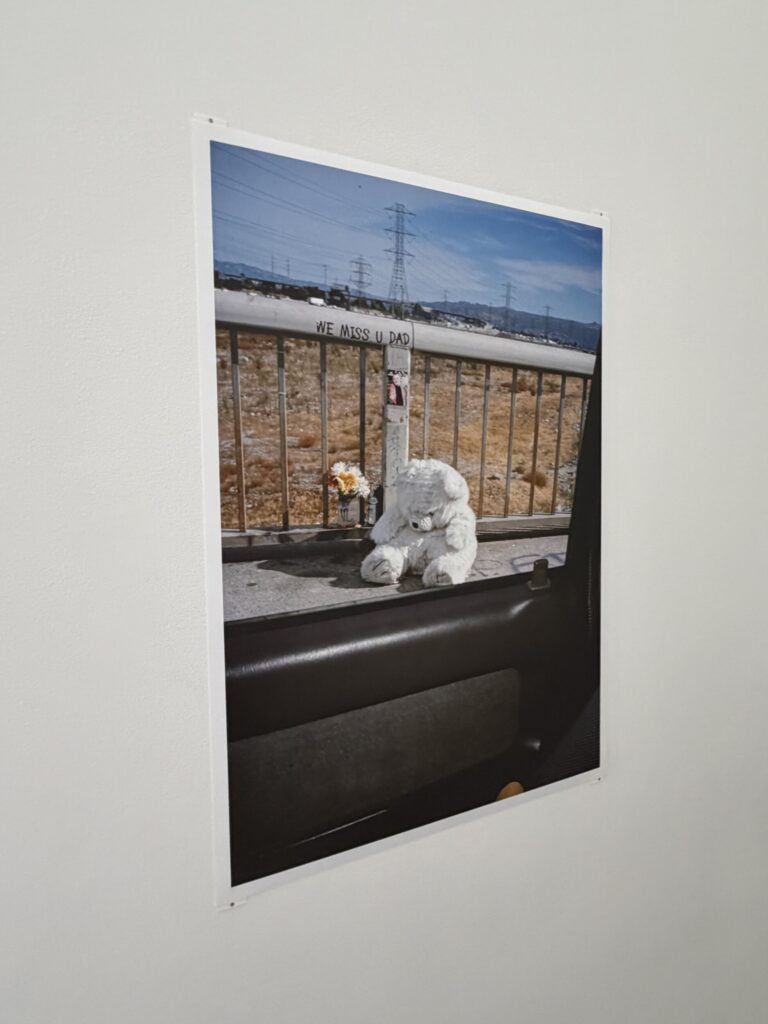
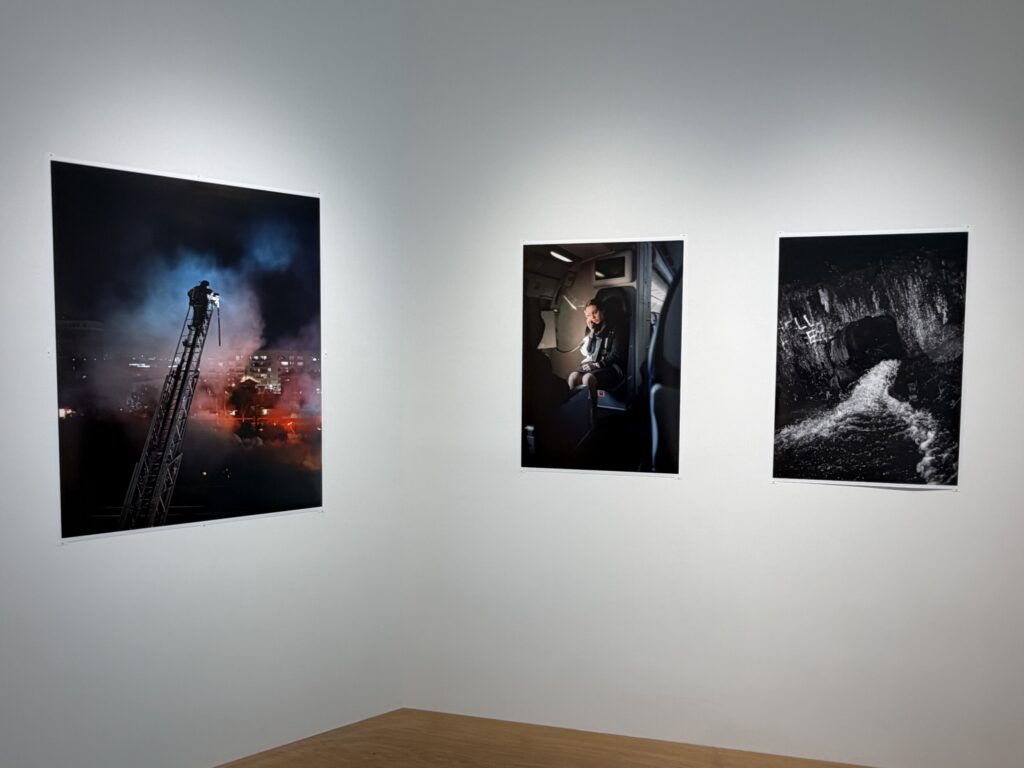
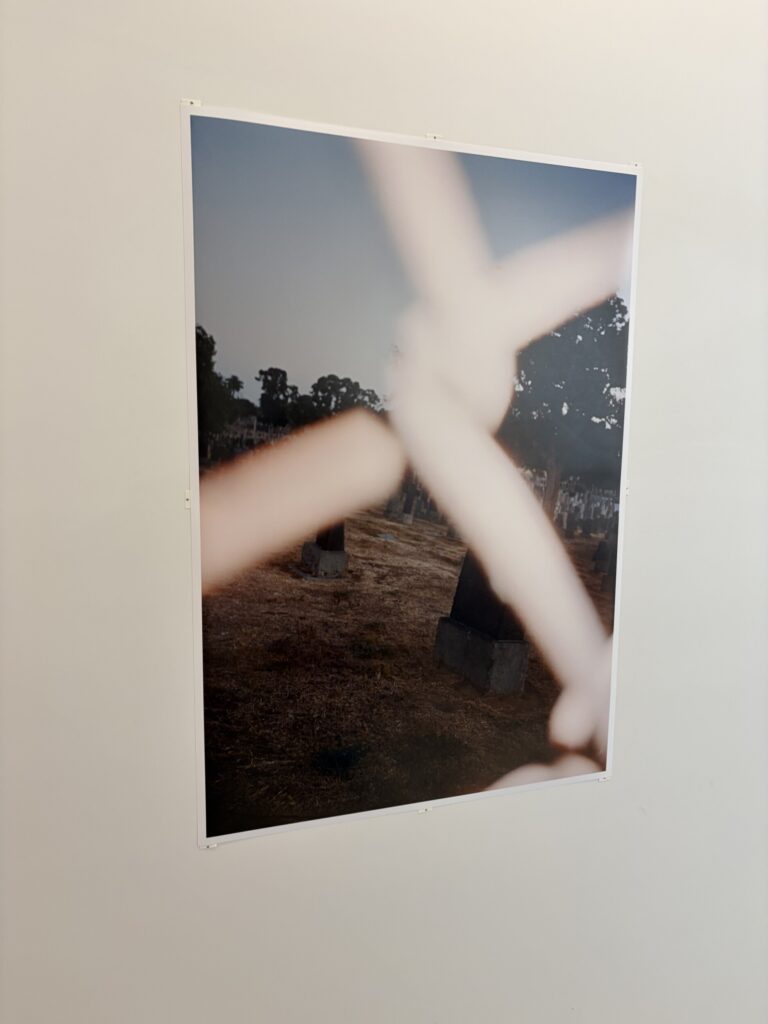
What’s intriguing about this show is that as the pictures pile up, Hsu moves further and further away from youthful skater bravado towards something approaching melancholy. He peers at a cemetery through a blurred chain link fence, seemingly prevented from getting closer. He notices a roadside shrine decorated with flowers and a stuffed bear, marked with the tragic note WE MISS U DAD. And in one of his most poignantly powerful pictures, a lonely firefighter stands atop an outstretched ladder above a smoky flare of red, the quiet beauty of the shifting nocturnal color decorating the disaster below and making the firefighter’s task feel all the more isolated and futile.
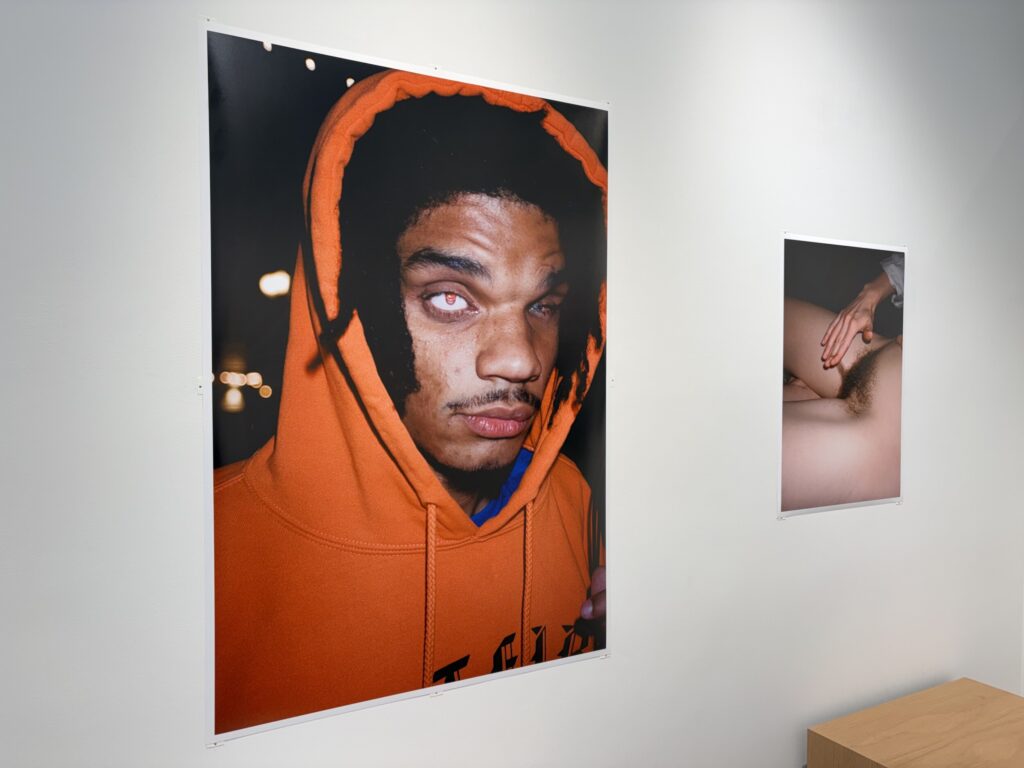
Versions of this same despondent mood also pop up in Hsu’s portraits and images of people, with the implied attitudes often wandering toward jaded resistance or weary resignation. Both Zion and Tori have eyes marked by trauma, and yet they are still very much present and ready for whatever comes next. Courtney’s soapy eyes-closed face (choked by her own hand) seems more exhausted than ecstatic. An anonymous stewardess sits with a face filled with deflated despair. And Tristan sums up all of this frustration and restlessness by simply pissing on the city in the distance.
Cutting against the obvious and stereotypical glamour of Los Angeles is part of what makes Hsu’s vantage point intriguing and authentic – he’s open to wrestling with the dark contradictions of the place, and embracing flashes of more grit and tension. But what started as a loose and improvisational style seems to be tightening up as Hsu’s eye matures, with many of his more recent images better finding the pressure point where a picture opens up ambiguous possibilities. Infusing street photography serendipity with a splash of audacious attitude isn’t in any way easy, and “How About Never” feels like a smart edit that starts to bring an unwieldy early career into focus.
When I walked into the show, I was brightly asked “What brings you in today? Are you a Jerry fan?”, as if I might be a wide eyed fanboy or an ex-skater of some sort. Based on the resonating bite of these photographs, I understand better how Hsu has built such a devoted base of supporters.
Collector’s POV: The prints in this show are priced between $400 and $3000, based on size. Hsu’s work has little secondary market history at this point, so gallery retail likely remains the best option for those collectors interested in following up.