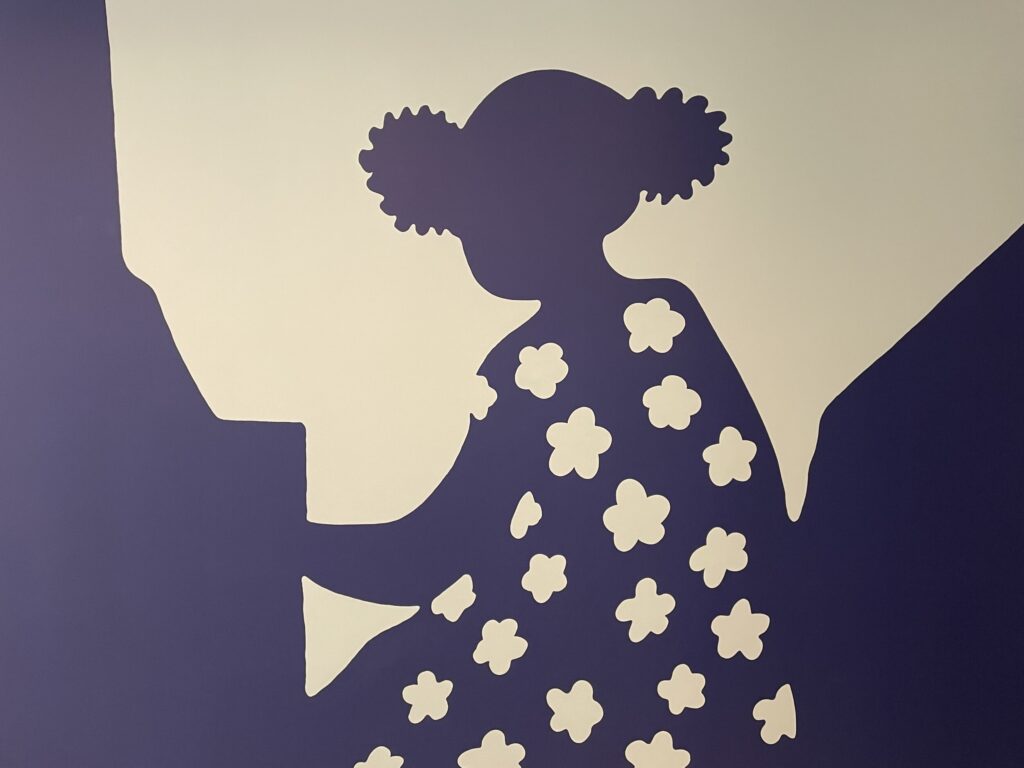
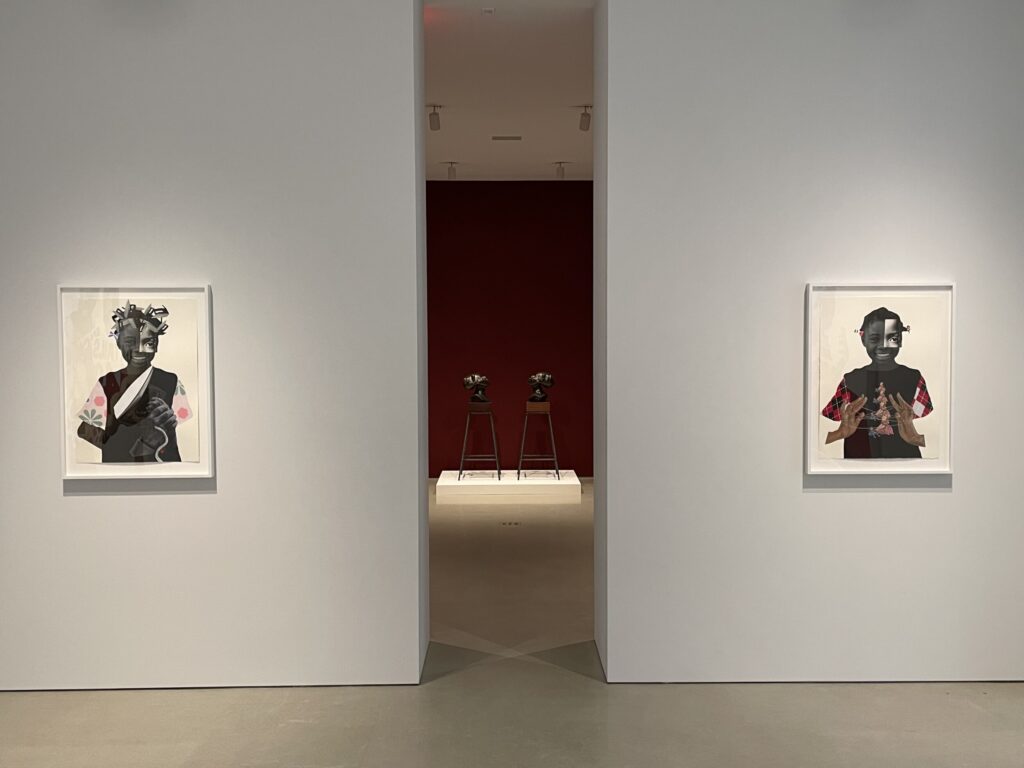
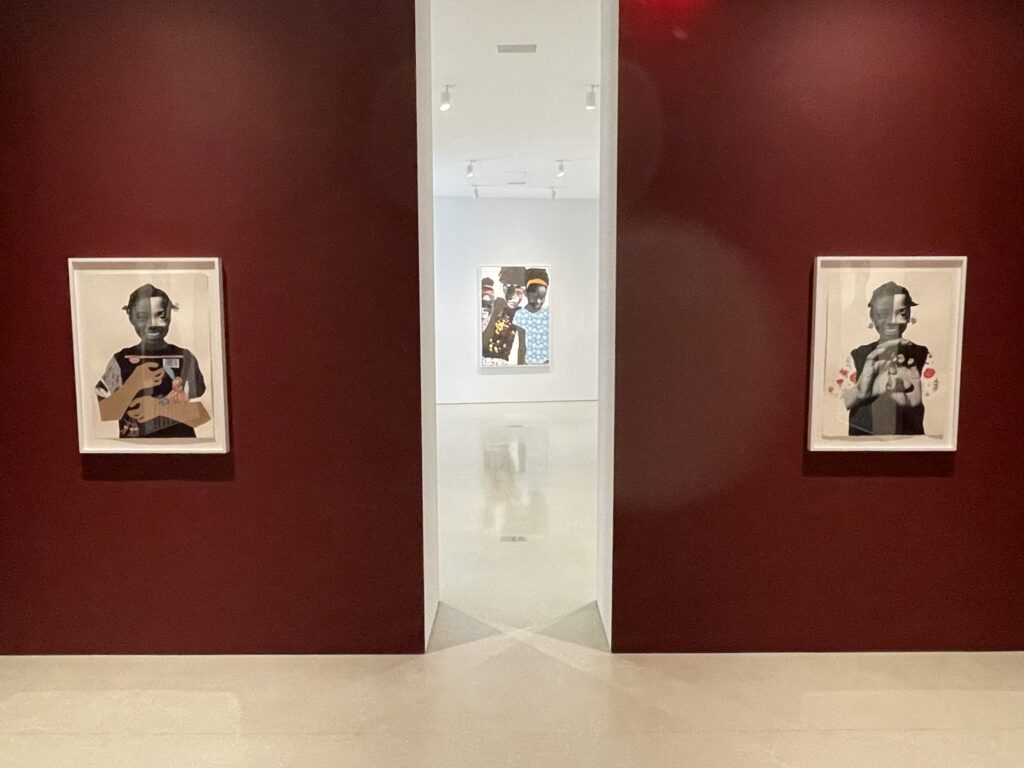
JTF (just the facts): A total of 19 works, generally framed in white and unmatted, and hung against white/burgundy walls in a series of rooms on the 9th floor. (Installation shots below.)
The following works are included in the show:
- 8 mixed media collages on canvas, 2025, sized roughly 54×45, 65×45, 70×70, 72×48, 72×60, 125×55 inches, unique
- 1 mixed media collage on paper, 2025, sized roughly 60×42 inches, unique
- 8 mixed media collages on paper, 2025, sized roughly 30×22 inches, unique
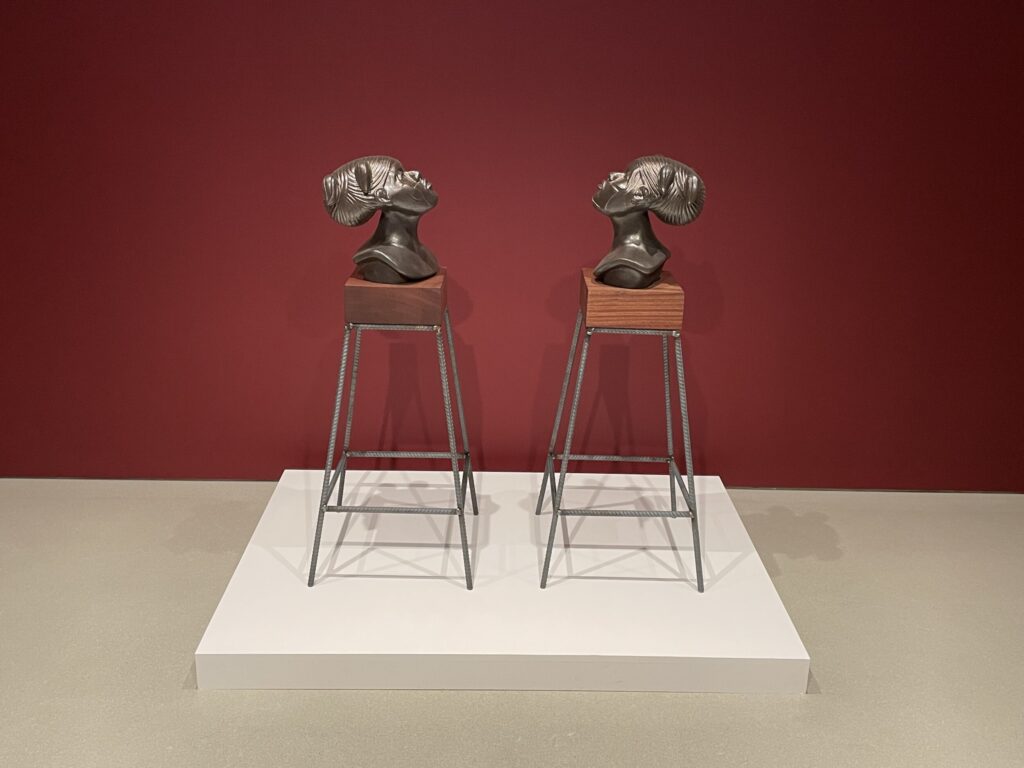
- 2 ceramics, 2025, sized roughly 16x12x11 inches, in editions of 7
Comments/Context: It’s fair to say that categorizing the art of Deborah Roberts as photography is likely an implausible definitional stretch. But given that nearly every work she has made over the past decade or two has included collaged photographic fragments of faces (as well as other body parts and found imagery in some cases), there is a tenuous argument to be made for her inclusion in the broader photographic realm. To my eye, photocollage certainly counts as photography, and Roberts’s work consistently incorporates photocollage elements into her larger painted (or mixed media) portraits, so let’s welcome her into the fold, even if she’s perhaps lingering on the edges.
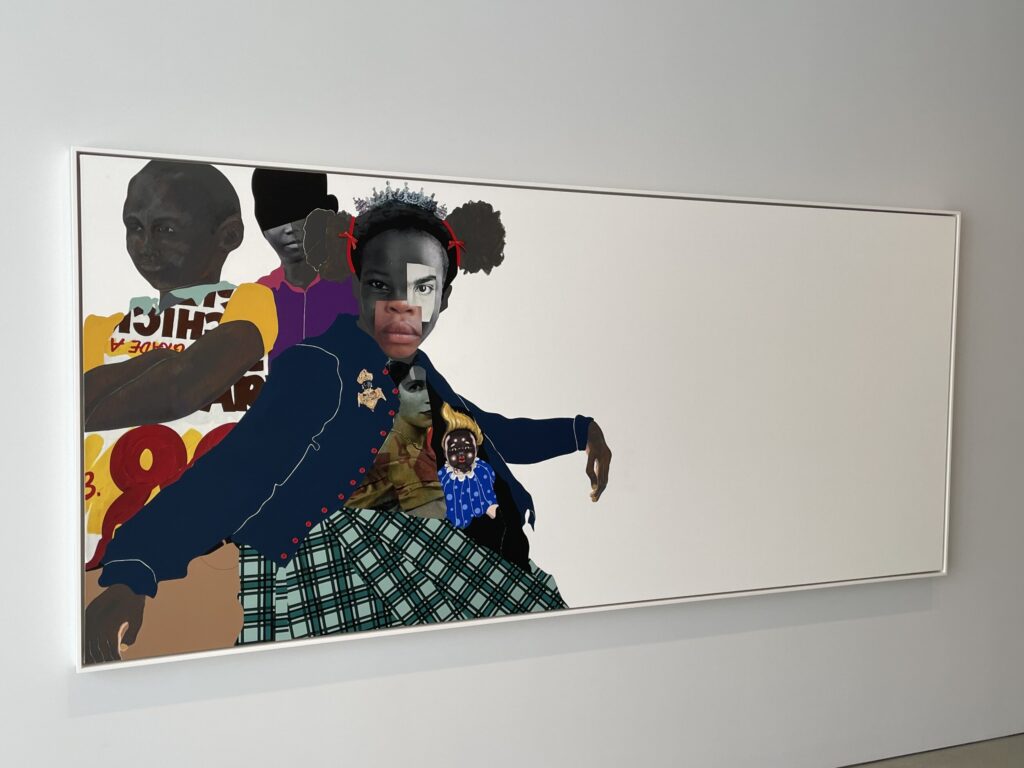
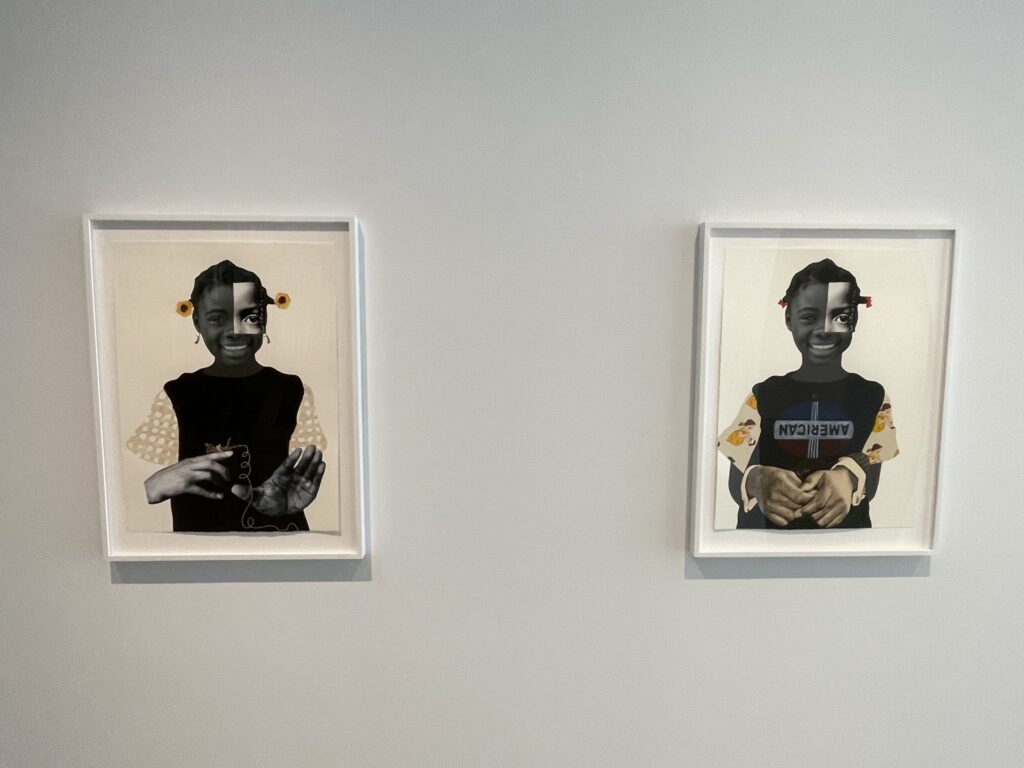
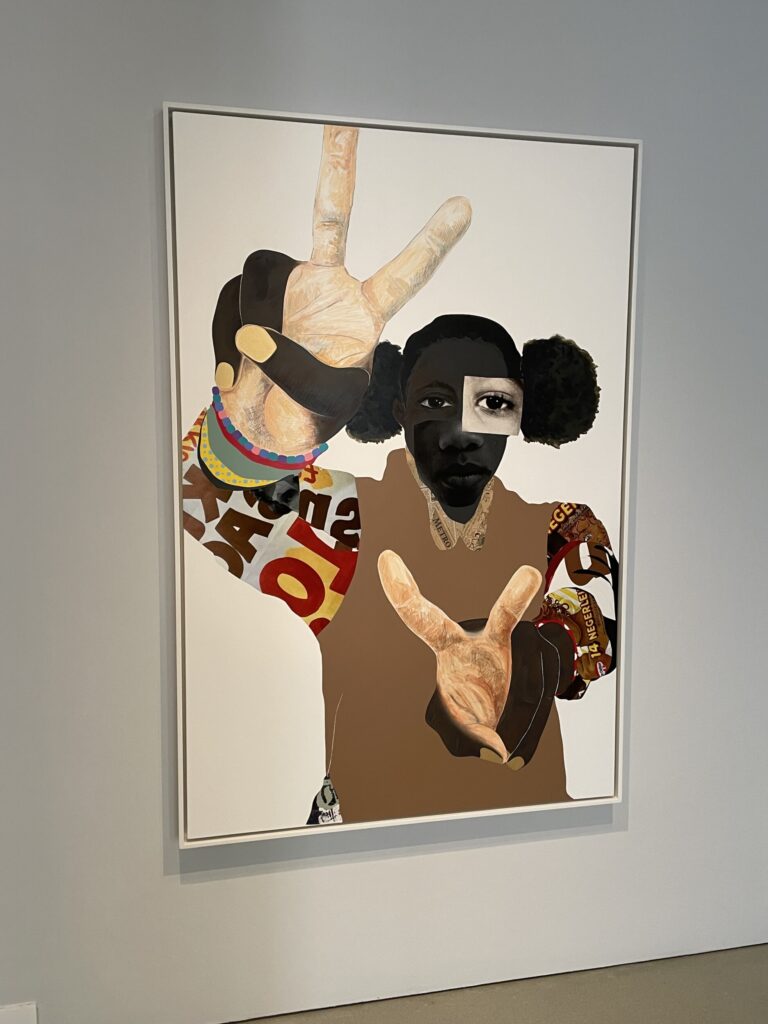
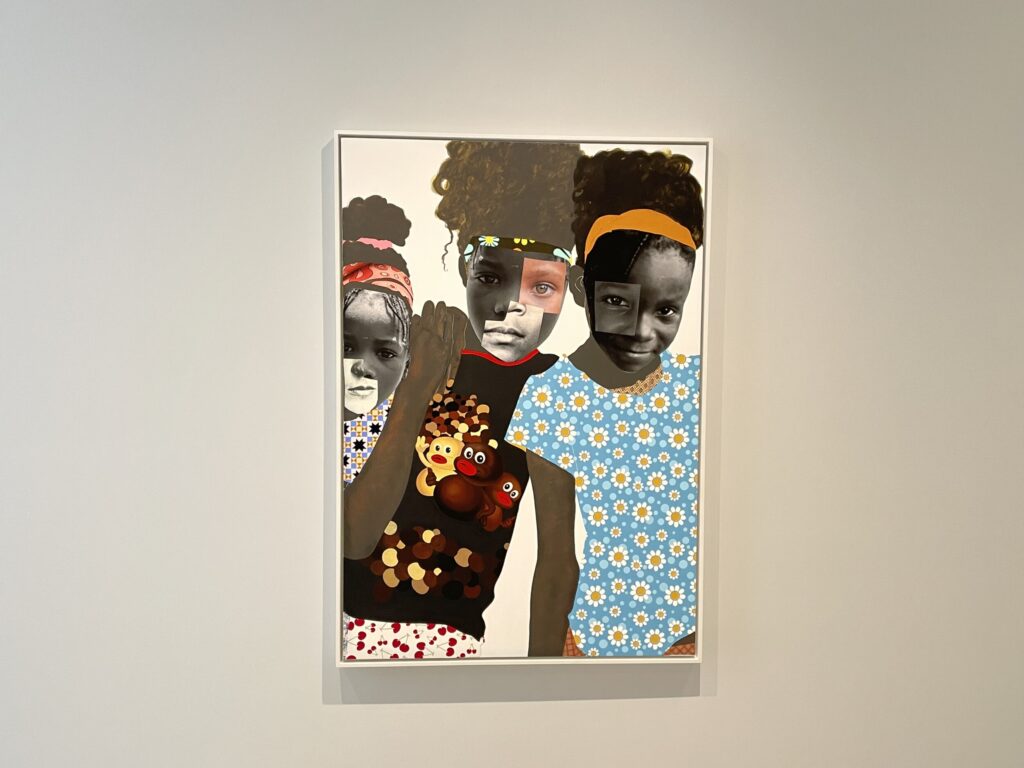
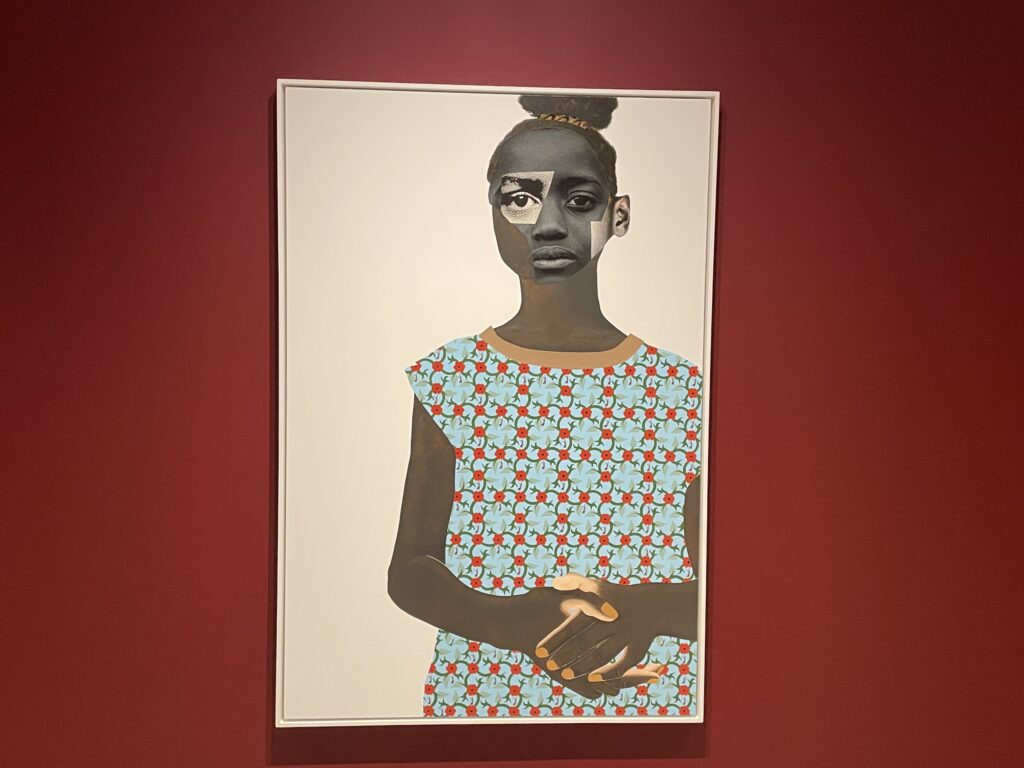
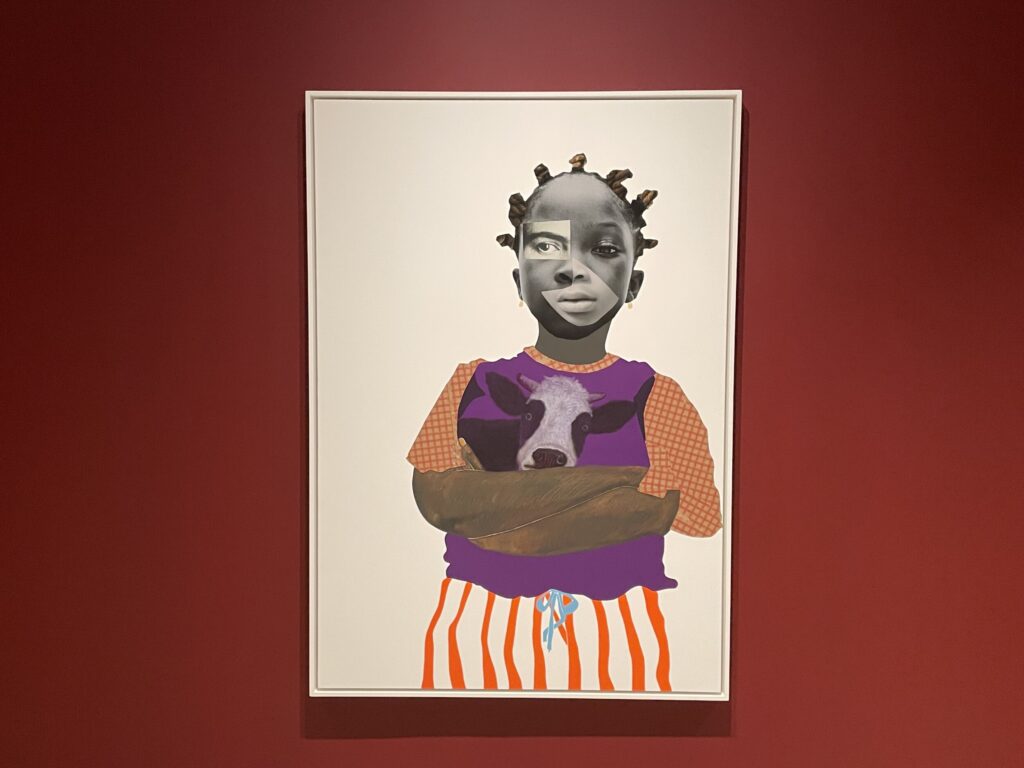
If there is a singular motif that has made Roberts’s work distinctive over the years, in many ways becoming a kind of visual signature, it is the way she builds faces out of photographic shards. Most of her faces (and heads) start with an image of an African American girl or boy, which is then interrupted by a second image of an eye and perhaps a third of lips or a mouth, the two or three pictures put together in a way that resolves into one shifting hybrid persona. Her approach has aesthetic echoes of Pablo Picasso and layered Cubist construction more broadly, but the underlying conceptual reasons for her image building have more to do with the complex fragmentations and roles of contemporary black identity than with other distortions and perspectives of time or character. With these layered faces as her central starting point, she has then extended them outward with painted and collaged bodies in various forms, often at nearly life size, creating fuller portraits set against blank white backdrops.
With the recent closure of the Stephen Friedman Gallery, Roberts is momentarily left without gallery representation in New York, but the FLAG Art Foundation has stepped into the void, offering a succinct survey of works made in the past year, including large paintings, a series of smaller collages, and even a pair of ceramic busts. It’s an effective update on the evolution of Roberts’s artistic thinking, bringing us up to speed on her newest ideas and compositional motifs.
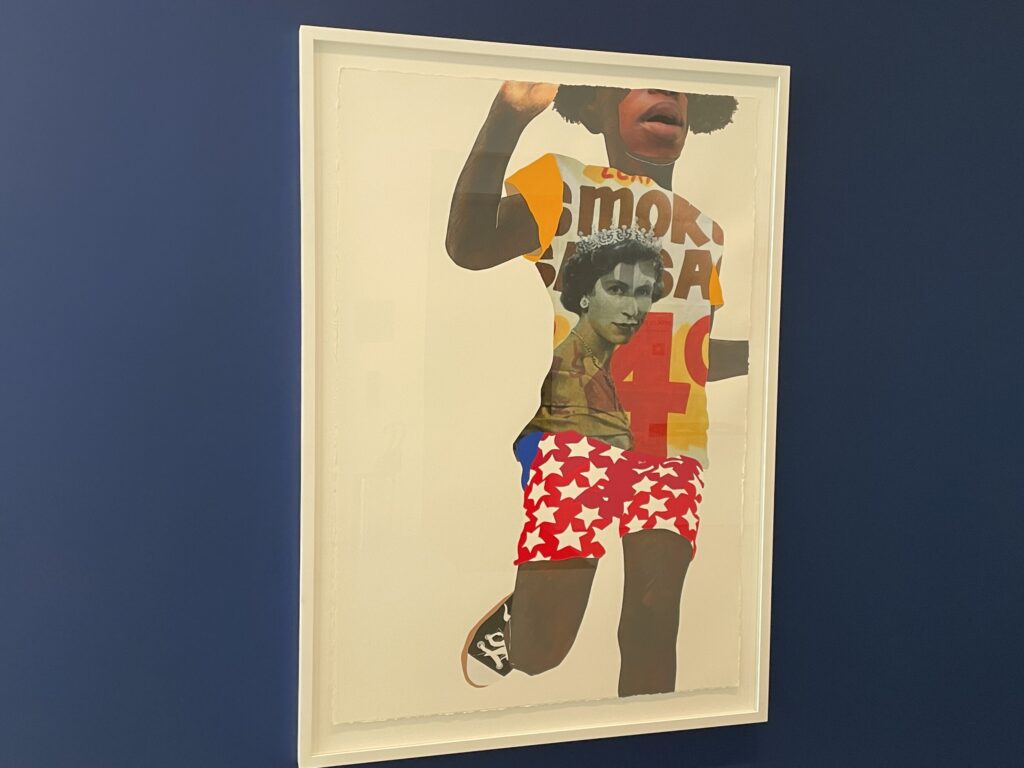
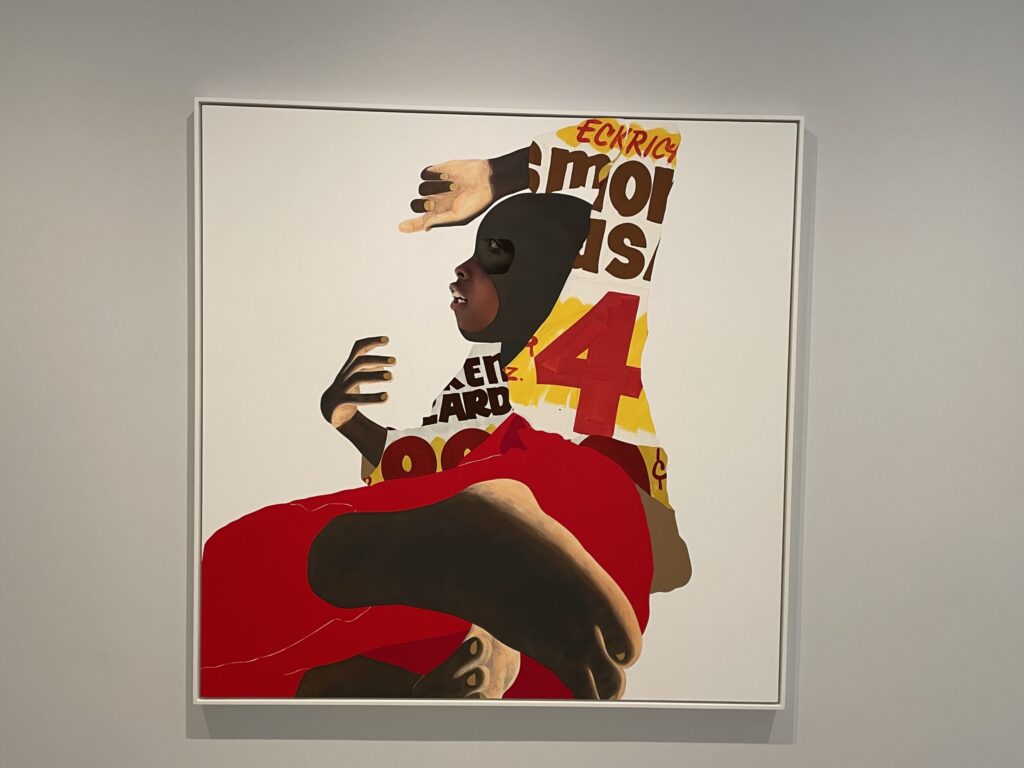
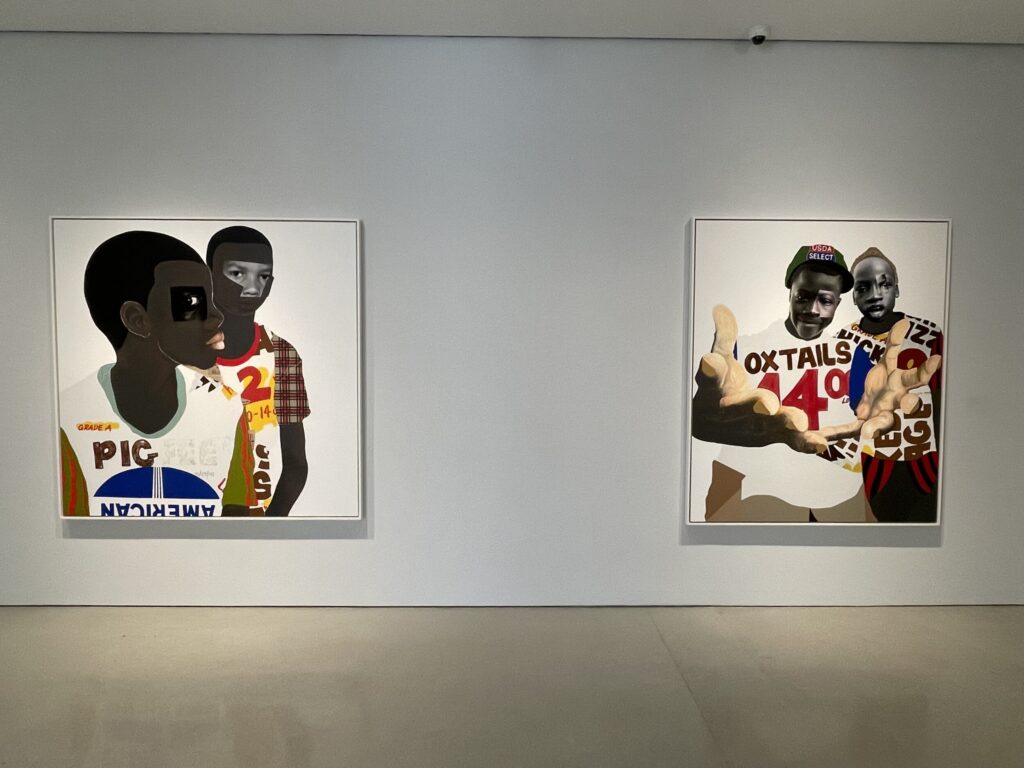
In Roberts’s larger paintings, she’s noticeably extended beyond single figures seen relatively straight on to experiments with groups of figures, unbalanced compositions, and other cropped and flattened vantage points. Collapsed space brings three girls close together, two boys overlap one behind the other, and a trio of kids pushes to the far left of a horizontal frame, their arms stacked together. Roberts further plays with limbs that extend out into the space of the viewer, including hands making energetic peace signs, hands outstretched as if to receive something (or make a point), and legs and arms cramped into a bent tumble. And even when she returns to single figures, she’s trying out the nuances of different poses, with hands clasped, arms crossed, or arms and legs in the motion of running, each gesture helping to set mood and tone.
By lingering in the intersection between photography and painting, Roberts has both realism and expressive approximation at her artistic disposal. Her black bodies powerfully combine the two, oscillating back and forth between direct photographic clarity and painterly simplification (or pattern reuse), pushing us to see complexity, ambiguity, universality, and even conflict in her representations of these black young people. In these new paintings, Roberts then goes a step further, adding in subtle visual references to colonialism and economic access, in the patterns that decorate her subjects’ clothing. She repurposes vintage grocery store signage (for pigs feet, smoked sausage, oxtails, and other low priced meat products once sold primarily to enslaved people), USDA meat stamps and markings, racialized black dolls, and even the face of Queen Elisabeth II, transforming them into bold fashions that accessorize identities with stinging reminders of history.
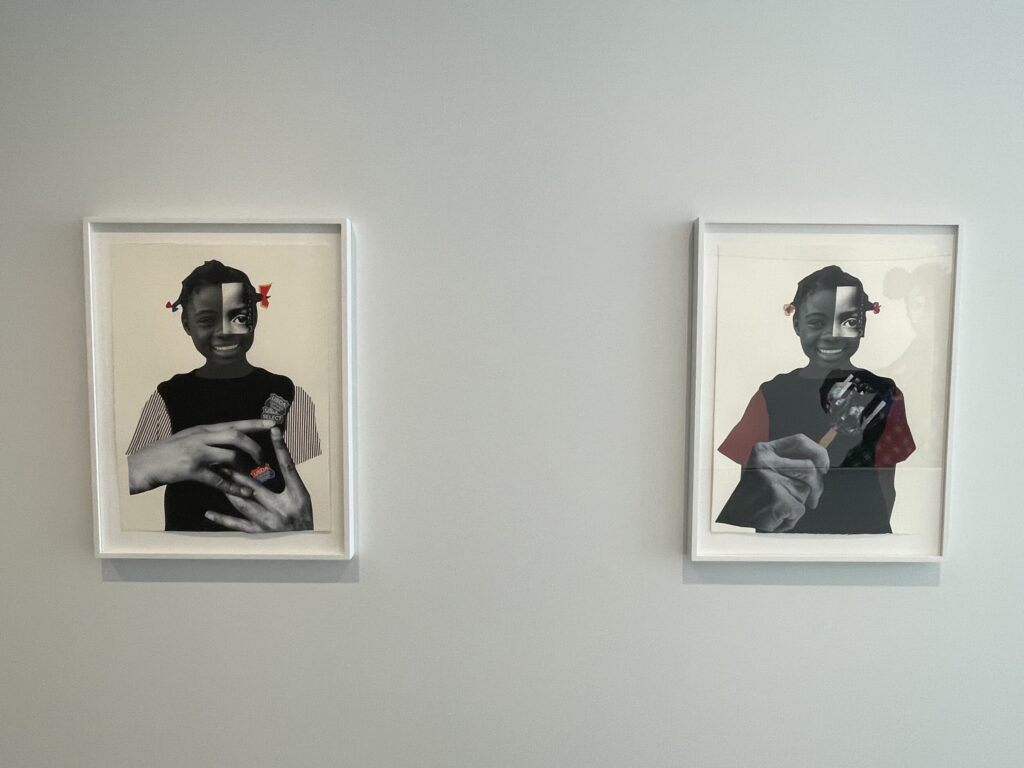
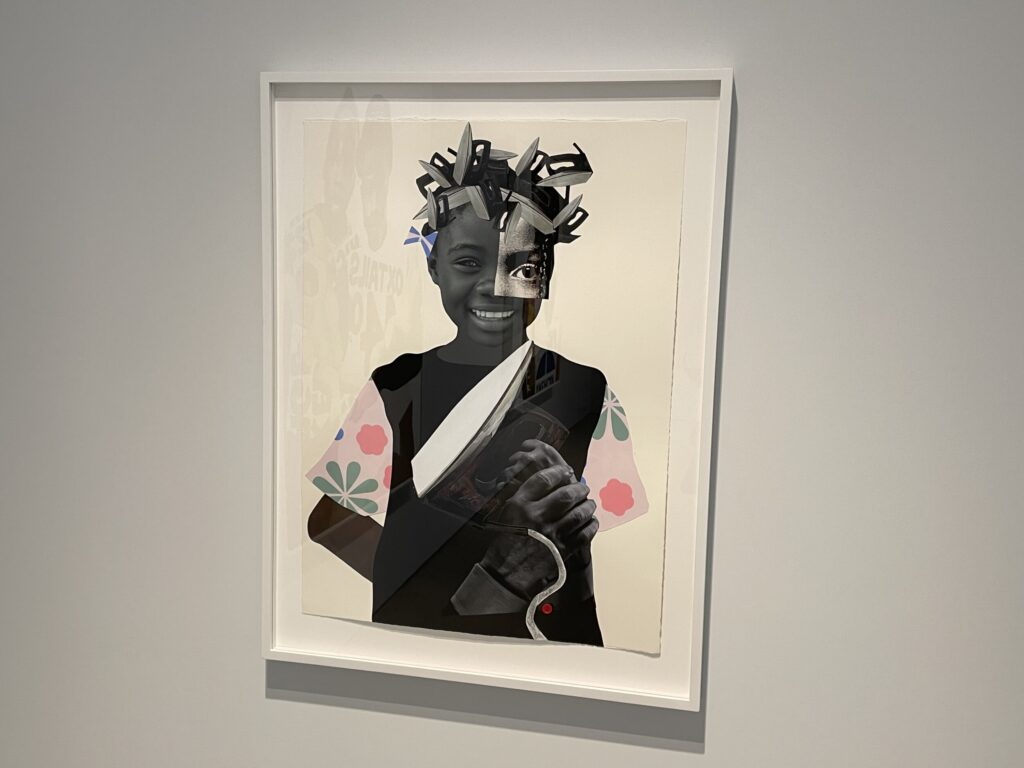
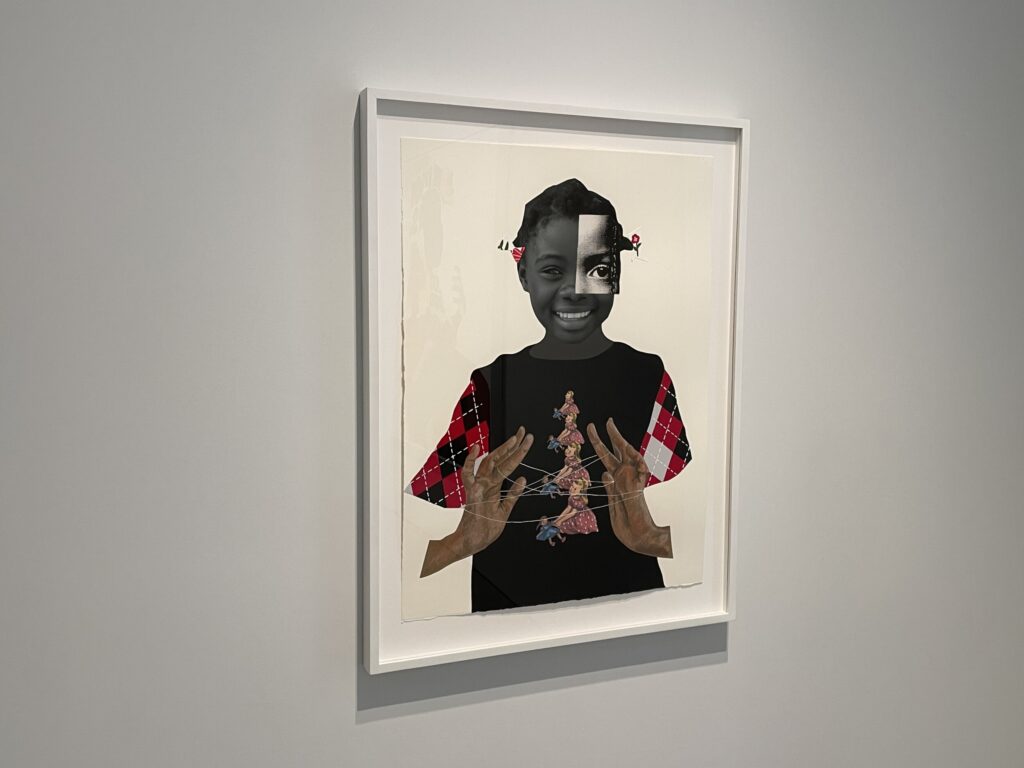
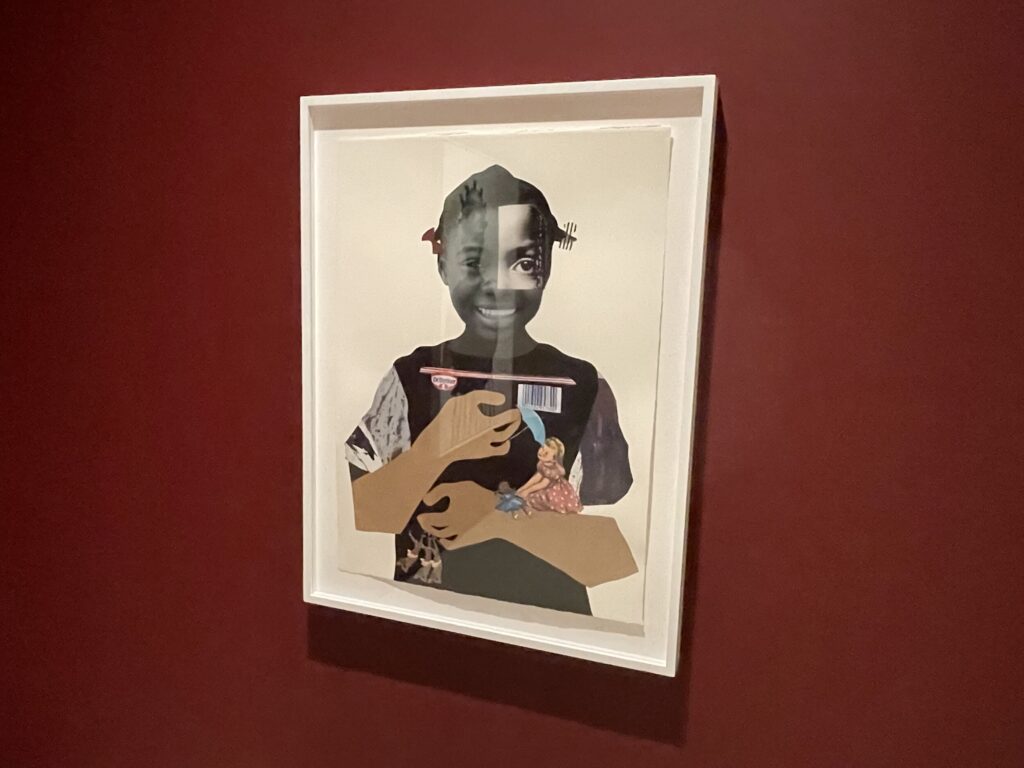
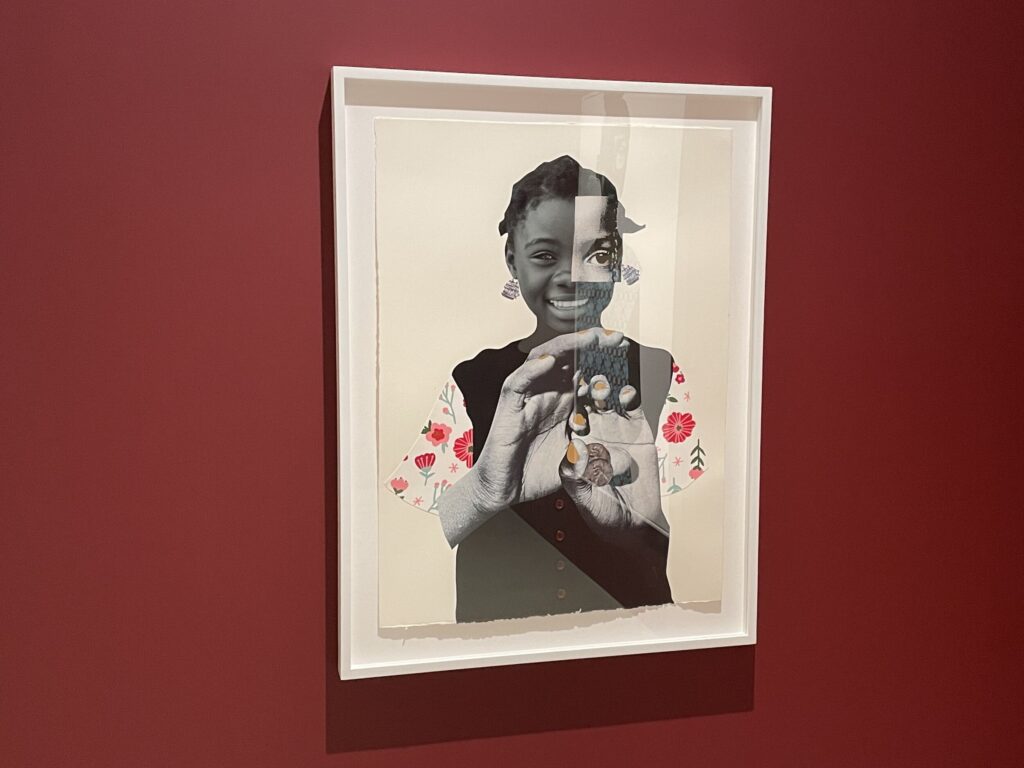
Roberts takes a more iterative approach to similar themes in a series of smaller collages titled “Many thousands gone”. Each collage starts with an image of a smiling black girl with two short braids standing in a dark shift dress, her eye covered by an inset image of a young woman’s eye, creating a shifting sense of potential time between youth and adulthood, and in eight separate works (spread throughout the galleries), Roberts reinterprets this base image. The meat stamps make additional appearances, as do vintage advertising and packaging from Dutch and German baking and food products (seemingly primarily from the brand Dr. Oetker), again with embedded racial language and stereotypes. In each collage, Roberts changes out the hair decorations, the earrings, the patterns on the arms of the dress, and the position of the hands, incorporating symbols of tall masted sailing ships, coins, ribbons, girls with dolls, dated floral prints, irons, reclining nude women, and a range of hand gestures. The resulting works adorn each child with the remnants of history, adding them to her bright young identity like badges she may or may not even understand. The chid’s consistent smile seems to positively push back against these many weights, tempered by the inherent innocence and vulnerability of her young age.
With faint connections back to the collage work of Romare Bearden, Roberts has created compound portraits that thoughtfully consider the objectification of black bodies and the weight of black history, and it is this consistent tension that infuses her works with such durable power. Her collaged faces allude to the time-based layers of legacy and personality that make up each individual, each subject becoming a resonant combination of a single unique persona and fragments of those that came before and after.
Collector’s POV: Since this is a museum exhibition, there are of course no posted prices. Deborah Roberts is represented by Vielmetter Los Angeles (here). Roberts’s work has been only intermittently available in the secondary markets in the past decade, with prices ranging from roughly $7000 to $120000.





I’m so glad you decided to see fit to cover her show. I think in interviews she has defined herself as happiest as a painter, but one who eventually expanded into photographic collage to get noticed.
The results are consistently magnificent.