JTF (just the facts): Published in 2026 by Kehrer Verlag (here). Hardcover (17 x 24 cm), 180 pages, with 75 tritone illustrations. Includes essays by Sara C. Appleby and the artist. Design by Caleb Cain Marcus, Luminosity Lab. (Cover and spread shots below.)
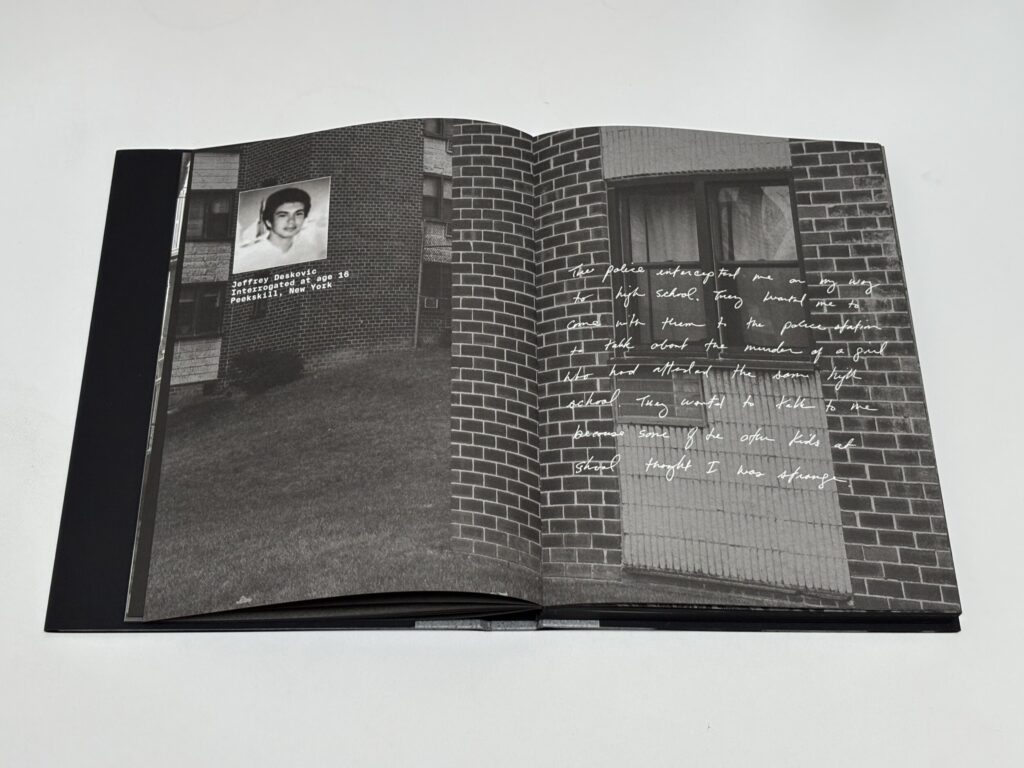
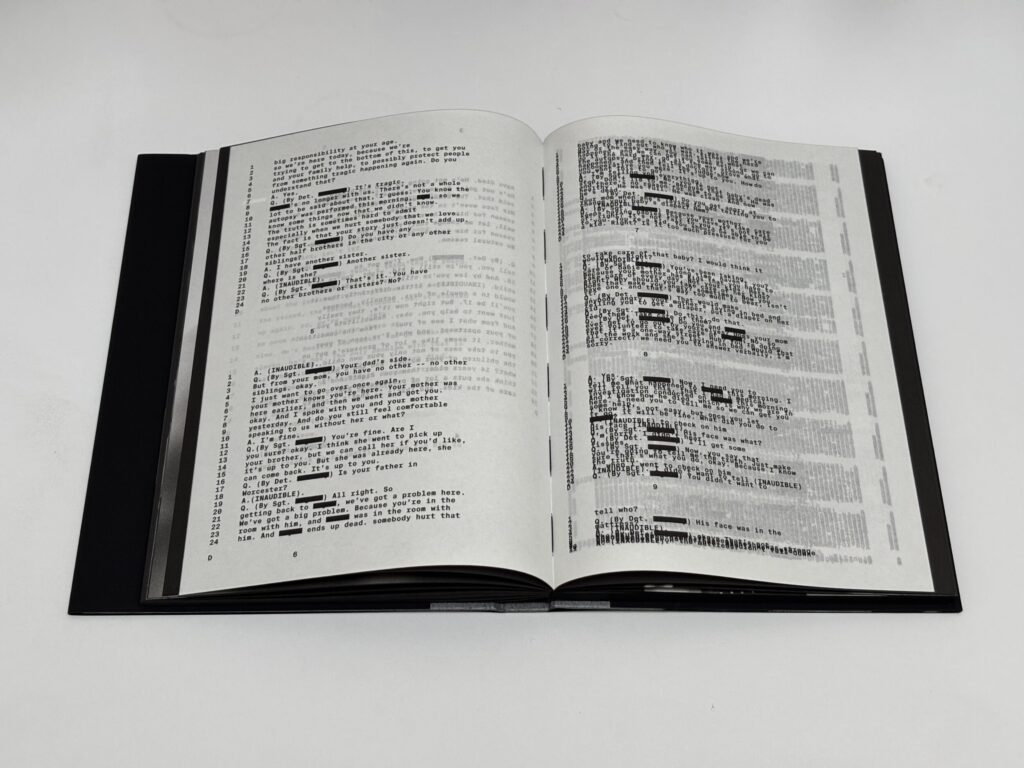
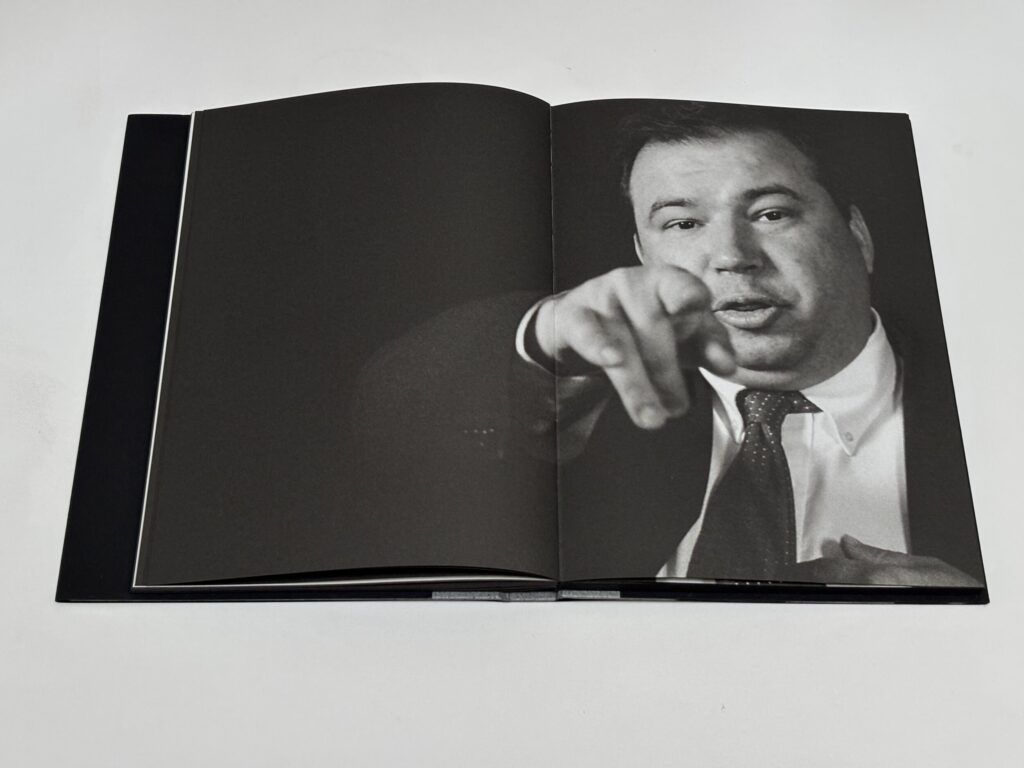
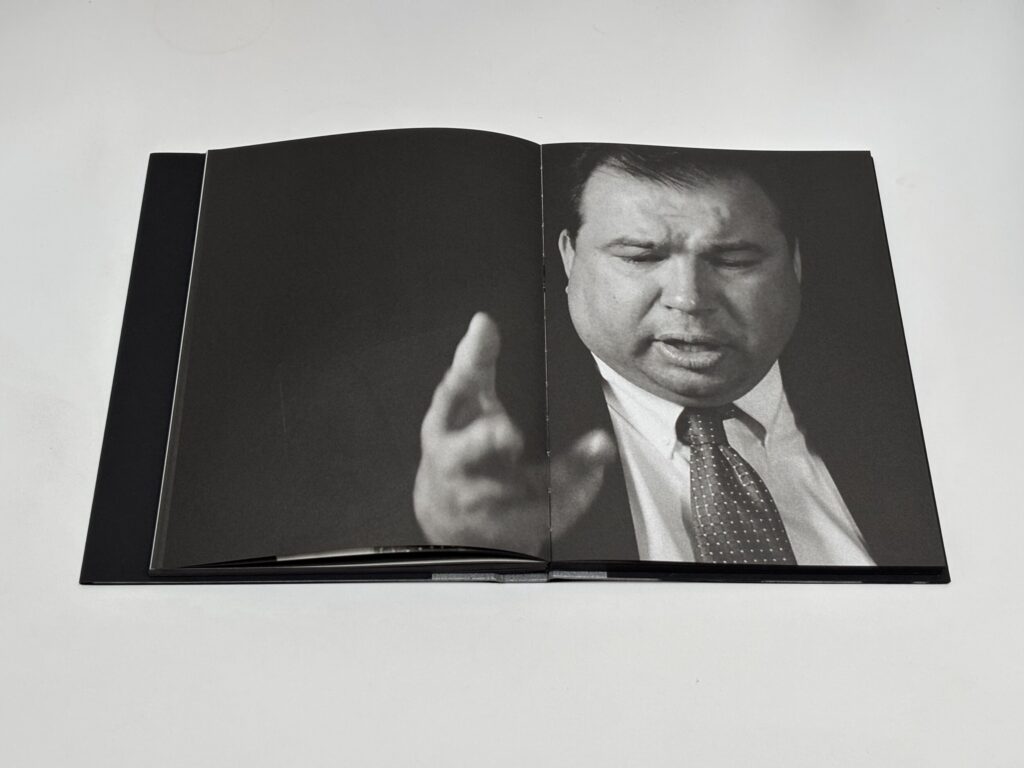
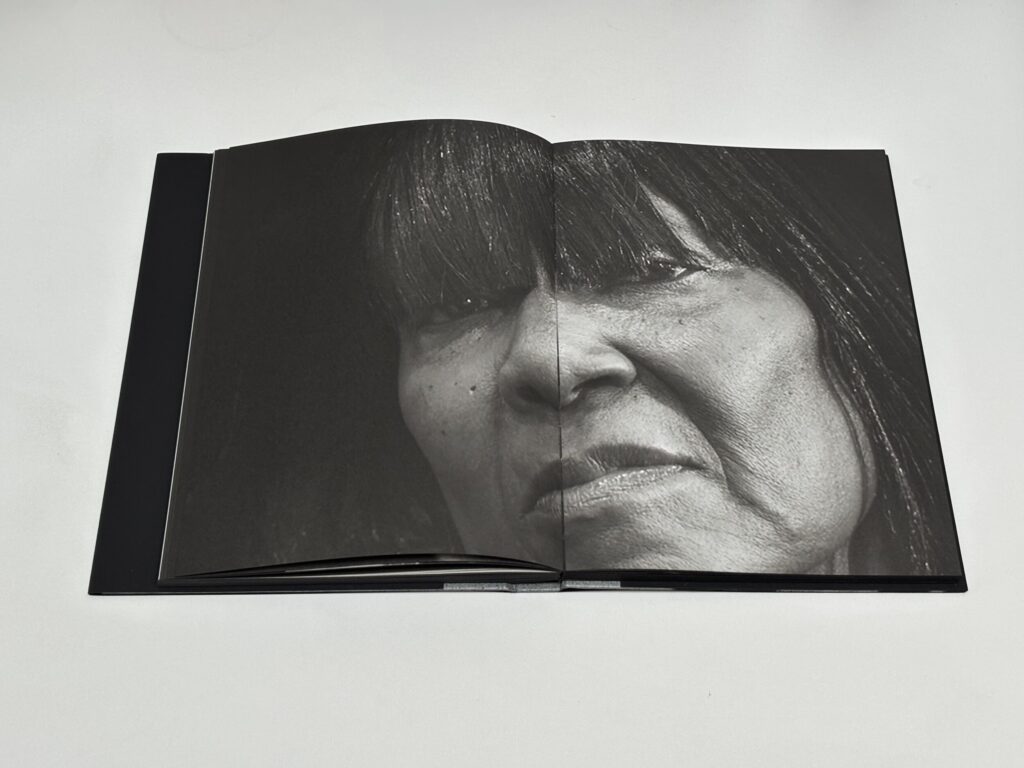
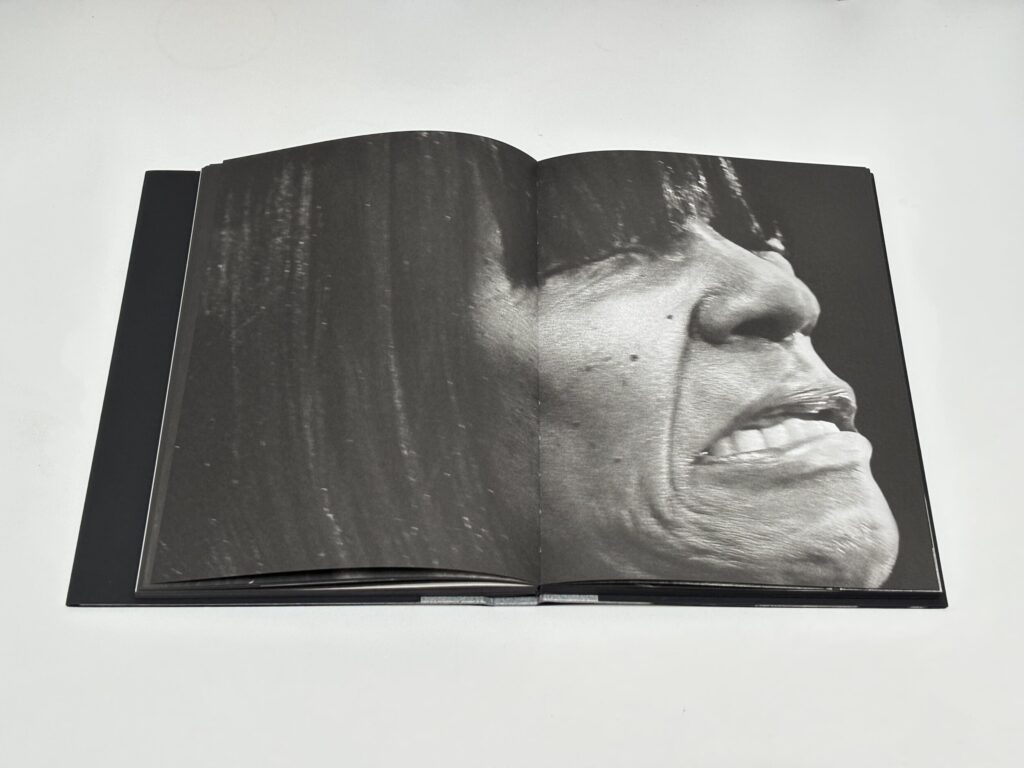
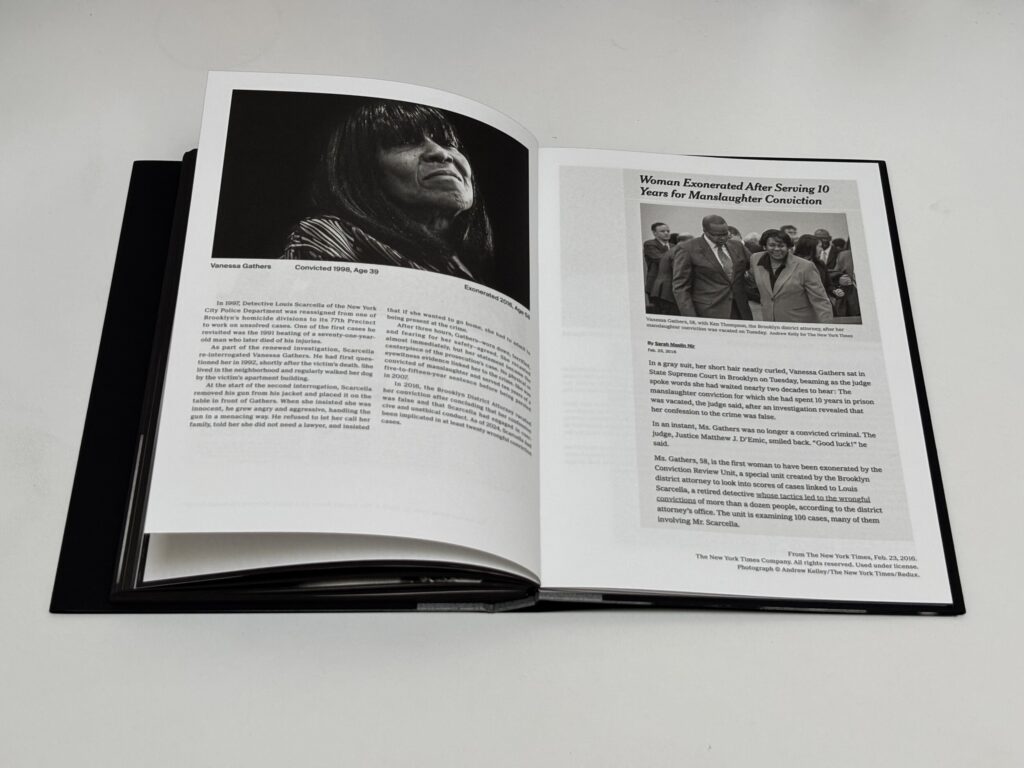
Comments/Context: Why would innocent people confess to crimes they did not commit? This troubling question lies at the heart of Robin Dahlberg’s latest photobook which examines false confessions, one of the most significant contributors to wrongful convictions in the United States. Before turning to photography, Dahlberg had a career as a lawyer, and that legal background continues to shape her artistic practice. Her projects are driven by a sharp awareness of institutional power and the often invisible mechanisms through which it operates.
In her earlier book Billable Hours: in 6-minute increments (reviewed here), Dahlberg turned her attention to the culture of corporate law, deftly exposing the gendered expectations, everyday indignities, and quiet absurdities that structure professional life. With a keen eye for detail and an understated sense of irony, she transformed the routines of the legal workplace into a subtle yet incisive critique. In Breaking Point: When the Criminal Justice System Fails, however, her focus shifts from the pressures of professional culture to the far more consequential failures of the criminal justice system, bringing the same analytical rigor to a subject whose stakes are immeasurably higher.
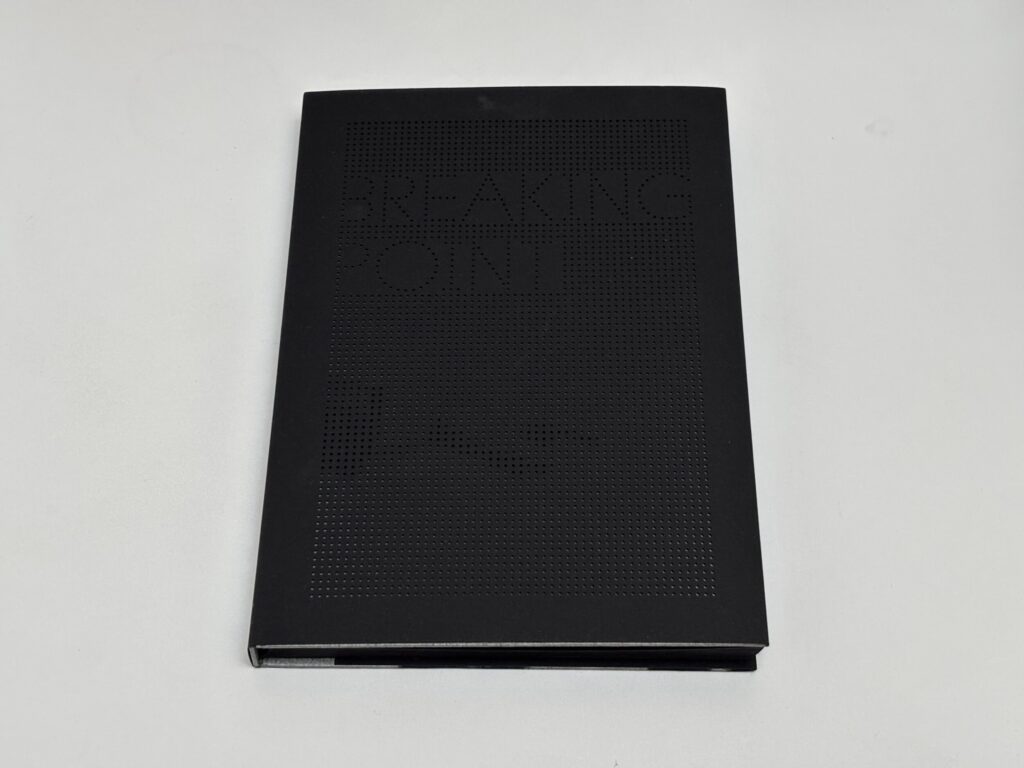
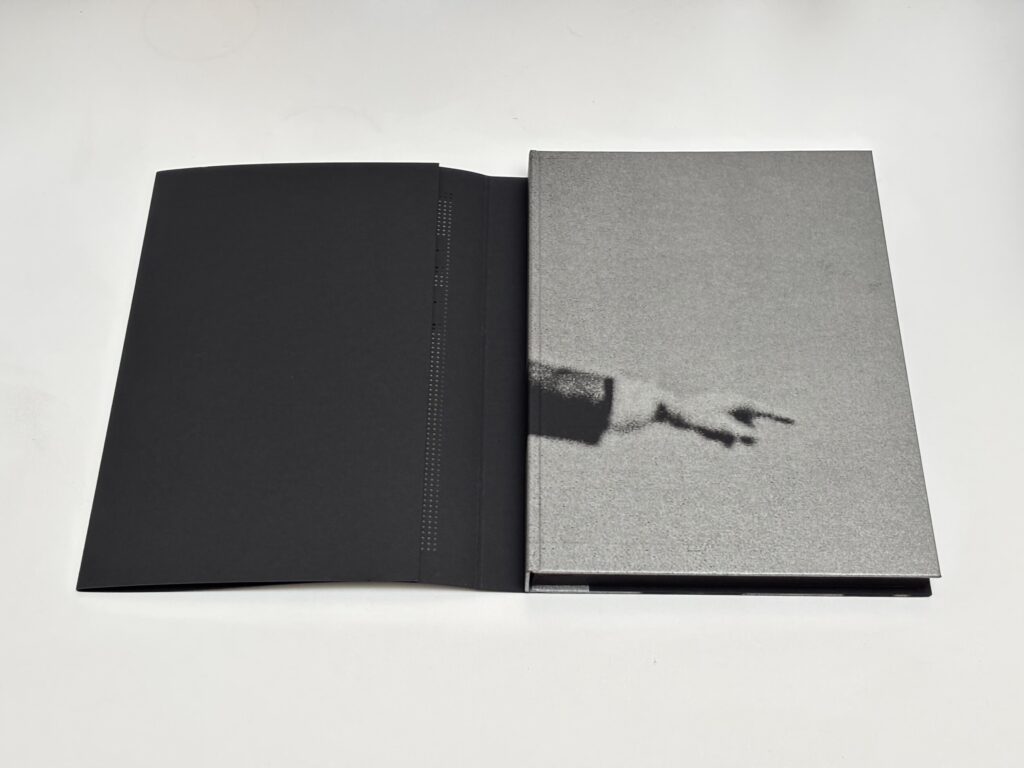
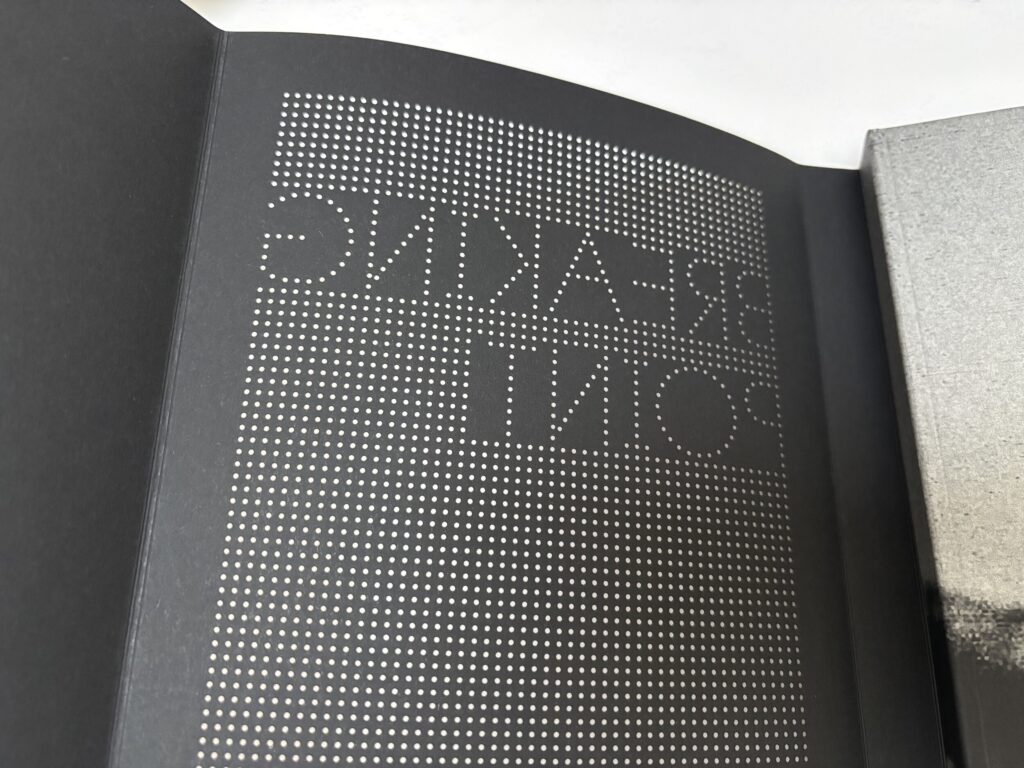
Breaking Point stands out as a carefully crafted object; it is beautifully produced and designed with elegance. It has a black dust jacket punctuated by tiny perforations that collectively form the title, giving the book a tactile and visually compelling presence. Through these openings, an image of a pointing finger becomes partially visible, an understated yet highly effective design choice. The black-dyed page edges lend the book a sculptural presence, while the title and the artist’s name appear discreetly in silver lettering along the spine. Inside, the book is just as exciting, bringing black-and-white photographs and writings into a striking visual flow. Overall, the book’s physical form echoes the gravity of its content, immediately inviting close attention.
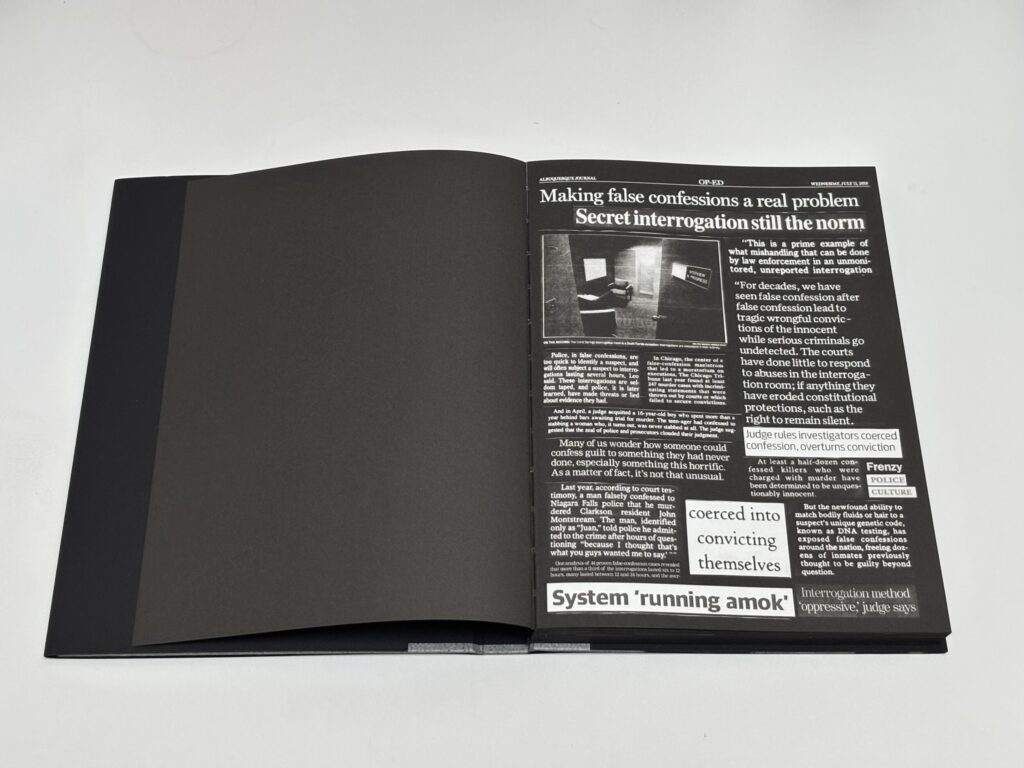
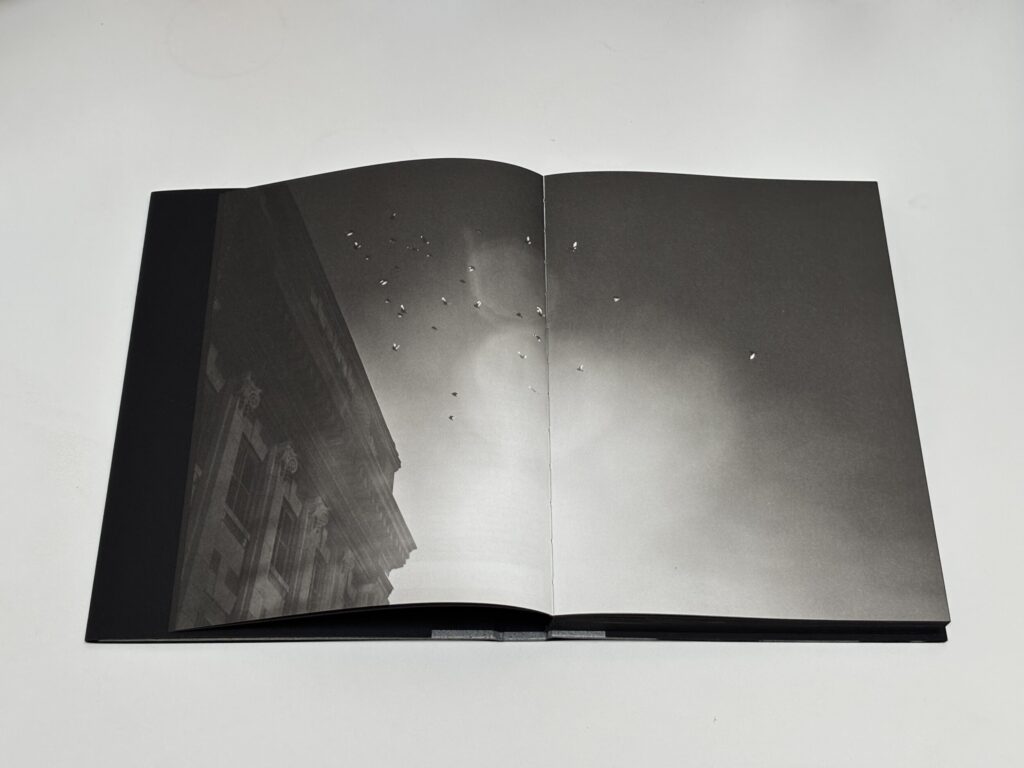
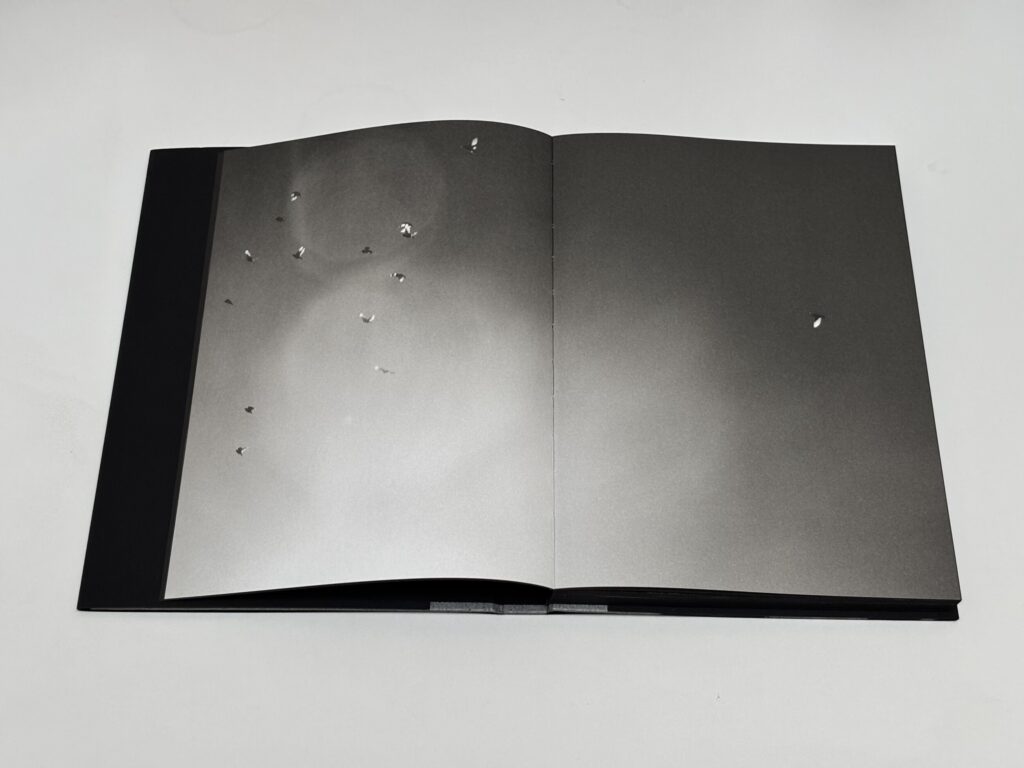
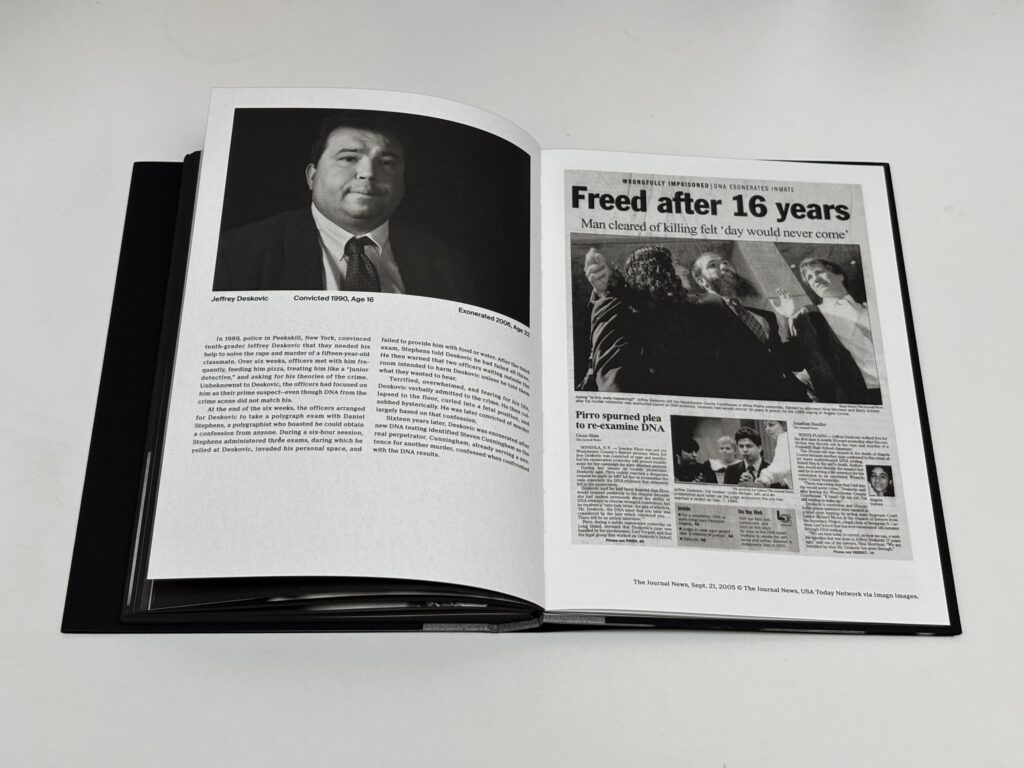
The book opens with a page crowded with newspaper clippings: “making false confessions a real problem”, “coerced into convicting themselves”, “interrogation method ‘oppressive’, judge says”, etc. These fragments immediately establish the book’s central concerns. They are followed by two full spreads of birds in flight set against an open sky before a spread bearing two questions that challenge one of our most deeply held assumptions: “if you don’t commit a crime, why the hell would you admit that you did?” and “Intuition holds that the innocent do not make false confessions. What on earth could be the motive?”
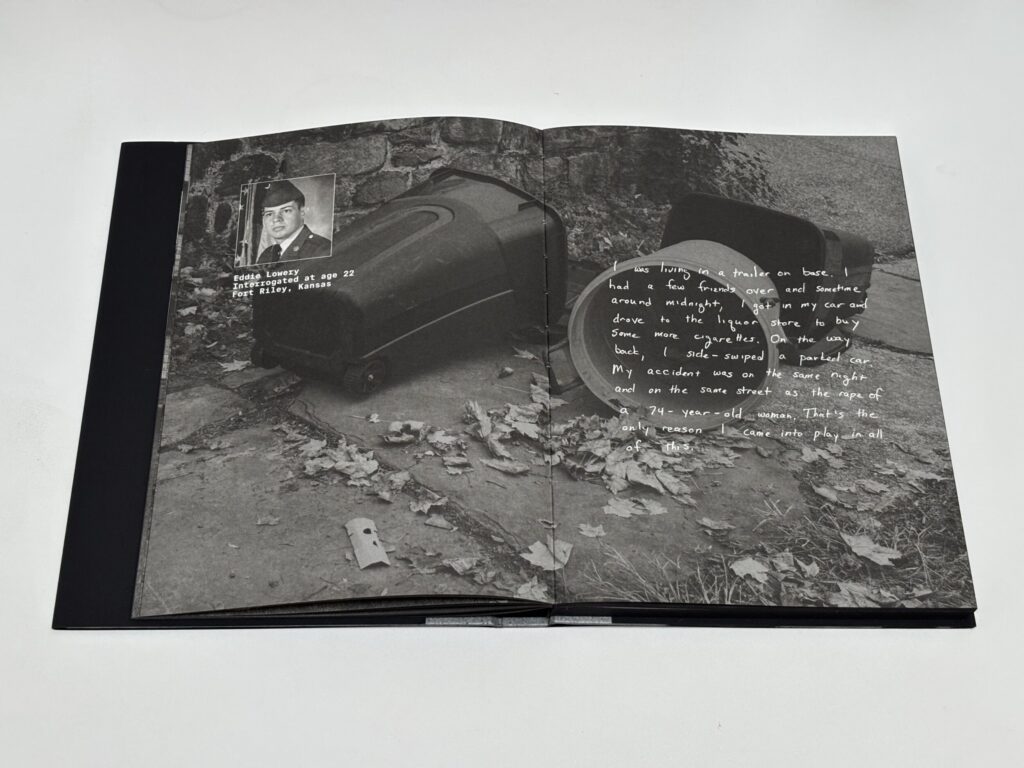
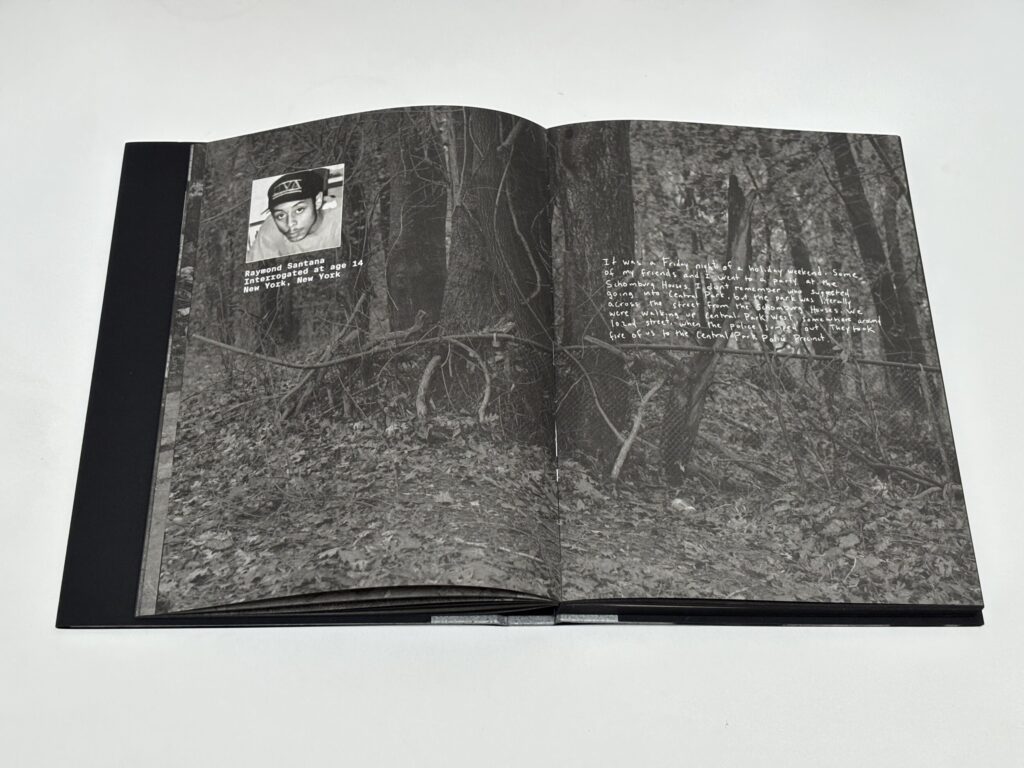
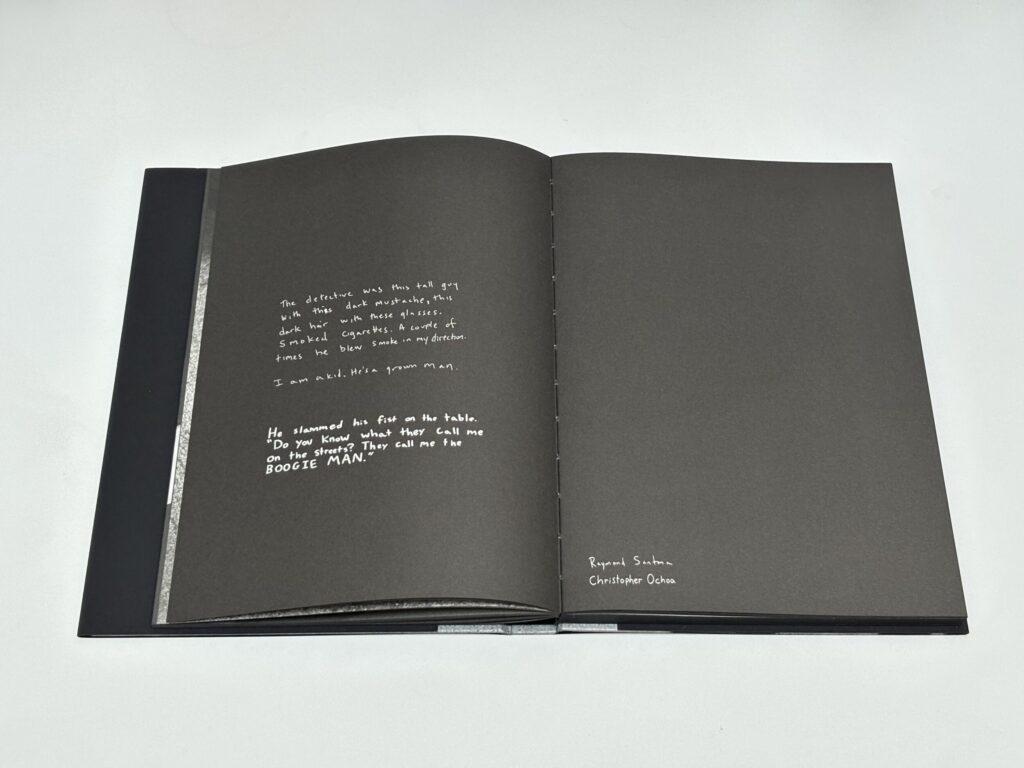
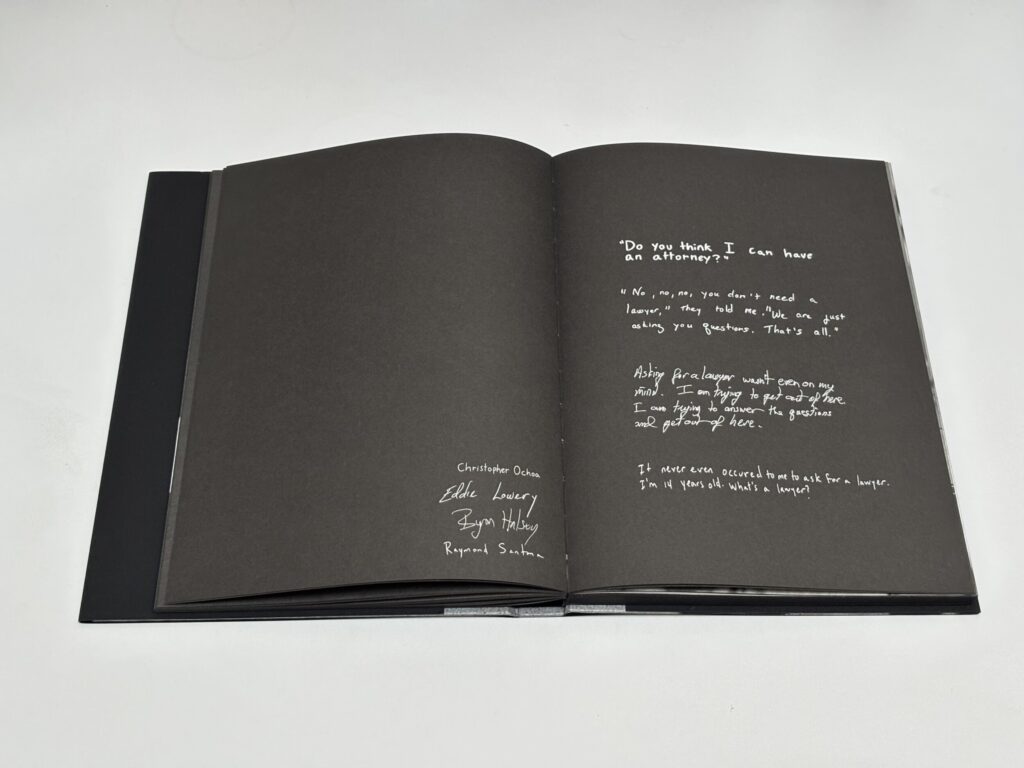
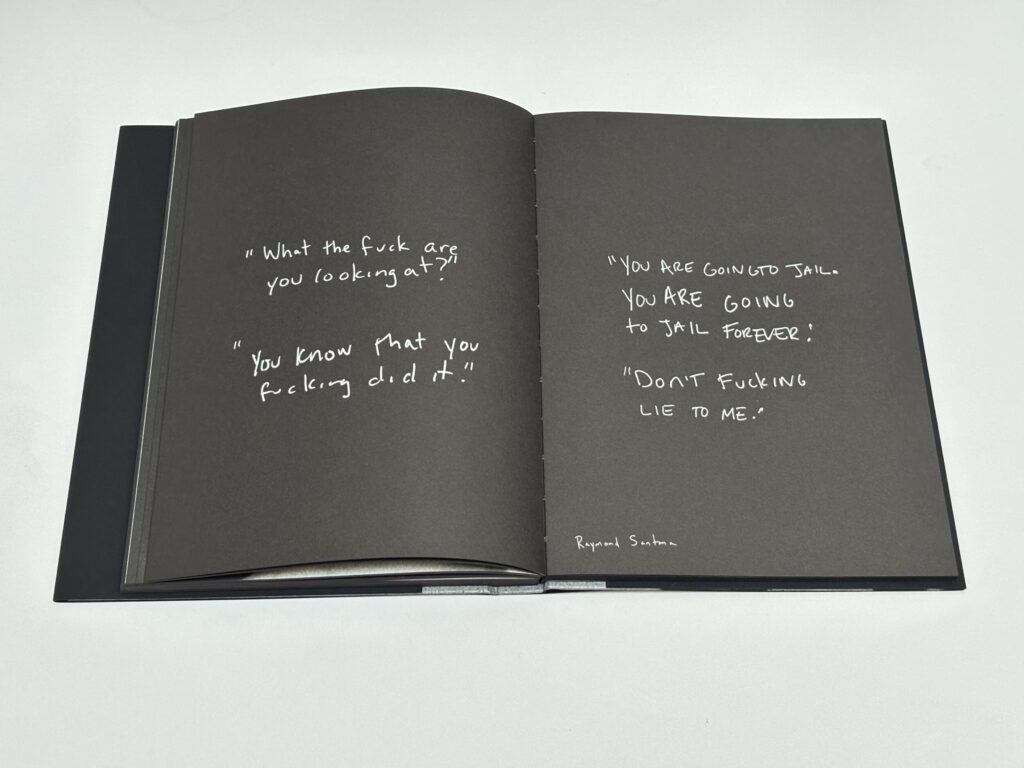
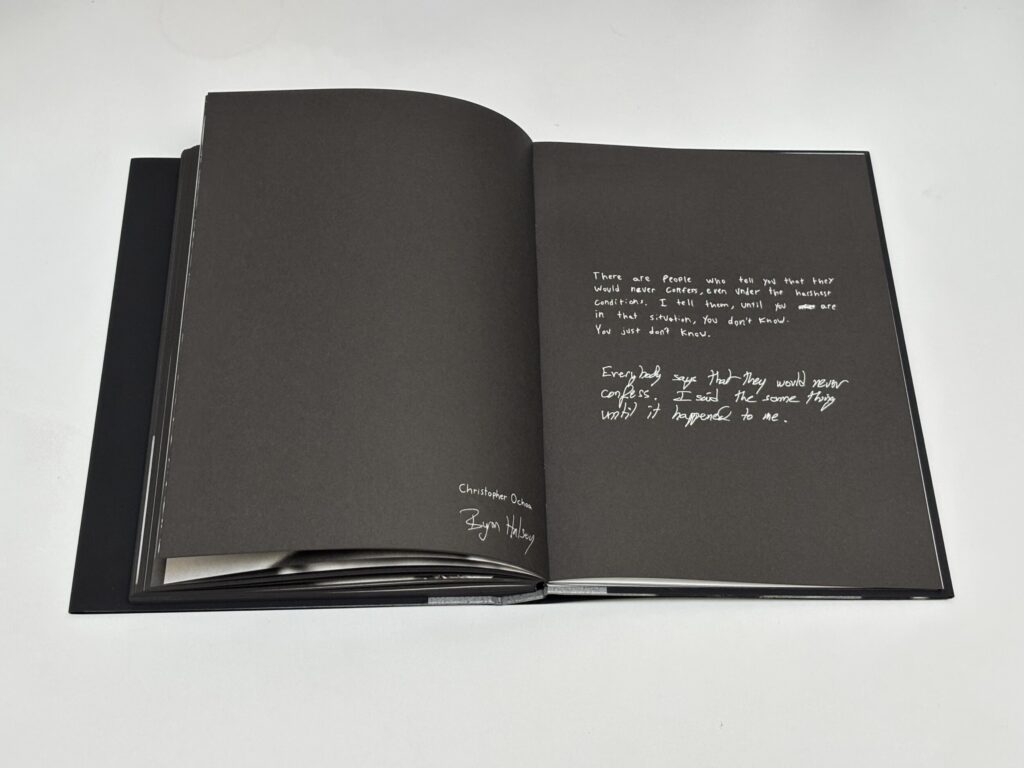
Through the stories of six individuals – Jeffrey Deskovic, Christopher Ochoa, Raymond Santana, Vanessa Gathers, Byron Halsey, and Eddie Lowery – Dahlberg reveals the powerful and often devastating tactics employed during interrogations. Each person was convicted, sentenced to lengthy prison terms, and later exonerated. Combining portraits with interview excerpts, Breaking Point examines the circumstances that pushed each individual to his or her breaking point, leading them to confess to crimes they never committed. One spread features handwritten words, rendered in white against a black background: “I decided to lie and tell them what they wanted to hear.” The signature beneath belongs to Raymond Santana, who, at the age of fourteen, falsely confessed in connection with the 1989 Central Park jogger case. He served five years in prison before DNA evidence and a confession from the true perpetrator led to his exoneration.
Vanessa Gathers falsely confessed to assault and robbery during a 1998 interrogation in which a detective yelled at her and threatened her with a firearm. Wrongfully convicted, she spent ten years in prison before her conviction was vacated due to the coercive nature of the interrogation and the unreliability of her confession. And another exoneree, Eddie Lowery, falsely confessed during an eleven-hour interrogation in 1981 and spent nine years in prison before DNA evidence set him free him in 2002.
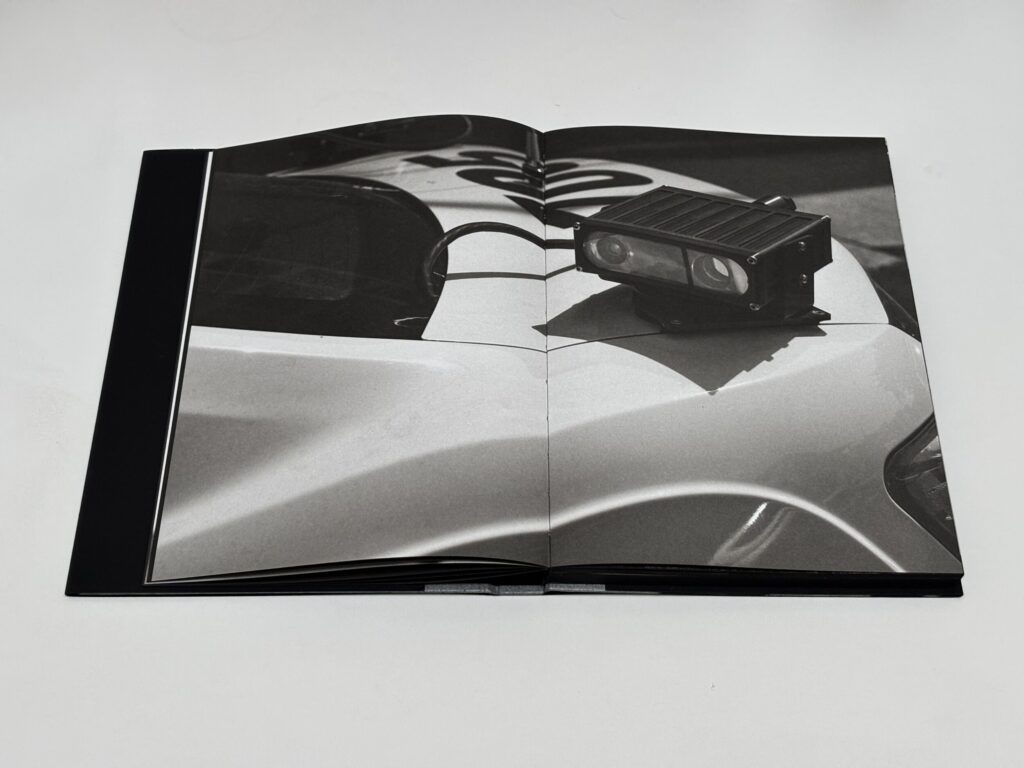
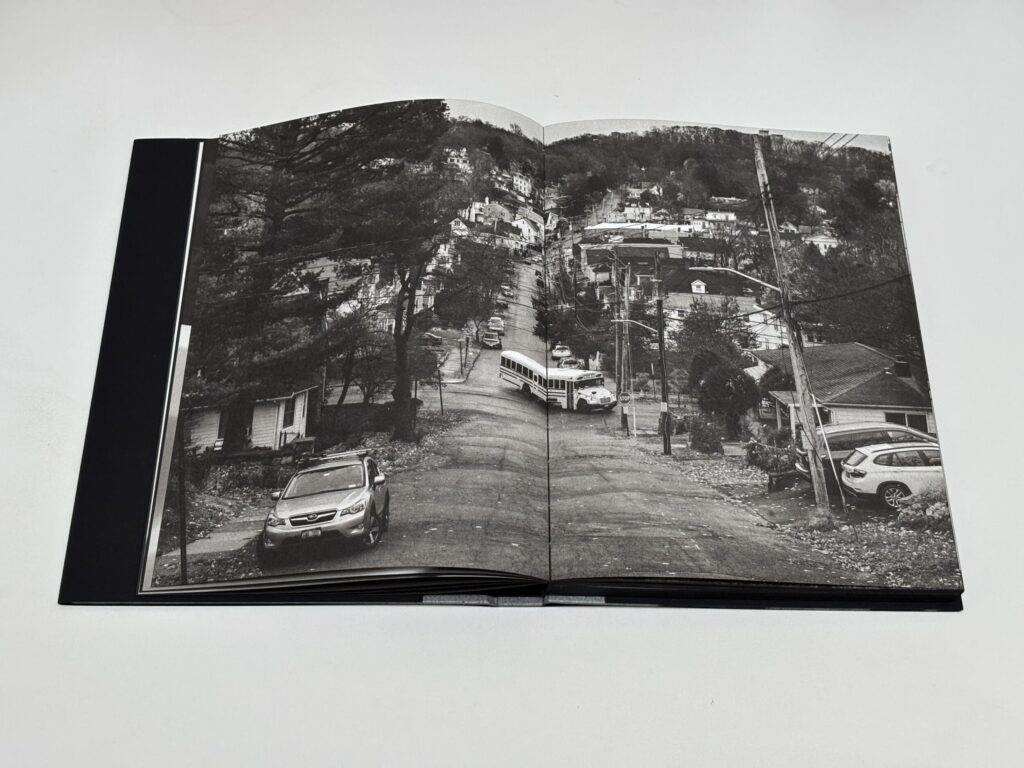
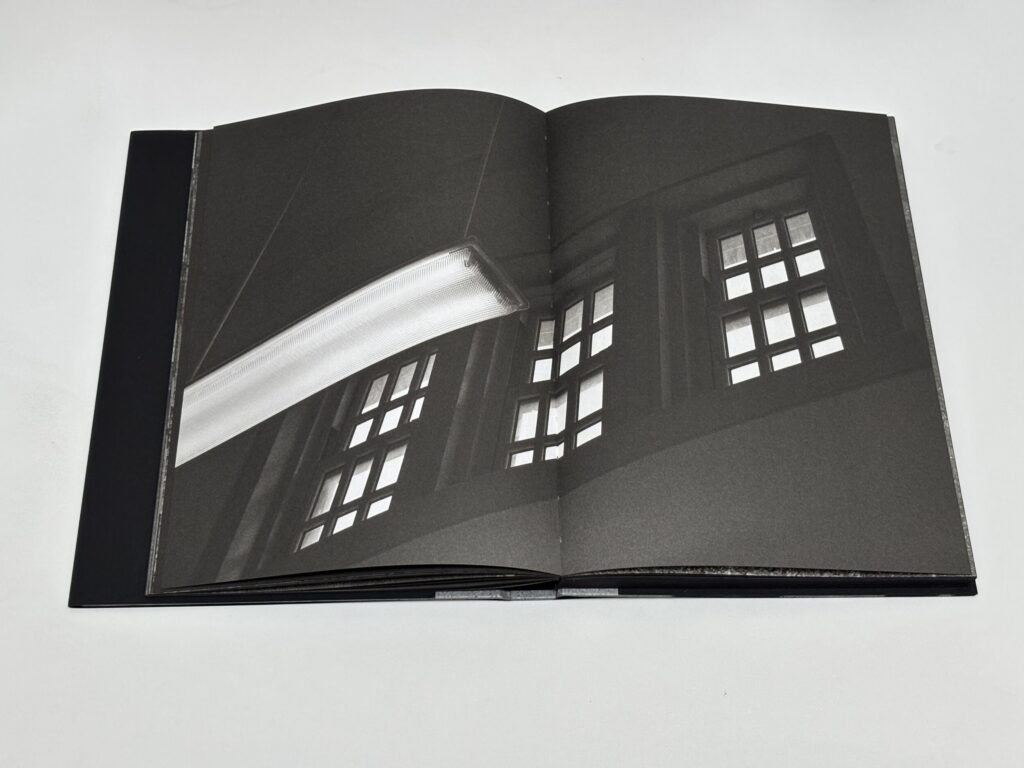
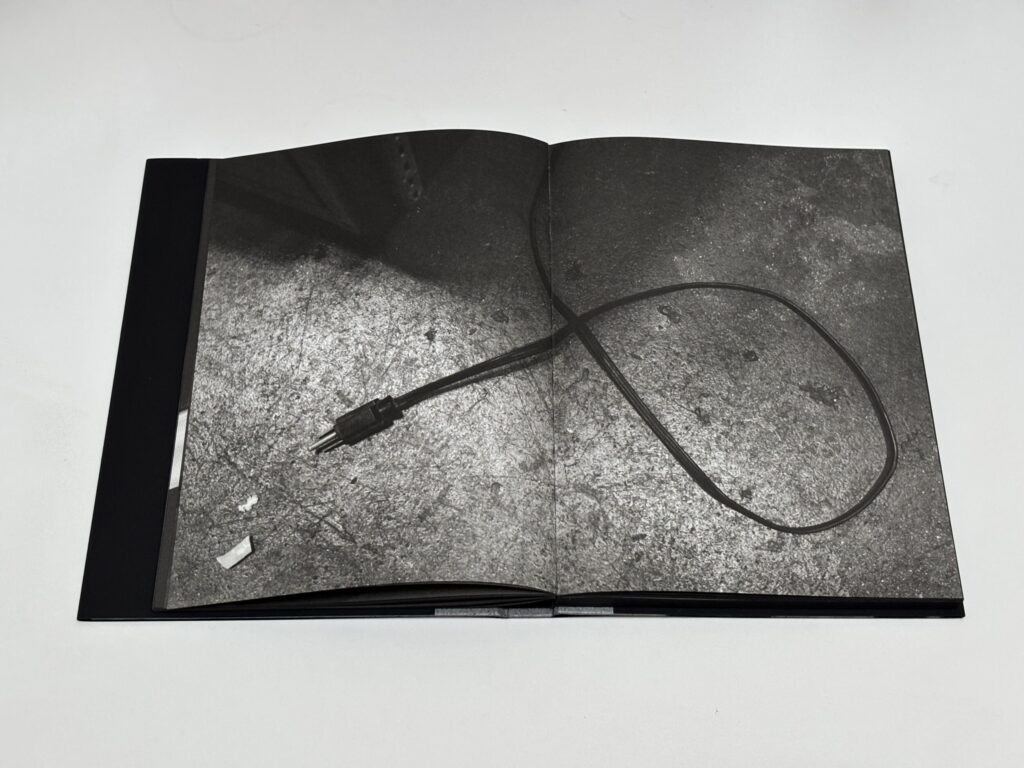
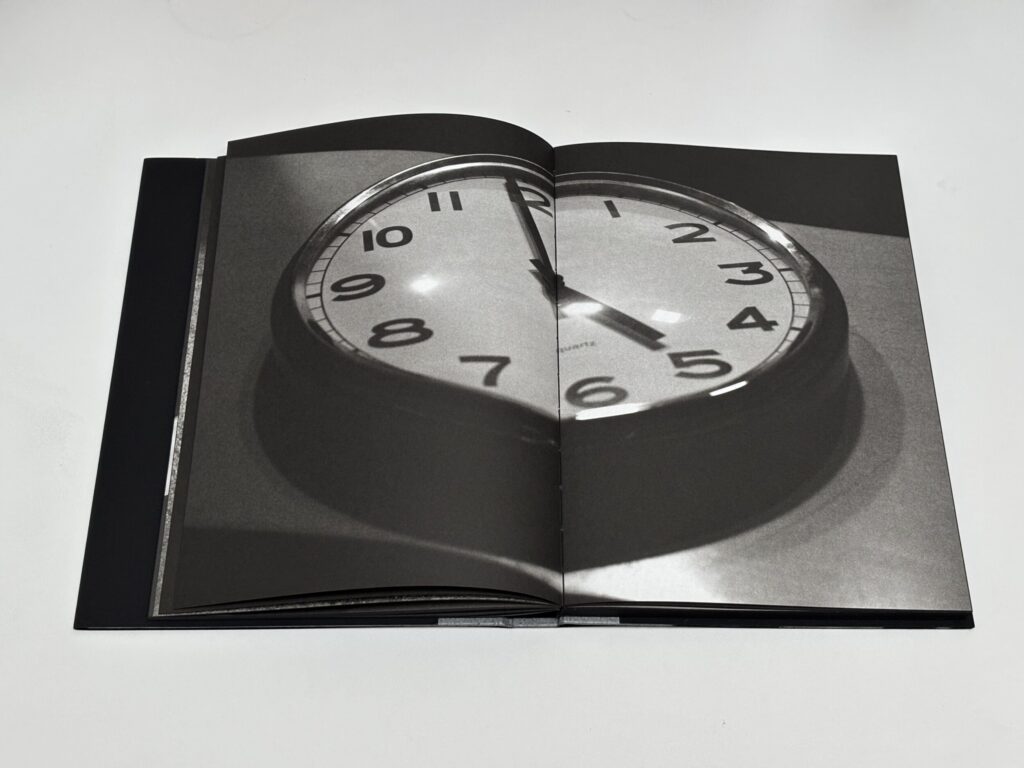
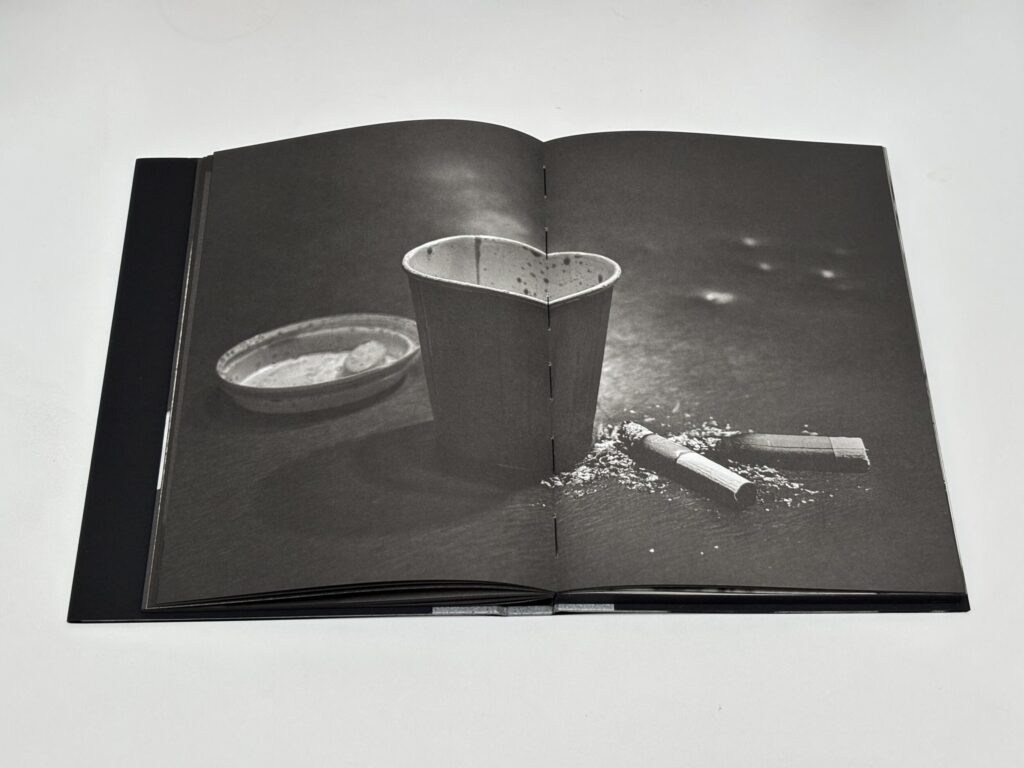
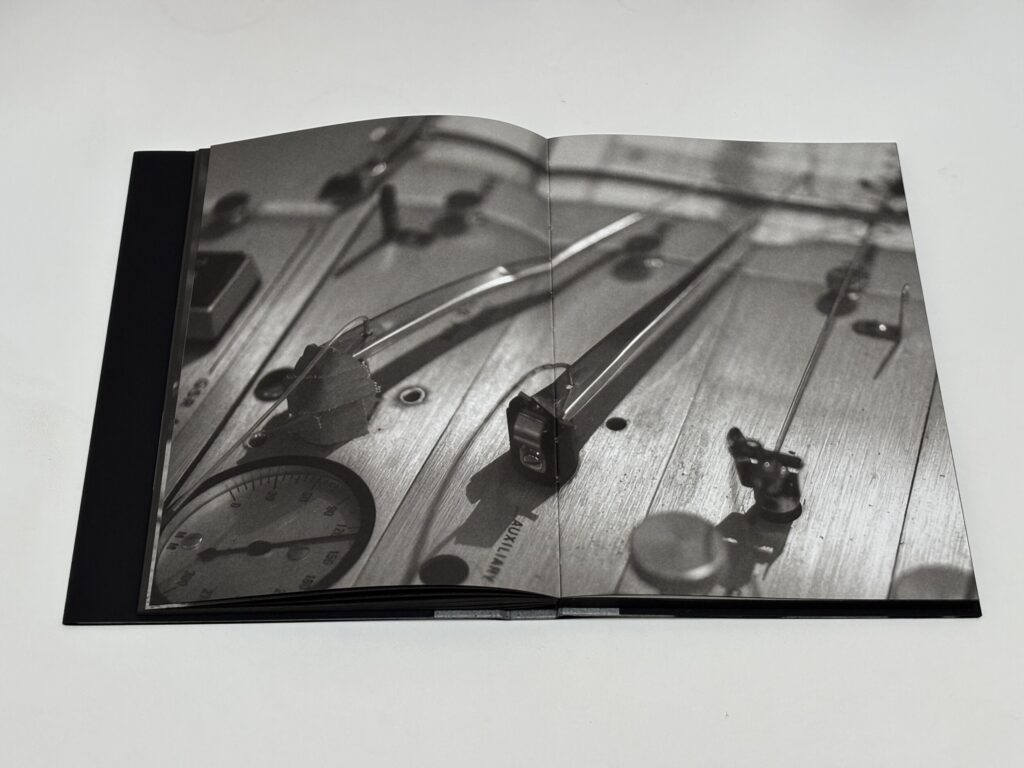
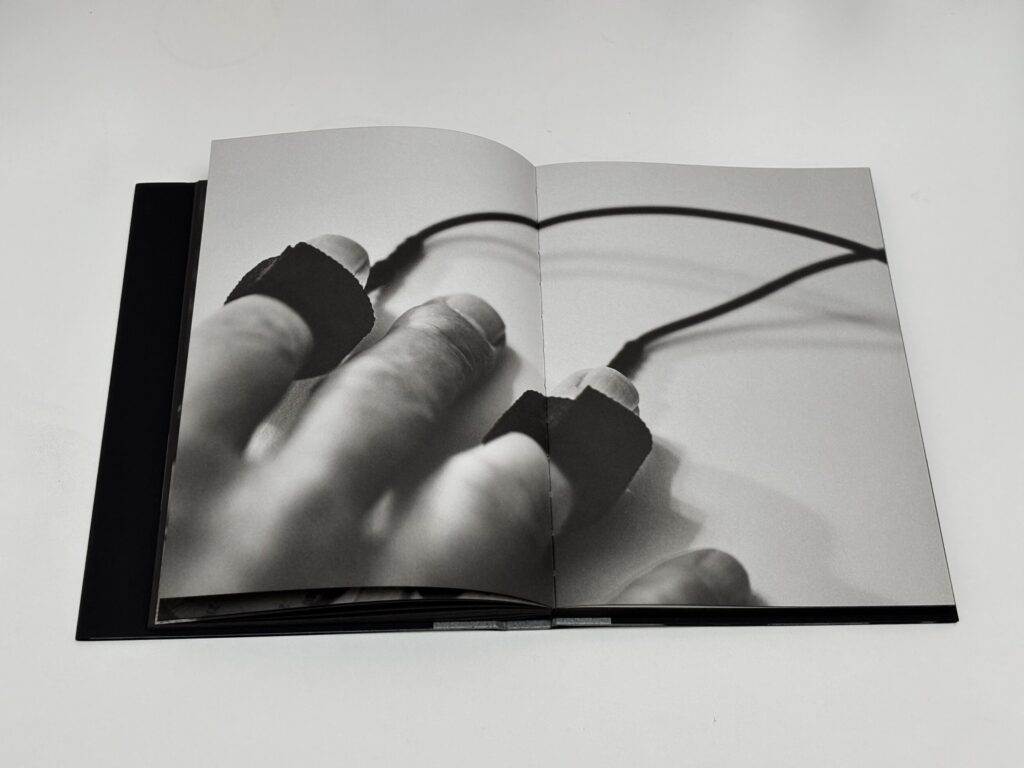
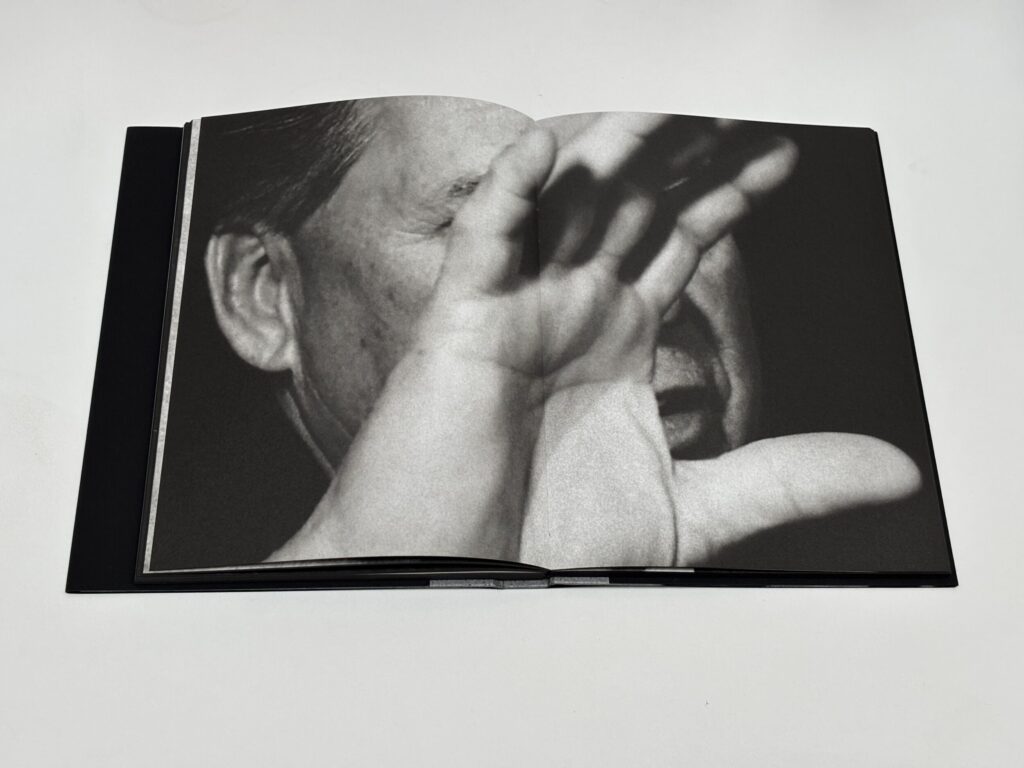
The book is filled with moody, full-bleed photographs: a cable snaking across a concrete floor, a glaring ceiling lamp, a clock approaching five o’clock, cigarette butts beside a discarded paper coffee cup, fragments of interrogation equipment, fingers connected to wires, etc. The visual language is sparse but evocative, suggesting the atmosphere of an interrogation room. Interspersed throughout the book are quotations from the six participants, each rendered in a distinct handwritten typeface. The differing scripts emphasize the individuality of each story while revealing striking parallels across their experiences.
Dahlberg worked with exonerees to reconstruct remembered moments from their interrogations, drawing on both personal recollections and emotional memory. Rather than simply recounting their experiences, she asked participants to physically reconstruct the scenes they remembered: where they sat, how officers positioned themselves, the gestures exchanged across the room, and the moments when questioning gave way to mounting pressure. As they revisited these memories, inhabiting them anew through movement and recollection, Dahlberg photographed them in the act of remembering. The resulting images are closely cropped portraits, some intentionally out of focus; they convey not only the circumstances of the interrogation but also the lingering emotional weight of those experiences. They shift the focus away from forensic evidence and towards the psychological realities of coercion, vulnerability, and doubt.
By placing viewers face-to-face with exonerees within the confines of the interrogation room, Dahlberg’s photographs challenge the deeply entrenched assumption that a confession is synonymous with guilt. The work invites us to confront a more complex and unsettling reality: that innocent people do confess to crimes they did not commit, and that the forces leading to those confessions are often psychological, profoundly human, and largely invisible. In doing so, Dahlberg shifts the conversation from questions of evidence to questions of vulnerability, power, and the conditions under which truth itself can become compromised.
Dahlberg’s project invites comparison with Martin Schoeller’s “Death Row Exonerees”, another powerful body of work centered on individuals failed by the American justice system. Schoeller portrays men and women who survived wrongful death-row convictions, using his signature close-up format to emphasize dignity, resilience and presence. If Schoeller asks us to confront the human consequences of wrongful conviction, Dahlberg asks us to consider how such miscarriages of justice begin.
Breaking Point exposes a flaw in the criminal justice system, making that flaw emotionally and psychologically legible. Dahlberg builds a quiet yet deeply unsettling visual narrative that asks to inhabit moments of uncertainty, exhaustion, fear, and coercion. Its strength lies in this combination of formal restraint and moral urgency. Breaking Point is not only a study of injustice but also an investigation into the psychological processes that make such injustice possible in the first place. By giving space to the voices and memories of those who endured wrongful conviction, Dahlberg transforms an abstract legal issue into a profoundly human one. Breaking Point is both a compelling photobook and a powerful act of witness, reminding us that justice depends not only on uncovering the truth after the fact, but on understanding the conditions under which truth can be distorted in the first place.
Collector’s POV: Robin Dahlberg does not appear to have consistent gallery representation at this time. As a result, interested collectors should likely follow up directly with the artist via her website (linked in the sidebar).

Thanks so much for this beautiful and heartfelt review of my photobook.