JTF (just the facts): Published in 2026 by The Ice Plant (here). Softcover (11cm x 16cm), 200 pages, with 10 photographs, and 1o essays and an afterword written by the artist. Edited and designed by Mike Slack and Tricia Gabriel. (Cover and spread shots below.)
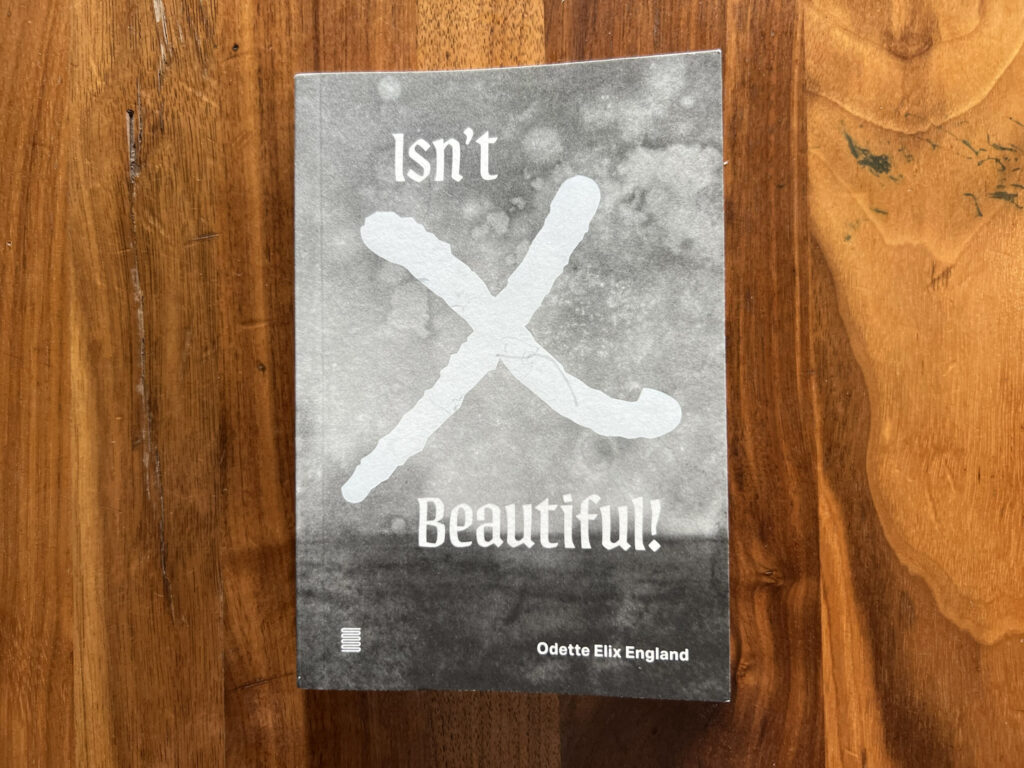
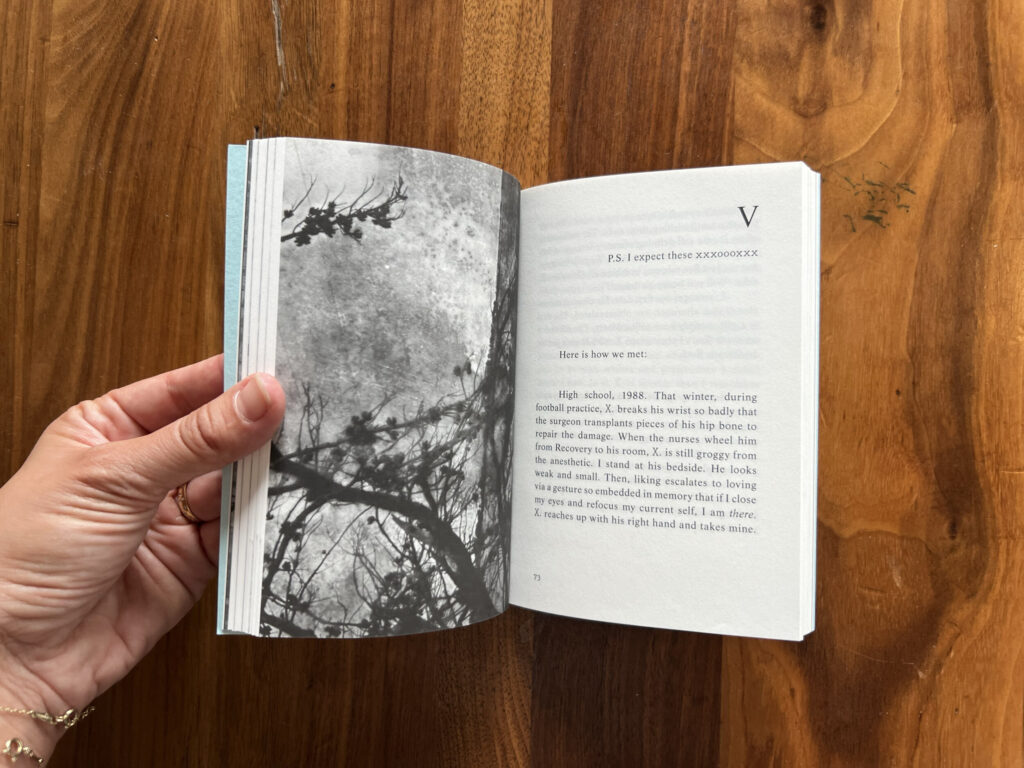
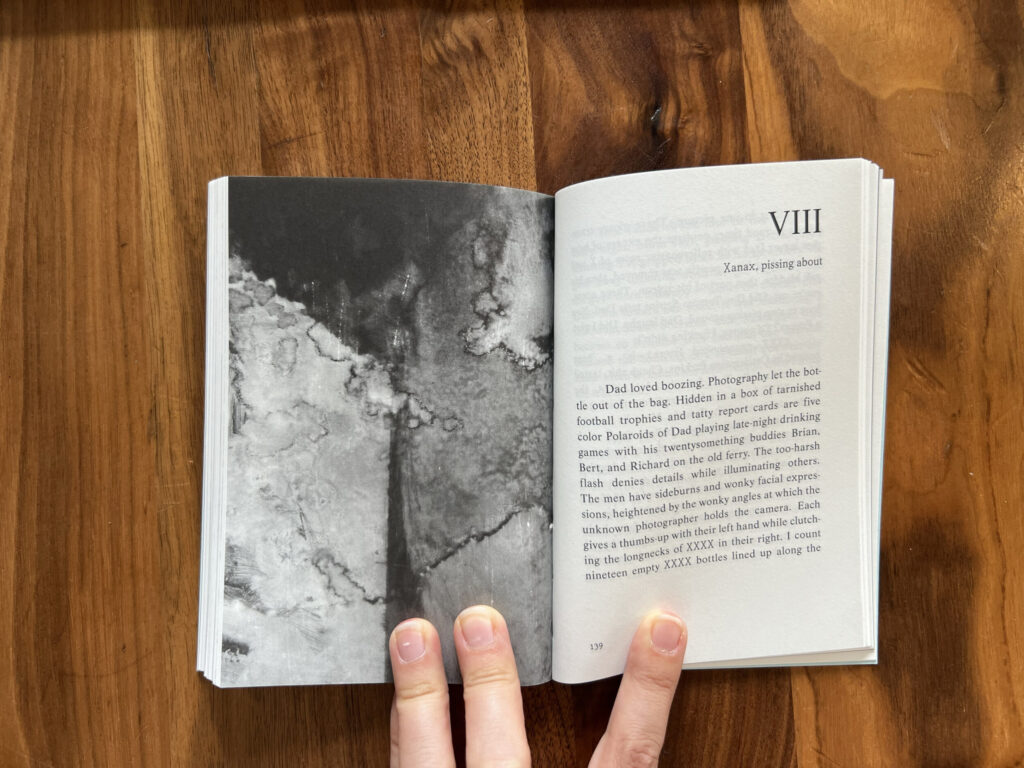
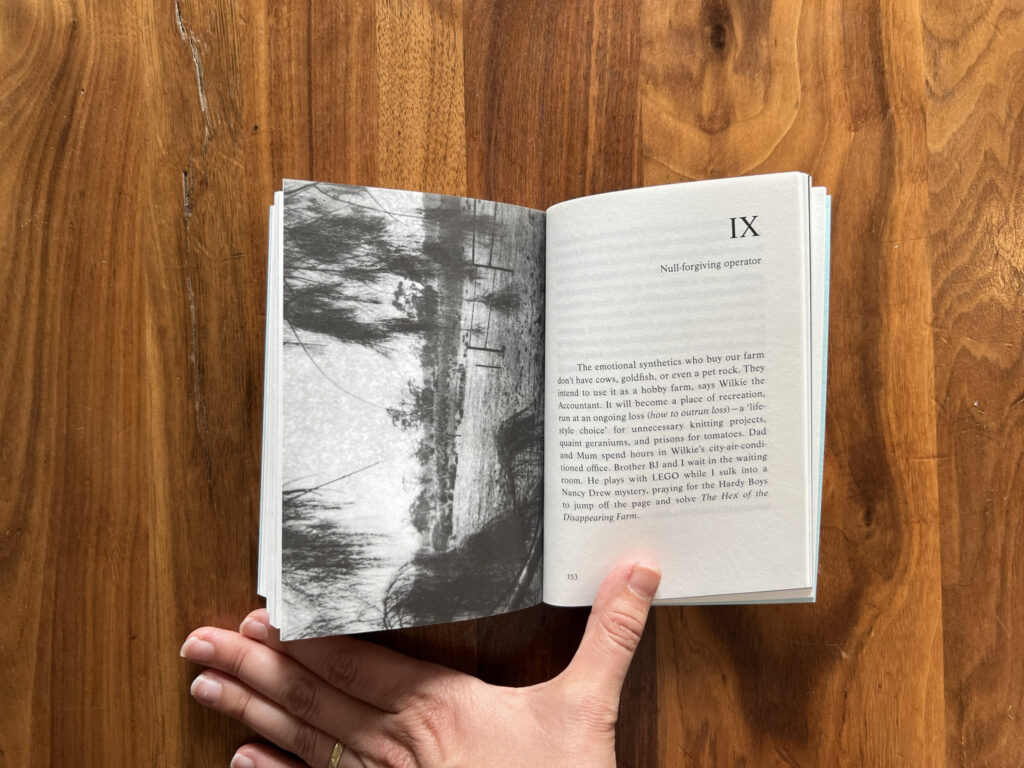
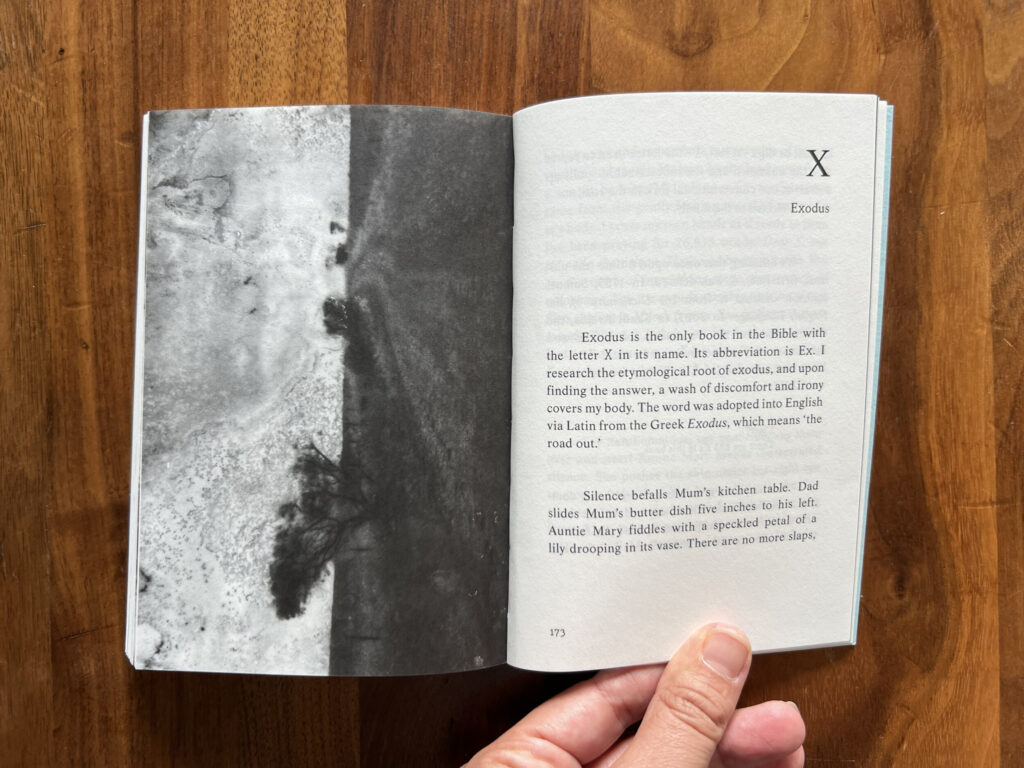

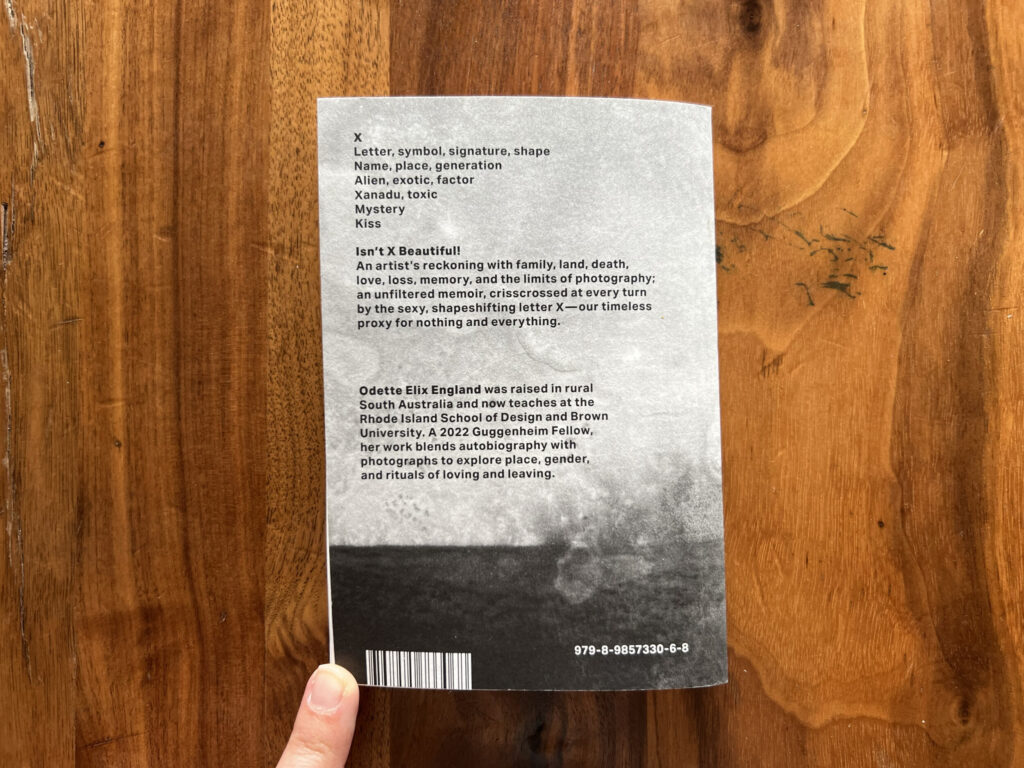
Comments/Context: Australian-British photographer Odette Elix England has had a prolific photobook output in the last few years; as an author, editor, and now with the 2026 release of Isn’t X Beautiful!, as an essayist. Born in 1975, the artist and writer’s previous photobook titles include Dairy Character, Past Paper // Present Marks, Keeper of the Hearth (reviewed here by Sabrina Mandanici), and others. Her latest book, Isn’t X Beautiful!, is a clever, circuitous musing on autobiography, image-making, the history of photography, and the fate and long-lasting impact her family’s farm and cattle grazing land has had on both her personal and creative life.
Nearly all of England’s photobooks have gracefully and effectively functioned as emotionally poignant, hybrid image-text works. In Dairy Character (Saint Lucy Books, 2021) England’s third photobook, the artist shares her experiences of growing up on a dairy farm in rural southern Australia with a particular examination of the gendered roles and repressions of her community. Isn’t X Beautiful! is an expansion of what we learn in Dairy Character; England’s psyche is exponentially opened up to readers to experience her idiosyncratic, albeit quirky, interest in the letter X alongside her autobiography, further underscoring place, writing, and research as the compass points of her creative practice.
Isn’t X Beautiful! functions as a porous, fluid yin/yang of elegiac and panegyrical memory. Highly captivating and free-flowing, the work is both funny and enlightening, seamlessly bridging personal anecdotes with historical facts that range from her father’s use of the letter X during calving season as he photographed calves using his Polaroid SX-70 and using X to mark the instant picture frames that would later be “chucked” into the fireplaces to the 18th-century usage of the letter X as a common signature for the illiterate. The publisher’s description states that the book is “an unfiltered memoir, crisscrossed at every turn by the sexy, shapeshifting letter X—our timeless proxy for nothing and everything.” X is a placeholder; X is a part of photochemistry; X is in the author’s name (Elix); X is the past; X is a symbol; X marks the spot; X might be rare. If I tried to further untangle this I would ruin it entirely. One spoiler—the author tallies 853 Xs used throughout the book.
England’s writing style strikes me as a fusion of Moyra Davey’s approach to integrating historical figures into her work and the intimate diaries of Susan Sontag—edited by Sontag’s son, David Rieff, and published across two volumes: Reborn: Journals and Notebooks, 1947–1963 (Picador, 2008) and As Consciousness Is Harnessed to Flesh: Journals and Notebooks, 1964–1980 (Picador, 2012). England’s own musings are irregular and vast, describing the many layers of who she is as a photographer and how everything in life is fodder for creativity. And yet no matter where each chapter leads the reader, the text always leads us back to the farm of England’s youth and the ongoing impact, influence, and inspiration of the land. The family left the farm but the farm never left the family, and importantly, never left the artist.
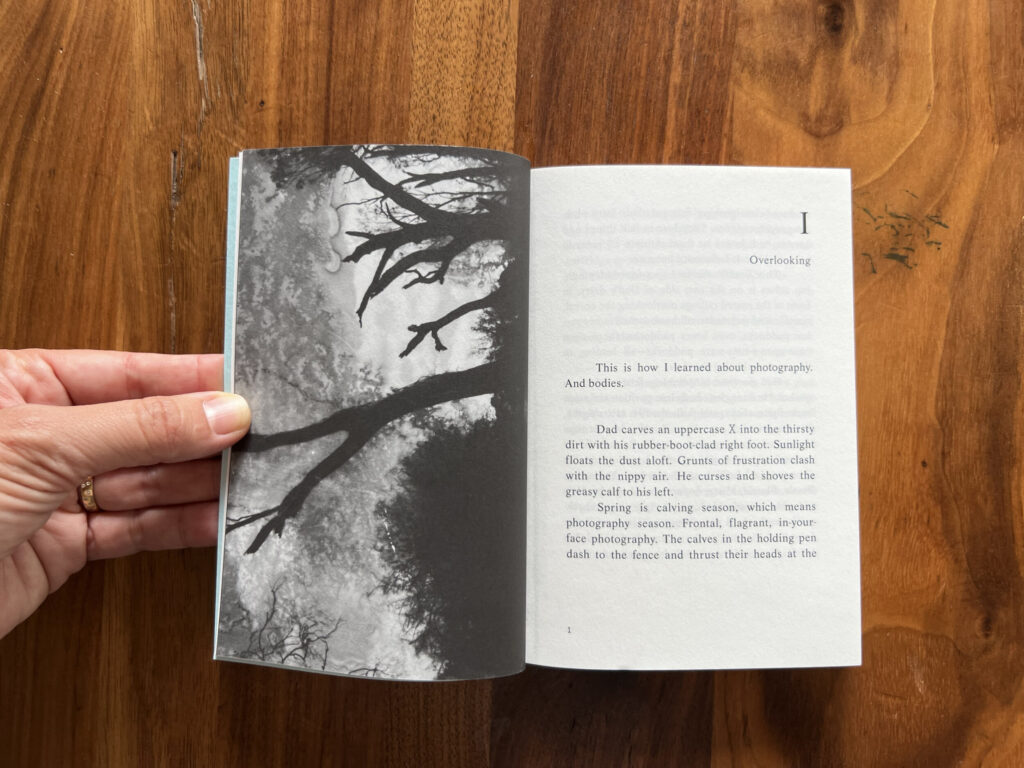
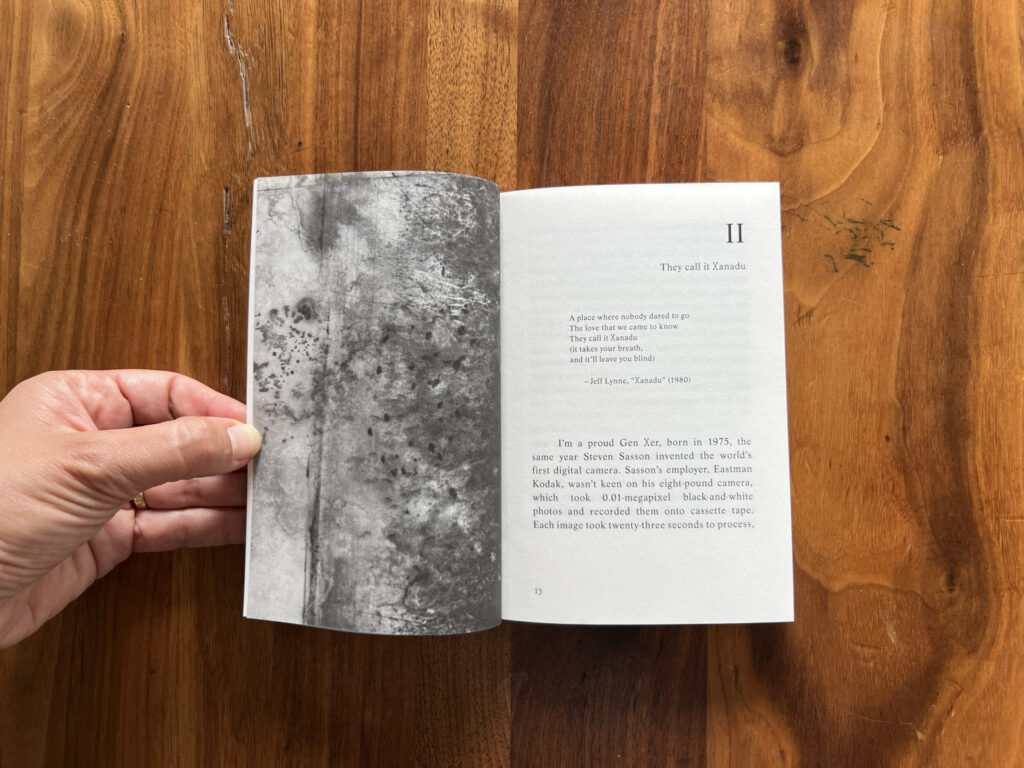
The ten images reproduced in the book are landscapes, both in content and orientation. The images are rotated 90° and printed full bleed on the left facing page across the gutter from the start of each chapter. The reader can view these pages vertically, or turn the book in order to see them lengthwise. While there is no caption information to indicate the location, year, or medium of each image, I imagine these landscapes to be the farmland that is the site of England’s lifelong fascination, captured on glass plates using the wet collodion process. Even on the lightweight book paper that cannot reproduce the full Zone System greyscale range, many of the black and white photographs have a rich, seductive ooze that I can see in my mind’s eye as a luscious, southern Australian landscape. In each image I look for branches, ruffage, or clouds that might form an X-like shape.
The book’s size and profile are reminiscent of a pocket poetry book. I am thinking of Lawrence Ferlinghetti’s Pocket Poet Series published by City Lights Books beginning in 1955. Isn’t X Beautiful!’s compact size allows for it to literally be carried in one’s coat pocket or pocketbook. My own copy of the book, heavily dog-eared and underlined, fits perfectly and flexibly into the back pocket of my jeans. An artist’s book of essays is fundamentally interacted with differently than a memoir written by an artist, like Hold Still by Sally Mann, published in 2015 by Little Brown and Company (reviewed here by Richard B. Woodward). England’s book can be filed as both essay and memoir. Yet the episodic style of the writing in Isn’t X Beautiful! allows for the reader to easily connect with certain passages and live in the glow of particular graphs, separate from other passages even within the same essay’s chapter. A phrase that England uses in the text (that I am taking out of context here) feels like an apt distillation: a “heartbeat to a malfunctioning metronome.” Pieces within a single chapter are cohered within the theme that they are catalogued, yet each graph can be enjoyed a la carte if that is the type of reading experience one wishes to enjoy.
I suppose the question arises: who should read this book? Students, other artists, collectors, curators? I say yes, all of the above. Anyone interested in the practice of making photographs, amateur or artist, student or professional, collector or curator. There is something in it—morsels or bucketloads—for all.
Whether read cover to cover or dipped into at random points, Isn’t X Beautiful! is a delightful and approachable glimpse into a contemporary artist’s inner world. The book offers a broad, sweeping meditation, inclusive of surprising facts, quotes, insights, aphorisms, and memories; ultimately reflecting on the practical functions and limitations of photography in our personal and creative lives. In both her images and writing, England has clearly poured her heart and mind into this book format, repeatedly proving that this is exactly where her work belongs.
Collector’s POV: Odette Elix England does not appear to have consistent gallery representation at this time. As a result, interested collectors should likely follow up with the artist directly via her website (linked in the sidebar).