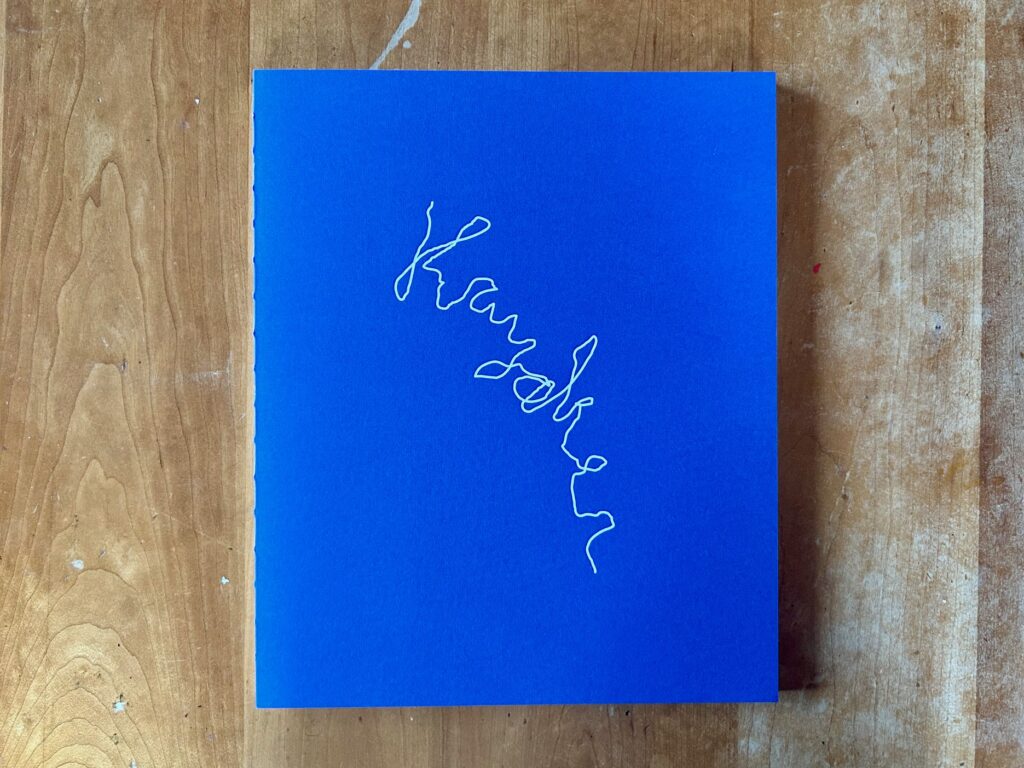
JTF (just the facts): Self-published in 2025 (here). Softcover with exposed spine, 9.5 x 12 inches, 122 pages, with 311 photographs. Includes a text excerpt by Peter Warshall. Design by Claire Hungerford. In an edition of 188 copies. (Cover and spread shots below.)
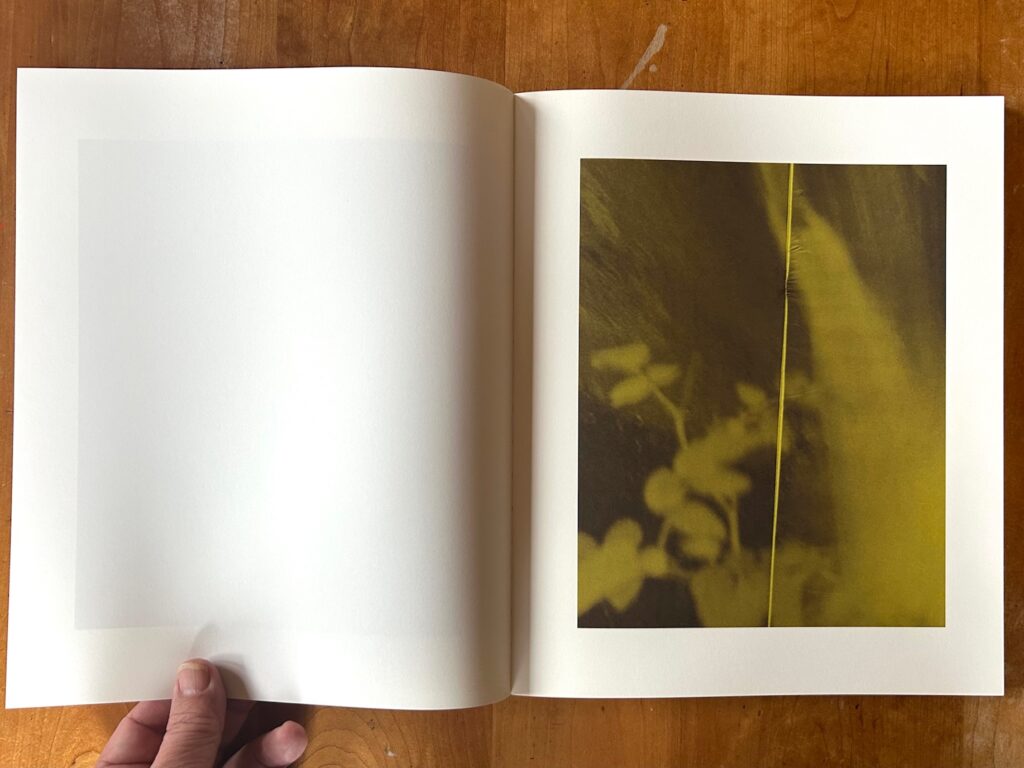
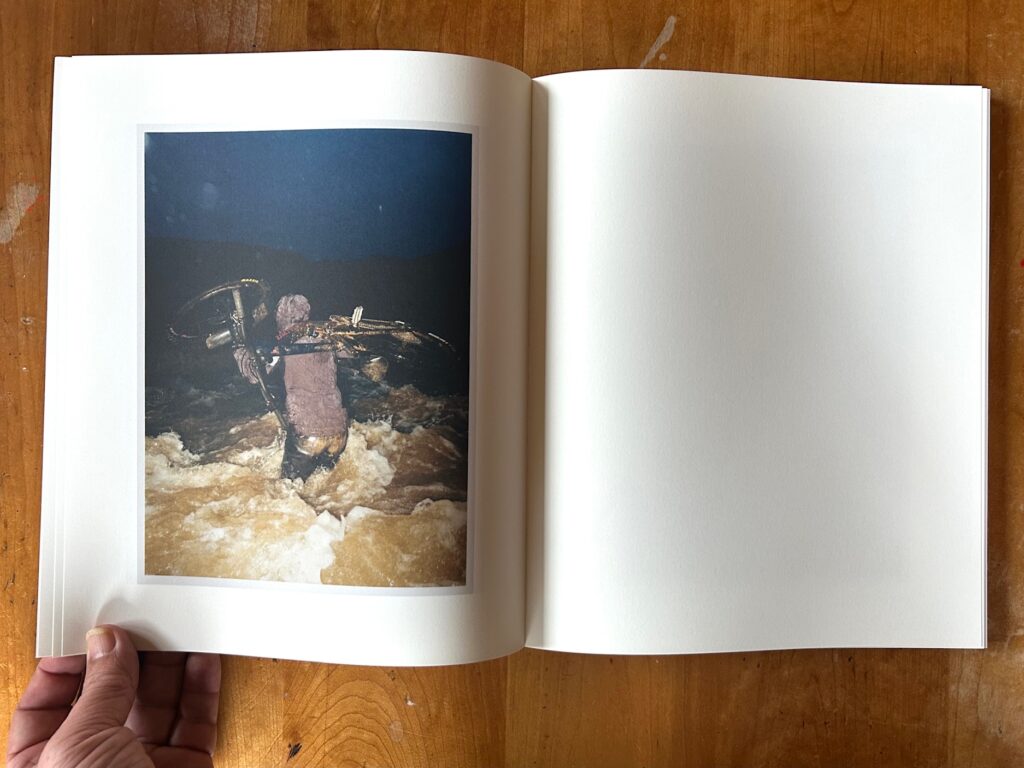
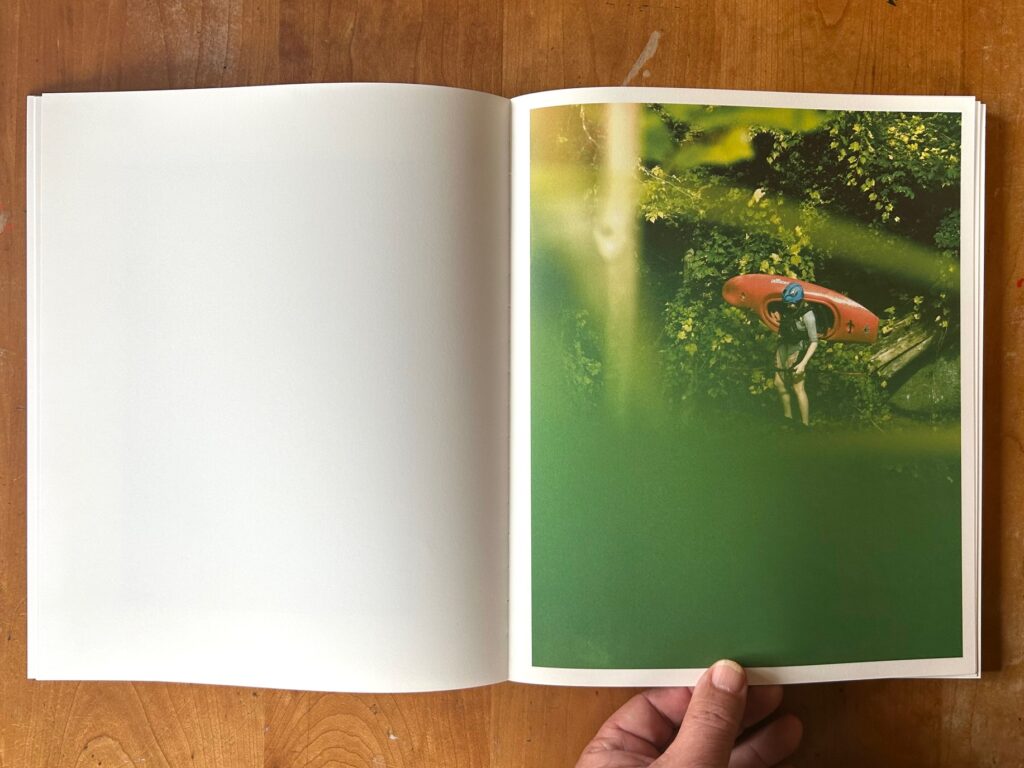
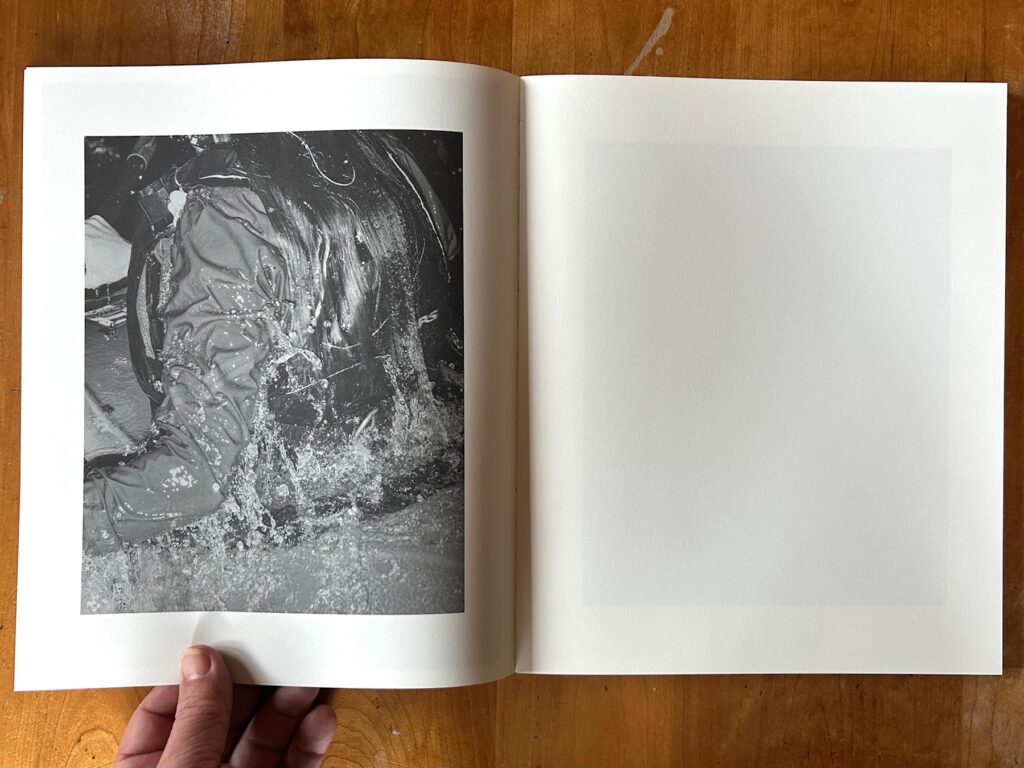
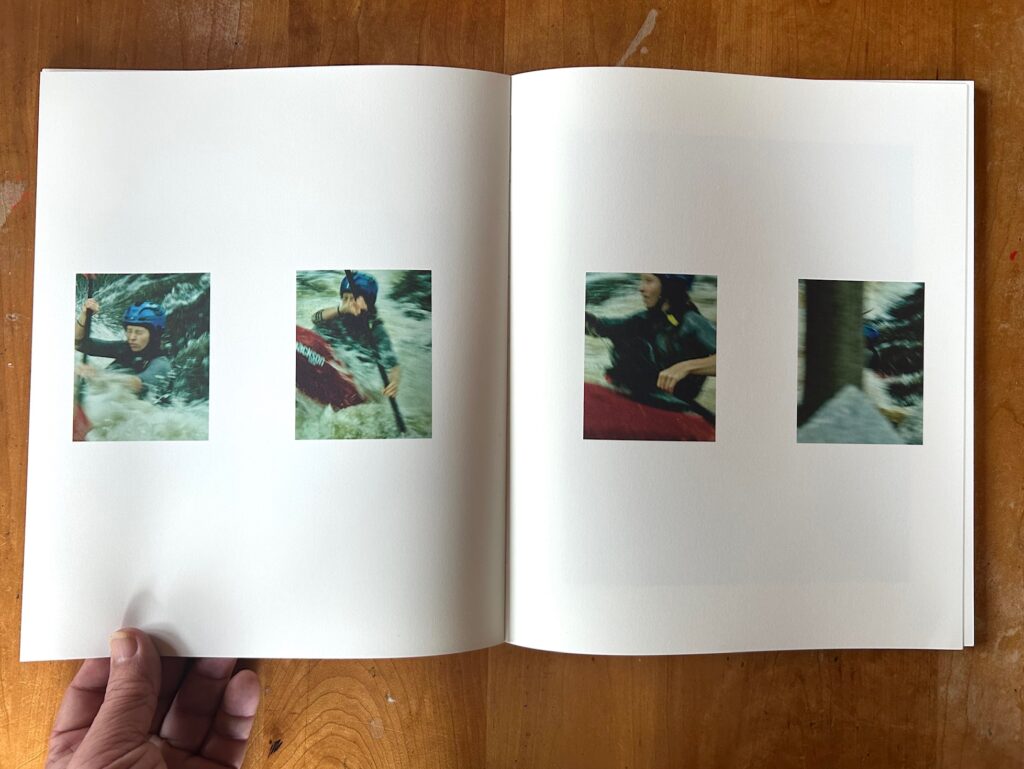
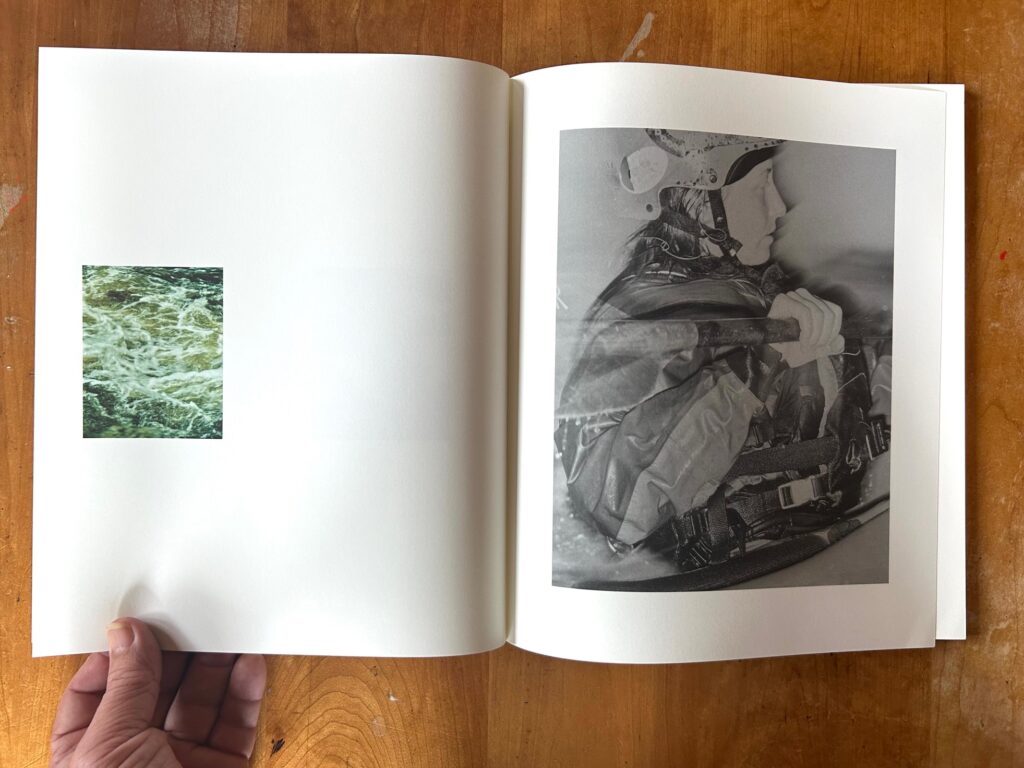
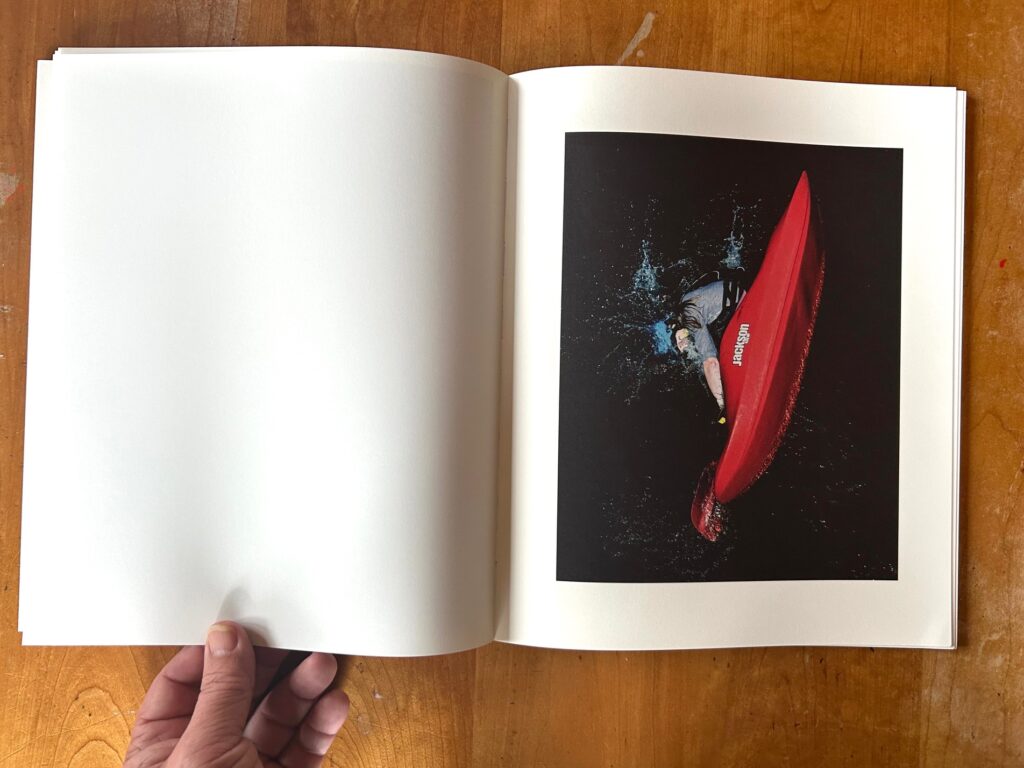
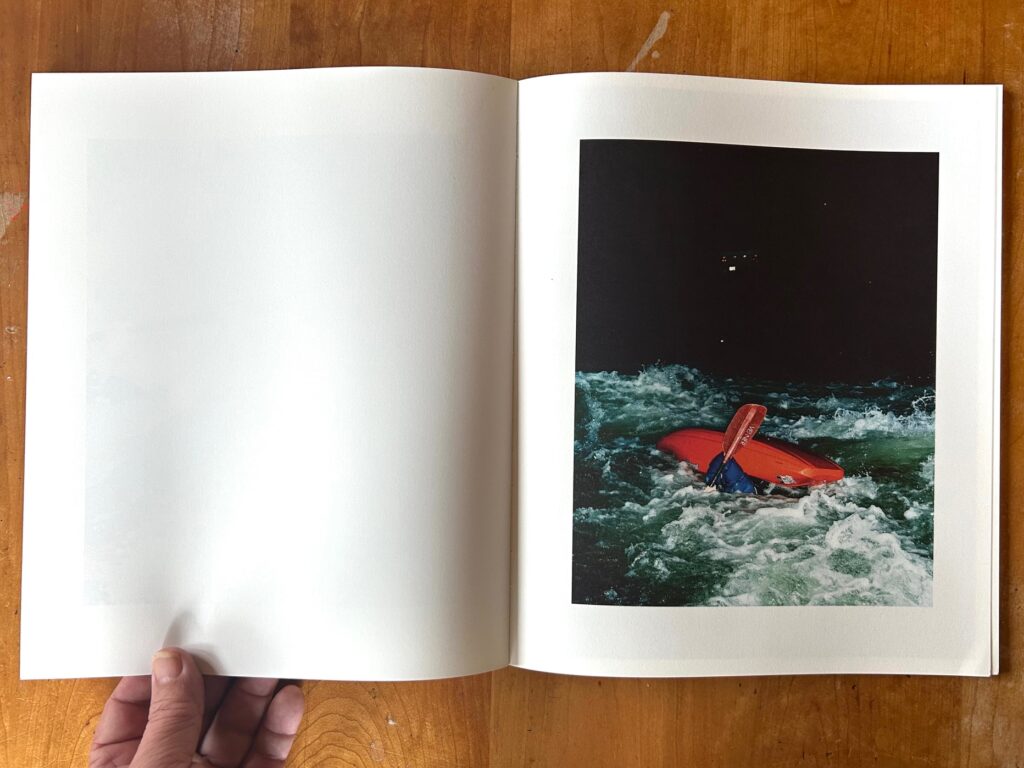
Comments/Context: In a former life I was once a whitewater kayaker. This was in the late 1990s, long before I’d become a serious photographer or photobook critic, or settled into any long term plans. For four years I worked at a kayak shop in Portland, selling retail gear, teaching classes, gaining my river legs, and floating through my late twenties. My fellow under-employed coworkers provided an ever-ready pool of boating partners. Together we spent much of our spare time exploring local rivers. My SUV’s rooftop cross-bars were always installed and ready. My rear windshield boasted stickers like “Real Men Wear Skirts” and “Kayakers Do It Upside Down”. My roll was reliable and my boat of choice was a Dagger RPM. On occasional evenings, friends and I would gather to watch VHS tapes of river stunts featuring young Eric Jackson, a Dagger company designer, whitewater hotshot, and pied piper of kayaking.
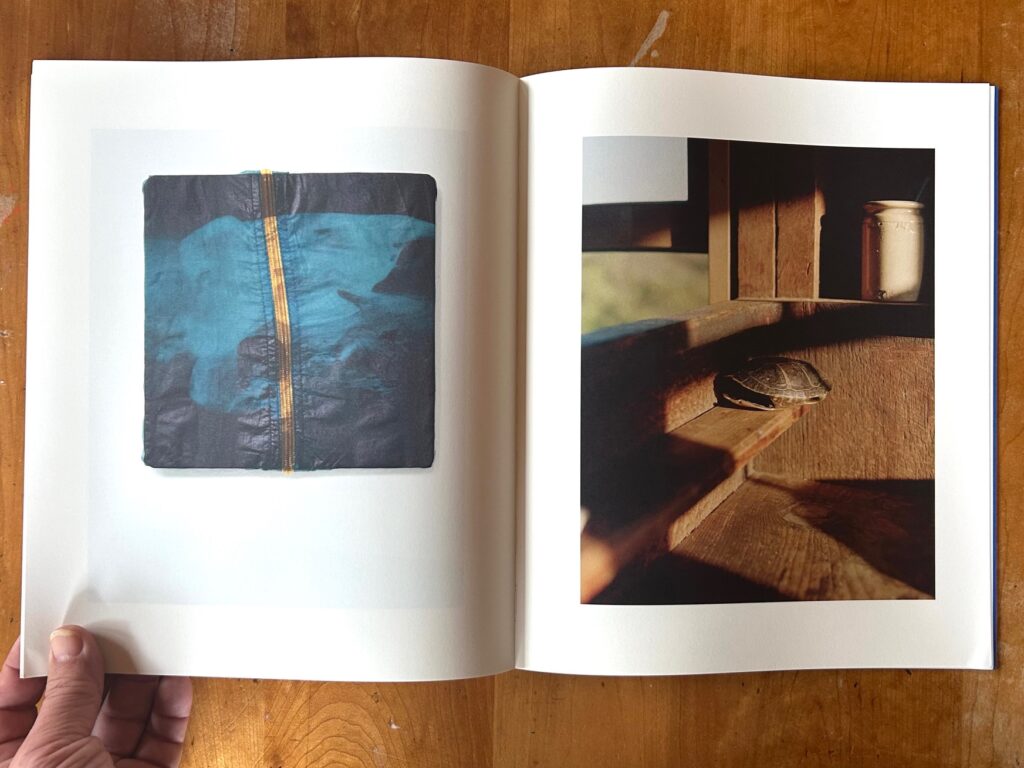
That stage in my life has long since passed. I’ve sold all the gear. The rack and stickers are long gone, and my hatchback is less pungent. But those old memories were rekindled recently by a photobook from Cole Barash, a young artist who splits his time between Paris and Los Angeles. Many of his past books have involved adrenalin-driven heroics, e.g. surfing, smoke jumping (reviewed here), storm watching, and childbirth (reviewed here). His latest effort falls into form. It’s called Kayaker, and it contains photographs loosely organized around the titular activity. Some images are metaphorical and some are literal. Taken collectively, they create an immersive experience.
To my knowledge, Kayaker is the first and only fine art photobook about kayaking. Upon initial encounter, I felt that two distinct worlds of mine were colliding. But after spending some time with the book, I realize that kayaking and photobooks have more in common than I’d supposed. Each enterprise is structured as a sequenced progression, moving forward inexorably from put in to take out. Along the way, a river might vary between calm pools and busy rapids. There might be oxbows, straightaways, and reversals. And photobooks can follow a similar pattern. Rarely do they progress from A to Z in a straight line. Instead they might contain gatefolds, texts, or diagrams. The sequence might feature blank pages, busy photo clusters, repetitions, alternative layouts, and difficult passages. Riverside eddies offer kayakers an opportunity for a time out, or a short trip upstream. With photobooks, a nightstand or bookmark might pay the same role. Viewed from a cultural perspective, both kayaking and photobooks are somewhat arcane pursuits, followed passionately by an insular group of hobbyists, and ignored with bemusement by the mainstream. Somehow I’ve fallen down both rabbitholes.
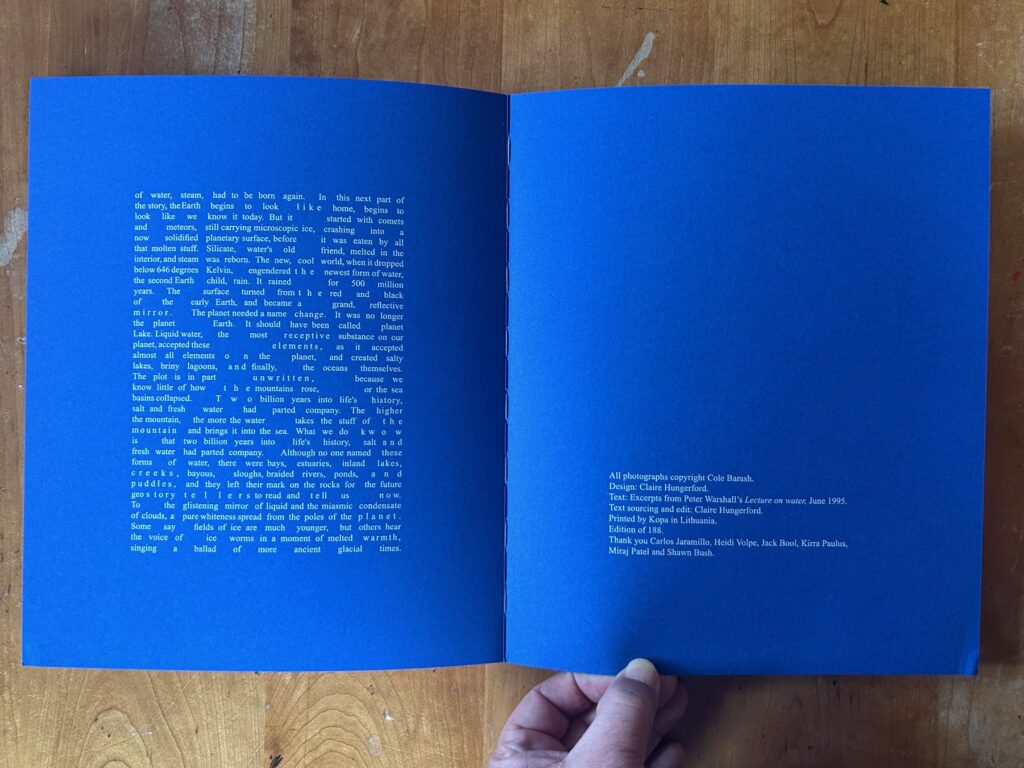
Barash highlights the kayak/photobook connection in subtle ways. Against an aquatic blue background, the cover text flows vertically in white cursive script. The comparison to river schematic comes naturally. The back pages play with a similar motif. A poetic rumination on water—excerpted from a 1995 lecture by Peter Warshall— is laid out in two text blocks with justified margins, printed white-on-blue against heavy stock. In the awkward kernings and word gaps, attentive readers can make out small streams of negative space flowing down the page. These devices come courtesy of the book’s designer Claire Hungerford. With a larger publisher and editorial filters, her offbeat experiments might have been quashed. Left to flourish here in a small-run self-published book, they gather critical mass.
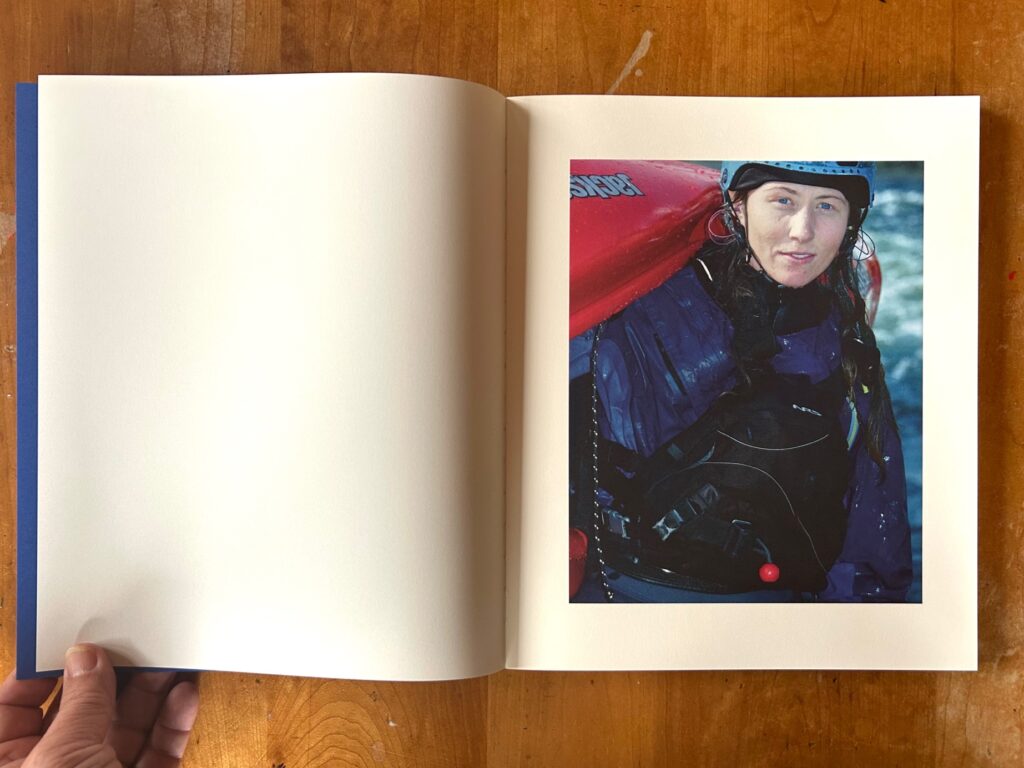
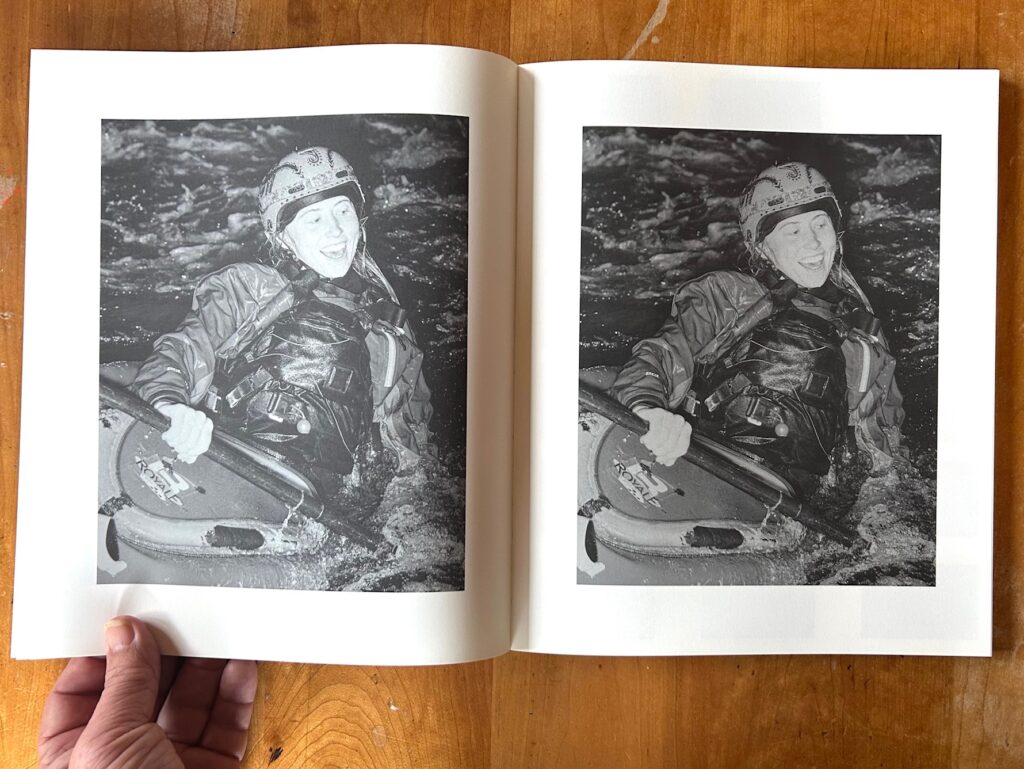
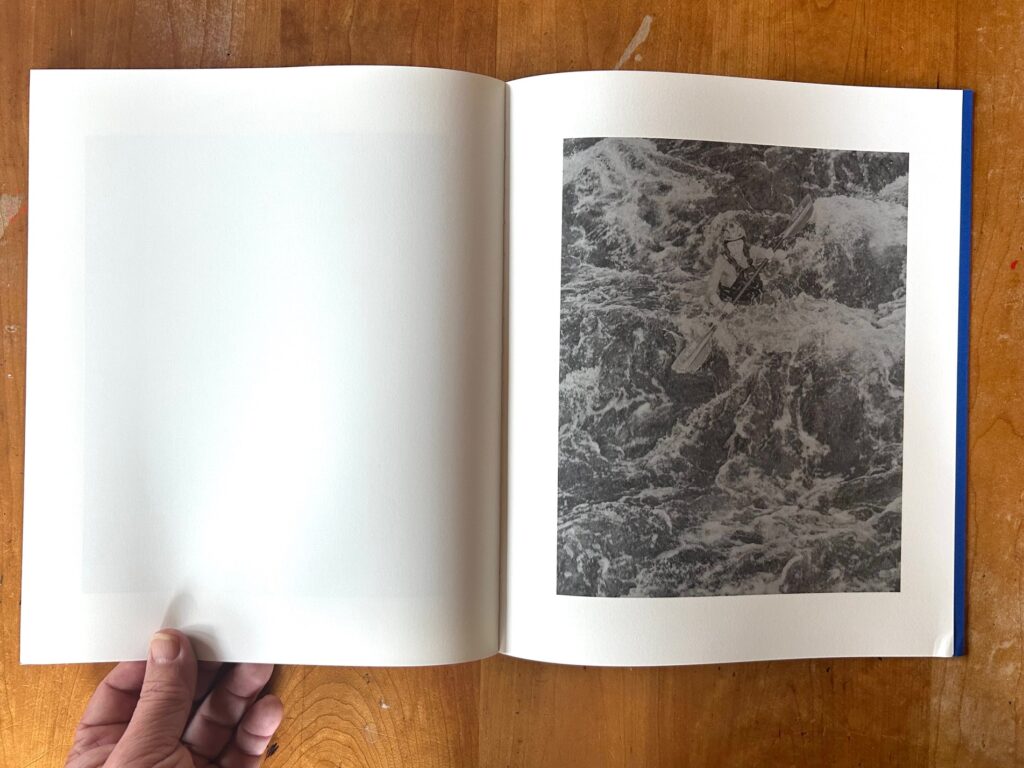
Kayaker features a protagonist to help knit the sequence together, a young woman kayaker named Kirra. She’s introduced in the first photograph, posing happily in soaking wet boating gear, apparently just off the river. On her shoulder is a red Jackson kayak, a brand which harkens back to my former life. Its founder and namesake is Eric Jackson, my old VHS hero. In one generation, his company has grown from a drizzle to a torrent.
Jackson kayak in tow, Kirra serves the book as an impromptu river guide and recurring motif. After the opening photo, she reappears with regularity, bobbing, weaving, and resurfacing through the image current. She’s always depicted in or near a river, geared up and ready.
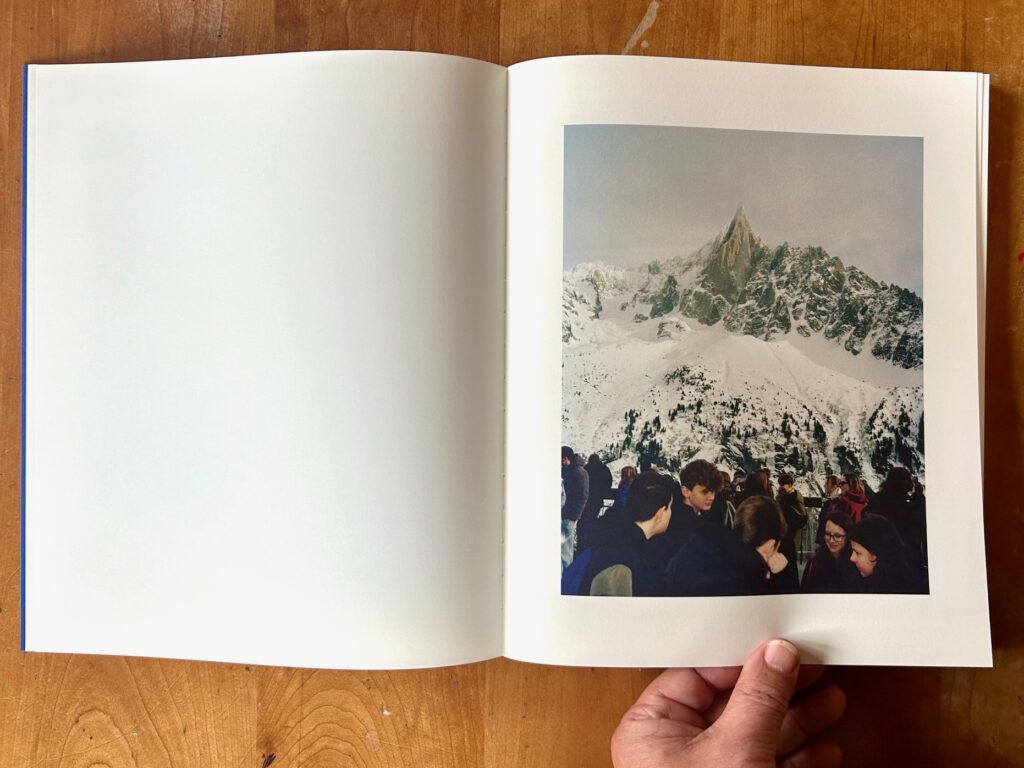
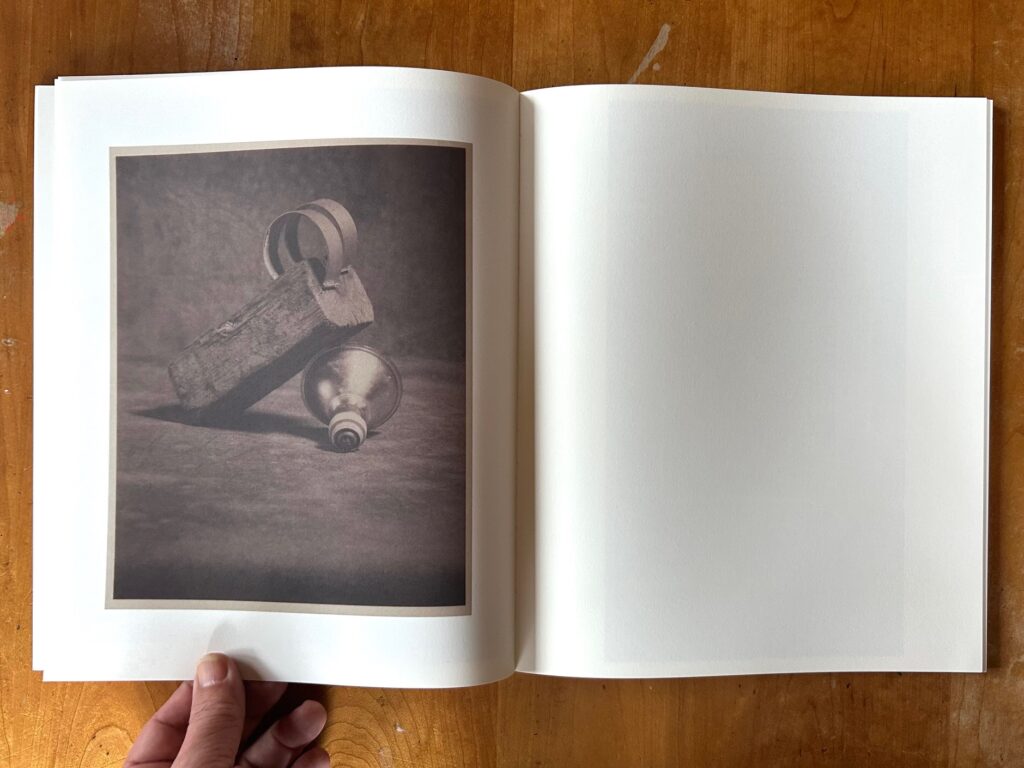
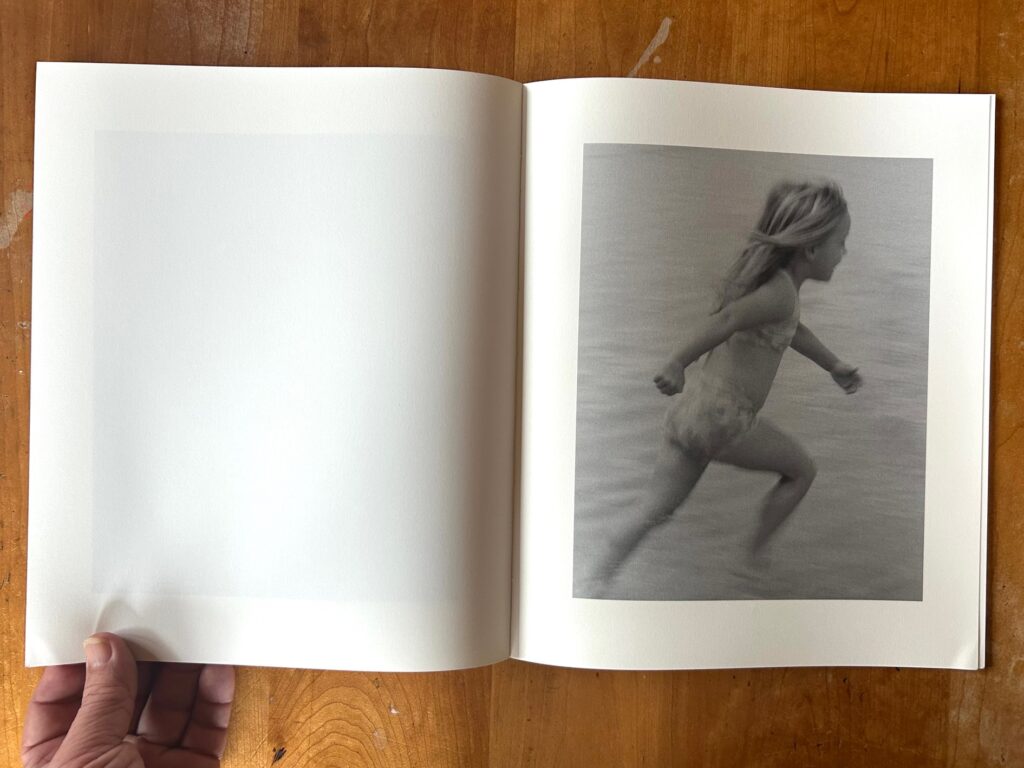
With Kirra as a fixture, the book’s other images have room to stretch out. They come in a variety of mediums including iPhone, rice paper, installation, and video. The subjects range widely too, with alpine scenes, snowy closeups, monochrome canyons, a decrepit concrete lot, and pictures of girls (presumably Barash’s kids?) playing with a fountain. All of these subjects and materials loosely revolve around a theme of water, but the thread is sometimes tenuous. Does a school bus or a lotus flower signal hydration? Hmm. If these concepts require a mental leap, Kirra smooths the process. Her regular appearances keep the “kayaker” theme on course.
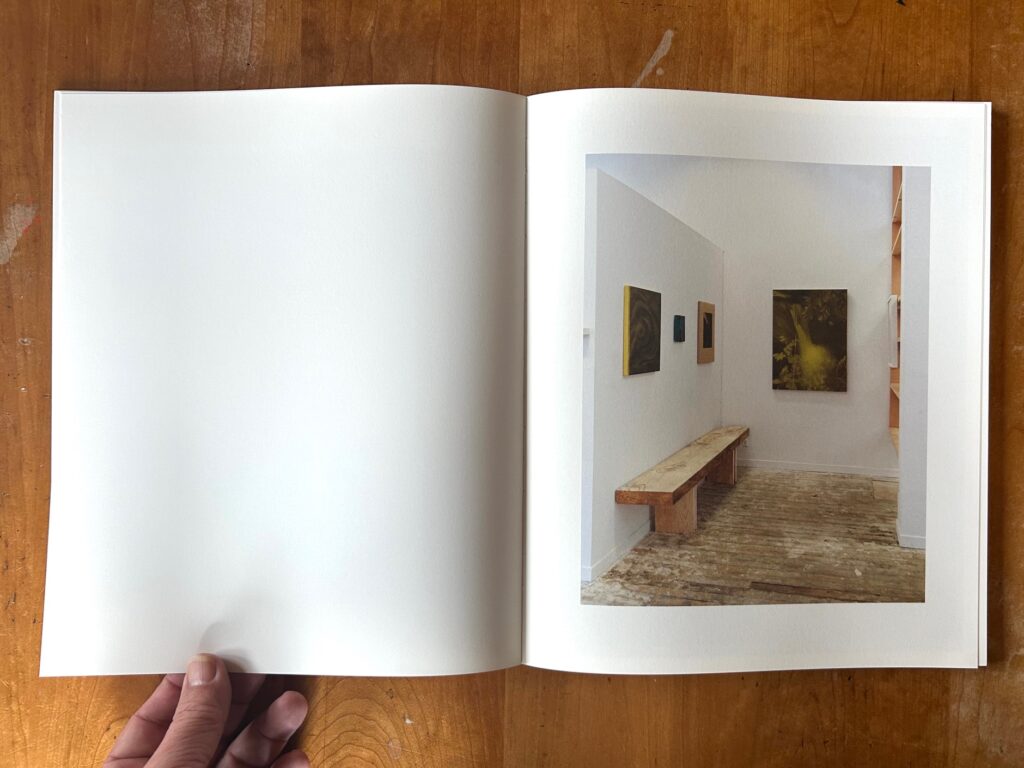
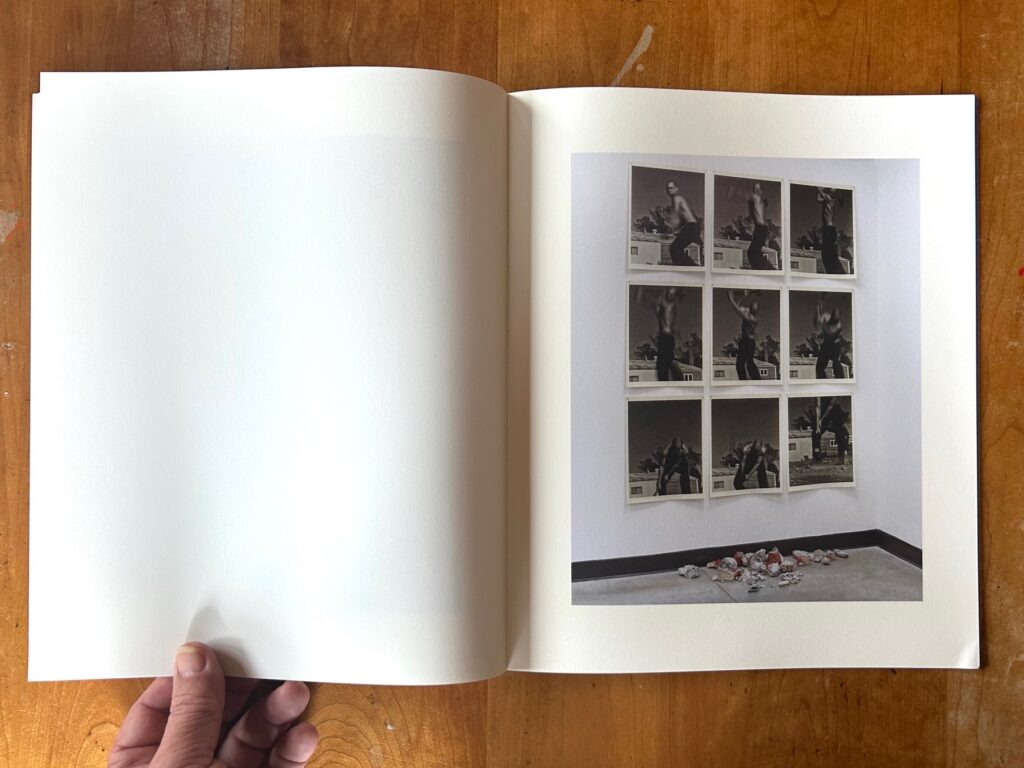
There’s another dimension to these images which adds an incongruent twist. Kayaker appropriates several images from physical exhibitions. Some are adopted from Barash’s 2024 show “Ecosystems”. Other roots are harder to trace. In any case, the translation from 3D space to 2D page is inexact, and it keeps the reader guessing. If this book were a river, these elements might be fresh dislodged boulders creating unexpected rapids.
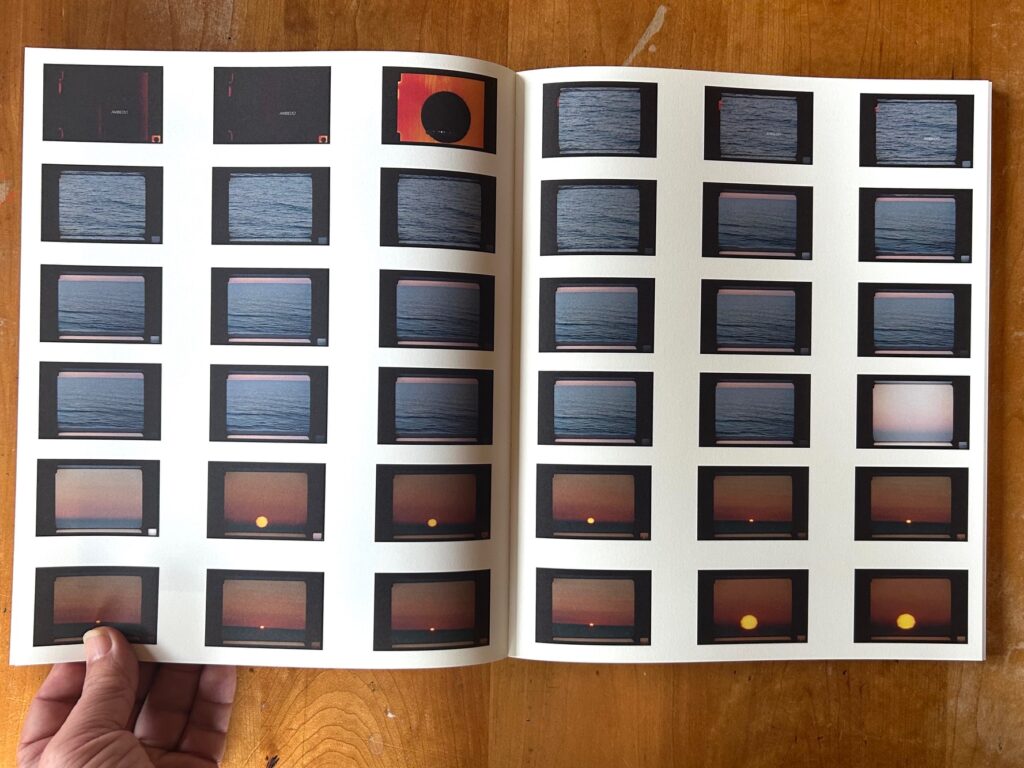
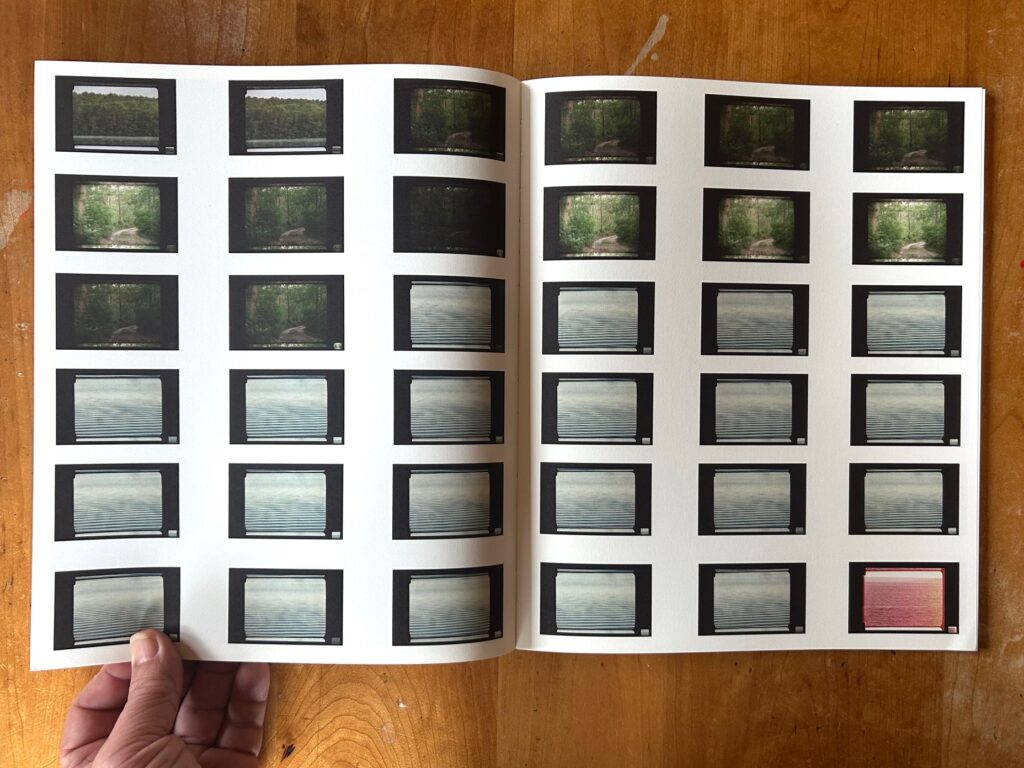
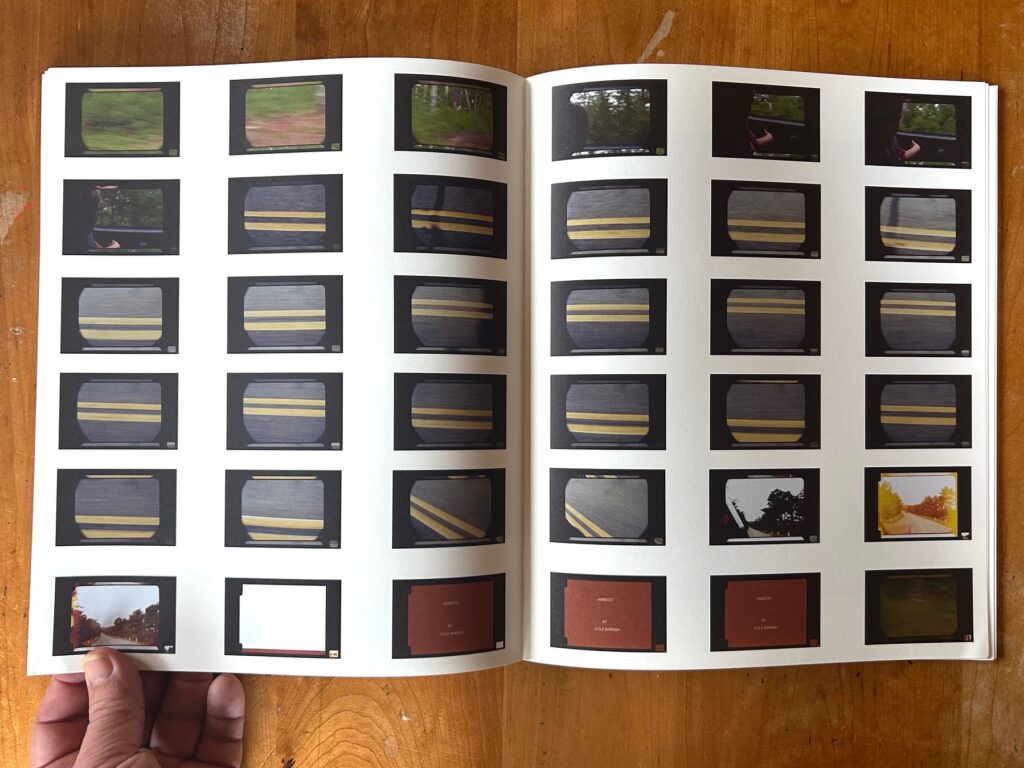
For example, canvased silhouettes are puzzling images at first, until we realize they were once wall-mounted objects. A photo of a figure whacking a sledgehammer is just as strange. But within a few pages we see it too in installation form, as part of a photo grid in its original gallery setting. A commentary on discipline or entropy? In another image, a whitewater dry-suit looks more sculptural than photographic. We might apply the same filter to several pages gridded with still-frame screenshots. At first glance they seem overwhelming and off-topic. Sunsets, clouds, forest scenes. It’s not immediately clear what’s going on. But shown in a gallery as real-time videos, these scenes must have expressed a message beyond the page. The process of wondering helps to activate the book. It’s a class IV rapid which forces active engagement. If you get lost or confused, two installation snapshots help navigate. They put the reader directly into a gallery visitor’s shoes—or perhaps booties.
One delightful aspect of kayaking is its playfulness. Boaters do not often progress directly down a river from put in to take out. Instead they typically stop at “play” spots. A sharp eddy line might provide a chance for squirt boating. Kayakers might stop for enders in steep holes, or spend time surfing upstream on a good wave. Kayaker the book feels motivated by a similar spirit of improvisation and amusement. Barash has thrown a lot of ideas into the mix. It’s an open-ended melange, and even he isn’t quite sure how the experiment will turn out, or how it might hit each reader.
The end result is a book which requires some effort and participation. This is not a straight-forward sequence of images. Instead it contains surprises and occasional detours, not unlike a river. The kayaker theme helps to stitch the whole thing together, but harnessing outliers into proper order is not always easy, and some of these images are downright non-kayak-adjacent. The motif feels artificially imposed at times, as if Barash is trying to cram extraneous material into a defined vessel. Well, that’s exactly what artists do. Poetic liberties be damned, somehow it all fits. In fact it’s the quirks, mysteries, and imperfections which make this book sing. Kayaker follows its own idiosyncratic logic, not unlike a natural object.
Collector’s POV: Cole Barash does not appear to have gallery representation at this time. As such, interested collectors should likely follow up directly with the artist via his website (linked in the sidebar).