JTF (just the facts): Published in 2025 by Hartmann Books (here). Embossed hardcover with backliner covering, 21 × 33 cm, 240 pages, with 119 duotone illustrations. Includes texts from Bruno Apitz, Imre Kertész, and Jorge Semprún, a poem by José Fosty, and essays by Heinrich Bedford-Strohm, Günter Jeschonnek, and Andrea Karle (in German/English). (Cover and spread shots below.)
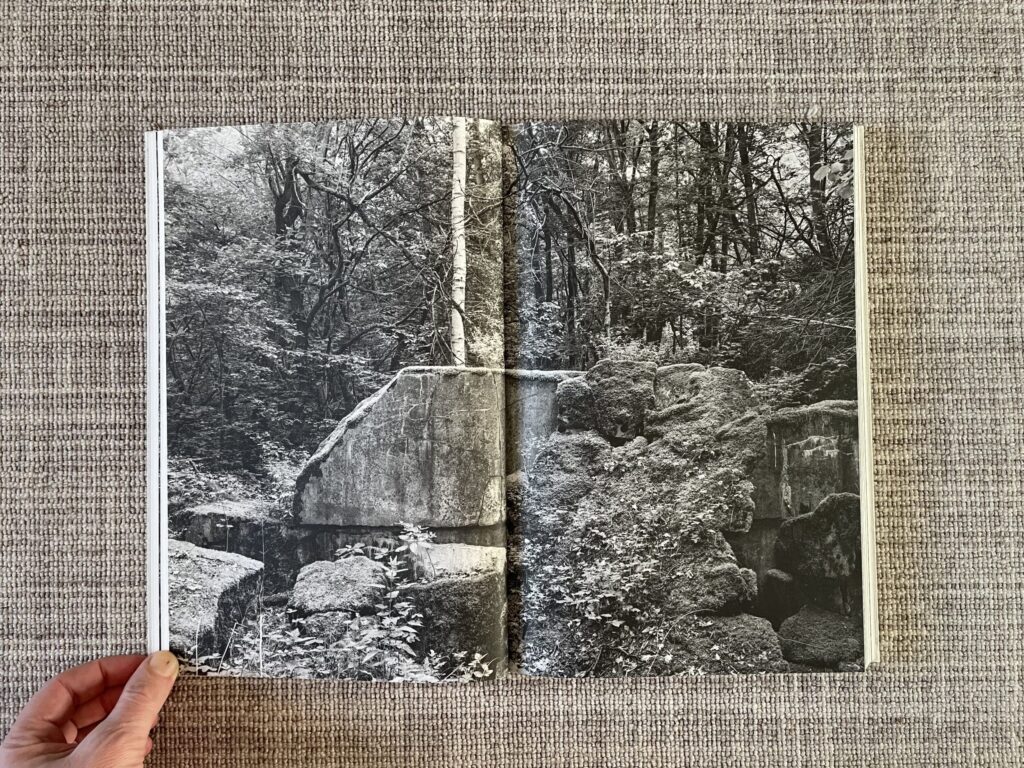
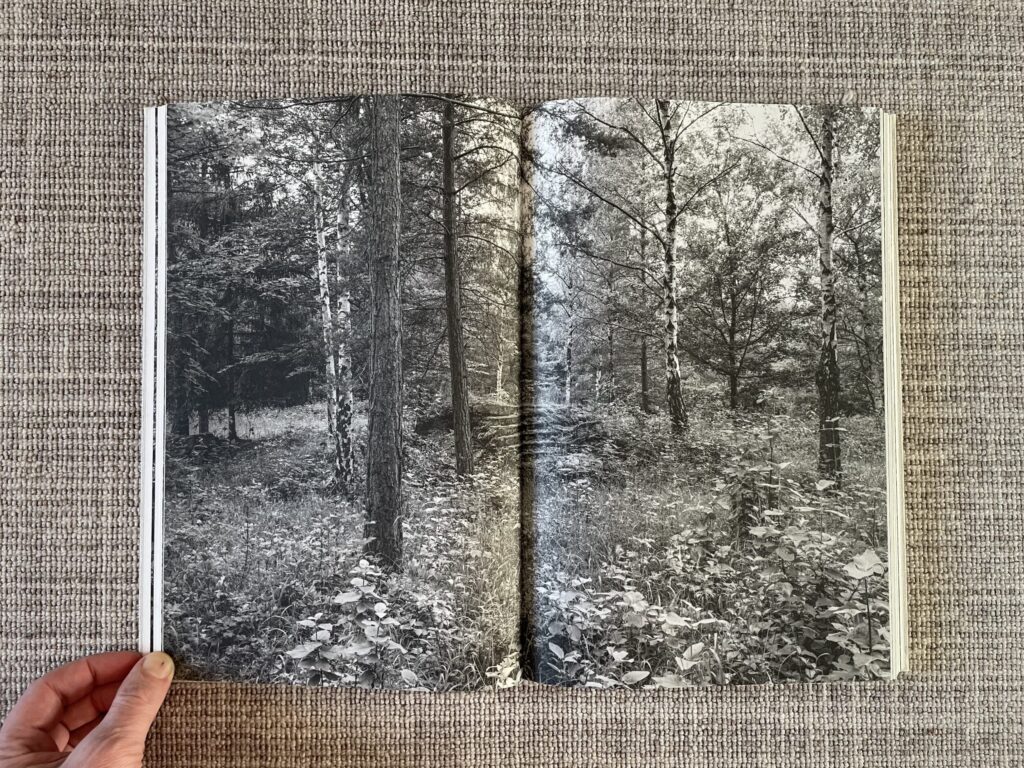
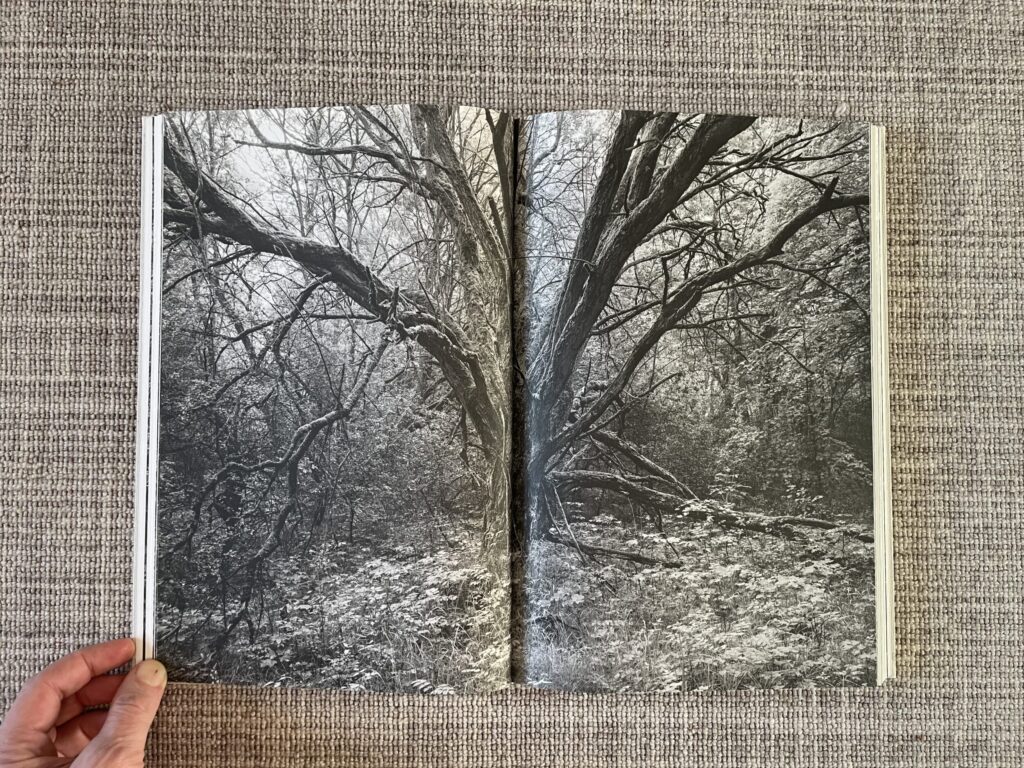
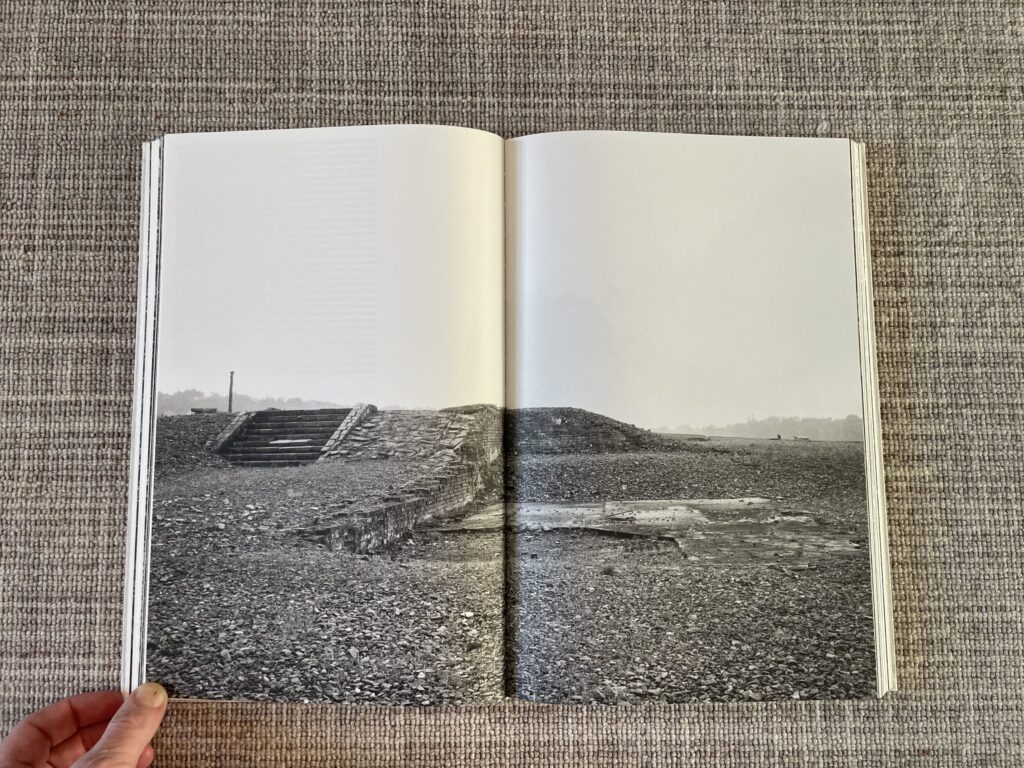
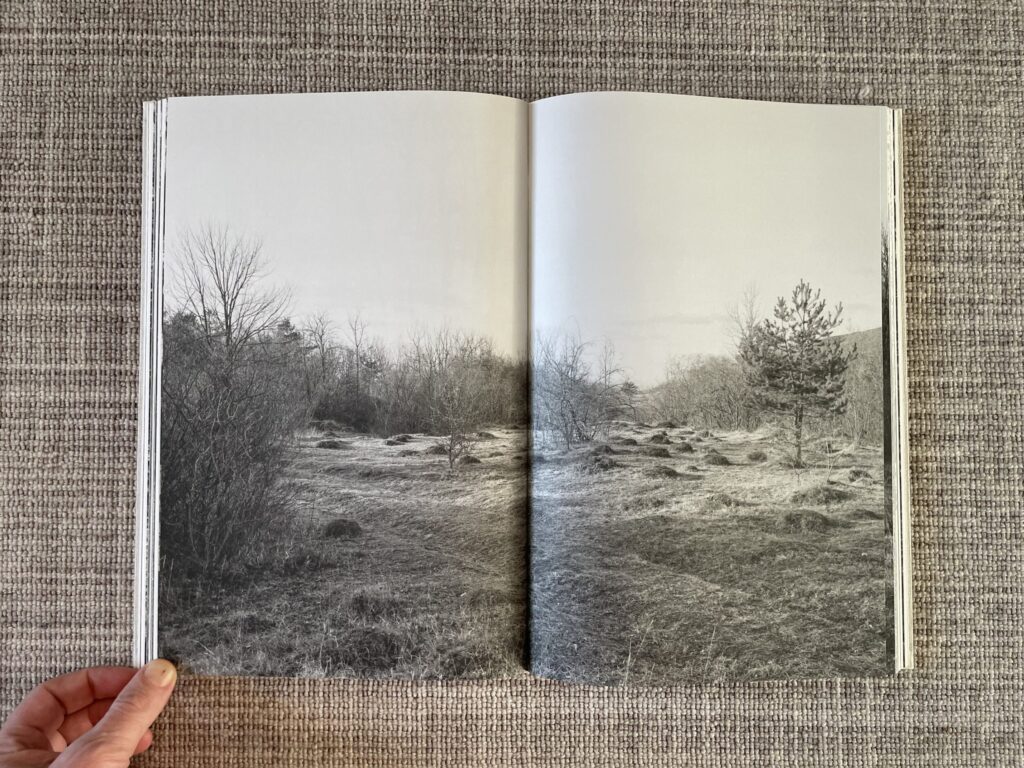
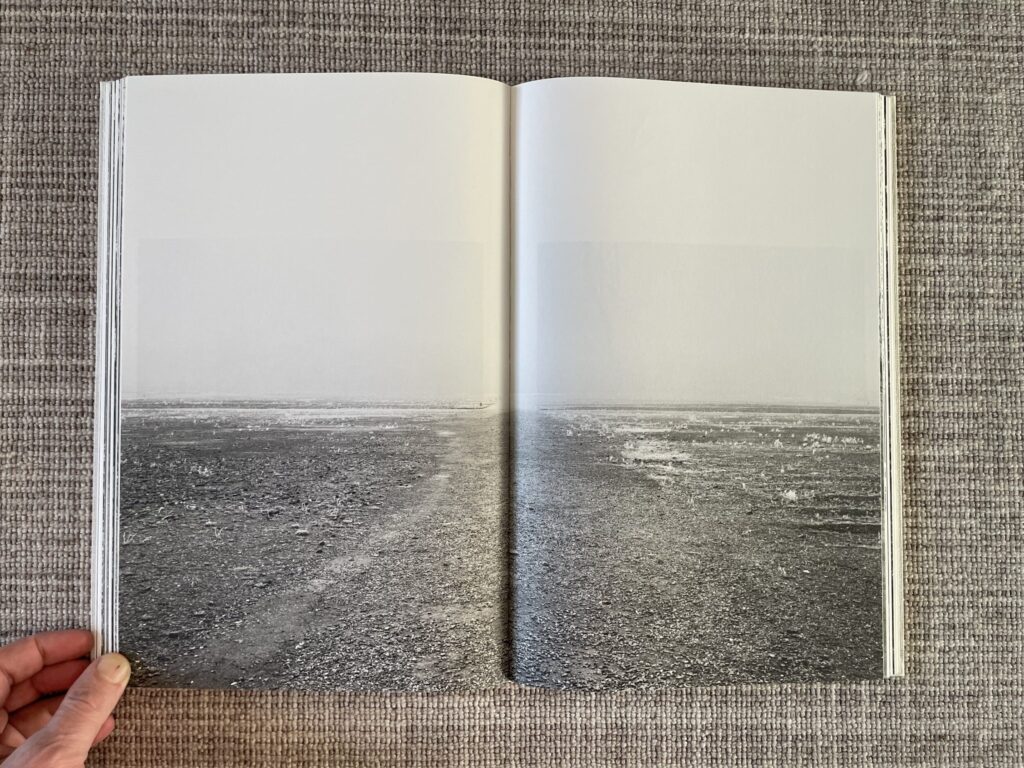
Comments/Context: The interaction between landscape and human memory is surprisingly fragile and impermanent. It is undeniably true that human activities of all kinds make real physical changes to the land that can be visible long after the original events take place. The remnants of a fallen building or a tumbled stone wall might leave a scar of sorts on a meadow or hillside, but unless active observation of those details turns them into resonant personal remembrance, the histories and meanings of those landscape artifacts can be lost entirely. Disturbed ground or piles of rubble might have been a battlefield or a crime scene, but given enough time and inattention, nature will inevitably attempt to reclaim the land, slowly obscuring whatever visible clues might remain and making it increasingly hard for those that come along later to discern exactly what took place.
Eighty years have passed since the liberation of the Buchenwald concentration camp on the Ettersberg near Weimar, Germany, and while a museum and memorial has protected and preserved the original prisoner detention site, much of the surrounding area occupied by the Nazis for servicing the camp lies outside the memorial area. At the time, this included housing for camp commanders and guards, as well as various other outbuildings and infrastructure, like a gas station, a post office, armaments sheds, work sites, entertainment facilities, and even a brothel. Most of these adjacent buildings were demolished after the war, or simply left to rot, and with the slow passing of time, the original forest in which they were located has largely swallowed them up.
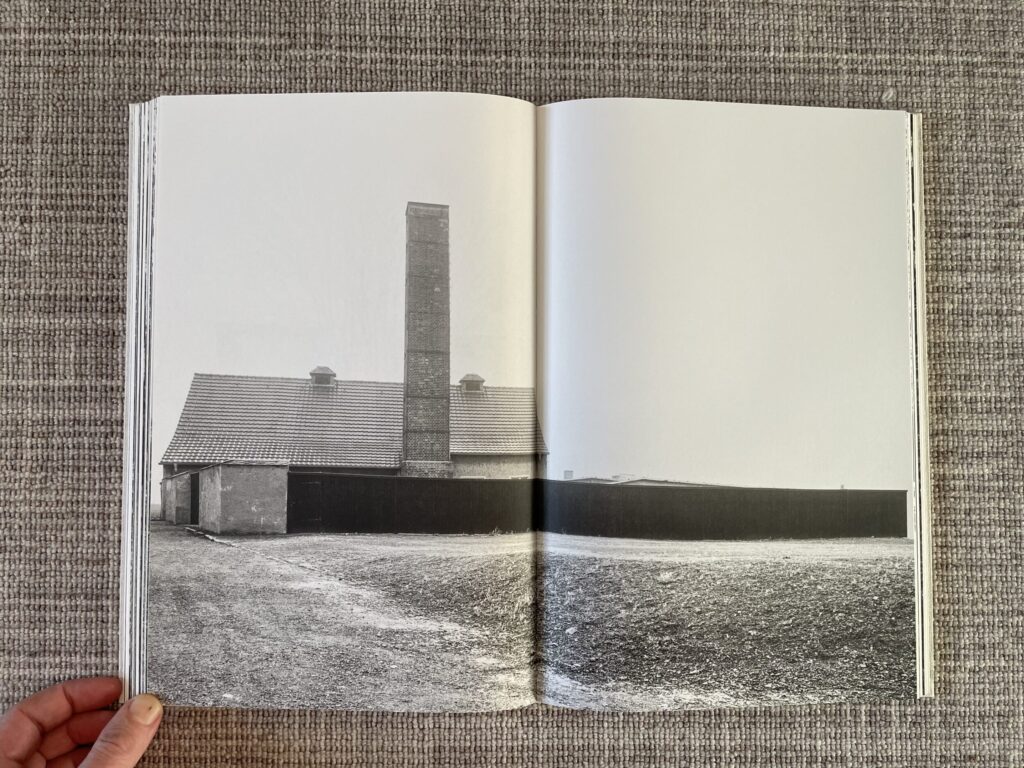
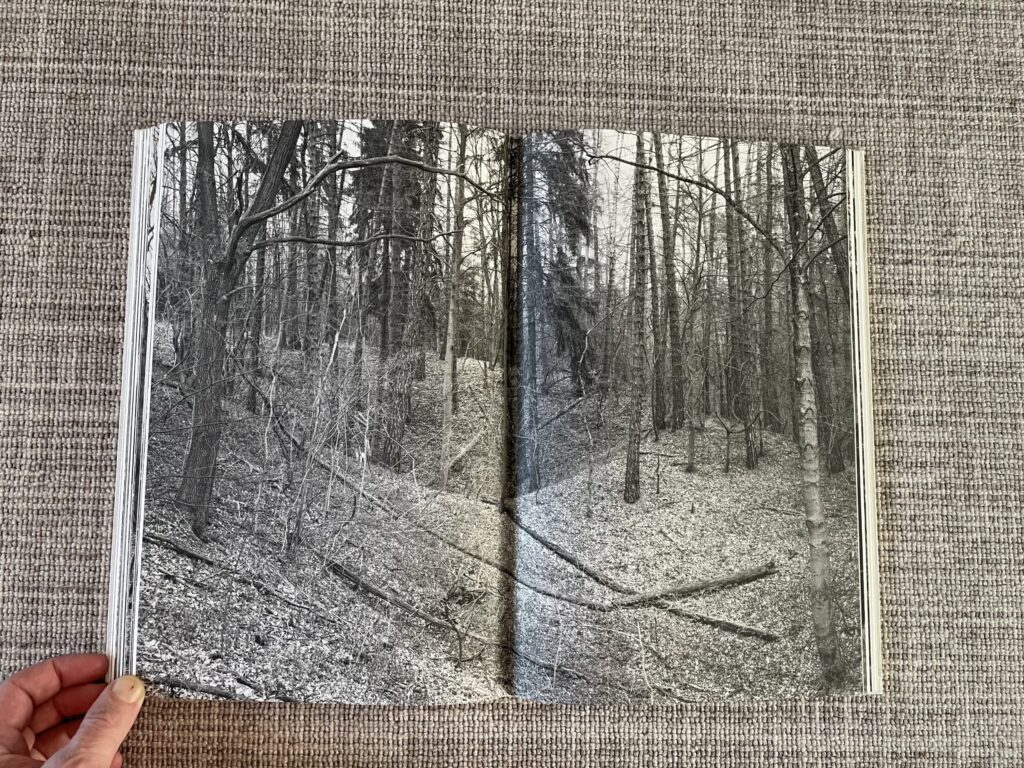
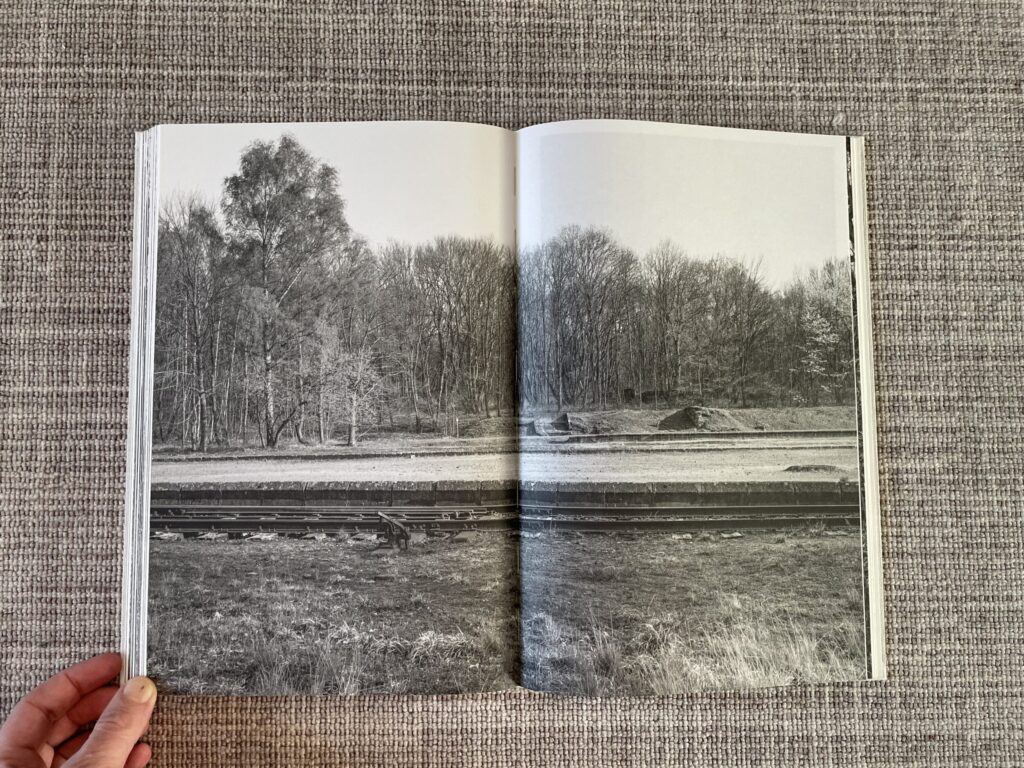
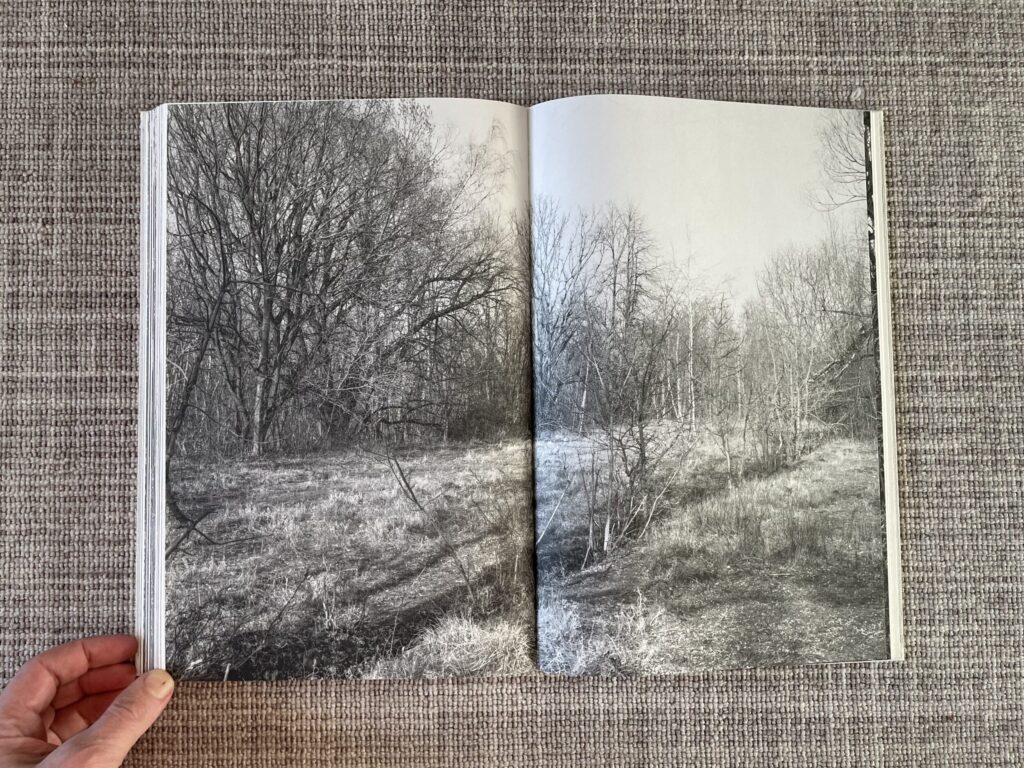
Christian Rothe has spent the past eight years wandering through these very same woods, making patient large-format photographs of what remains. His resulting photobook, simply titled Buchenwald, features gorgeously understated black-and-white landscapes, each view subtly disrupted by horrors we can now only imagine. This tension between beauty and ugliness is so extreme that the experience of flipping through Buchenwald is wholly unsettling – mostly because the forgetting process is now so clearly underway that we can no longer entirely identify places that we would once have brought us to outrage or tears.
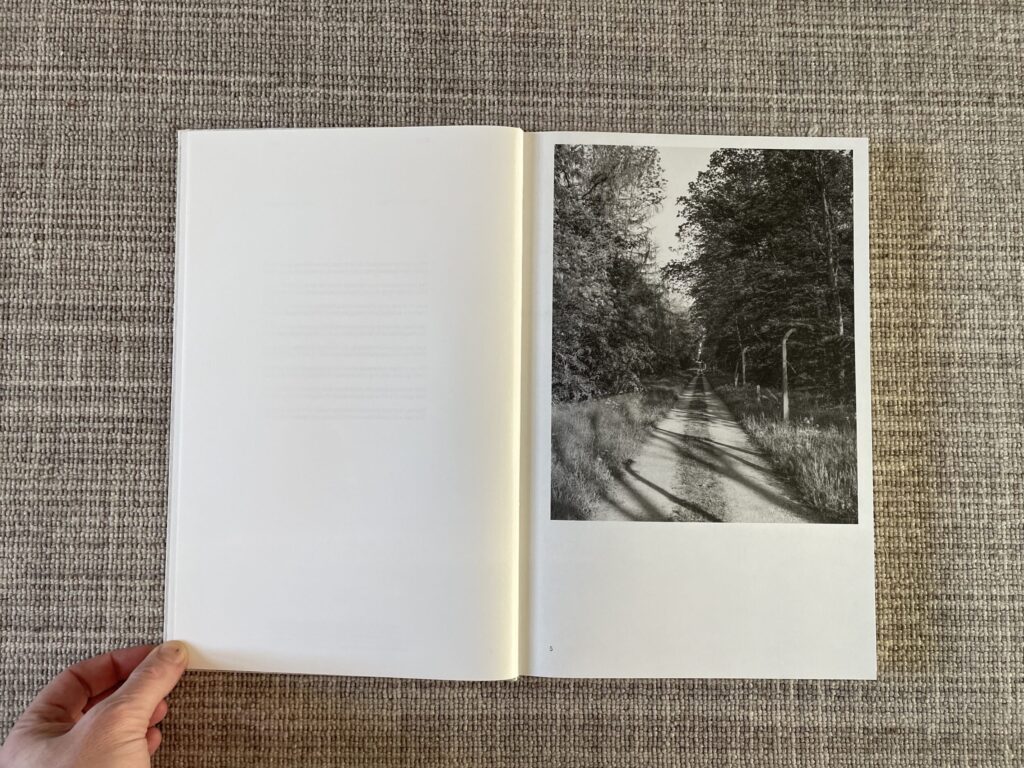
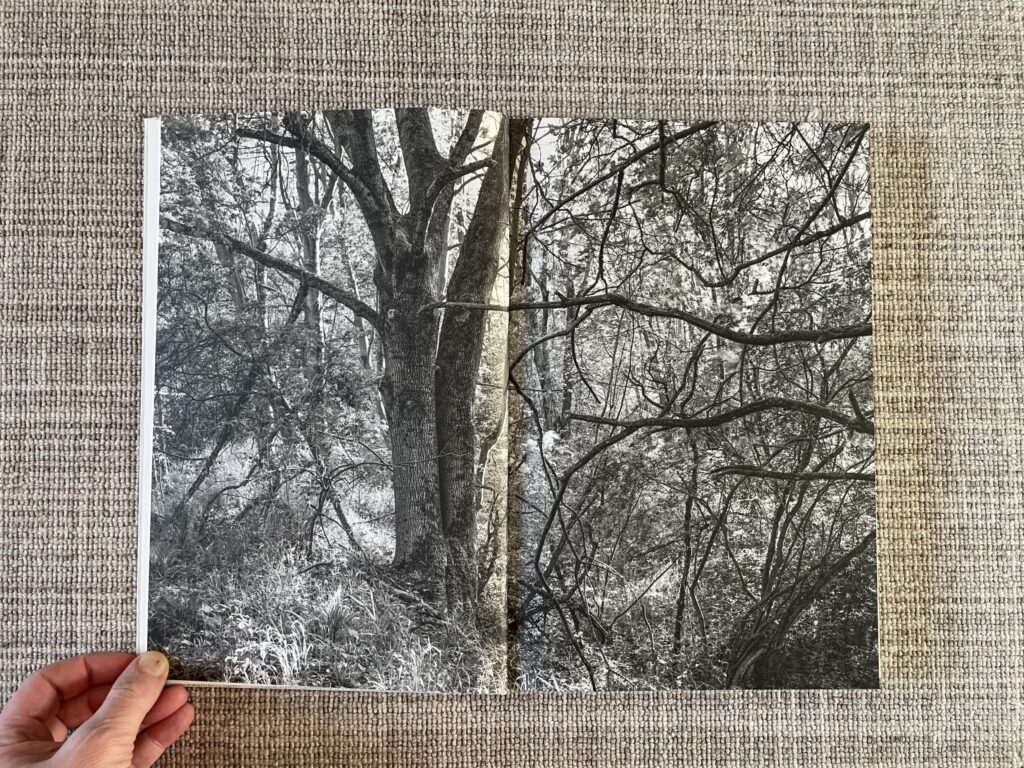
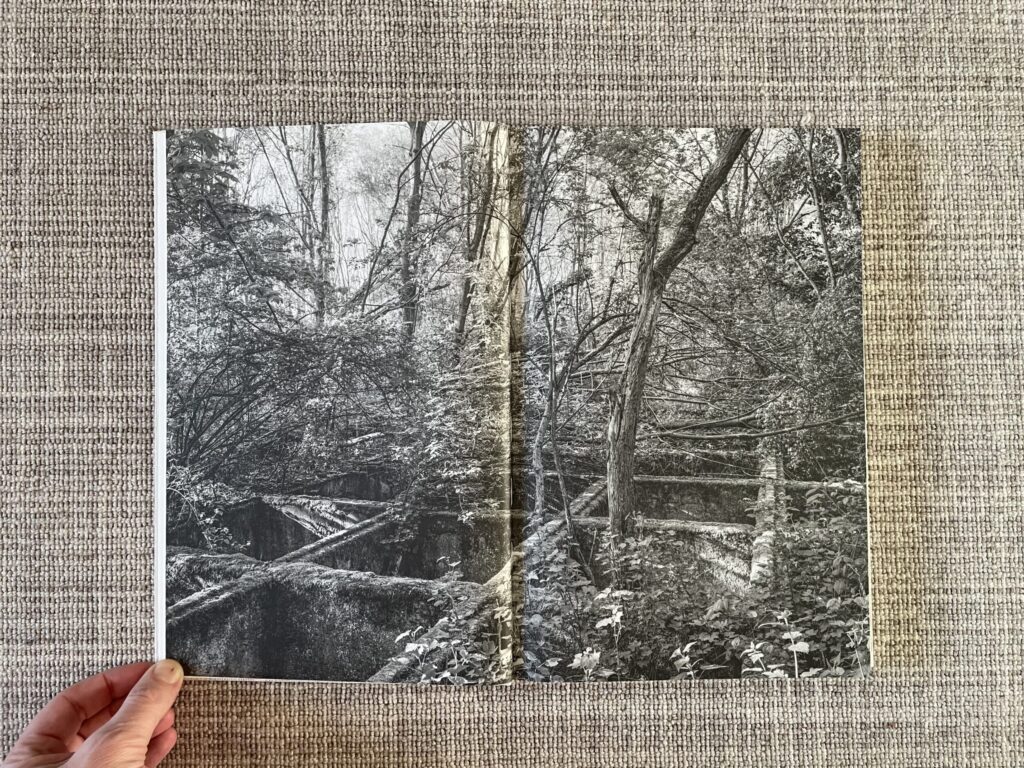
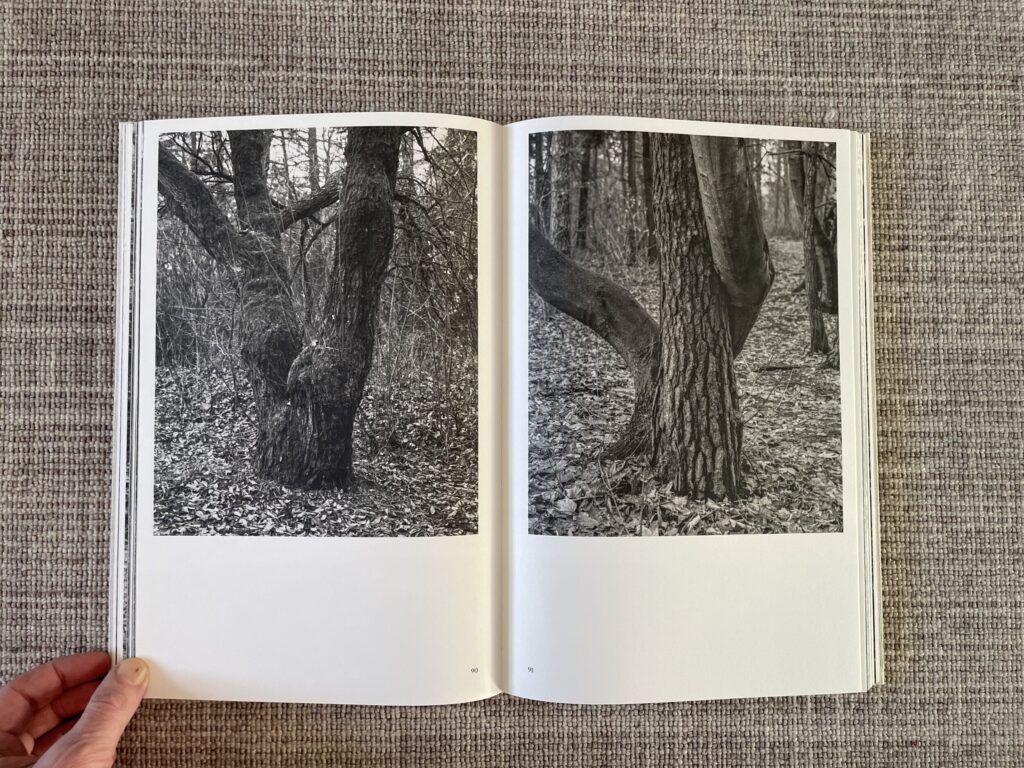
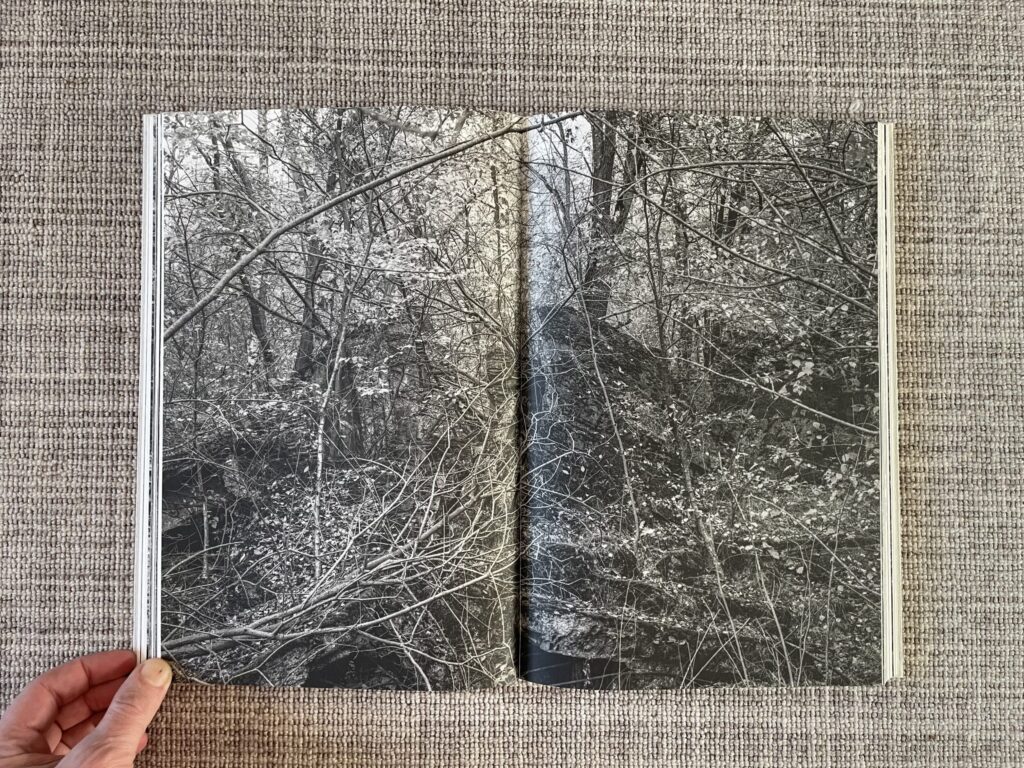
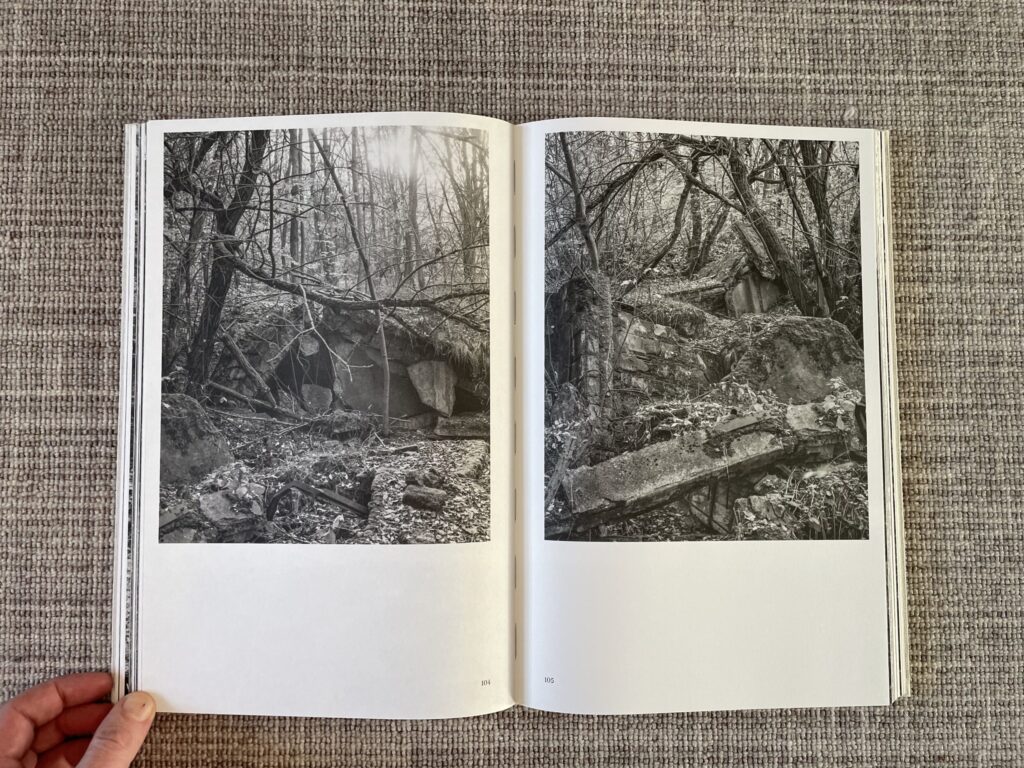
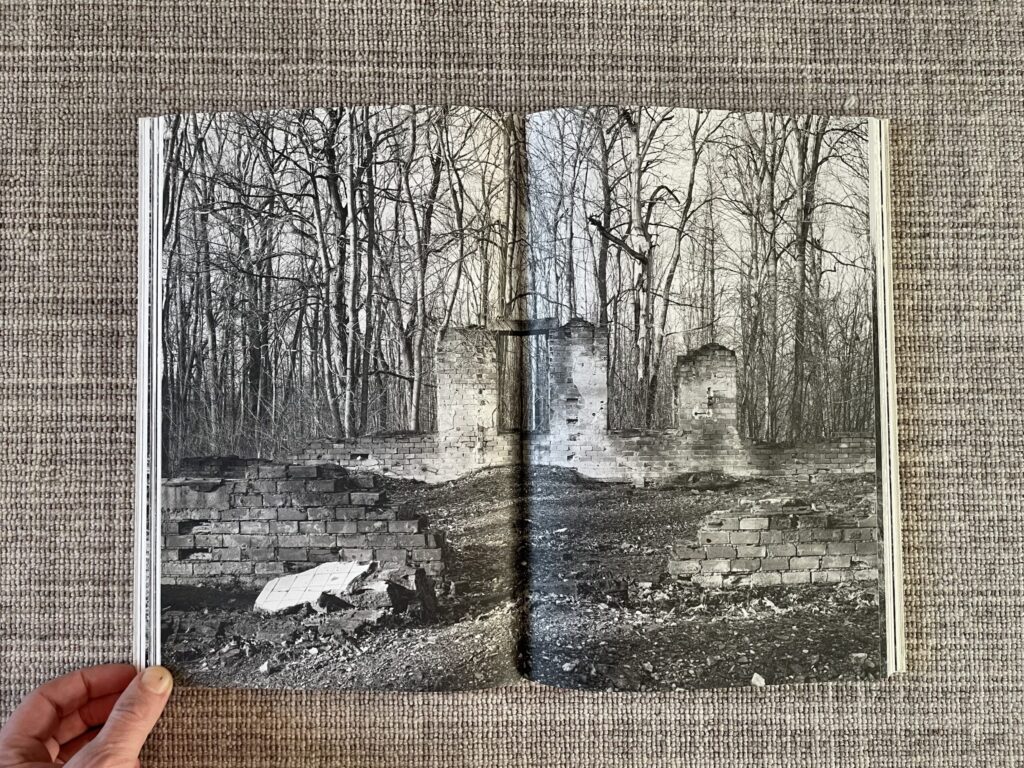
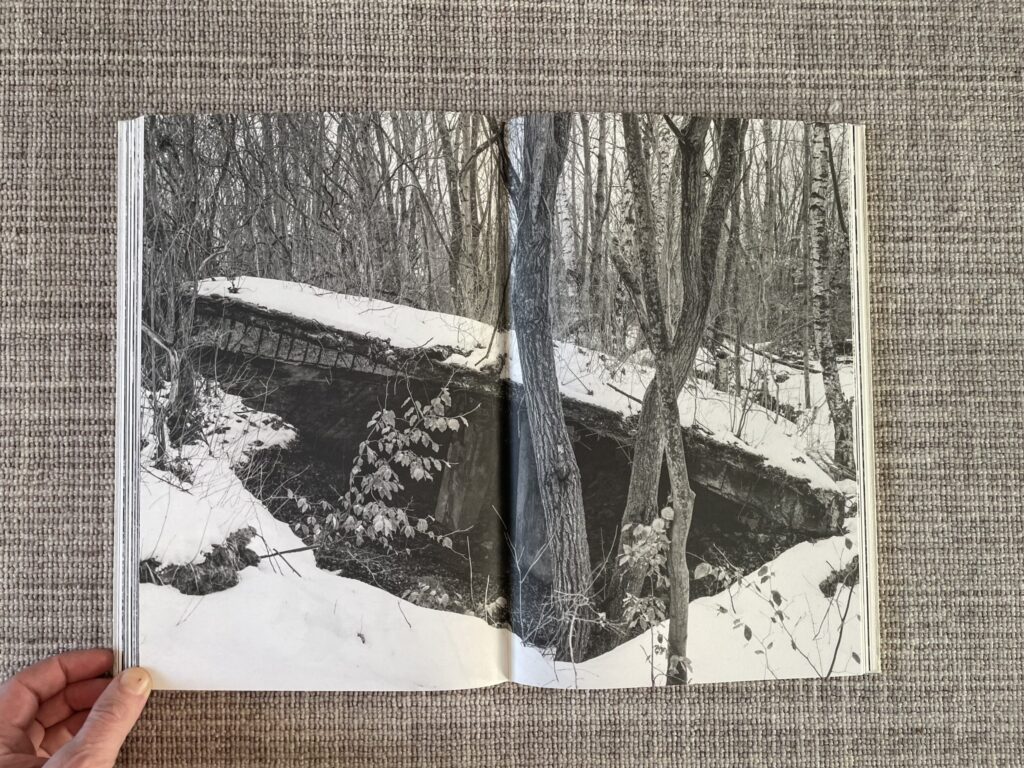
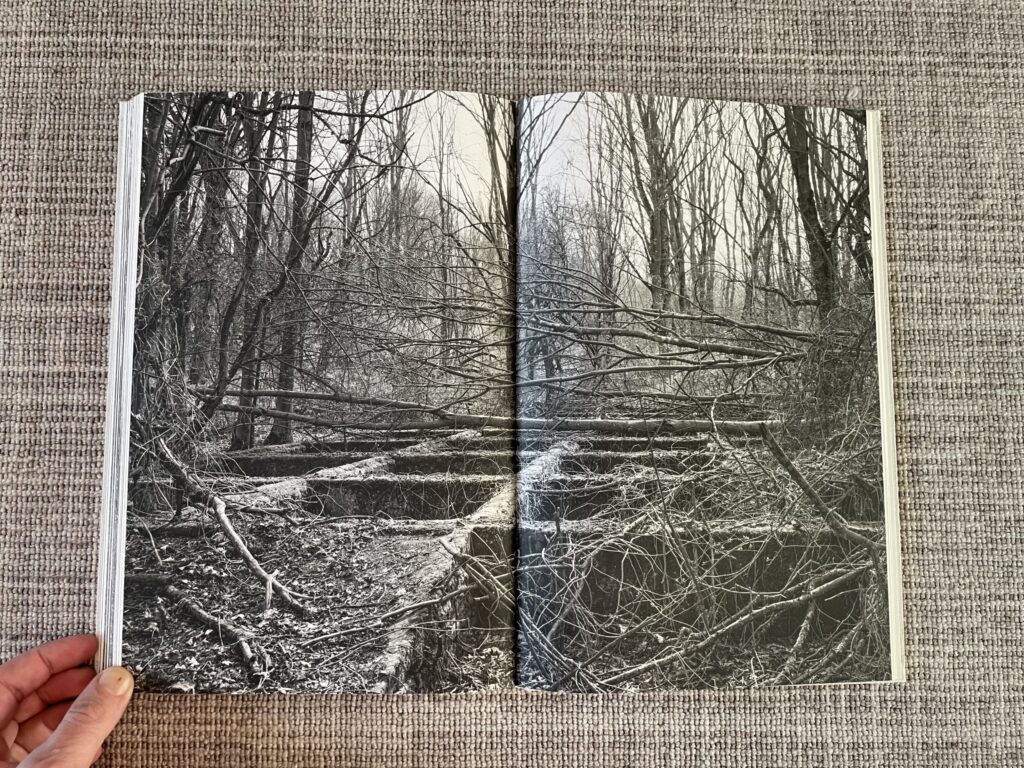
Much of what Rothe presents to us is new growth forest – thickets of trees that have grown up in the intervening years, obscuring roads, fences, collapsed buildings, and other even less identifiable moss-covered ruins and structures. The trees sink their roots into the crumbling brick foundations, stick up between dissolving walls, and interrupt previous architectural geometries, seemingly unbothered by the histories they might disrupt or obscure. A few older trees have somehow survived, but they are far from unscathed – most have deep scars, burn marks, unnaturally twisted or grasping limbs, and other wounds (particularly the massive trunks shorn to the ground) that allude to still other tragedies.
Rothe hasn’t included any descriptive titles or captions in Buchenwald, so we are left to our own investigative abilities to puzzle out what might be a well, a barracks, a path, or some steps now leading to nowhere. What might that empty clearing have been used for? or that underground bunker? or that pockmarked concrete wall? or that road cut through the forest? We can’t entirely know. And perhaps what’s most troubling and scary is that our imagination might not even be capable of envisioning the depths of what actually happened. To aid in this process, and to provide first hand survivor context, Rothe has included a selection of literary texts (in both poetry and prose) that describe some of what took place in the camp. These words make the landscapes all the more harrowing, if we can use a charged word like that to describe views of seemingly empty and uninhabited forest.
Rothe’s landscapes are exquisitely executed – crisp from edge to edge in the way only a print from a large format negative can be, rich in mid range tonalities, and composed with precision and care, allowing the interplay of man-made and natural to gracefully aggregate into visual harmonies and dissonances. Rothe seems to have worked during all of the seasons of the year, but mostly in the fall and winter, when the leaves were down, the trees were at their most stark and spindly, the skies were grey, and a light coating of snow might appear. When he gets nearer to the prisoner camp itself, his geometries get more elemental, with less trees and more open spaces scarred by rail cuts, smokestacks, guard towers, fence lines, and stony foundations, the ghosts of the past seemingly even more present. His pictures are somber and sobering, but consistently eloquent in a way that alludes to a deliberative process of looking. A photographer doesn’t make these kinds of elegantly unnerving pictures without thinking, and feeling, and waiting.
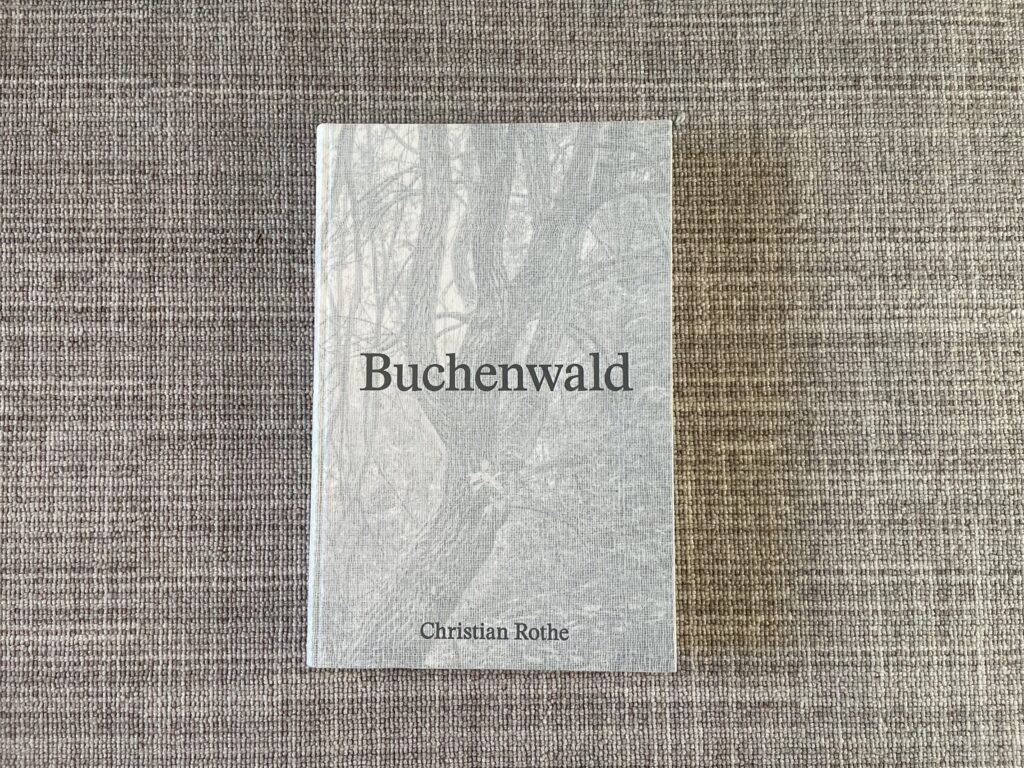
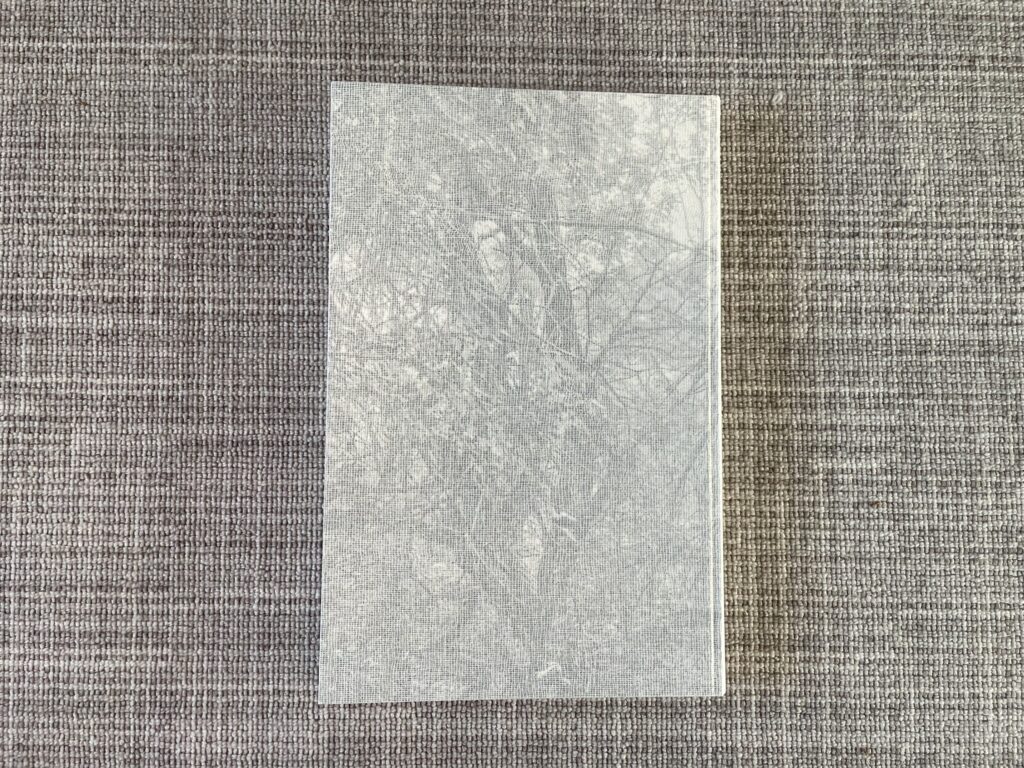
The design and construction of Buchenwald as a photobook object is similarly lovely, which is of course a very troubling word to apply to a book of concentration camp images. The cover is wrapped in a light linen mesh, creating a veiled view of an image of the woods, with the title and artist’s name arranged simply on the front. Inside, the images are shown as full bleed spreads or as single page images surrounded by white space, the alternation of formats from page turn to page turn providing a little space for the reader to breathe. The texts are interspersed at intervals through the image flow, pulling us out of visual observation and into literary thinking, while also giving life to the stories of endurance and survival in the camp and helping us to visualize what any given pile of rocks might possibly represent. The overall flow is well balanced, the full bleed images enveloping us in texture and presence, only to step back, turning our attention to some other detail or vantage point before moving on. It’s an understated but masterful design, and one that has already garnered several awards (including the Stiftung Buchkunst 2025 and the German Photobook Award 2025/26.)
The idea that the land can itself bear witness, and can then visually communicate some of those truths via photographs isn’t entirely a new one. Robert Adams was one of the first to make difficult images of clear cut forests and suburban sprawl in the American West back in the early 1970s, inherently questioning their impact on the environment, and in the decades since, strong projects by artists like Jo Ractliffe (as seen in a 2015 gallery show, reviewed here) and Zoe Leonard (in a 2022 gallery show, reviewed here) have explored how the land in war zones and border areas bears its own scars. Rothe’s book fits neatly into this kind of conceptual progression, both in terms of the consistent quality of the landscape image making and the risk taking necessary to wrestle with such powerfully invisible ghosts.
When filmmaker Alain Resnais released his landmark Holocaust documentary Night and Fog in 1955, some of the response to the work was that the beauty and poetry of his approach distracted from the brutality, inhumanity, and cruelty that took place in the raw footage. Rothe takes a much more indirect approach into essentially the same subject matter, using the passing of time to cloak some of the intimate horrors. As a result, the subject of his project is less the grim history itself but our ever changing memory of its traces, and how elusive the seemingly durable process of remembrance actually is. Again and again, Rothe brings us back to the scene of the crime, the burial ground, or the slowly healing wound, and yet we are left with a depressing lack of resolution. In opening up a dialogue with the contemporary landscape, he’s listening more than talking, watching more than dictating, and leaving the echoing loneliness of these places to do its own storytelling. At a political moment when violence and hatred are on the rise around the world, when arrogance and intolerance seethe through our daily lives, and when histories are being actively revised to suit current priorities, Rothe’s look back in Buchenwald feels all the more current and relevant. It’s a challengingly sumptuous photobook very much worth seeking out, one that asks us to actively and urgently remember, even when the signposts that might guide us are disappearing.
Collector’s POV: Christian Rothe does not appear to have consistent gallery representation at this time. As a result, interested collectors should likely follow up directly with the photographer via his website (linked in the sidebar.)