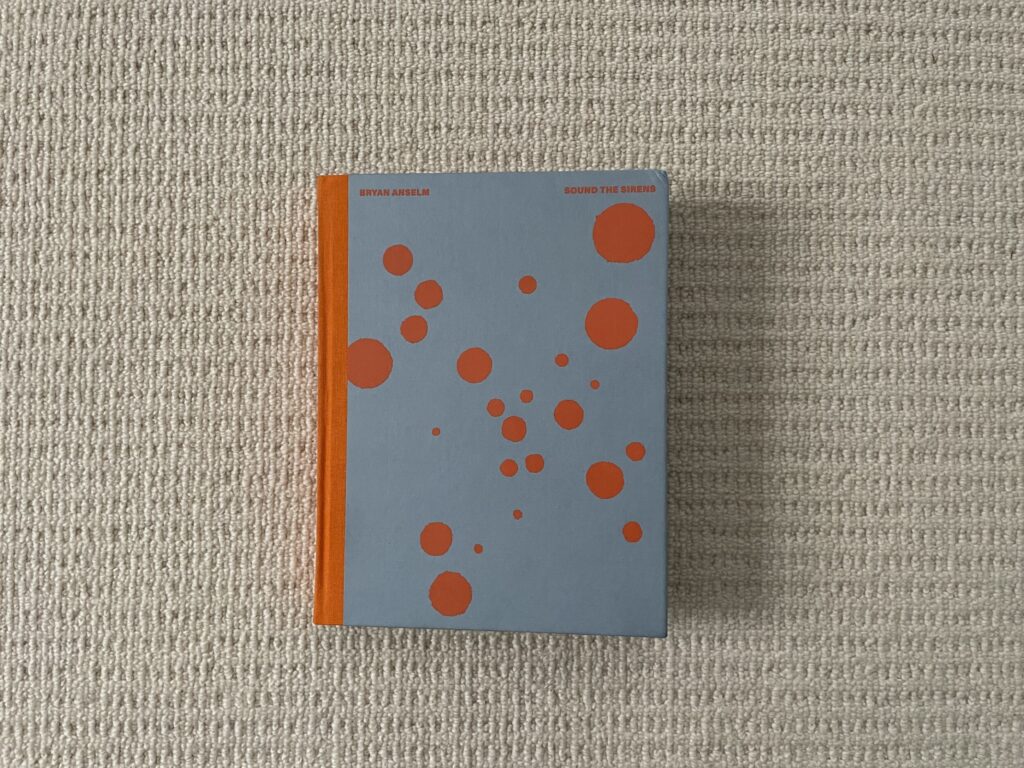
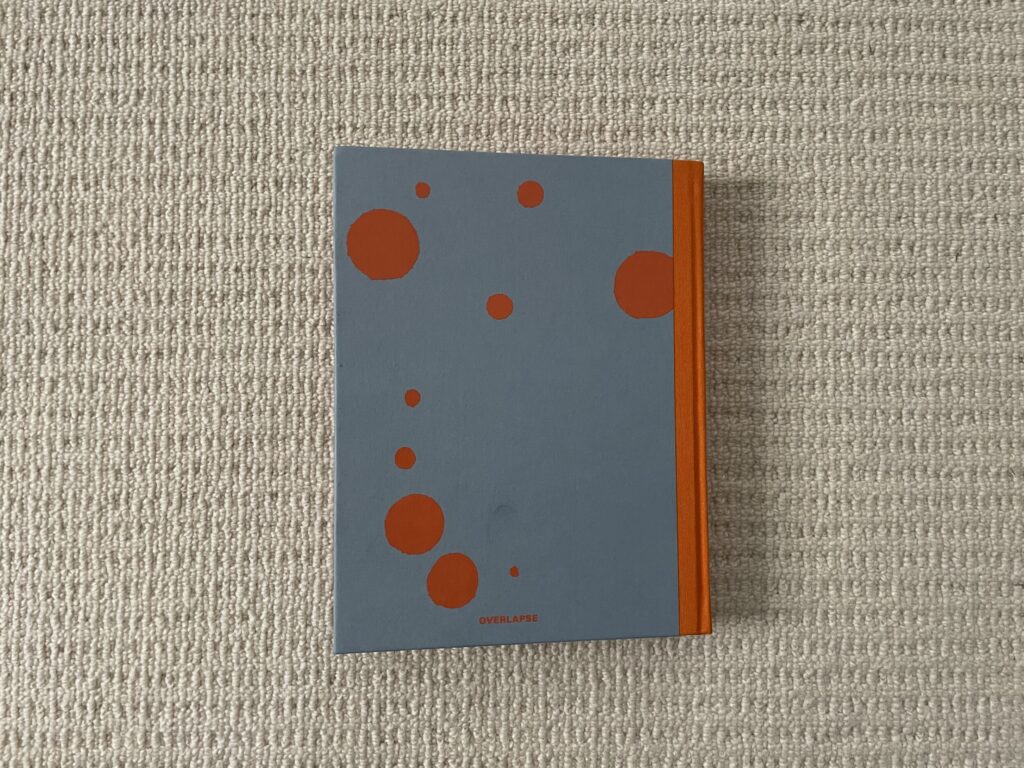
JTF (just the facts): Published in 2025 by Overlapse (here). Hardcover, 172 x 224mm, 160 Japanese-folded pages (with images printed on the interior folds), with 188 color and black-and-white photographic reproductions, illustrations, and archival images. Includes several loose insert images (double-sided), a quote by Ralph Waldo Emerson, and a short explanatory text. Design by Camilla Marrese. (Cover and spread shots below, with cut open folds and inserts after back cover image.)

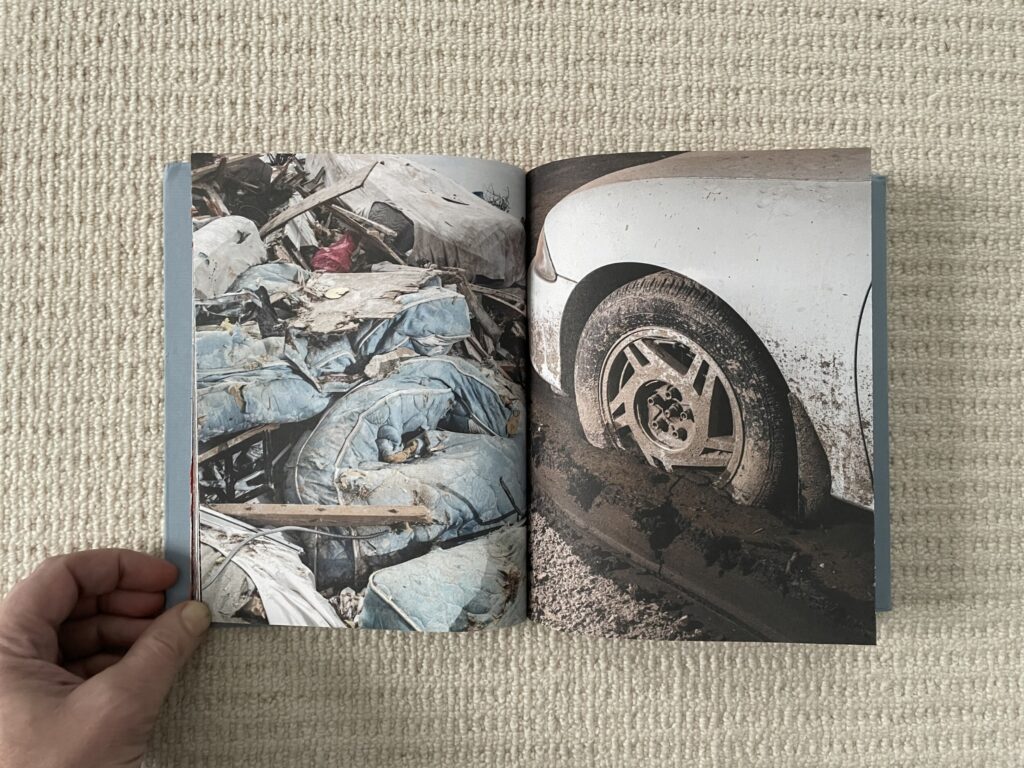
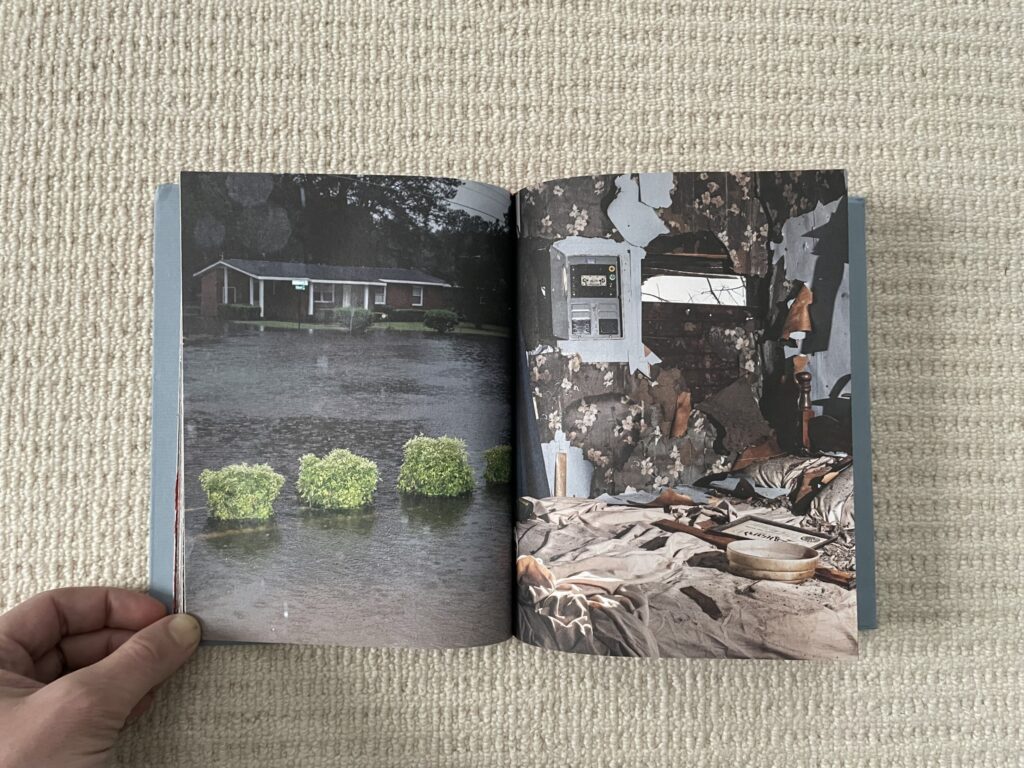
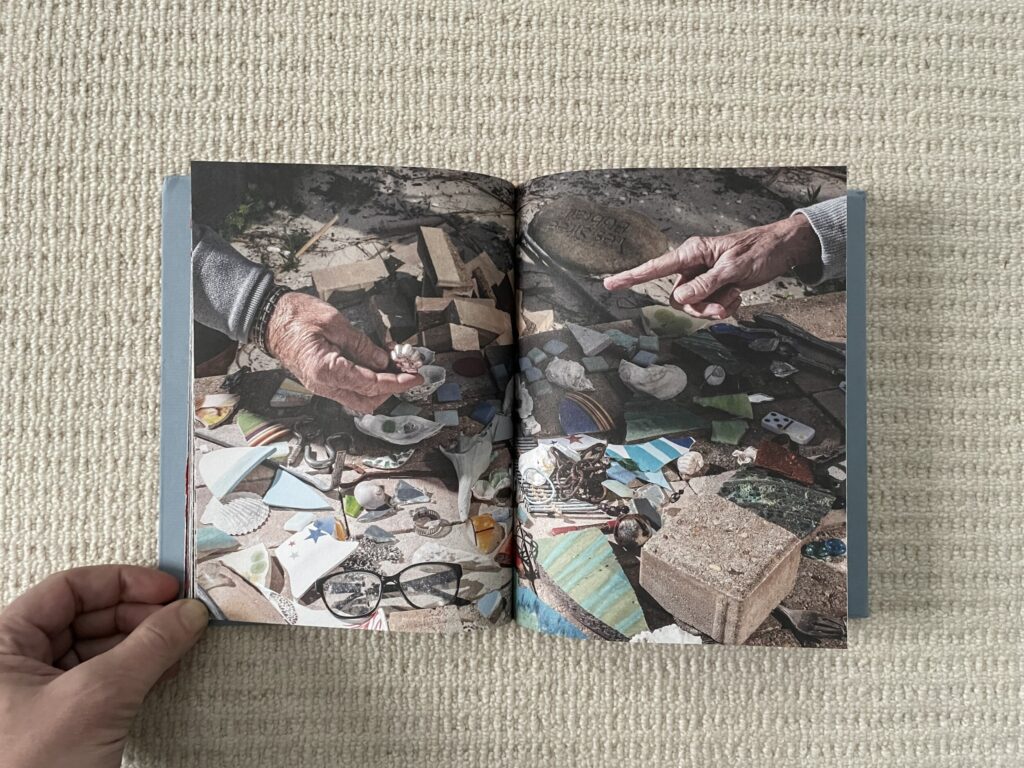

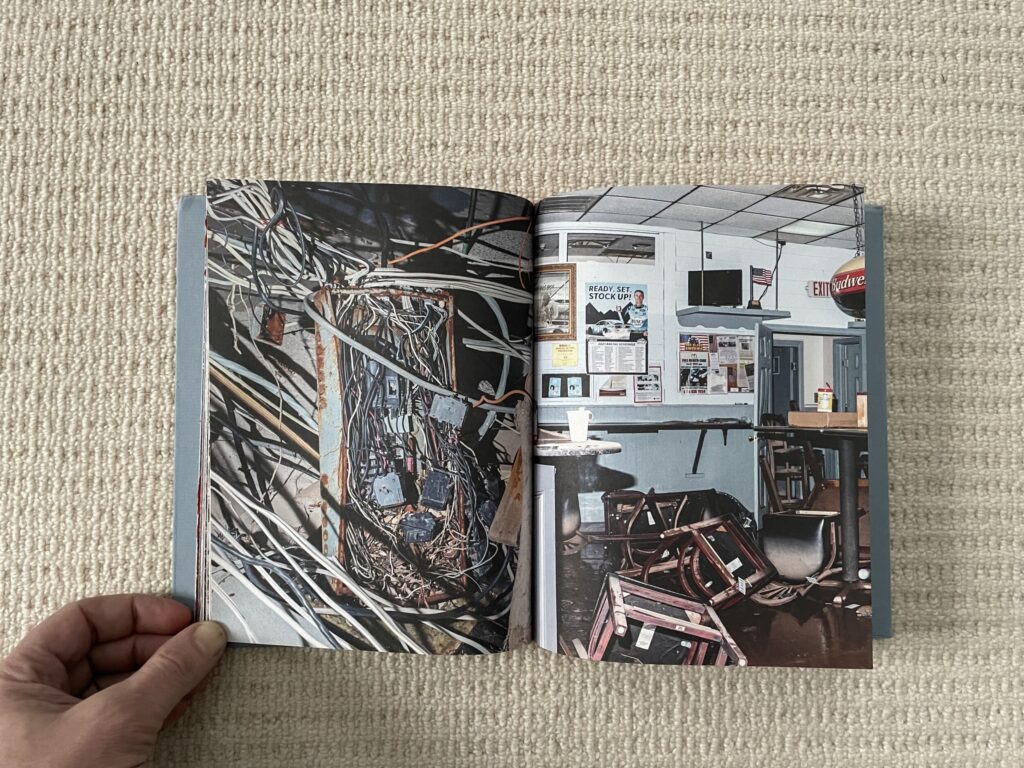
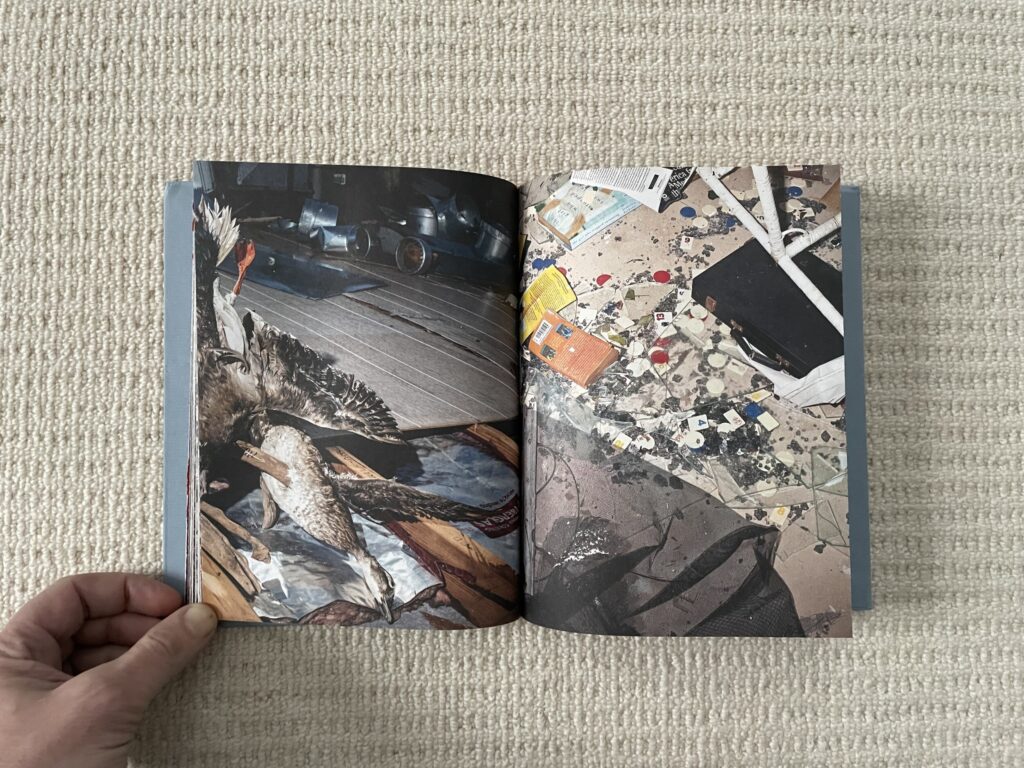

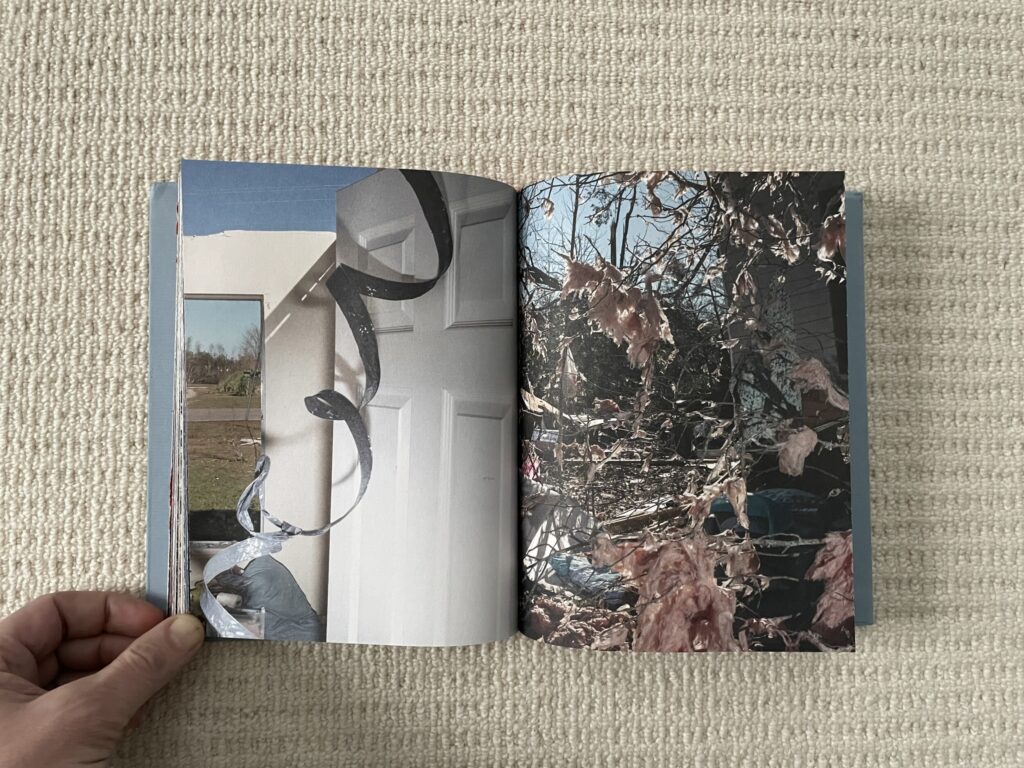


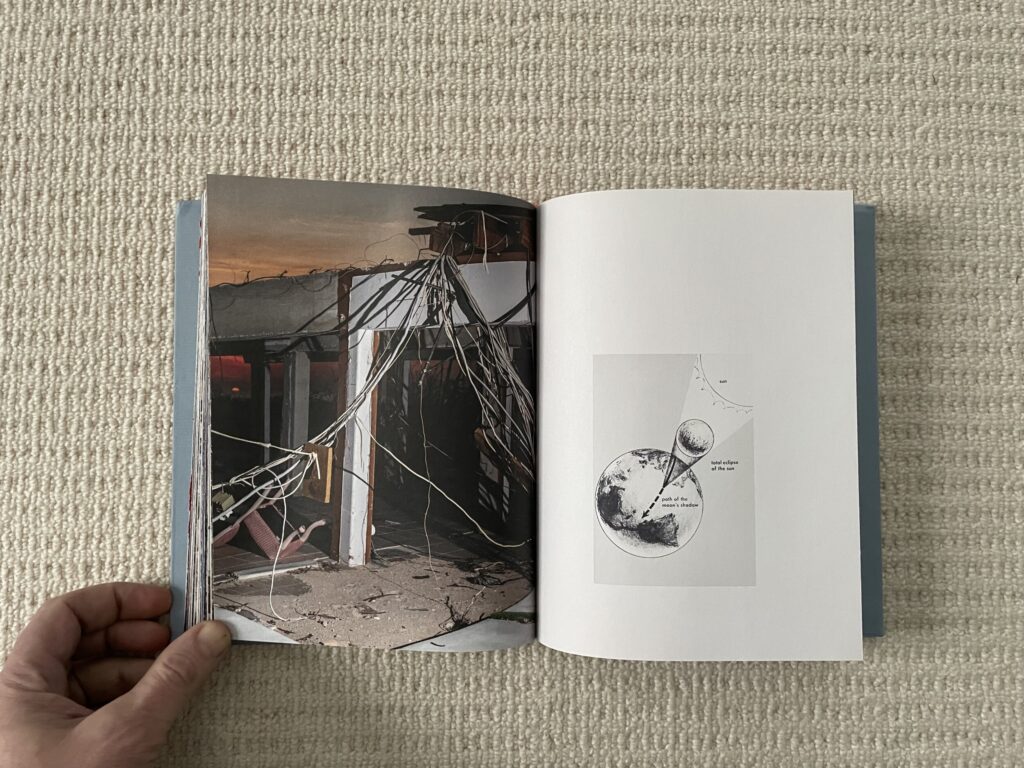
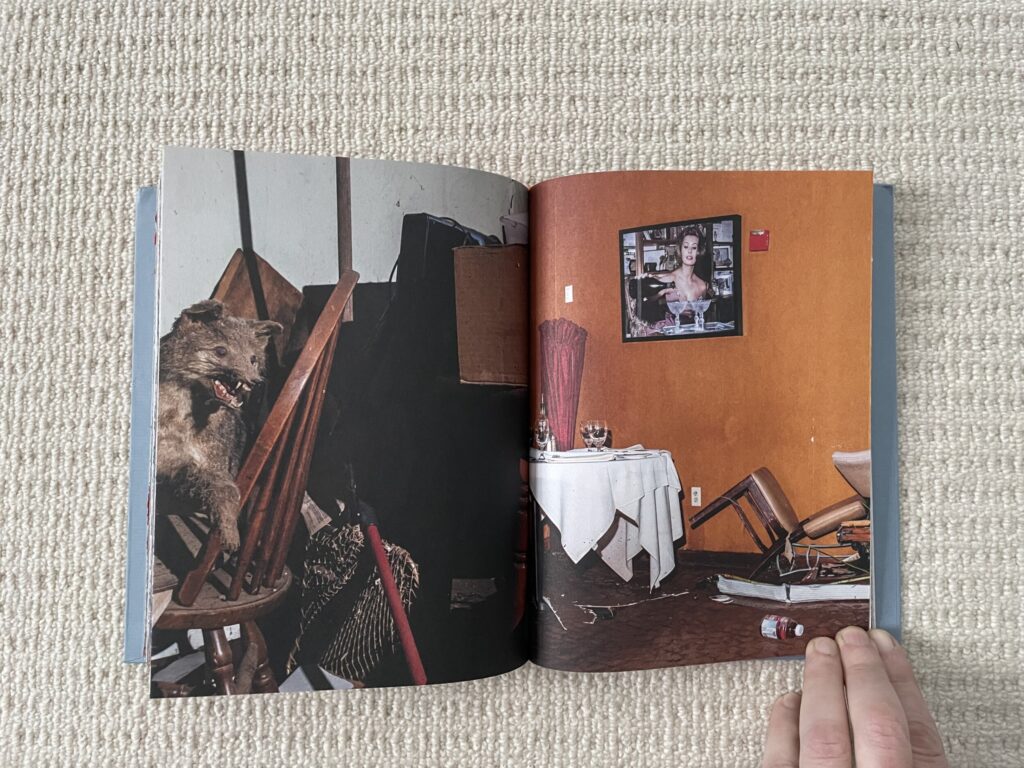
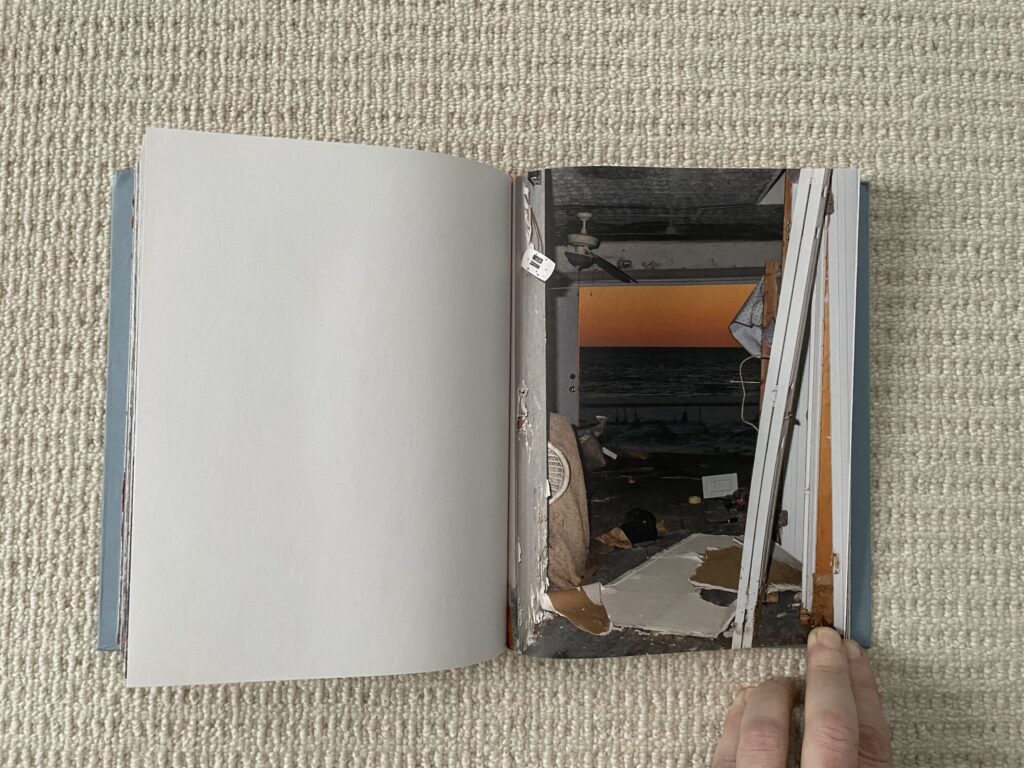
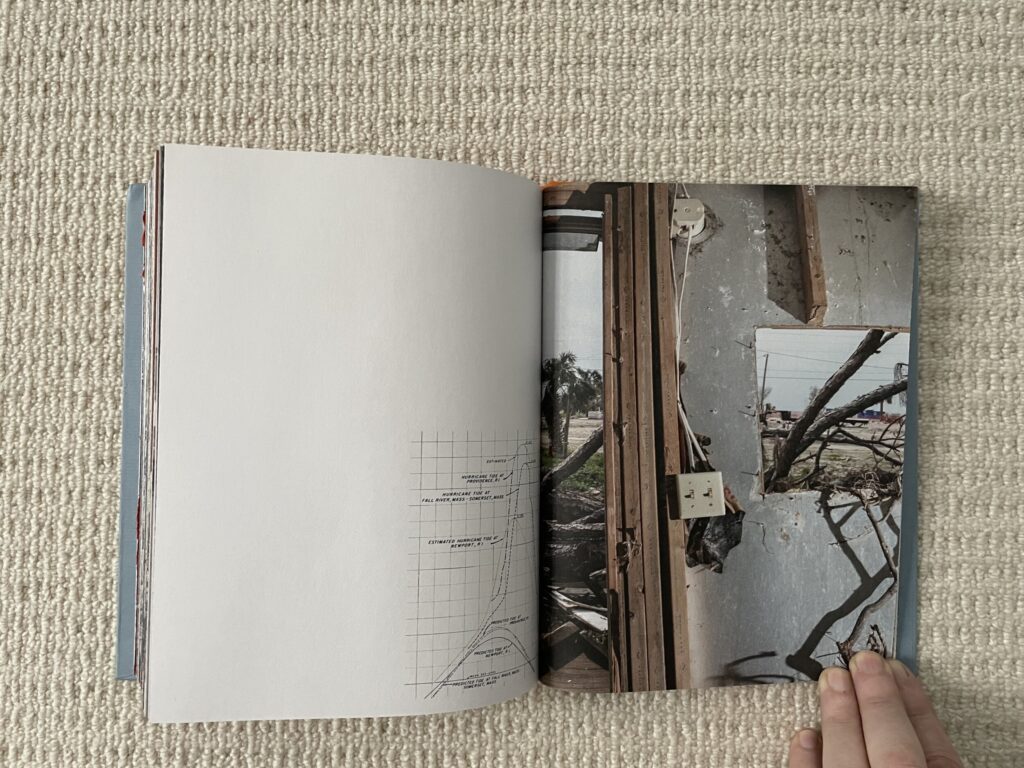

Comments/Context: Bryan Anselm’s Sound the Sirens is a climate change photobook that emphatically returns to the central message that the effects of global warming are terrifyingly dangerous. After a decade or two of artistic projects that have interpreted climate effects in different conceptual ways, often steering clear of imagery that was overtly polarizing, threatening, or negative, Anselm dispenses with that indirect approach, opting instead to take us to ground zero of the aftermath of climate-induced disasters around the United States in the past several years. There are no lovely melting icebergs on view here to spur concerned but ultimately apathetic conversation. Instead, he takes us into the teeth of the destruction, forcing us to witness what is actually happening to homes, communities, and real people when hurricanes, floods, and wildfires wreak their increasingly intense havoc. And with the recent repeal of the EPA’s endangerment finding, effectively eliminating the legal basis for regulating the greenhouse gases that come from extracting and burning fossil fuels in the United States, it’s clear that we’re intentionally taking a step backward from necessary solutions and that new strategies (and visual languages) will now once again be needed to redirect climate engagement in urgently productive ways. So Anselm’s book arrives at just the right moment – unfortunately we are in need of a bracingly realistic slap in the face, and this photobook delivers it.
Anselm has spent the better part of the past decade covering weather-induced disasters for The New York Times, The New Yorker, and Time, making on-the-ground photographs of more than half a dozen major hurricanes along the coasts (Michael, Dorian, Irma, Matthew, Ian, Florence, and Ida, among others), the recent fires in Los Angeles and Maui, and various inland floods and tornadoes. If we somehow want to convince ourselves that these are isolated incidents, the images in Sound the Sirens brush that notion aside, the included photographs mixed together without regard to exact location, but coming from multiple spots in ten states.
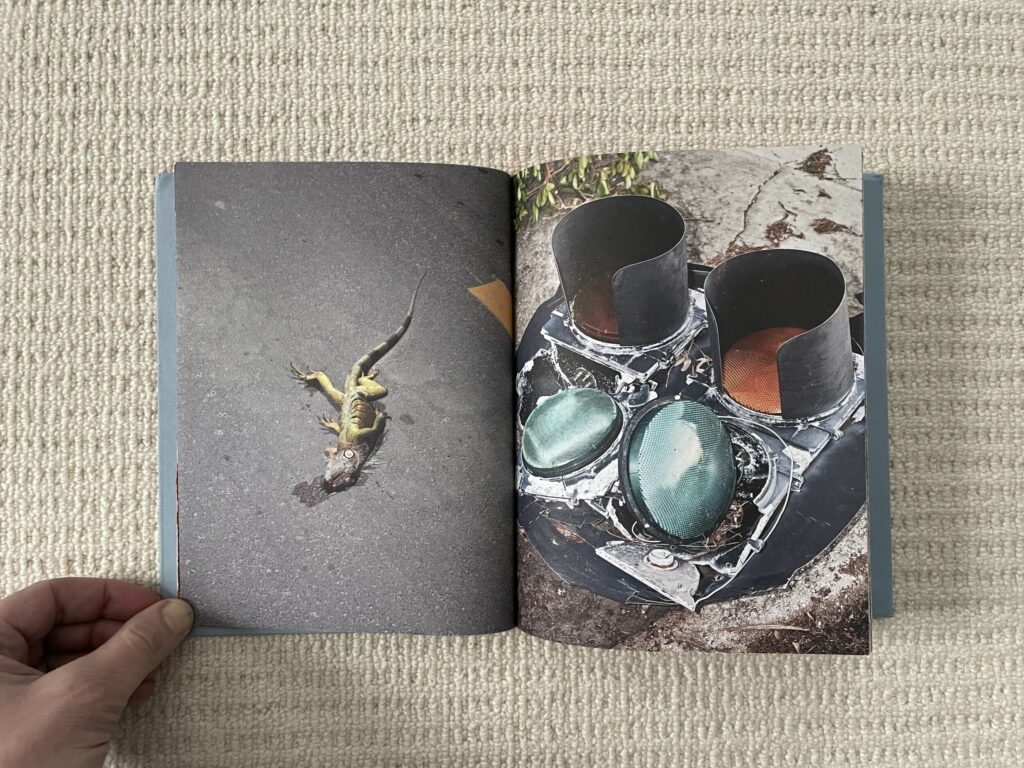
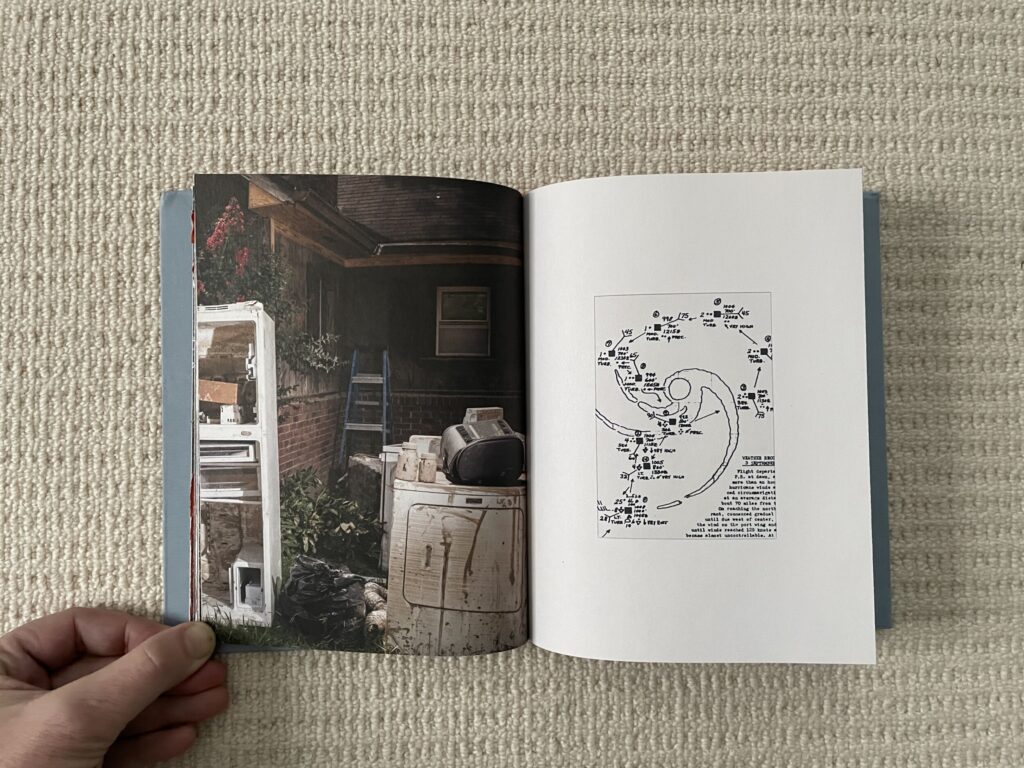
In page turn after page turn, Anselm brings us into close proximity with ruthless indiscriminate devastation. The first image in Sound the Sirens documents a fallen tree smashing in the roof of a government vehicle of some kind, and from there, the demolition just gets more intense and widespread. Walls and roofs are routinely ripped off houses, leaving them dangerously vulnerable and entirely open to the elements. With the walls removed, the interiors of homes and buildings are roughly shaken and pulled apart like overturned doll houses, leaving hanging wires, broken glass, soggy mattresses, twists of HVAC metal, and shredded pink insulation. The remnants of peoples’ lives are strewn everywhere (including up in nearby trees), from refrigerators full of rotting food and washing machines covered in mud to filing cabinets overturned and treasured items turned to scattered piles of junk to be sifted through for usable remnants. Even with windows boarded up or covered with plastic sheeting, Mother Nature comes in when she wants, as seen in tree branches routinely thrust into kitchens and deposited on rooftops.
Anselm is careful not to let his images drift into the realm of what we used to call “ruin porn”; while his photographs are consistently smartly composed, often keying on a singular object (like a Christmas tree, a pile of dining chairs, a limp American flag, or a piece of taxidermy) or the angles created by now smashed walls, they aren’t overly pretty and there is no sensationalization or titillation going on. His flash heightens our ability to see the ruins of these lives, but he uses it neither to embellish nor abstract away the punishing damage. Peering into these messy scenes of destruction, Anselm dispassionately observes countless details, and in a few cases, he uses a blasted out window to carefully frame a nearby sunset, recalling John Divola’s eerie images of vandalized houses from the 1970s. This new world Anselm is observing is wrecked, toppled, fallen, stripped bare, mud covered, ankle (or knee) deep in water, and decorated with debris, and it’s becoming much more common across America than we want to admit. With cleanup and rebuilding efforts just beginning in his pictures, Anselm also calls into question the logic of repeating the stupid mistakes we’ve already made by staying put in the direct path of this kind of climate-induced fury.
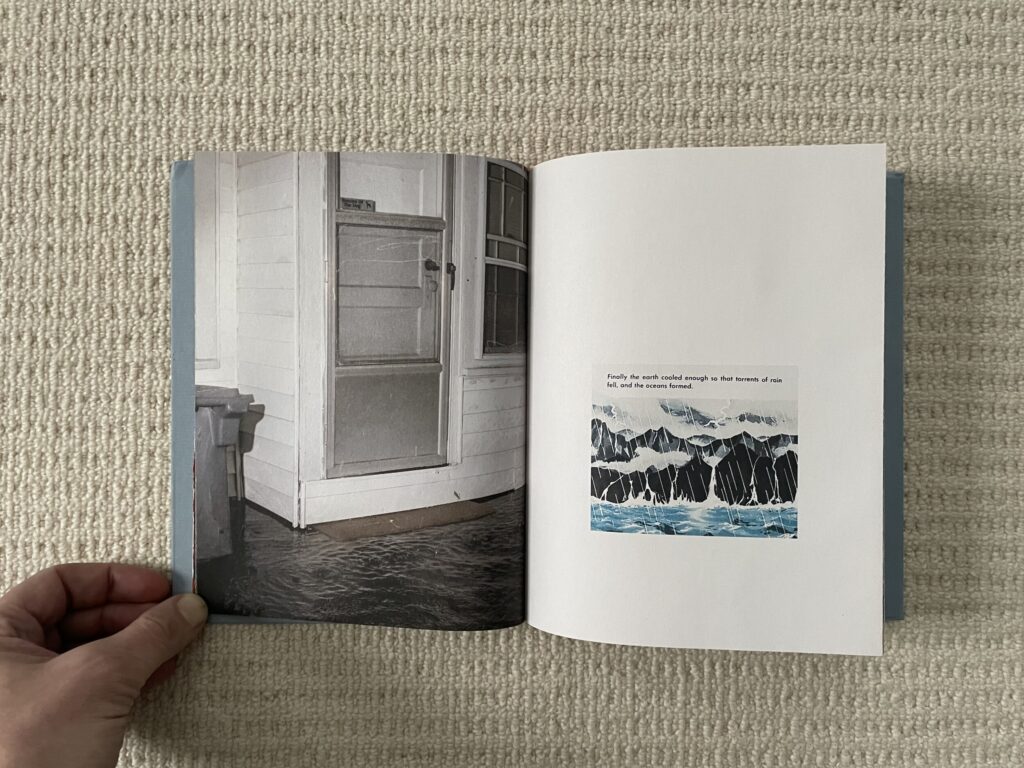
While Anselm’s photographs can of course tell this sobering story on their own, the design and construction of the photobook object of Sound the Sirens add many layers of subtle complexity to the overall message. Anselm’s photographs are printed on Japanese folded pages, with the vertical images filing one side of a spread and the horizontal ones filling two sides, either across the gutter or around a page turn (thereby dividing the image in half); a few black-and-white portraits of residents, survivors, and first responders have also been included here and there in the flow, and these images are set off by thin white borders.
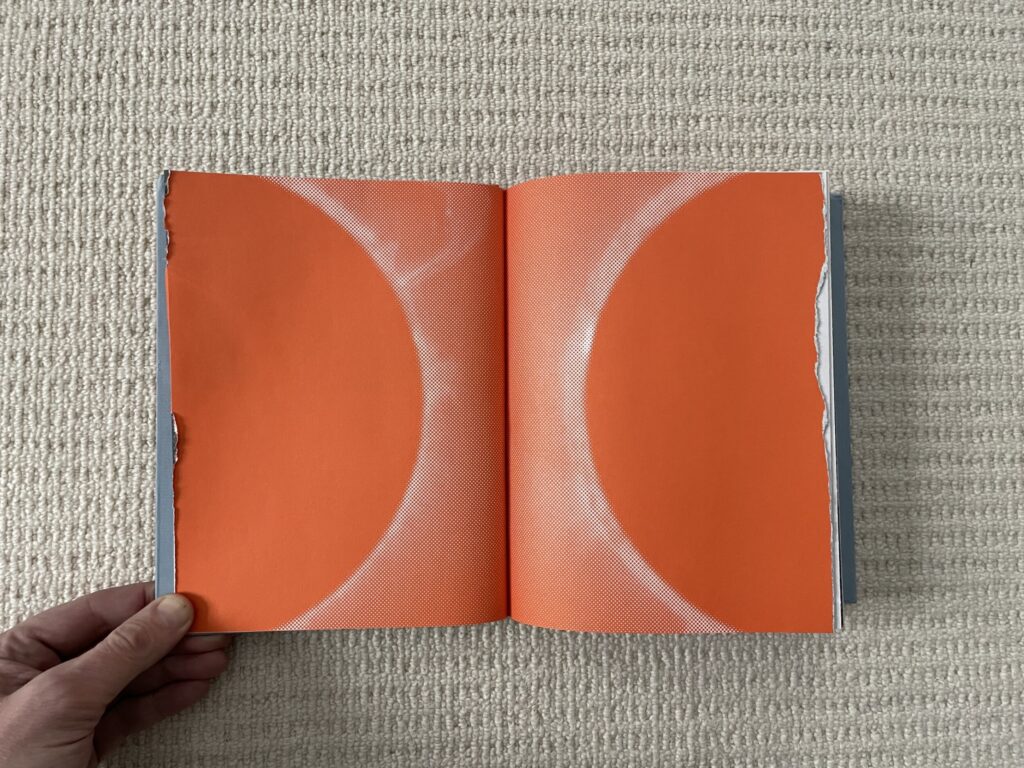
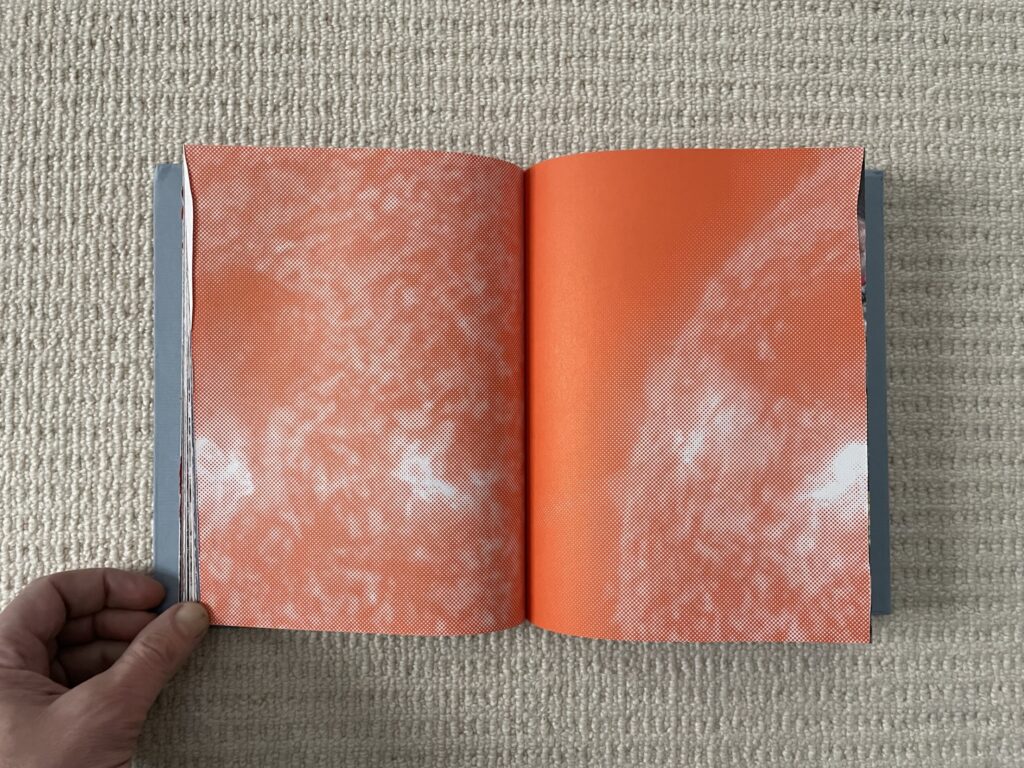
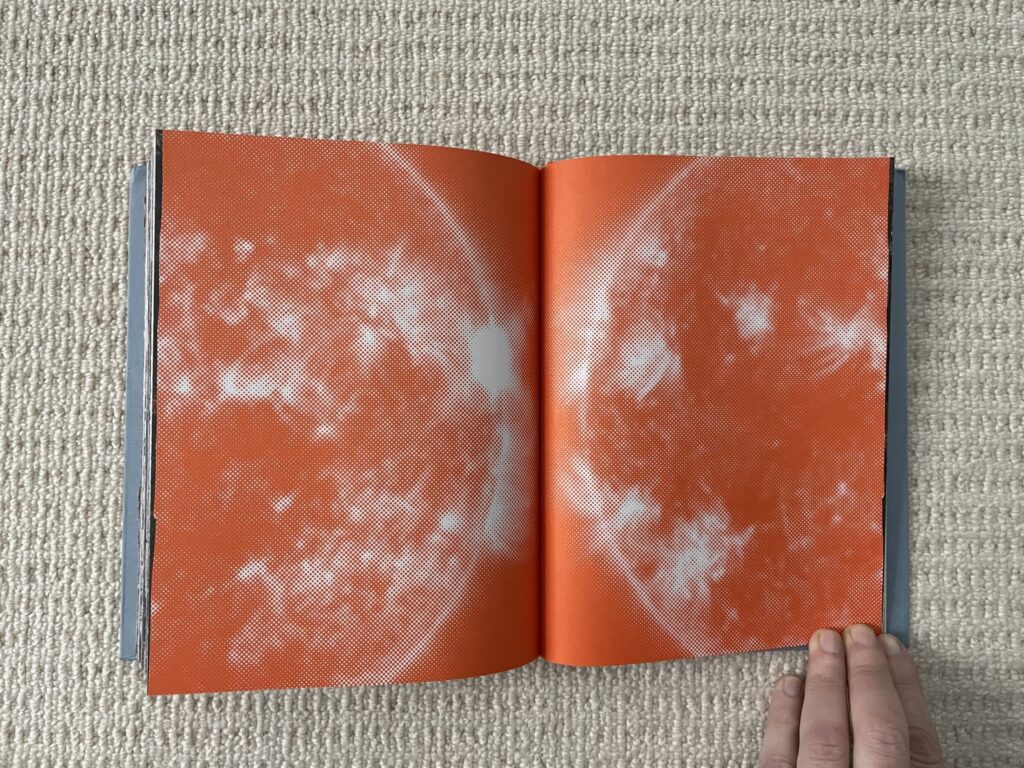
As the pages turn, it becomes clear that there is an orange glow coming from inside the folded pages. A peek inside the folds reveals images of solar flares (in white halftone on orange, as seen in a few cut spreads above), the hotness of the sun literally radiating outward from the inside and emphasizing the warming effect that is catalyzing the storms. This solar flare motif is repeated on the front and back covers, in what first looks like decorative orange polka dots; a closer look reveals the spots aren’t perfectly round, connecting them back to the stormy flare idea.
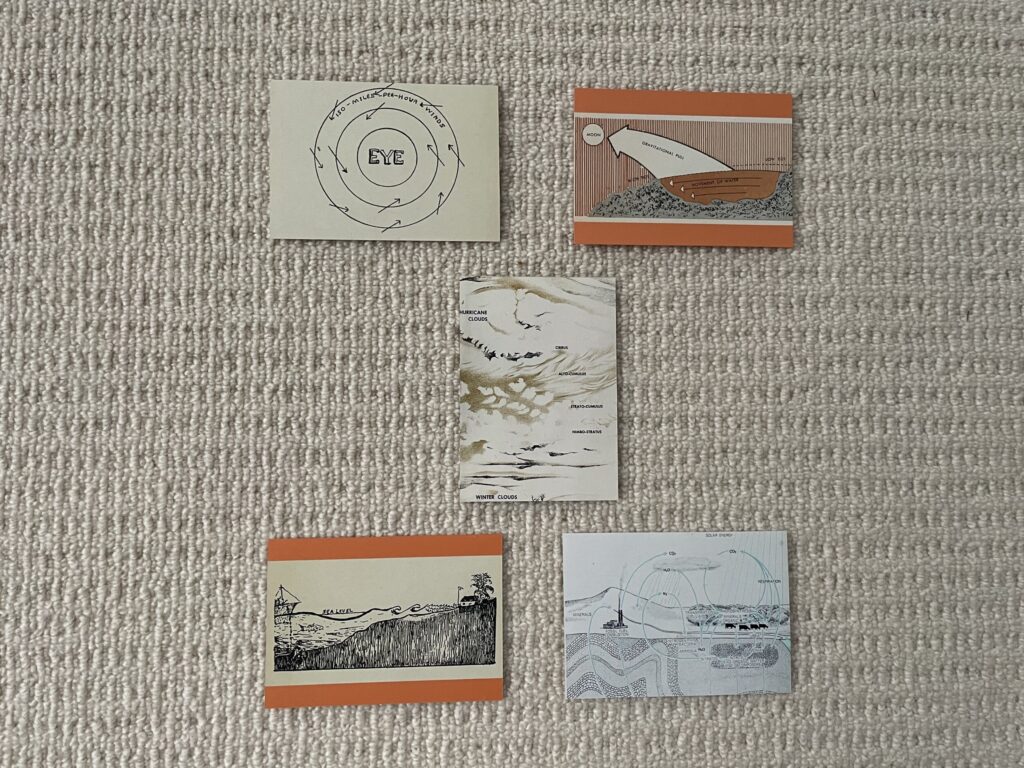
Sound the Sirens also includes a number of scientific diagrams, shown as smaller images on some of the spreads. These include measurements (of temperature, salinity, and other technical details), geological Earth core diagrams, sun drawings and eclipse silhouettes, hurricane rotation schematics and landfall histories, energy usage charts, water and wind current diagrams, seismic measurements, tide charts, and various other less identifiable data points and explanations. These provide concrete technical context for the destruction found in Anselm’s photographs, but of course we don’t engage with them enough, so as the pages turn, a few loose inserts fall out of the folded pages, revealing additional diagrams, as if to grab our attention and force us to physically see the scientific truth.
Seen as an integrated artistic argument, Sound the Sirens is memorably hard to ignore, even though that is exactly what seems to be happening far too much at this political moment. Anselm’s photobook is a valiant effort to alter the direction of the larger conversation, and his photographs make evident the harrowing realities and consequences of repeated destruction, displacement, and disaster across the United States, with even grimmer truths like the loss of life left out of his frames. His book is an urgent and persuasive call to action (a shout really), its title literally asking us to raise the alarm. While many of his images are compositionally compelling and well constructed, they are even more poignant and disheartening when seen in repeated bunches. We’ve seen this movie again and again at this point, so we can’t say we didn’t know what was happening, and yet we don’t seem to have collectively internalized the lessons of this scary situation at all. Perhaps Sound the Sirens can shake loose some new action, its impolitely unvarnished bluntness the kind of medicine we so desperately need.
Collector’s POV: Bryan Anslem does not appear to have consistent gallery representation, although he is represented by Redux Pictures (here) for his commercial assignments. As a result, interested collectors should likely connect directly with the artist via his website (linked in the sidebar).