JTF (just the facts): A paired show consisting of a total of 58 works, variously framed and matted, and hung against white walls in the main gallery space, the office area, and the smaller back room. (Installation shots below.)
The following works are included in the show:
André Kertész
- 2 gelatin silver prints mounted to board, 1920s/c1920s, 1936/c1936, sized roughly 9×8, 10×8 inches
- 2 gelatin silver prints mounted to paper, 1926/c1981, 1929/c1981, sized roughly 3×4, 4×3 inches
- 30 gelatin silver prints, 1917/c1970s, 1919/c1970s, 1928/c1960s, 1928/c1970s, 1929/c1970s, 1930/c1930, 1933/c1970s, 1939/c1960s, 1949/c1970s, 1952/c1952, 1952/c1970s, 1954/c1970s, 1958/c1970s, 1960/c1960, 1967/c1970s, 1970/c1970s, sized roughly 7×10, 8×10, 9×7, 10×8, 14×11, 20×16, 24×20 inches
- 1 gelatin silver print on ferrotyped paper, 1959/c1959, sized roughly 7×5 inches
- 3 SX-70 Polaroids, 1979, 1980, 1981, sized roughly 4×4 inches
- 1 c-print mounted to board, 1960/c1960, sized roughly 20×15 inches
- 1 Cibachrome print, 1979/c1979, sized roughly 10×8 inches
M. C. Escher
- 3 wood engravings, 1935, 1945, sized roughly 7×9, 11×6 inches
- 7 lithographs, 1931, 1932, 1944, 1953, 1955, 1956, sized roughly 9×12, 10×12, 11×12, 11×13, 12×13, 14×10, 14×18 inches
- 1 woodcut on Japan paper, 1938, sized roughly 15×27 inches
- 3 lithographs on wove paper, 1947, 1950, 1956, sized roughly 10×13, 12×12, 20×8 inches
- 1 woodcut printed from three blocks, 1952, sized roughly 10×13 inches
- 1 woodcut, 1947, sized roughly 13×10 inches
- 1 linocut, 1950, sized roughly 10×13 inches
- 1 lithograph on silver paper, 1935, sized roughly 13×8 inches
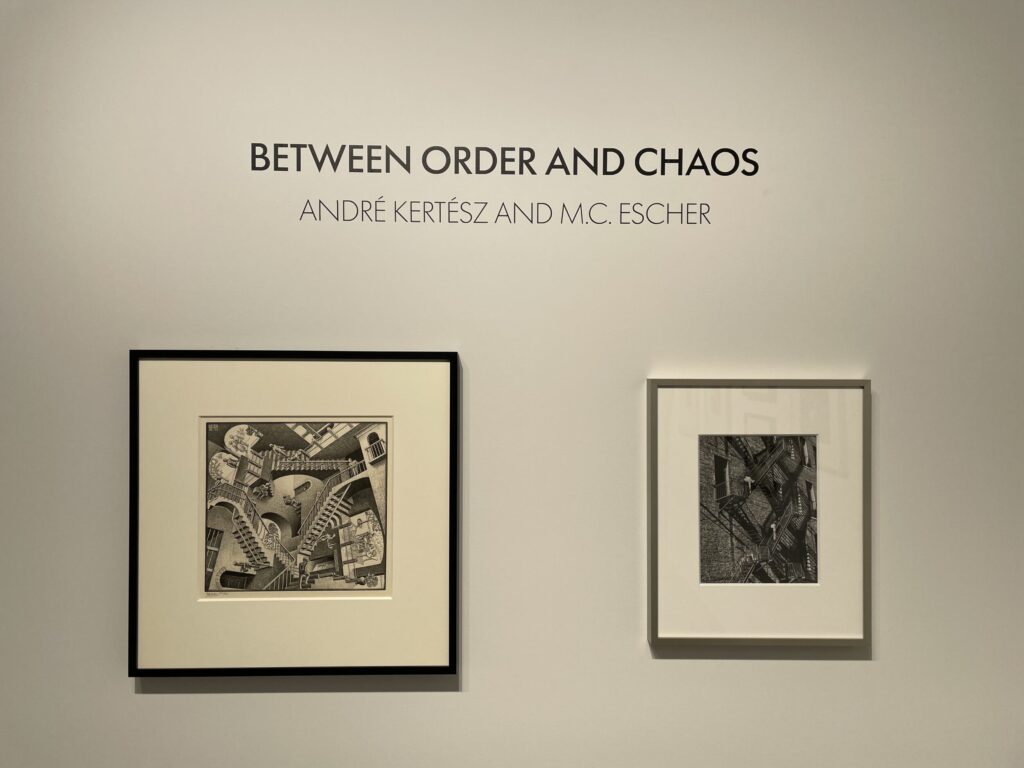
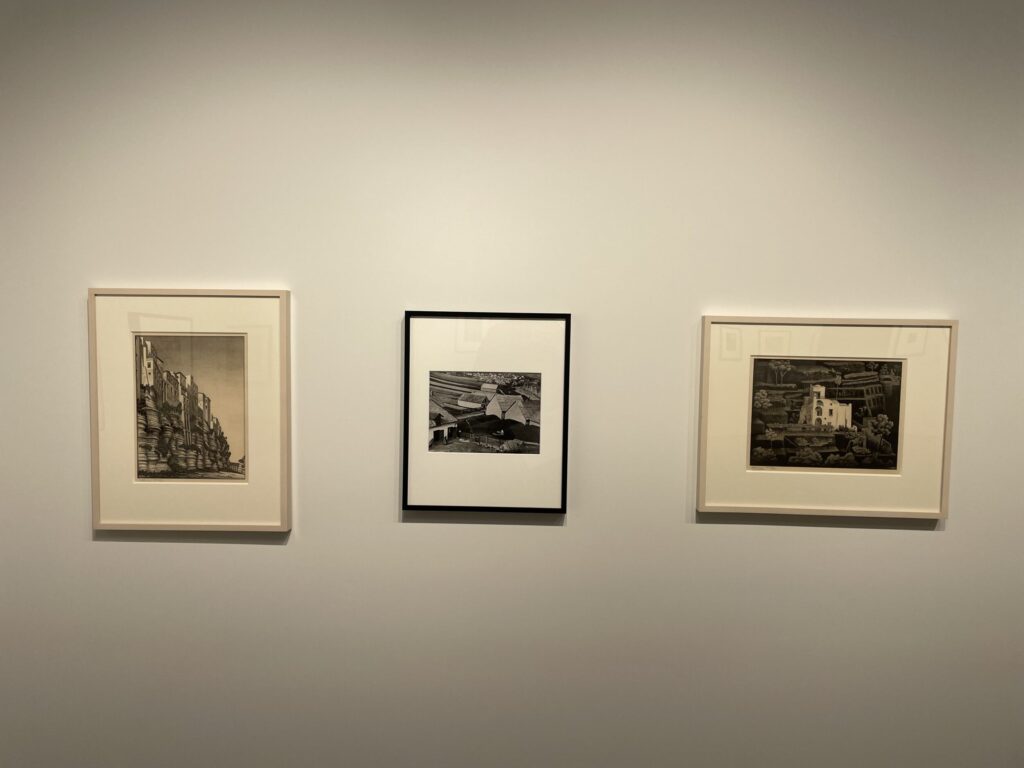
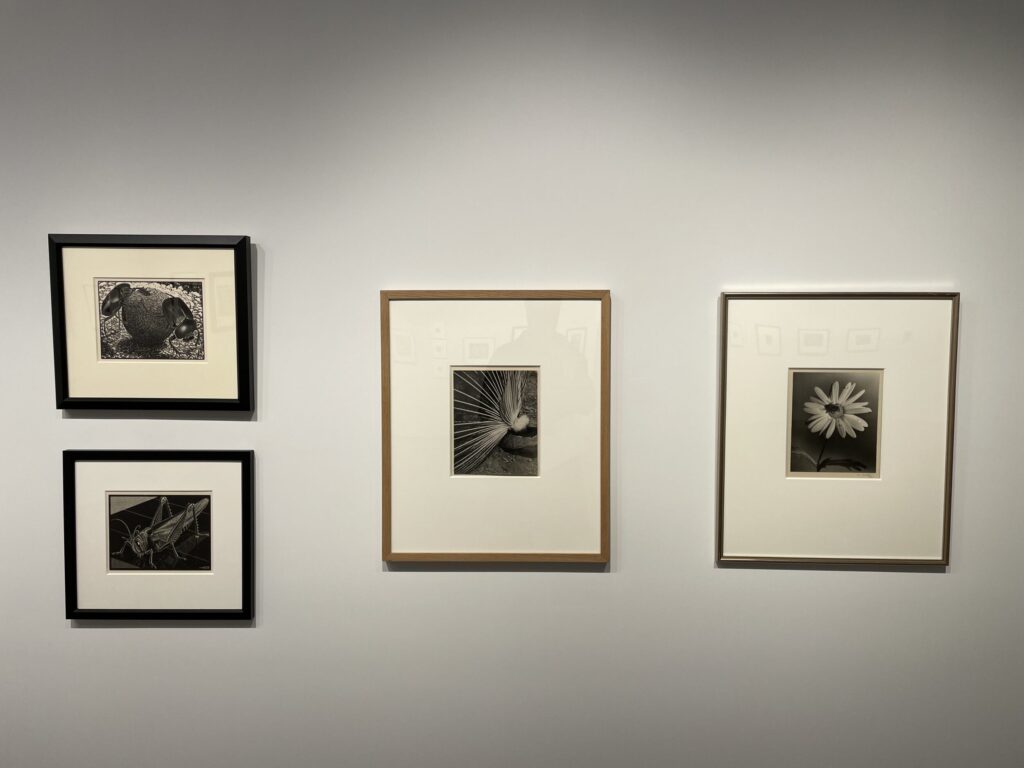
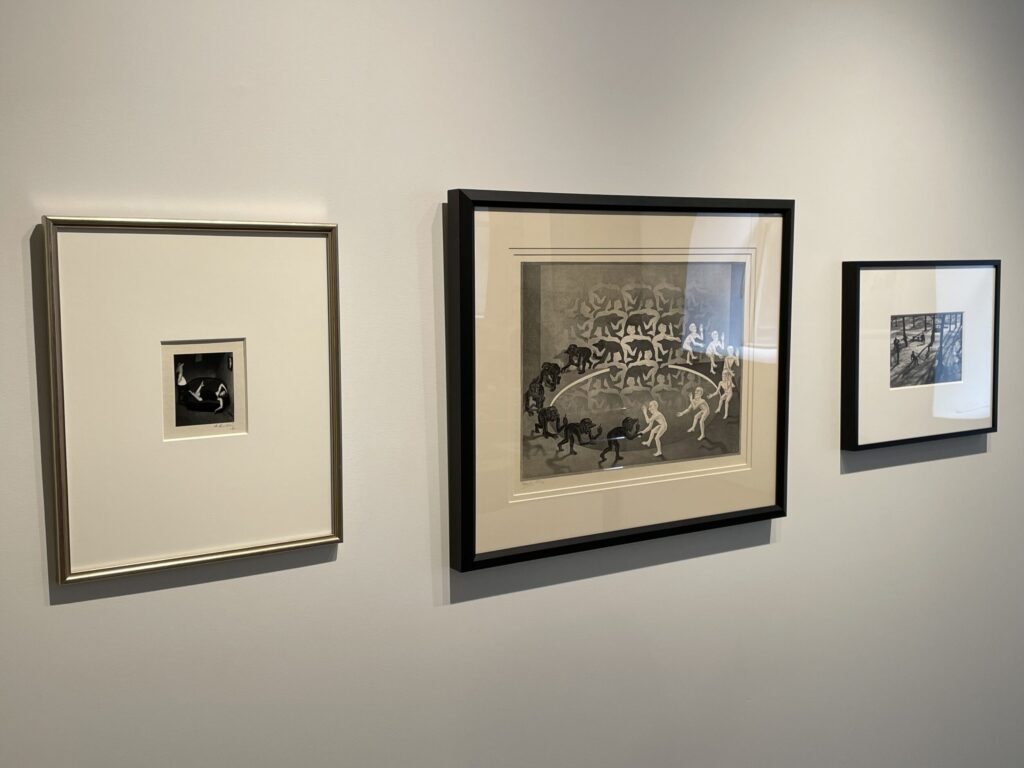
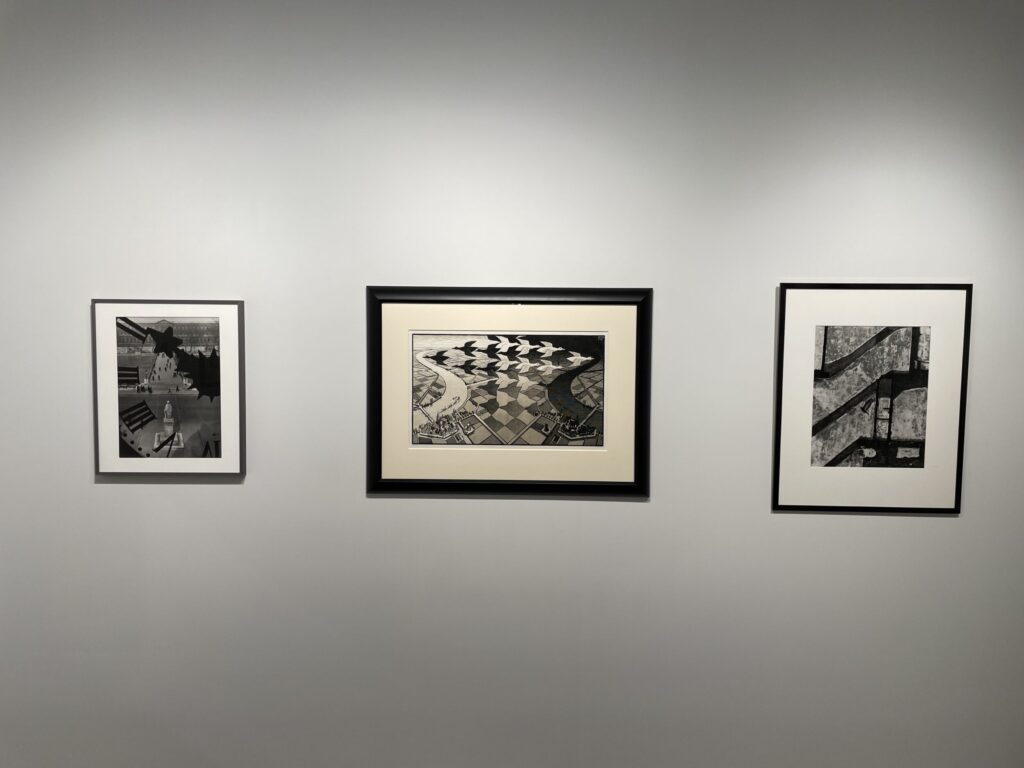
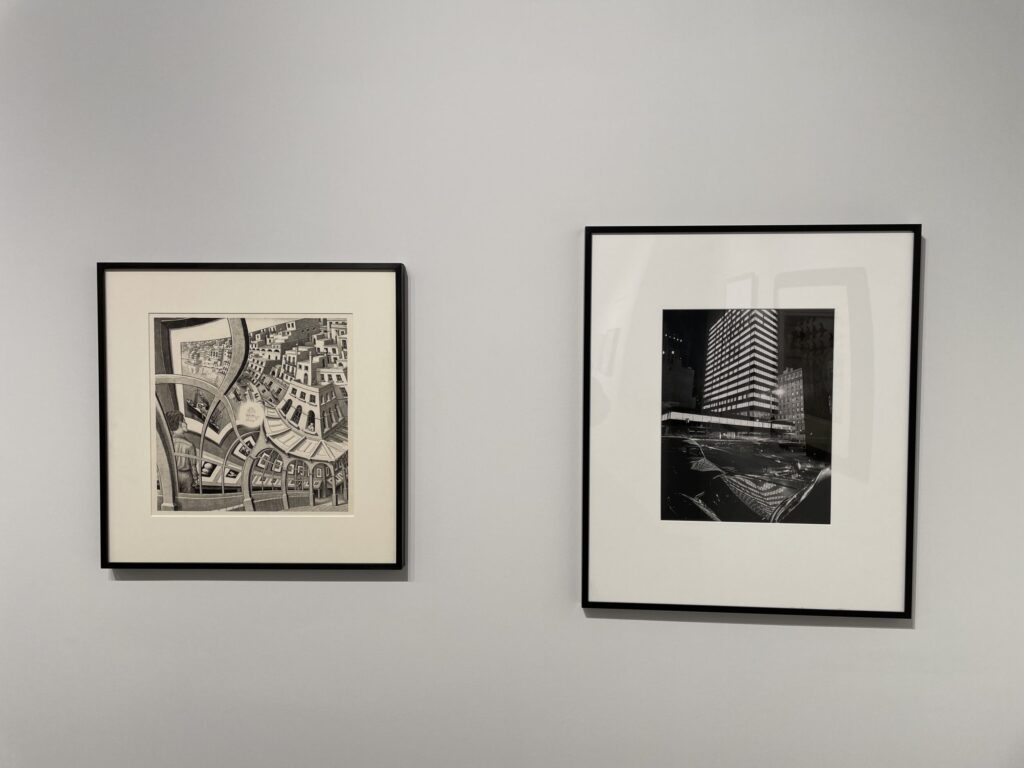
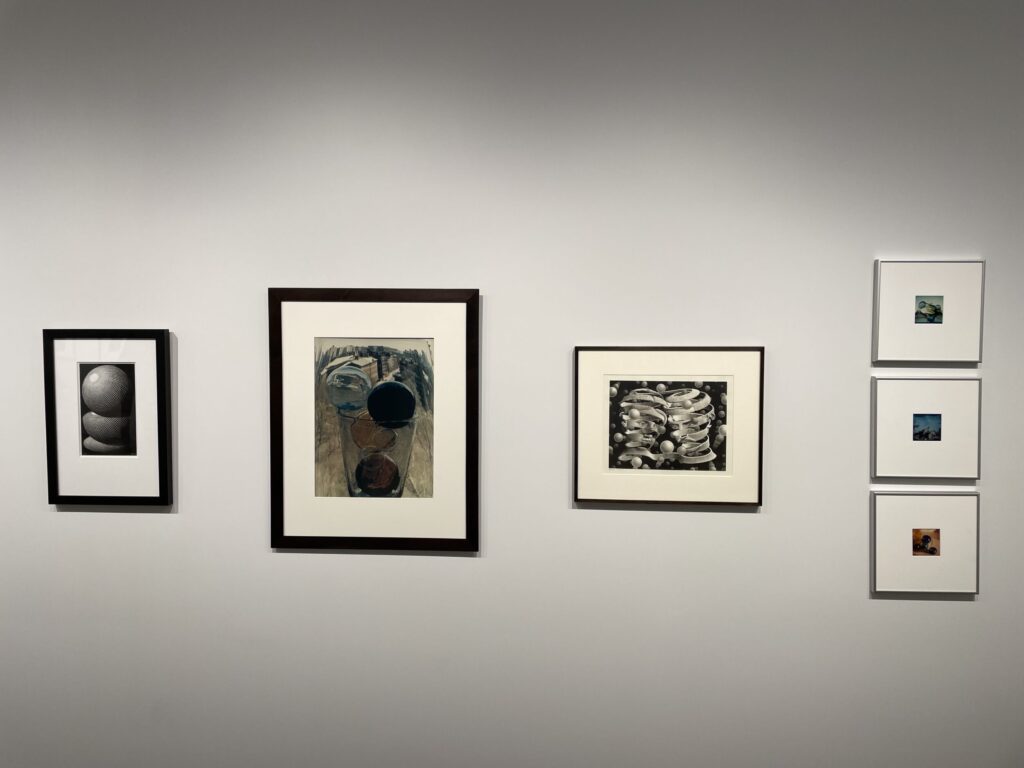
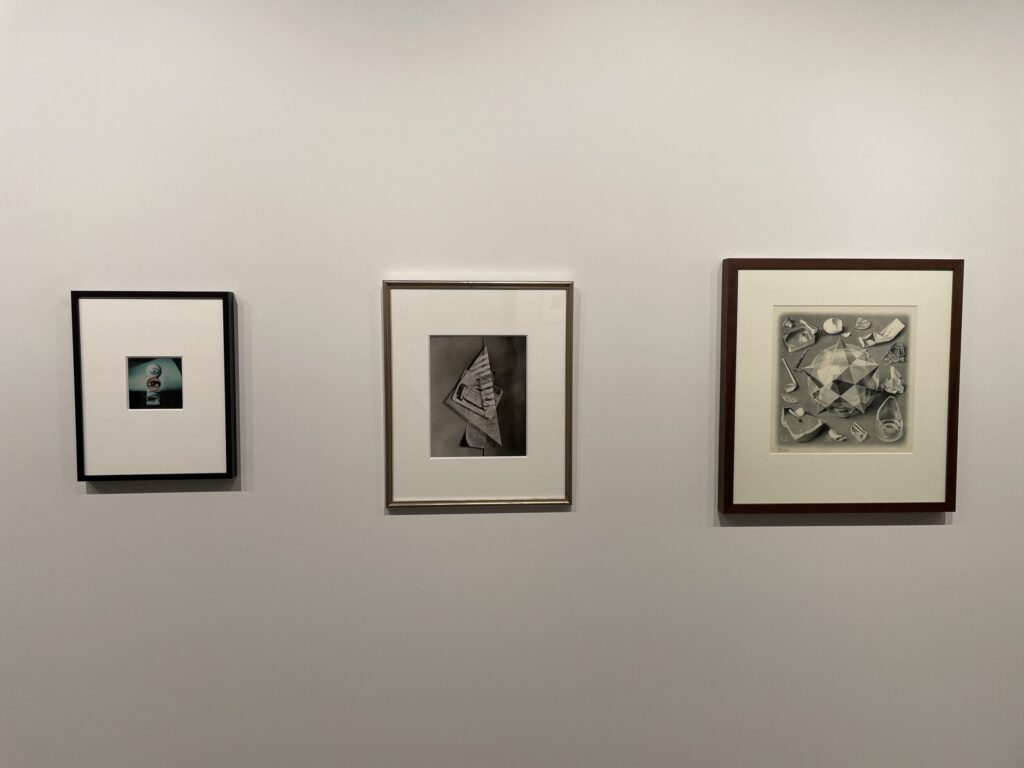
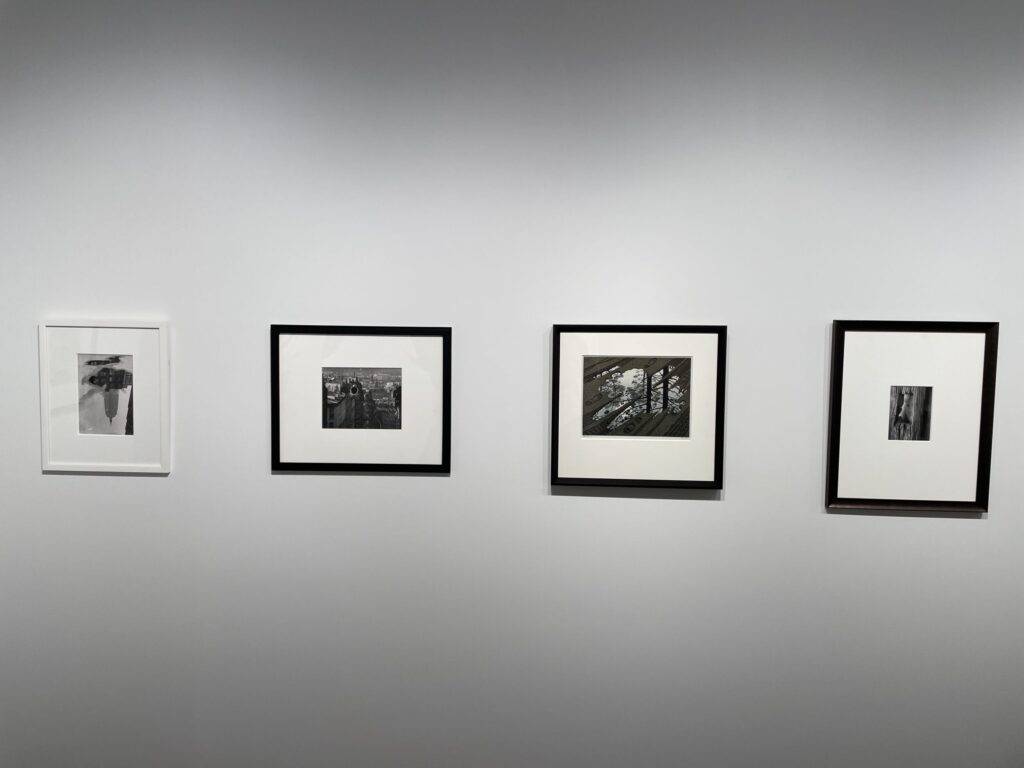
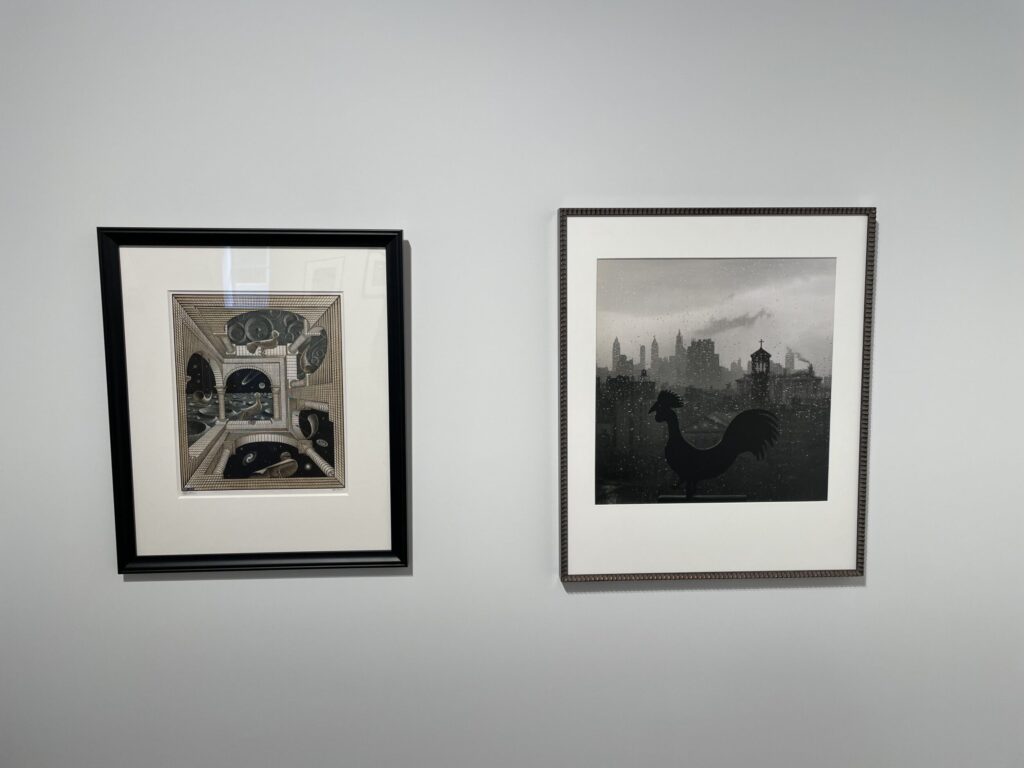
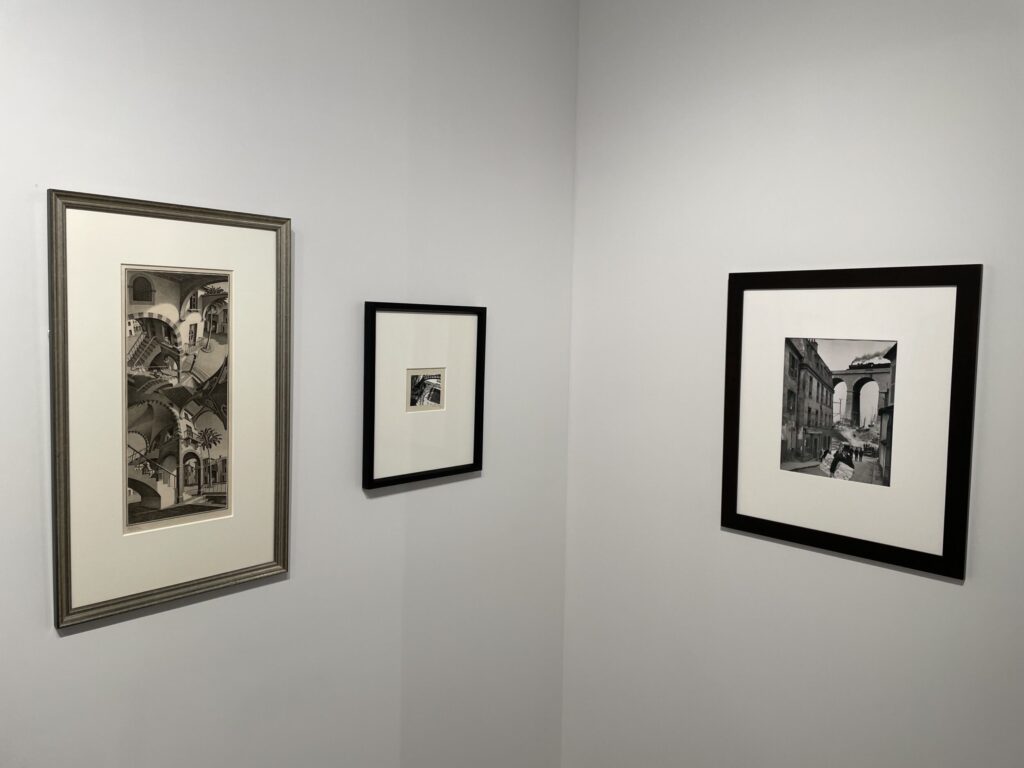
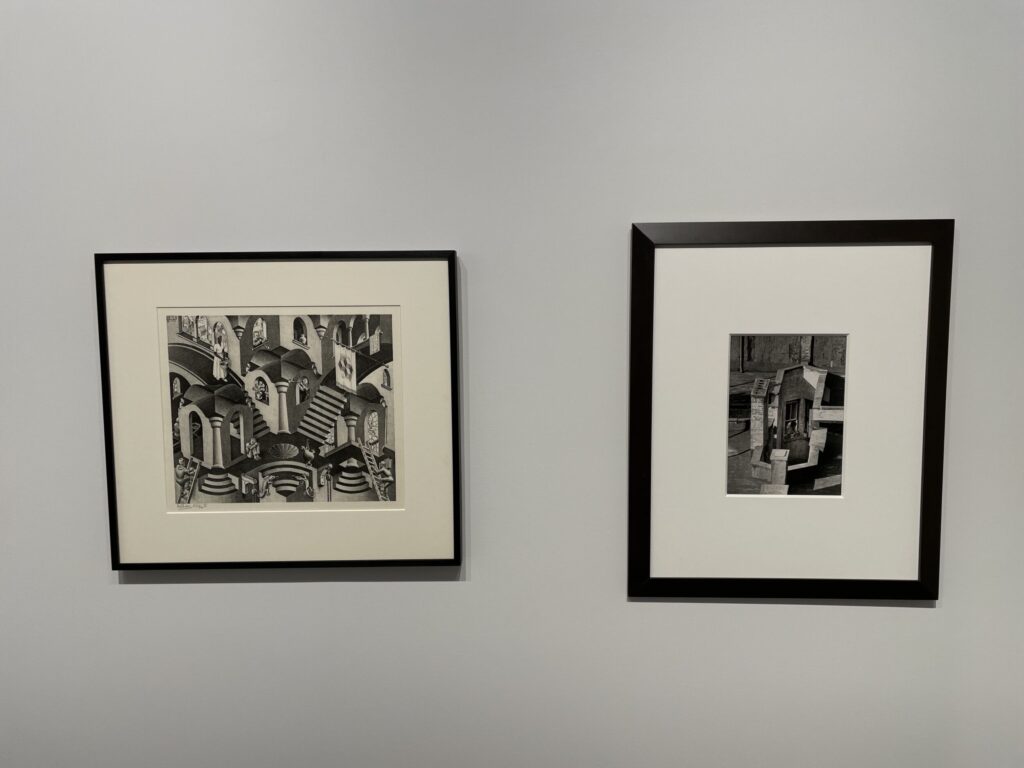
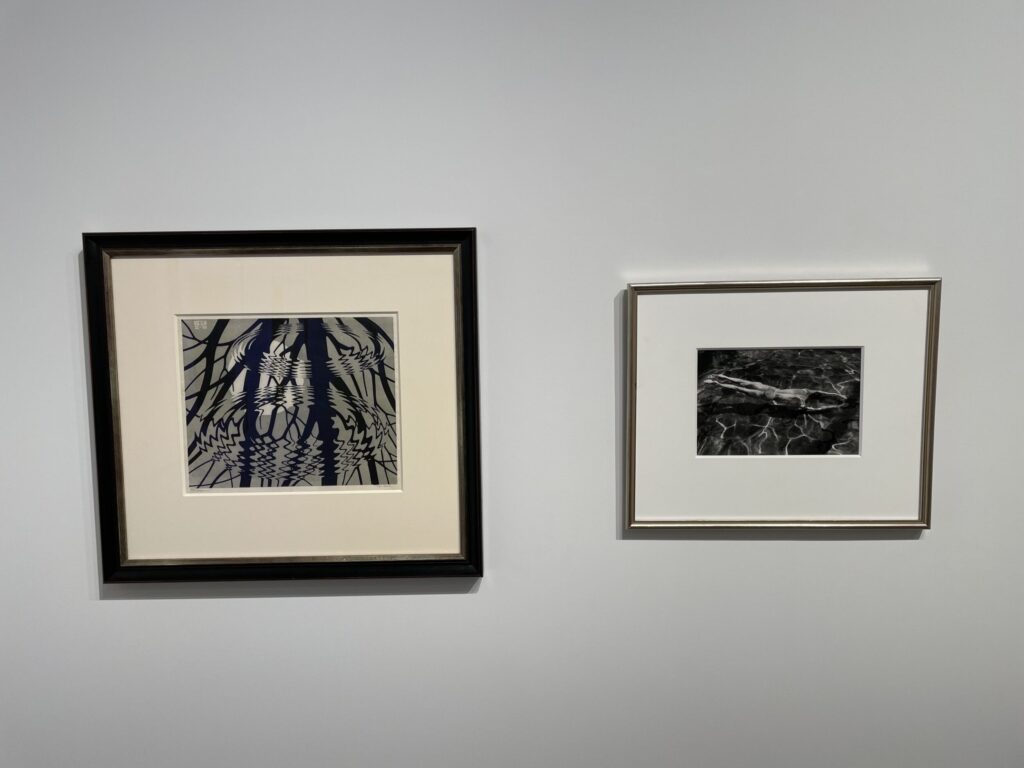
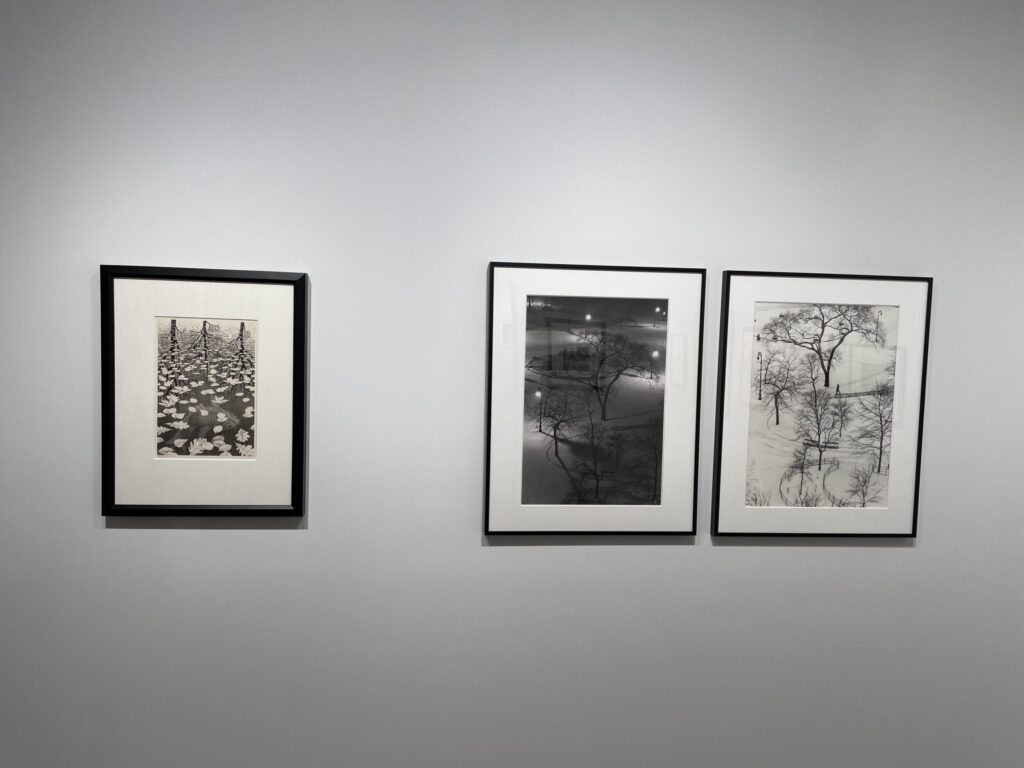
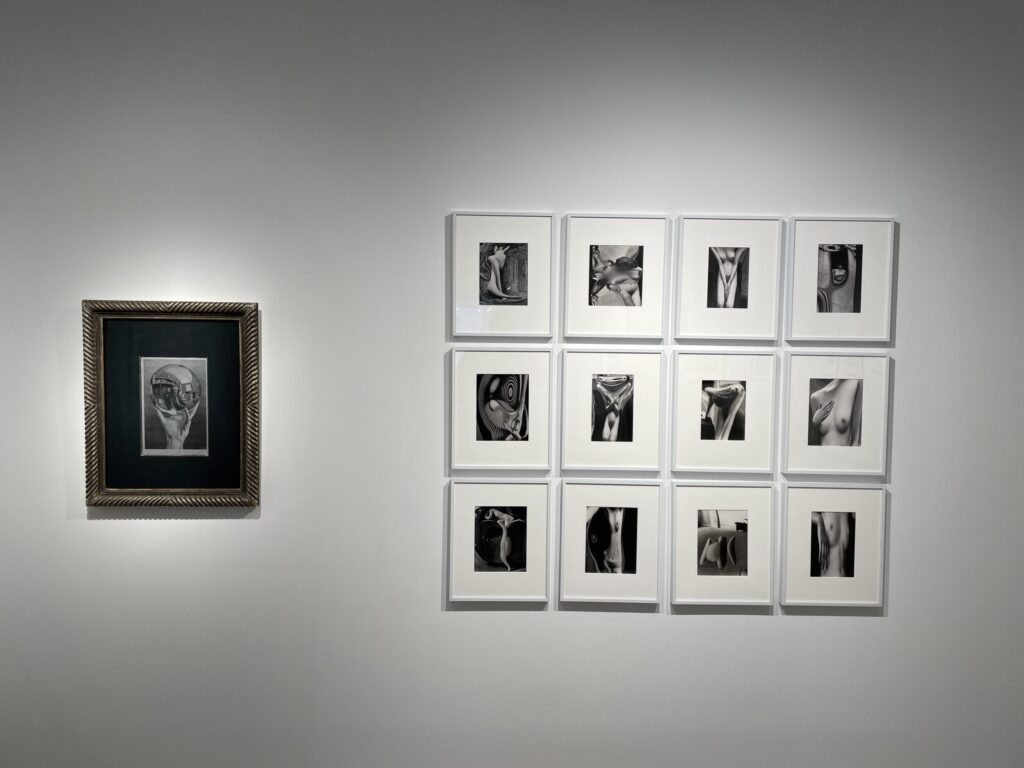
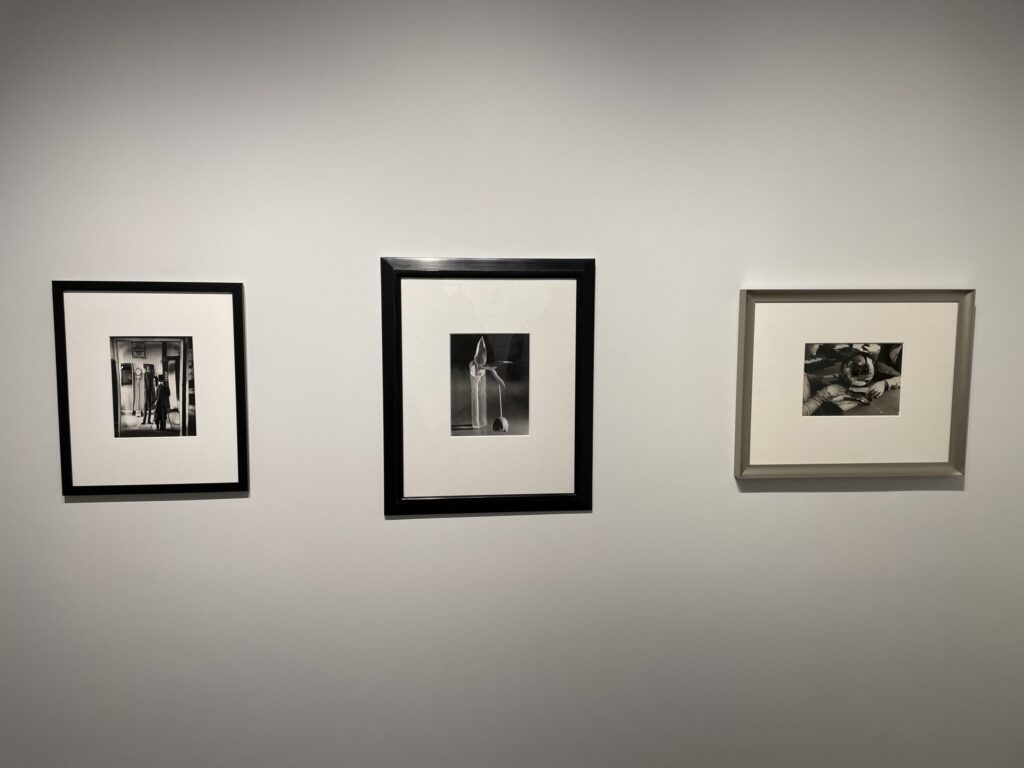
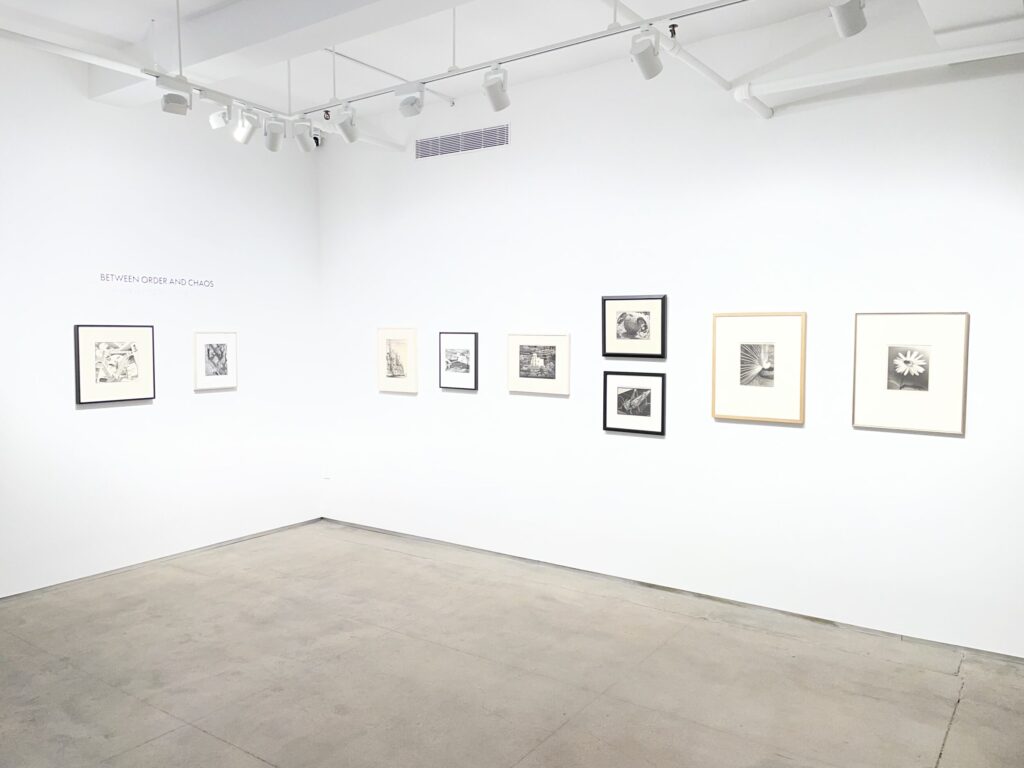
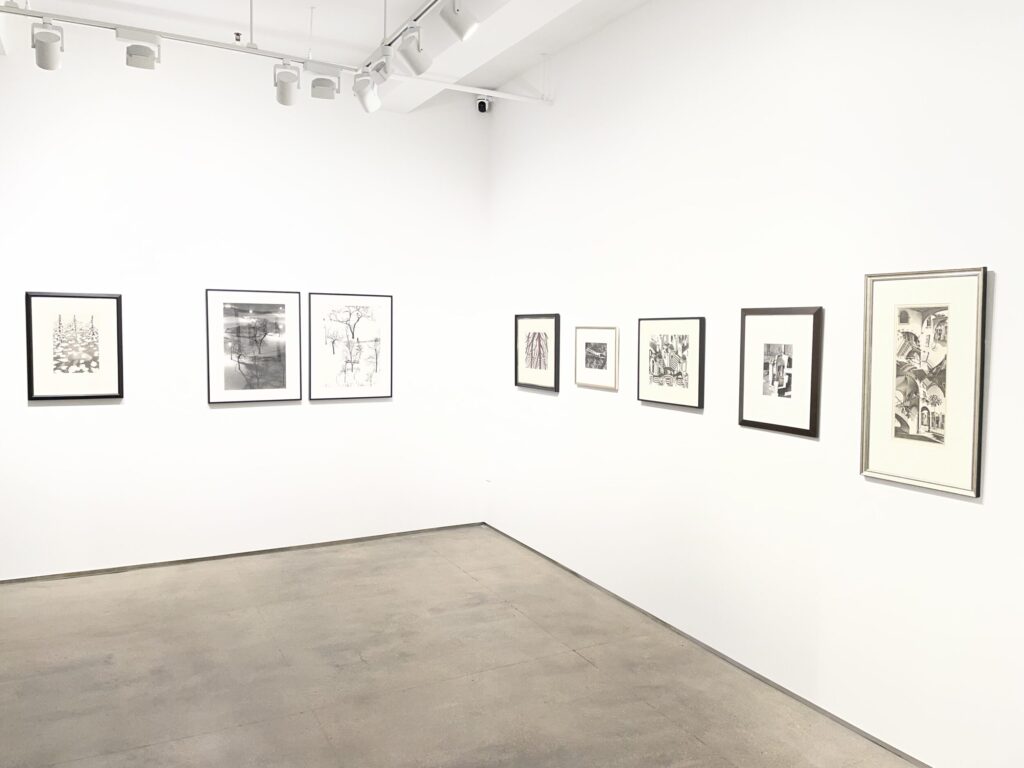
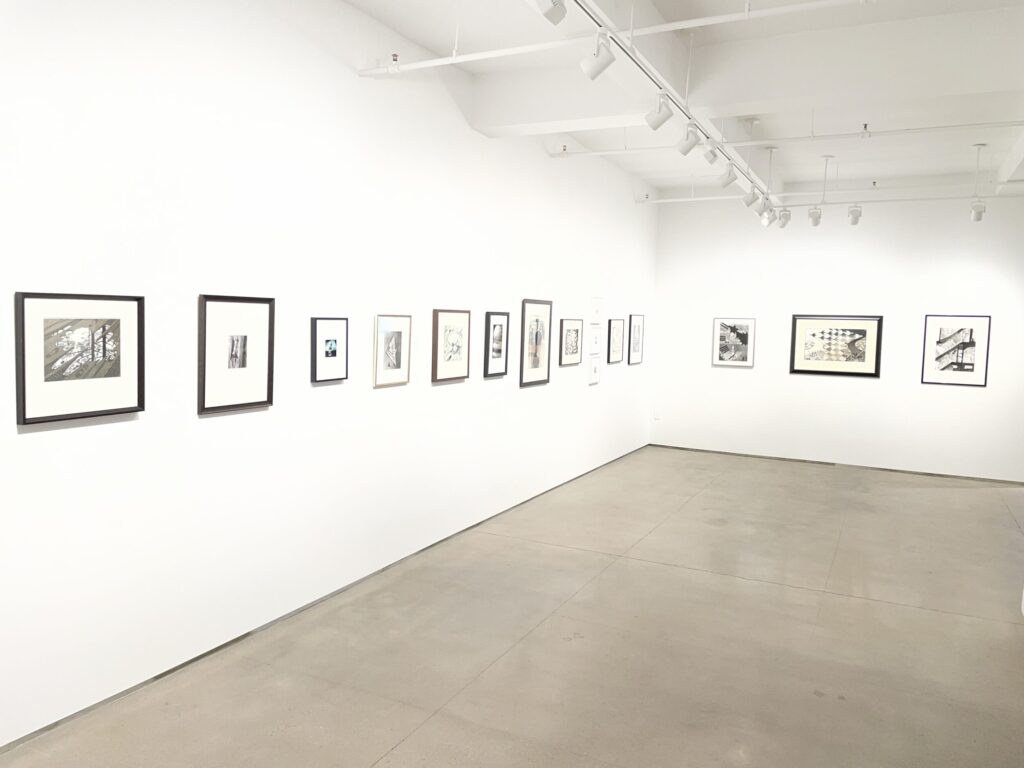
Comments/Context: At first glance, the photographer André Kertész and the graphic artist M. C. Escher don’t seem to have all that much in common. Aside from both being native Europeans and both being born in the last decade of the 19th century (and thereby active artistically through much of the middle of the 20th), the similarities might end there. But with some aesthetic links between pictures that edge away from reality toward the surreal and the impossible and a little curatorial flair, this exhibit connects the two with unexpected elegance and resonance, via insightful pairings that tease out unexpected echoes.
Subject matter can of course provide an obvious point of commonality between many artists, and this show does have its fair share of repeated subjects. But what gives the conceptual link between Kertész and Escher some richness and heft is the way the two actively used distortion, perspective, geometric structure, and even intentional illusion to rethink how everyday reality could be transformed or re-imagined in extraordinary ways. In this way, both were using their own artistic tools to re-visualize the world, recognizing opportunities for redefining perception all around us.
Architecture provides the raw material for visual experiments by both artists, and paired sets and sequences in the gallery offer easy comparisons. Kertész looked up at the interlocking back and forth angles of fire escapes, while Escher created impossible connections between angled staircases. Kertész noticed the distorted curves of a reflected building in the hoods of parked cars, while Escher pushed those kinds of flared bends even further in city buildings that reach down into an arched gallery. Kertész looked down on the black-and-white geometric planes of nearby rooftop edges, while Escher used similar alternating contrasts to punctuate a dizzying twist of stairways, arches, and columns. And Kertész played with the compositional possibilities of railway arches and the curves of the Eiffel Towel, while Escher turned other archways into an contradictory tangle of multiplied recursive space. In each pairing, structure is celebrated and undermined, discovered and then destabilized.
This kind of tit for tat thinking can of course go the other way as well. Escher offers a reflection of trees in a muddy road puddle (cut with tire tracks and footprints) and Kertész comes back with a face peeking through a hole in a tree, a gutter puddle reflecting the Empire State Building, and a hole broken in a plate glass window. Escher pays attention to the rippled surface of water that distorts the dark branches of a tree, and Kertész responds with an underwater swimmer elongated by the dappled and distorted light through the water. And Escher uses reflected trees to anchor a view of fish in a pond, while Kertész uses trees (flipped in the other direction) to organize views of Washington Square in the snow, both at night and during the day.
This show is filled with this kind of clever back-and-forth visual dialogue. Both artists experimented with more contrived setups and still lifes, playing with the possibilities of glass balls and floating orbs, stacking rounds into mini towers, creating arrangements of angled geometric tools and origami shapes, and using mirror balls to create rounded reflections of hands and surrounding rooms. And both used close up still life observations of bugs to make these humble creatures seem special.
Such witty visual repartee is hard to sustain at length, particularly in a couple of cases where each artist offers his own essentially unique innovations. For Escher, this comes in compositions that use figure and ground reversals of light and dark to shift foreground and background, like a checkerboard unraveling. In this show, he does this with birds in flight and dancing bodies, the light becoming dark and vice versa with ingenious dexterity. Kertész can’t really match this kind of transformation photographically, although several prints are uncovered that use contrasts of light and dark and foreground/background flattening to mimic some of Escher’s ideas.
For Kertész, his distorted nudes made with a carnival mirror have no real equivalent in Escher’s world. An extended grid of these nudes fills one wall of the show, the doublings, blurs, twists, and elongations abstracting the bodies beyond recognition. Escher never really went quite as far, always staying within the boundaries of recognizability – Kertész’s nudes reach far across those lines, transforming bodies into smeared shapes that contort with gloriously surreal mystery.
With Escher as an artistic foil, Kertész’s consistent interest in disorienting visual constructions becomes even more clear. For Escher, the paradoxes are made central, almost challenging us to make sense of them, while for Kertész, those same paradoxes turn almost poetic, like found versions of reality that the photographer has shifted into a more elegant plane of vision. In this way, bringing Escher into the conversation reframes Kertész’s eye, amplifying his push to subtly take photography beyond the limits of reality.
Collector’s POV: The Kertész photographs in this show range in price from $6000 to $40000, while the works by Escher are priced between $6500 and $135000 (with one work NFS). Kertész’s works are routinely available in the secondary markets, with many prints (and portfolios) coming up for sale in every season. Recent prices have ranged between roughly $2000 and $200000.




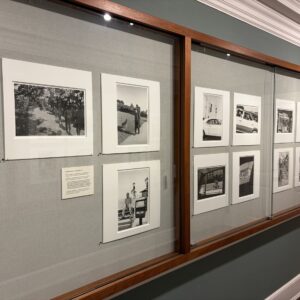
Are these Kertesz’s original distortion nudes or the ones he made about 1984 when he was offered an apartment in Paris? I saw the latter three times about 4-6 weeks apart: 1st as contact sheets. Later as 8×10 inch prints. Finally as sequenced 11×14 inch exhibition prints. The latter was so moving that I burst out crying halfway through and he had to jump up and bring me a box of Kleenex to stop the flow. I haven’t seen the last ones anywhere. He is my very favorite photographer, very moving, imbued with feeling as well as brilliant composition!!!! Thanks,