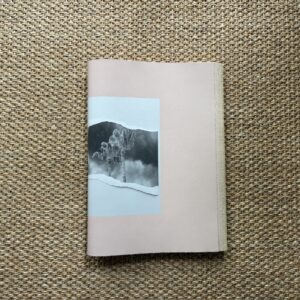
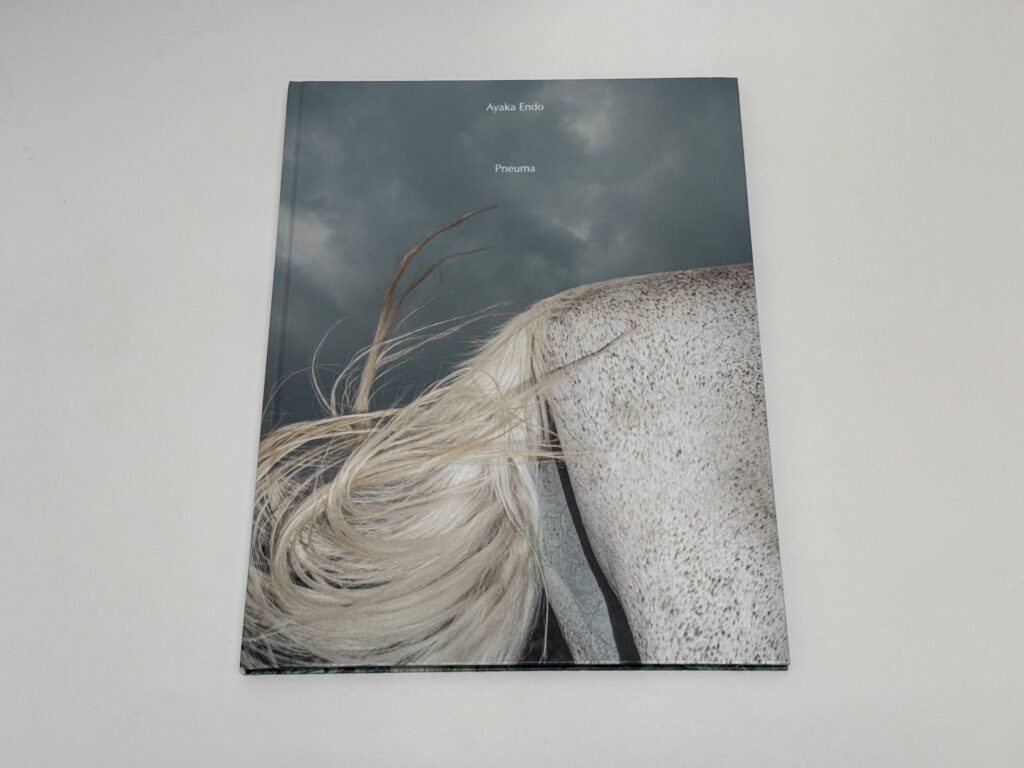
JTF (just the facts): Published in 2026 by roshin books (here). Hardcover (28.9 x 21.3 cm), 80 pages, with 60 color photographs. Includes an essay by the artist (in Japanese and English). Design by Hiromi Fujita. In an edition of 1000 copies. (Cover and spread shots below.)
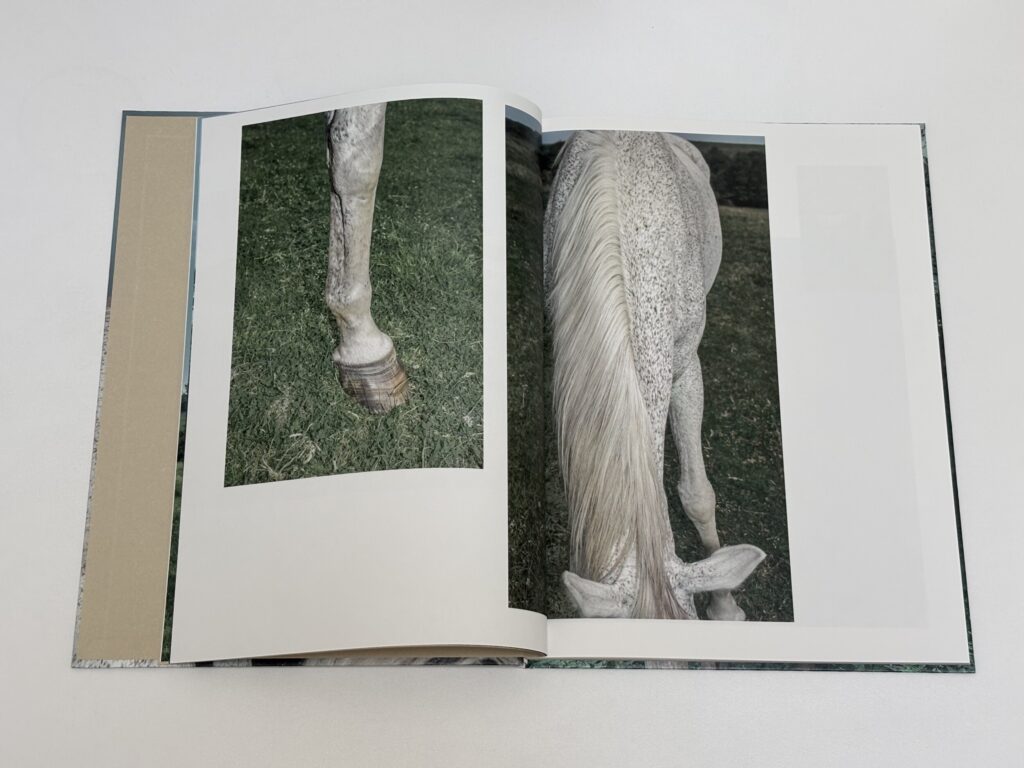
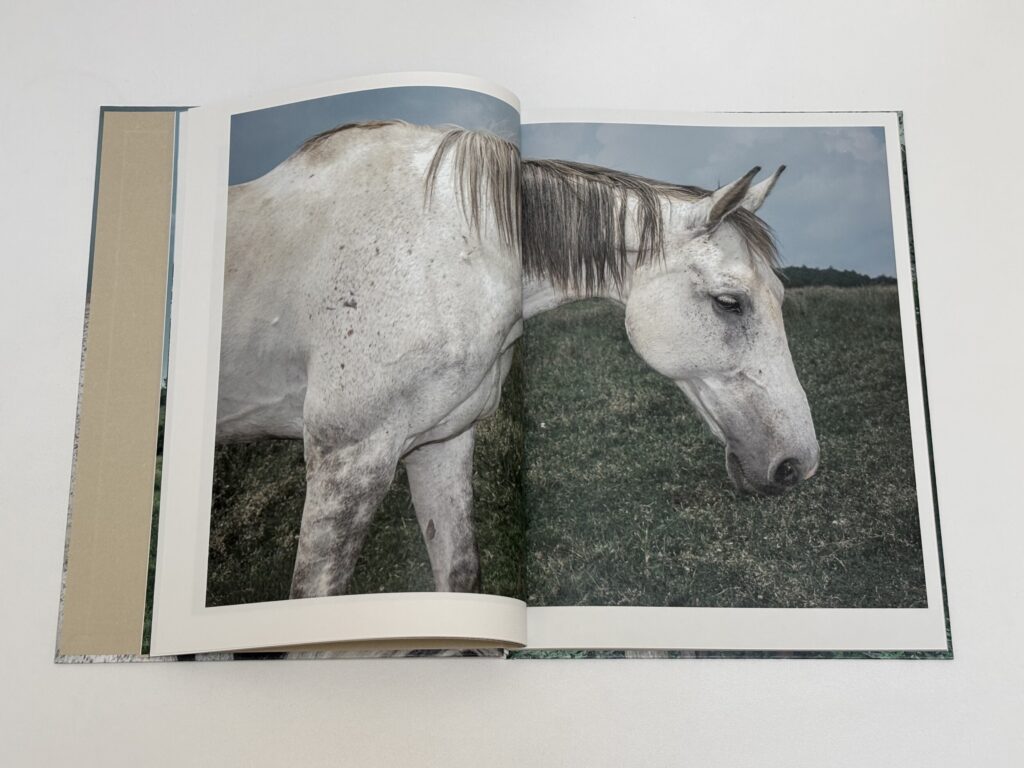
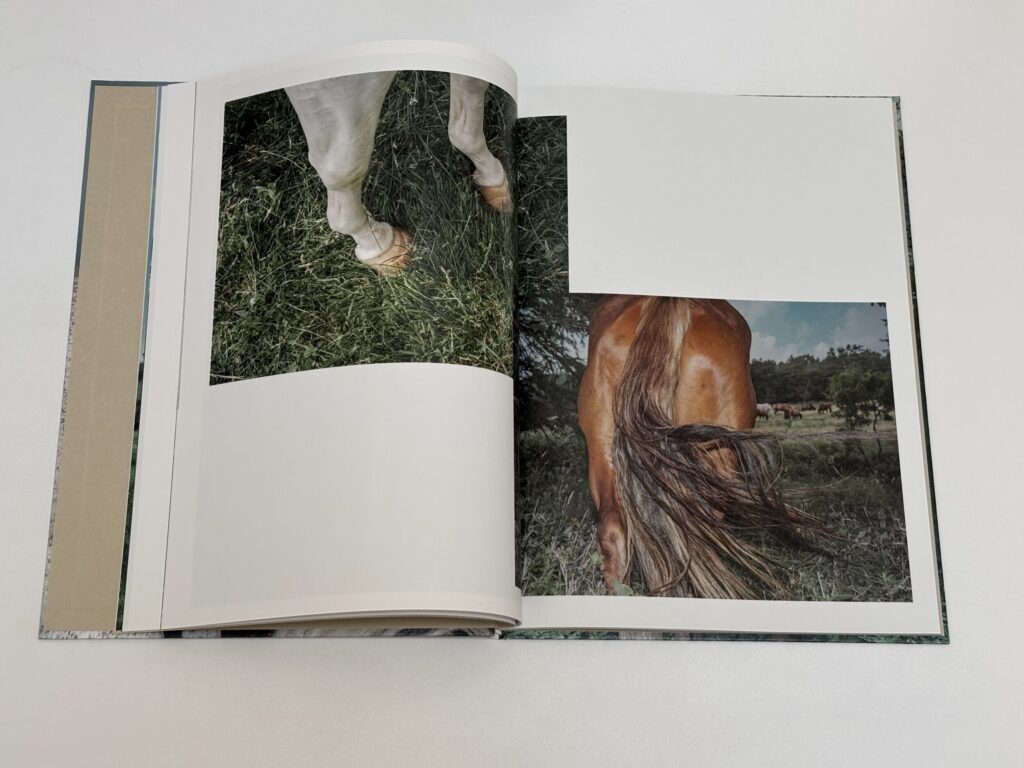
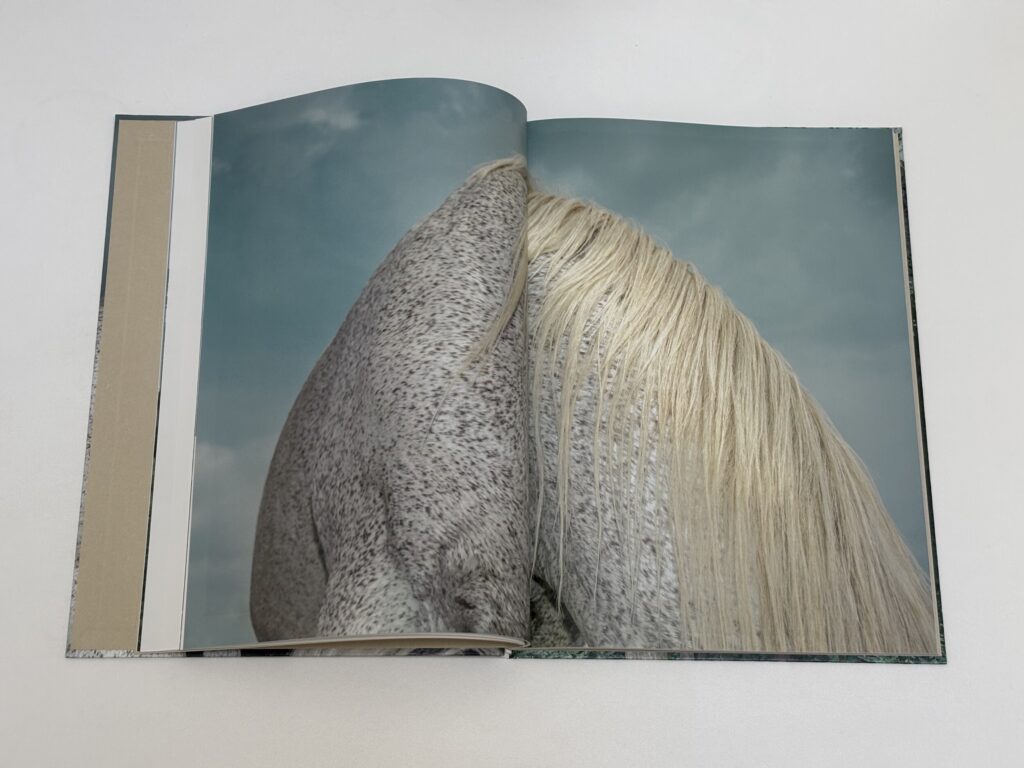
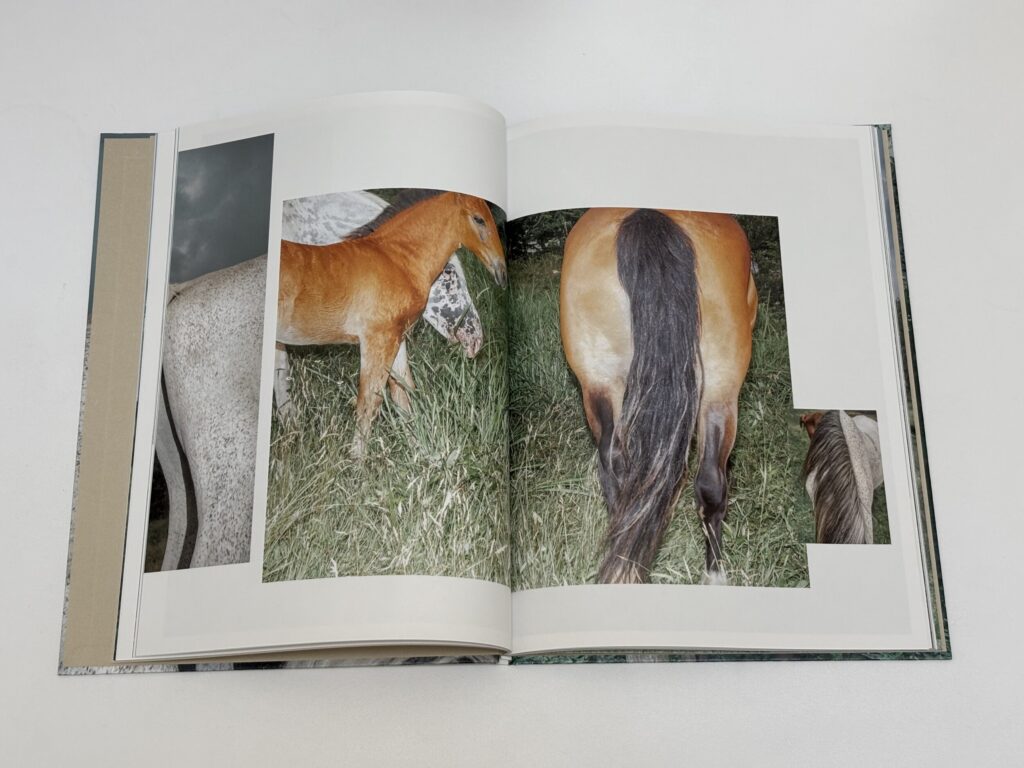
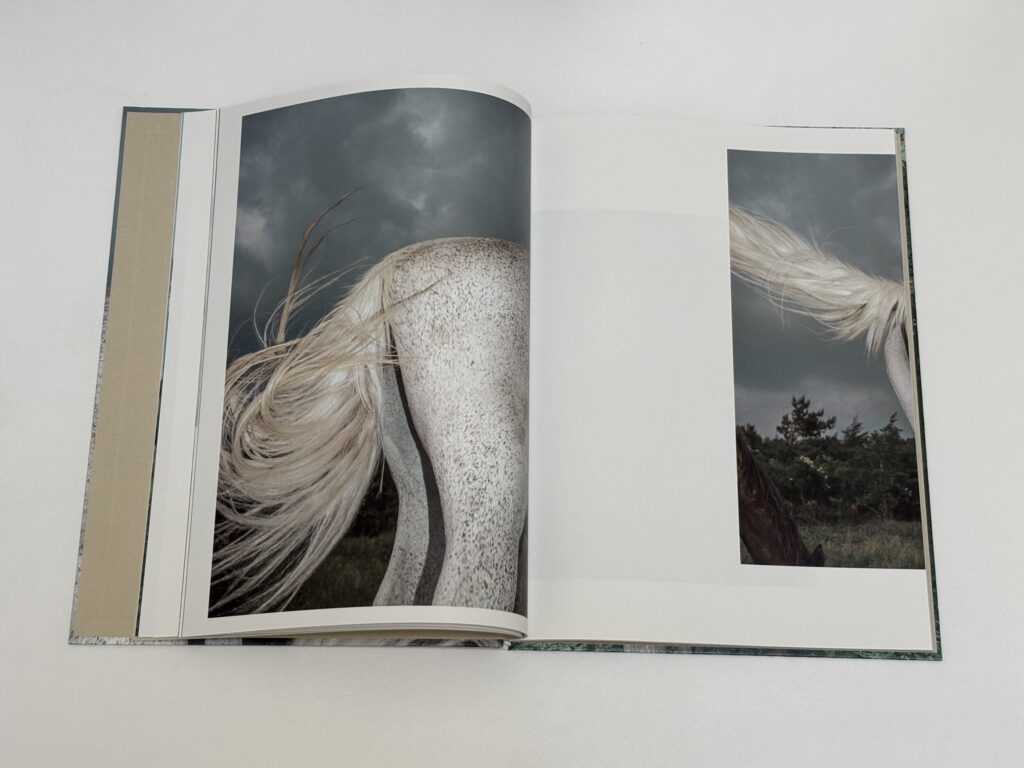
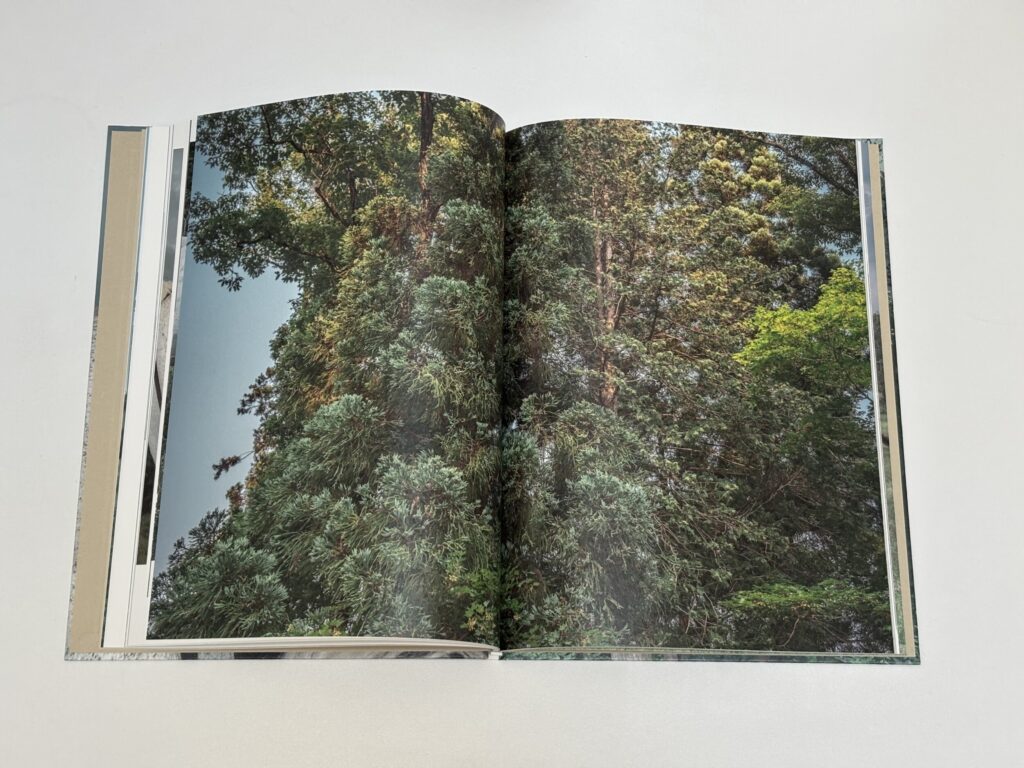
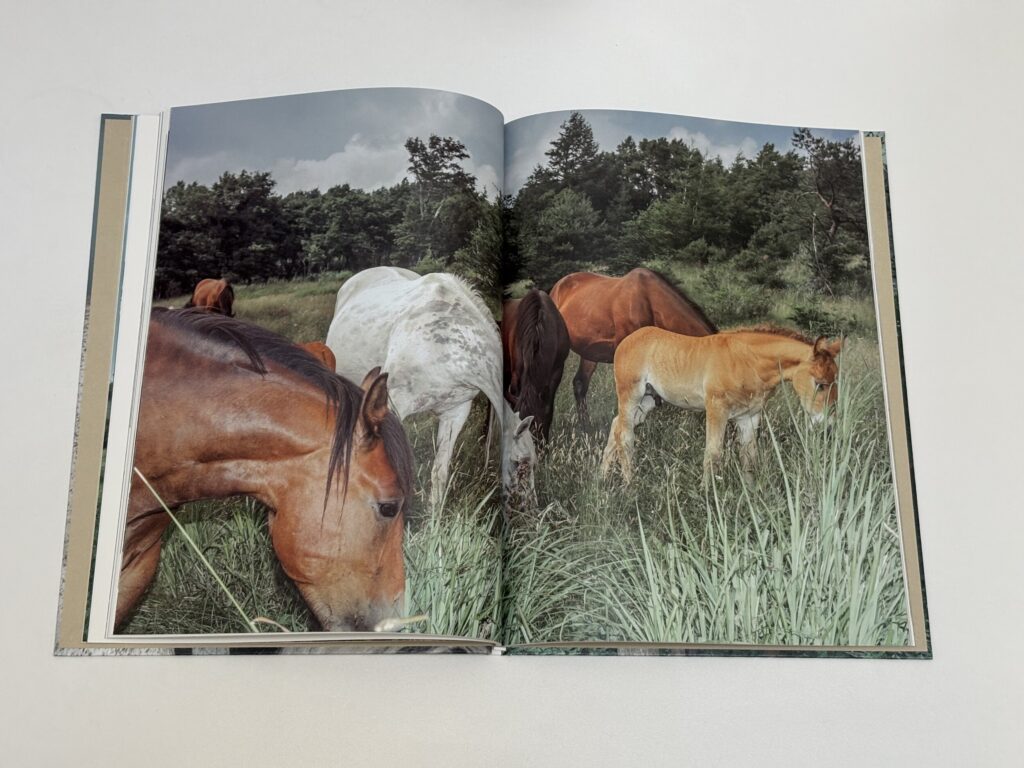
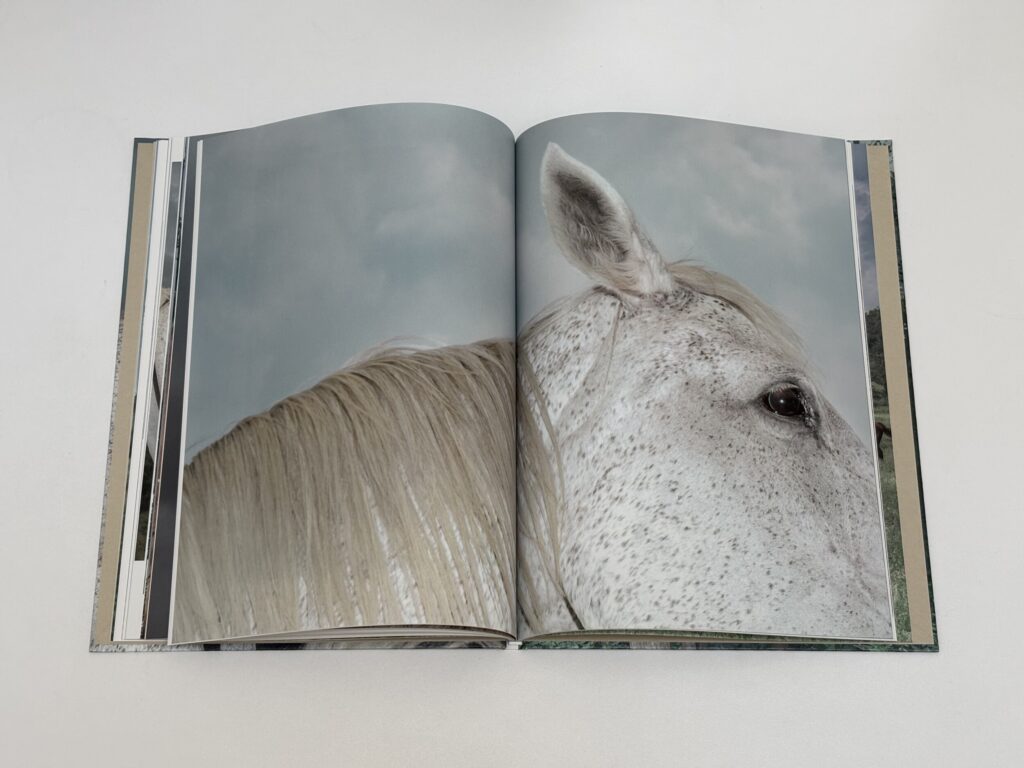
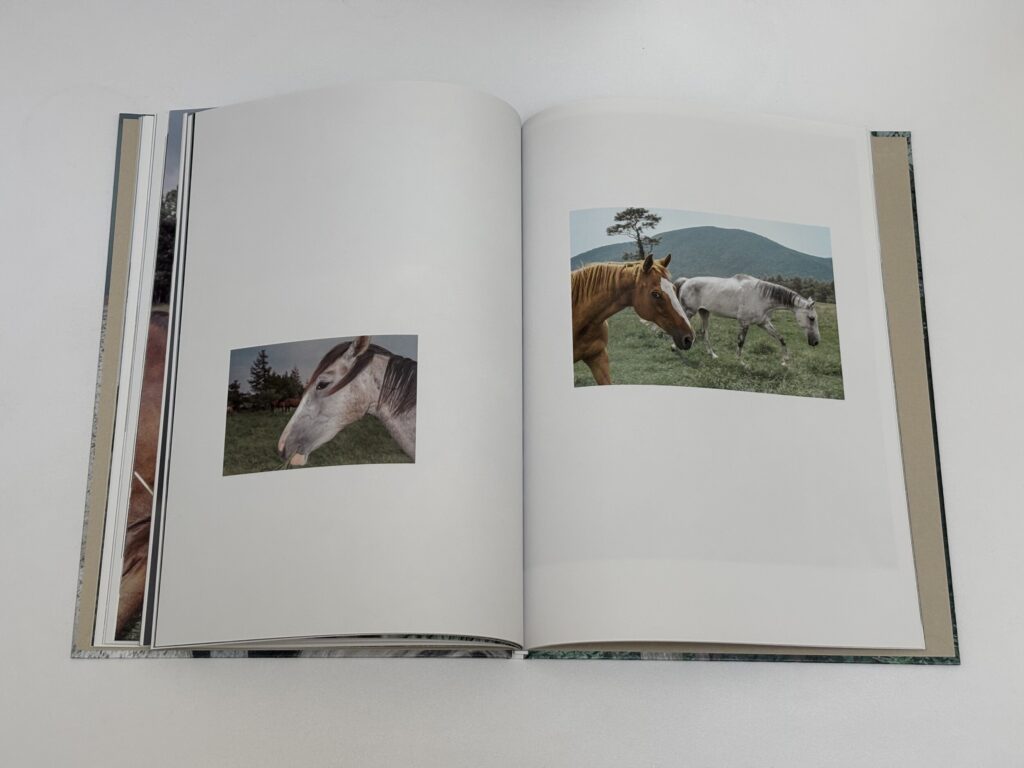
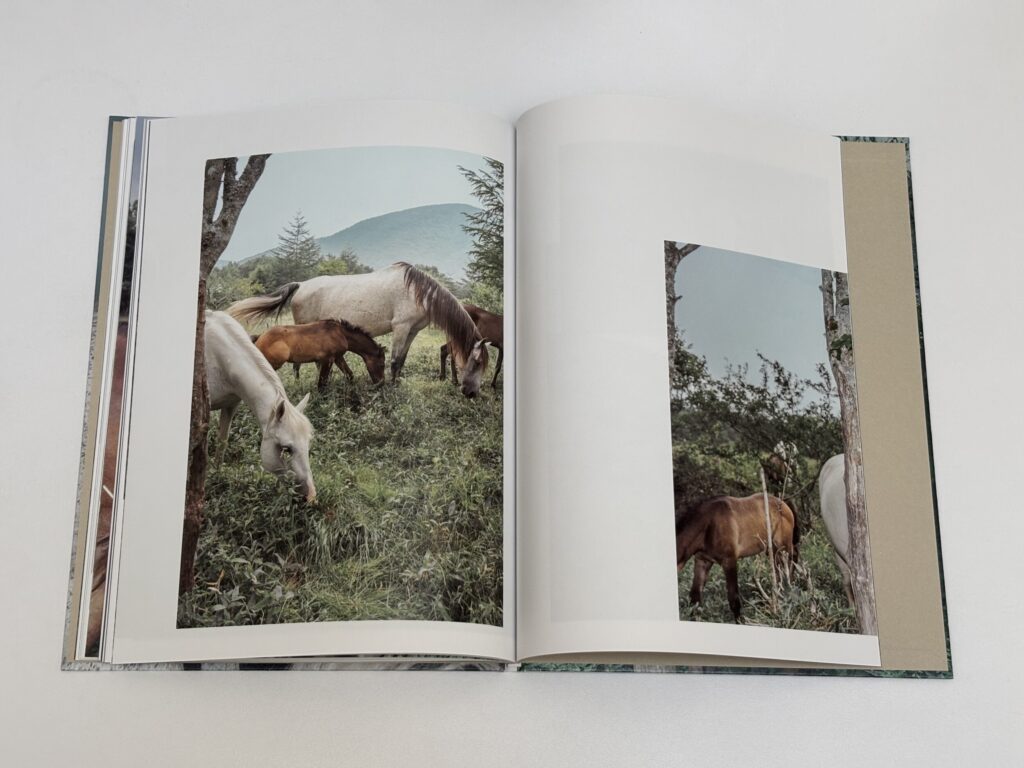
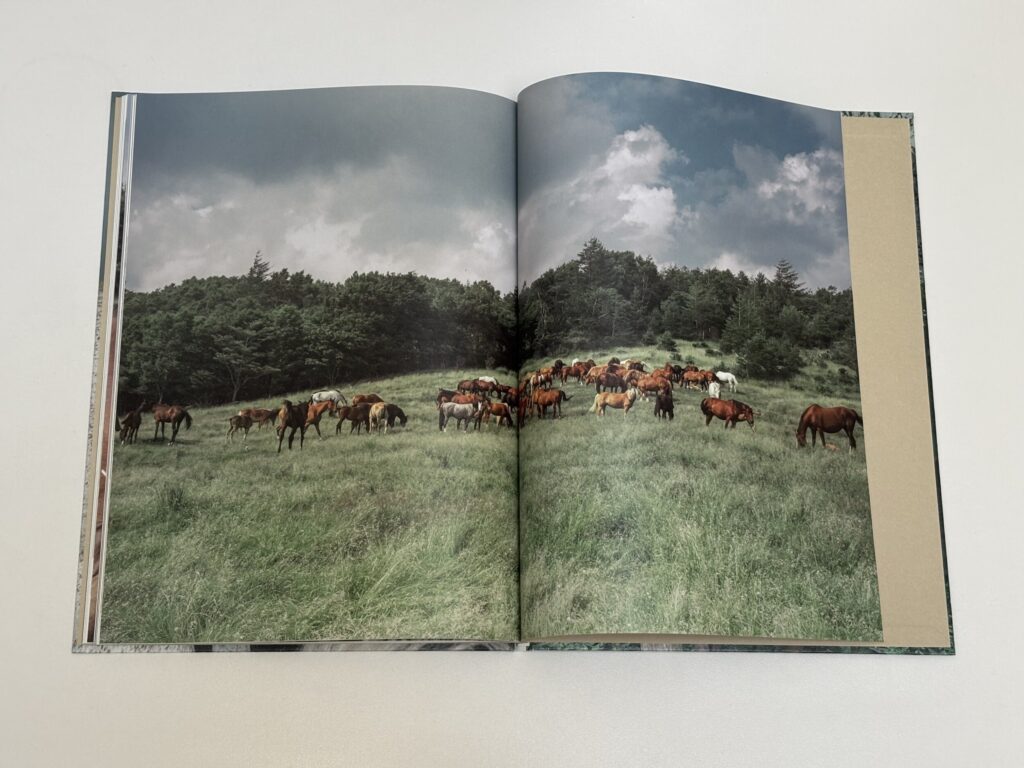
Comments/Context: The title of Pneuma, a new photobook by the Japanese photographer Ayaka Endo, points toward the immaterial. Derived from the ancient Greek word for “breath,” “wind,” or “spirit”, pneuma refers to an invisible force that moves between bodies. Yet the book is remarkably grounded in physical experience. Its photographs emerge from an encounter with a herd of free-ranging horses living in the highlands of Tono, an experimental “horse-first” environment where the animals roam without reins or horseshoes. The region is frequently described as a repository of Japan’s mythic imagination and cultural origins. Rather than treating the animals as symbols or anthropological subjects, Endo focuses on their presence, using the camera to observe and record moments of connection between herself and the horses.
The resulting book is less a study of horses than a meditation on proximity. Again and again, Endo moves close to her subjects. She frequently photographs at close range, focusing on details of the animals’ bodies and movements. Scale and perspective are often ambiguous, and individual images sometimes emphasize texture, light, and form over clear description. These choices create photographs that are at once observant and formally attentive.
As a photobook, Pneuma feels light, intimate, and surprisingly dynamic. Relatively slim in format, it is printed on delicate paper that reinforces the book’s sense of fragility and movement. The cover features a horse seen from behind, cropped tightly so that its body fills most of the frame. Its pale mane and tail sweep diagonally across the image, lifted by the wind against a softly clouded sky. Endo’s name and the book’s title appear discreetly at the top, allowing the photograph to remain the primary focus. Throughout the photobook, the images constantly change in both size and placement on the spreads and the visual flow seems intentionally unpredictable. There are no page numbers or captions, and a brief text by the artist appears only at the end, serving as a quiet coda to the sequence of photographs.
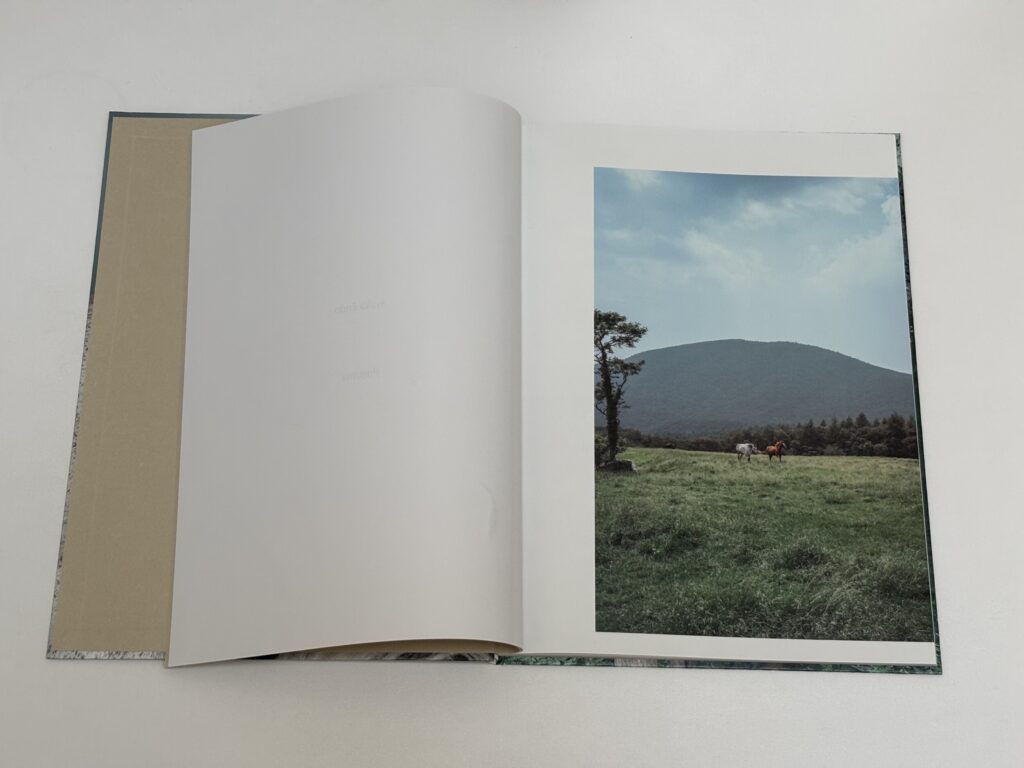
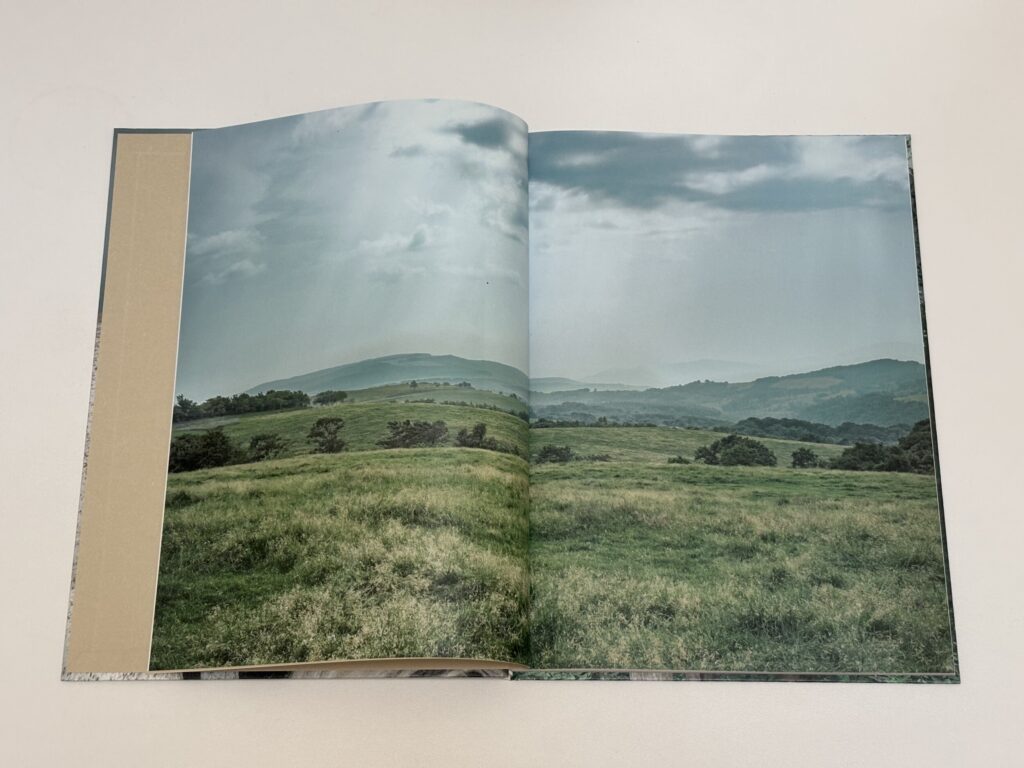
The book opens with a photograph that captures a serene pastoral landscape that perfectly conveys the book’s quiet appreciation of the natural world. A sweeping meadow stretches toward a forested mountain rising gently in the background, while two horses graze peacefully in the open field, adding warmth and life to the scene. Although the image is surrounded by a generous amount of white space, its right edge extends to the margin of the page, creating an asymmetrical layout that subtly draws the eye into the landscape. It is followed by a full spread shot of the vast meadow, expanding our perspective and reinforcing the sense of openness and immersion in the natural setting.
The book unfolds at an unhurried pace, placing greater emphasis on atmosphere than on narrative development. Landscapes, close-up details, portraits, and more ambiguous images appear alongside one another in a flow that feels intuitive rather than heavily structured. Endo does not treat the horses as symbols of untamed freedom, nor does she rely on sweeping landscape views to create a sense of wonder. Her attention remains focused on direct experience and close observation.
Color plays an important role throughout the book. Endo works with a subdued palette of soft grays, muted greens, silvery whites, and earth tones. Many of the photographs appear to have been made under overcast skies or in diffused light, giving the images a quiet, atmospheric quality. At the same time, they remain attentive to the textures of the horses, the landscape, and changing weather conditions. The photographs balance a sensitivity to mood with a close observation of the physical world.
This attention to physical presence is reflected in Endo’s own description of the project. She writes about spending time with the horses and becoming increasingly aware of shared rhythms and subtle changes in the surrounding environment. As a result, the photographs move beyond straightforward observation without becoming overly interpretive. They balance careful looking with a more personal sensibility, allowing familiar scenes to take on a slightly unexpected character.
These are not horse portraits in the traditional sense. In many images, horses are only partially visible, appearing through details of hair, muscle, shadow, and movement rather than the horse as a whole. These visual fragments move between representation and abstraction, shifting attention to texture, form, and atmosphere. Endo seldom focuses on individual animals, instead photographing the herd as a fluid, interconnected presence, using fragments and gestures to evoke spirit and sensation rather than document specific subjects. The sequencing contributes to the book’s quiet rhythm. Landscapes, details, and portraits are arranged in a way that feels guided by visual and atmospheric affinities. As the book progresses, recurring elements, such as grass, sky, hair, clouds, and textured surfaces, reappear in different contexts, creating a subtle sense of continuity across the sequence.
Pneuma finds meaning not through narrative or symbolism but through sustained attention. Endo’s photographs invite us to slow down and engage with the physical presence of her subjects, emphasizing touch, observation, and shared space. The title’s reference to an invisible life force is never illustrated directly; instead, it emerges through the quiet accumulation of gestures, textures, and encounters. Together, the photographs suggest a sense of connection between the animals, the landscape, and the photographer herself. The physical form of the book reinforces this quiet, contemplative mood.
Collector’s POV: Ayaka Endo does not appear to have consistent gallery representation at this time. As a result, interested collectors should likely follow up directly with the artist via her website (linked in the sidebar.)