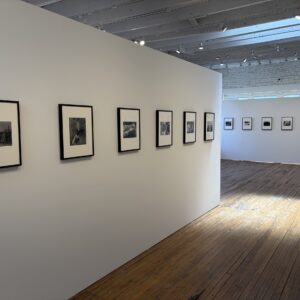
JTF (just the facts): Published in 2025 by L’Artiere Edizioni (here). Screen printed softcover with Swiss binding (8.7 x 13.2 inches), 68 pages, with 35 tritone reproductions. Cover design by Martina Soffritti. In an edition of 500 copies. (Cover and spread shots below.)

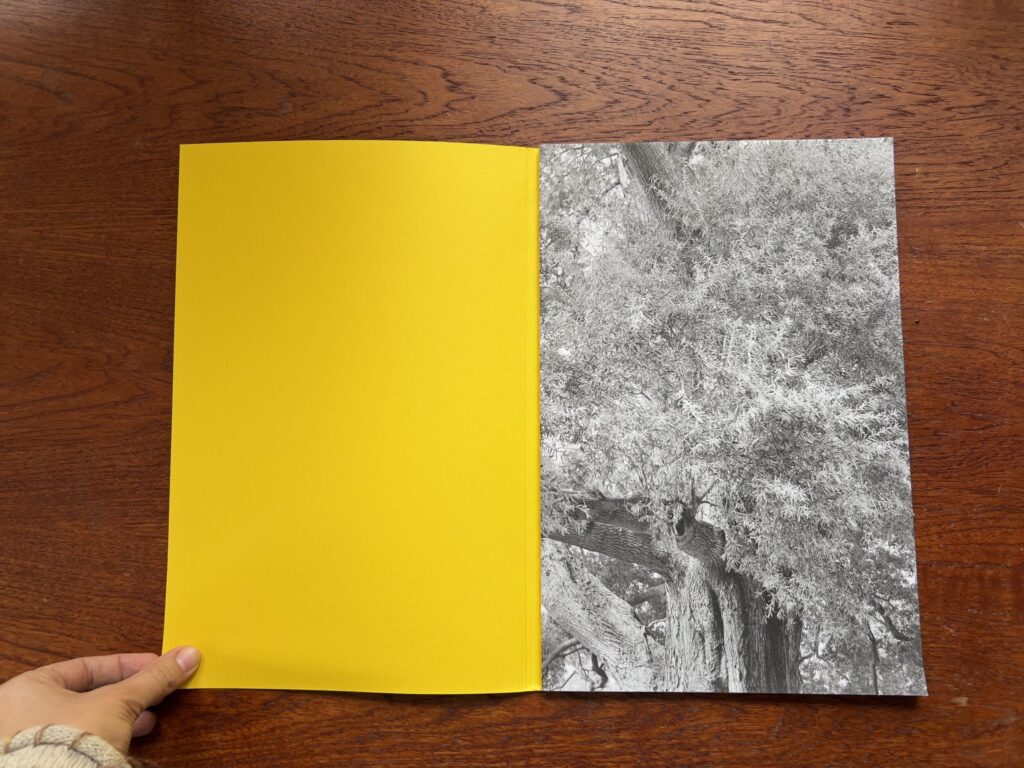
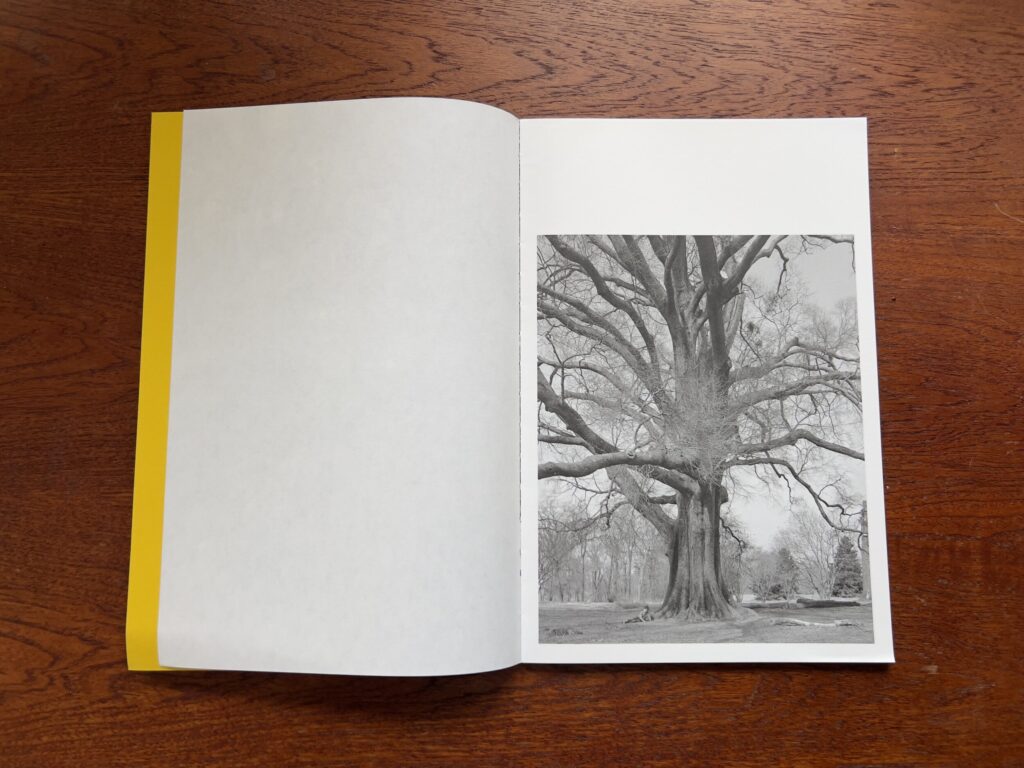
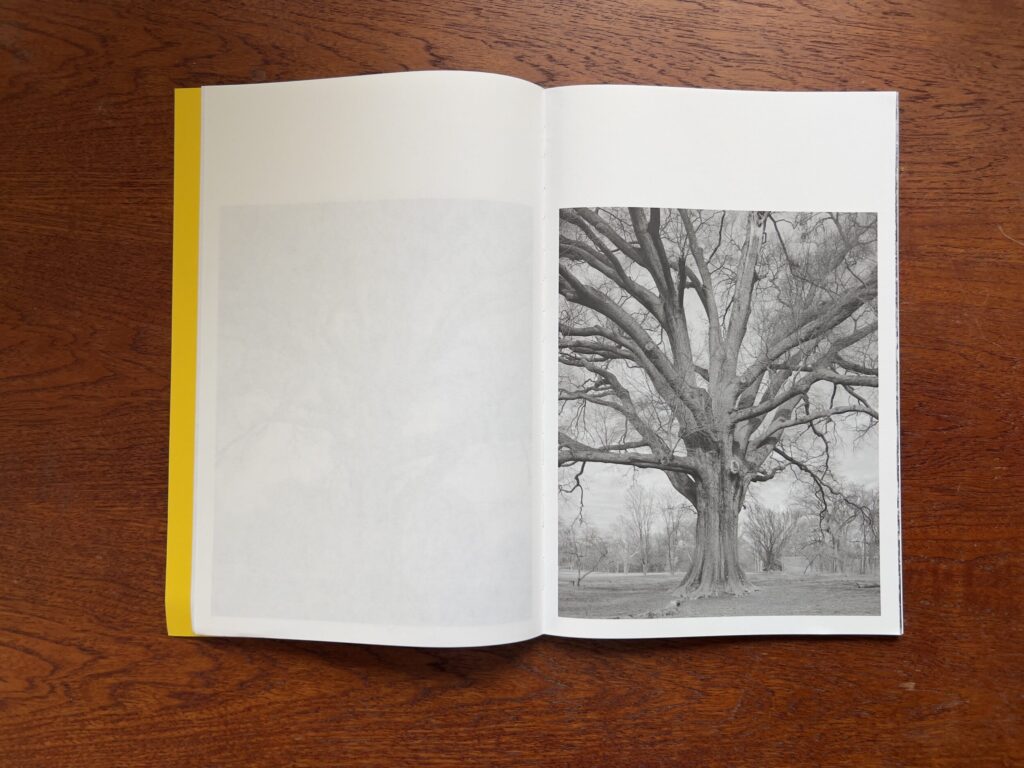
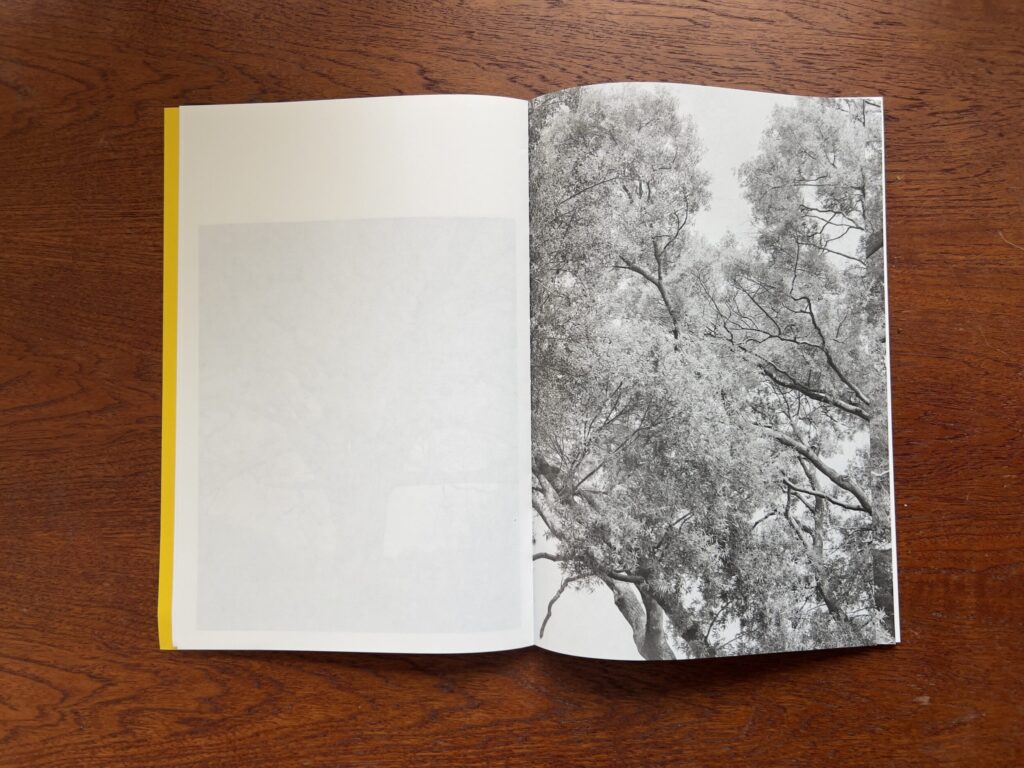
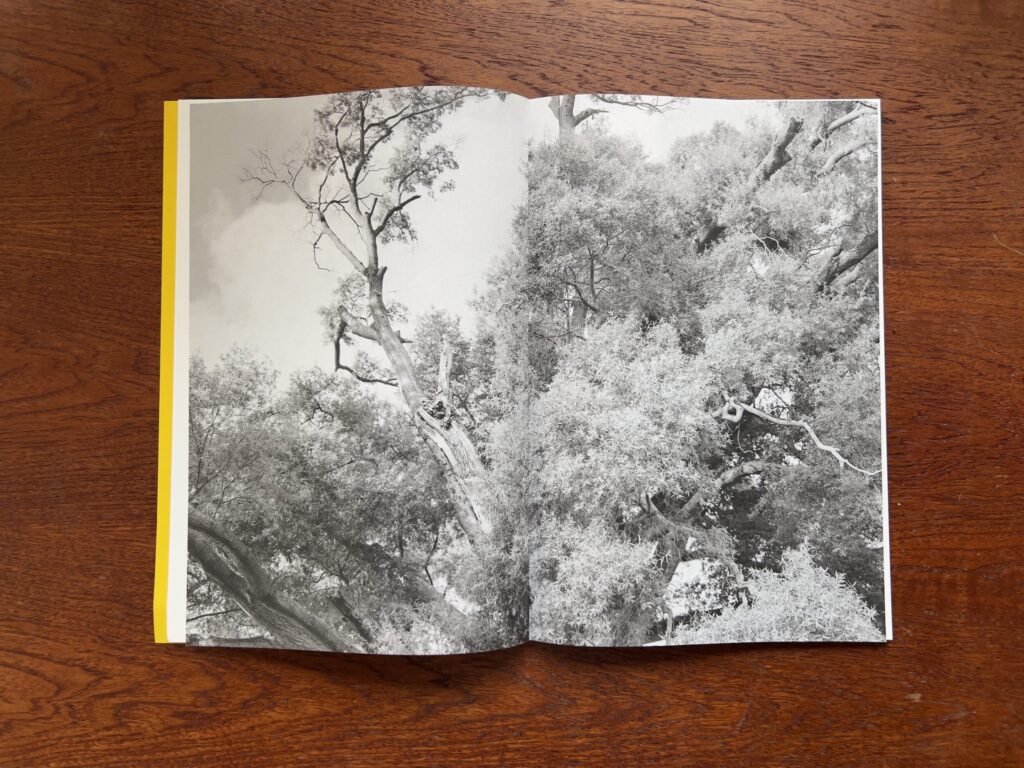
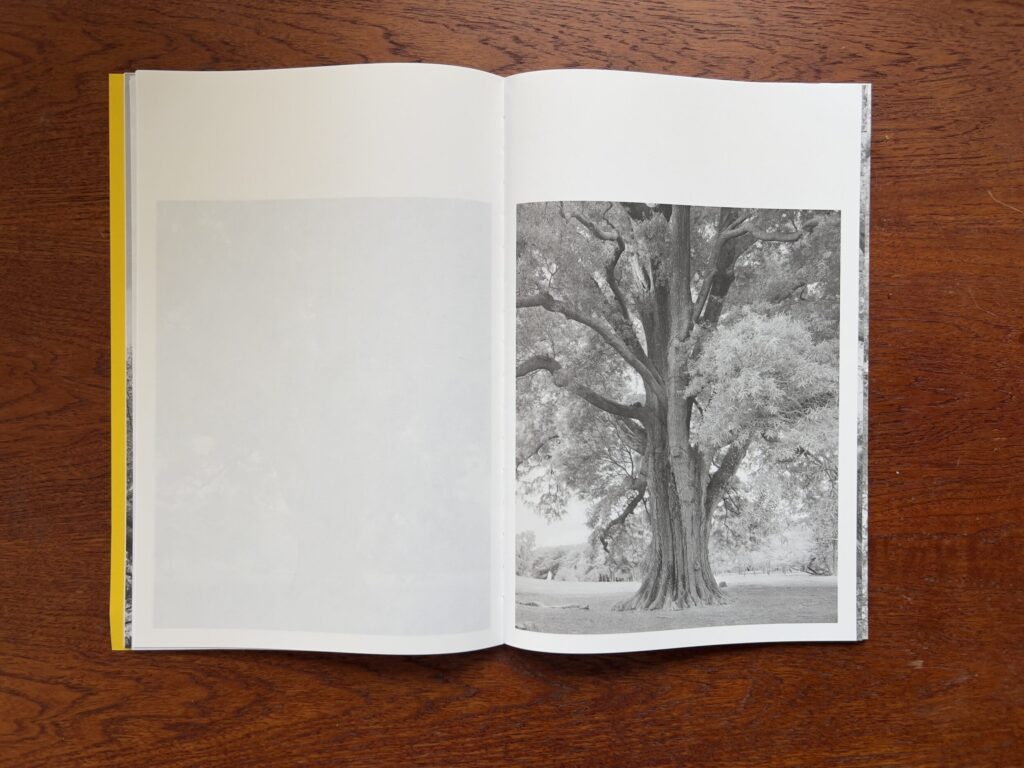

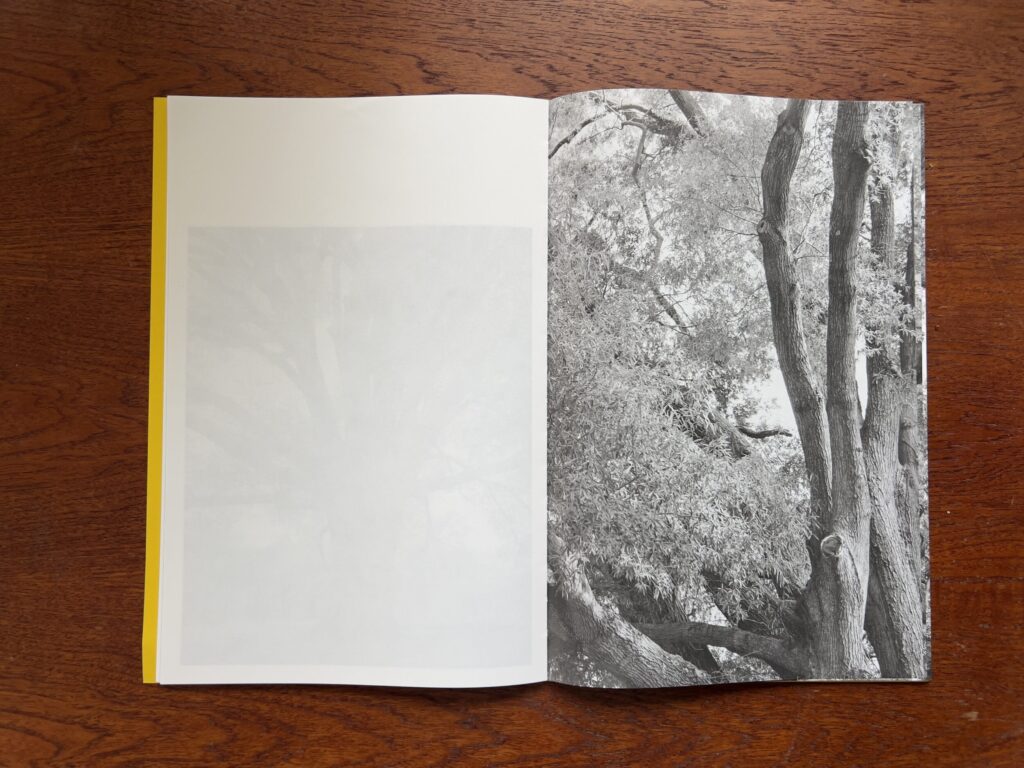
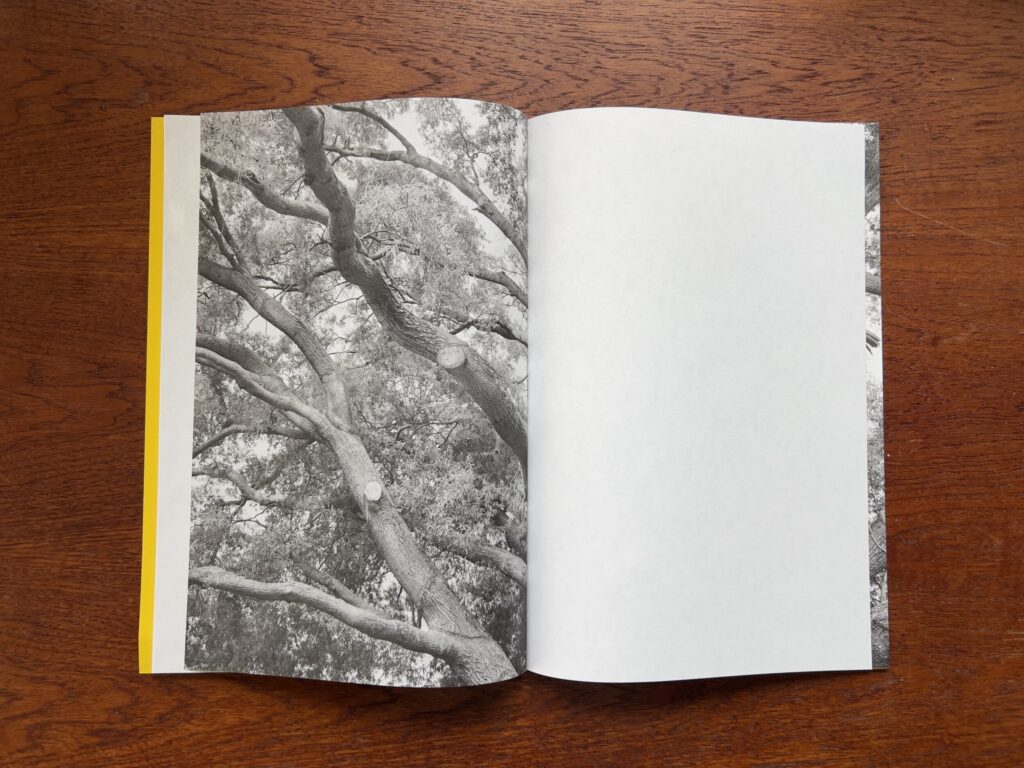
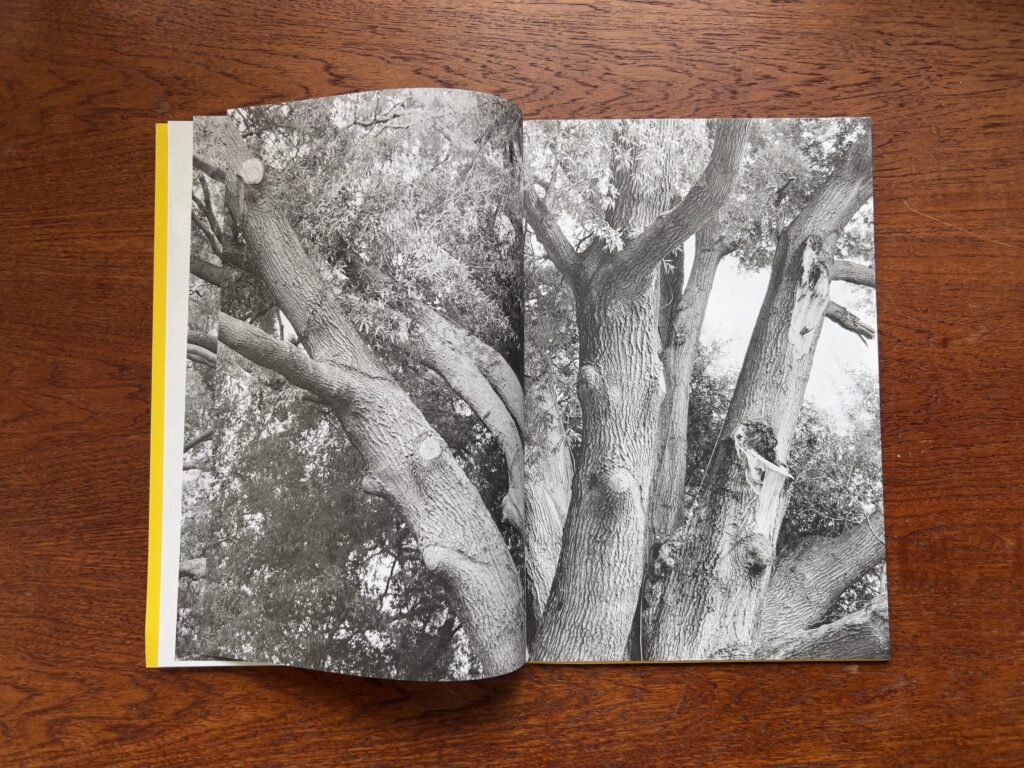
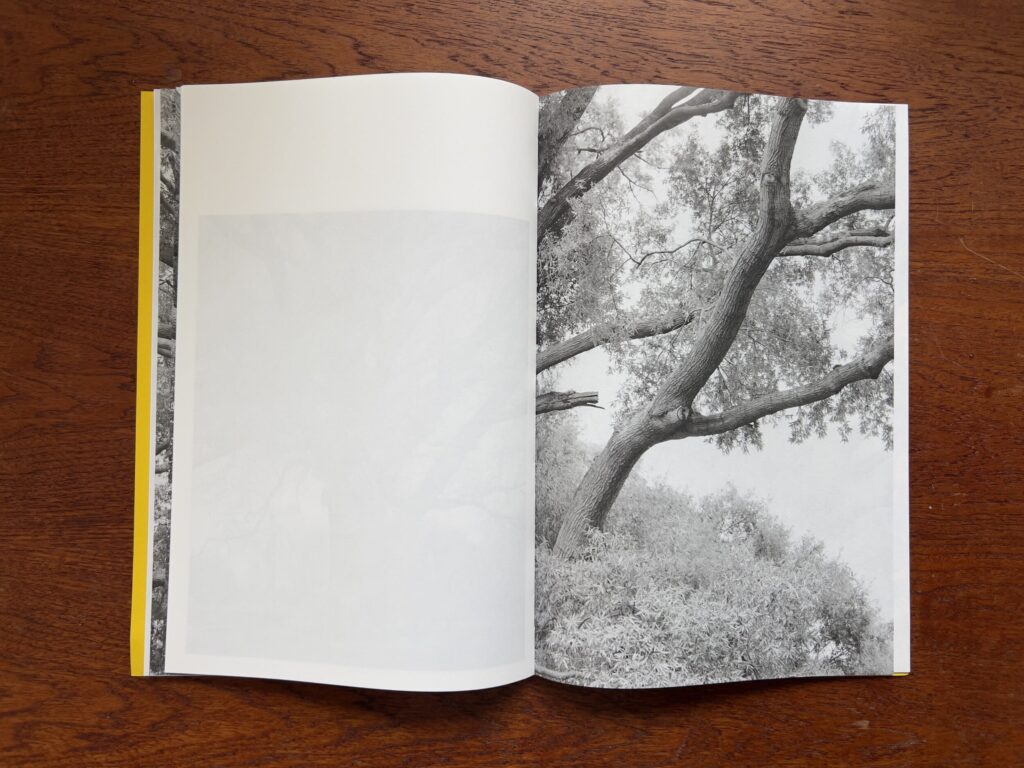
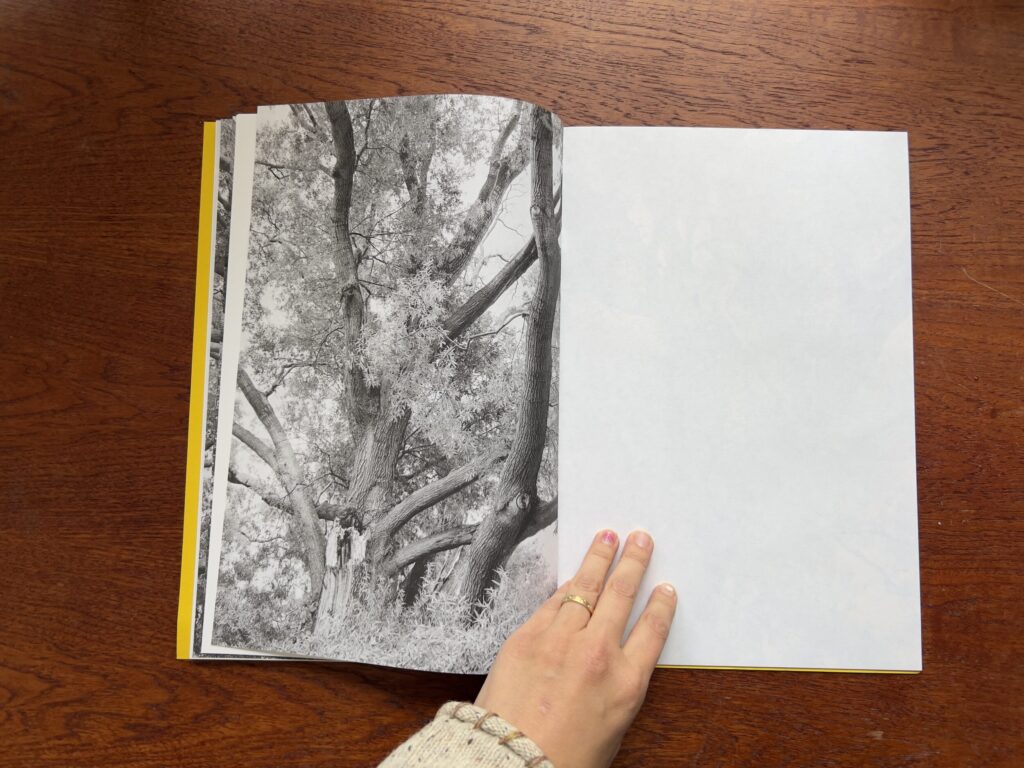

Comments/Context: In Giant Willow Oak, the American photographer Amanda Sauer offers an intimate meditation on time, nature, and the natural living world. The book achieves this by focusing closely on a single, awe-inspiring willow oak tree in her hometown of Washington, D.C. Through its pages, the photobook leads us on a deliberately slow journey of observation. For those who are patient and can sit with the larghissimo tempo of the photobook, it will reward them with an appreciation for the enduring power of nature and the specimen tree at the heart of this project.
Sauer’s photography is deeply influenced by her previous career in climate change research and policy, when she wrote about and published on environmental subjects. As a photographer she uses a large format camera as her primary tool, which allows her to convey the formidable and sublime qualities of her subjects with exceptional sharpness and detail. In the case of Giant Willow Oak, we look closely at a mature willow oak found in the United States National Arboretum that Sauer depicts over the course of a few years: first in 2021-2022, and later in the extended last moments before the tree was felled in October of 2023.
The cover of the L’Artiere Edizioni trade edition of Giant Willow Oak is yellow with a graphic design of the concentric tree rings that are found on a tree stump. These rings are visible layers of wood as seen on a tree’s cross-section, with each ring illustrating about one year of the tree’s growth. These rings can tell a lot about a tree, including how well it grew in a year due to weather, and can even reconstruct past climate conditions during the tree’s lifetime depending on variations in the rings’ width and color. This line drawing takes up the entirety of the front and back cover, with the exception of a one inch margin at the top and smaller margins on the left, right, and bottom of the cover. Handwritten numbers near the bottom third of the cover’s rings indicate some type of coding, not decipherable by the lay person who is not an arborist or sawmill operator. Indirectly, the cover tells the story of what will become of the giant willow oak of the book’s title.
Once we open the photobook, we are immediately confronted with the first view of the tree presented full bleed, black and white, the camera high up in its leafy branches. Without a title page or a blank page to rest before entering, we are pleasantly plunged right into the photographs. From the start of the sequence, moving through the book at larghissimo pace – a musical tempo that is the slowest possible to play – asks that we look at each right facing page to note the similarities and differences between each formal portrait of the giant tree. I find the sequencing to be smart and mathematical; a metronomic tempo of full bleed on the right facing page, blank on the left, formal portrait of the oak in 4×5 ratio on the right facing page, full bleed up in the branches on the right facing page again, and then the crescendo of full bleed of the canopy across the gutter, which feels monumental. There are four carefully placed full bleed left facing pages that feel like a key change, or a different phase of the lifespan of the tree.
After the image sequence concludes, Sauer adds the accession information and scientific attributes to the tree we’ve just spent so much time observing. Descriptions of note include: “Great old specimen near center of arboretum; size approximately 100’ tall and 98’ wide in 1995, Its crown is especially well balanced and even. A prominent specimen that displayed a 50-foot spread in aerial photographs taken in 1949. This tree was growing here long before the Arboretum was formed.” By the end of the book, a meaningful sense of loss and mourning is felt – certainly for the massive tree that was taken down, but also as a proxy for whatever is heavy on the reader’s heart. While the form and design is quite different, Giant Willow Oak echoes some of the feelings found in Fever Field by Melissa Catanese (reviewed here), as the flowers in Cantanese’s book include messages of grief, remembrance, and a hope for regeneration; at the end of Sauer’s book, we are left with similar feelings to ponder.
Since the beginning of photography, practitioners have looked to the trees as their chosen subjects, but never quite like this. Giant Willow Oak serves as a testament to photography’s capacity to honor the natural world, preserve memory, inspire and celebrate the awe for the natural order. While it is not revealed why the tree must be taken down, the audience is invited to celebrate and mourn alongside the artist in a manner that matches the emotional tenor of photobooks that showcase beloved parents or elders, where aging is watched and documented with the utmost care, warmth, and attentiveness. This photobook invites readers on a deliberate and slow journey of contemplation and close observation, revisiting the same subject repeatedly not only to document the physical passing of time and the human’s impact on the tree’s growth and life, but also to serve as an elegy and celebration for this giant willow oak. This photobook is not for those seeking instant gratification. It is instead one that rewards the patient reader with a well-earned feeling of calm and beauty, if not melancholy.
Collector’s POV: Amanda Sauer does not appear to have consistent gallery representation at this time. Collectors interested in following up should likely connect directly with the artist via her website (linked in the sidebar).