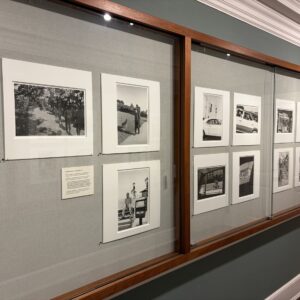
JTF (just the facts): Published in 2025 by Palais Books (here). Hardcover (16 x 31 cm), 128 pages, with 90 color and black-and-white photographs. Includes texts by the artist. In an edition of 700 copies. (Cover and spread shots below.)
Comments/Context: People have long been fascinated by UFOs (now rebranded as UAPs, or Unidentified Anomalous/Aerial Phenomena), and although much of the public discourse around these mysterious objects was shaped in the 20th century, our fascination shows no sign of fading. UFOs occupy a broad spectrum of curiosity: for some, they represent the possibility of extraterrestrial life; for others, they lead to questions surrounding misidentified technology, surveillance, and the limits of human perception. Across media coverage, podcasts, exhibitions, and books, UFOs persist less as objects of belief than as catalysts for a sustained fascination with uncertainty itself.
It is within this cultural and perceptual terrain that UAP a journey, the new photobook by French artist Yann Linsart, situates itself. Drawing on declassified United States government archives, the book maps an iconographic journey through the visual and contextual materials that helped shape the foundations of ufological thought. Sourced from military and governmental investigations, the images function simultaneously as evidentiary remnants of something unresolved and as conduits for a narrative that exceeds any single account. This approach extends Linsart’s earlier publication, UNCLASSIFIED, which focused on photographs made between 1989 and 1991 during the so‑called “Belgian wave of UFOs,” when thousands of witnesses reported sightings across the country.
Public interest in UFOs is often traced to a single moment: on June 24, 1947, Kenneth Arnold, an experienced pilot, reported seeing a formation of nine unidentified gleaming objects flying near Mount Rainier. He described their maneuvers as impossible and their speed as extraordinary. Widely reported in the press, Arnold’s account ignited global attention and ushered the phenomenon into the public imagination, introducing the term “flying saucer” into everyday language.
As unidentified sightings began to multiply, the United States launched a series of official investigations (Project Sign, Project Grudge, and Project Blue Book, between the 1940s and 1960s). Designed to collect, classify, and interpret reports of UAPs, these efforts operated at the intersection of scientific inquiry and strategic concern and produced images that move beyond documentation. Blurred and fragmentary, they bear the trace of an era attempting to approach the ungraspable, each photograph registering a presence felt at the edge of the known.
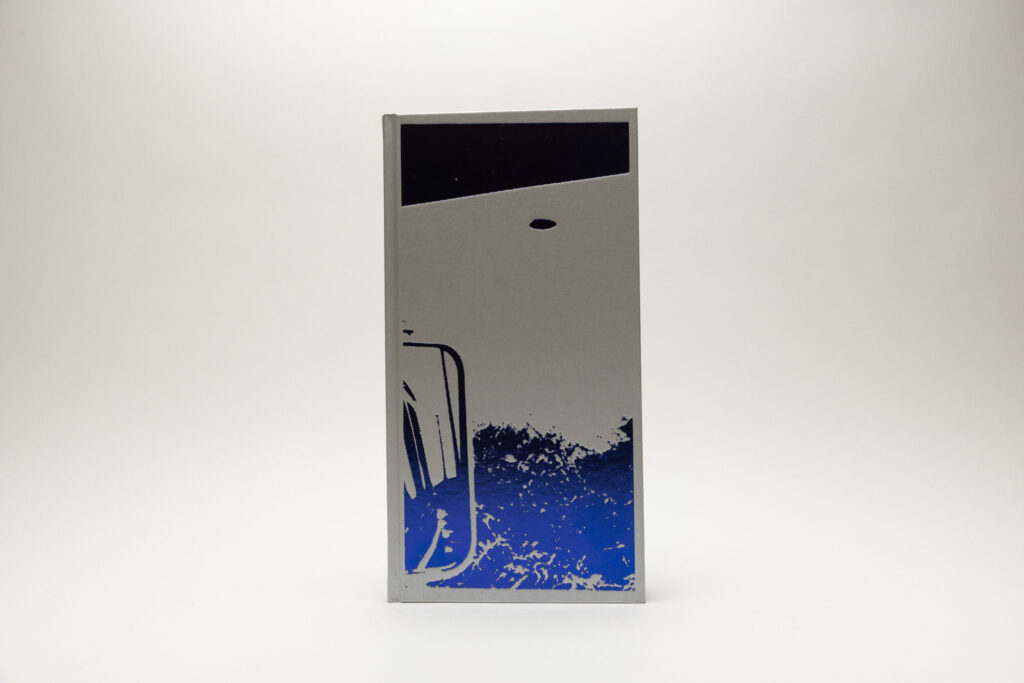
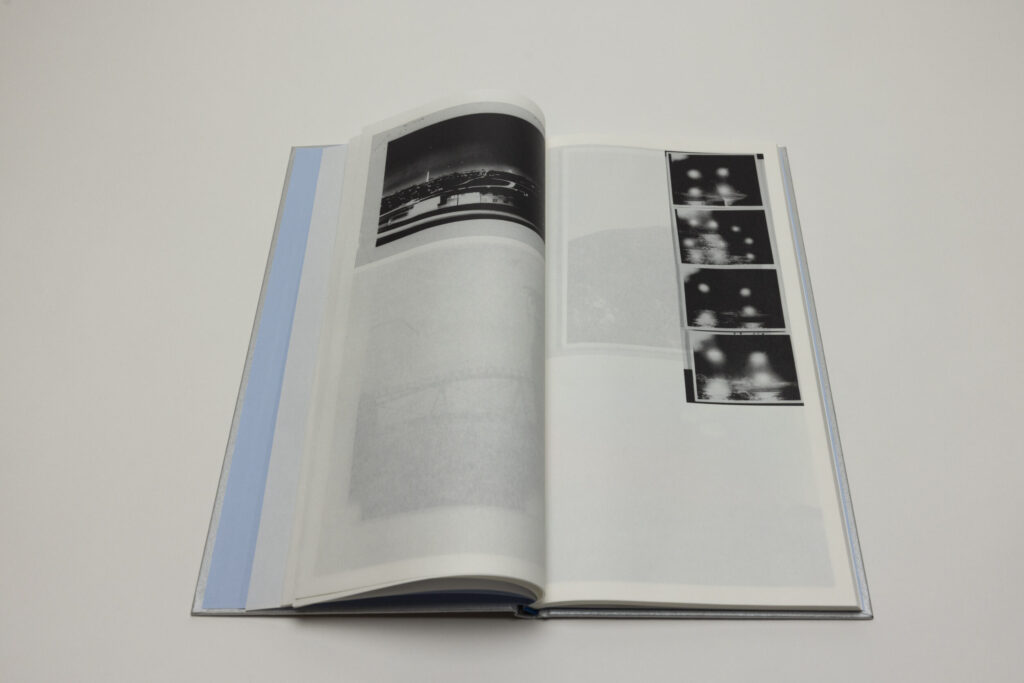
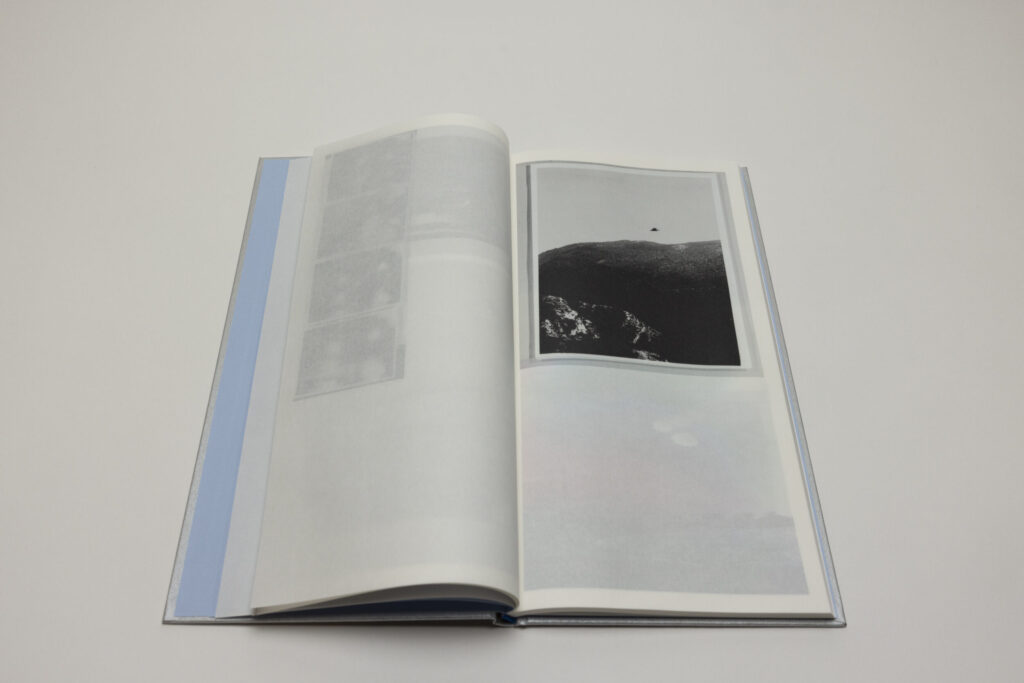
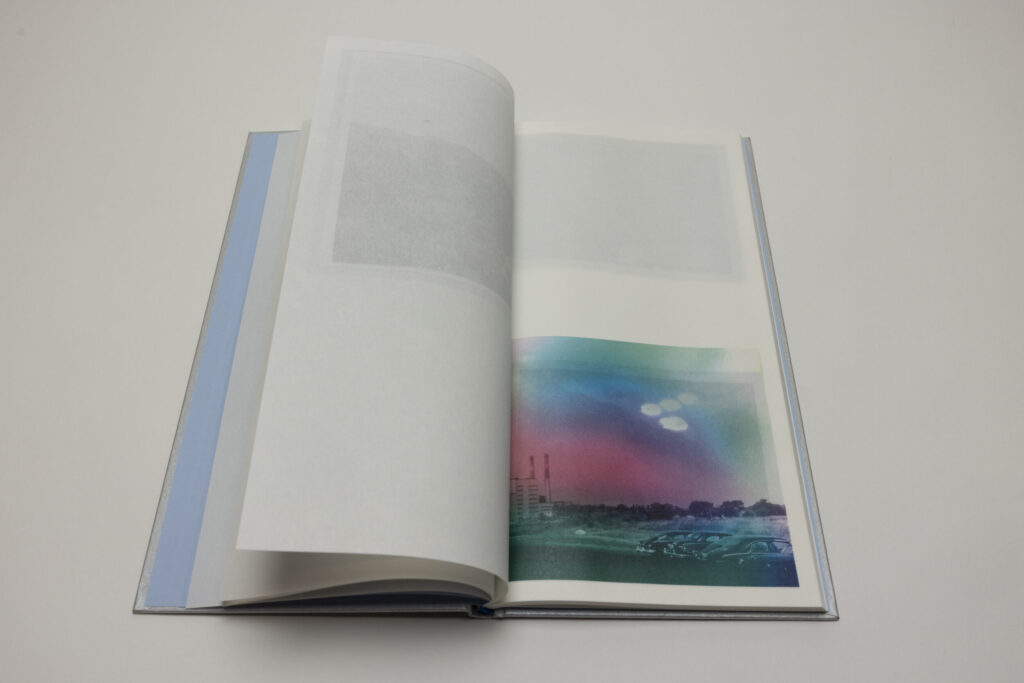
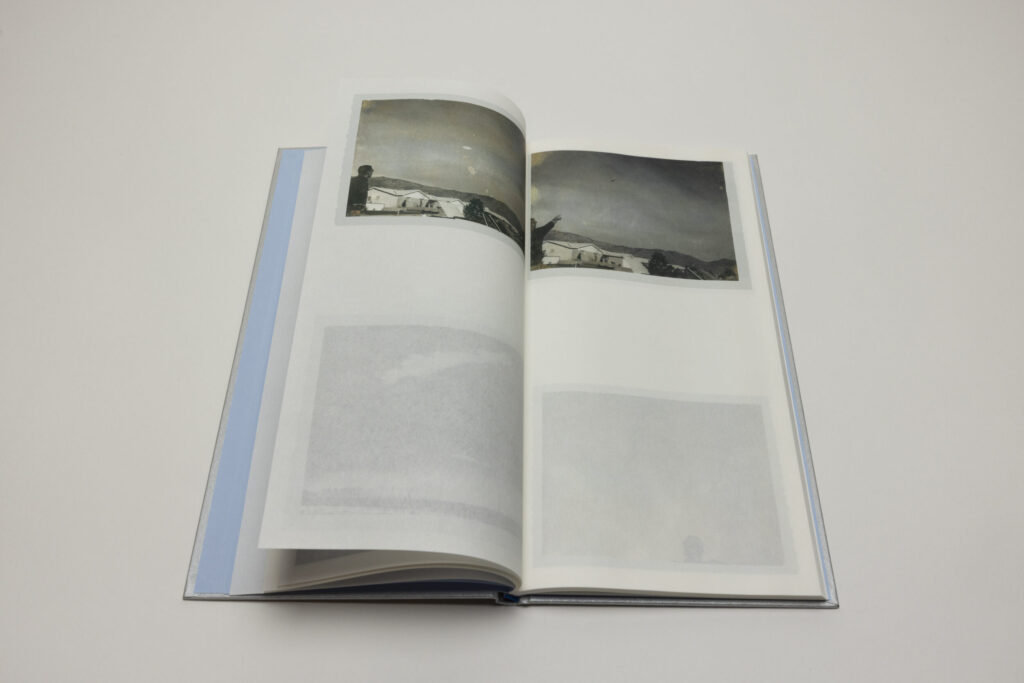
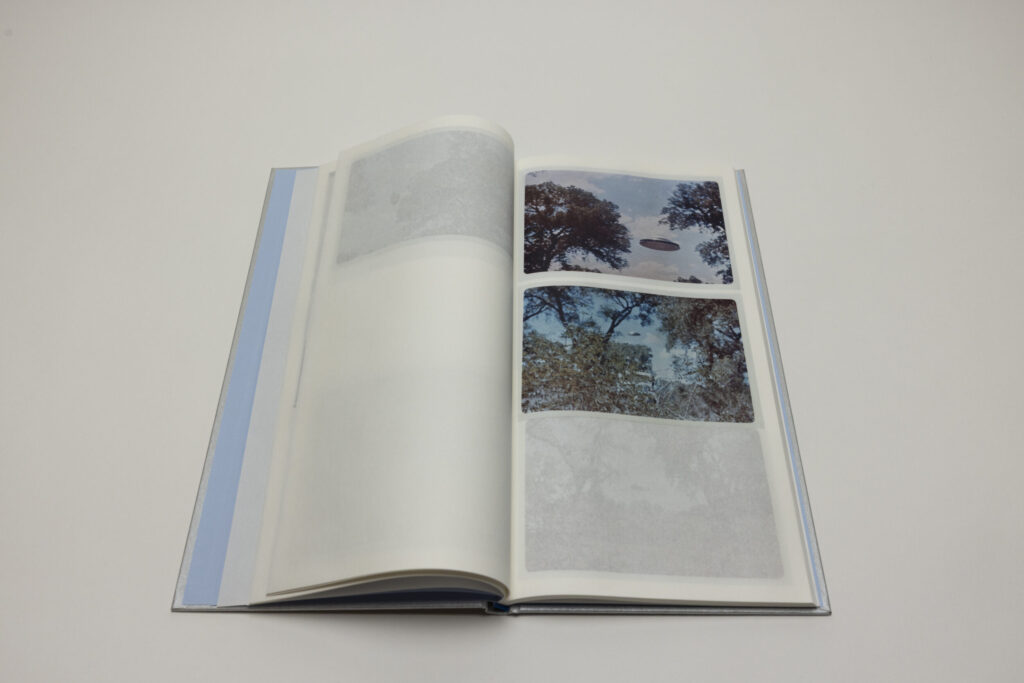
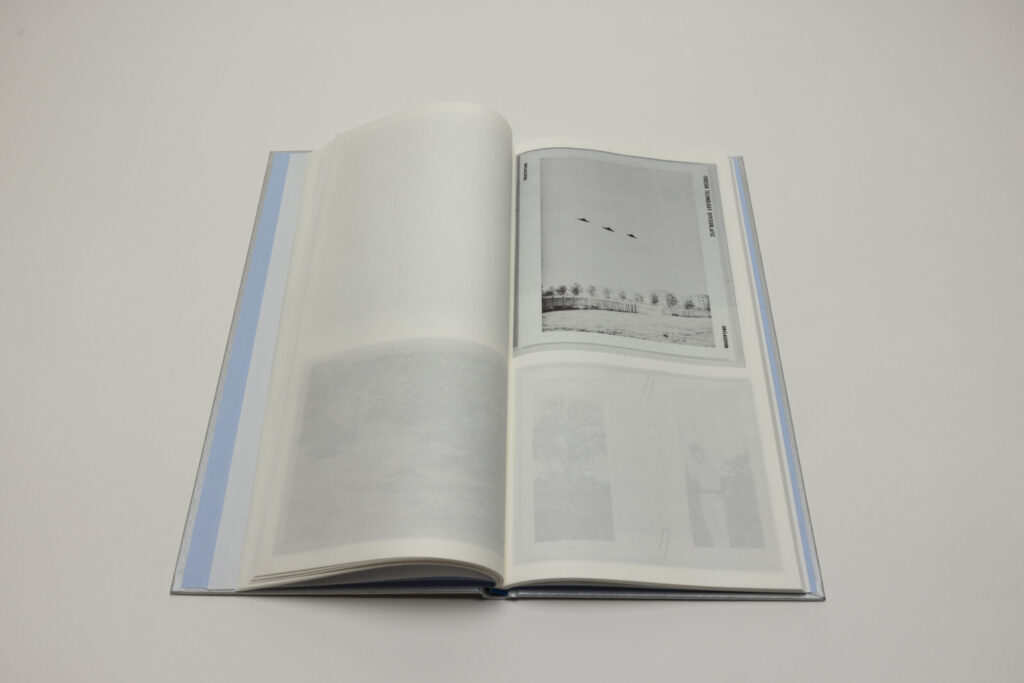
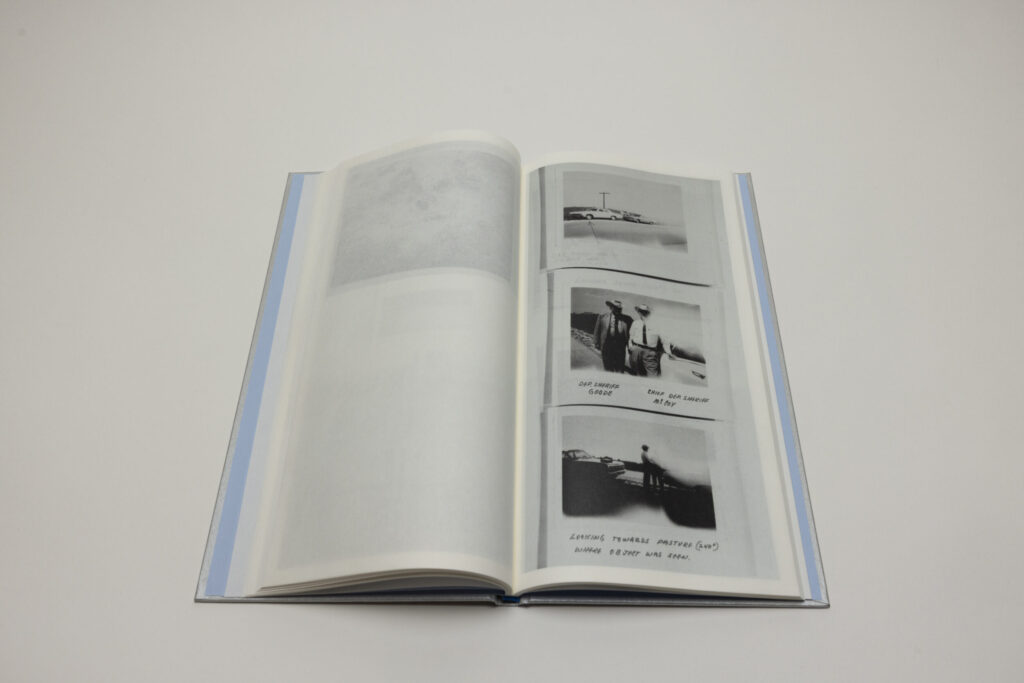
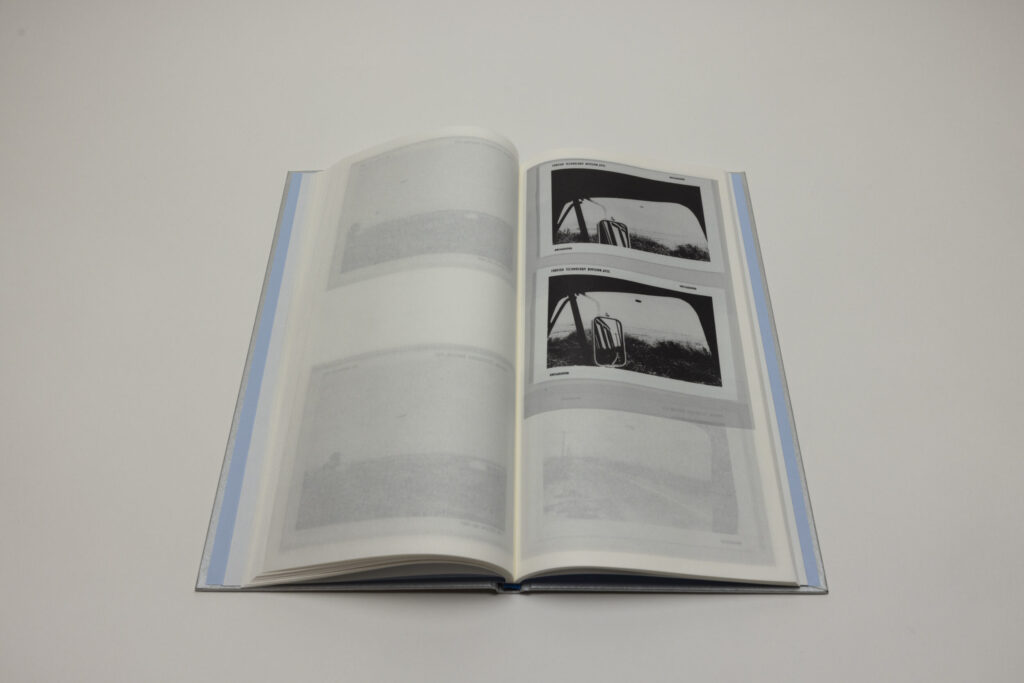
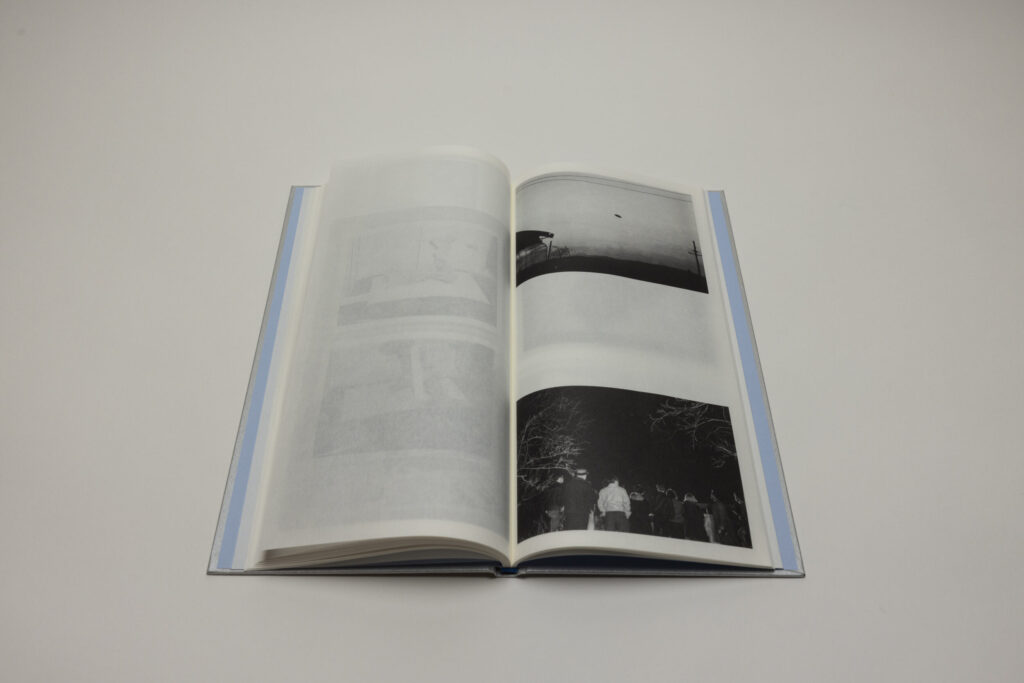
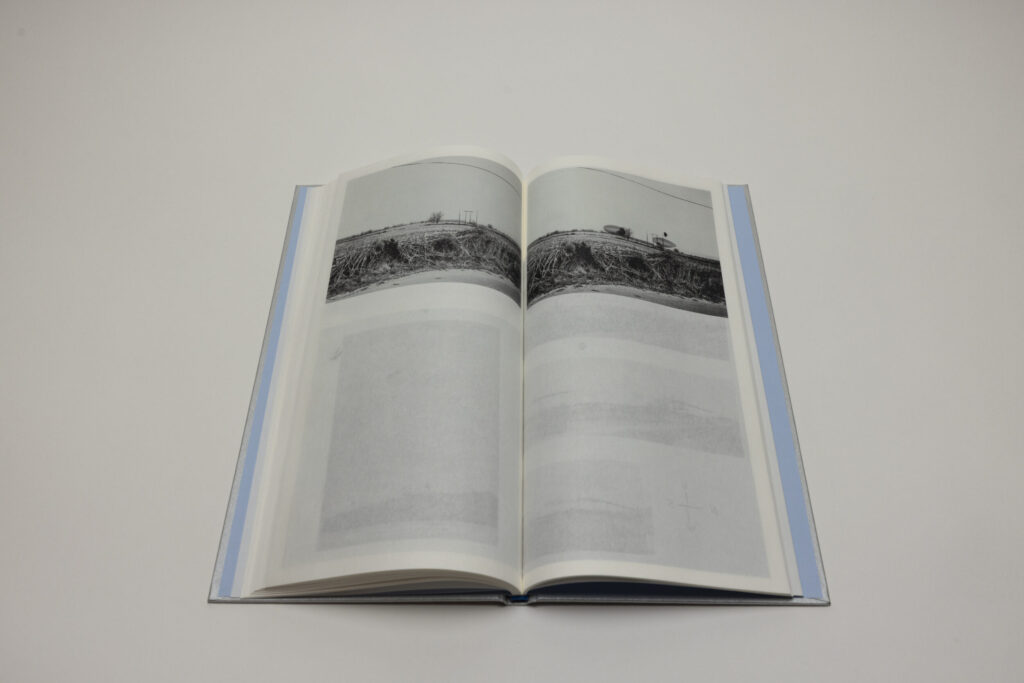
As a photobook, UAP a journey feels exciting and pleasant to hold. It is vertical and relatively narrow, a photograph shot out of a car showing a rear view mirror and an oval shape in the sky is rendered in blue and embossed against a metallic silver background. The picture itself doesn’t reveal much, yet it functions well as a symbol of the book’s subject. Inside, the endpapers appear in a sugary blue color and the photographs are printed on a thin paper. The extended vertical format of the book allows the images to rest within a generous amount of white space, suggesting both the austerity of official records and the expansive imaginative pull of the unknown. There are no captions, although some of the images have markings from official records such as “for official use only”, “Foreign Technology Division, AFSC”, “unclassified”, etc. The text by the artist is placed at the very end, closing the book.
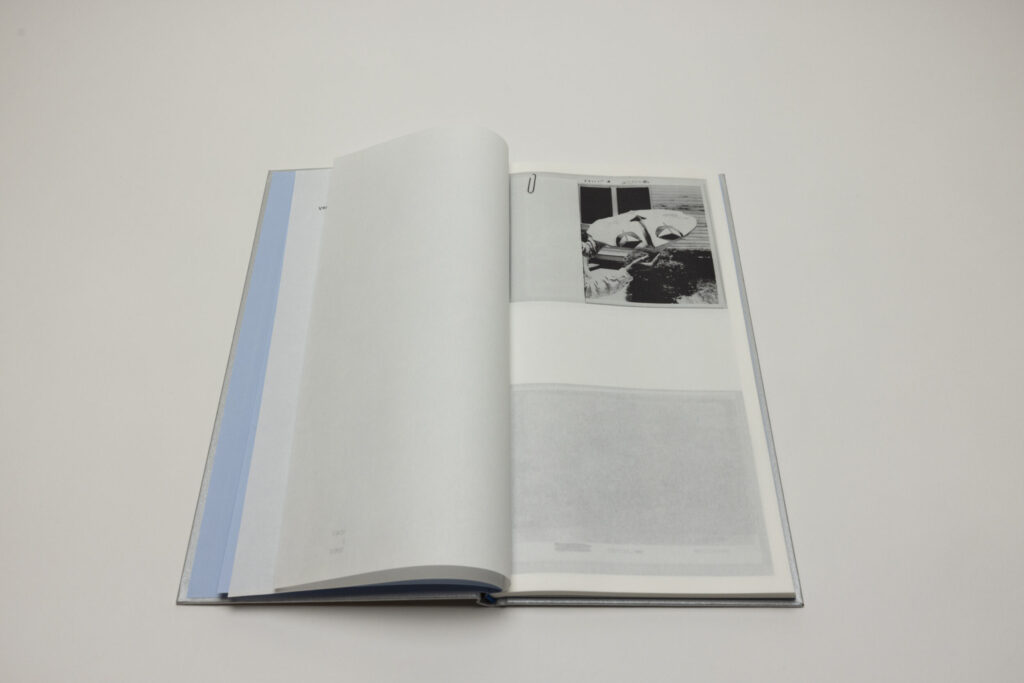
As the book opens, the dates, “1947-1969” appear at the bottom of the page alerting us that we are looking at archival images from those decades. The very first photo is black-and-white, and shows a person holding an object that looks like a model or mock-up of a flying saucer; part of a building and a window appear in the background, suggesting an outdoor setting. The text at the top reads” EXHIBIT A” and “UNCLASSIFIED” giving the image an official and archival feel, possibly related to government or military documentation. A large paperclip with a piece of paper that seems to cover part of the photo is visible on the left, reinforcing the idea that this is a reproduction of a document or evidence.
The images, sourced from archival materials originally created for investigation rather than artistic expression, carry the residue of their utilitarian purpose. Sequenced by Linsart, the images assume a new and haunting dimension. The viewer is confronted with the cold factuality of archival documentation, yet the arrangement also introduces ambiguity, revealing how readily the human mind constructs meaning from fragmentary visual clues. In this sense, Linsart’s project becomes less an attempt to provide answers and more an inquiry into the very nature of evidence itself.
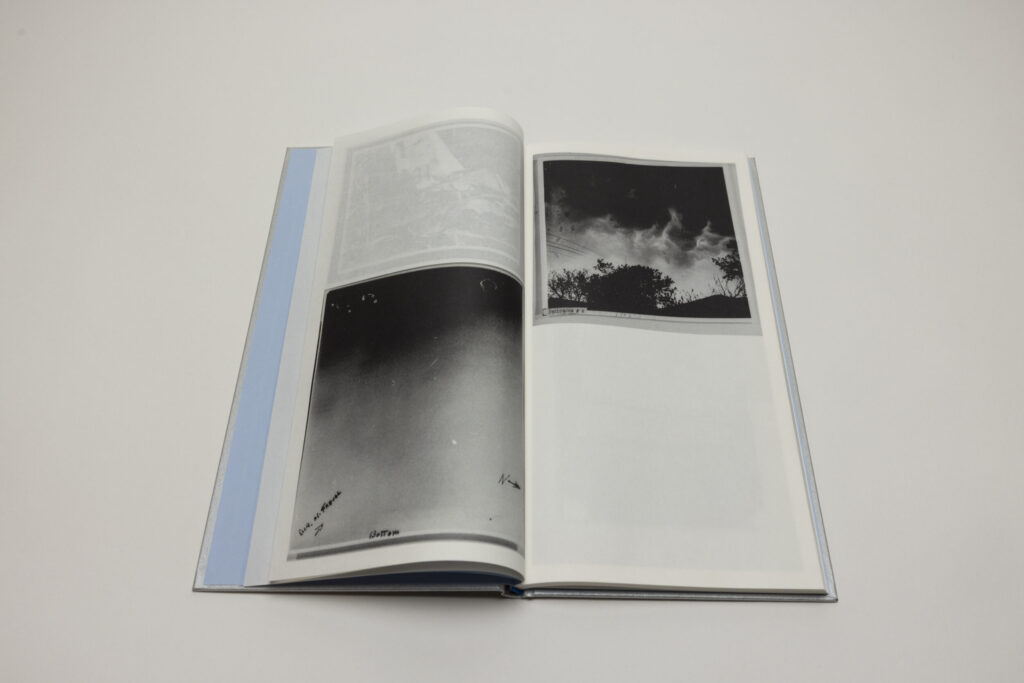
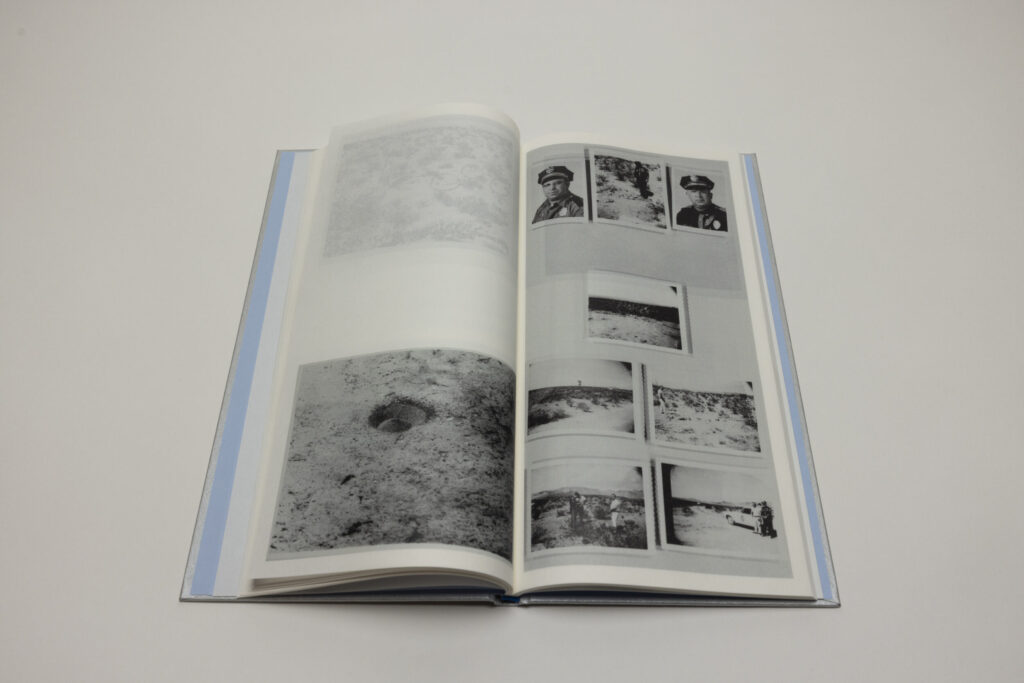
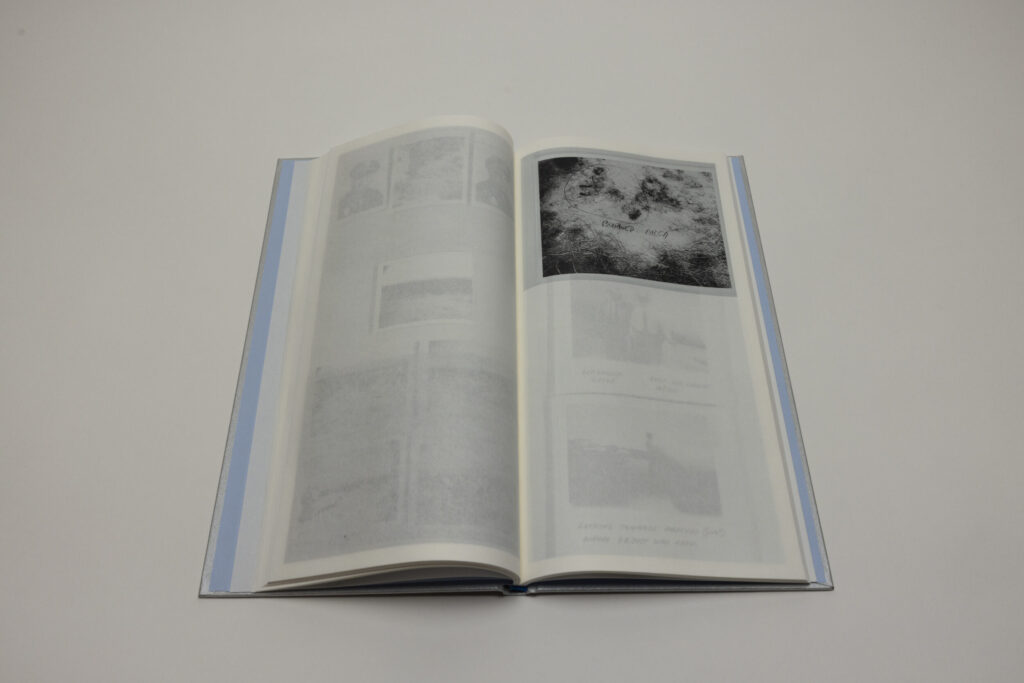
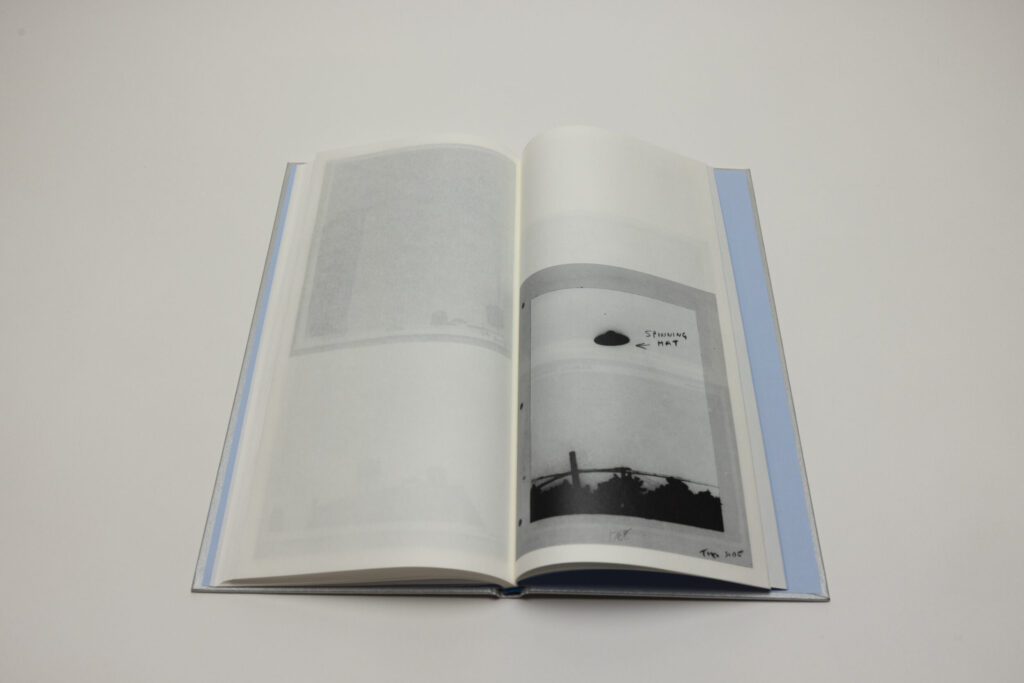
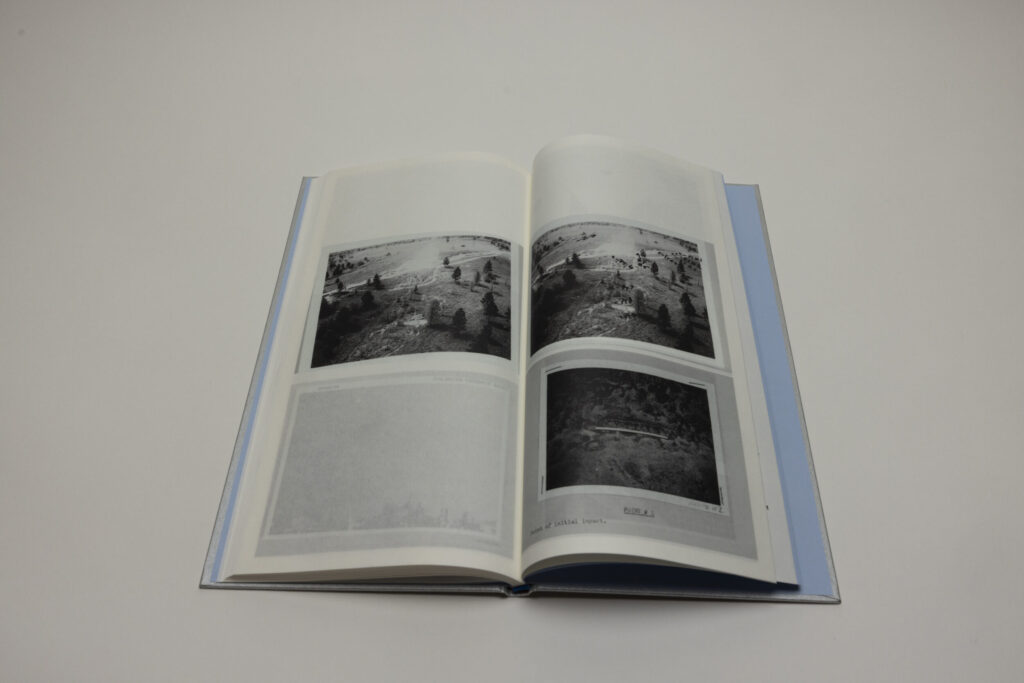
As the pages unfold, the book reveals photographs of saucer‑shaped forms suspended in the sky, scorched patches of land, shallow craters, and faint traces of movement overhead. Some images bear handwritten annotations and graphic markings, evidence of close scrutiny and attempted interpretation. In one photograph, a circled section of terrain is labeled “burned area”; in another, a blurred object hovers indistinctly in the sky, an arrow pointing toward it with the note “spinning hat.” These interventions transform the images into sites of inquiry, where looking becomes inseparable from speculation.
Linsart’s book recalls another compelling exploration of the subject: Phenomena (reviewed here), created by the Copenhagen‑based team of Sara Galbiati, Peter Helles Eriksen, and Tobias Selnæs Markussen, which offers an in‑depth photographic chronicle of extraterrestrial enthusiasts and UFO believers. Likewise, in Port Talbot UFO Investigation Club, Roo Lewis uses the idea of UFO phenomena as an entry point into the people, landscape, and folklore of the town. And in Some Kind of Heavenly Fire (reviewed here), Maria Lax traces UFO sightings through the dark Finnish forests, where mysterious lights echo fragments of her own past. Together, these works underscore how the UFO theme continues to inspire photographers to probe not only the cosmic unknown, but also the communities and cultural myths that form around it.
UAP a journey is a compelling and meticulously produced photobook, at once a historical document, a conceptual investigation, and a beautifully crafted object. Rather than asserting a position on UFOs, Linsart invites us to inhabit the uncertainty that defines the phenomenon. The result is a quiet, elegantly constructed space to contemplate mystery, history, and the tenuous boundary between the seen and the imagined.
Collector’s POV: Yann Linsart does not appear to have consistent gallery representation at this time. Collectors interested in following up should likely connect directly with the artist via his website (linked in the sidebar).