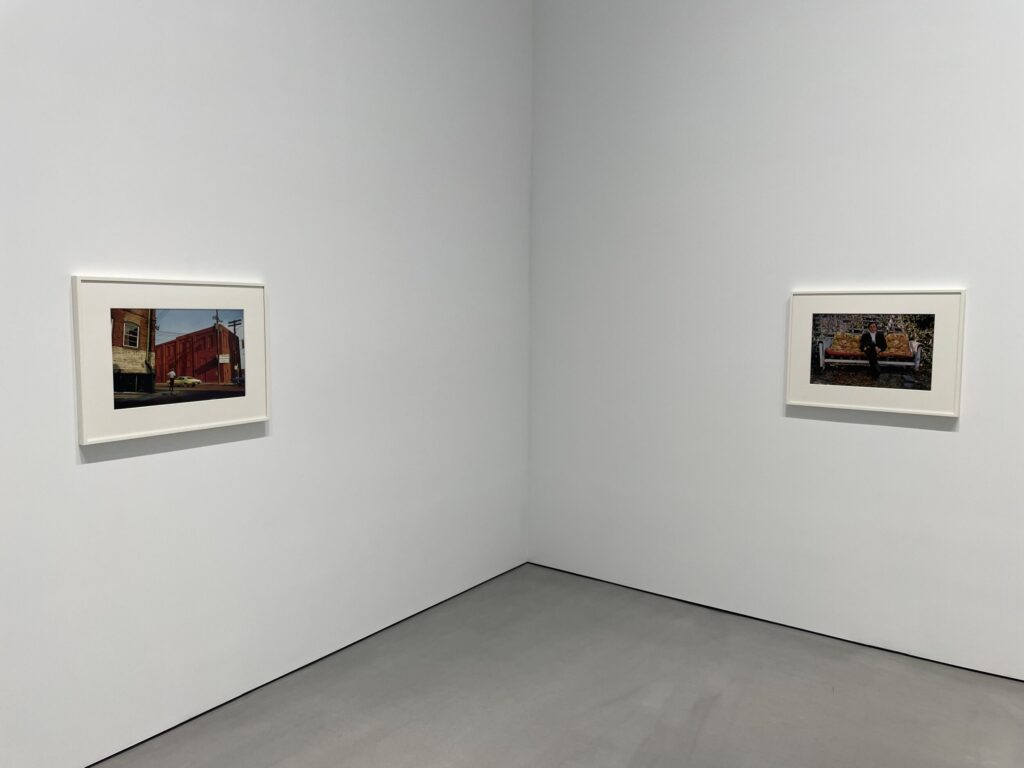
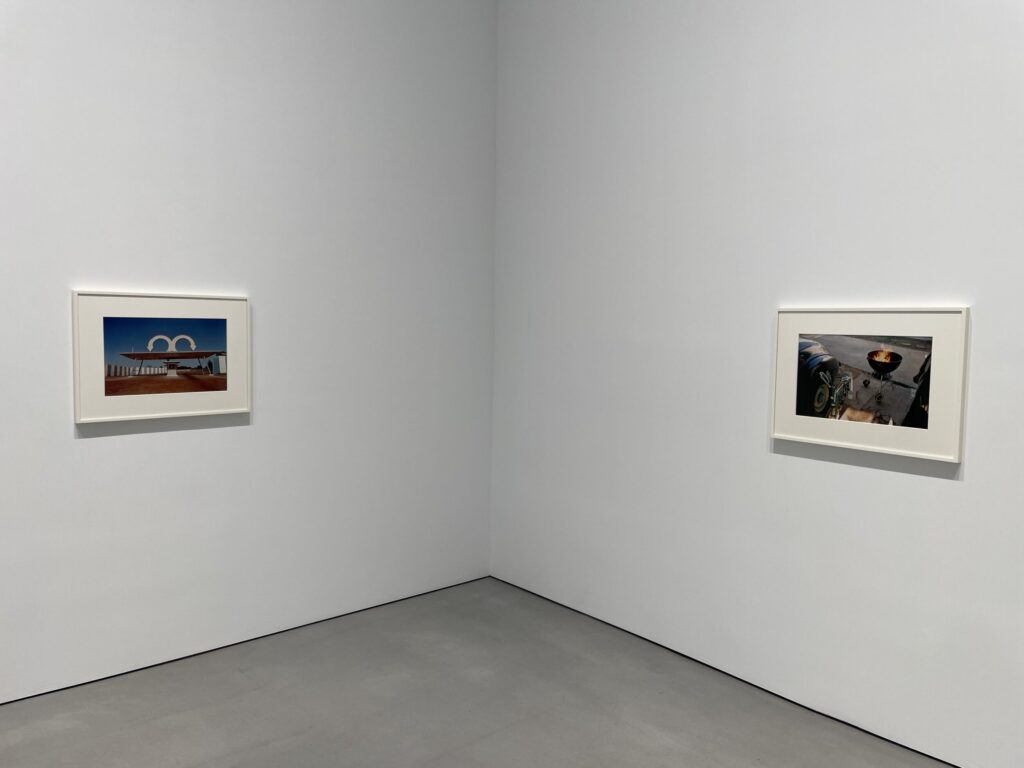
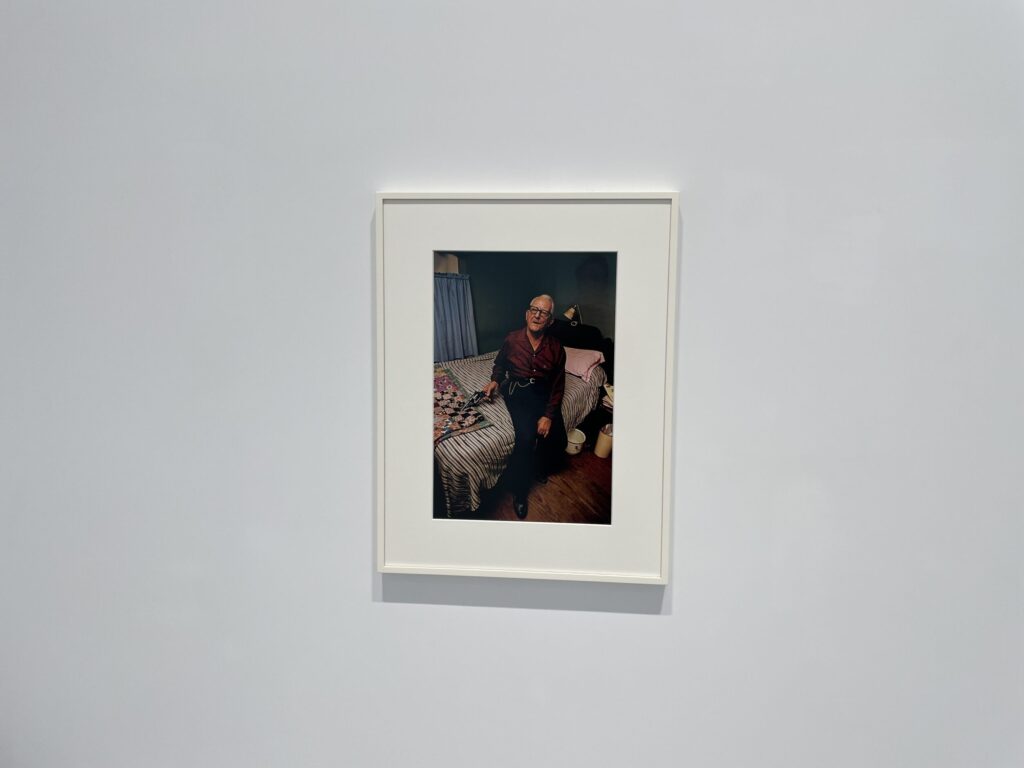
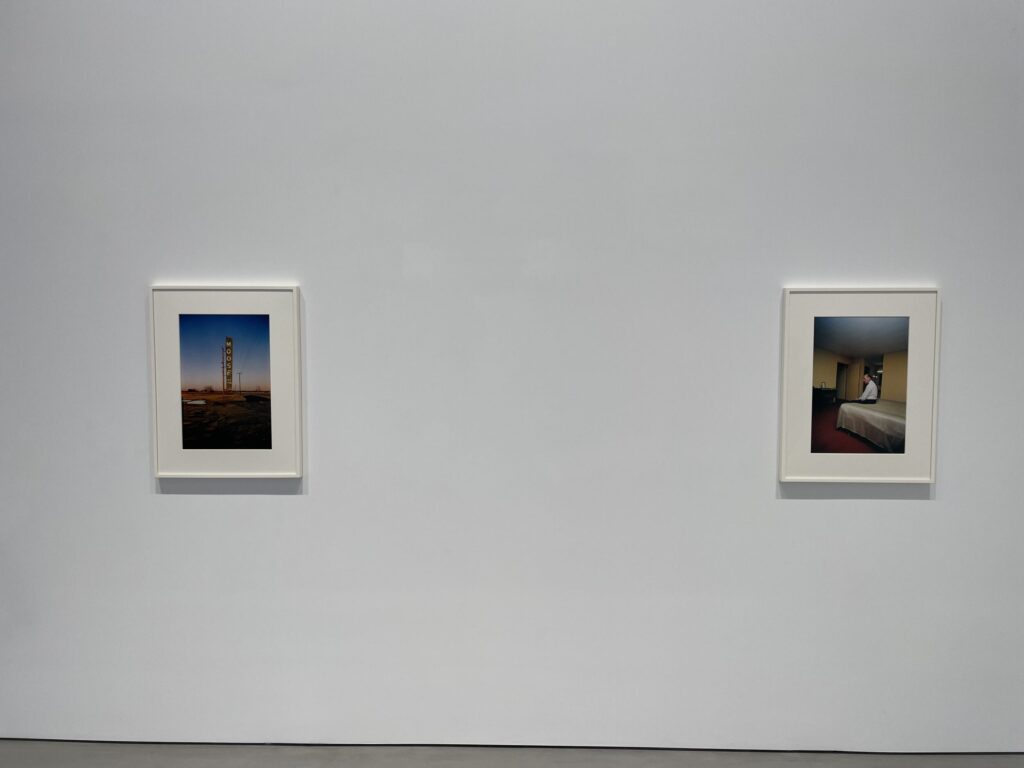
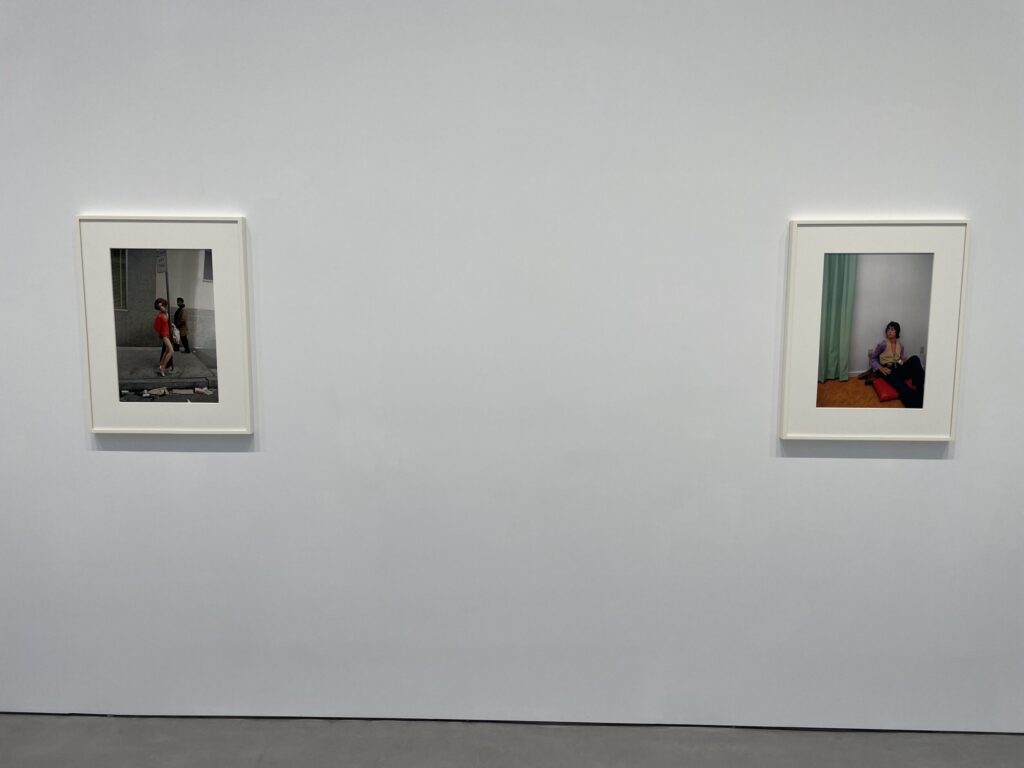
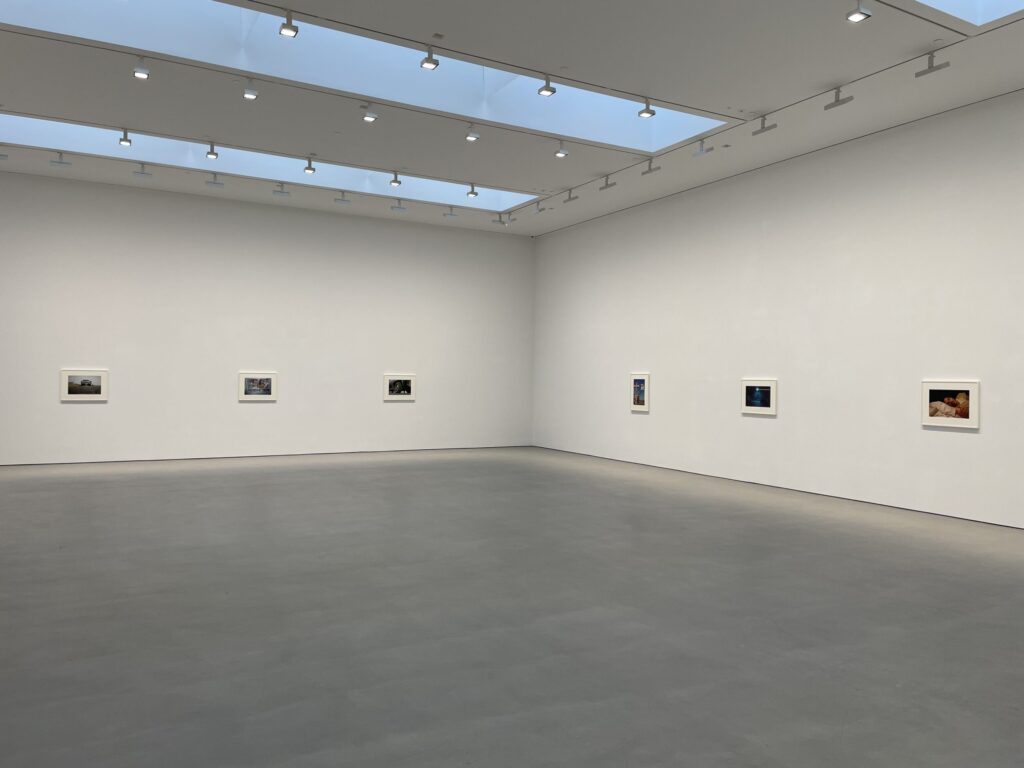
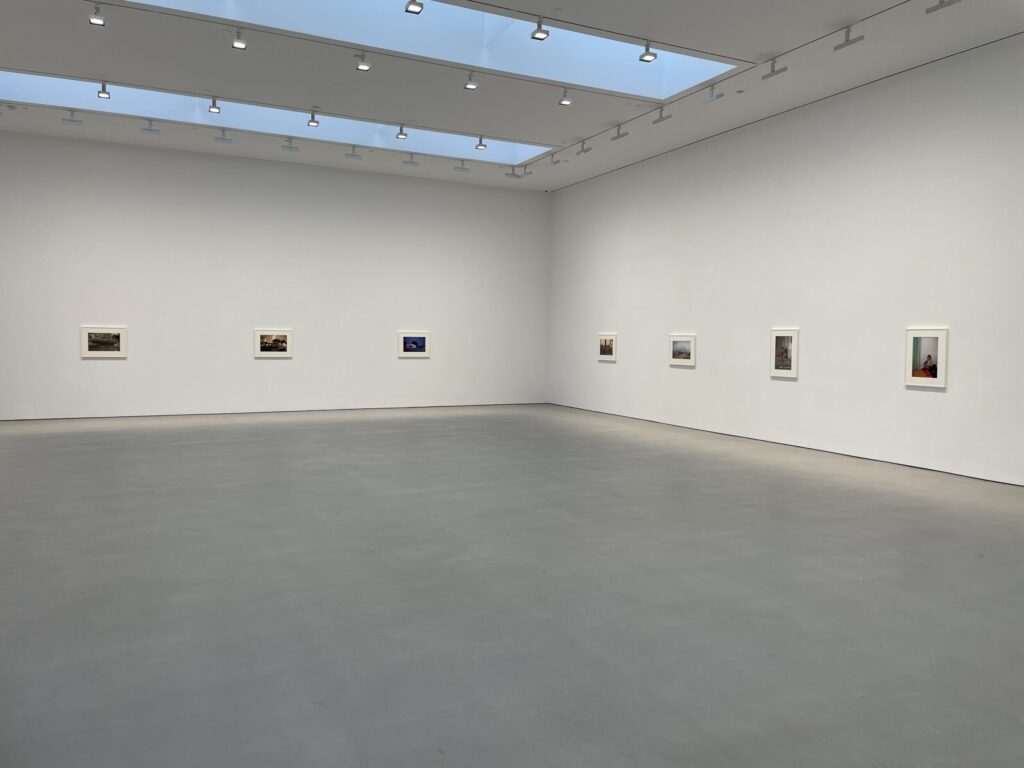
JTF (just the facts): A total of 31 color photographs, framed in white and matted, and hung against white walls in a series of three connected gallery spaces. All of the works are dye transfer prints, originally made in 1970, c1970, 1971, 1972, c1972, and 1973 and printed recently. Each is sized roughly 20×24 inches (or the reverse) and is available in an edition of 5+3AP. (Installation shots below.)
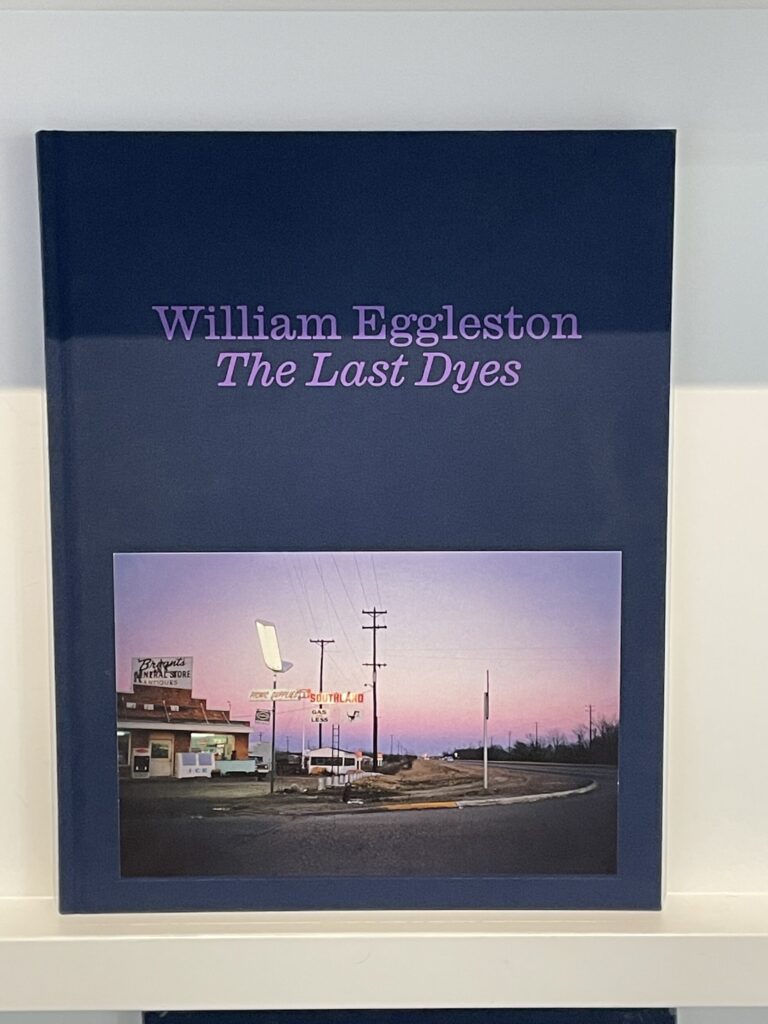
A monograph of this body of work was published in 2025 by David Zwirner Books (here). Hardcover, 10×12.5 inches, 112 pages, with 62 color reproductions. Includes an essay by Jeffrey Katzner. (Cover shot below.)
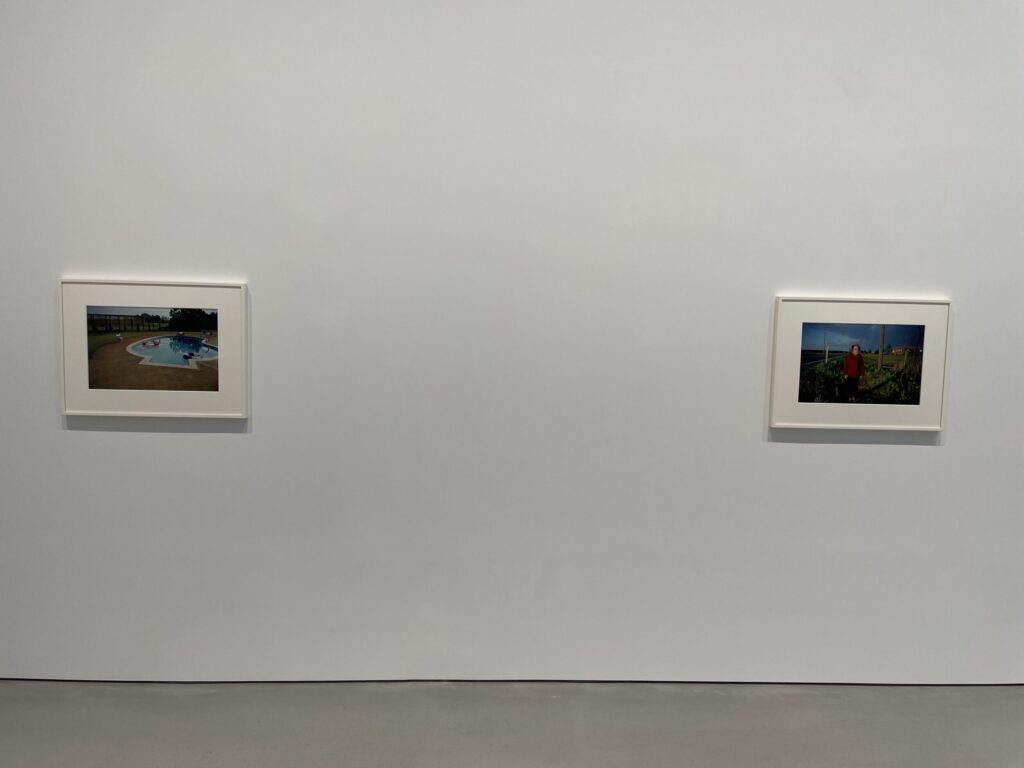
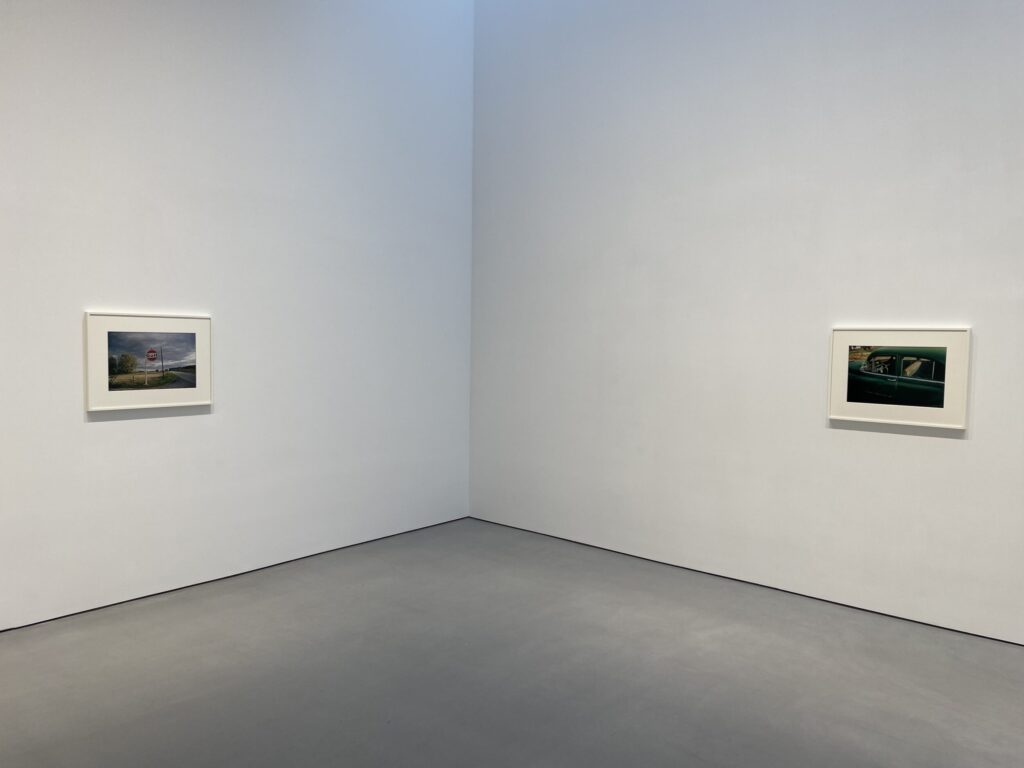
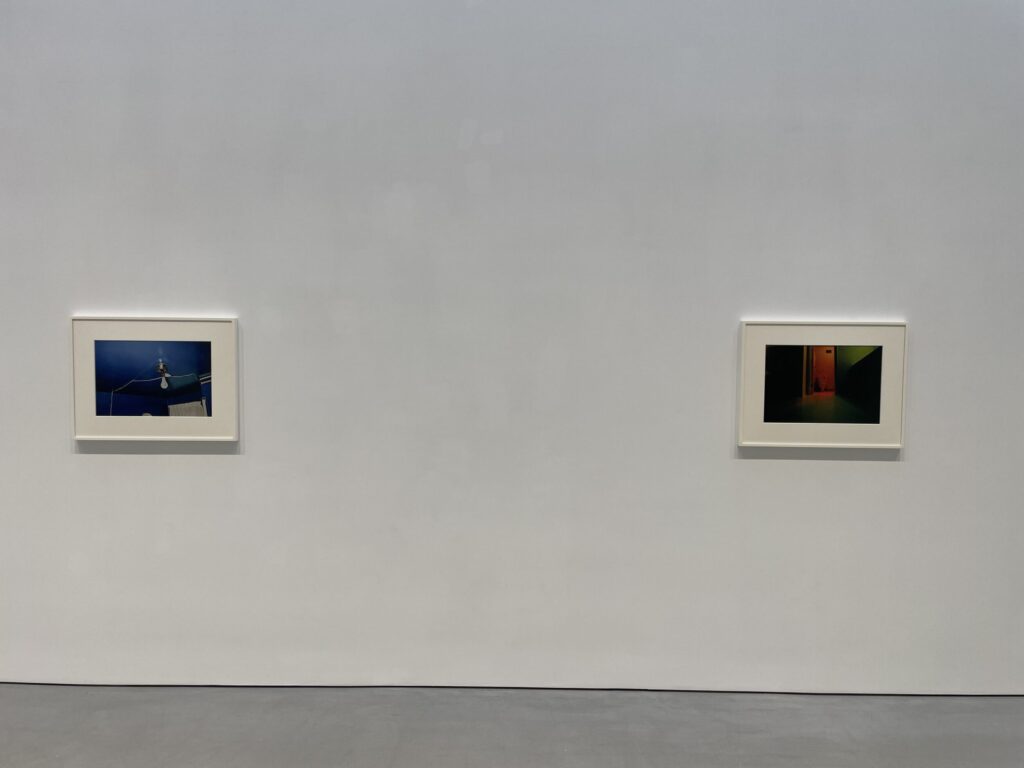
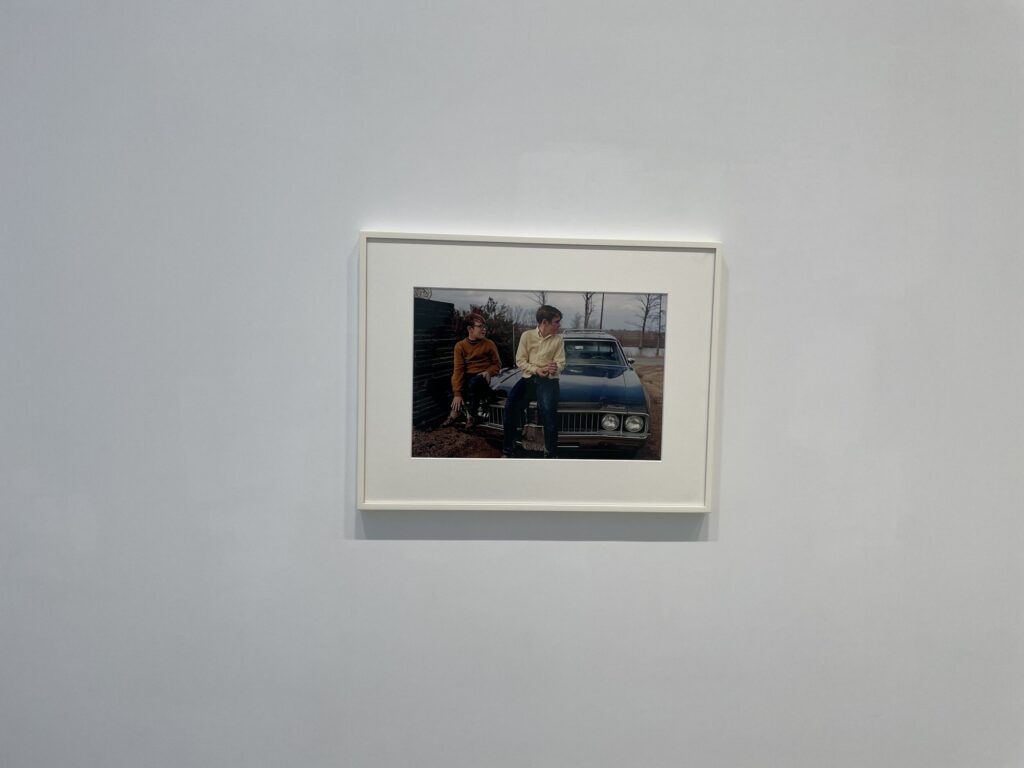
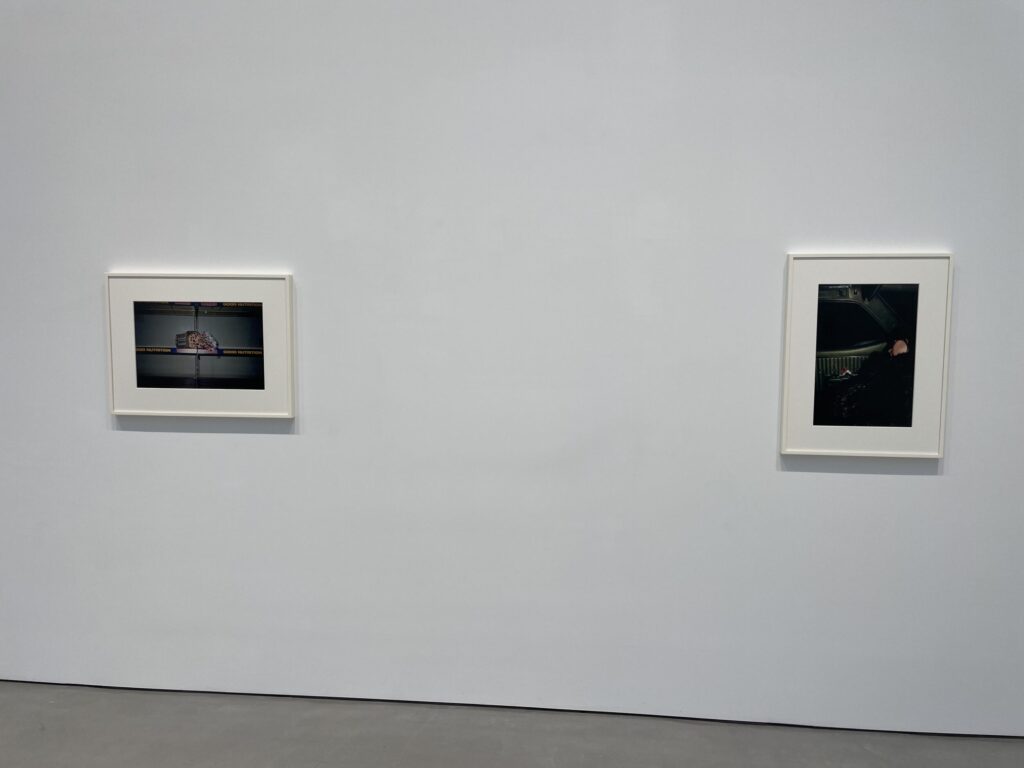
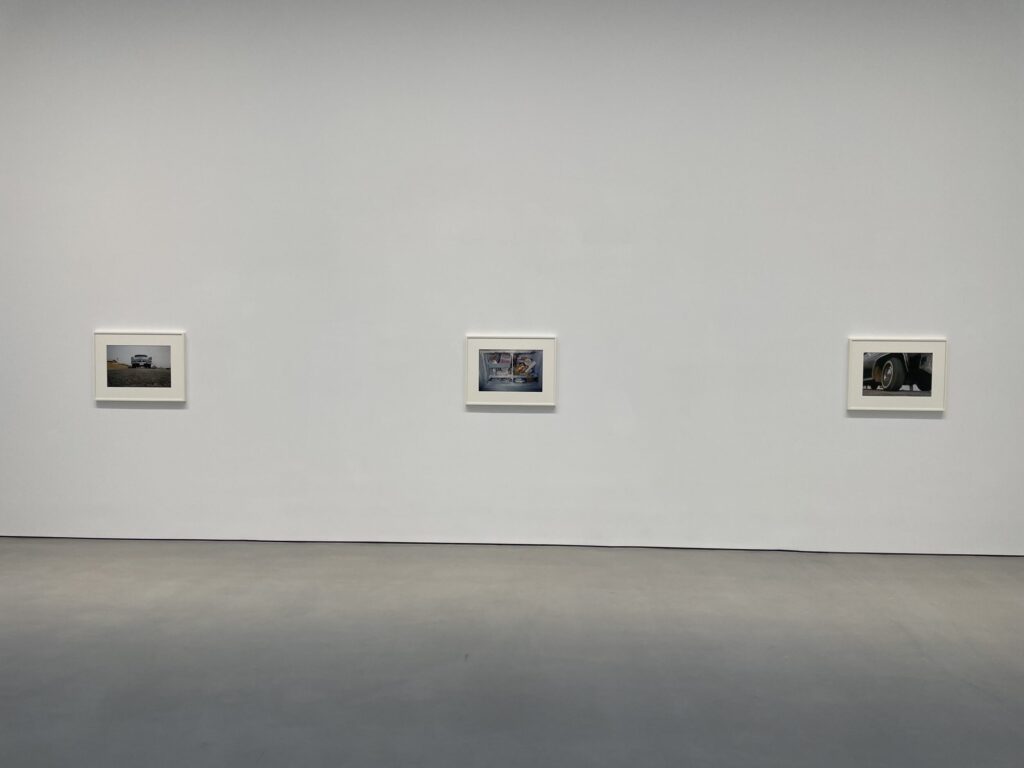
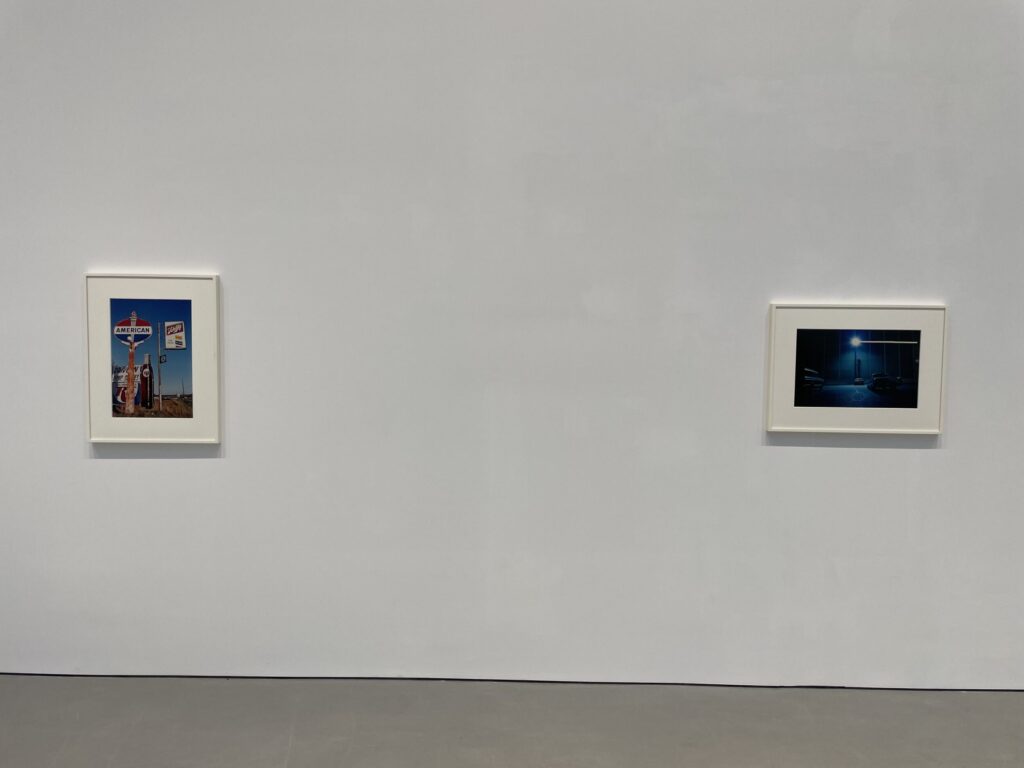
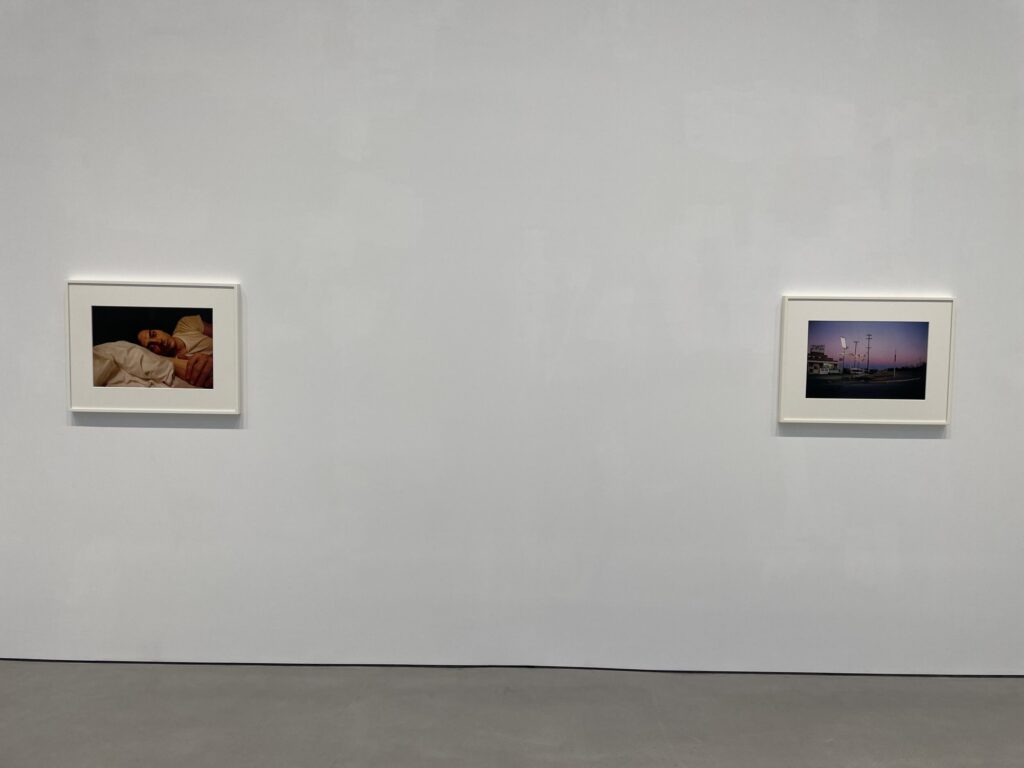
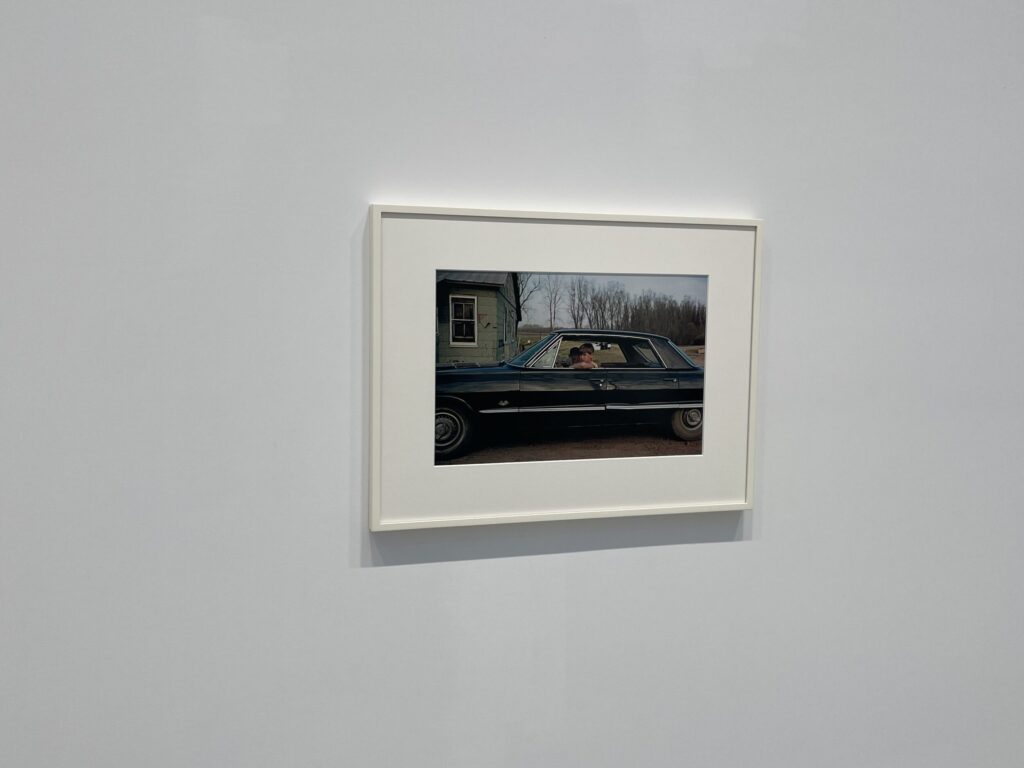
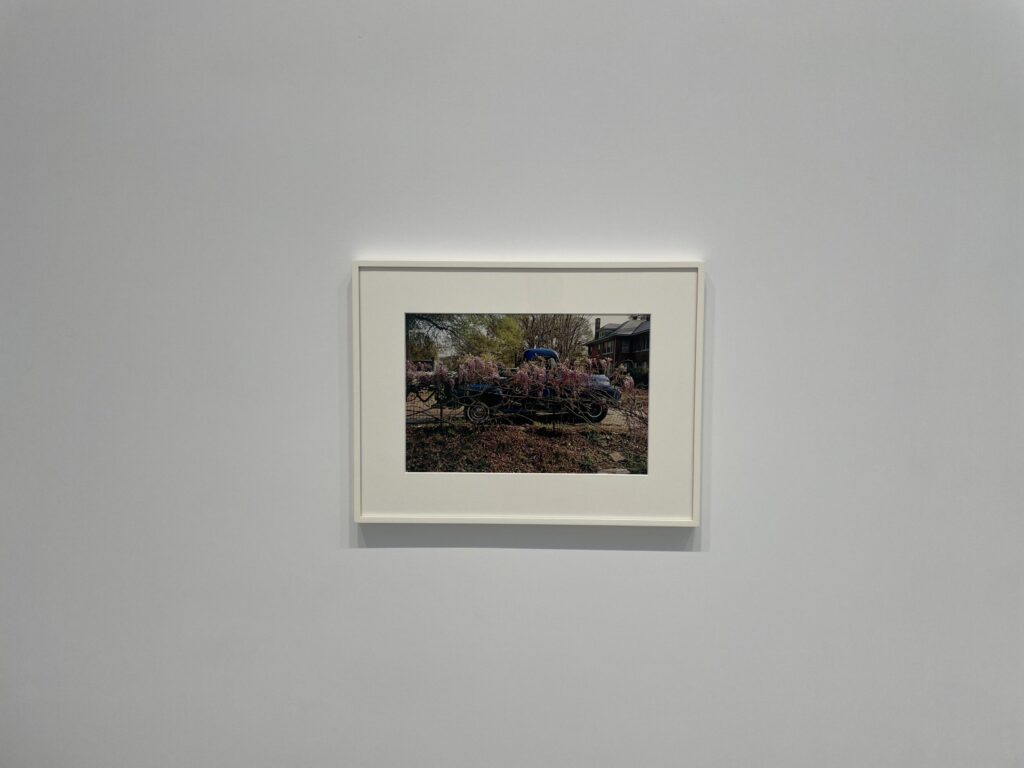
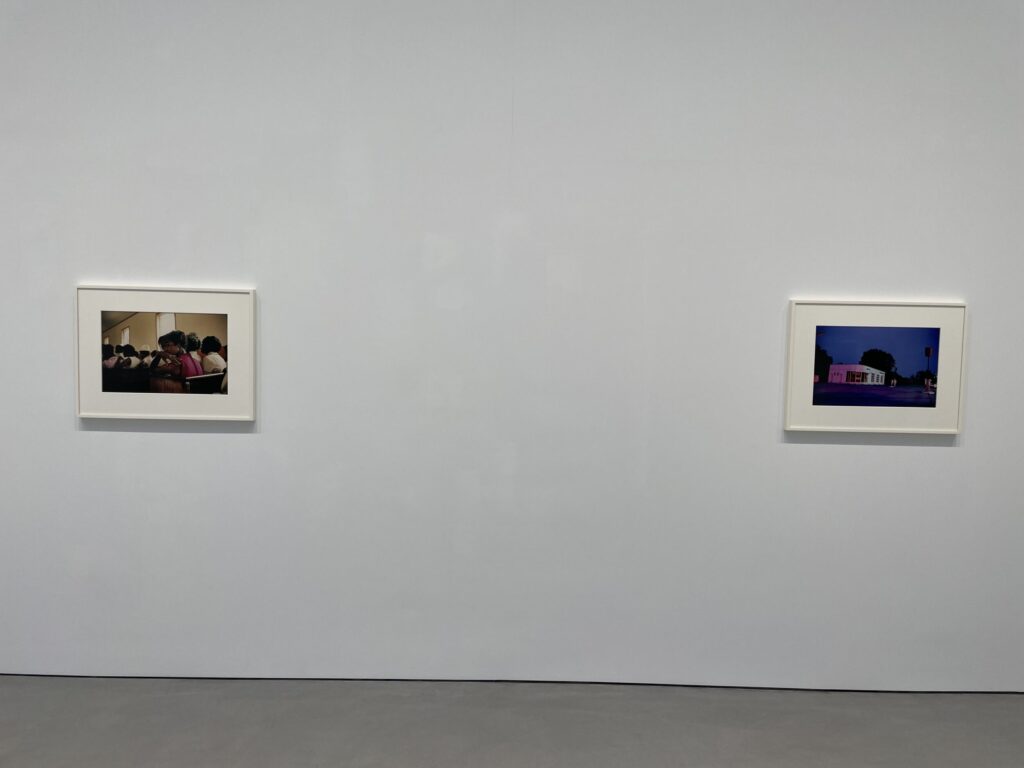
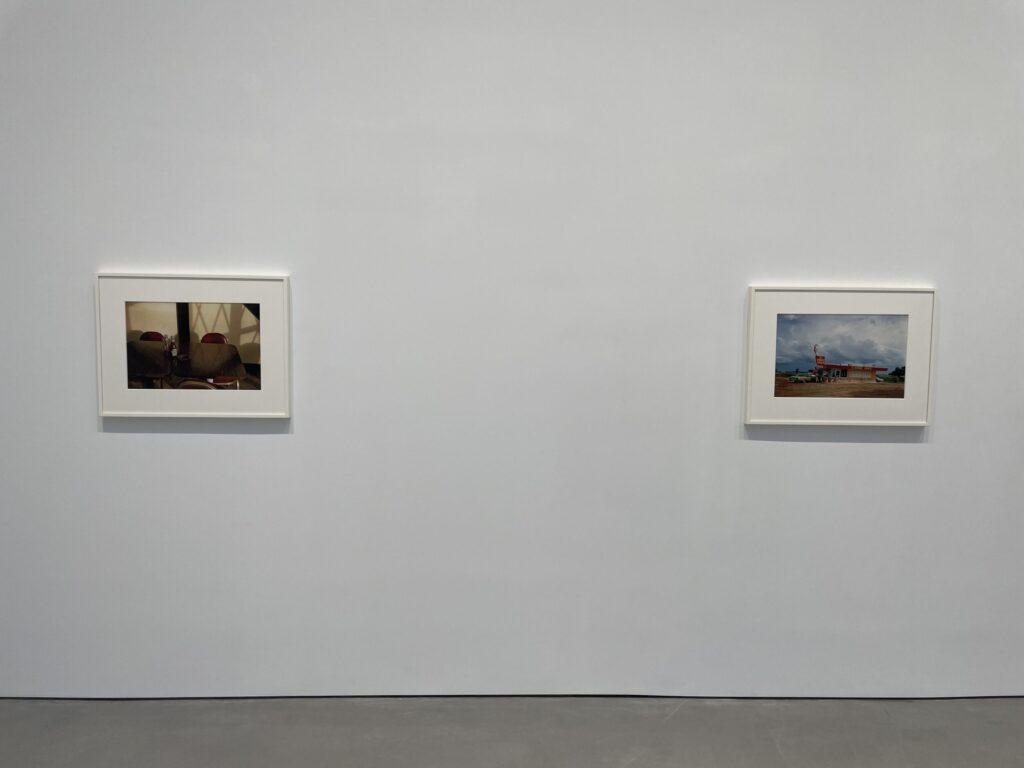
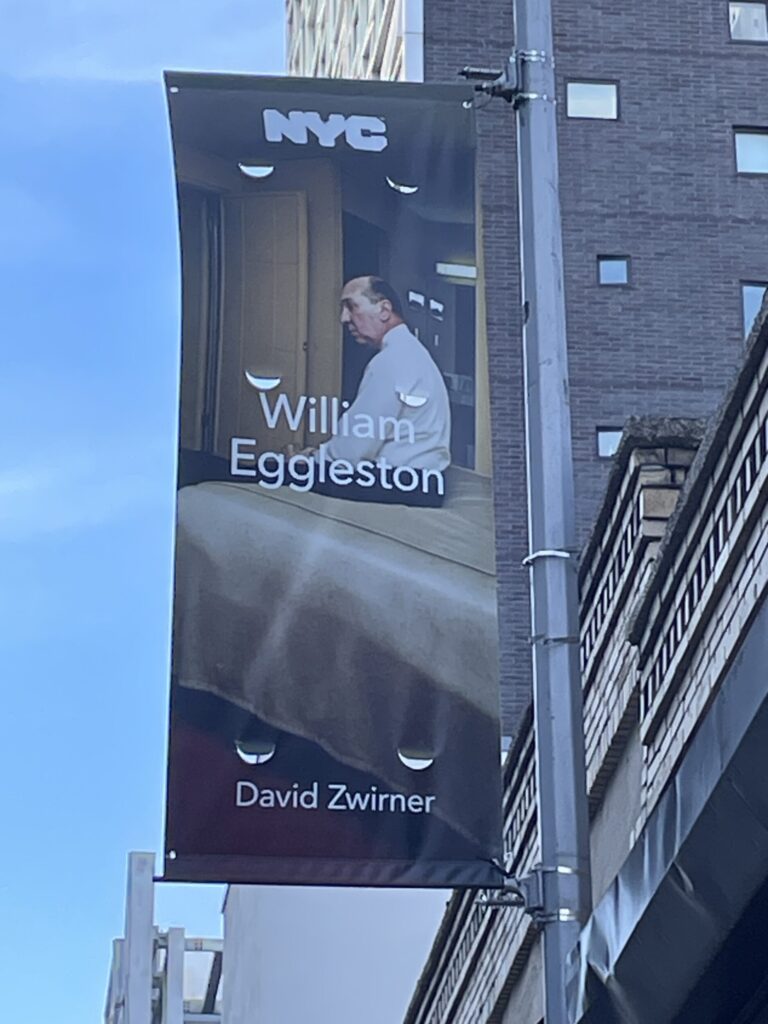
Comments/Context: The selling point of a gallery show or museum exhibit of photography isn’t typically the printing process used to make the photographs. With ubiquitous contemporary processes like digital inkjet or pigment printing, the fact that the prints were made using these techniques isn’t generally that important to the average visitor, and even with gelatin silver or chromogenic prints, the specific printing details are more often supporting information rather than the headline. It’s only when we wander off into the most rare, specialized, and unruly of photographic prints, like carbon, Fresson, or dye transfer (among other now essentially obsolete approaches), that it really does become a notable event that the prints were made in a particular manner.
William Eggleston started using the dye transfer process for his photographs in 1972, and at the time, it wasn’t an obvious choice. Kodak had developed the dye transfer in the 1940s, where it was used mostly for commercial image printing, largely in advertising and fashion. Technically, it was a tricky and finicky process, with the original image split into three separation negatives, which were then enlarged and printed into positives on three matrices, which were then soaked in dye (cyan, magenta, and yellow) and ultimately transferred to paper. The alignment of these multiple layers required exacting attention, but the good news was that the color and density of each layer could be controlled with precision, and this is where the fit with Eggleston’s artistic aesthetics came. With the help of master printers Guy Stricherz and Irene Malli (with whom he would ultimately work over the next several decades), he was able to achieve a richness of tonal depth and color shading/saturation that made his images sing. The less good news was that the process was hand-crafted, labor-intensive, time-consuming, and expensive, making the resulting prints decently rare.
In 1994, Kodak discontinued production of the dyes, paper, and film used for the dye transfer process, which of course quickly led to scarcity, and ultimately hoarding by those who still wanted to use the process. Over the years, Eggleston and his printers have acquired what they could of the remaining materials, gathering up enough for one last major round of prints. And so this exhibit (first in Los Angeles in 2024, and now in New York), and these prints, are like the last call at the bar when the night is coming to a close, offering one final opportunity to get a dye transfer Eggleston (in the primary market) before the lights go out. (As an aside, Stricherz and Malli sold a selection of their original printers’ proofs, largely of Eggleston dye transfers, at auction in 2025, here and here.)
The edit for “The Last Dyes” seems largely to have fallen to Eggleston’s sons William and Winston, and the what’s in and what’s out of those final choices must have been agonizing – with the entirety of Eggleston’s career to choose from and a very limited number of images to be selected, how do you pick? A quick survey happily reveals that it didn’t end up being an obvious, most easily sellable, greatest hits countdown; while many famous images are of course included, it’s not a simplistic parade. Instead, the edit liberally draws from Eggleston’s original 1976 MoMA show, as well as from “Outlands” and “Chromes”, essentially limiting the chronological period to roughly 1969 to 1974. From there, knowing that the original dye transfer prints were integral to cementing Eggleston’s place in the history of American color photography, the edit seems to follow the color, searching out those compositions that most benefit from the astonishing color saturation the process delivers, even if they weren’t the most notable pictures to begin with.
In a sense, each photograph in this exhibition is about color; there may be other things it is about as well, including people, places (particularly in the American South), vernacular styling and signage, emptiness and quiet, even cars. But every single frame is organized around its use of color, and the dye transfer process makes those choices even more vividly apparent. There was another installation to be made here that followed the colors in succession, like a spectrum: the seductive violet of twilight evenings transitioning into the deep blue of a nighttime parking lot, a single lightbulbed ceiling, the hood of a car, and various shades of blue sky, followed by the green of a car with a broken window and side mirror, some curtains, and the interior of another car with a woman in a fur coat, leading to the yellow wall of a shadowed diner, a man having a drink in a hotel room, a boy’s shirt, and a self-portrait in bed, and onto the orange of a woman on the sidewalk, a Gulf gas station sign, a seething bathroom, some carpet, and a barbecue fire, and finally to red, in the form of a boy’s sweater, a pillow, the chairs in the diner, an ice cream shack, and the side of a building, with plenty of other eye-catching color pops to be discovered along the way. If you approach each photograph on view with the question of how the color is being used to orient, balance, or amplify the available elements in the composition, every picture will be a new example of the masterful way Eggleston was controlling our experience. There’s even a self-portrait reflection in a car bumper for those looking closely at how things are being put together.
For dedicated and long-term Eggleston followers, “The Last Dyes” won’t deliver much in the way of new information, nor will those connoisseurs misunderstand the difference in historical importance (and physical size) between the prints originally made in the 1970s and the ones made recently (which are a bit larger). Instead, there is a warm end-of-the-era nostalgia to this show that the FOMO positioning of get-’em-while-you-can doesn’t dilute. Eggleston’s dye transfers remain a master class in 20th century color photography, with plenty of capacity to teach and astound even half a century later.
Collector’s POV: The prints in this show are priced between $85000 and $125000 each, based on the place in the edition. Eggleston’s work is routinely available in the secondary markets, with lesser known images and iconic works coming up for sale with surprising regularity. Recent prices for single images have roughly ranged from a reasonable $5000 to $1441500 (in 2024, for a 60×44 pigment print); and in 2025, a “Los Alamos” portfolio of dye transfers reached $1875000.




Wonderful review with some excellent historical and artistic context, and a stunning installation. I bet the weight of it would really be felt in person. Eggleston has always had a personal and poetic approach to photography, and to see these images in the context of contemporary photography is a breath of fresh air. Thanks again.