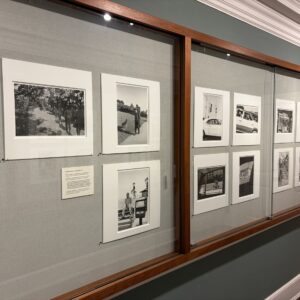
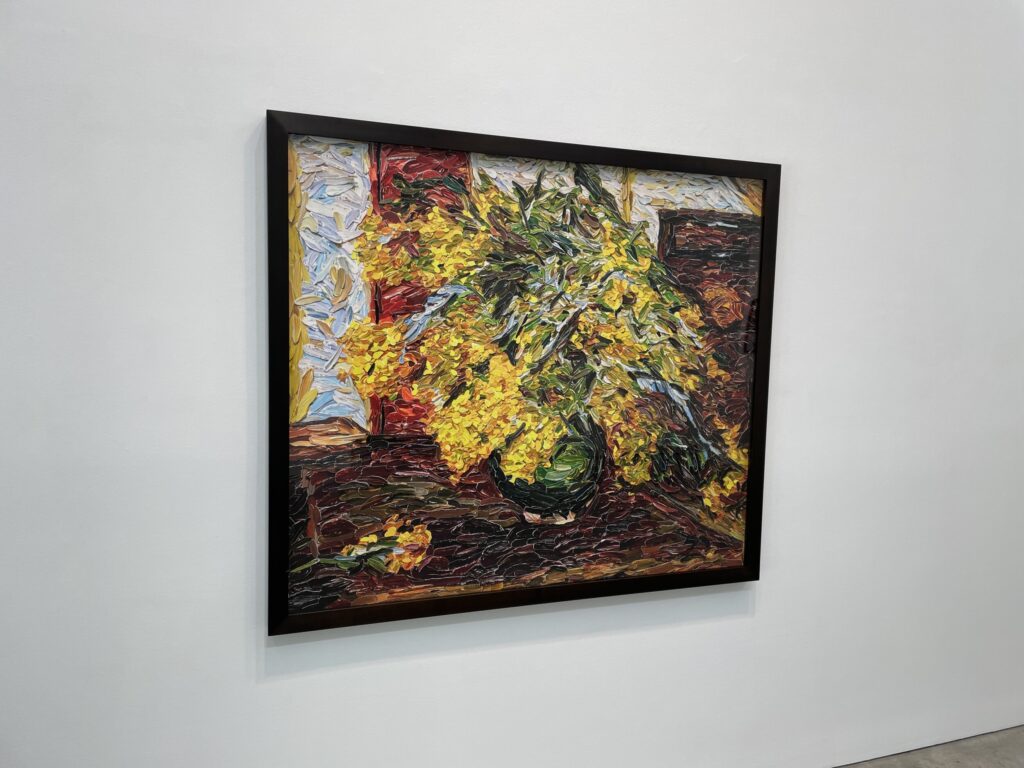
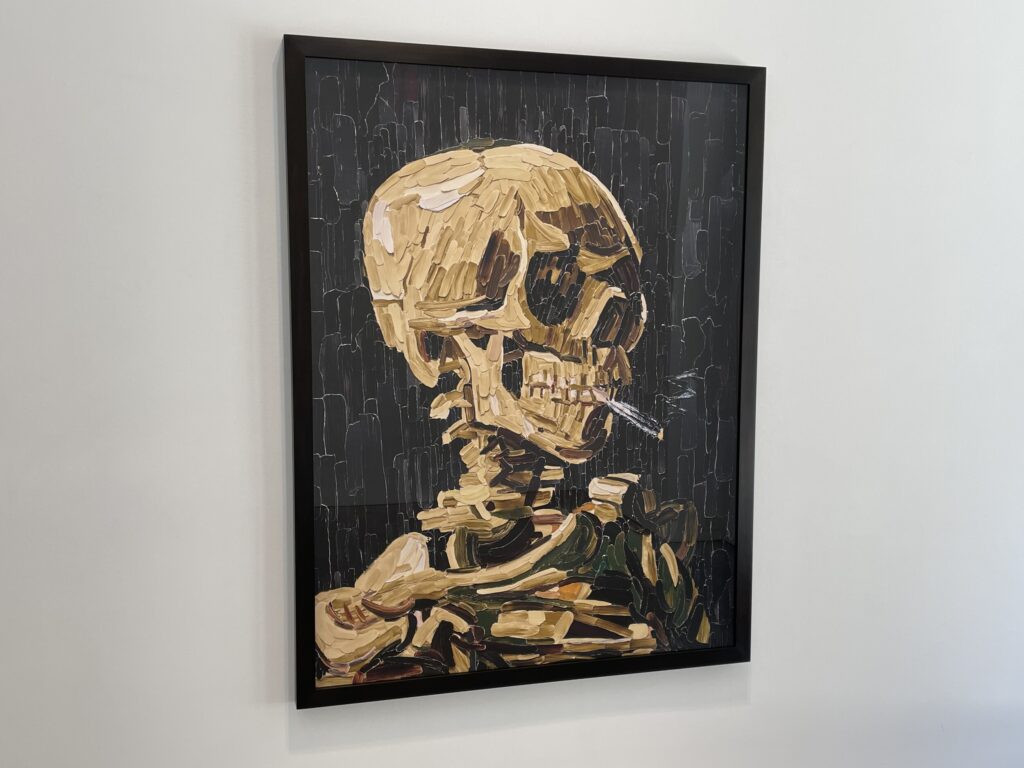
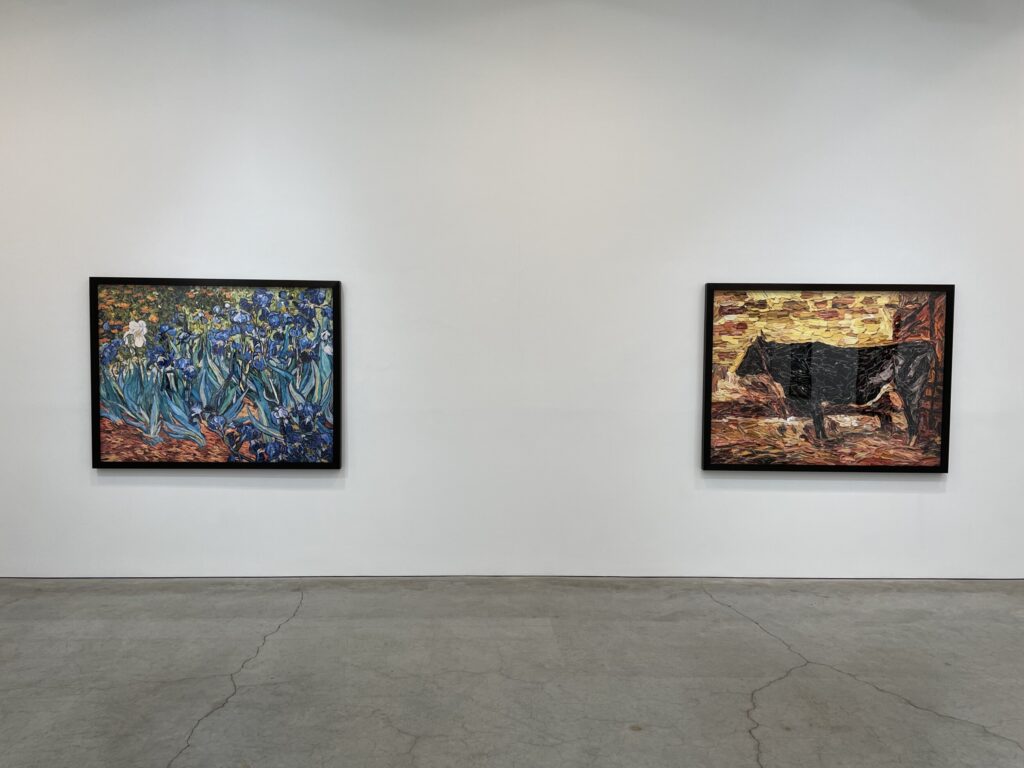
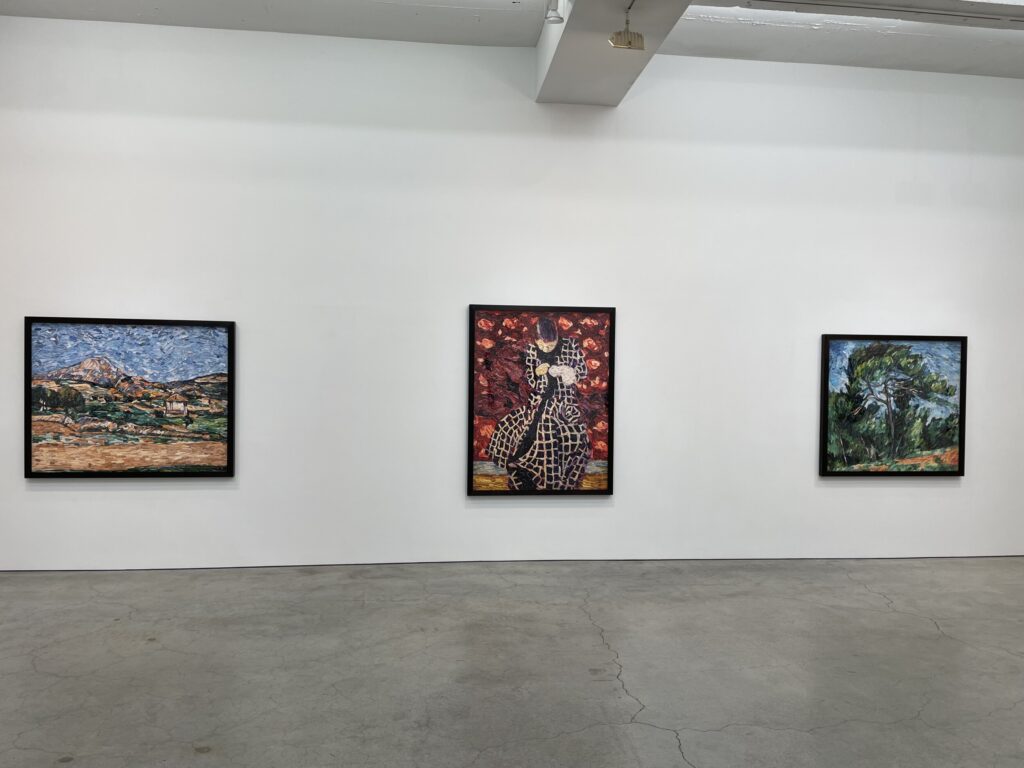
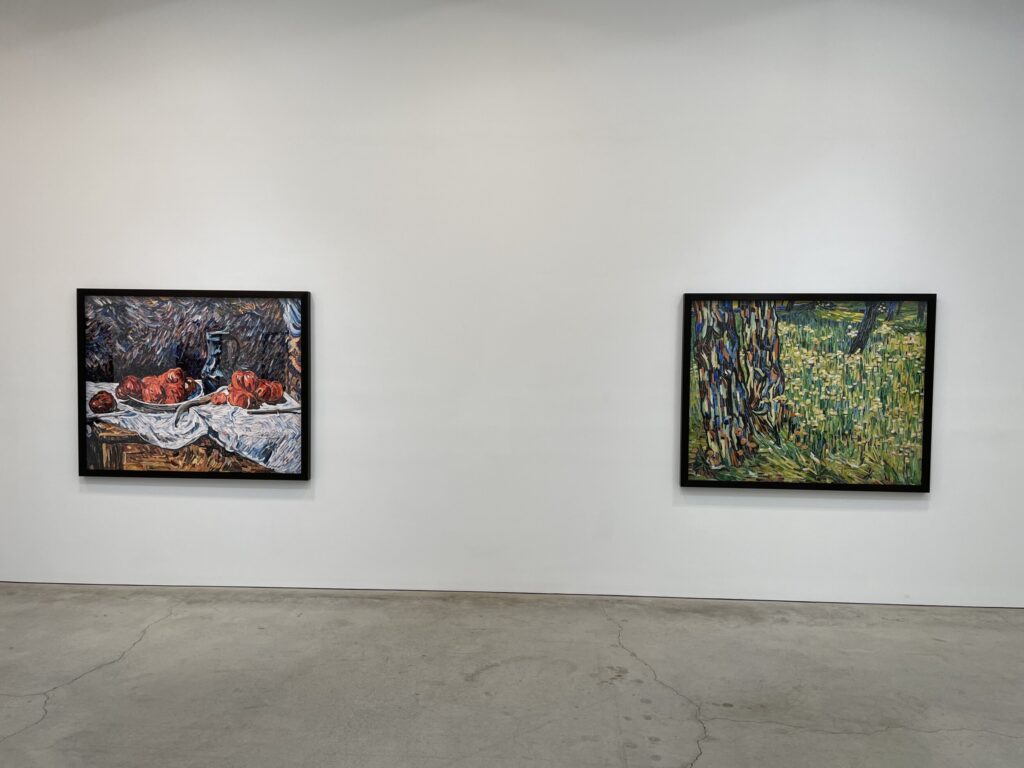
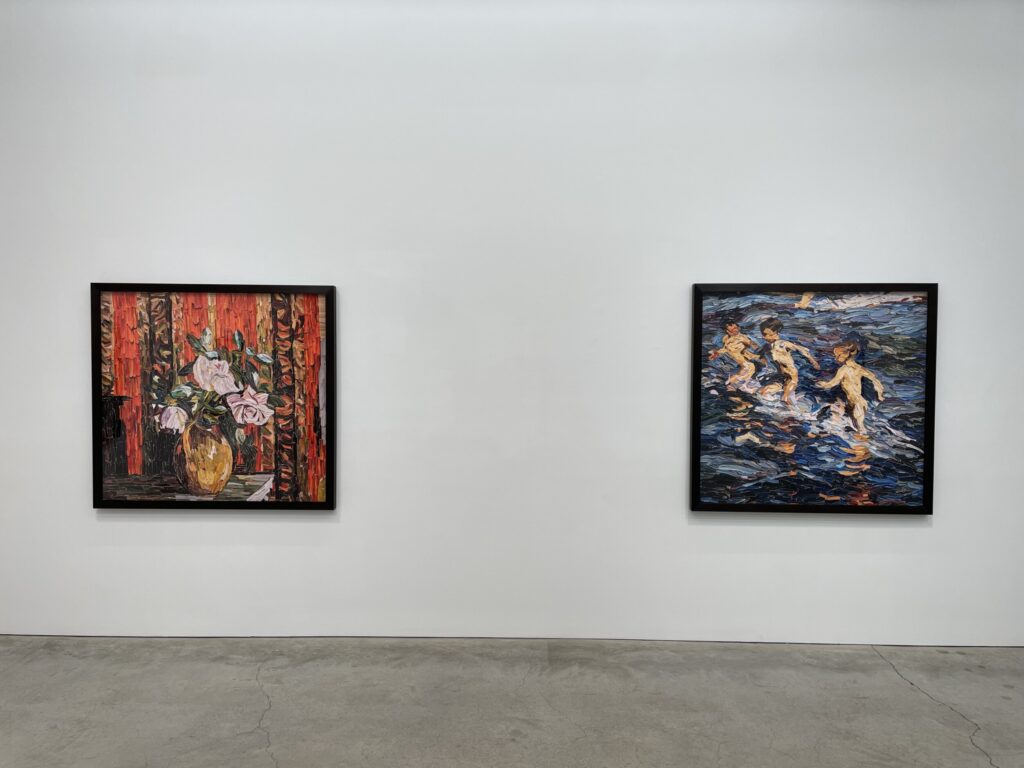
JTF (just the facts): A total of 11 large scale color photographs, framed in black and matted, and hung against white walls in the main gallery space and in the entry room. All of the works are archival inkjet prints, made in 2026. The prints come in two sizes, with the larger prints on view. These prints are sized roughly 50×52, 50×53, 50×54, 50×58, 50×62, 50×63, 50×65, 50×66, 62×50, or 66×50 inches, and are available in editions of 6. (Installation and detail shots below.)
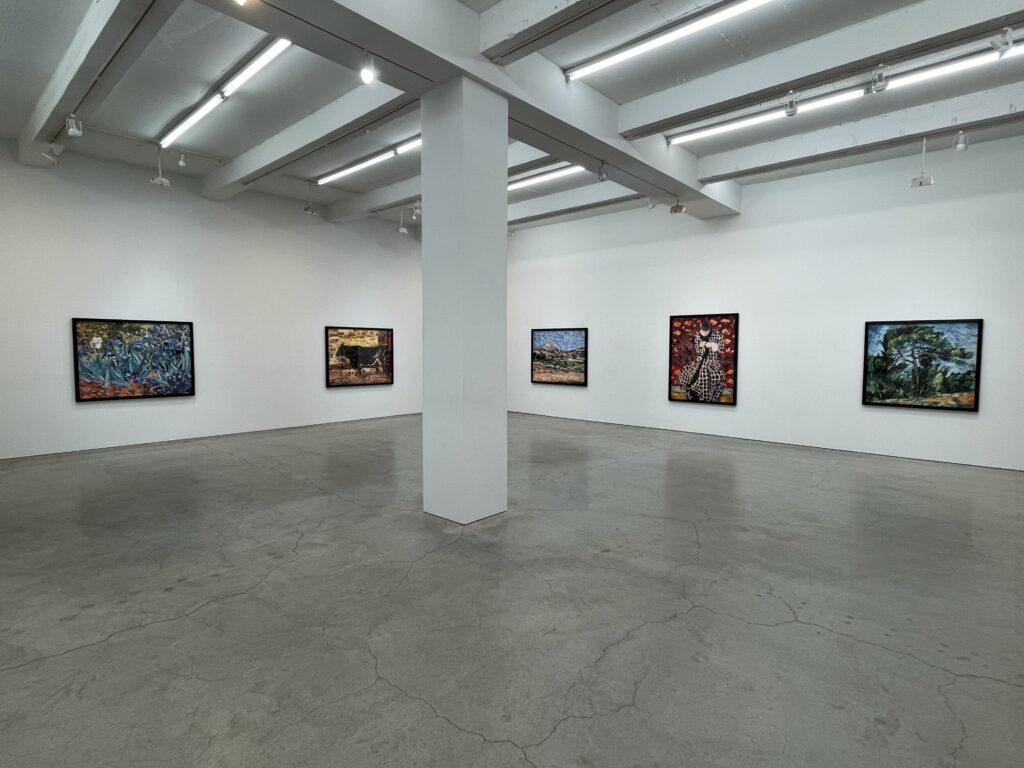
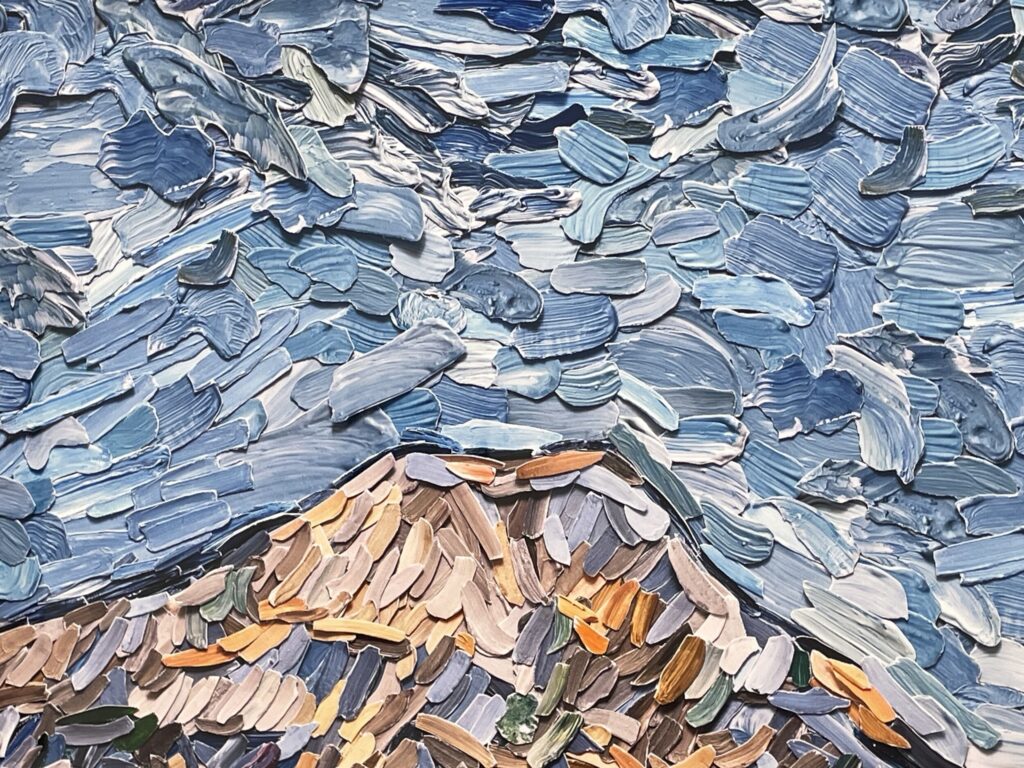
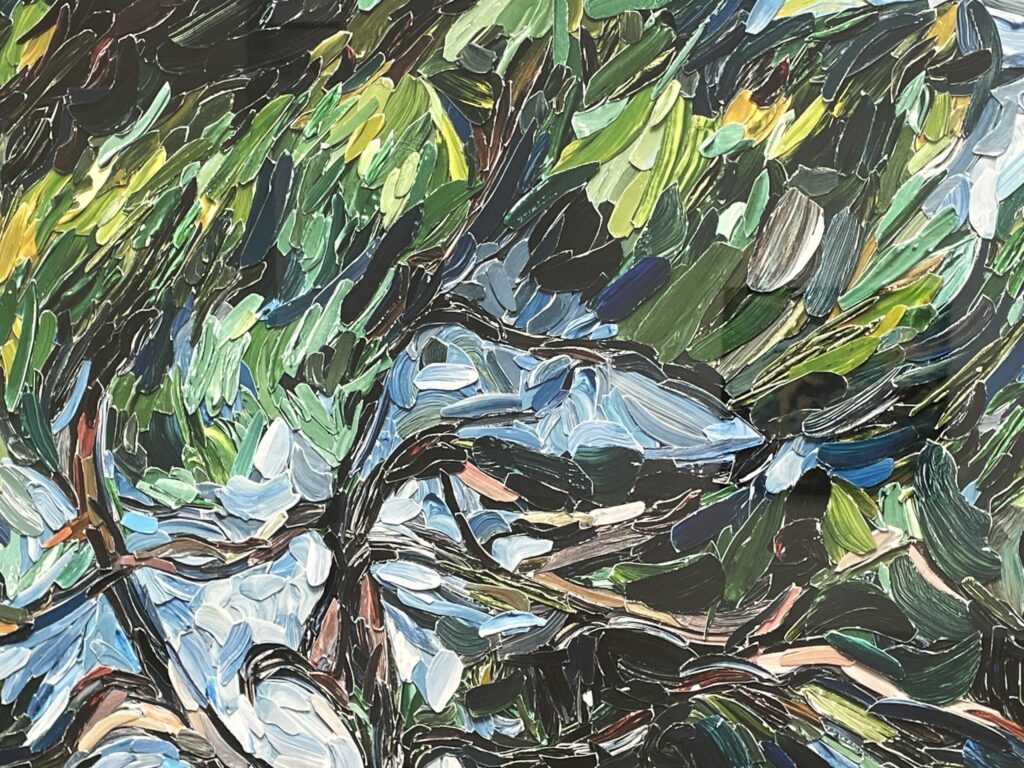
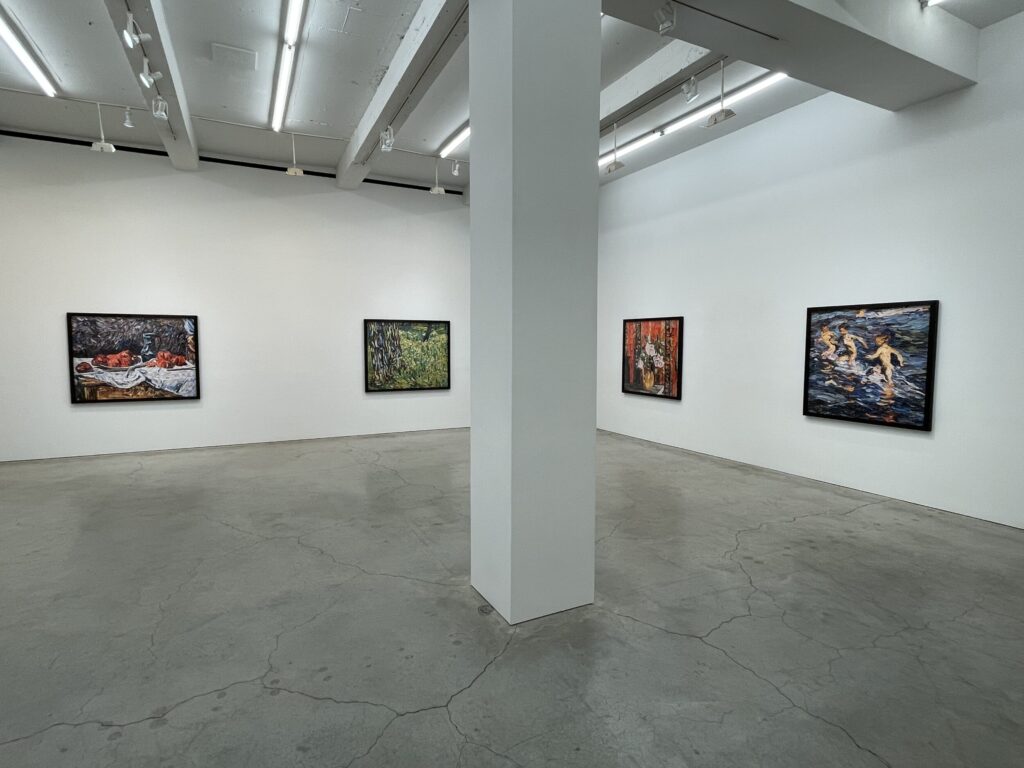
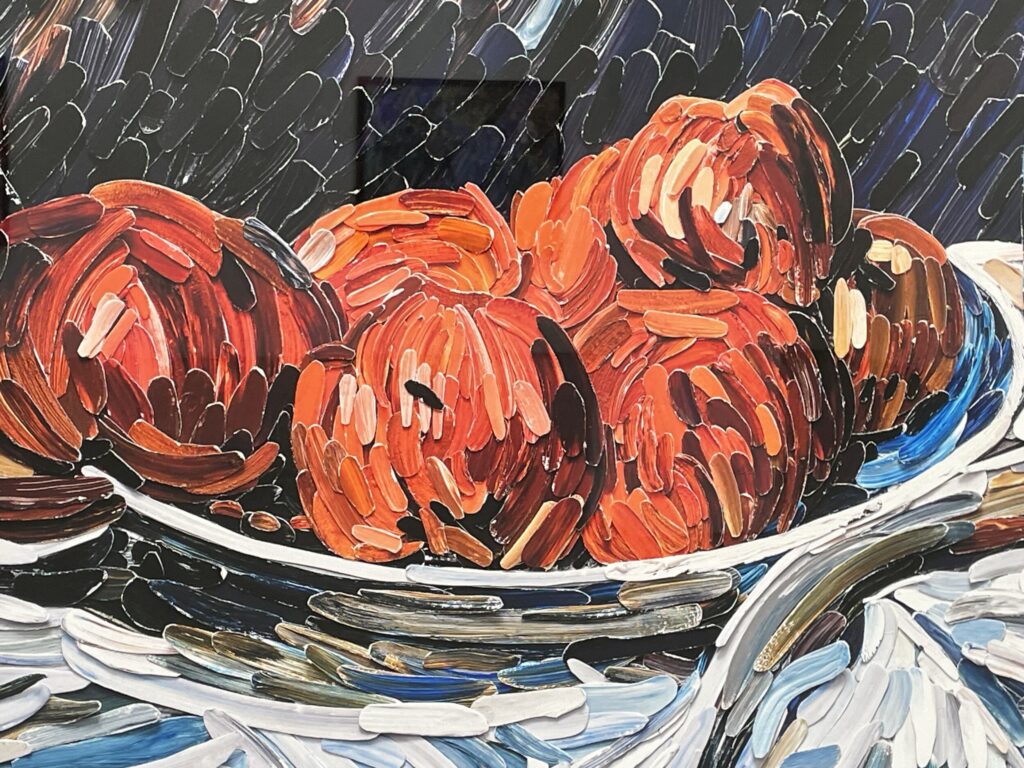
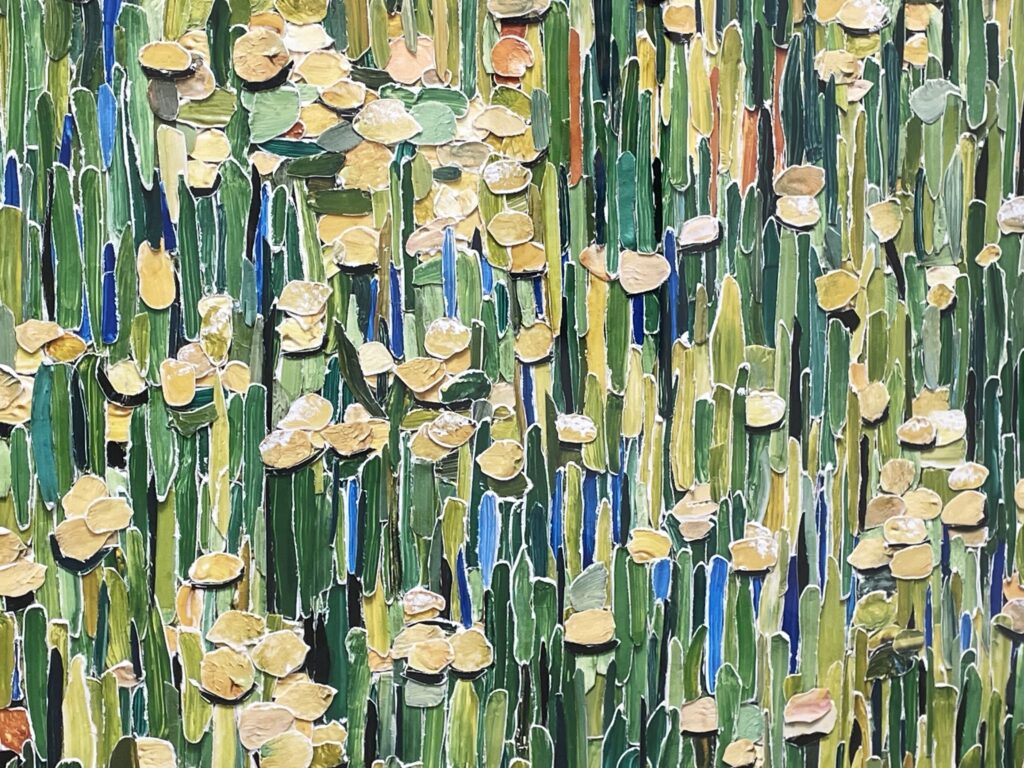
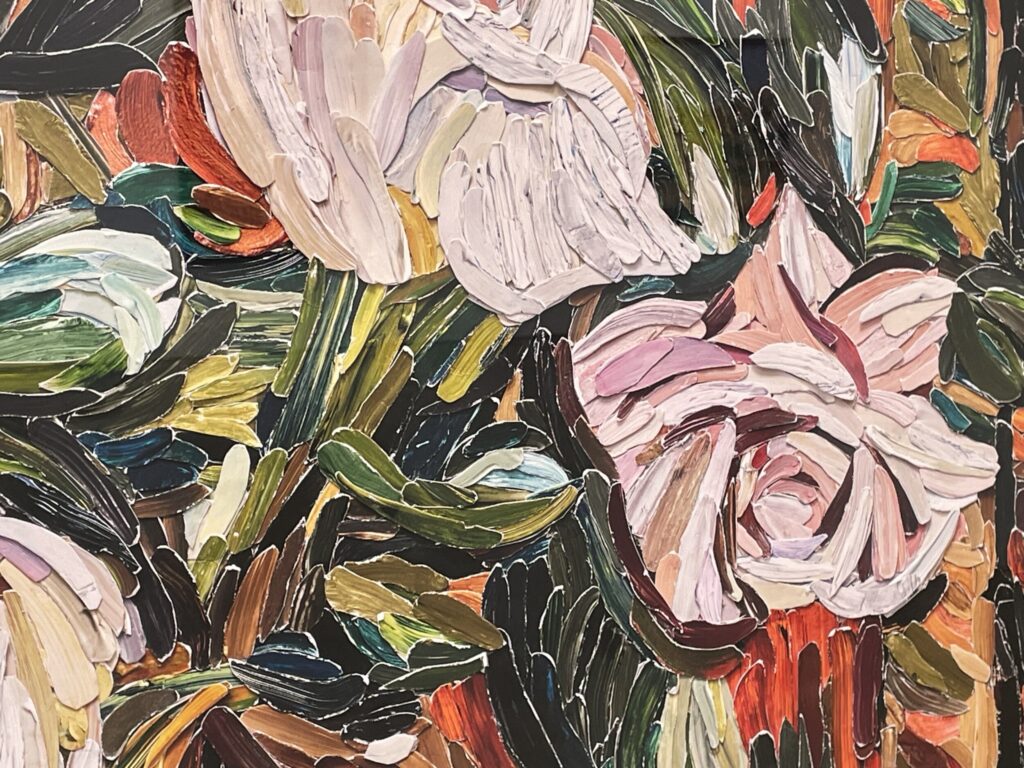
Comments/Context: In the decades since the early 1990s when Vik Muniz made his artistic jump from sculpture to photography, he has most often been wrestling with the central idea of imaginative artistic recreation, actively exploring unorthodox ways to translate one artistic medium into another. For many of his projects along the way, it has seemed like Muniz has chosen to test himself with the most unlikely materials possible for these re-imagination efforts, only to magically turn bent wire, garbage, chocolate syrup, plastic toys, or diamonds into a decently faithful recreation of something we already knew from the annals of art history or popular culture. Each famous (or not so famous) source artwork offers a similar challenge – to break it down into component parts (colors, textures, shapes, marks, layers, gestures, and other distinguishing features) that Muniz can then meticulously approximate with any number of alternate materials, and then document as an endpoint photograph.
Many Impressionist and Post-Impressionist paintings have wormed their way into Muniz’s brain over time, and his resulting recreations from different past projects – in color blocks, in powdery ground pigments, and in magazine scraps – have tried to unpack and mimic the shifting nature of light and color and the use of gestural brushwork found in notable works by Monet, Cezanne, Van Gogh, Gauguin, and others. But at some level, the fundamental unit of creation common across these works has always been the individual brushstroke (which is generally visible, and sometimes overtly bold, in these paintings), and Muniz seems to have had unfinished business with the aesthetics of these artistic movements, and so has been restlessly searching for innovative (and functionally malleable) visual substitutes for their expressively painted surfaces.
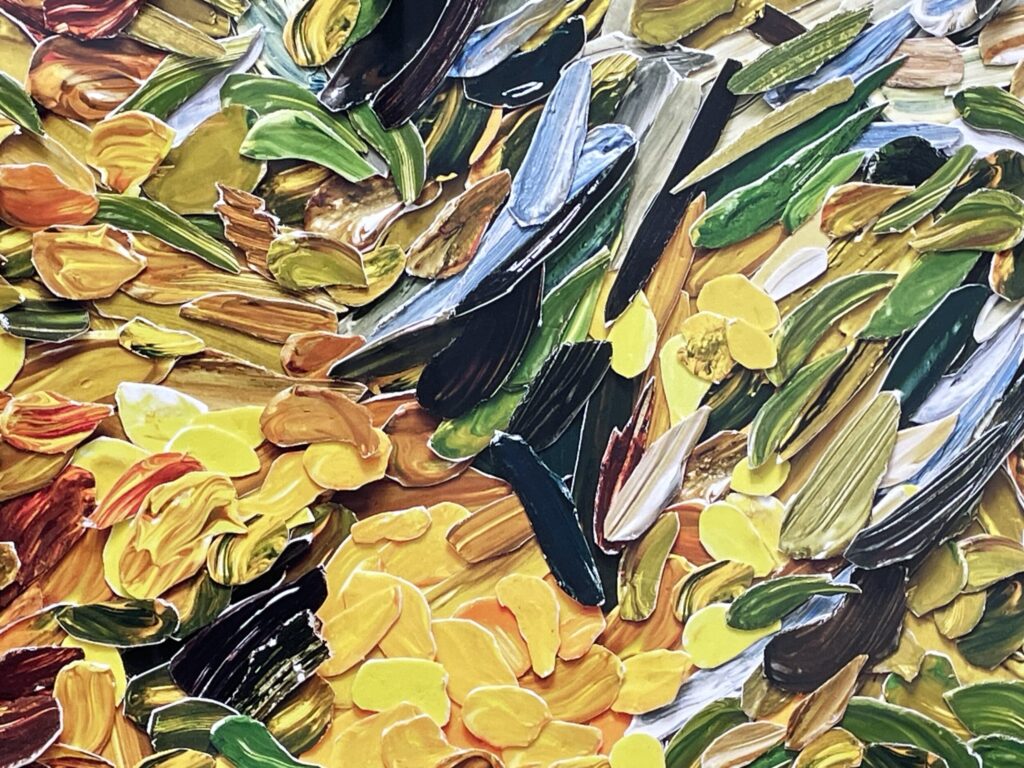
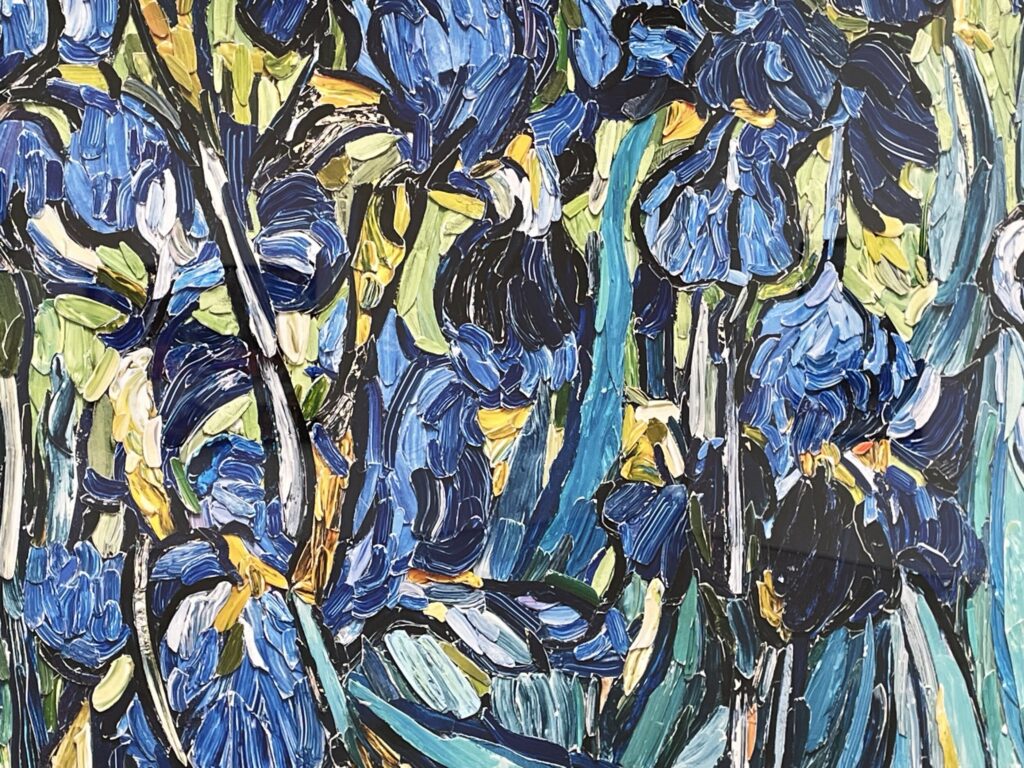
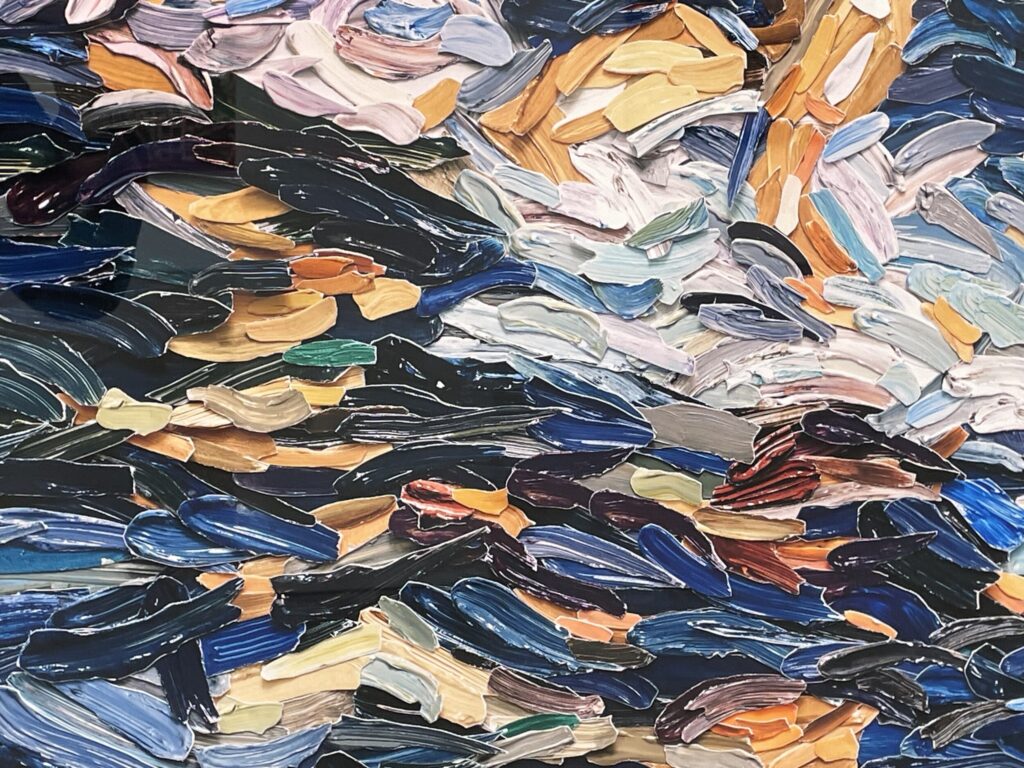
At some point, Muniz must have asked himself the conceptually obvious, but altogether puzzlingly nested question of “why not use brushstrokes to represent brushstrokes”? As seen in this show of new works, the answer eventually lay in carefully orchestrated photographs of single painted brushstrokes made in Muniz’s studio (particularly with respect to the incoming direction of the light cast across the paint), which were then printed on paper, methodically cut out, and assembled back into representations of the original compositions – not a literal one for one replacement of brushstroke for brushstroke (as much as such a thing would be possible), but an approximation using paper-based brushstroke images as artistic building blocks.
Interestingly, this approach is more resolutely physical than related brushstroke reuse approaches by other contemporary artists. More than a decade ago now, Matthew Stone started scanning painted brushstrokes and using them as digital raw material for his own compositions (reviewed here and here), and Alina Frieske (reviewed here) has crafted a related kind of painterliness with digital fragments. But in fact, Muniz is going back to paper, not digitally manipulating these photographic images of brushstrokes, so there is still very much an element of personal touch taking place in his constructions.
While all of the paintings that Muniz has chosen to recreate with this brushstroke approach have thick brushwork, expressive movement, and lush color, the match between his technique and the underlying original subject matter is particularly striking in a few works here. The shimmery lines of Van Gogh’s “Tree Trunks in the Grass” offer Muniz an almost perfect vehicle for his most elongated brushstroke stand-ins, the swirls of the tree bark and the insistent verticals of the nearby grass making for a vibrantly shifting surface. And Cezanne’s “The Great Pine” turns those verticals into swaying horizontal curves and arcs, the evergreen limbs twisting and turning as if blown by a persistent wind.
In other works, the brushwork is more dappled and gestural, often in electric colors that seem to jump off the wall. This is true of Bonnard’s yellow mimosas, Van Gogh’s blue irises, Vuillard’s pink roses, and Gauguin’s more orange than red tomatoes, with Muniz’s photographed brushstrokes amplifying both the combinations of colors that actually come together from brushstroke to brushstroke and the orientation of the brushstroke movements required to create the desired shapes and forms. In this way, Muniz is systematically unpacking and then repacking these paintings, getting up close to every single small decision made and then remade. An increase in scale also helps heighten the energy of Muniz’s recreations, giving them a heft and presence on the wall that is quite different than the original paintings.
There is a maturity to these works that feels refined and confident, even if the underlying conceptual inversion follows a formula now altogether familiar for Muniz. The meticulousness and expansiveness of his craft is never in question. The more relevant point is how often a new twist like the brushstrokes creates moments of artistic/photographic magic, where we as viewers are mesmerized and enthralled by the transformations Muniz has delivered. To my eye, that magic happens in up close pockets in many of these works, but less so in the full works as seen from ten feet back. This observation returns me to a conceptual interest in process rather than product, and in this case, an impressed admiration for the idea and its execution more than for each and every final recreated example.
Collector’s POV: The prints in this show are priced at $42000 each, with somewhat smaller versions also available at $34000 each. Muniz’s works are ubiquitous in the secondary markets for both photography and contemporary art, with dozens of images available at auction every season. Recent prices have ranged between $5000 and $295000, with most prints finding buyers in five figures.