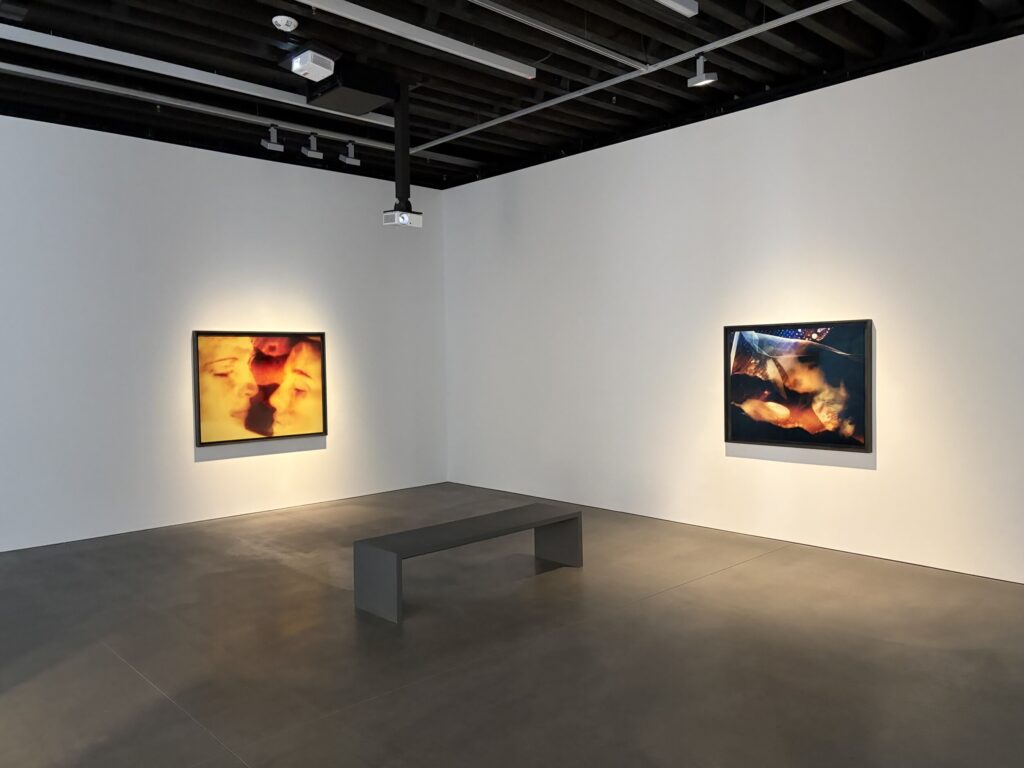
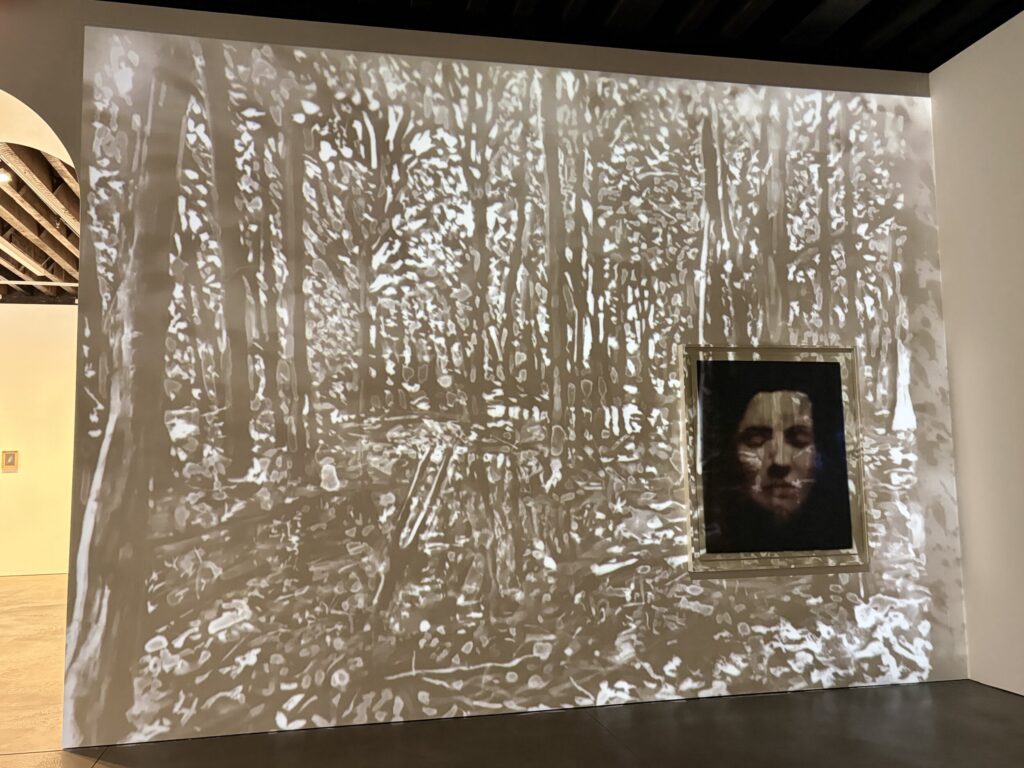
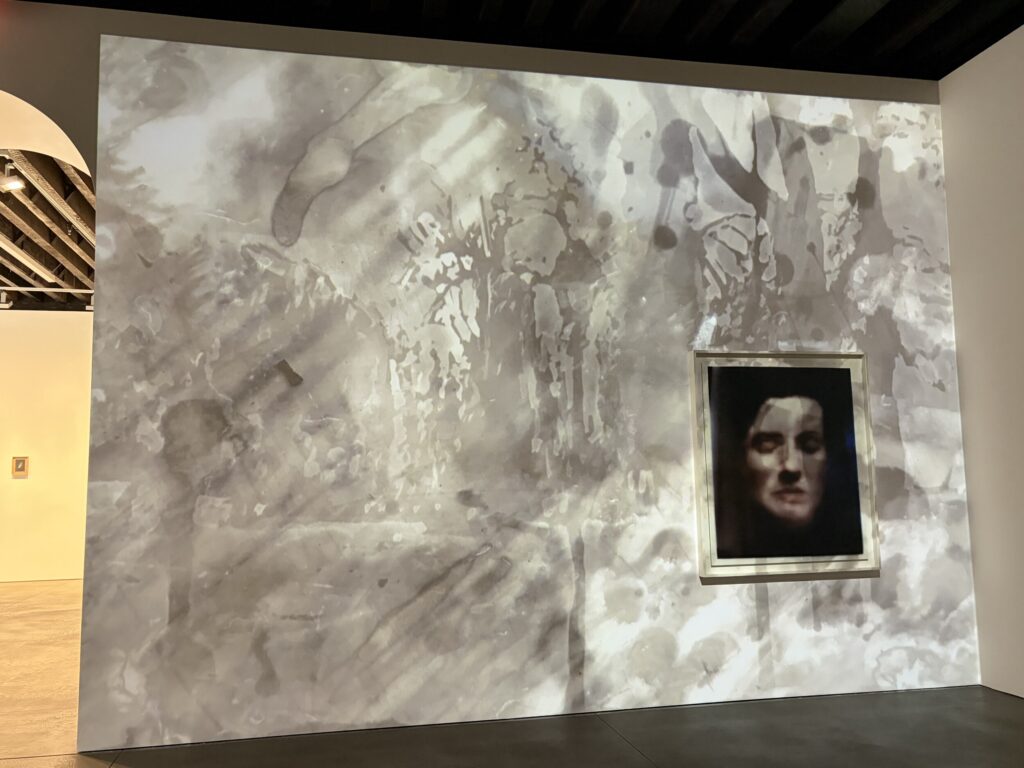
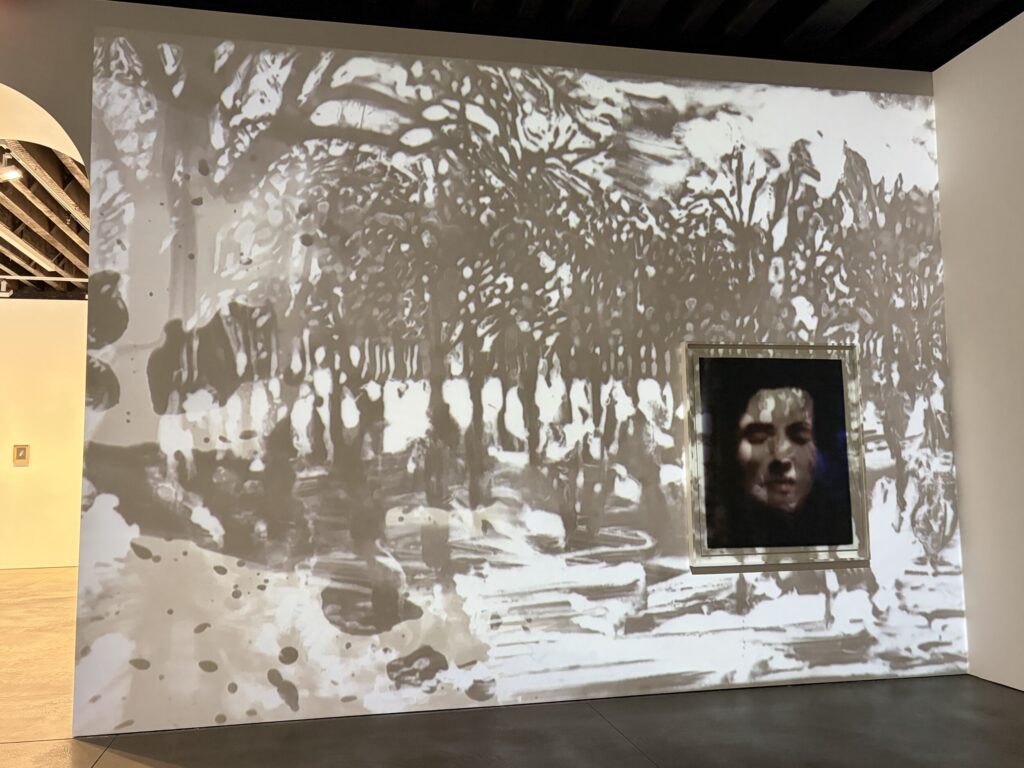
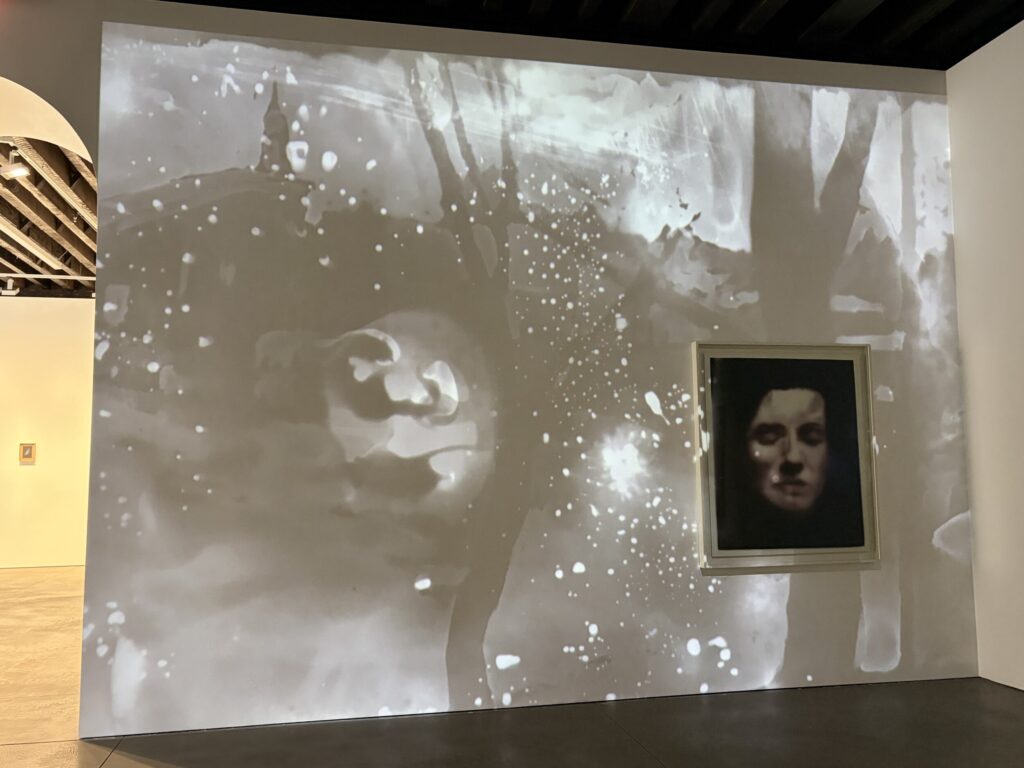
JTF (just the facts): A varied mix of photographic works and video installations, on view in a series of gallery spaces on the second floor. (Installation shots and video stills below.)
The following works are included in the show:
- 3 c-prints on glossy paper, 2026, sized roughly 45×51 inches, unique
- 1 set of 3 c-prints on glossy paper, 2026, each panel sized roughly 48×35 inches, unique
- 1 c-print on luster paper, 2026, sized roughly 50×73 inches, unique
- 3 c-prints on matte paper, 2026, sized roughly 40×49, 49×41 inches, unique
- 2 c-prints on glossy paper, 2025-2026, sized roughly 48×34, 45×57 inches, unique
- 2 gelatin silver prints on fiber-based paper, 2026, sized roughly 9×12 inches, unique
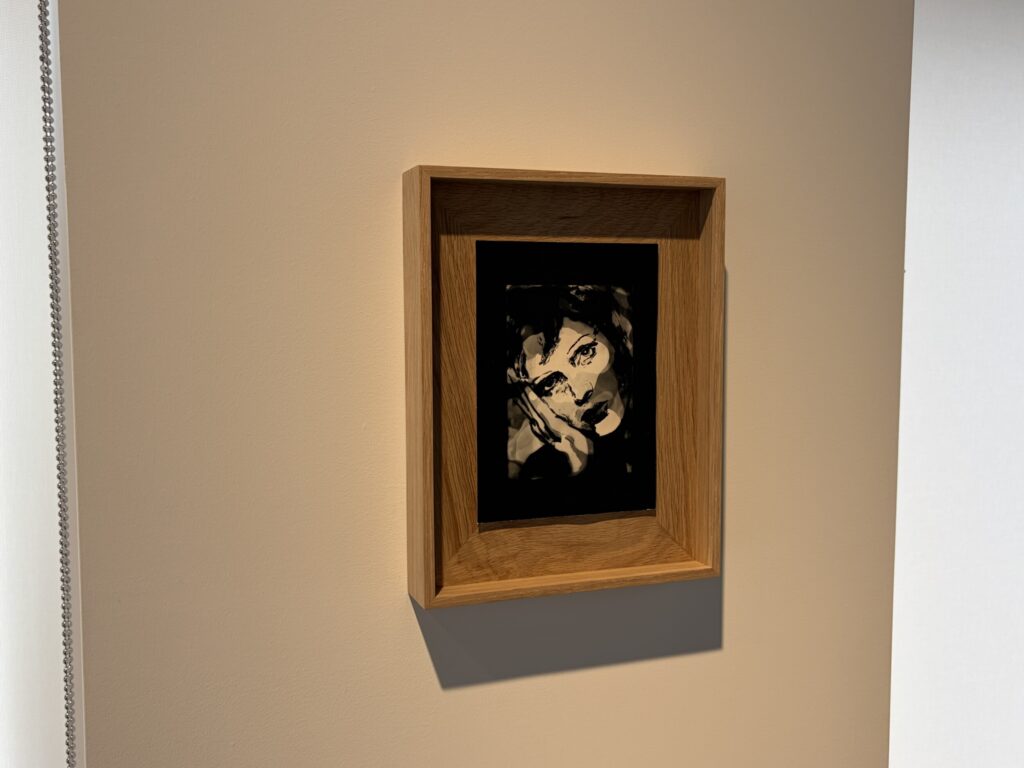
- 10 gelatin silver prints on fiber-based paper, 2025, sized 7×5 inches, unique
- 3 gelatin silver prints on fiber-based paper, 2025, sized roughly 45×33 inches, unique
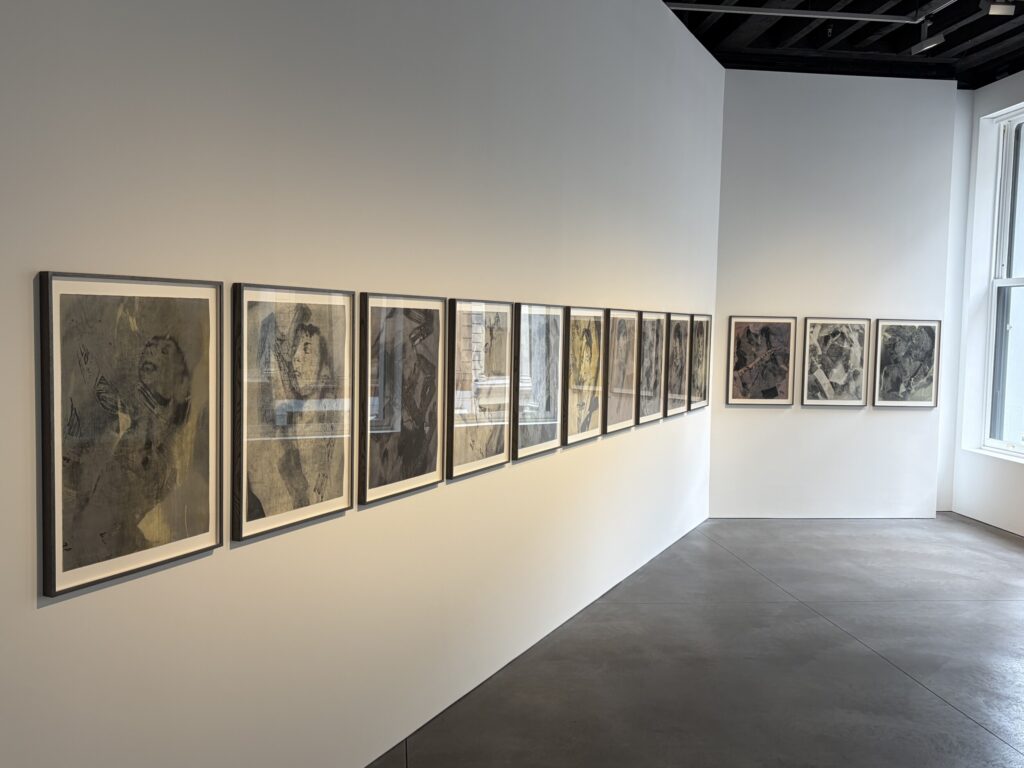
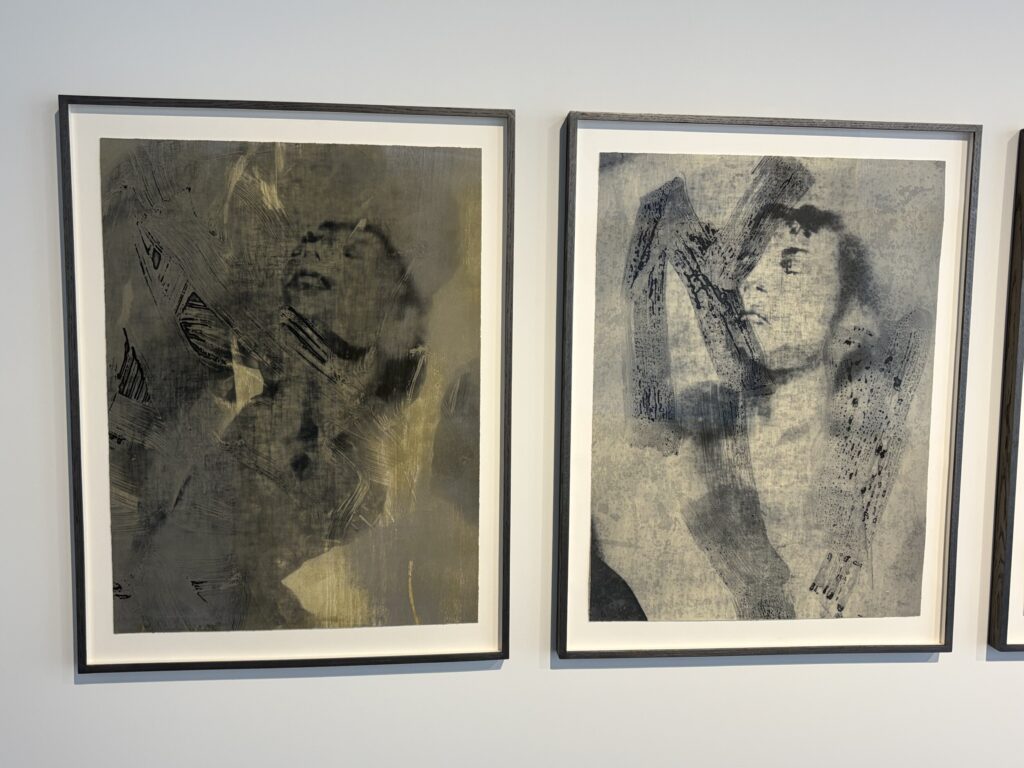
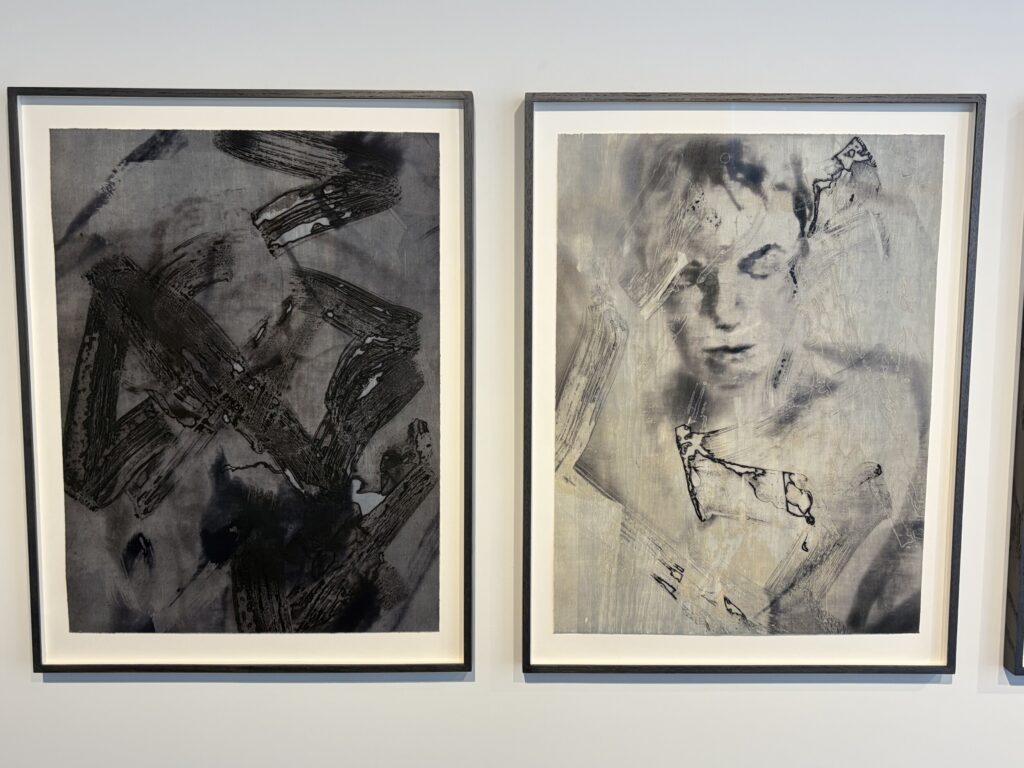
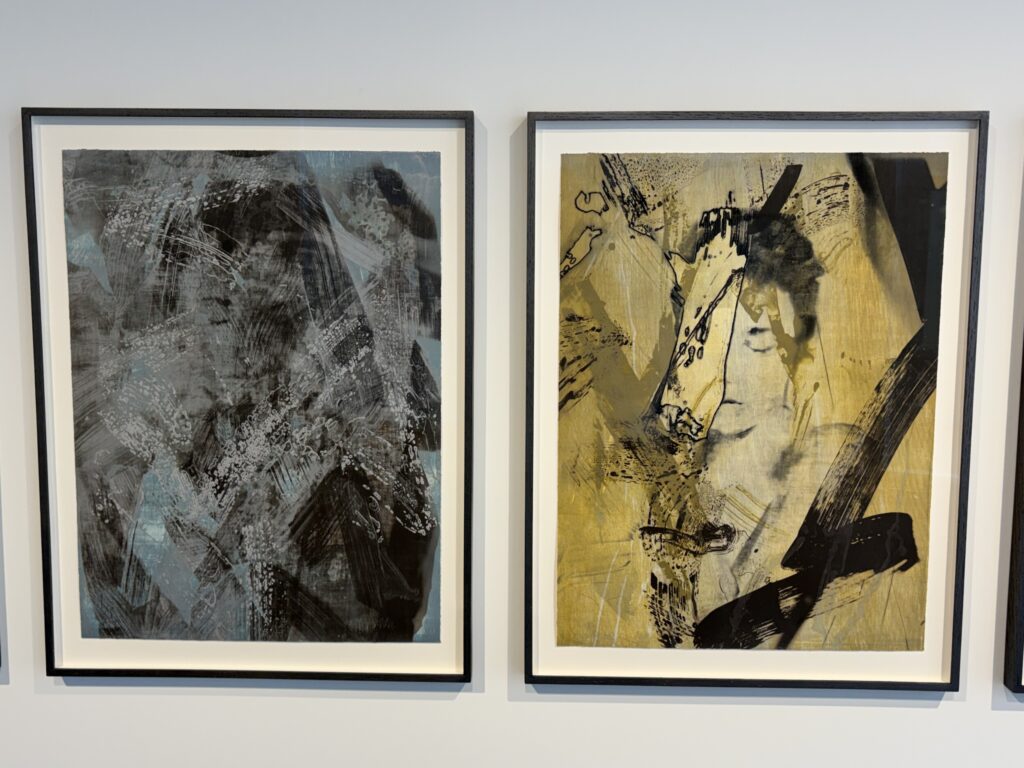
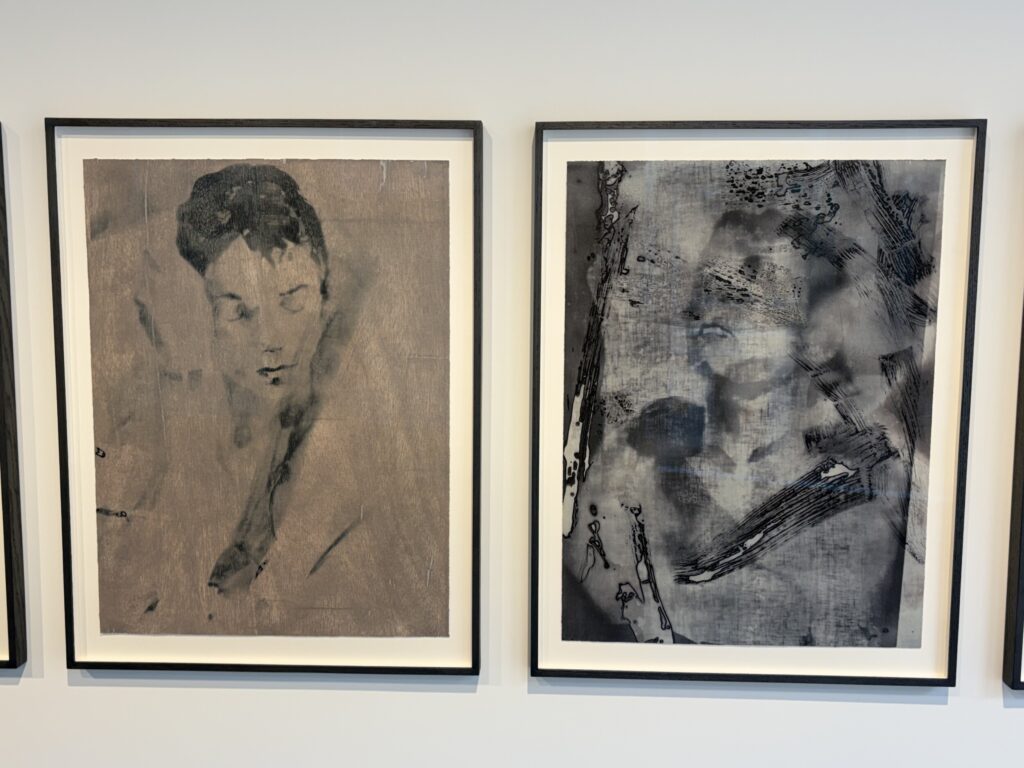
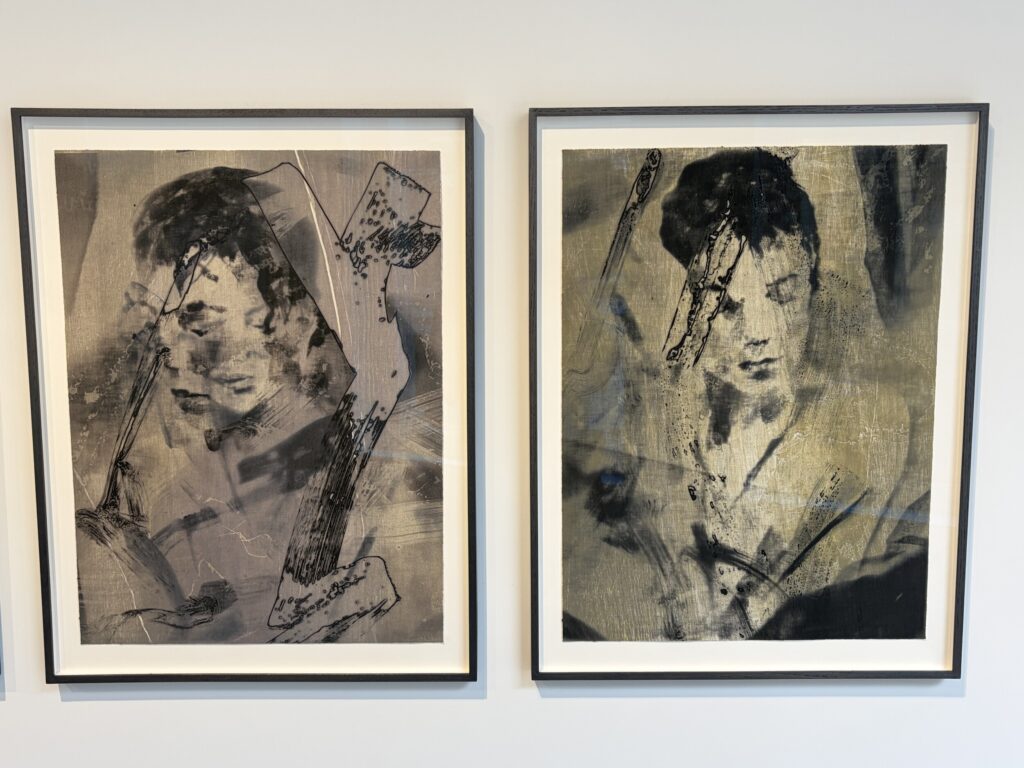
- 13 photogravure woodcuts on Hahnemühle paper, 2025, sized roughly 27×20 inches, in editions of 6+3AP
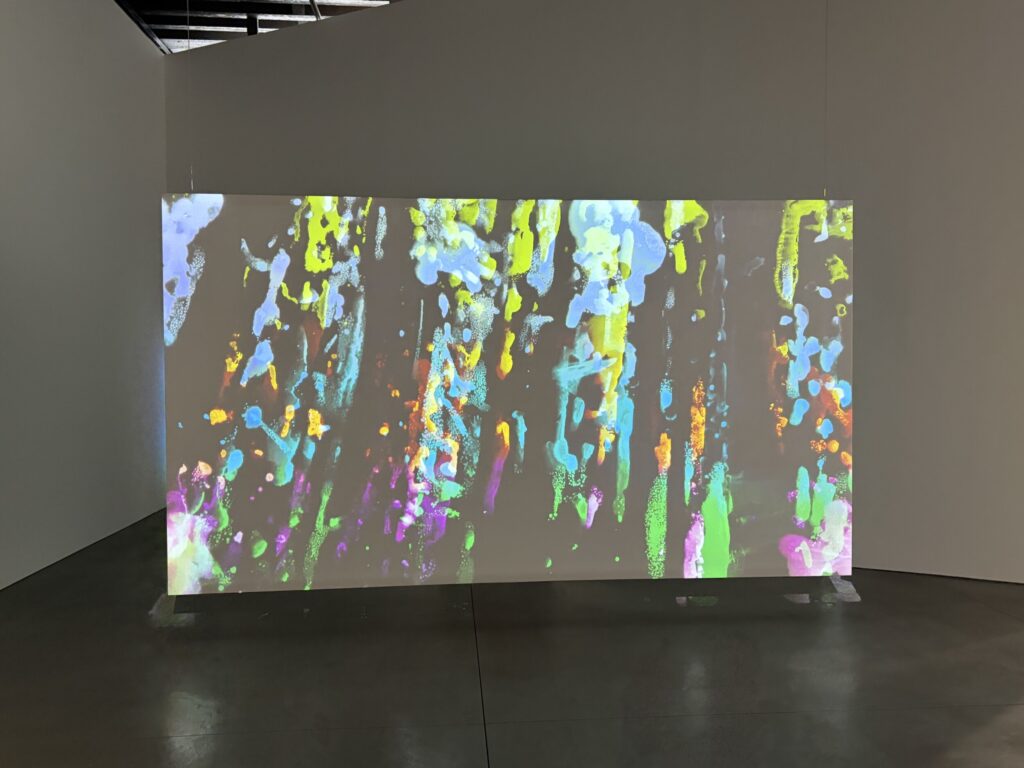
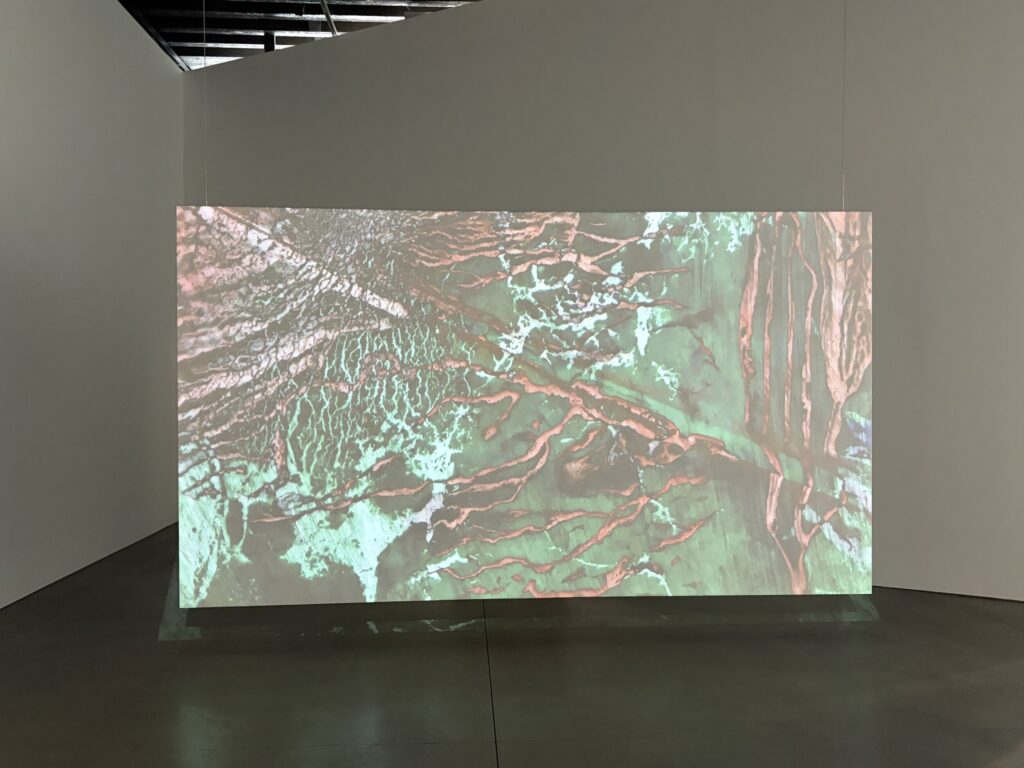
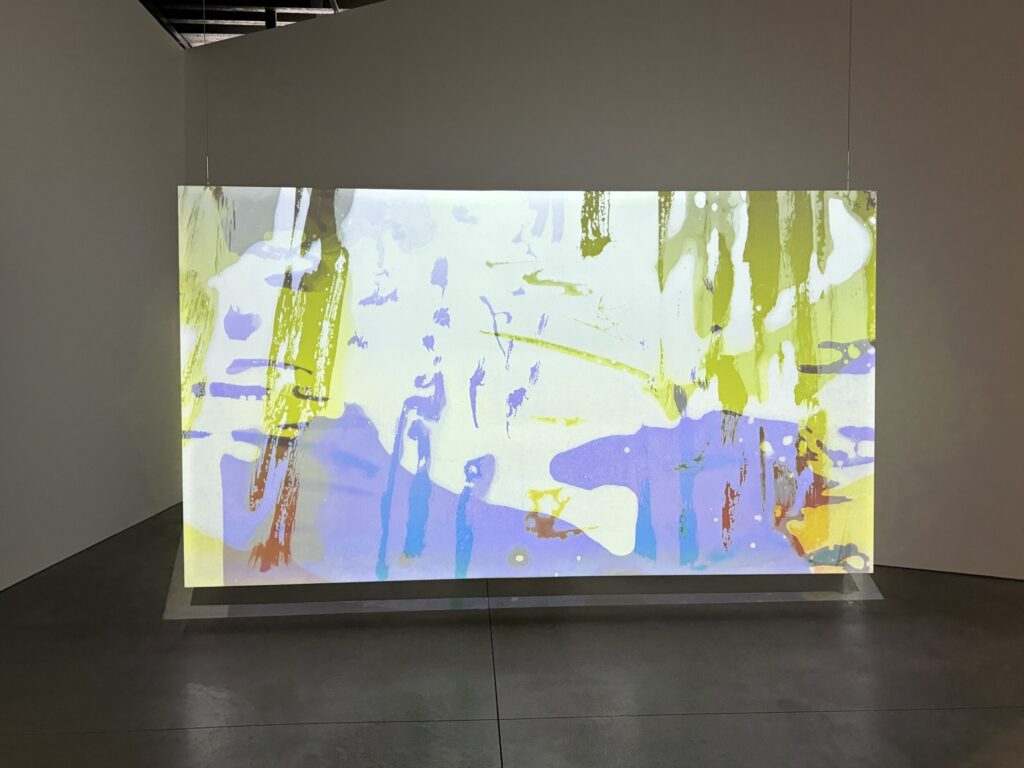
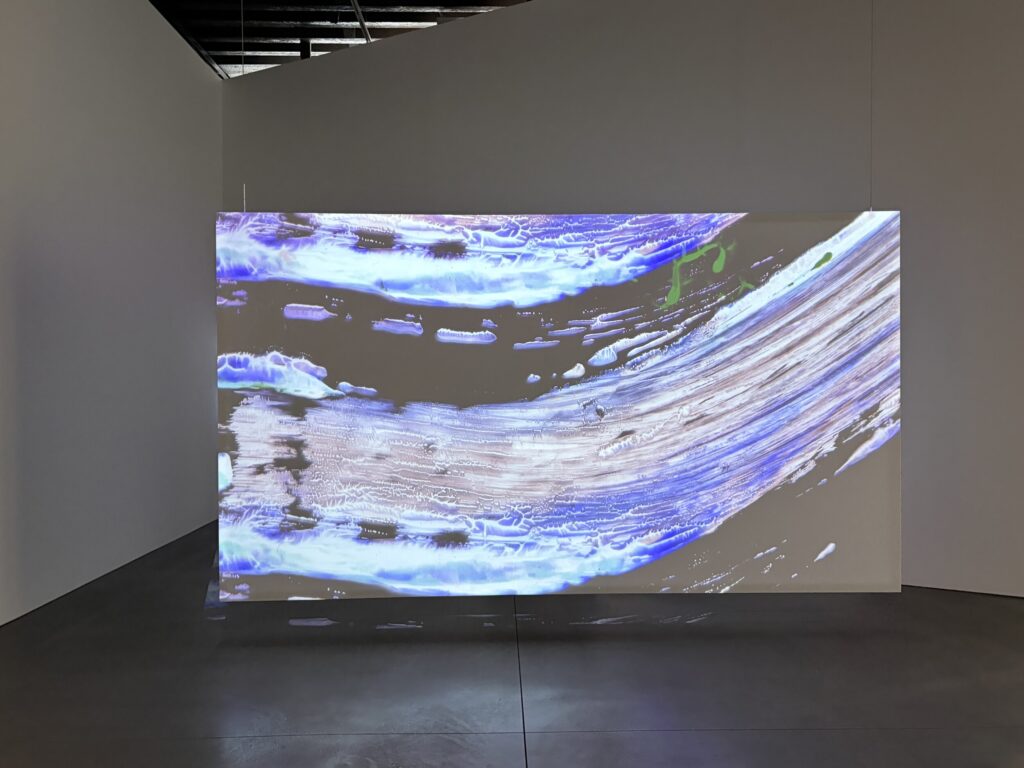
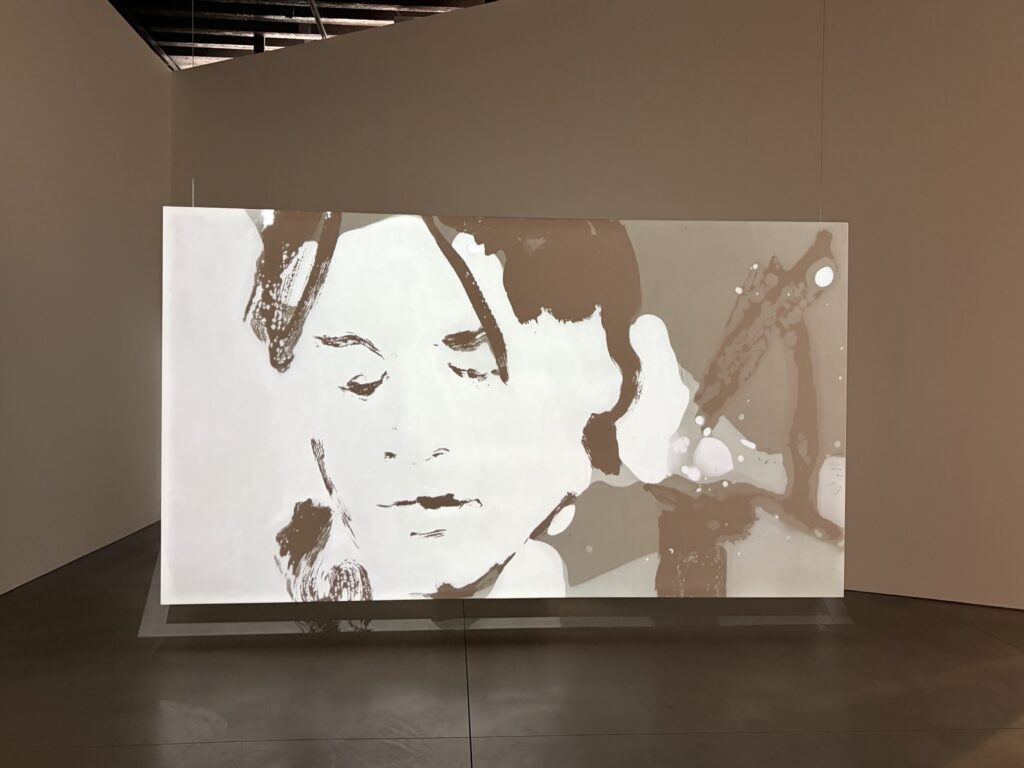
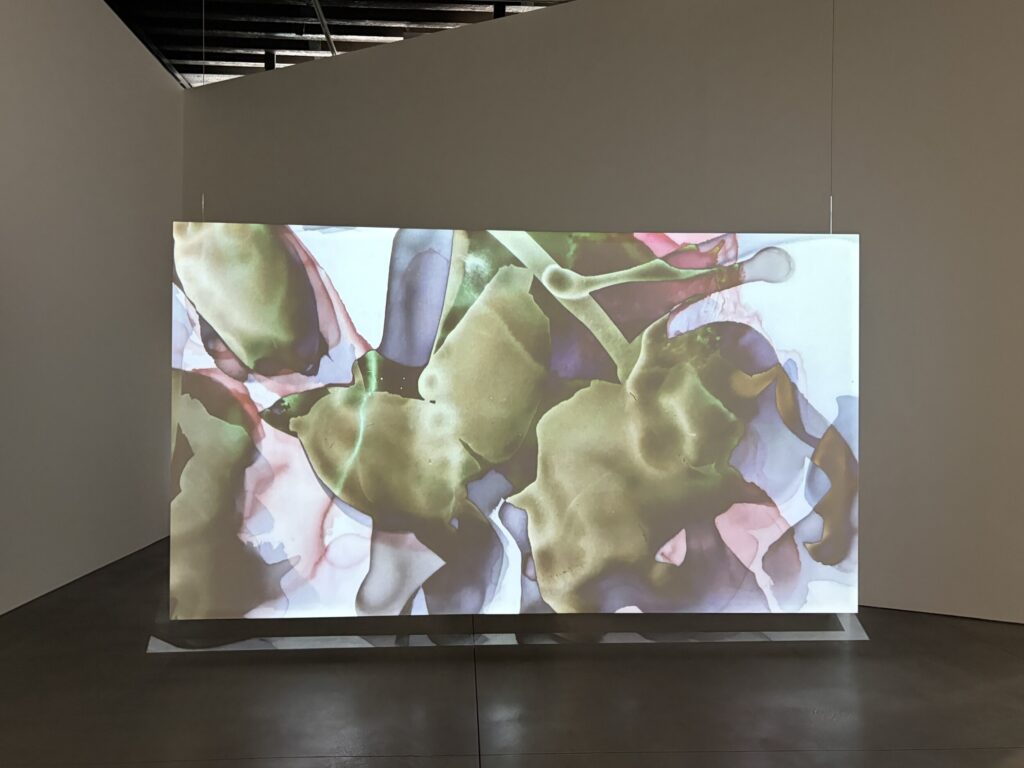
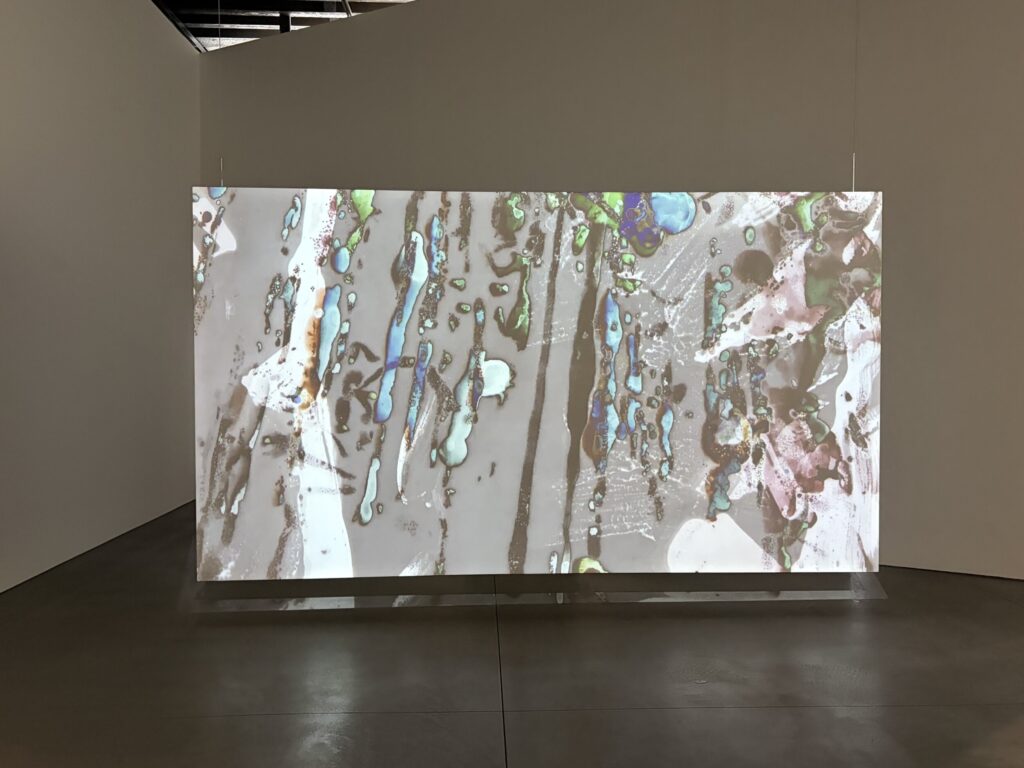
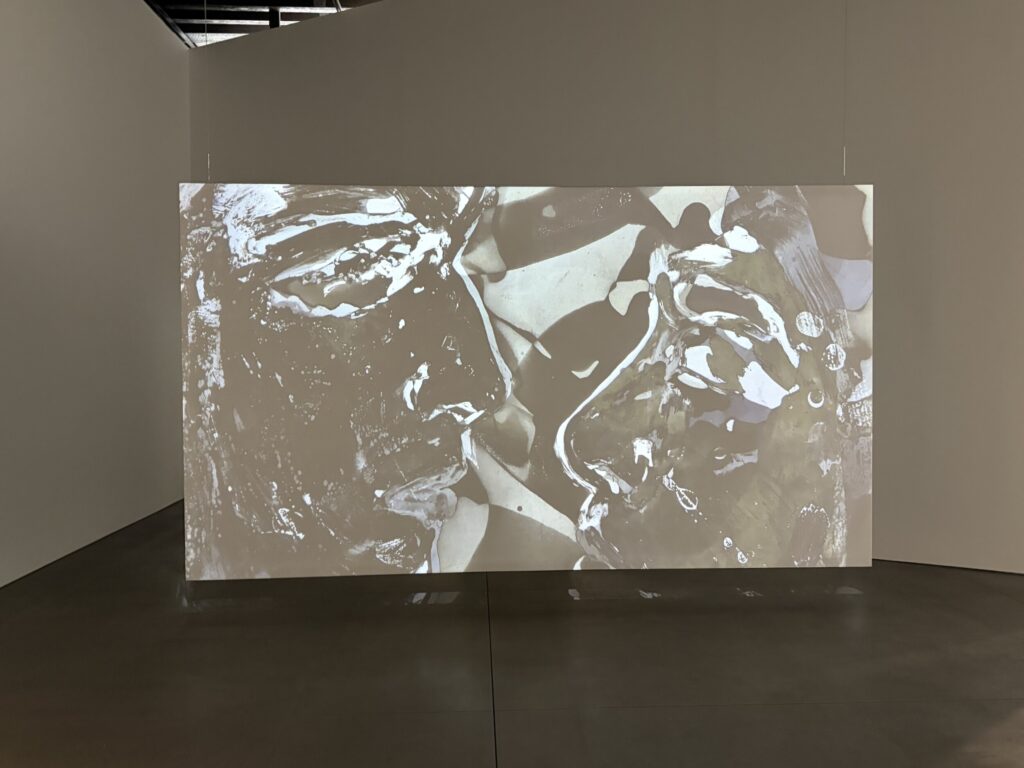
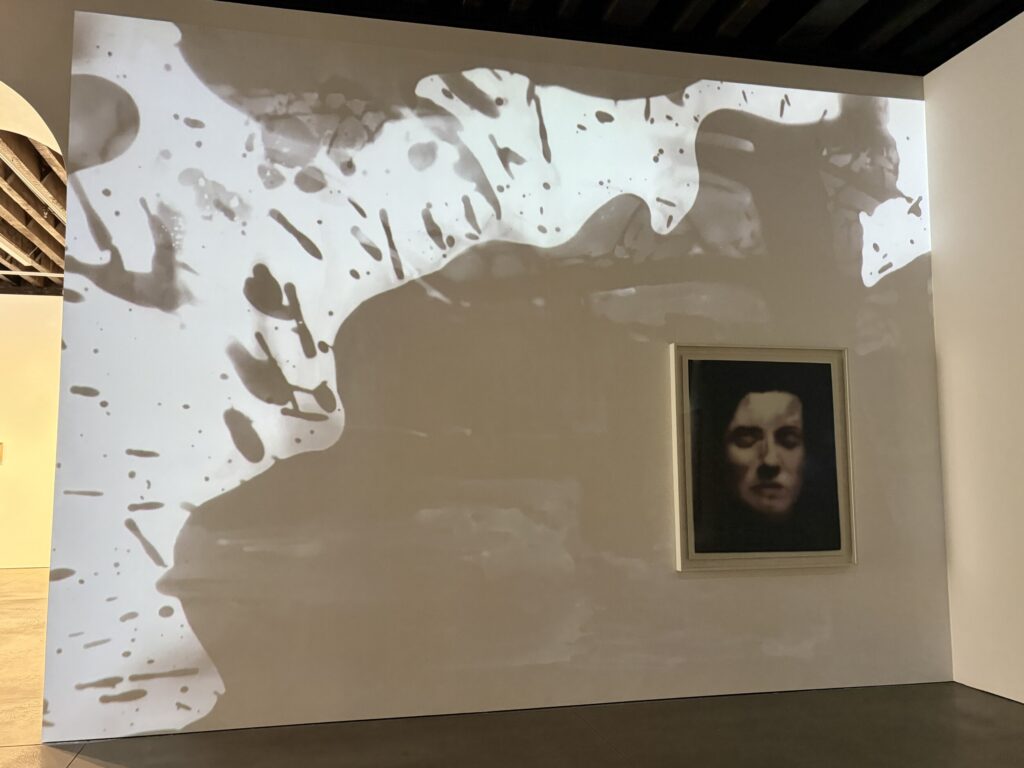
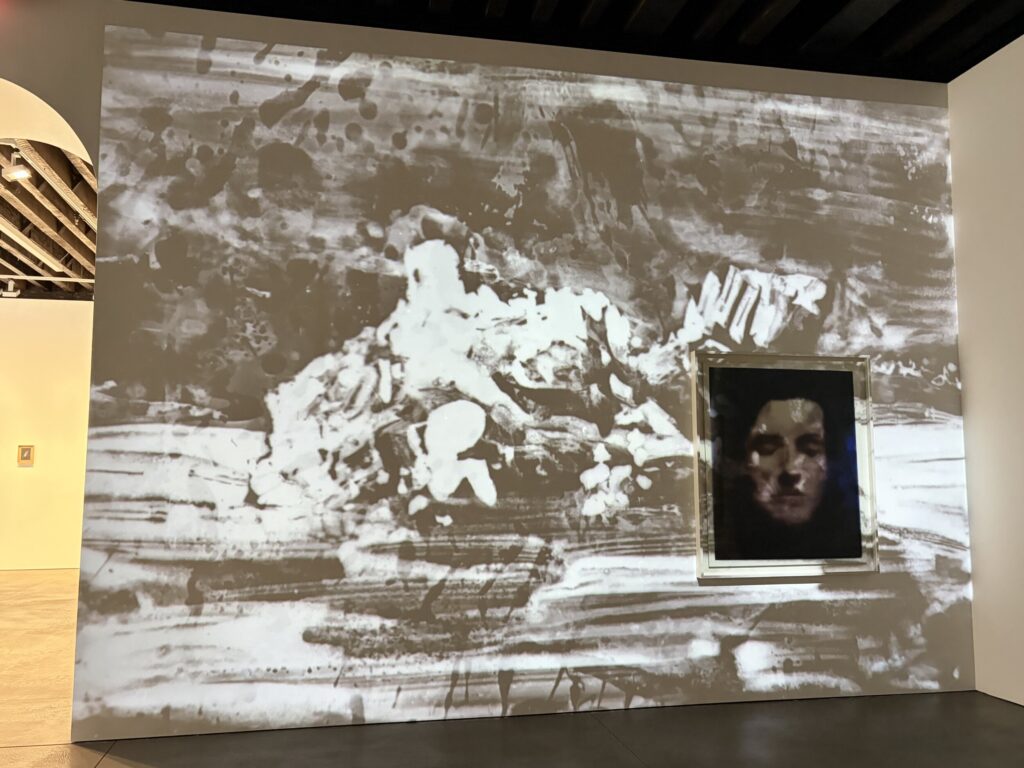
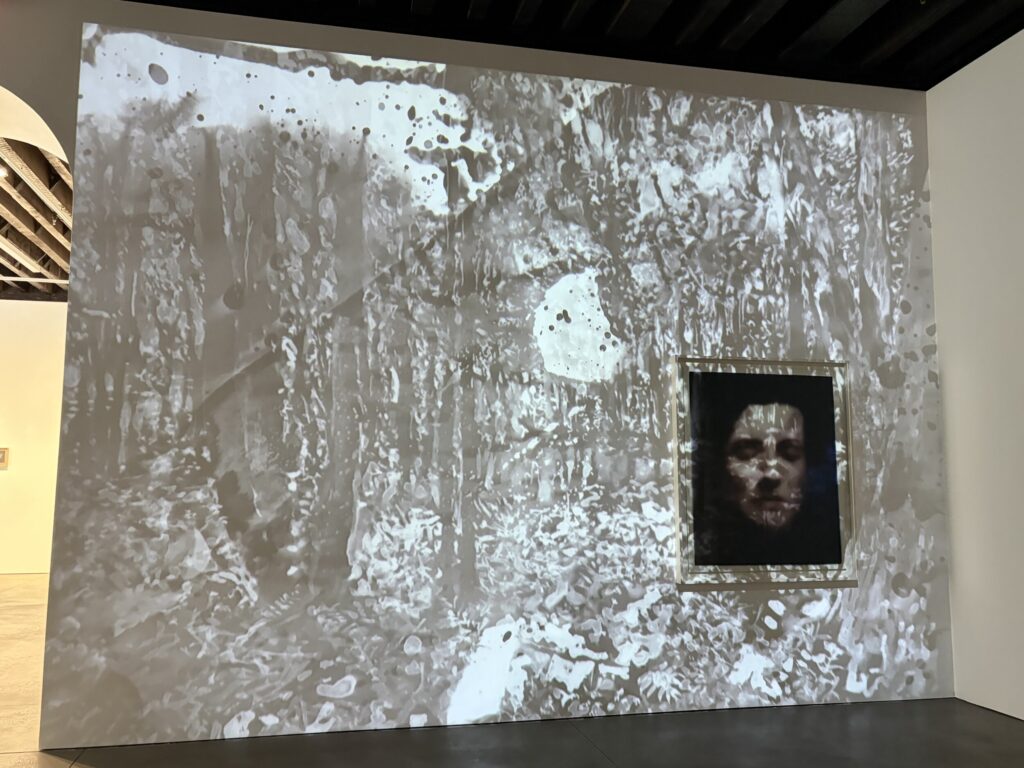
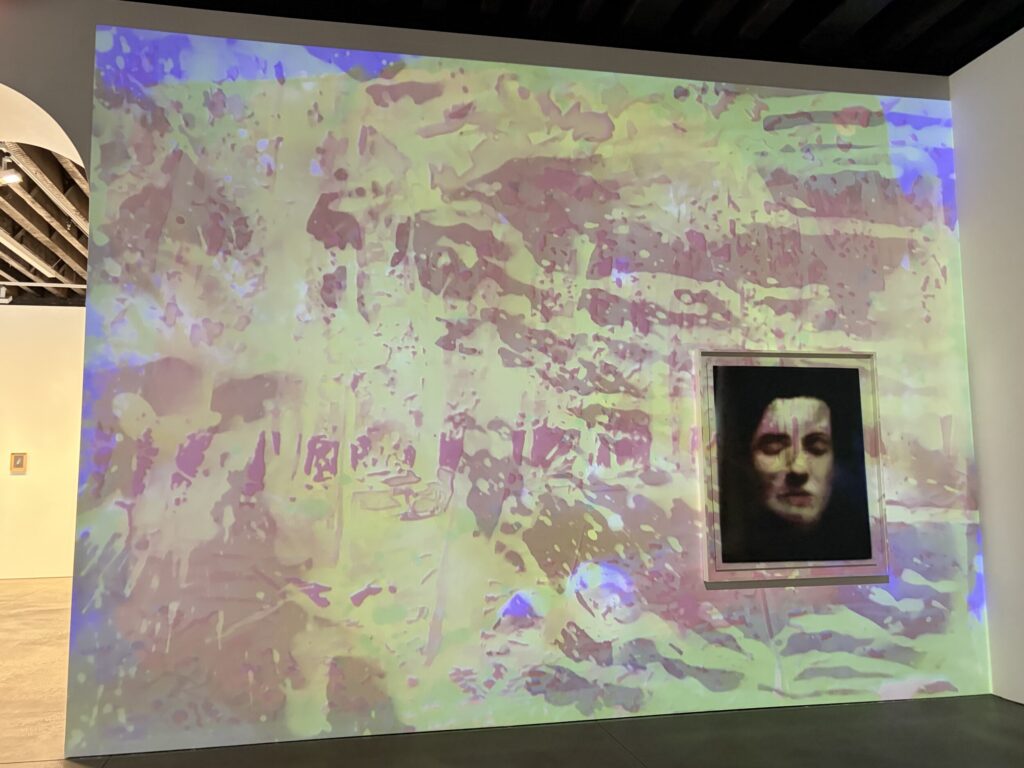
- 1 2-channel video installation with sound, 2026, 14 minutes 40 seconds, in an edition of 2+1AP
Comments/Context: When an artist stays comfortably inside the broad definitional boundaries of his or her chosen medium, it makes it simpler for viewers (and critics) to conclude that any given work is indeed a painting, a photograph, or a film, and to therefore place that work in a particular historical context or conceptual framework. But of course, not all artists rigidly limit themselves to one medium, and the creative process doesn’t always adhere to neatly coloring inside the lines. In fact, the intentional breaking of artistic “rules” and the risky exploration of the less defined in-between zones between mediums can often lead to new ideas and unexpected innovations, even if the dictionary definition of what ultimately gets created is less than strictly obvious. In this way, in the realm of contemporary photography, when it’s not entirely clear whether an artwork can plausibly or definitively be called a photograph, something worth watching might be going on.
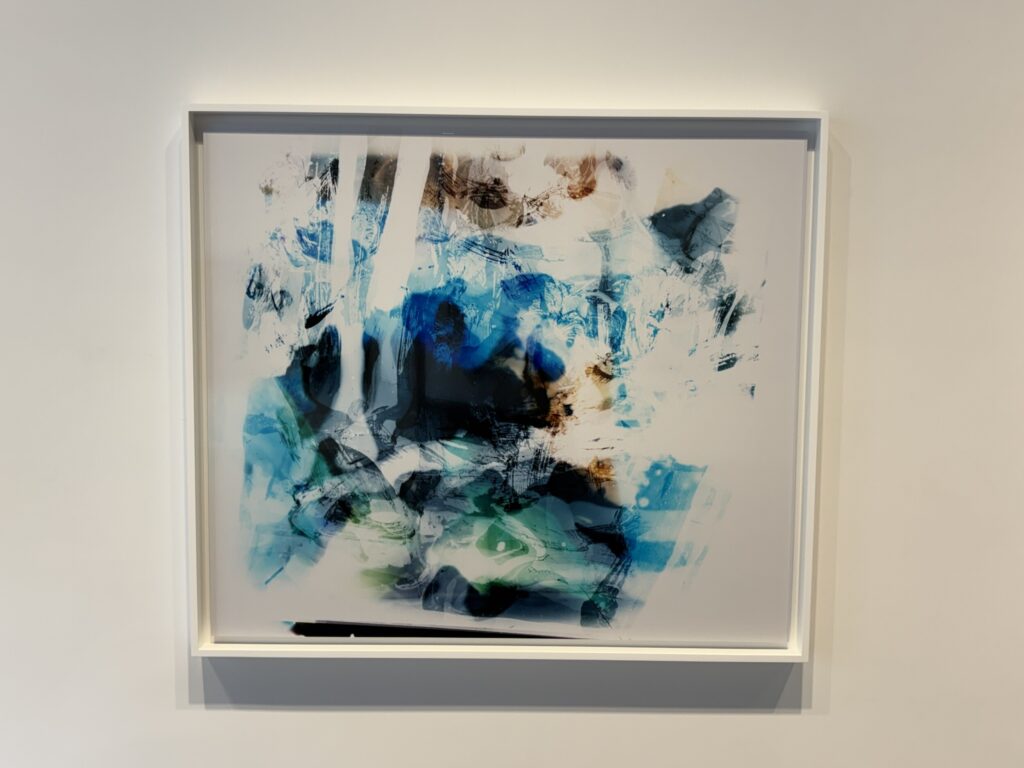
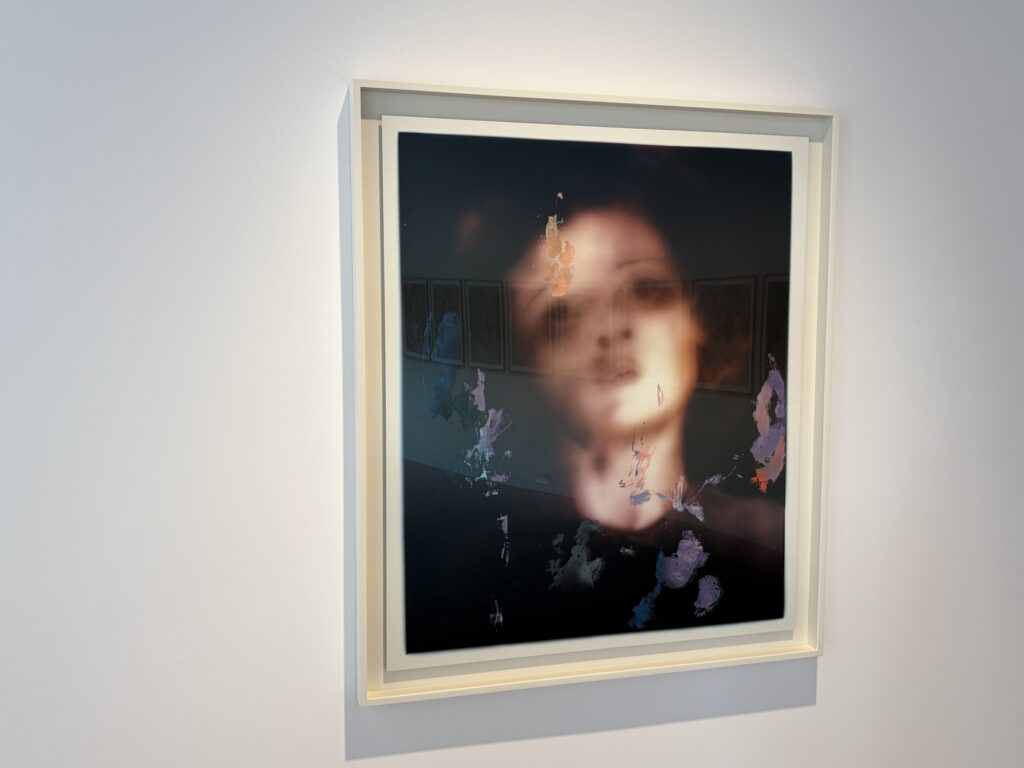
When the word “painterly” is applied to a photograph, we tend to be talking about the end result aesthetics of the photographic image. Perhaps it has been softened or blurred to some extent, or its textures and colors have been amplified and made more expressive, with the exacting specificity of the photographic reproduction intentionally undermined and made more approximate by techniques deployed in camera, in the darkroom (particularly with chemical washes and hand-crafted processes), or more lately in software manipulation. But for Matt Saunders, the painterliness that we routinely observe is his photographs is rooted less in trying to alter the look of photography, but in using both painting and photography in tandem, actively layering the two approaches together in harmonized composite works that oscillate with sophistication between abstraction, mark making, observation, and figuration.
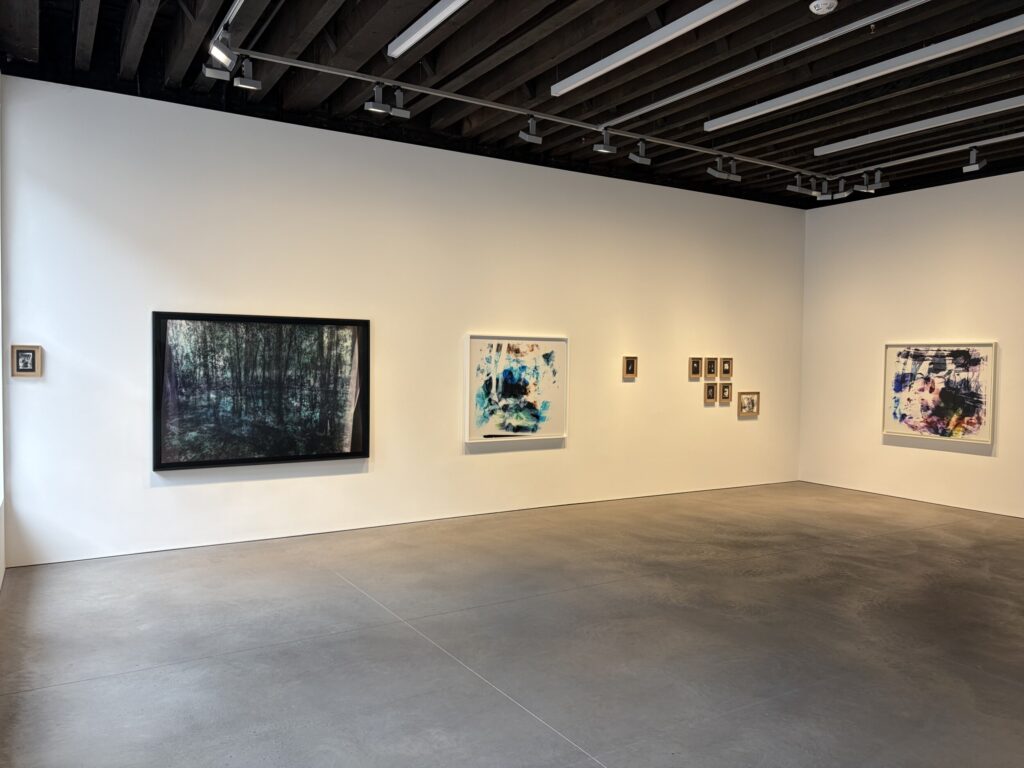
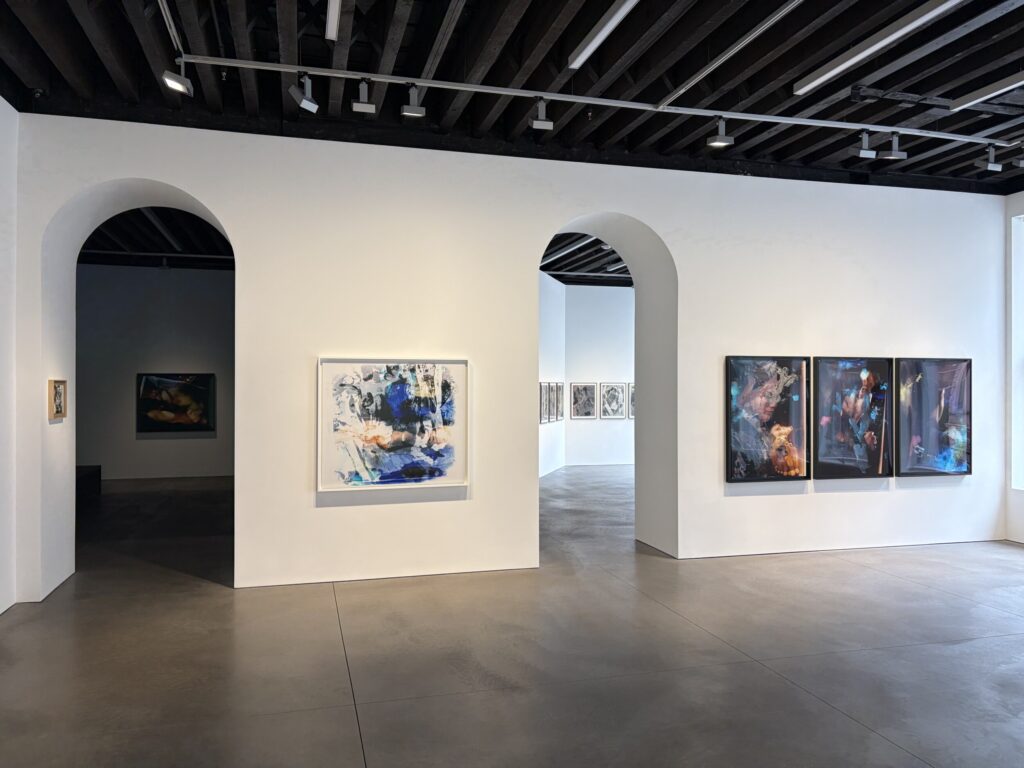
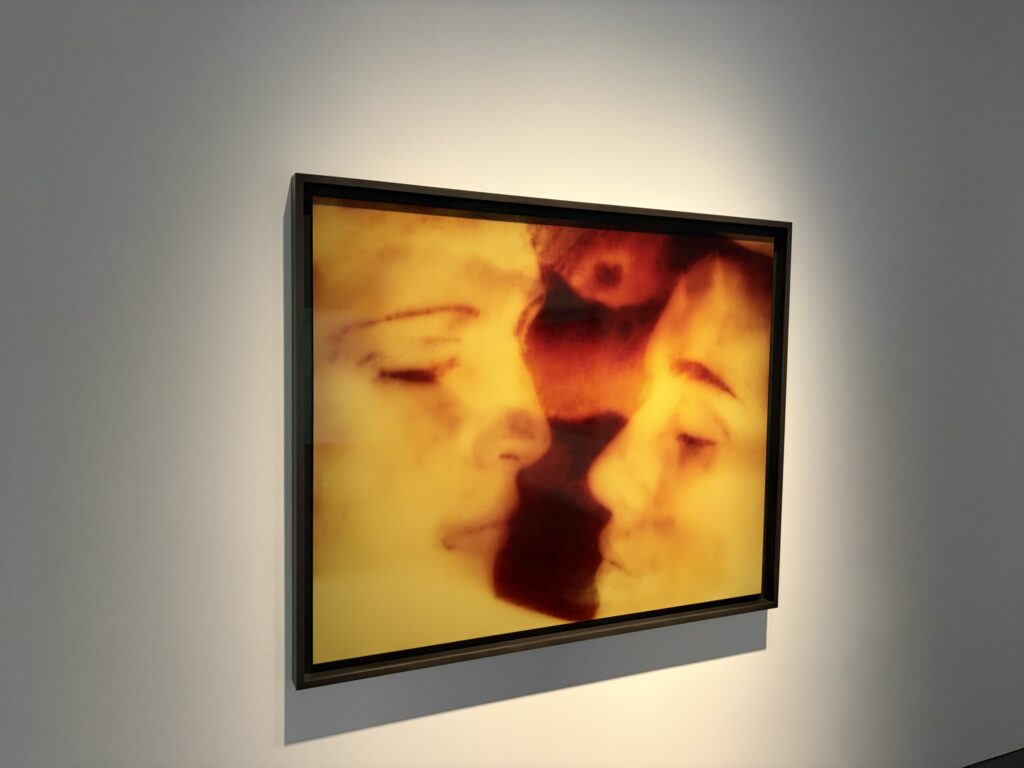
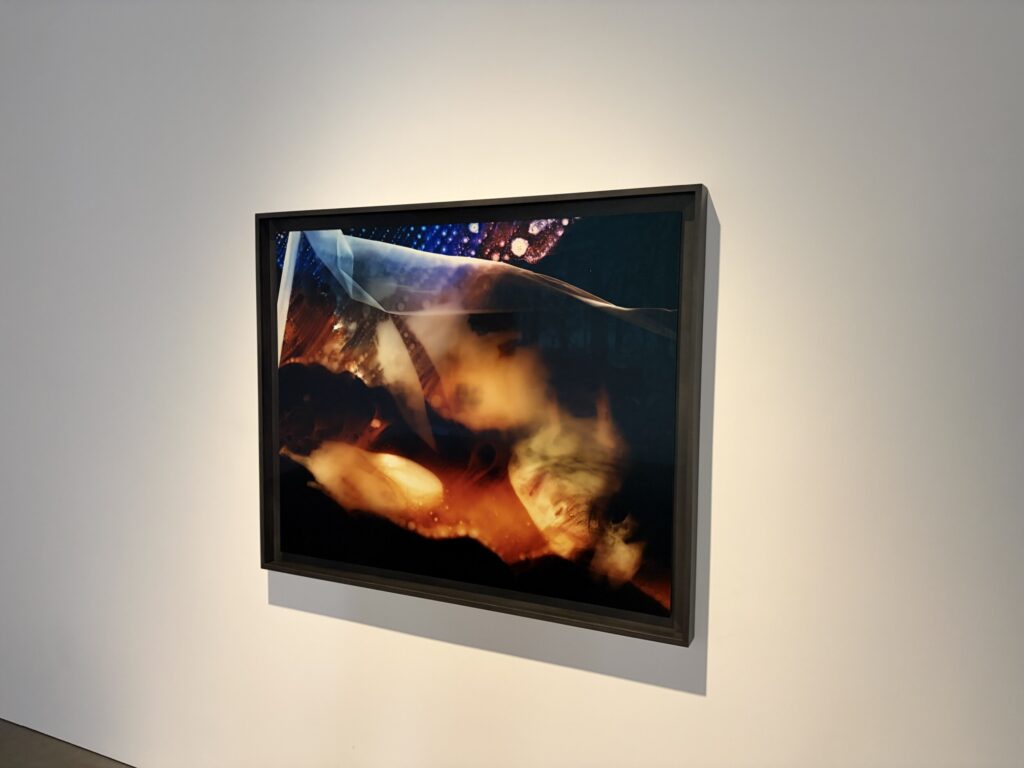
Unlike many gallery shows of photography these days where the artist presents a series of examples from a single body of work, Saunders throws half a dozen different projects and styles at us in the space of three rooms here, all of the artworks (including two videos) made in just the past year or two. But the effect isn’t as haphazard as it sounds – in aggregate, we watch as Saunders explores the possibilities of different techniques and step-wise iterative process layers, each resulting work a riff on fundamental artistic ideas that continue to percolate and recombine.
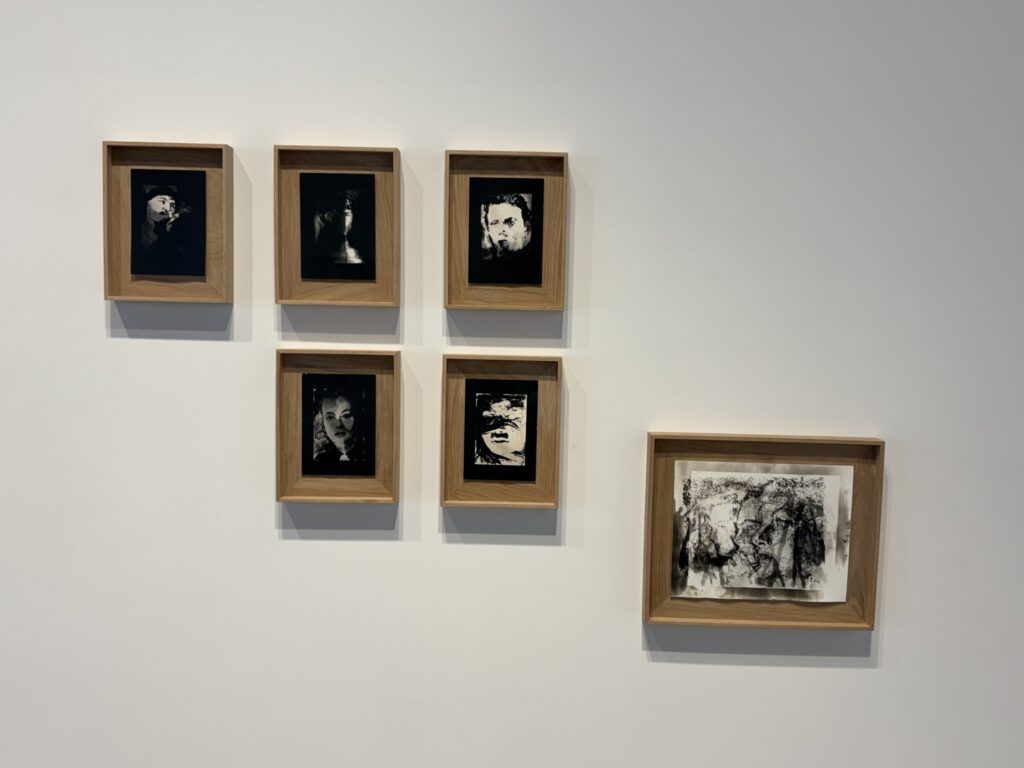
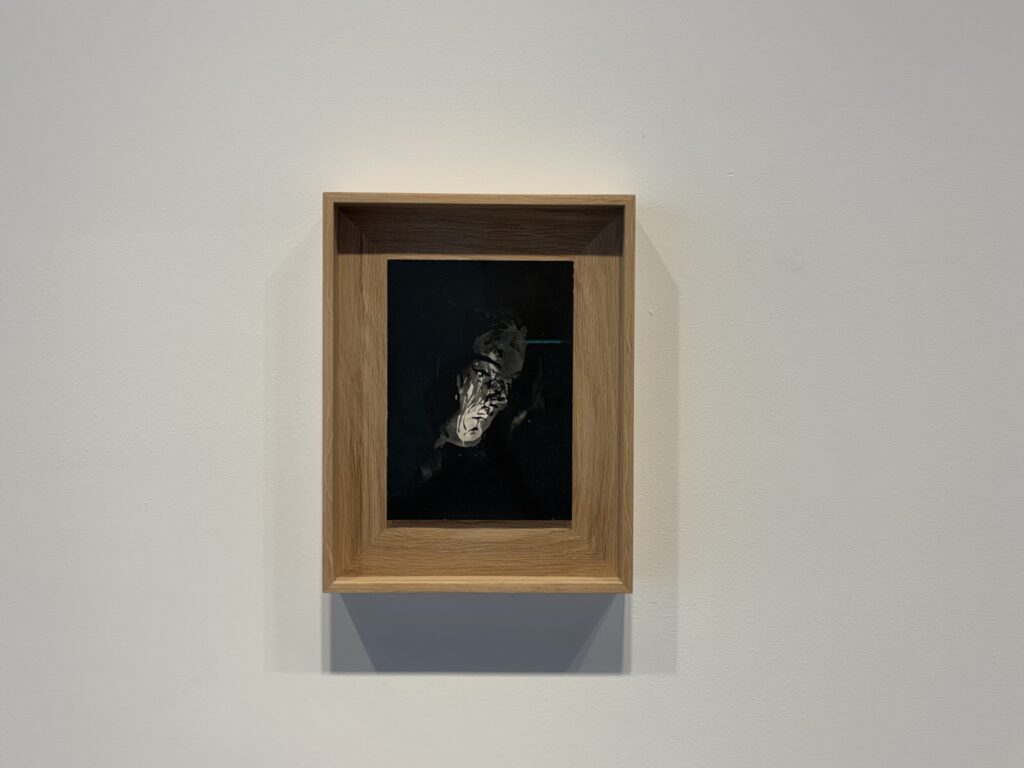
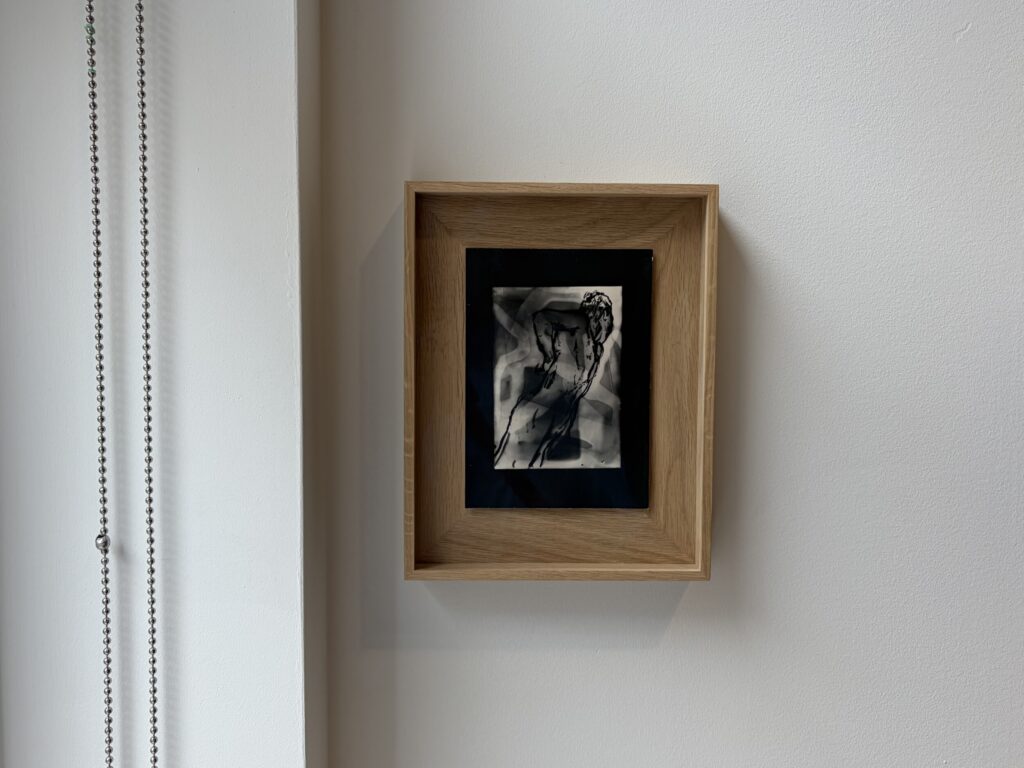
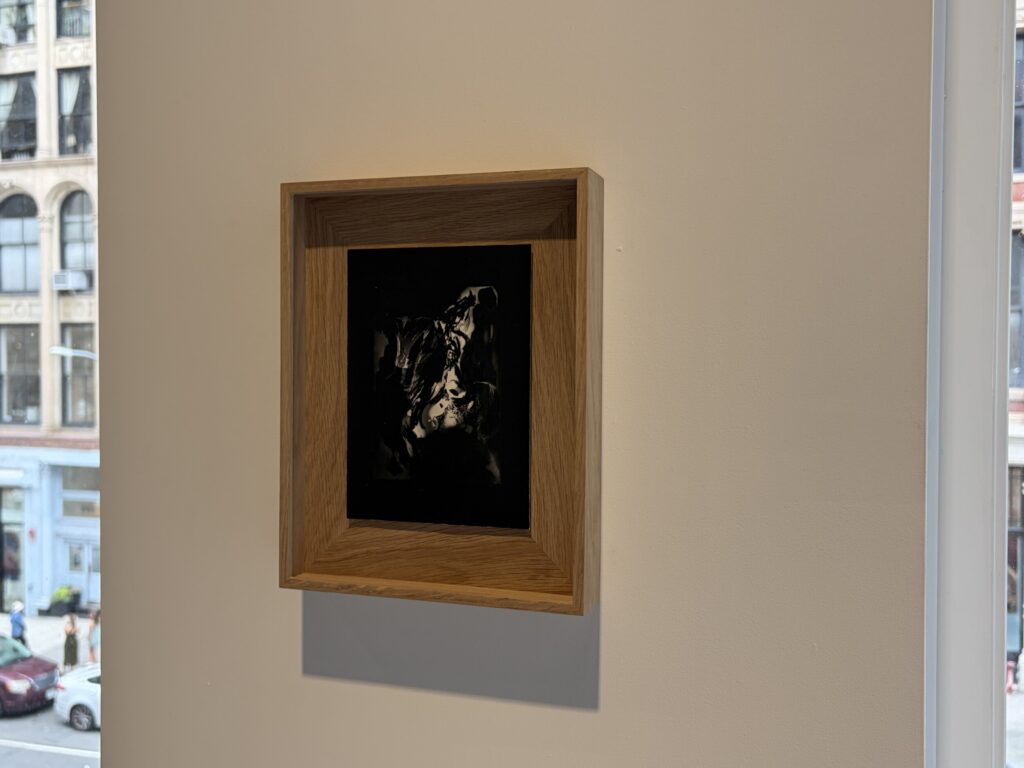
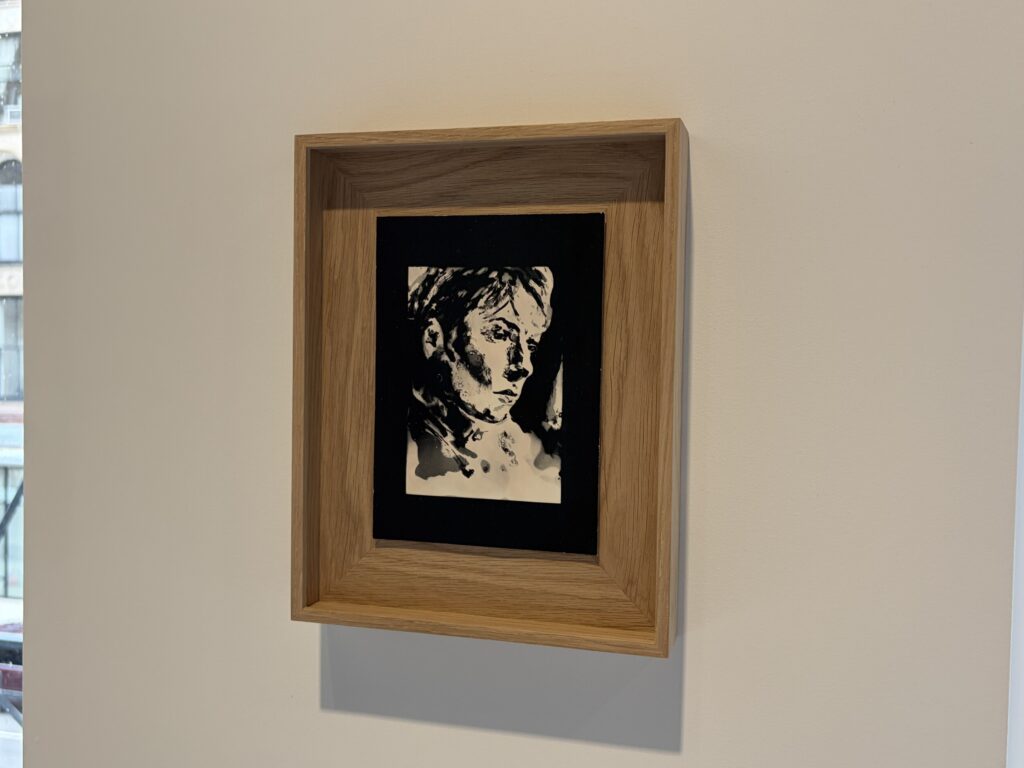
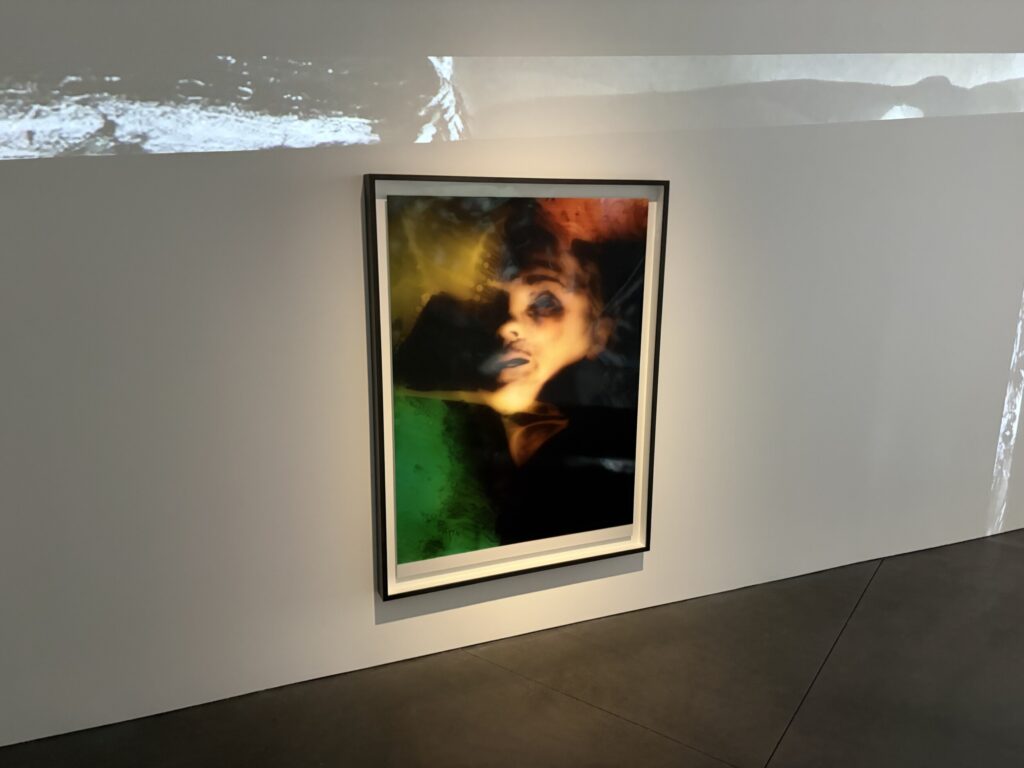
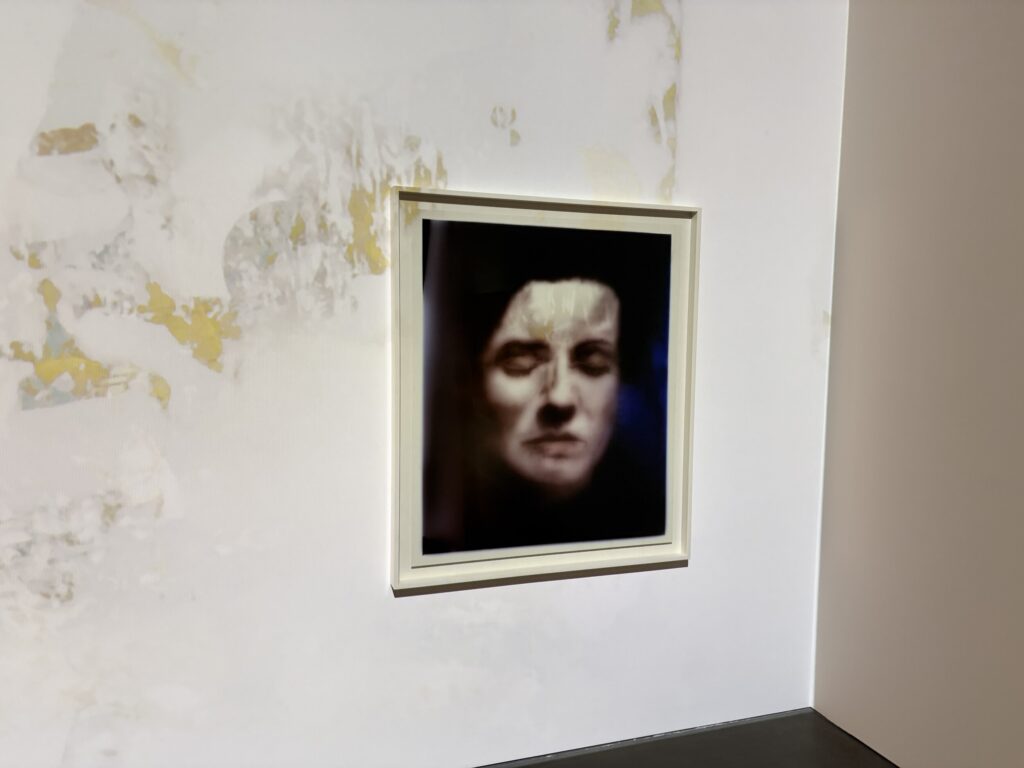
Faces, and the artist’s interpretation or memories of those faces, provides the ostensible subject matter for several different mini-projects, with Saunders repeatedly pushing portraiture away from straightforward photographic representation. “Memory Piece” is a series of small dark works that start with photographic portraits or film stills, many featuring 20th century German actresses like Barbara Sukova and Hertha Thiele. Using those images as sources or inspiration, Saunders made gestural oil drawings of those faces on sheet film, which he has then used as negatives (sometimes doubling the exposures) to make the resulting photographs. His portraits are shadowy, watery, and boldly expressive, his memory transforming the precision of the photographs into pared down essentials and haunted interpretations filled with simmering emotional energy.
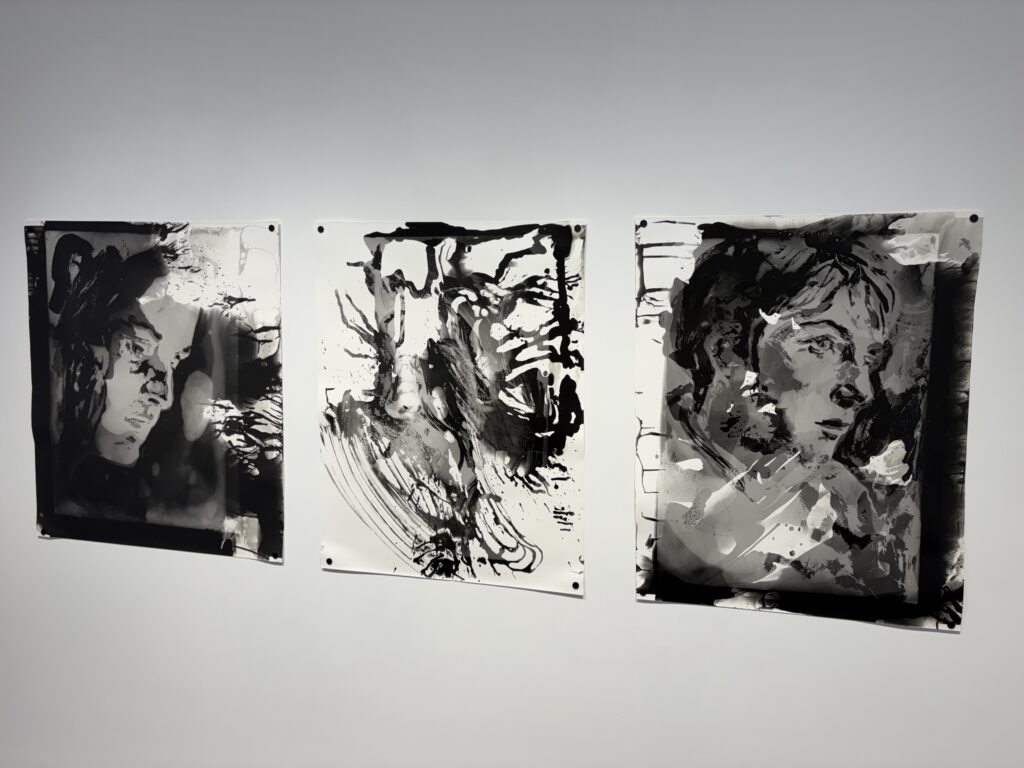
In another facial exercise, Jane Birkin acts as the muse for “Birkin Rosso”, a tactile series of ethereal photogravures. In these works, Birkin drifts in an undefined space, never quite looking at the camera directly, her angelic face floating and wandering through mists of approximation, the images exposed through layers of ink drawing on linen. These iterations of elemental essence are then interrupted by active movements of brushwork and abstract mark making, with bold lines and drippy inversions then laid atop the faces in inked woodcut, adding layers of subtle color and woodgrain texture. The resulting image hybrids are seductively calm and elegantly refined, each understated iteration of Birkin’s visage offering Saunders an opportunity to tweak the mood with subtleties of dissolving gesture and tint; and hung as a group, the works succeed in breaking down Birkin’s famous aura into something gently (and memorably) evocative.
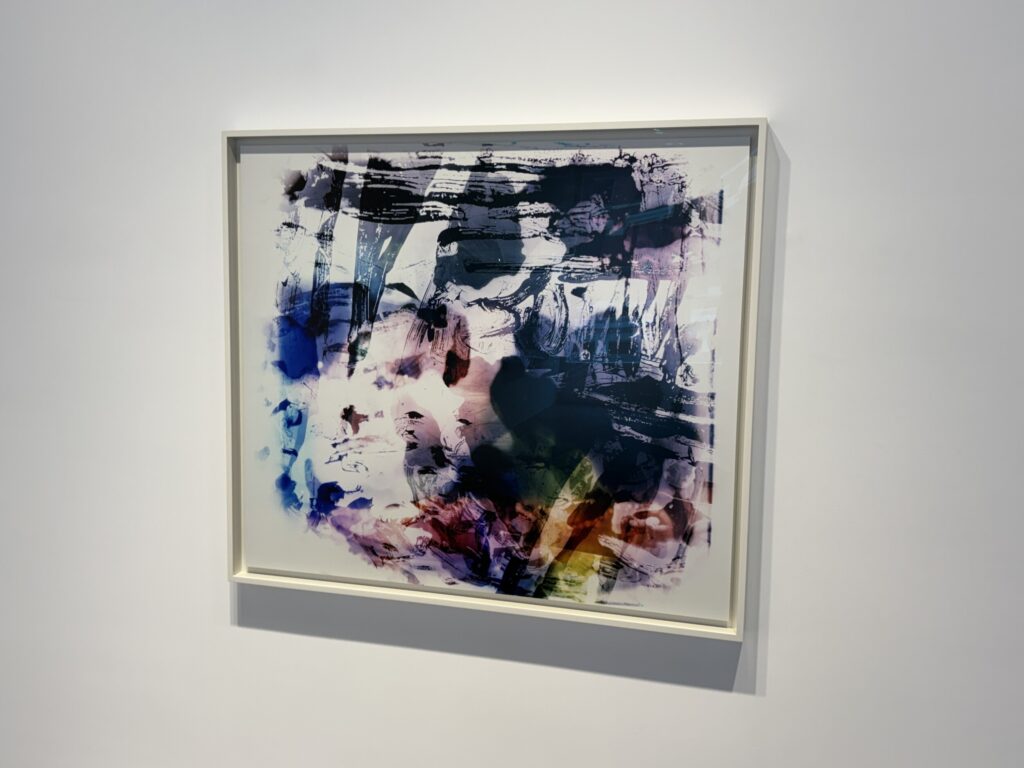
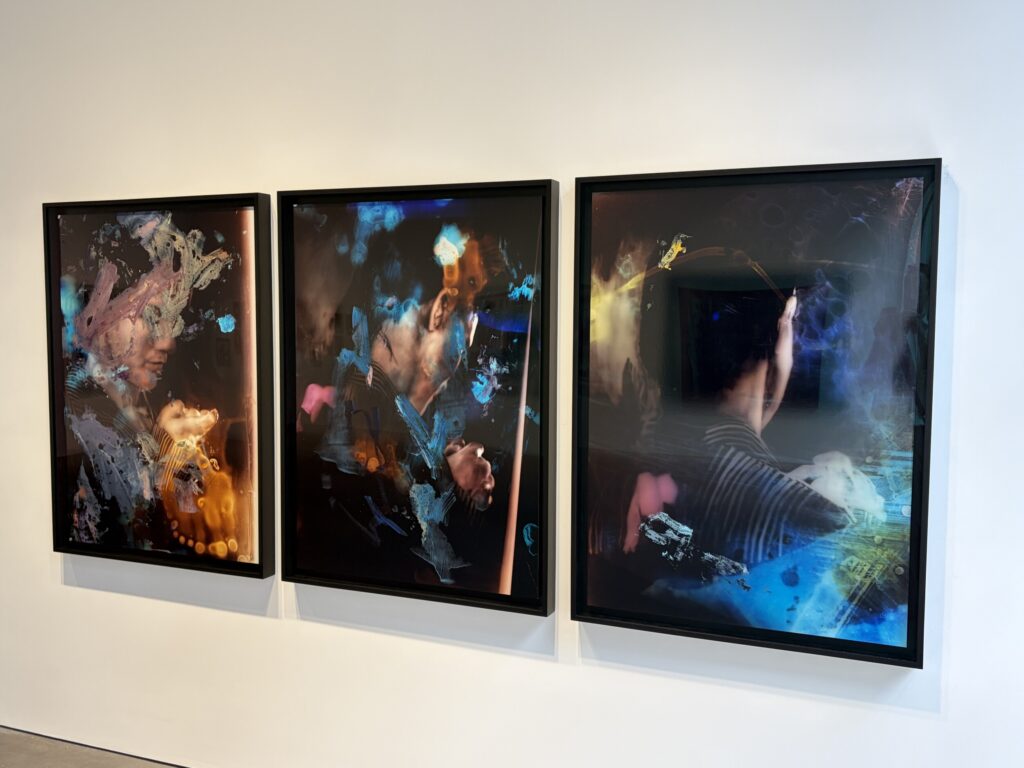
Still other images of faces mine similar territory, but use color and surface painting even more forcefully. A triptych titled “Days” uses the face of French actress Carole Bouquet at its subject, her profile slowly turning away amid flutterings of color flares, hazy echoes, and roughly painted marks. Various other performers receive similar treatment, including Candy Darling of Warhol fame, with inked interpretations of faces then doused in washes of seething orange, electric green, and spotted yellow. Often Saunders opts for a complexly filtered view, where layers of veiling get between the viewer and the chosen face, the colors and textures reinterpreting what we think we might know about these actresses and celebrities, leaving behind studies of energy, spirit, and radiant atmosphere.
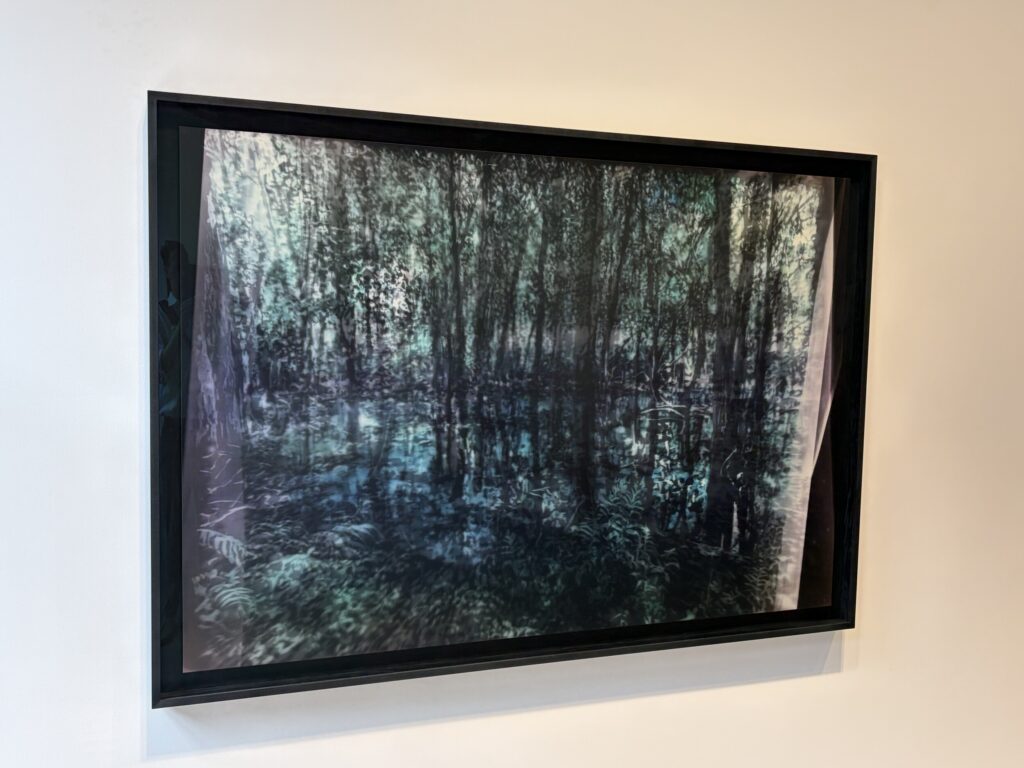
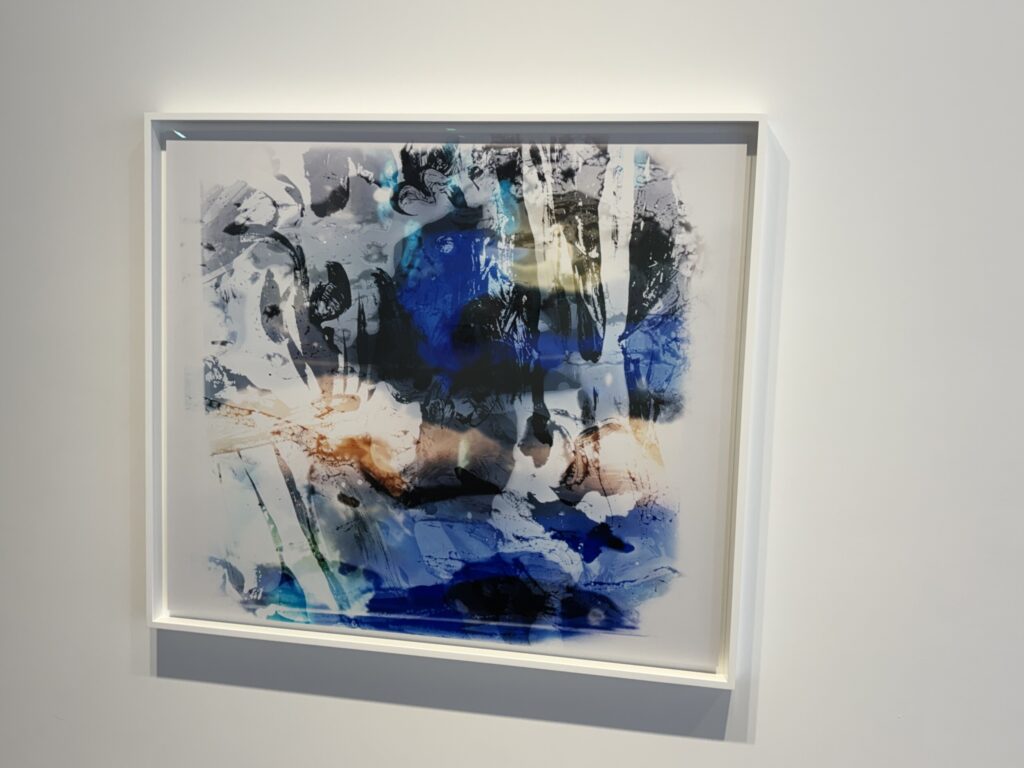
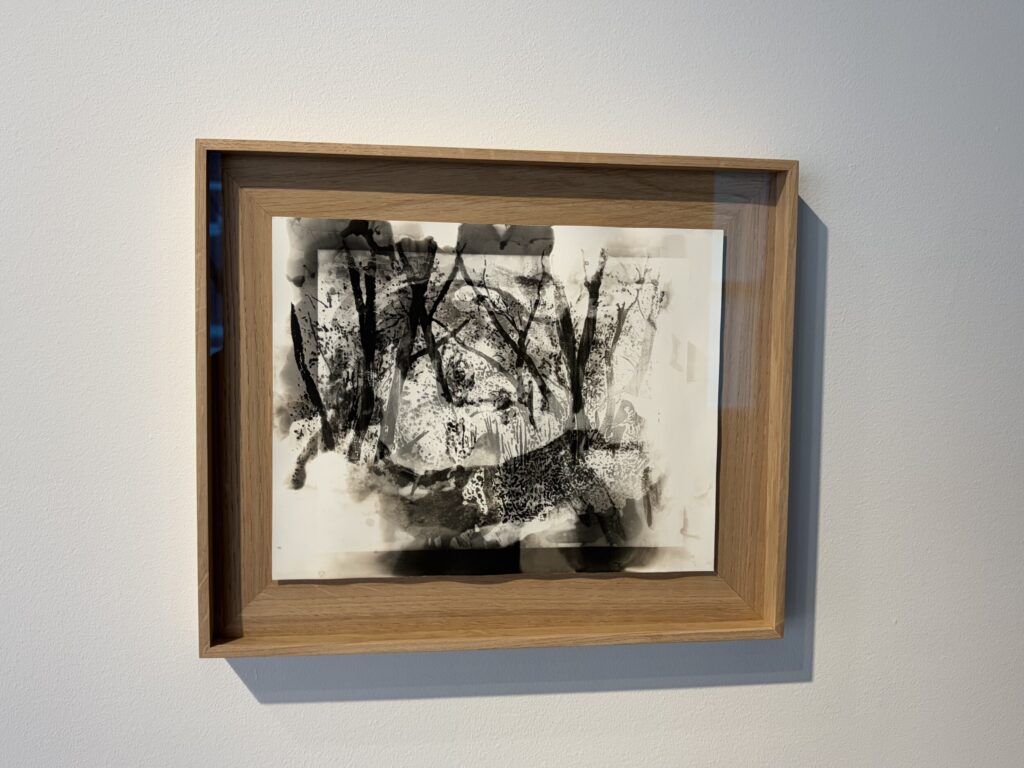
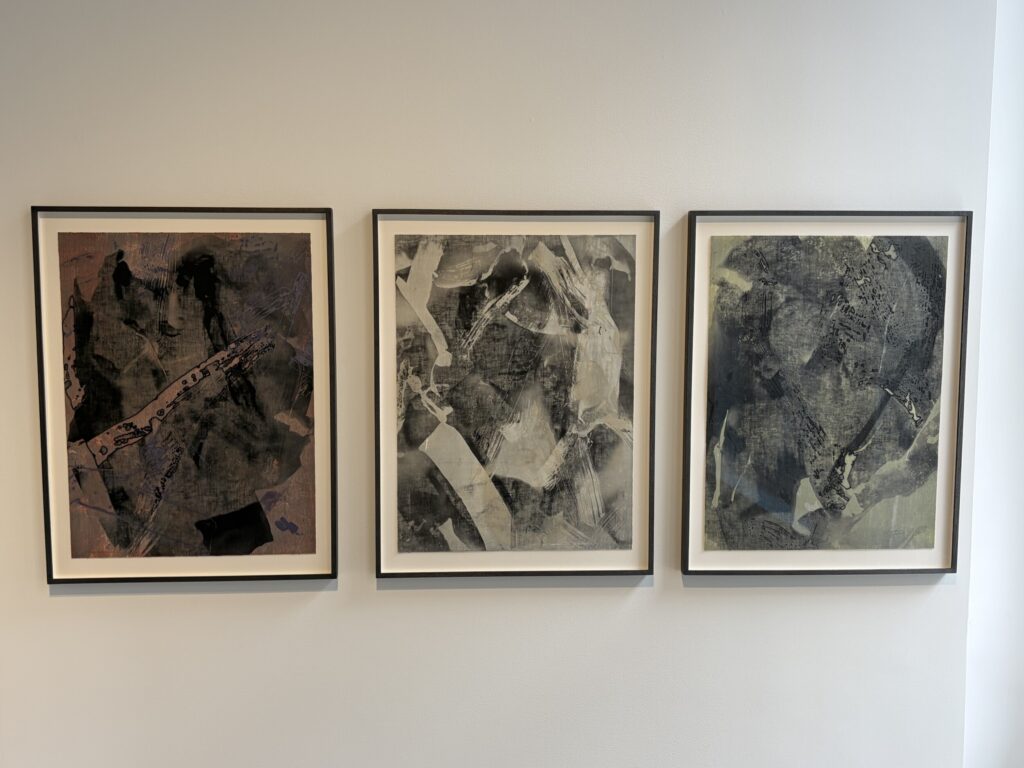
Landscapes, and particularly forests, make up the subject matter for much of the rest of the work on view in this show, with the same kinds of strategies and processes used in the portraits now applied to various views of nature. The “Plein Air” series features negatives drawn on site and then layered together layer, creating large scale abstractions that shift and wander through different color ranges, coming in and out of interlocked legibility. “Flooded Woods” starts with an oil on canvas negative process, using a photograph Saunders made in Canada as a jumping off point; his trees are densely clustered and envelopingly claustrophobic, with hints of green and blue tints washing through the dappled light. And two works from the “Overgrown” series use the same ink-style approach as the “Memory Piece” works, with boldly drawn images of woods layered together with drippy clouds of shadow and fog. In each case, Saunders is expressively interpreting the land, loosely remaking it from memory or experience as opposed to documenting it with faithful photographic fidelity.
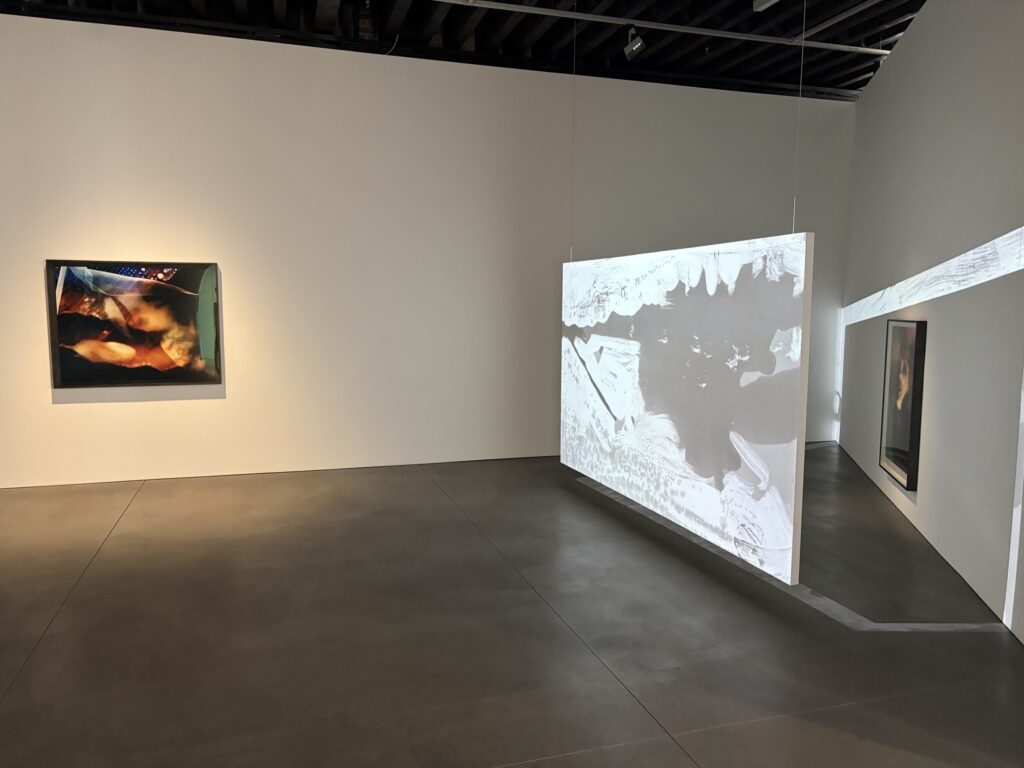
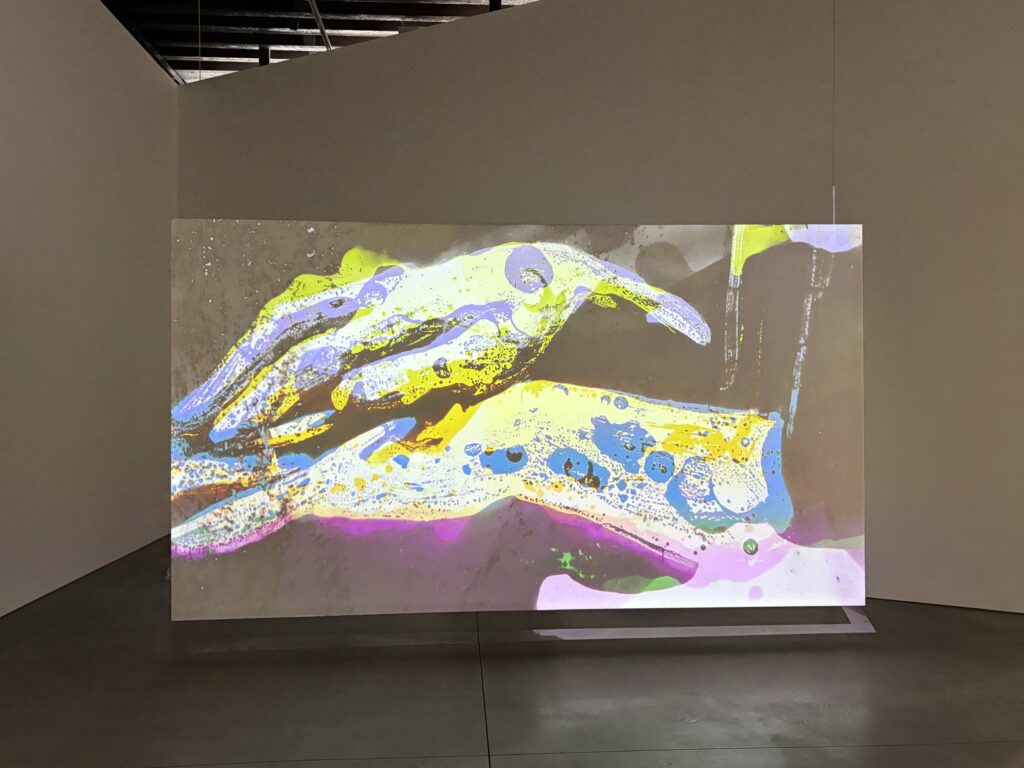
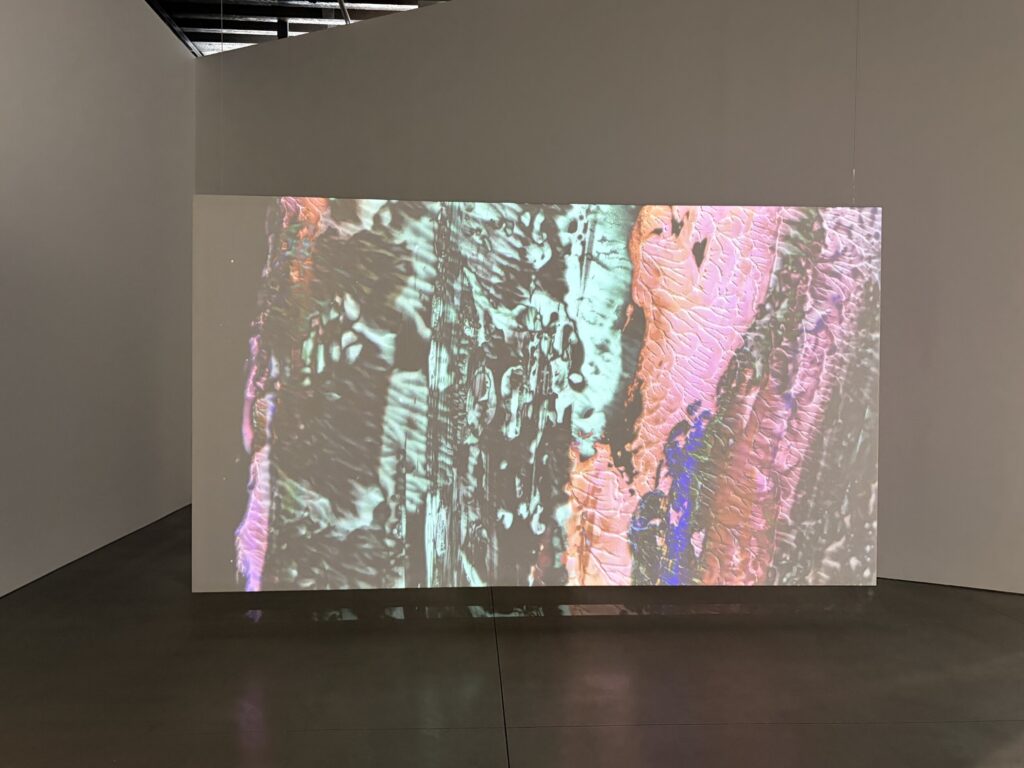
This kind of forest imagery is then further explored in one part of a two-channel video installation, titled “On an Overgrown Path”, on view in a partially darkened gallery. While it isn’t entirely clear, it feels like the videos were first comprised as single still photographs, which have then been sequenced and reshot using the possibilities of motion inherent in video. Saunders’s forests dissolve and reform, with subtleties of trees, trunks, branches, and undergrowth turned into fleeting inky vistas and insistent chemical splashes. The second screen is much more abstract, with gestural color studies and process experiments sputtering by, sometimes congealing into flashes of figurative form before breaking back down into painterly squishes of pigment, matched by piano suites composed by Leoš Janáček. The two sides of the installation share some aesthetic moods, but also seem relatively distinct from each other, the mostly black-and-white forest images in constant flux like the changing of the seasons, while the surfaces and markmaking of the other side more analogous to the lilting sparkle of Janáček’s collaged harmonies.
All this experimentation eventually leads back to the central idea of essentially hijacking the photographic process for more painterly ends. In a sense, Saunders has gone back to the underlying framework of the cliché-verre, and then updated it for the 21st century, turning paintings and ink drawings on any number of materials (including canvas, voile, acetate, and transparent film) into negatives in a darkroom workflow. Then with layers of image sandwiching and alternate processing techniques (both positives and negatives), he ends up with works that are inherently camera-less, but linger inside the nuances of photographic methods, pushing photography into new zones of interpretation. Light is still the activating force, but it’s filtered through an inherently painterly baseline.
In many of the works in this show, it feels like Saunders is wrestling with the idea of what it means to remember a photograph, or to extract it from a mind’s eye. Whether a face or a forest view, he’s effectively asking himself to recreate, to reinterpret, and to expand a single visible instance into something fuller and more expressive (and in the case of the Jane Birkin images, into thirteen distinct variants). It’s a thoughtfully nuanced exercise in uncertain visual translation, where the specificity of photography is boldly replaced by the tactile expressiveness of personal touch.
Collector’s POV: The photographic works in this show range in price from $1800 to $35000 each, with the triptych priced at $75000. The video pieces are priced at $55000 and $75000 individually, or at $125000 for both. Saunders’s work has only been sporadically available in the secondary markets in the past decade, so gallery retail likely remians the best option for those collectors interested in following up.