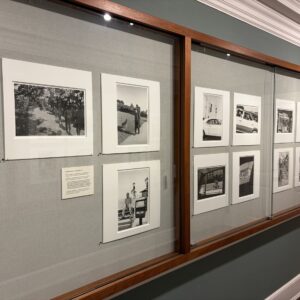
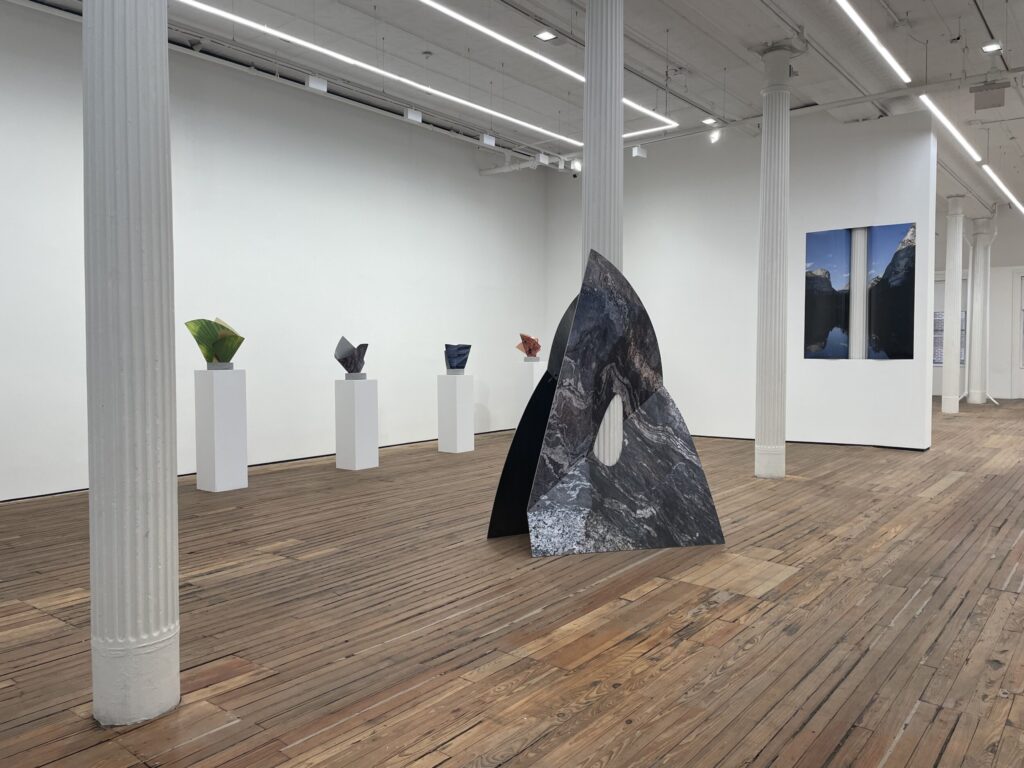
JTF (just the facts): A total of 9 sculptural photographic works, on view in the front gallery space. (Installation shots below.)
The following works are included in the show:
- 1 Corten steel, UV print, 2026, sized roughly 113x62x52 inches
- 1 UV prints on brass, concrete, 2025, sized roughly 24x23x13 inches
- 1 UV prints on steel, concrete, 2026, sized roughly 21x18x12 inches
- 1 UV prints on steel, steel pipe, concrete, 2026, sized roughly 16x16x12 inches
- 1 UV print on copper, copper, concrete, 2026, sized roughly 18x16x11 inches
- 1 archival digital prints, cast iron column, hole in wall, 2026, sized roughly 72×48 inches
- 1 UV print on vinyl, bronze, aluminum, 2026, sized roughly 60x74x3
- 1 Corten steel, UV print, 2026, sized roughly 82x56x57 overall
- 1 UV print on aluminum, dibond, 2026, sized roughly 55×42 inches
Additional works by the artist are on view in the downstairs gallery, but are not part of the show.
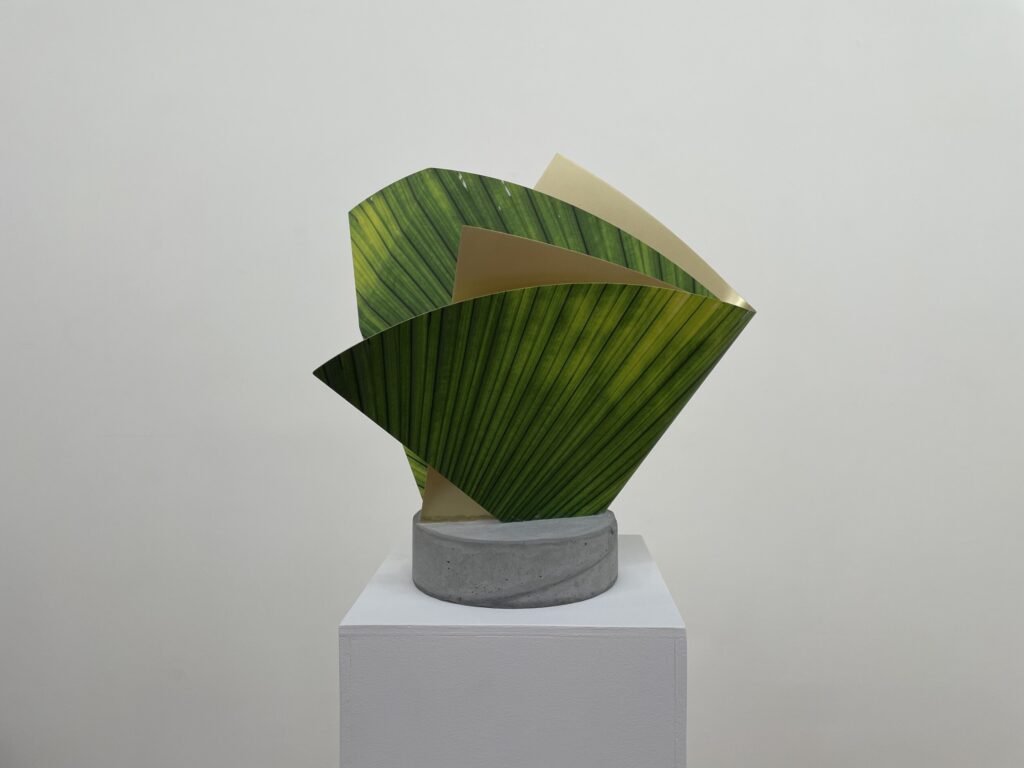
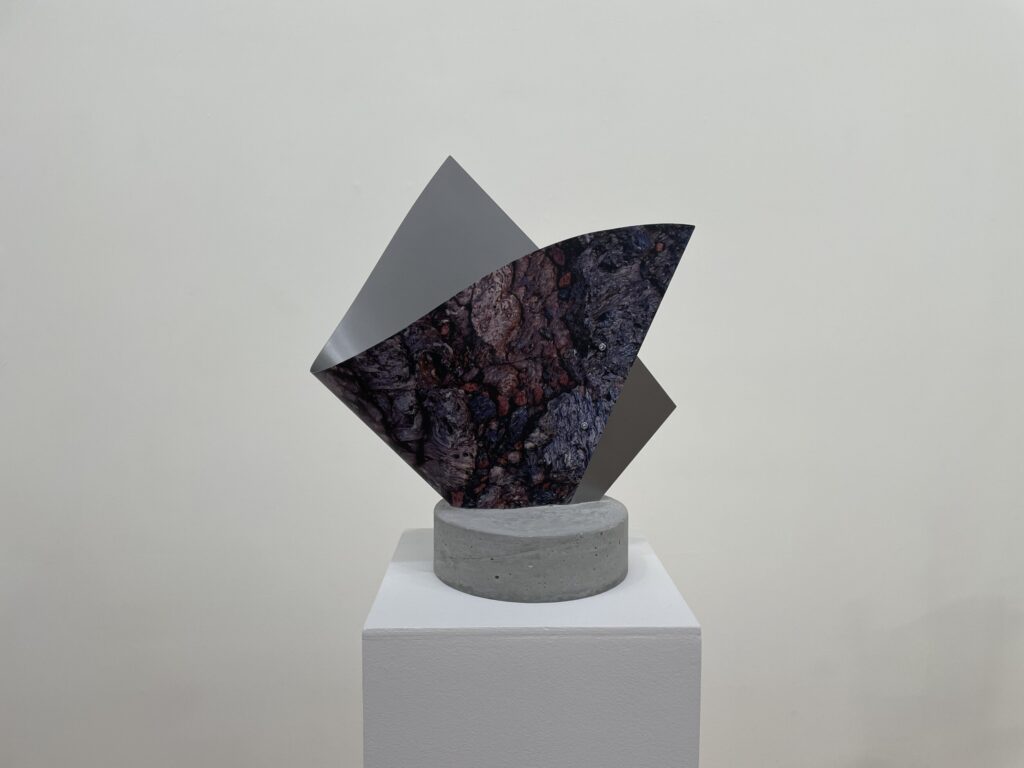
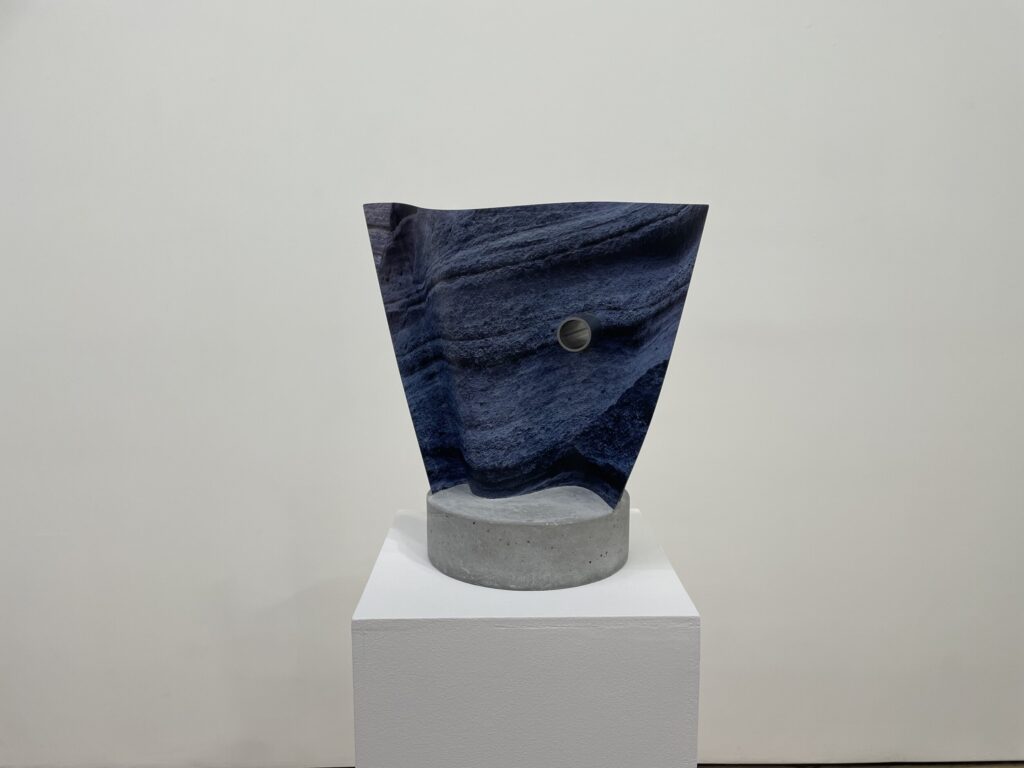
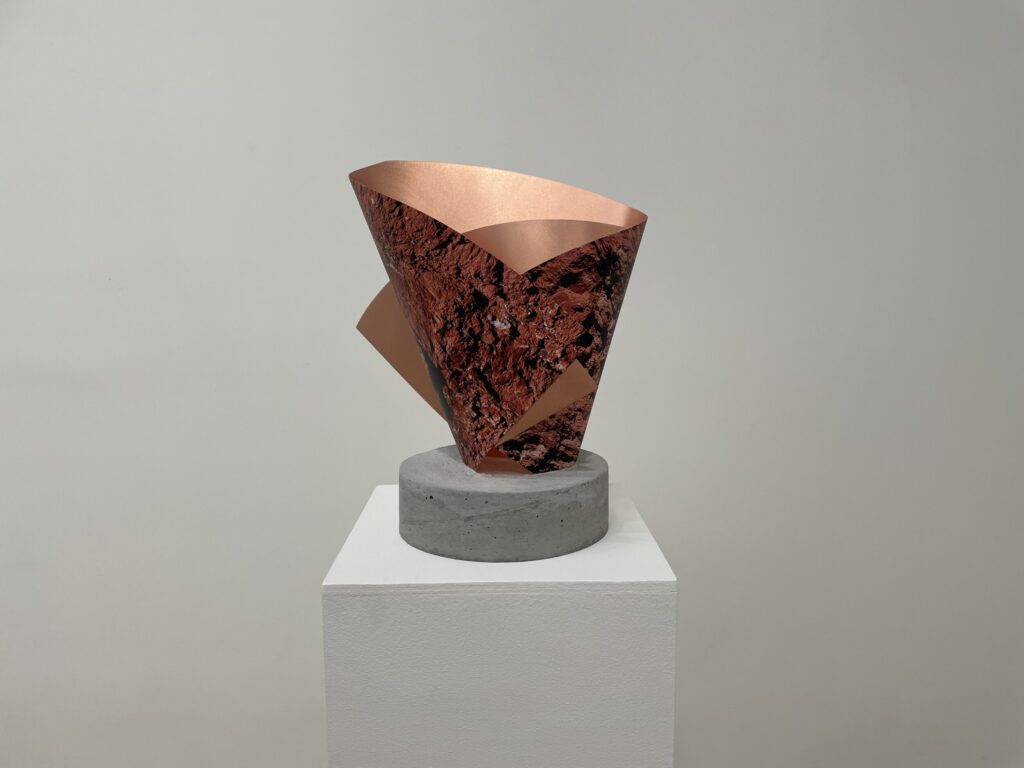
Comments/Context: To my knowledge, Letha Wilson’s art has never really been overtly positioned as a critical response to global warming and climate change. In fact, given that Wilson came onto the artistic scene at a moment (almost two decades ago now) when the possibilities of digital printing were enabling photographic imagery to inhabit all kinds of new forms, her work has more often been conceptually categorized by its process and its sculptural physicality, rather than its subject matter. Her works have always included fragmented photographic images of mountains, forests, plants, rock faces, and sunsets (generally found in the American West), those pictures of natural surfaces and textures then put into physical dialogue with various man-made materials and interventions, where the two dimensions of flat photography are forced to wrestle with the three dimensions of sculpture.
But for the first time, as I wandered through Wilson’s new show, I resonated with the fragility and poignancy of the nature photographs that populate her works far more than I ever had before. In the past, I saw her photographs as largely forgettable visual raw material, almost generic representations of the surfaces and patterns of nature, that were then manipulated in a range of sophisticated ways. But now I saw the central tension between the natural and the man-made in her work as far more ominous and threatening, the machined materials and structures constantly disrupting and twisting the original elegance of Mother Nature, making the complex contradictions (both visual and physical) she has been wrestling with all along somehow all the more urgent.
In the years we’ve been following Wilson’s work, she’s deployed a wide range of approaches and techniques underneath the larger thematic umbrella of “sculptural photography”. She’s started with color photographs, photograms (sometimes interrupted by her own hands), and double sided prints, then variously cut, perforated, bent, crumpled, and folded those prints, mounted them to a range of metals, mixed them with concrete, molded them into fan-shaped rounds, made them into books, forced them to interact with tubes and dowels, and enlarged them into spatial interventions installed in relation to gallery walls and architectural features. Her new works reprise and extend different elements of that visual vocabulary, continuing to reimagine the ways that the imagery and the materials can challenge each other.
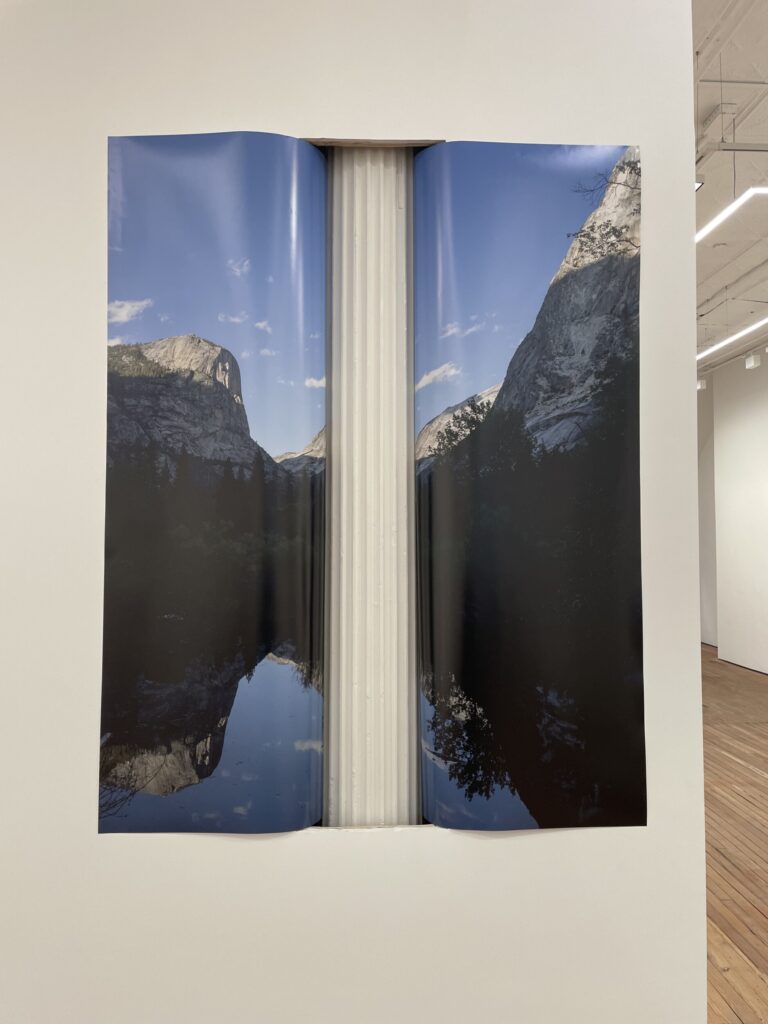
Three of Wilson’s works in this show actively interact with the GRIMM Gallery space, adding a site specific element to the idea of the uneasy coexistence between man and nature. “Yosemite Wall Column Push” feels the most intrusive, with a lovely landscape vista of Mirror Lake in Yosemite National Park brusquely interrupted by the vertical form of a fluted column dug out from the gallery wall. The column bisects the picture with a kind of implied arrogance, literally blocking our view and putting this man-made object (and representation of the art world) into primary position, almost dismissing one of grandest natural settings in America. I found Wilson’s setup provocatively offensive (in its treatment of natural beauty), in a way that I hadn’t reacted to her physical interventions before.
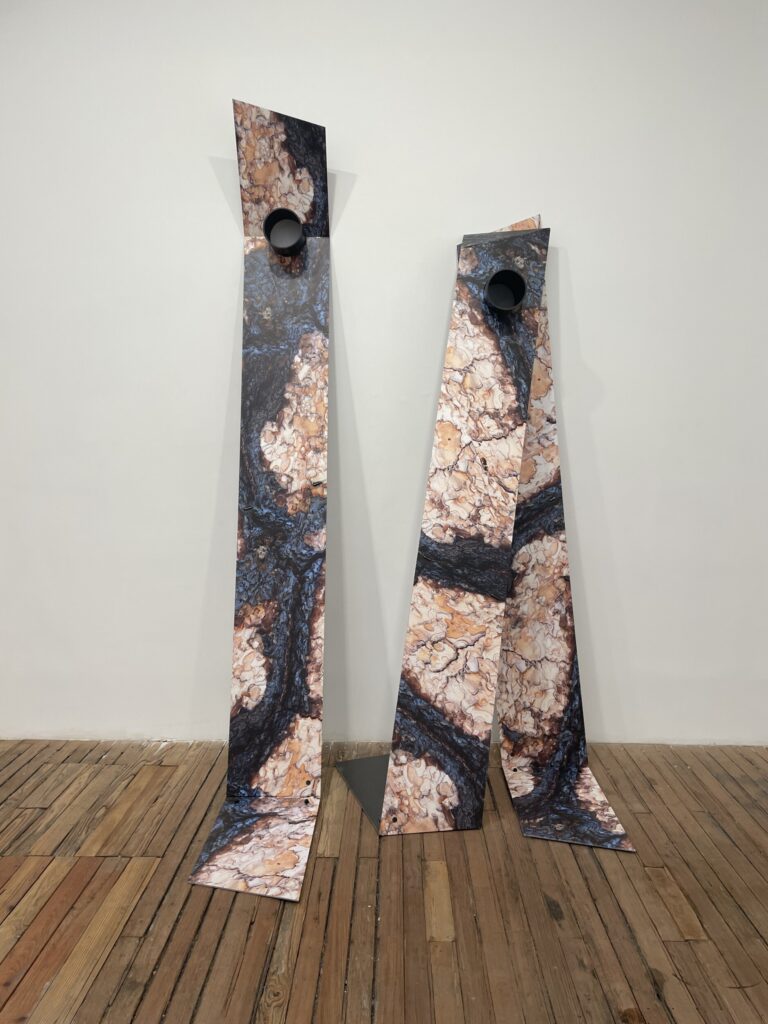
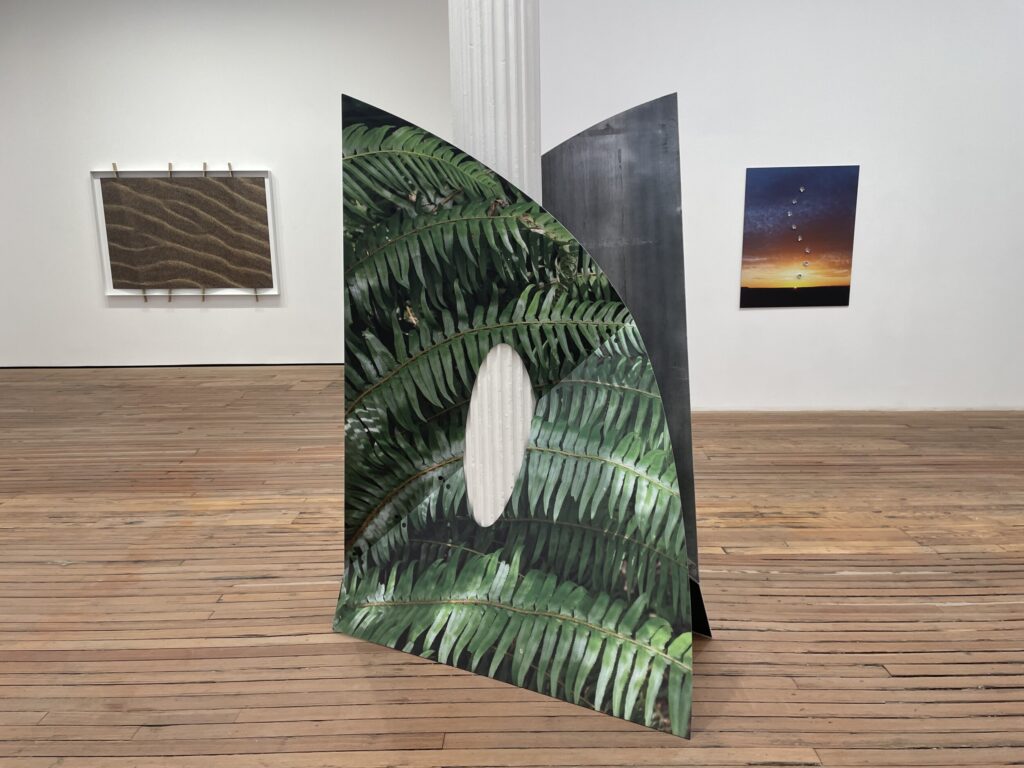
“Double Notched Steel Column Hold” sits in the middle of the gallery space, with two arced and folded plates “embracing” the column, with cutouts on each side. This work feels more like an exercise in contrasting textures, with the vertical flutes of the column playing off the the structure of the leaves (on one side) and the whorls in the rock (on the other), again with a man-made presence intervening (or providing “support”). Nearby, “Jeffrey Pine Steel Planks” transforms the rough bark of pine trees into flat planes that lean against the gallery wall and floor, seemingly tacked up by steel tubes like magnets. To my eye, this work felt like a machined abstraction or approximation of nature, perhaps for the future moment when the trees are gone.
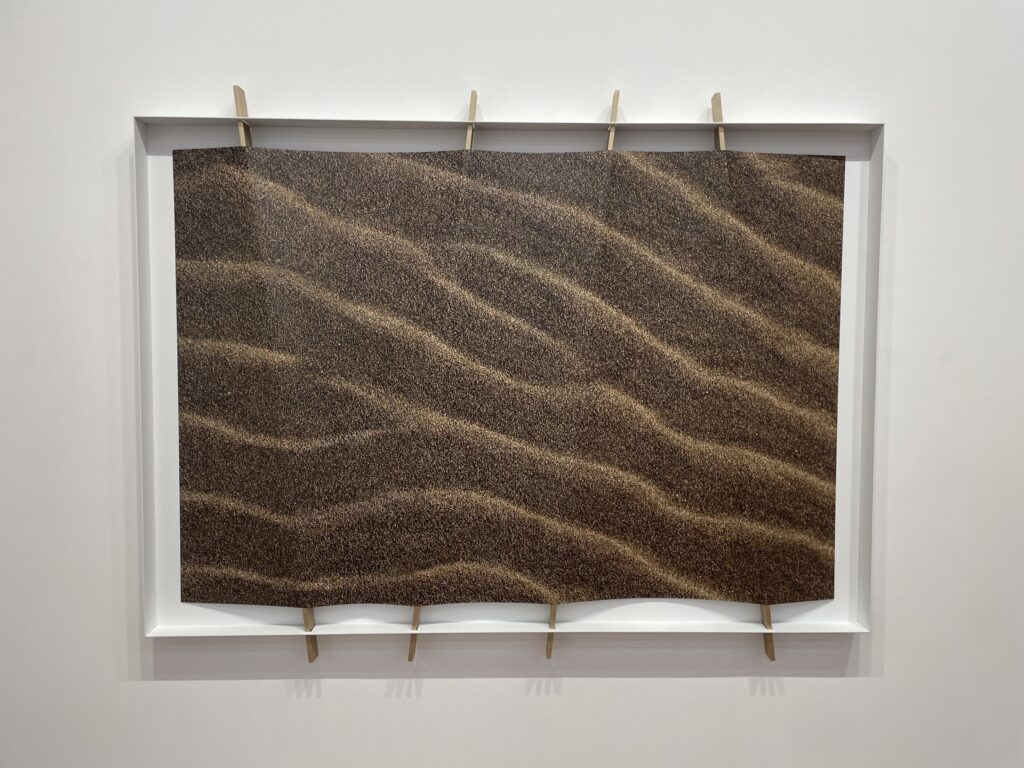
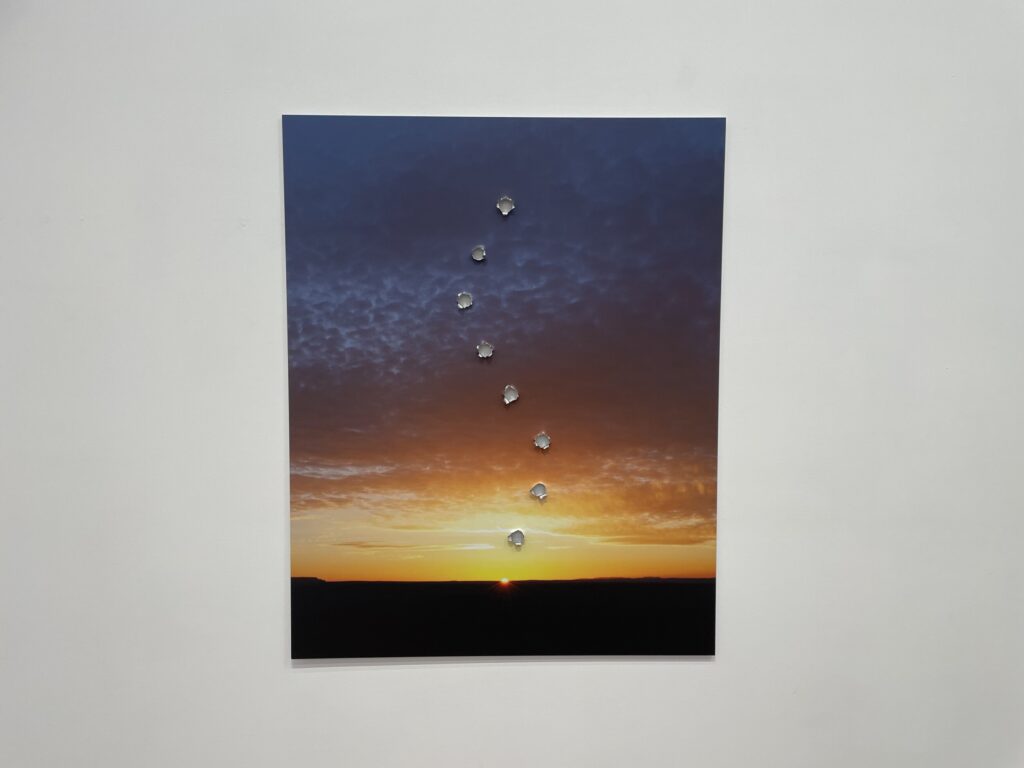
Only two works in this show really function like flat photographs hanging on the wall, and even these have been interrupted in different ways. “Pacific Coast Bronze Sand Lines” takes the classic Modernist subject of undulating sand dunes and actually gives it up and down motion, in the form of bronze strips installed underneath the print; conceptually, I liked the intellectual friction of the natural sweeps in the sand potentially being influenced by man-made structure underneath. “Goblin Valley Sunrise Punch Holes” travels a road similar to that of Chris McCaw, using the sun as activating element. Here, Wilson has made physical holes in the print, almost like the twisting smoke from a campfire, or some cosmic rotation measured over time. (A terrific video of Wilson actually making the holes with a hammer and spike can be found on the artist’s Instagram page, linked in the sidebar.)
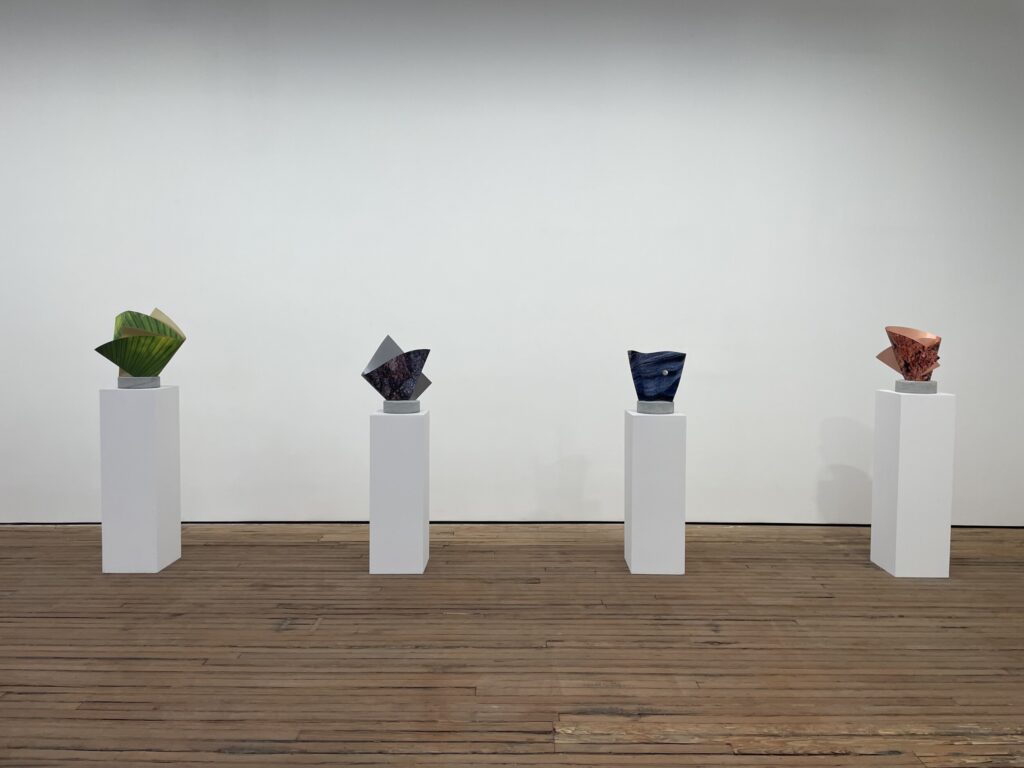
Four smaller works installed on pedestals feel like continuations of ideas explored in Wilson’s 2023 and 2024 gallery shows (at Higher Pictures, reviewed here, and at Sperone Westwater, reviewed here). These works mount images of nature on thin sheets of metal, with echoes of color connecting the opposing sides. Here yellow brass is paired with yellow-green palm leaves, orange copper with rough rock, grey steel with bluish grey canyon walls, and silvery steel with craggy bark, each work a kind of gestural dance between the two opposing forces. There is a lovely lyricism to the folds and turns of these sculptures (almost like the cellophane cone of a bouquet of flowers), but again, I felt the prickly dissonance of the machined materials overwhelming the natural imagery more strongly in these works than I did in the more geometric folded exercises Wilson made a few years back.
Wilson’s unique approach to sculptural photography (or photographic sculpture) is clearly appreciated enough to lead to consistent inclusions in contemporary group shows these days, but it’s time for a more robust institutional survey of her career to date to make better sense of the evolution of her aesthetics. Maybe it’s my own mood, but it feels like Wilson is on the brink of stepping into more artistic risk, building on the analytical and structural strengths and successes of her past work and edging toward something a bit more energized and political. She’s well positioned to take up that provocative challenge, and doing so may be the spark she needs to make the indelible work she’s capable of.
Collector’s POV: The works in this show range in price from $12500 to $35000, based on size. Wilson’s work has little secondary market history at this point, so gallery retail likely remains the best option for those collectors interested in following up.