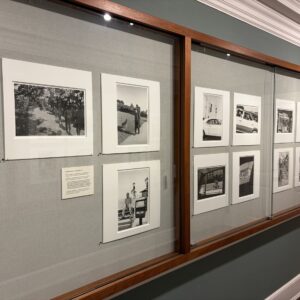
JTF (just the facts): A total of 11 color photographic works, generally framed in wood and unmatted, and hung against white walls in the single room gallery space and the office area. All of the works are inkjet prints on canvas and collage on panel (1 includes oil, another is a diptych, and 2 more are three dimensional objects placed on the ground), made between 2023 and 2026. Physical sizes range between 24×20 and 50×40 inches (or 100×80 for the diptych), with the three dimensional works sized roughly 13x50x17 and 21x54x19 inches. All of the works are unique. (Installation shots below.)


Comments/Context: Throughout much of the 2010s, Kate Steciw could be found right in the middle of a cohort of younger artists actively pushing on the digital frontiers of contemporary photography. At that artistic moment, there was an intense interest in the broadening powers of new digital image manipulation tools, the expanding possibilities of digital printing, and the conceptual intersection of image and object, resulting in a range of photographic works that crafted a new photographic vocabulary, experimenting with digital photocollage (especially as drawn from Internet image sources), digital mark making (as made with software tools), and photographic objects executed in all kinds of unexpected shapes, sizes, and materials.
Coming from a background as a professional image retoucher, Steciw had an innate familiarity with the cutting edge tools and techniques that were being used at the time, and with the increasingly divergent aesthetics of perfected photographic realism and intentionally clumsy and awkward usage of those very same effects and manipulations. In a string of solo gallery shows (in 2012 reviewed here, 2014 reviewed here, and 2016 reviewed here) and in other important group shows (often interrogating the nature of the image/object dichotomy), Steciw grappled with swirled stock imagery, shaped frames, prints, and cutouts, sculptural interventions, and gestural digital marks, continually pushing on what a composite picture might be.
It’s been ten years since we last checked in with Steciw’s work, and that extended period of silence tells us something about the changing interests and priorities of the art market. Once the emphasis shifted toward more identity-driven image making, many of those artists exploring the digital possibilities of photography seemed to wander away from the spotlight, their interests and concerns somehow less relevant than before. But as this gathering of recent works by Steciw proves, those artists didn’t give up on the artistic problems they were trying to solve, they were simply replaced as the representatives of the next new thing.
As seen in this show, Steciw’s recent works extend her rethinking of digital photocollage, chasing a variety of different techniques toward their points of breakdown. The only diptych in the show features the doors of a white car, with the front and rear doors placed side by side. A closer look reveals plenty of illusionistic complexity – the two doors don’t match (they must be from different cars), the exterior doors are layered together with images of open doors, the windows are further stacked with cutouts and doubling, and the perspectives are slightly different (as seen in the desert horizon), like the alternating of a parallax view. What at first glance seems obvious turns out to be altogether unstable, revealing a smartly constructed composite of parts that don’t quite fit together.
Other single images play with related ideas of repetition, changing vantage point, broken objects, and obvious digital manipulation, playing with the doubling (and flattening) of bottles on a table top, the layering of shards of a shattered mirror (and other scratched reflections), and the nesting of circular shards of a broken coffee mug with a circular rampway. In each case, Steciw is cutting and pasting image fragments into sophisticated visual dialogues, where the rough process of digitally collaging the images together is left visible to further disrupt our ability to confidently resolve a sense of what is going on.
Several other works then break through the flatness of the typical picture plane, recalibrating our experience of the imagery. One work adds round bike reflectors to the seething red surface of a hand wearing a skull ring (almost like John Baldessari’s dots), while a cutout corner disrupts what looks like the flared view from inside a bus in another. Steciw then jumps down off the wall to the floor in two folded two-sided works that have hinges and attached wheels, with the cutout shape of a boot providing the substrate for a pairing chair legs with a mottled pink sky, and multiple hinged folds bending back on themselves and interrupting some red, white, and blue buoys. When considered in relation to typically flat cut-and-paste on-the-wall photocollage, Steciw’s works look all the more radical and disruptive, even if we can’t quite decipher all her visual allusions and puzzles.
For those like Steciw who overtly embraced the aesthetics of digital manipulation early on and have continued to wrestle with how to transform its visual cues into a richly shifting visual language, the job is never really done, so it’s good to see Steciw pushing forward and refreshing her approach. The strongest of the works on view here remind us of both the unresolved complexities that come from sophisticated image manipulation and the expanse of artistic white space that remains to be explored using these kinds of techniques, especially as the tools continue to change and our collective eye for such composites evolves. As artists like Steciw hit their power zones of artistic maturity, the quirks, codes, and brash risks of deliberate photographic manipulation may be primed for a comeback.
Collector’S POV: The single images works in this show are priced between $2400 and $6500 each, with the diptych priced at $12000 and three dimensional works at $2500 and $3000. Steciw’s work has little secondary market history, so gallery retail likely remains the best option for those collectors interested in following up.