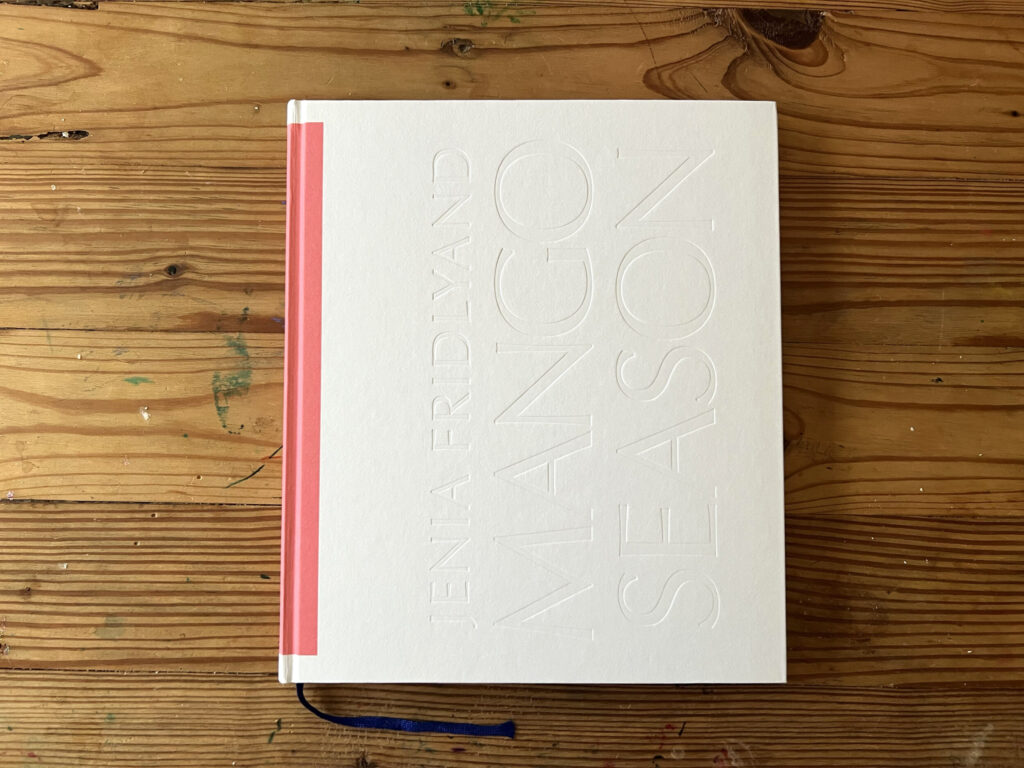
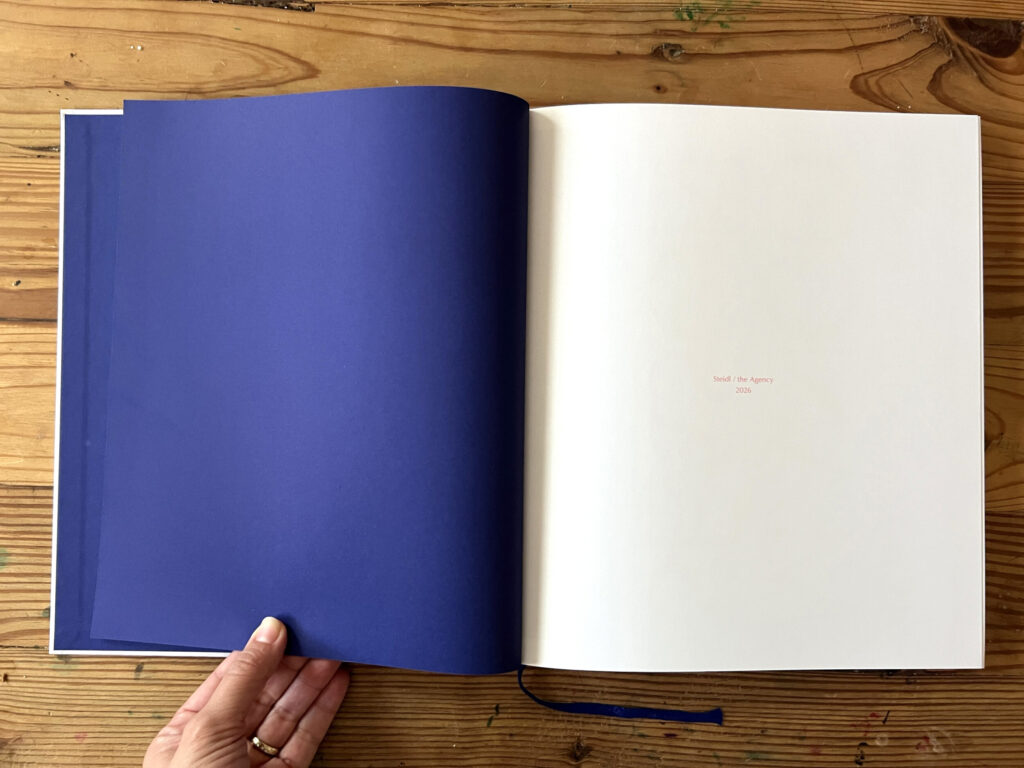
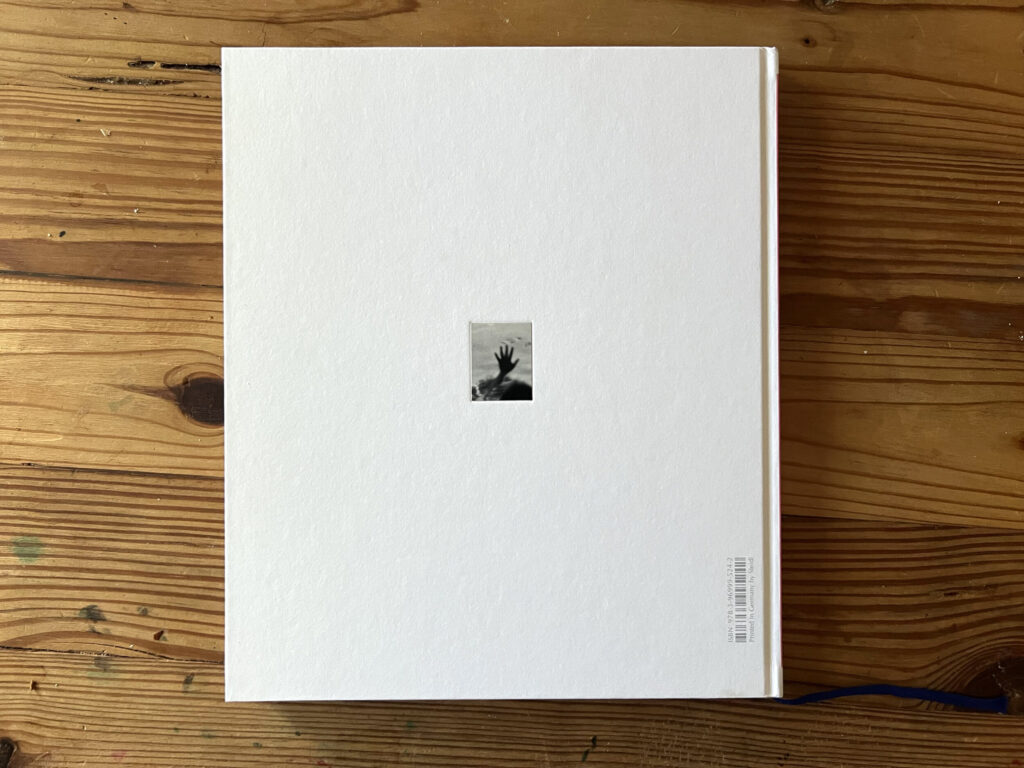
JTF (just the facts): Co-published in 2026 by Steidl and The Agency (here). Hardcover, 24.5 x 28.7 cm, 112 pages, with 54 black and white image reproductions. The back cover includes a tipped-in silver gelatin print made by the artist. In a trade edition of 1750 copies. (Cover and spread shots below.)
A limited number of special edition copies includes an additional page: a transparent silver halide print made by Raymond Meeks, attached into the gutter between the book block and the back endpapers with a thin strip of double sided tape.
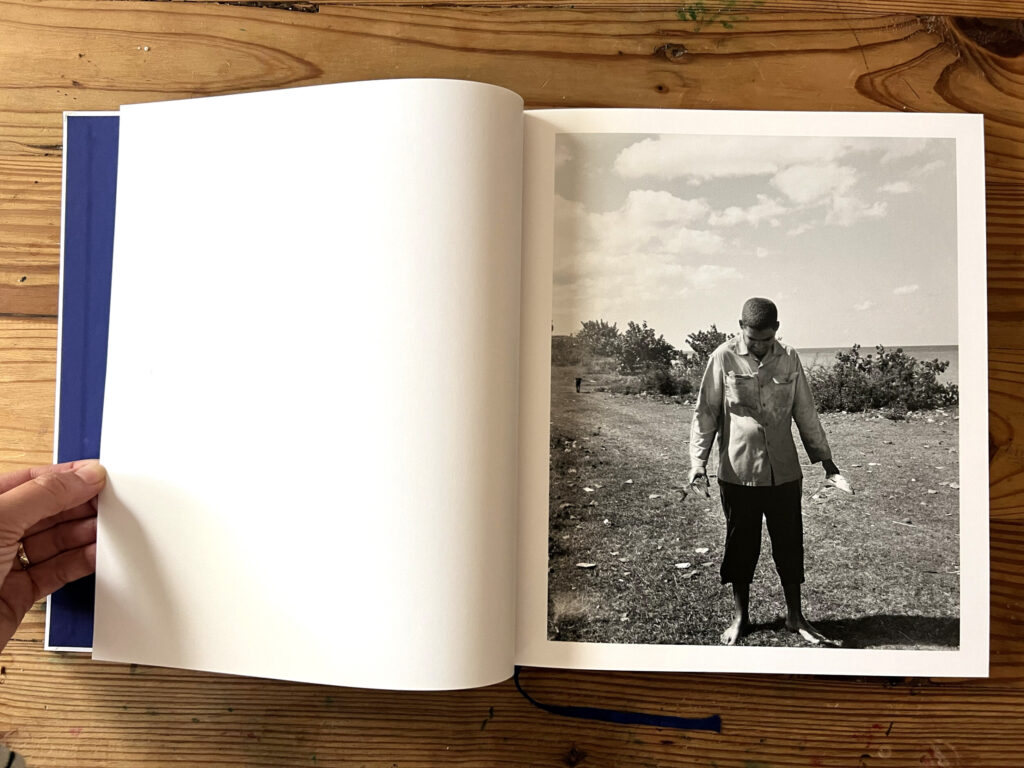
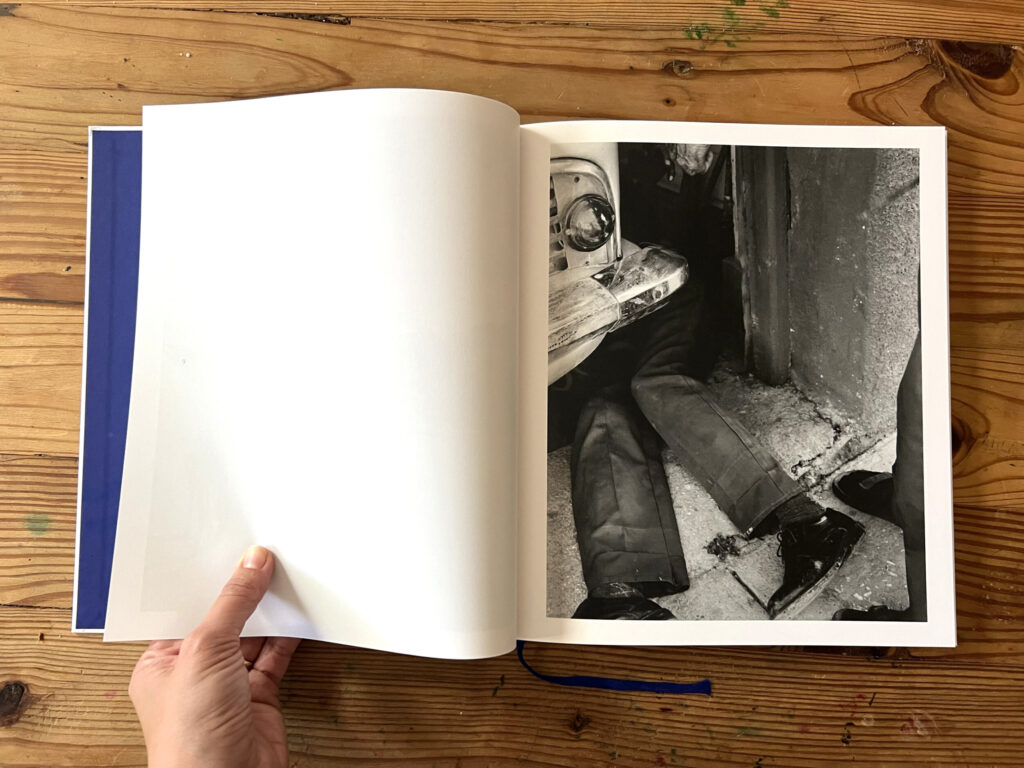
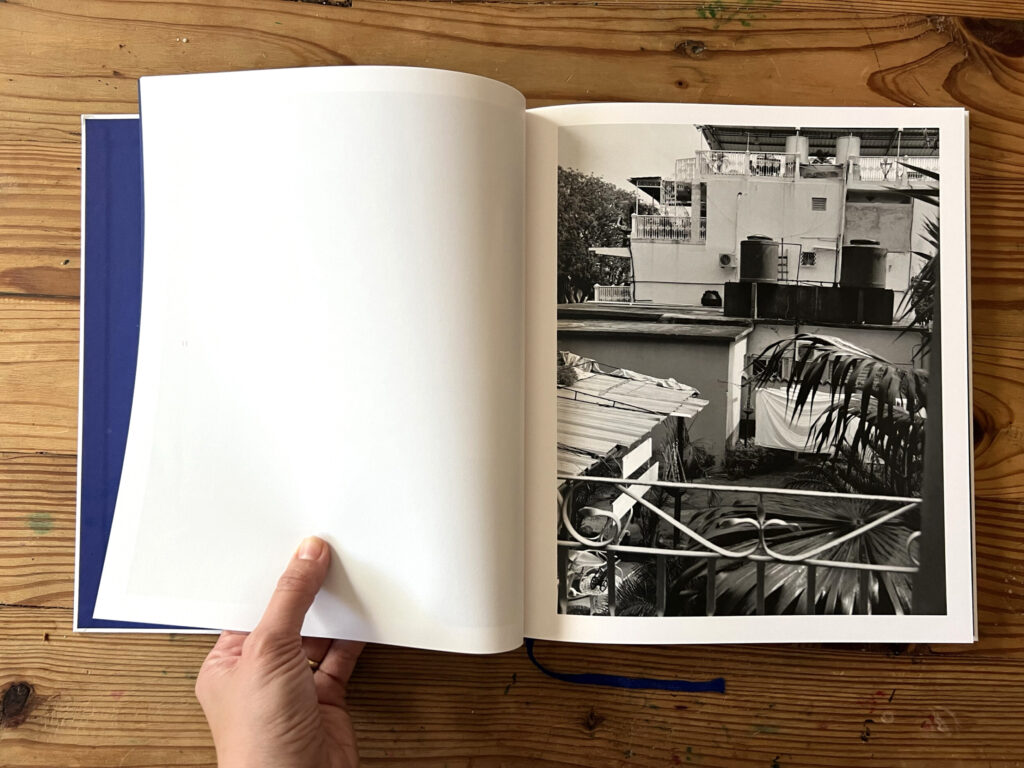
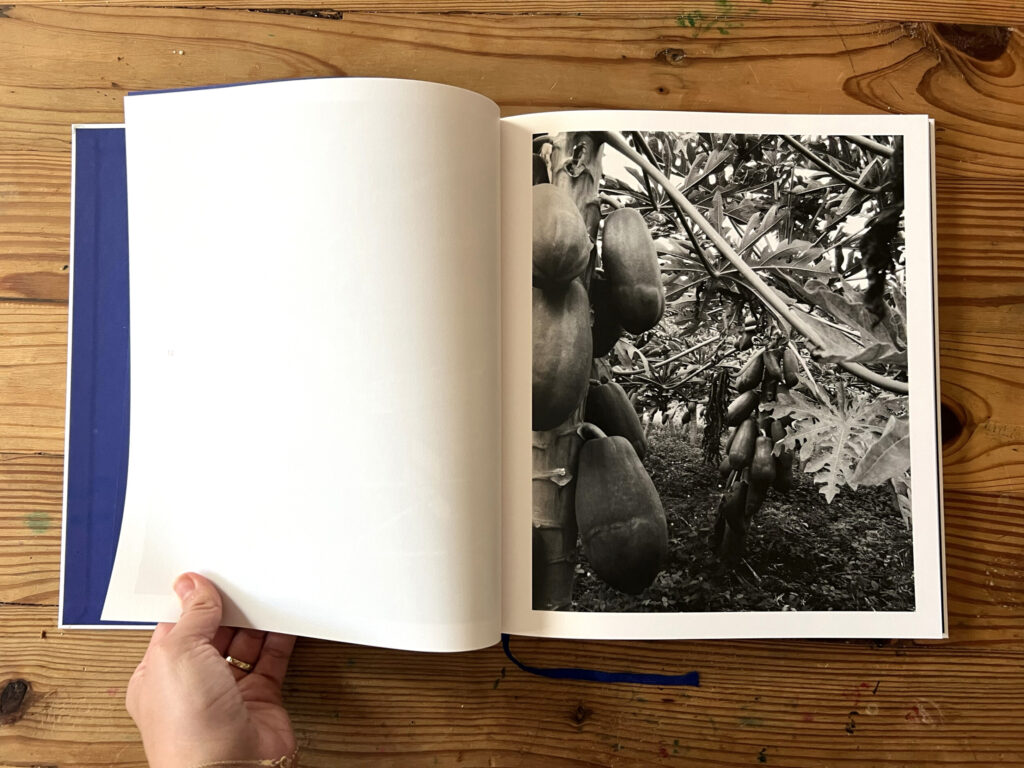
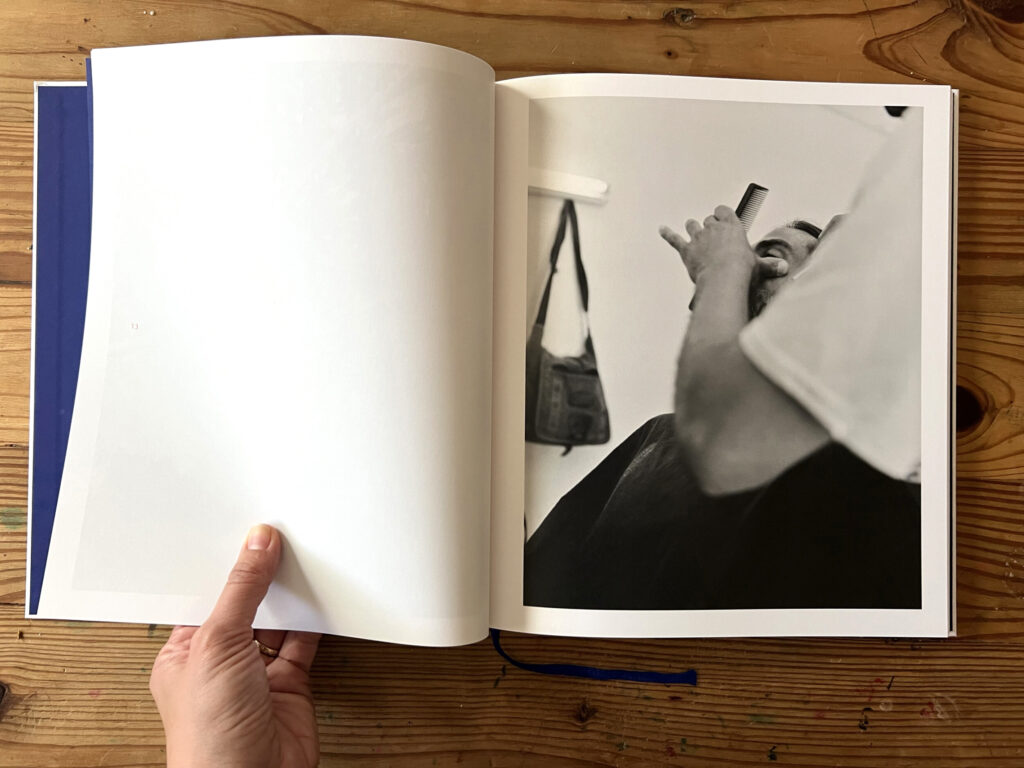
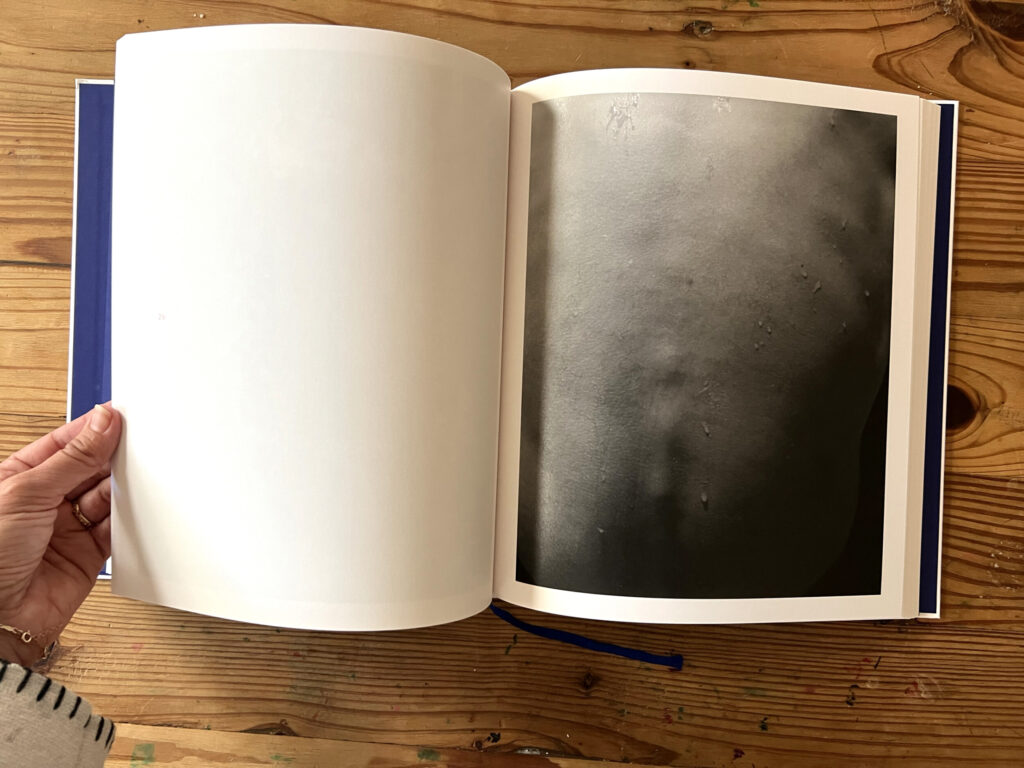
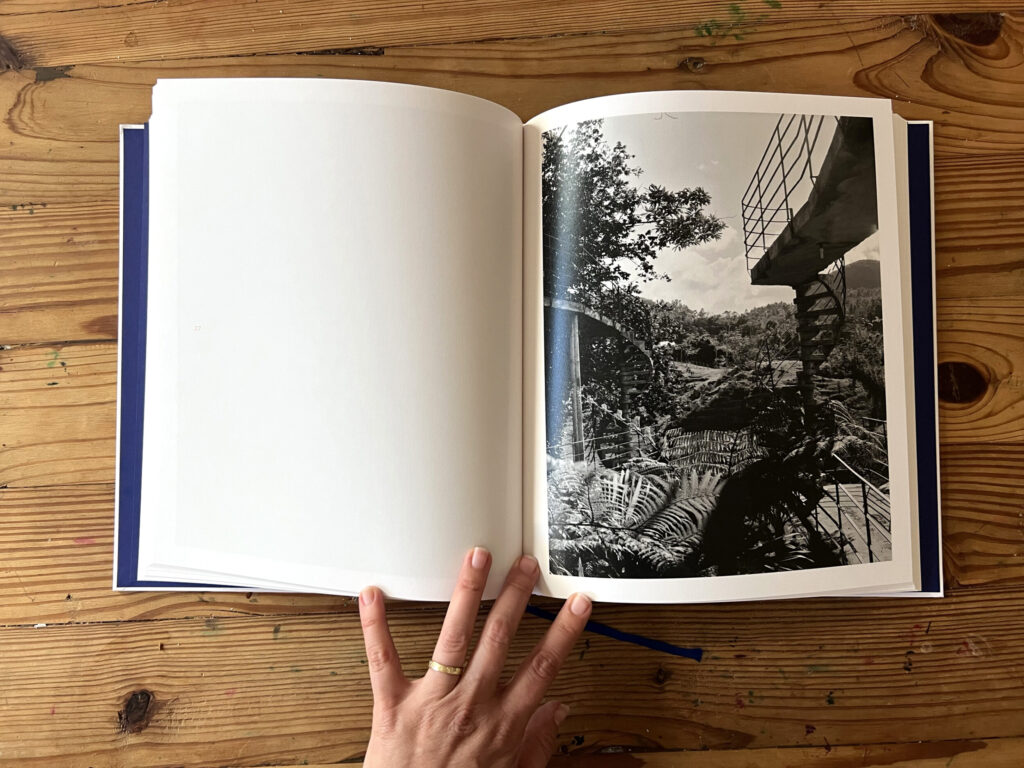
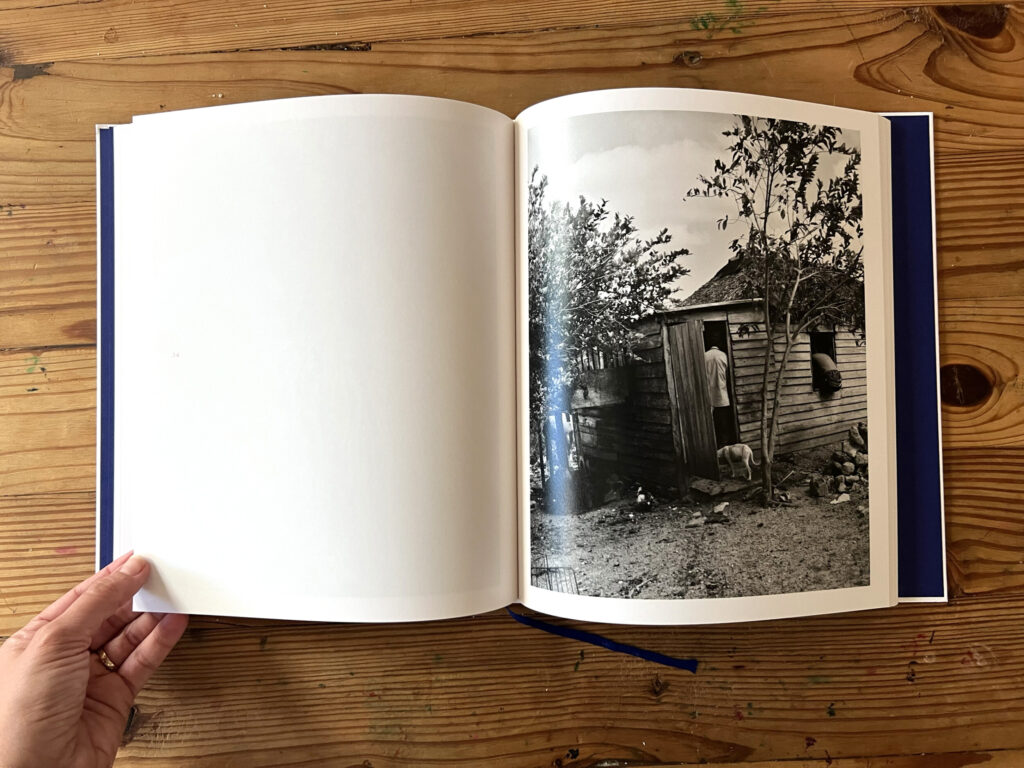
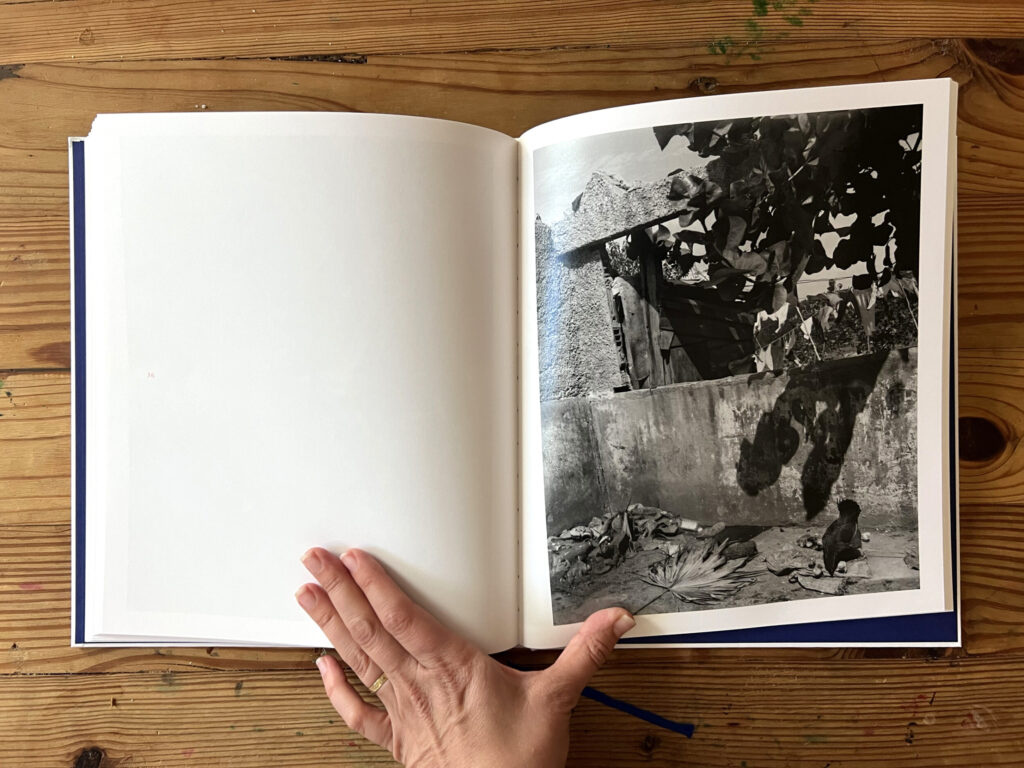
Comments/Context: Jenia Fridlyand’s long anticipated second photobook, Mango Season, opens with an intimate portrait of a young man holding a fish in each of his bare hands, trailed by a panting black dog in the distance. The man is looking down toward his feet rather than engaging directly with the camera’s gaze, establishing a mood of quiet introspection.
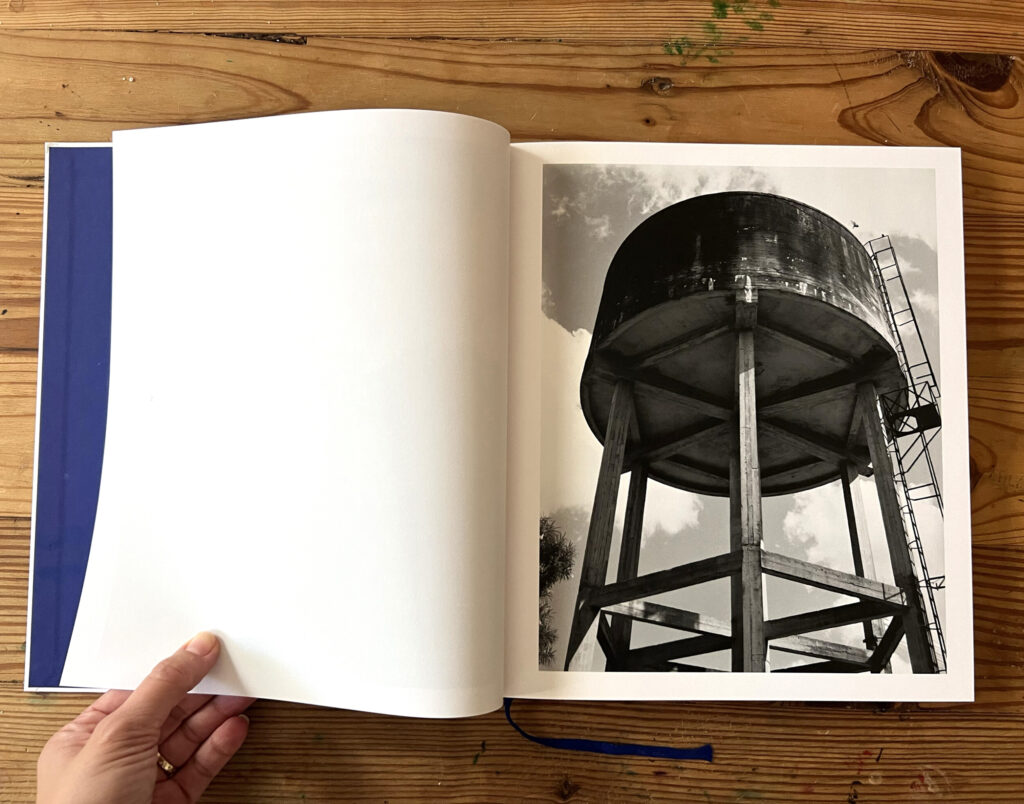
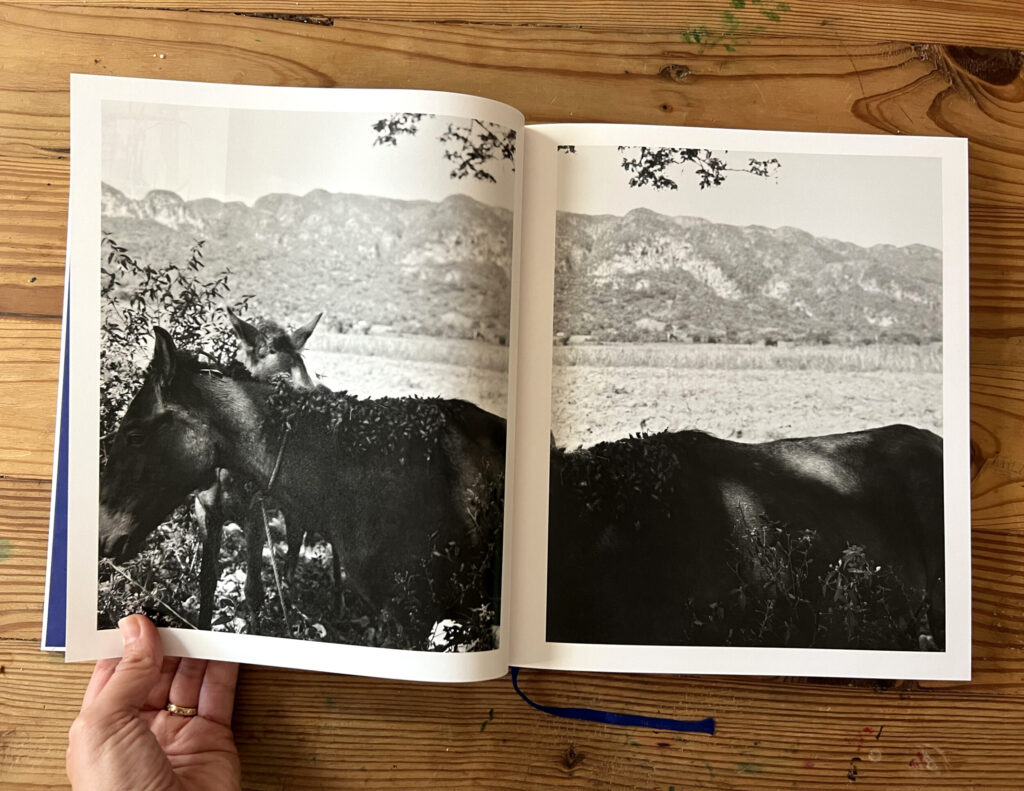
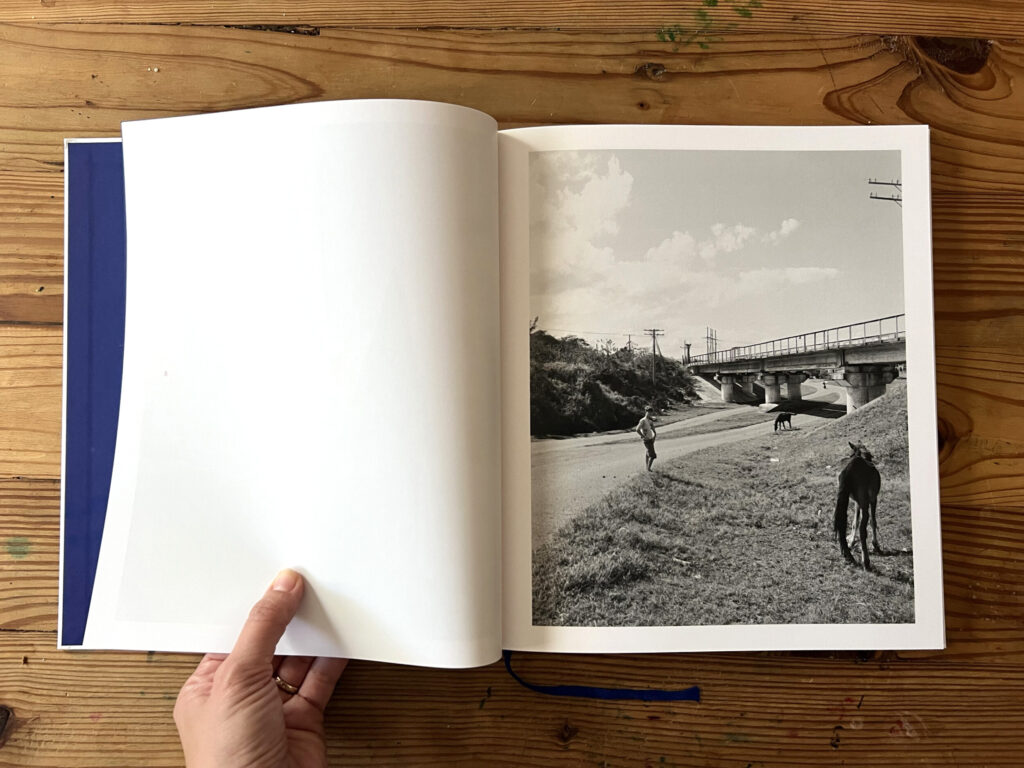
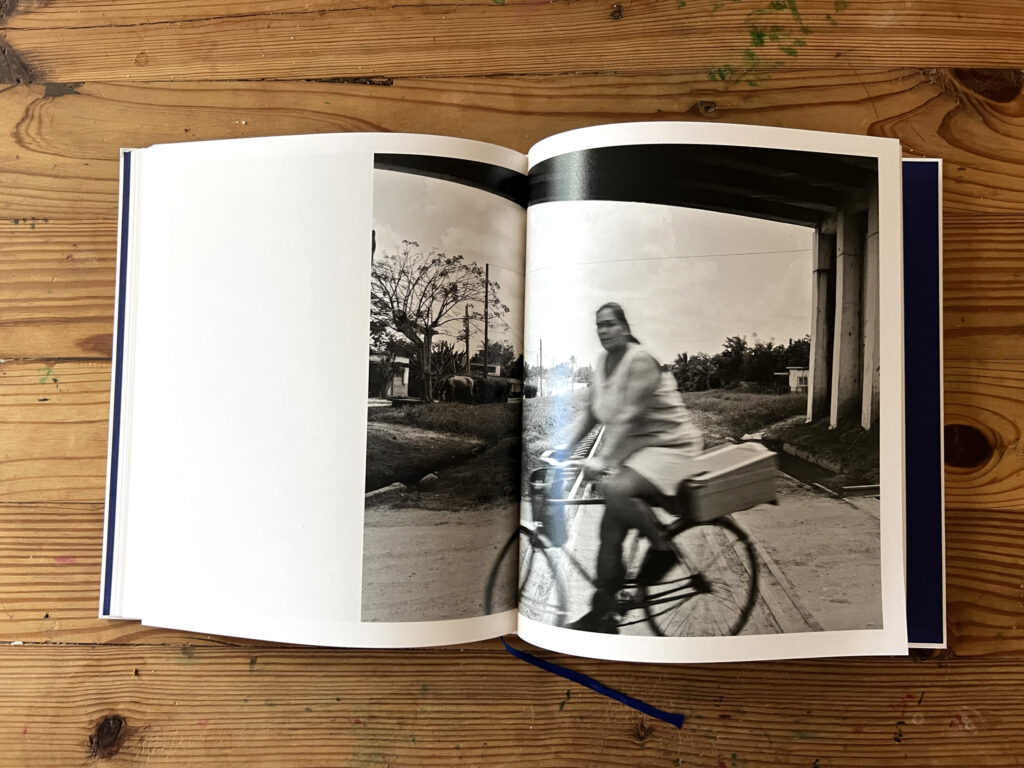
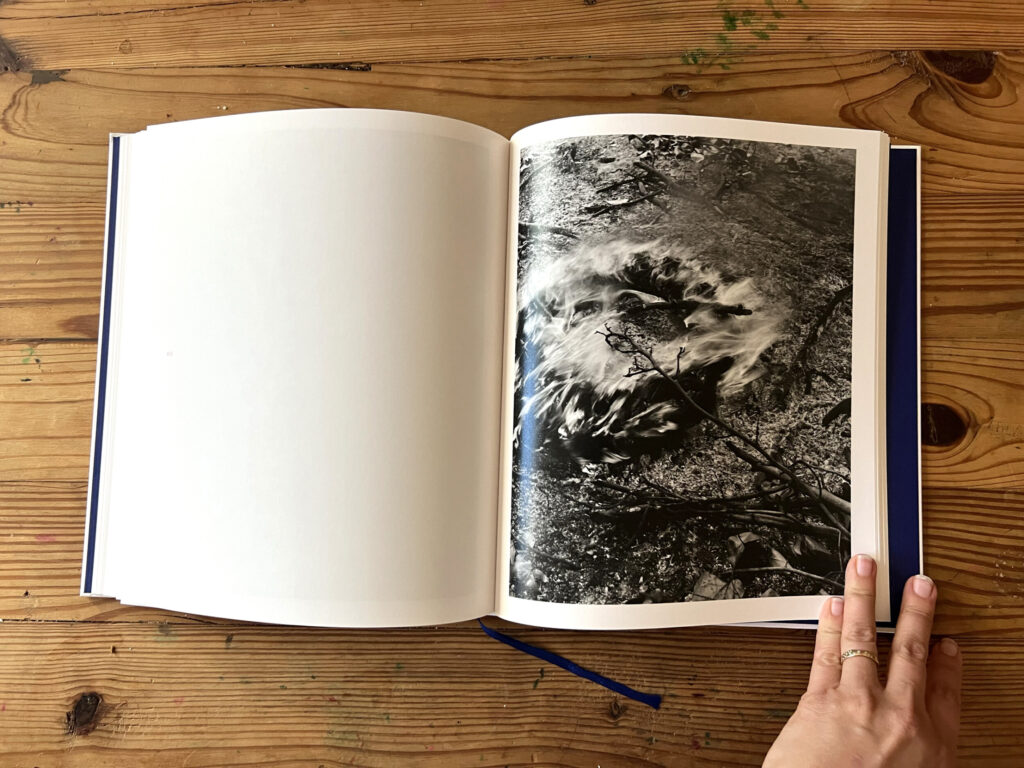
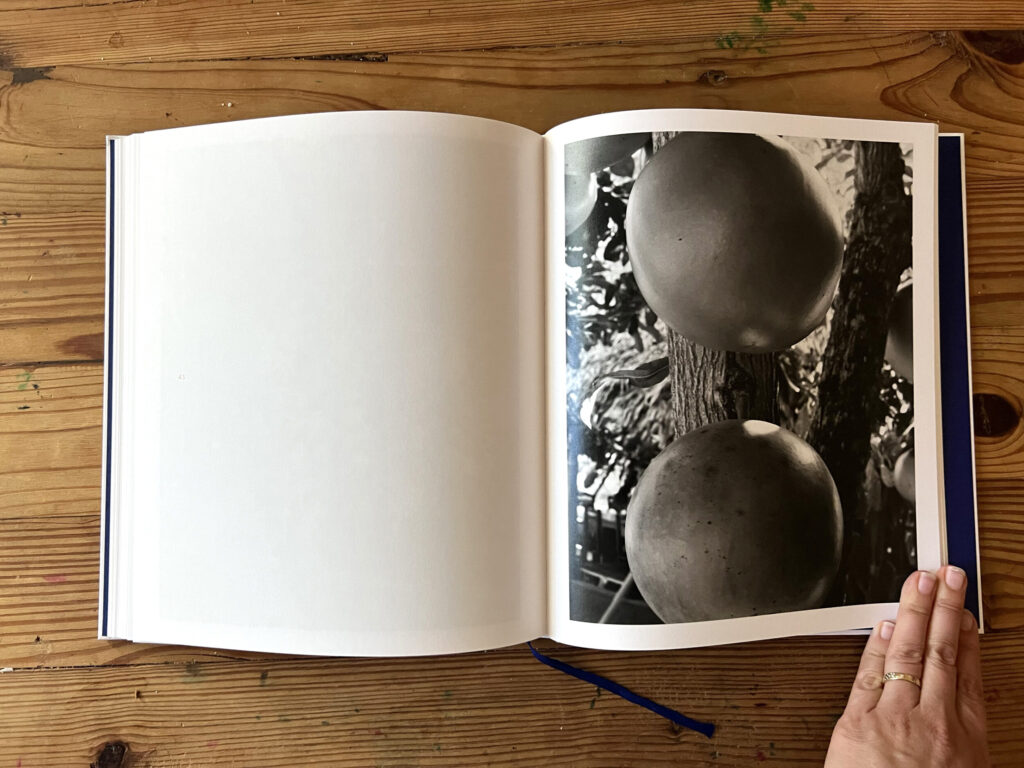
What follows is a rich cascade of scenes, carefully and exquisitely framed, feeling as though they have been gracefully plucked out of time: the hulking view of a concrete water tower as seen from below with all its complex geometric infrastructure fully displayed, the spine of a donkey silhouetted against soft rolling hillsides, the poignant view of a young boy standing akimbo between two donkeys beneath a footbridge, a man’s legs exposed while his top half is hard at work beneath the underbelly of an old car, and scenes of tropical plant life in what looks to be sweltering heat, including the maturation of large bulbous fruits, presumably mangoes as implied by the volume’s title.
The photographs are made from a restrained yet comfortable vantage point. They are not modernist nor street photographs, but a distinct third genre. The best photographers are able to make a place feel like one that you know after you’ve looked through an entire portfolio of their work. This case is no different: I am left with the sense that this is a single place and yet this could be almost any place. It is familiar.
Aside from a brief dedication, the monograph contains no written text, so readers learn that the images were made in Cuba solely through promotional notes provided by the publisher. Having spent her childhood in the Soviet Union prior to perestroika, Fridlyand found her journeys through Cuba during the 2010s to be a strange, deeply familiar homecoming. This book is not a simple “I went to Cuba“ travelogue. Mango season in Cuba runs from May through July, some of the hottest months of the island’s year. Beneath the bright tropical sun, Fridlyand found evocative quiet, unvarnished cadences that define daily life under a communist system.
Employing the deliberate, methodical precision of a 4×5 view camera with a rare blend of formality and closeness, remarkable intimacy, and sensitivity, Fridlyand presents a deeply nuanced examination of daily life in contemporary Cuba. Her complex observations quietly scrutinize the delicate intersections of human labor, historical memory, and the physical environment, constructing a deeply layered meditation that avoids predictable clichés that romanticize the country’s precarious infrastructure.
Mango Season is the photographer’s second time exploring her relationship with a specific place in book form, expanding upon the distinct, highly disciplined visual language she has cultivated over years of working with large-format photography. We became acquainted with Fridlyand’s work in her first photobook, Entrance to our Valley, published by TIS Books in 2019 (reviewed here). In that debut project, Fridlyand established a quiet, deeply patient approach to narrative and landscape, examining family life, labor, and domesticity within the Hudson Valley with remarkable sensitivity.
Similarly, in Mango Season, Fridlyand does not impose a rigid linear narrative nor settle for simple documentation. Her image sequence moves fluidly between evocative landscapes and fleeting portraits, encouraging contemplative engagement, allowing details to resonate. Each image functions not merely as a description of a place, but as a deliberate reflection on human labor and layered intersection of memory and geography.
As an object, the photobook is formally very classic—bright white with a debossed title, royal blue end papers, and a blue ribbon bookmark that allows the reader to contemplate for long stretches and return to a distinct page of their choosing. Its physical design—featuring a crisp linen-like tactile quality, robust binding, and refined color choices—complements the quiet precision of the photographs within. The presence of the blue bookmark serves as both a functional utility and a gentle invitation to pause, emphasizing the volume’s deliberate pacing and encouraging a recursive, non-linear reading of the sequence. Every material choice reflects a meticulous commitment to the book as an artistic artifact in its own right, mirroring the careful craft and visual restraint of the large-format images it contains. It comes as no surprise that the print quality is superb, as we have come to expect from Steidl. Affixed to the volume’s back cover is a small, square, silver gelatin print depicting a single hand, a subtle detail isolated from an earlier photograph in the photobook’s sequence. Reaching outward, the palm creates a poignant visual pause, gently inviting the viewer to hesitate, linger, and return to the pages once more.
Mango Season offers an unusually intimate perspective on a Cuban society, a place that remains largely obscured from external observation. Decades of strict travel barriers and severe physical infrastructure constraints have long restricted outside views of the island nation. Through her lens, Fridlyand presents a quiet, deeply layered meditation on a landscape shaped by intricate socio-historical complexities. At the same time, her technical skill and understated artistic sensibility create a poignant visual reflection on a childhood home that stays perpetually beyond reach. The photobook functions as both an artist’s proxy memory and an intimate document of the physical place she returned to year after year; an indirect bridge between personal heritage and geographical reality.
Collector’s POV: Jenia Fridlyand is represented by Galerie Wouter van Leeuwen in Amsterdam (here). Fridlyand’s work has little secondary market history at this point, so gallery retail likely remains the best option for those collectors interested in following up.