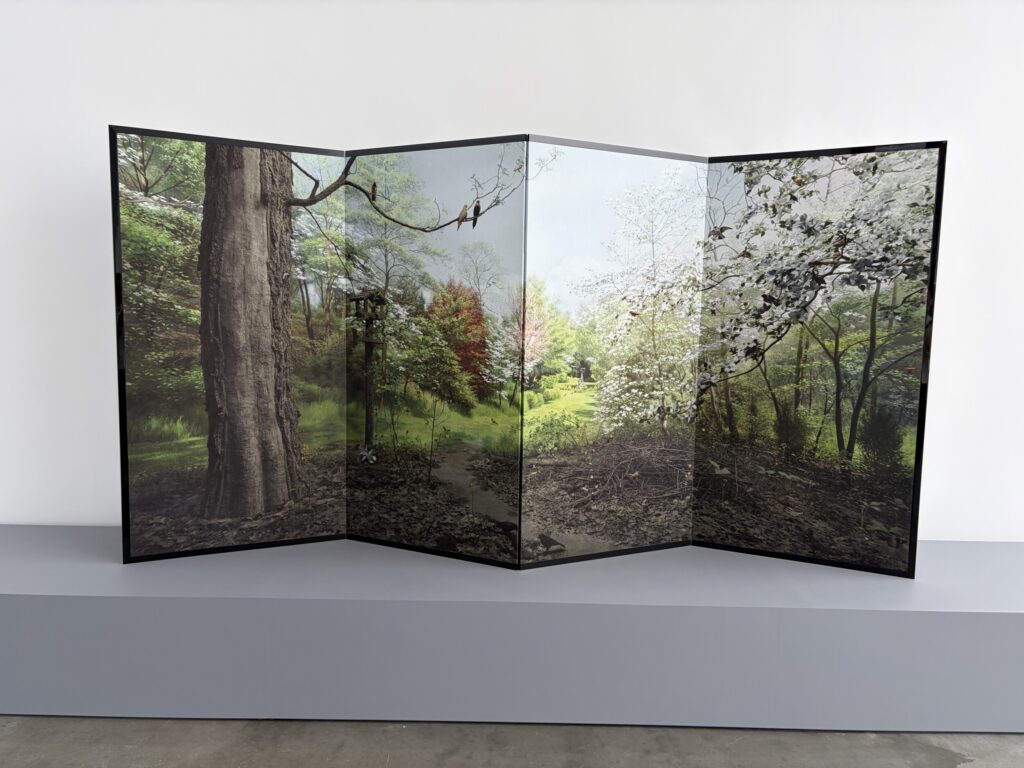
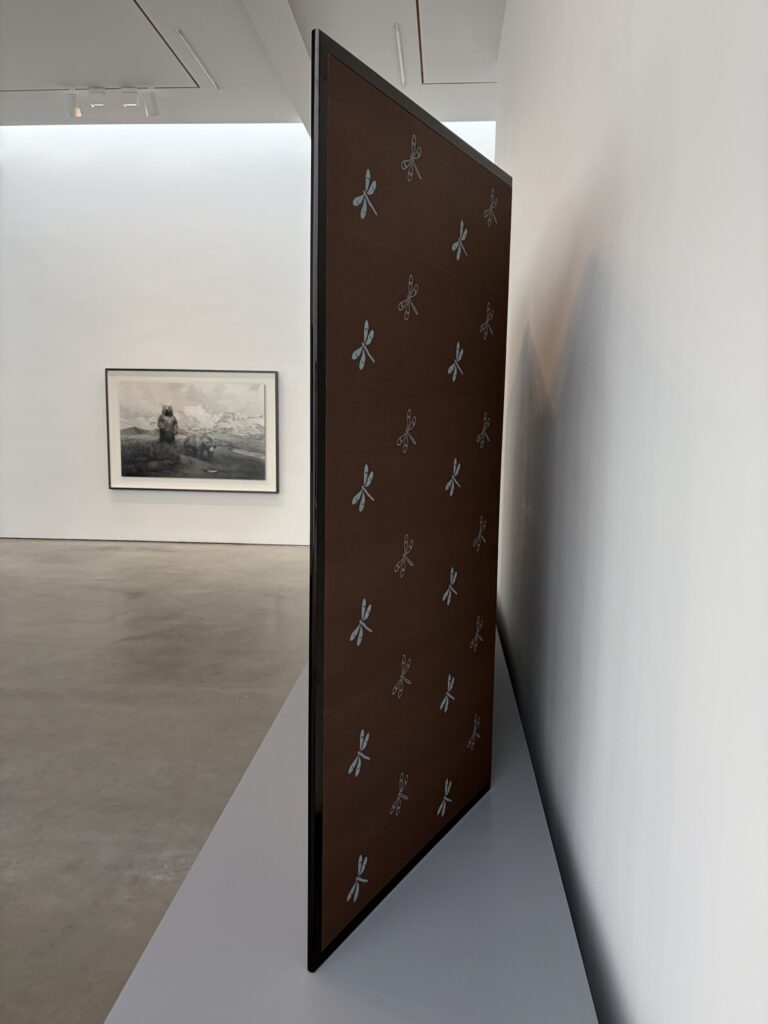
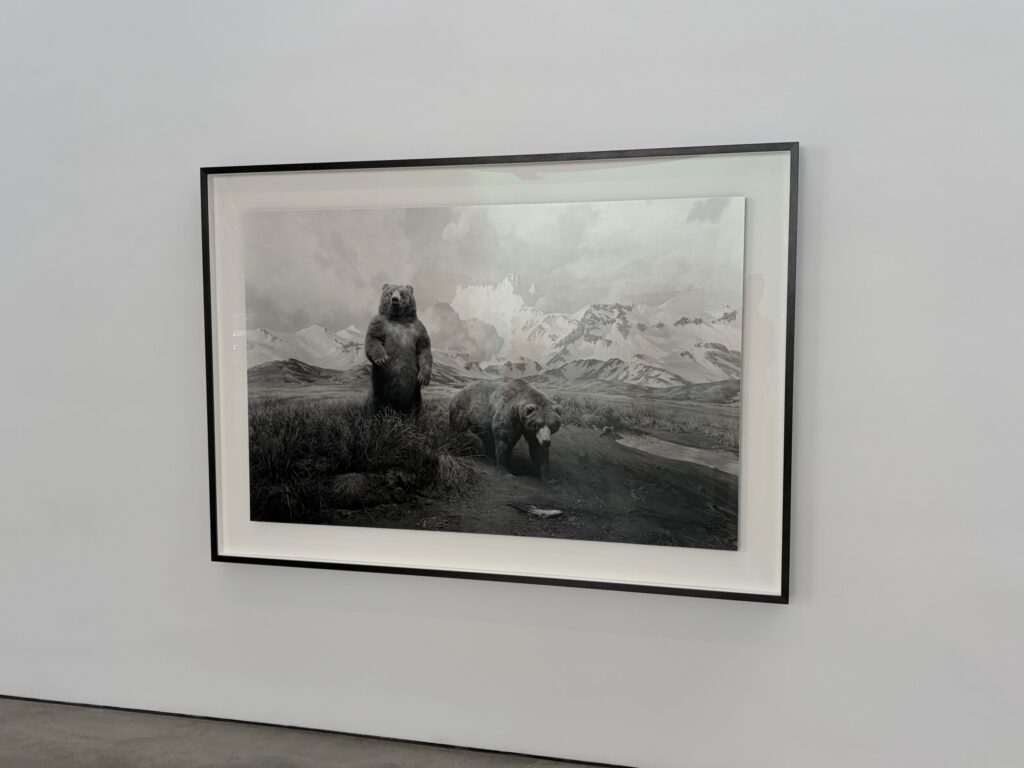
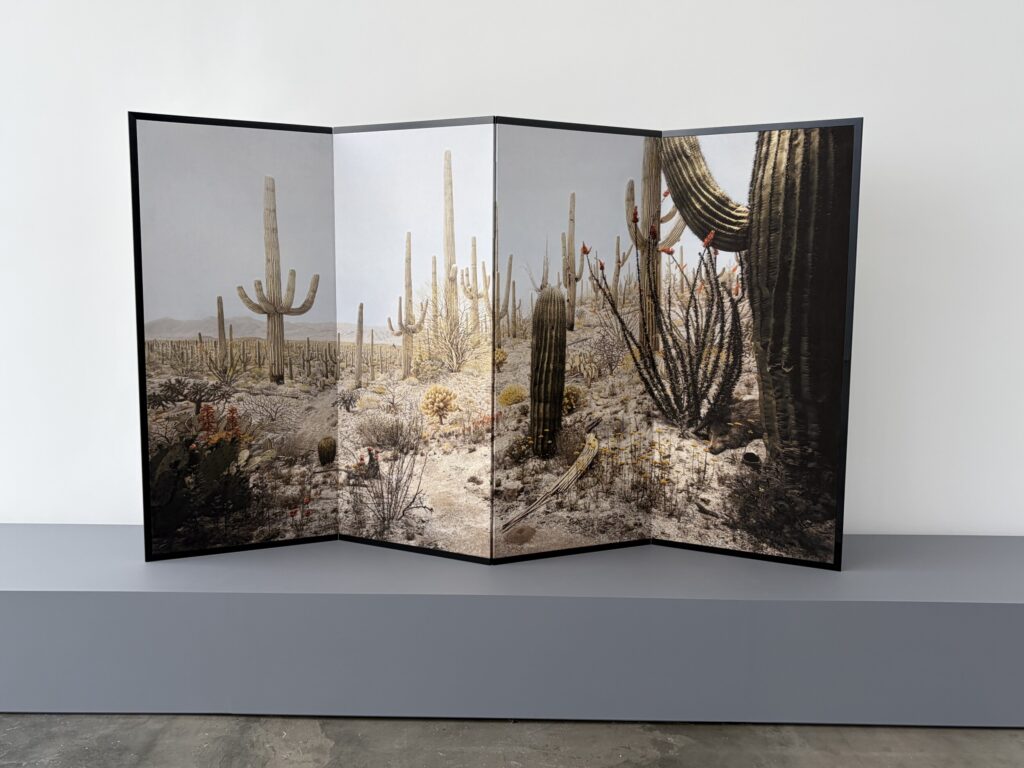
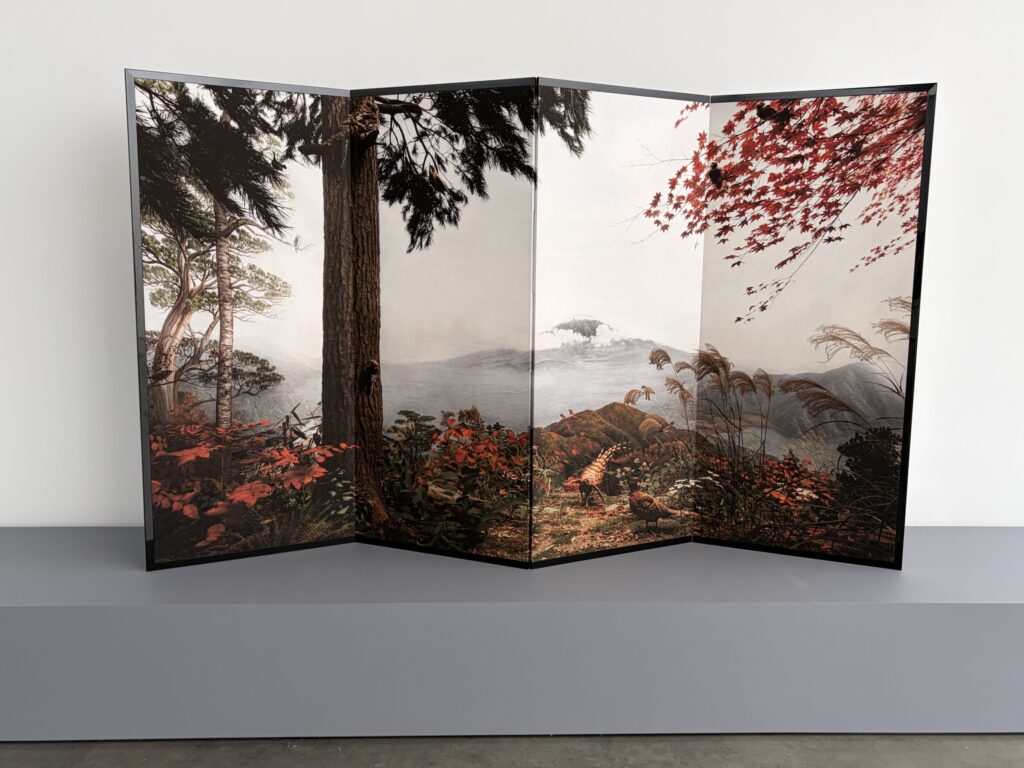
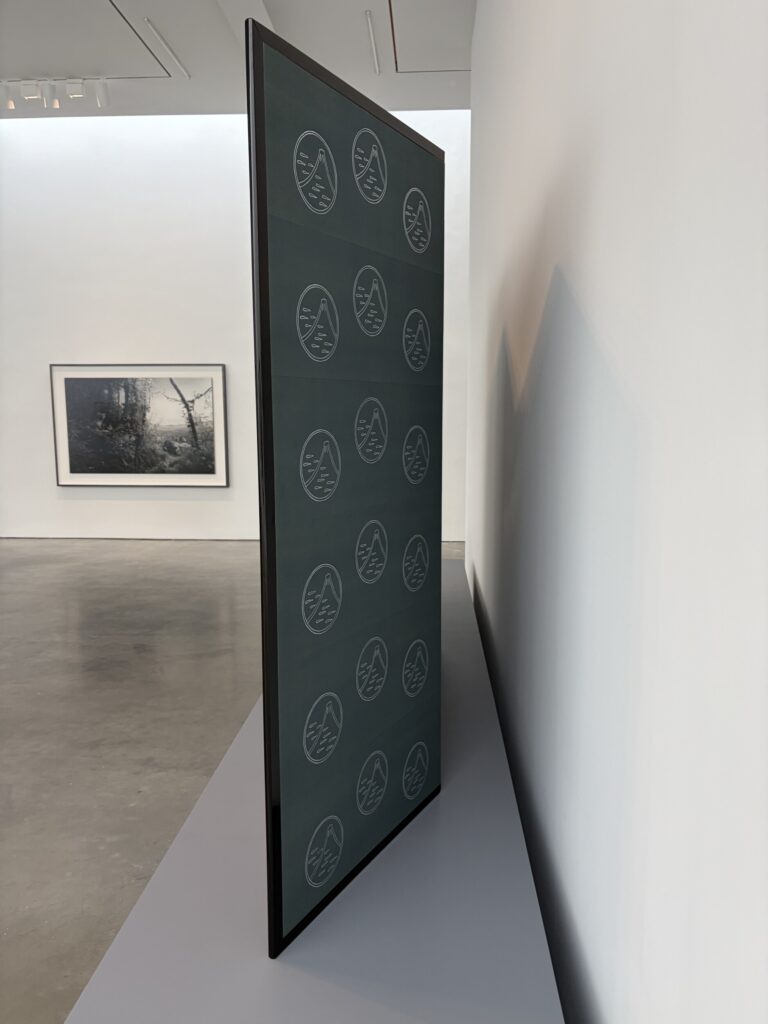
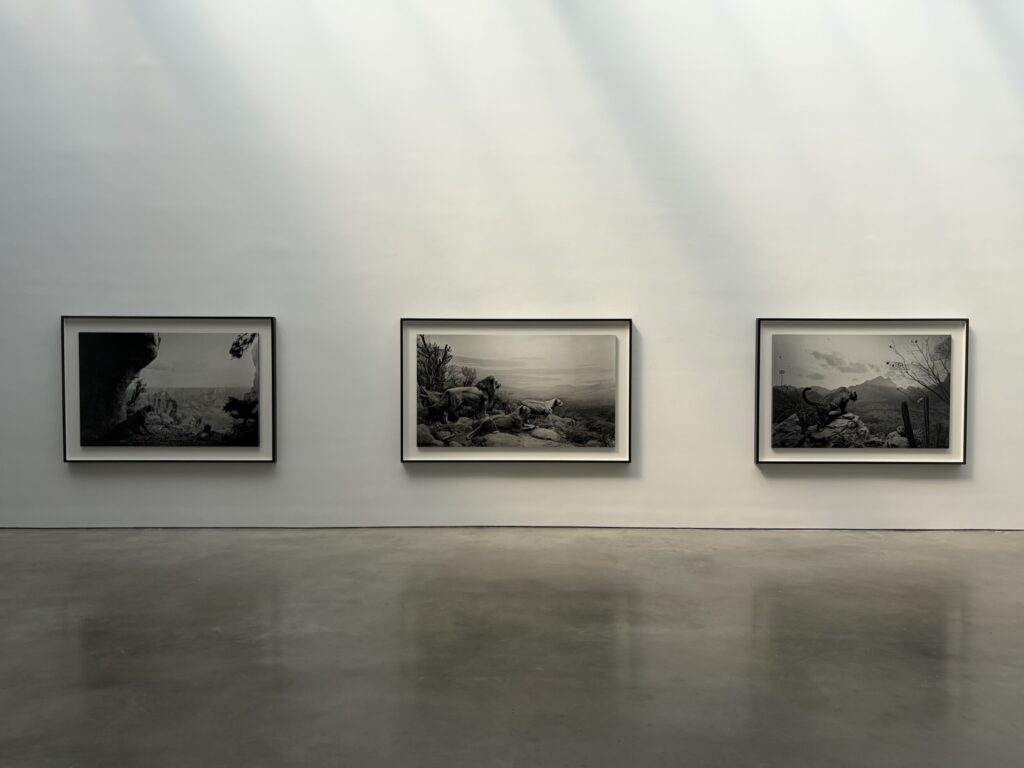
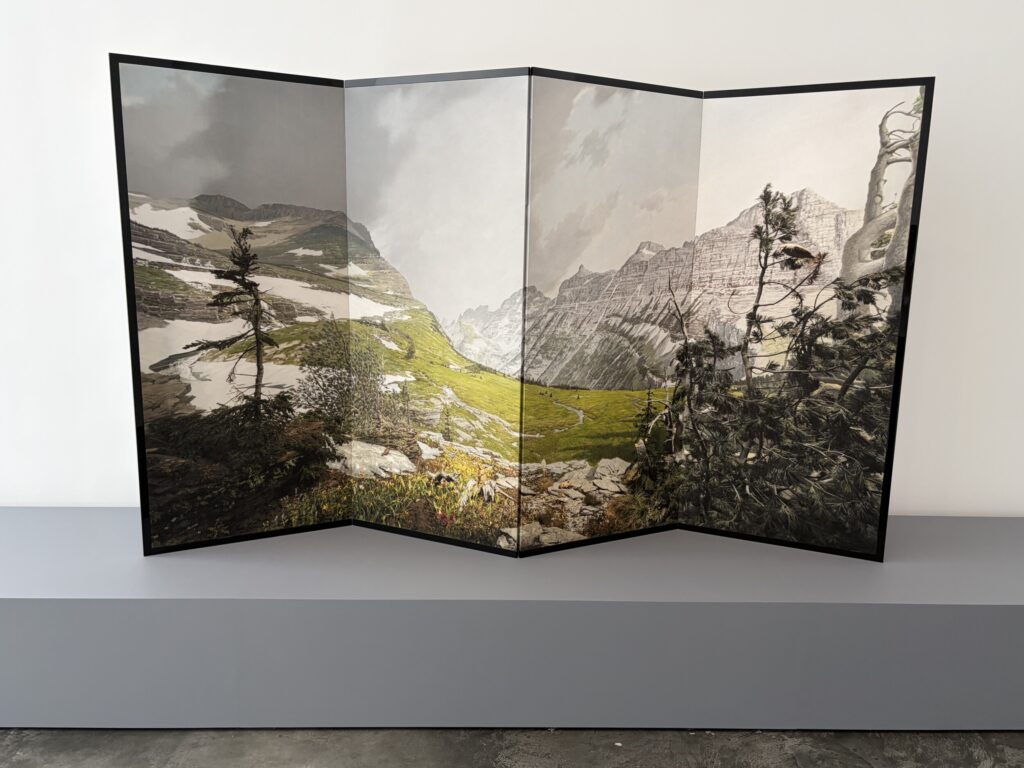
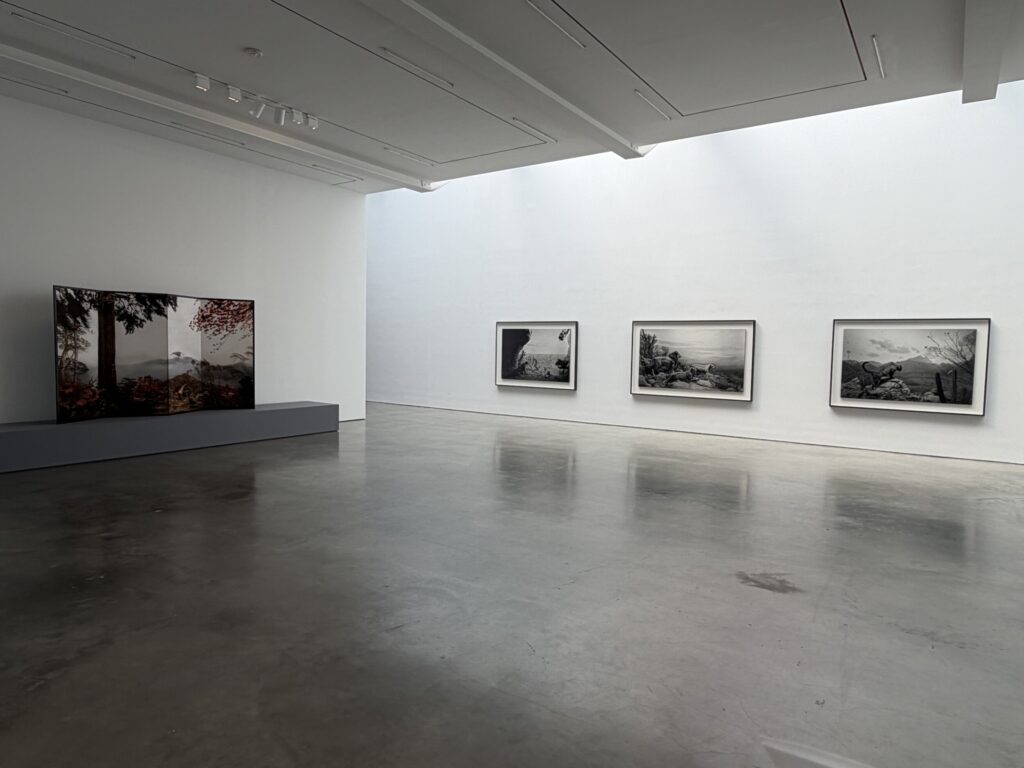
JTF (just the facts): A total of 13 photographic works, framed in grey and mounted or displayed as folding screens on grey pedestals, against white walls in the divided gallery space. (Installation shots below.)
The following works are included in the show:
- 4 pigment prints on washi paper, mounted on folding screens, 2025, sized roughly 73x116x16, 73x136x17 inches, in editions of 3
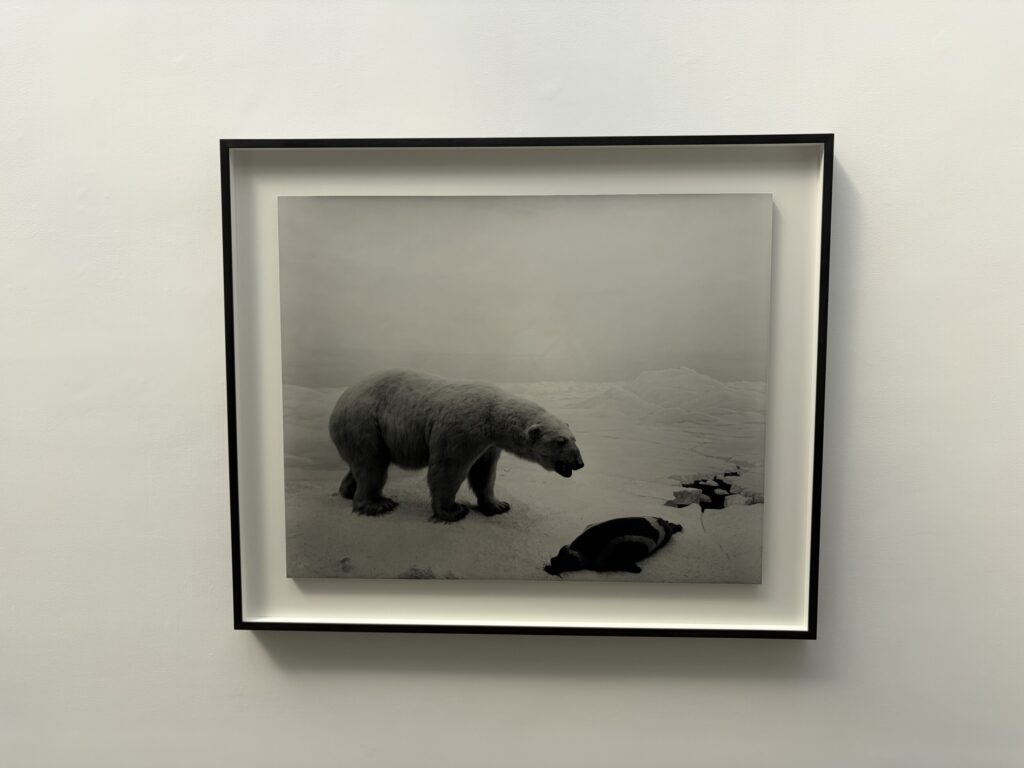
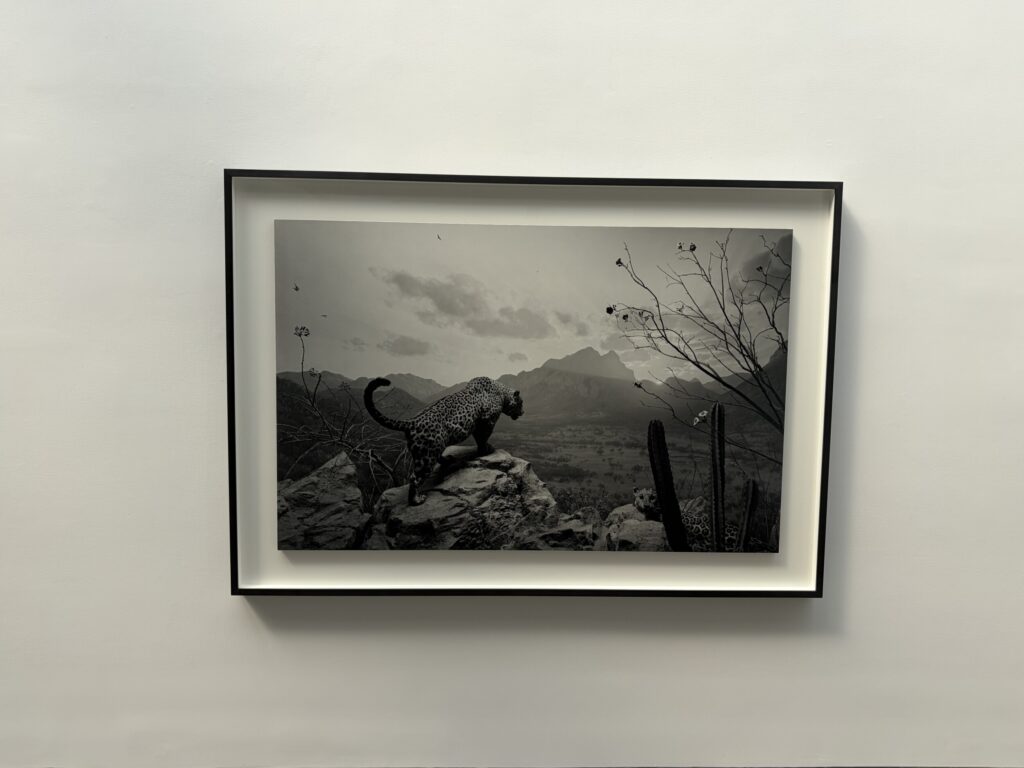
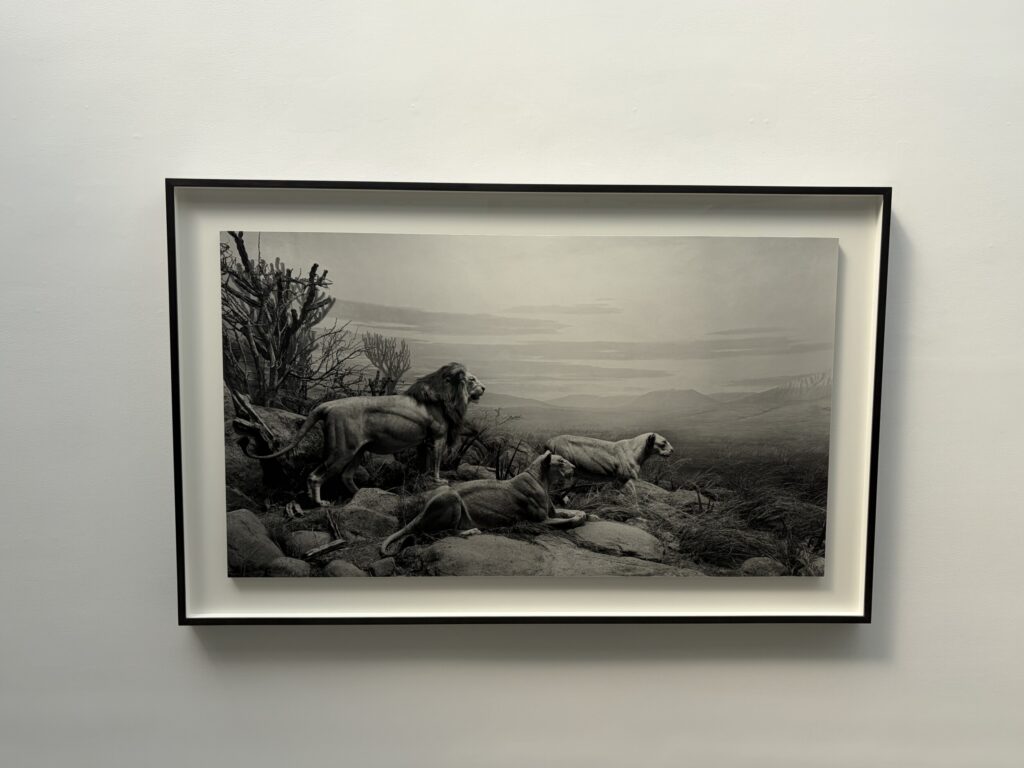
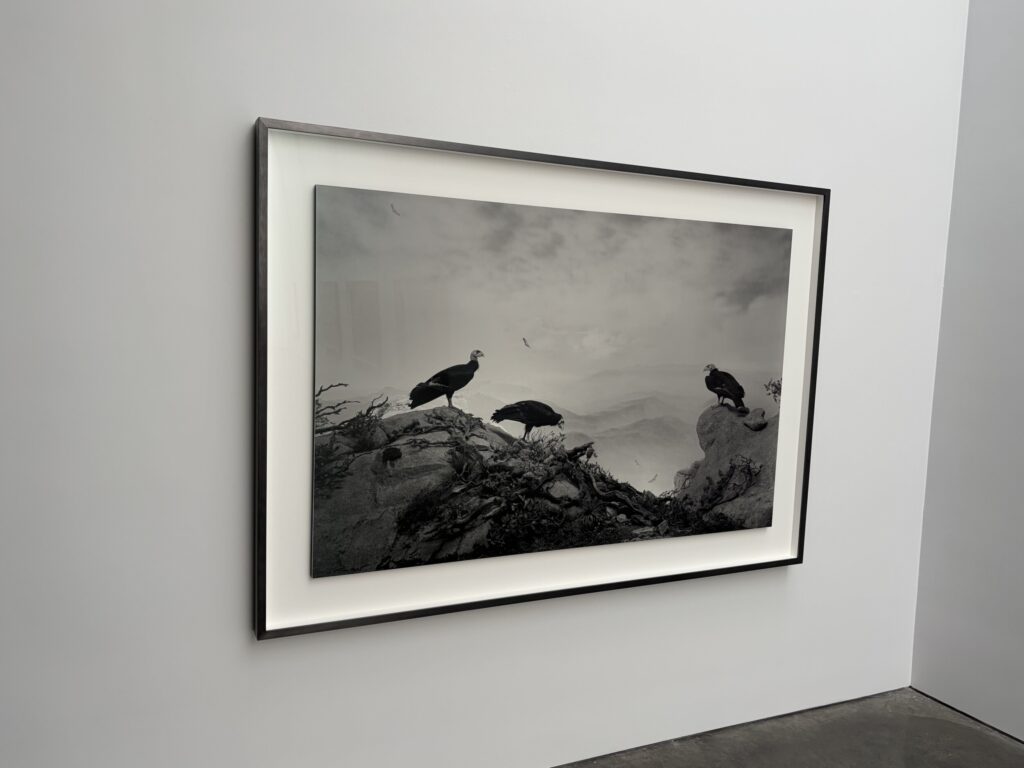
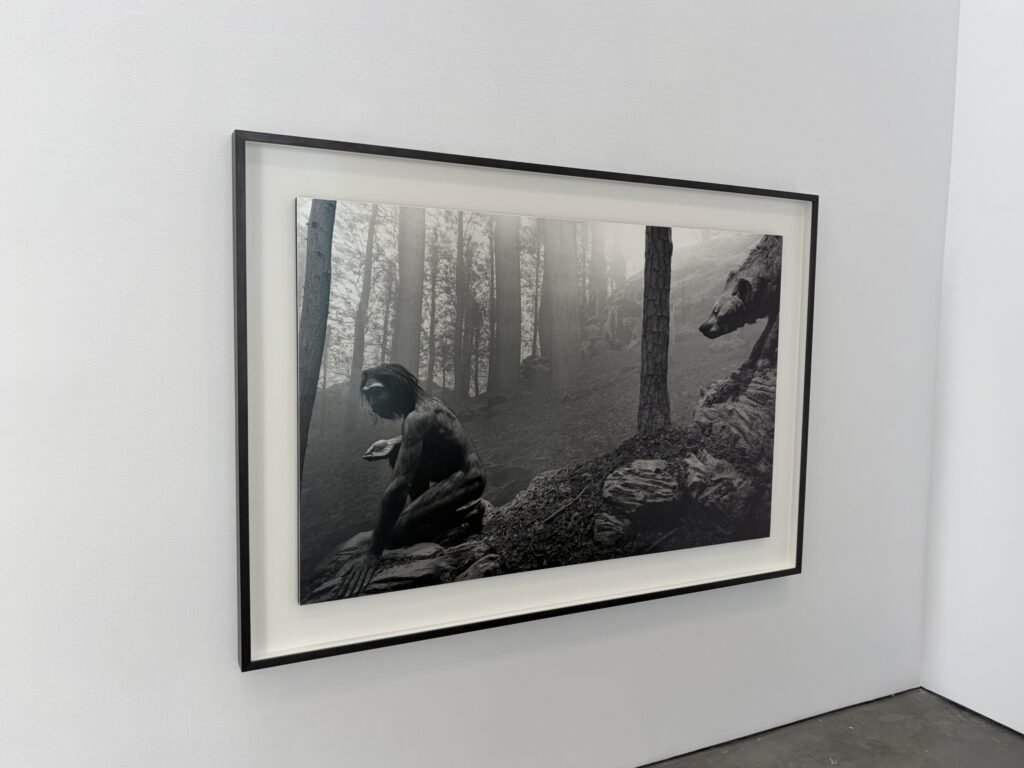
- 9 gelatin silver prints, 1974, 1980, 1980/2025, 1994, 2025, sized roughly 47×60, 47×73 47×83 inches, in editions of 5
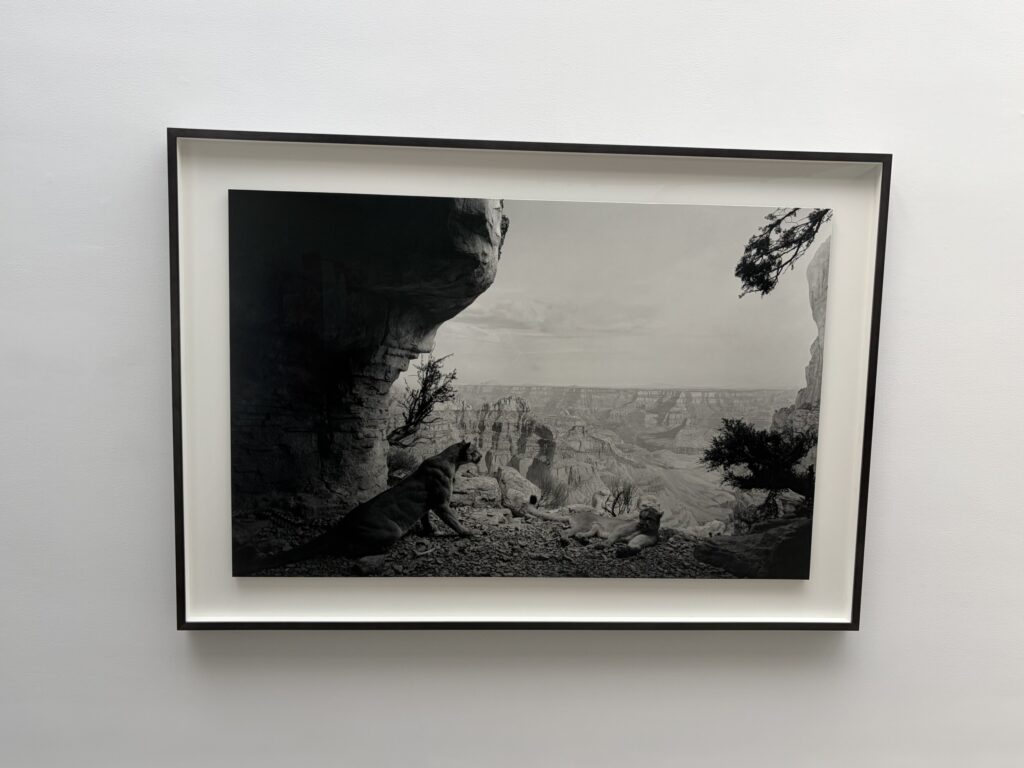
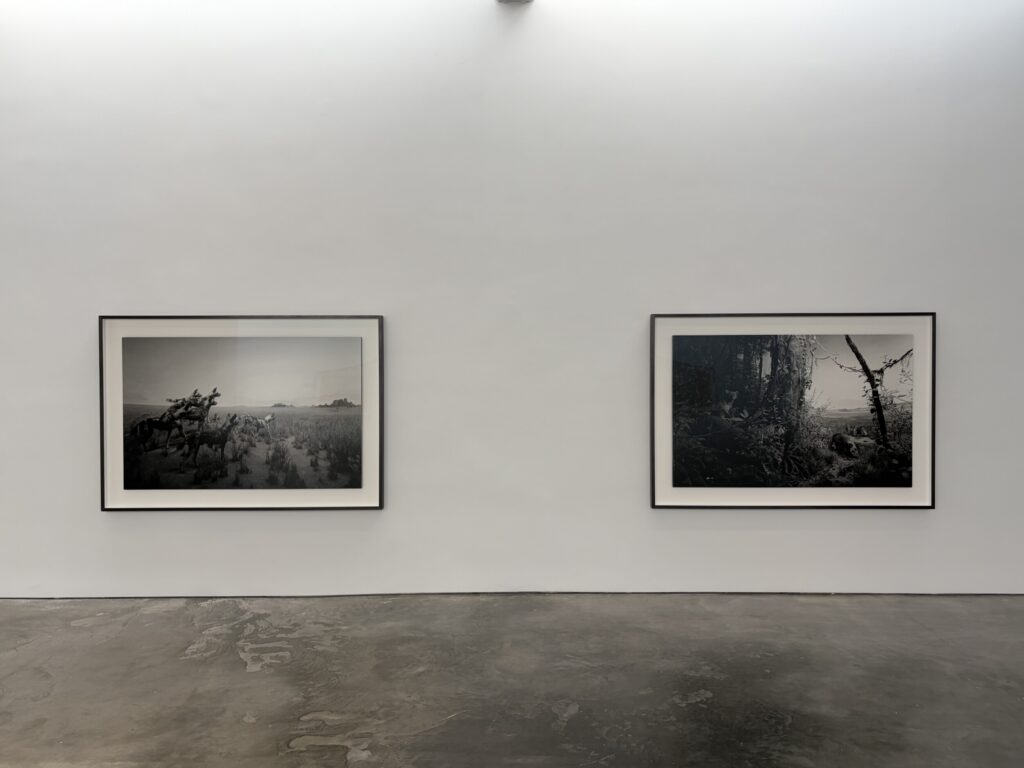
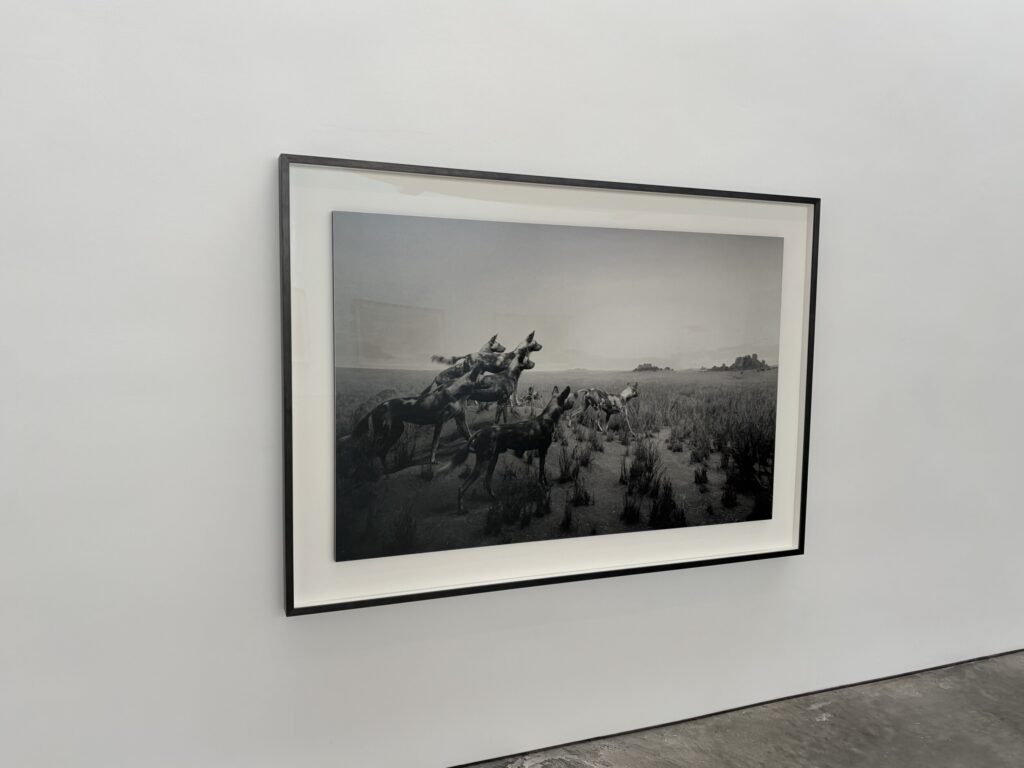
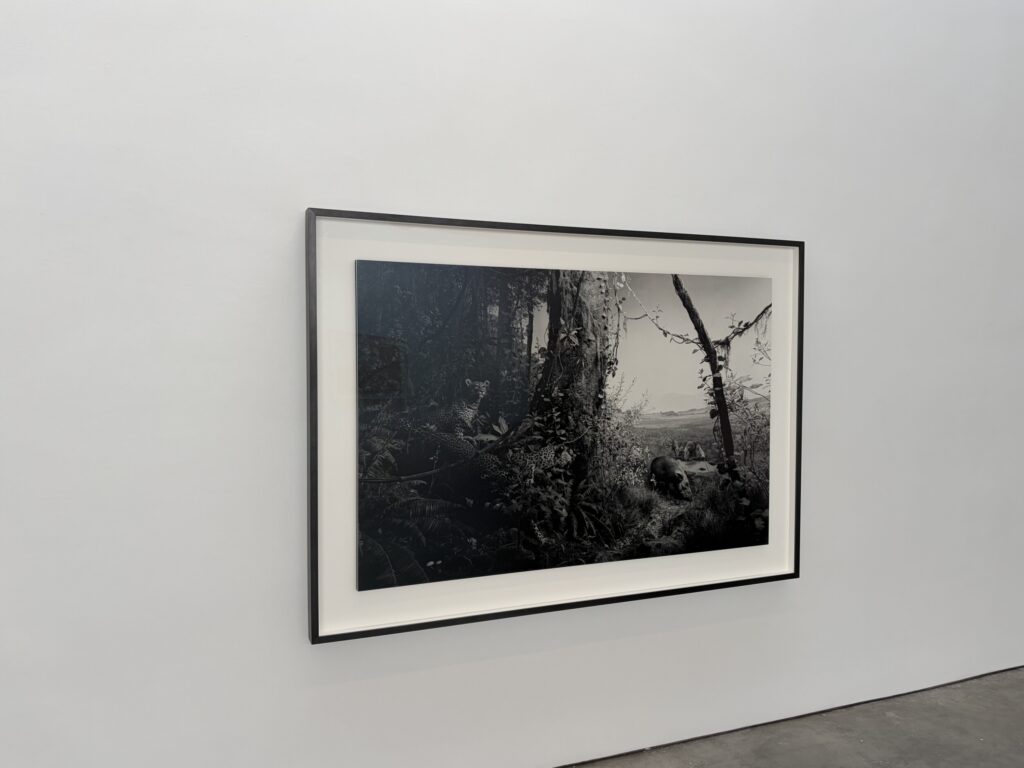
Comments/Context: It’s a small but quietly impressive chronological detail that Hiroshi Sugimoto has been making his images of natural history dioramas for more than fifty years now. As a subject, we might reasonably have assumed that the dioramas would be a discrete chapter in Sugimoto’s photographic life, like the wax museum portraits, the Buddhist bodhisattvas, the lightning fields, or the mathematical models, each an idea to be considered, wrestled with, and then “completed” in some manner. But here we are in 2026, with Sugimoto once again returning to the diorama subject matter, like an artist with a nagging sense of unfinished business.
Sugimoto began the series after he moved to New York in 1974, his first images made in the American Museum of Natural History in the mid 1970s. He returned to the subject in the early 1980s, and again at several points in the 1990s, adding in images made at other museum locations in Denver and San Francisco, and turning his attention from animals (and big birds) to geological era and early human dioramas. At the time of his 2006 retrospective at the Hirshhorn Museum, the dioramas were marked as “1975-1999”, as though they were finished. But he was back at them again in 2012 (as seen in his 2014 gallery show at Pace, reviewed here), exploring the wide sweeps of forest dioramas.
This show features a sampler of earlier diorama images (now printed at larger scale), one rediscovered photograph of a hunting dog diorama from 1980 (originally marred by a burnt-out bulb in the display but since adjusted), a few black-and-white diorama images from 2025 (including scenes featuring a jaguar perched on a rock outcropping, an edge of the forest setup with leopards and a group of bush pigs near a watering hole, and an unsuspecting homo erectus figure about to be attacked), and most notably, a group of 2025 color diorama images printed on washi paper and mounted on wide, multi-paneled folding screens.
The central friction point for each of Sugimoto’s diorama photographs is the puzzling reality of having a photograph of an artificially constructed scene actually make it look more real. Each diorama is a painstakingly constructed educational re-creation that is inherently fake – the animals are taxidermy, the plants are artificial, and the backdrops are painted murals. In a sense, these sculptural installations are themselves artworks, and Sugimoto is reinterpreting them – the camera and Sugimoto’s framing choices seem to flatten, blend, and activate the illusionistic scenes, hiding the minute flaws of their construction that we notice when we stand near the glass at the museum and giving the resulting pictures an enhanced feeling of mimicking, or actually being, photographs taken out in the wild.
This perceptual and conceptual inversion gives these photographs their consistent mystery, the real/not real oscillation never really settling down, even after countless viewings, as evidenced by the durable drama of Sugimoto’s polar bear and seal image from 1975 (the first diorama image he made), which still feels astonishingly raw, especially now as presented at a larger and more muscular scale. Sugimoto’s photographs pull us inside these various staged scenes, each one carefully optimized by its original designers to tell a particular story about the complexity and wonder of the natural world. When we think hard about the meaning of these photographs, they reveal themselves as studies of how photography operates, how the medium subtly transforms what it sees, and how a very smart artist can turn that twist in on itself.
With an opportunity to make another (or perhaps final) round of diorama photographs presented to him by the AMNH, I can imagine Sugimoto questioning himself about what problems were left to be solved, what new ideas could be incorporated, and what risks could still be taken. His last cycle of dioramas had expanded the scale, and selected an alternate slice of diorama subject matter, focusing on enveloping forestscapes; the resulting pictures had a different kind of drama – less people or animals (perhaps just a few birds, bugs, or smaller rodent-sized inhabitants) but much more spooky atmosphere, with an almost musical quality to their abundant echoing silence. In the interim since then, Sugimoto had been working down several paths simultaneously, exploring more overtly architectural and spatially interventionist building and exhibition projects, while also diving into the optical science of Newtonian color (as seen in his “opticks” series from 2024, reviewed here), among a busy range of other artistic and intellectual investigations.
This makes Sugimoto’s screen-mounted color dioramas feel like a confluence of percolating ideas. While not exactly a riff on “The Four Seasons”, the four diorama screens do plausibly wander through four ecosystems at four different times of the year, from summer in the desert and fall in Japan to early winter in the mountains and spring on Long Island, and they all follow on from the forestscapes to show us wide views filled with rich detail but absent any big animal or human presence. In a sense, they are “about” the sublime fragility and vulnerability of climate and environment, in ways that feel more pressing than before.
For the first time, these dioramas incorporate photographic color into the mix, which changes the calculus of reality to some extent. On one hand, in contrast to the abstracting qualities of black-and-white, the color amplifies the specificity of the red leaves, the dusty rocks, the evergreen needles, the brown mud, and the white blossoms; on the other, the images of the painted back murals, when printed on the lushly textured washi paper, turn more deliberately painterly and Impressionistic, their tactile softness made more lush and indistinct.
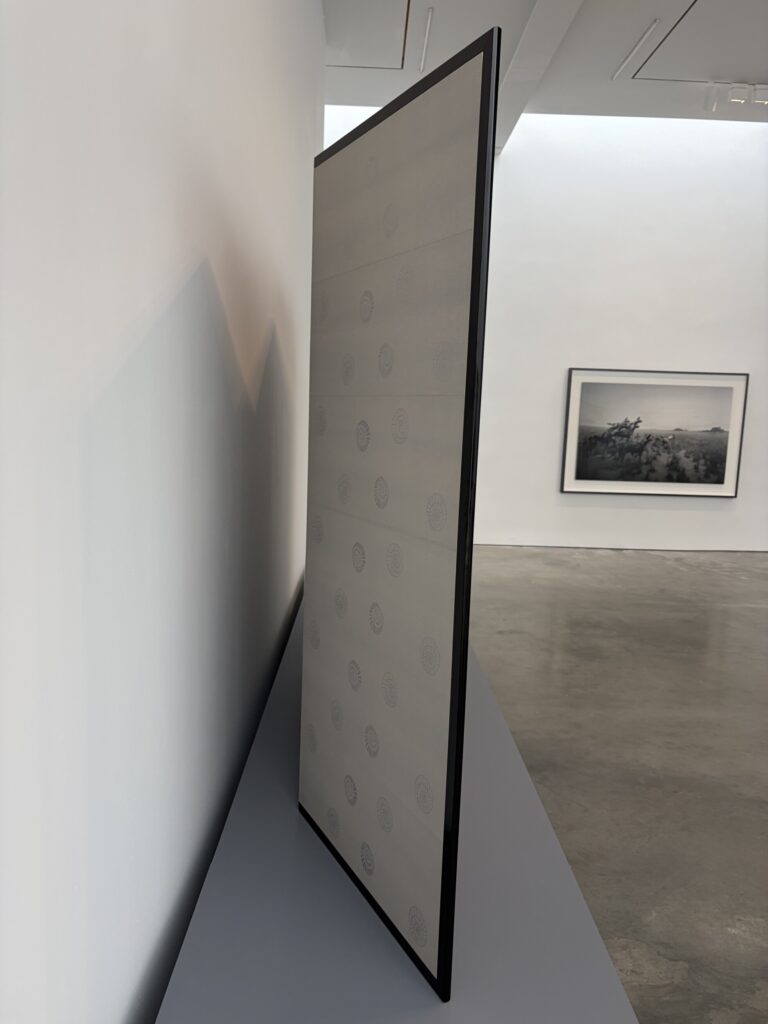
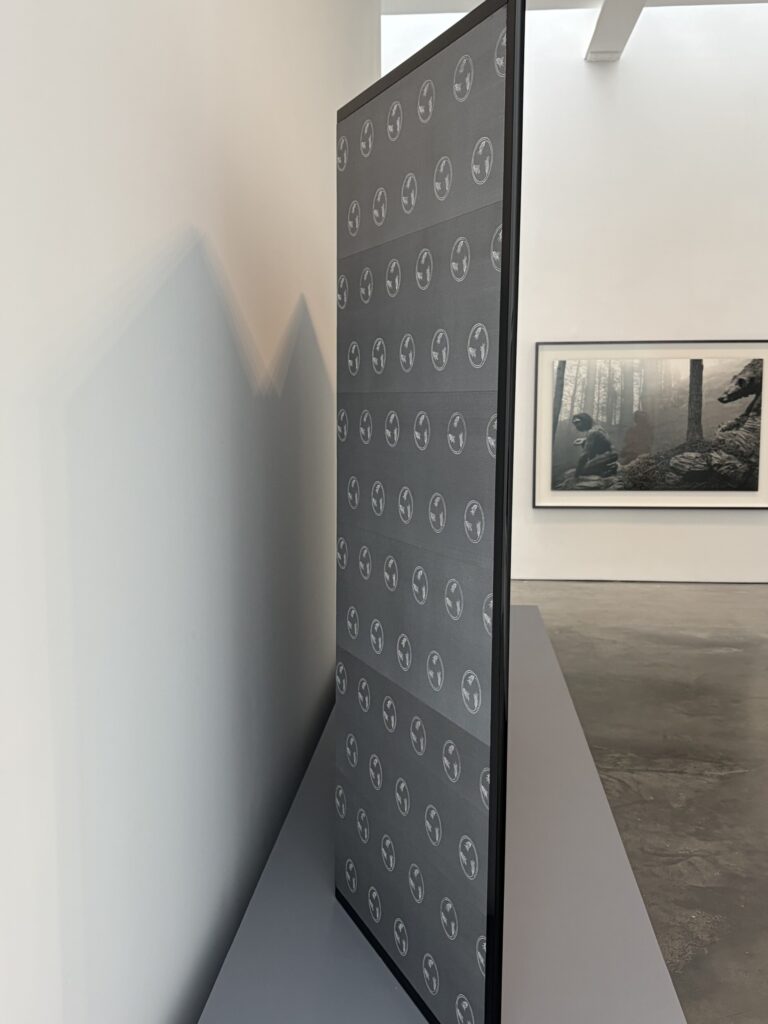
The switch from massive, wall-filling photographic panoramas into more delicate folding photographic screens (byōbu) similarly redirects our associations. The screens now inhabit space in a much more physical way, have backs decorated with patterned Japanese fabrics, and more clearly reference the history of Japanese art and architecture (and the way landscape screens were traditionally used to divide and decorate rooms). Displayed on pedestals, their object quality feels almost artistically performative, but also practical and usable, in a way a monumental framed object is less so.
With all of these variables tweaked by Sugimoto, the resulting folded screen dioramas have a refined elegance that is deceiving, the inherent real/unreal dichotomy underplayed even more than in the black-and-white works. Their physical presence seems to invite stepping through the magic mirror into the offered fantasy/reality, while also acknowledging the artificiality of the whole layered exercise. To my eye, the more I see these works as boldly radical photographs, the smarter and more incisive they feel; when I relax and let the works be lovely screens, some of that charge is diluted by their easy beauty.
I’d like to think that Sugimoto now sits in his studio and answers yes to the question of “have I pushed this as far as I can?” In these folded screens, he has brought physicality back into the experience, having started there (in the form of the museum dioramas themselves), ingeniously interpreted that presence via photography, and then reconsidered those photographs with newfound spatial dynamism and personal historical resonance. Now in his late 70s, Sugimoto might reasonably call these his “late dioramas”, where the bluntness of the original concept has now been smoothed out by years of considered thought and measured implementation. As seen in this show, when we jump all the way from the first polar bear to the recent screens, across fifty-odd years of thinking about the same subject, we get something like a mini Sugimoto diorama retrospective, filled with an arc of consistent conceptual evolution that is in equal measure searching and sublime.
Collector’s POV: The works in this show are priced as follows. The black and white photographs start at $200000, with the polar bear image (made earlier) at $400000. The screens are priced at $400000 each.
Sugimoto’s work is readily available at auction, at a variety of price points. His Time Exposed portfolio can generally be had at auction for between $3000 and $11000. Smaller individual prints (in the range of 20×24) typically range between $10000 and $90000. And his largest prints (seascapes, wax portraits, and architecture) have recently been available starting at roughly $100000 and continuing up to over $1 million.