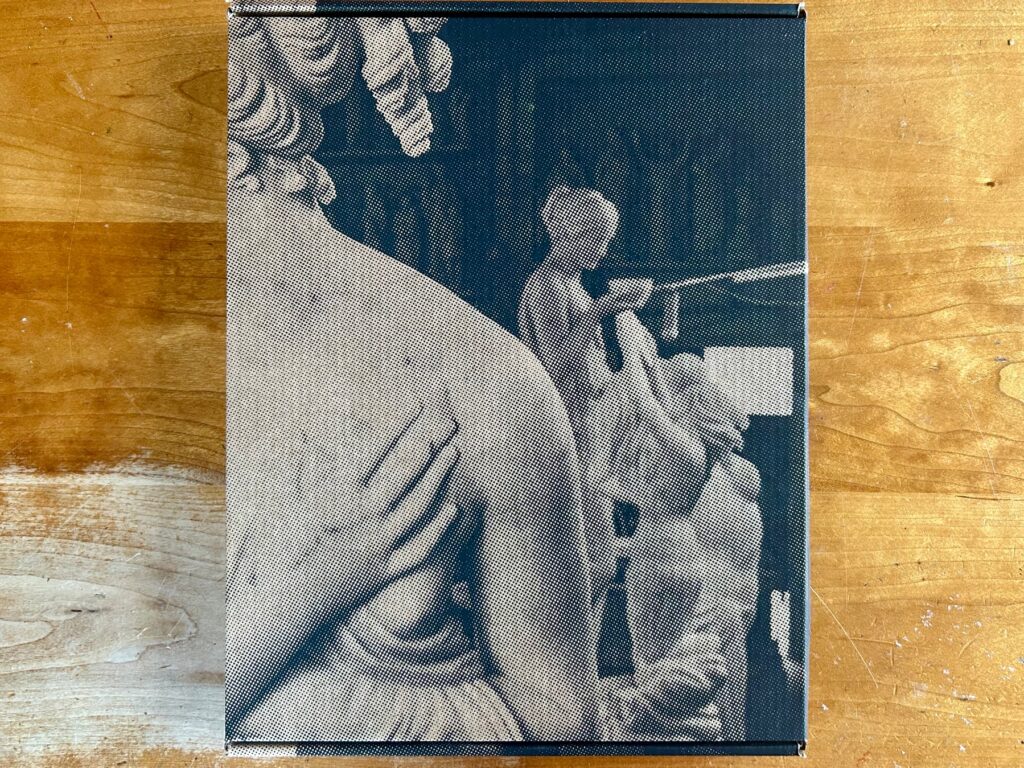
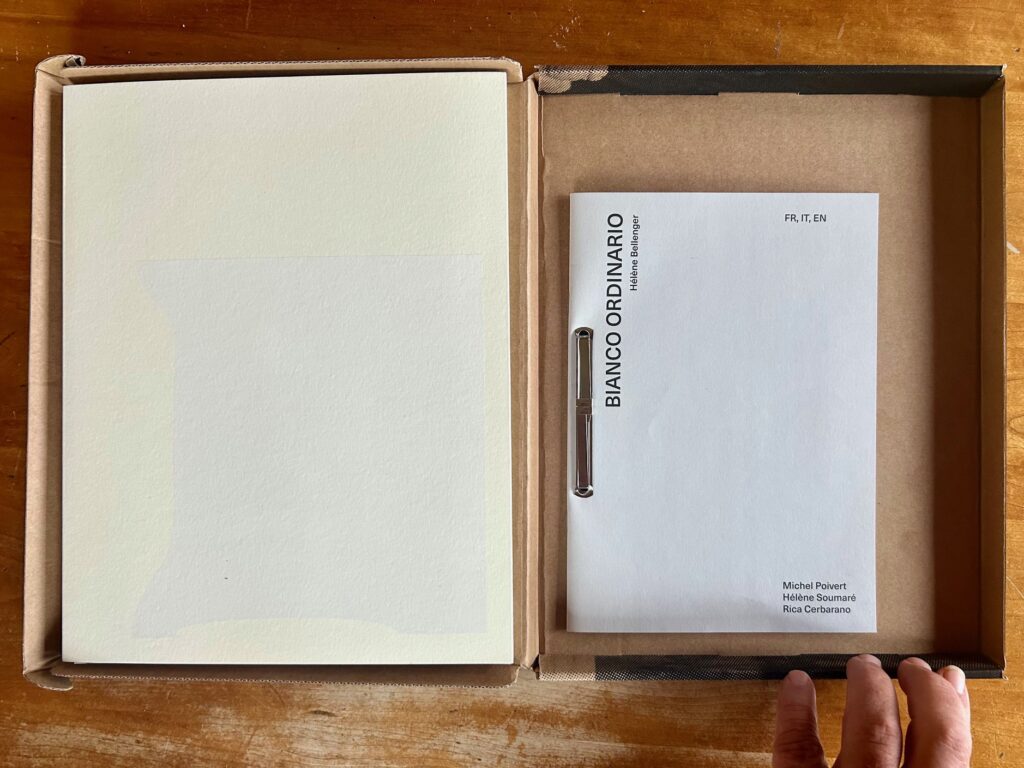
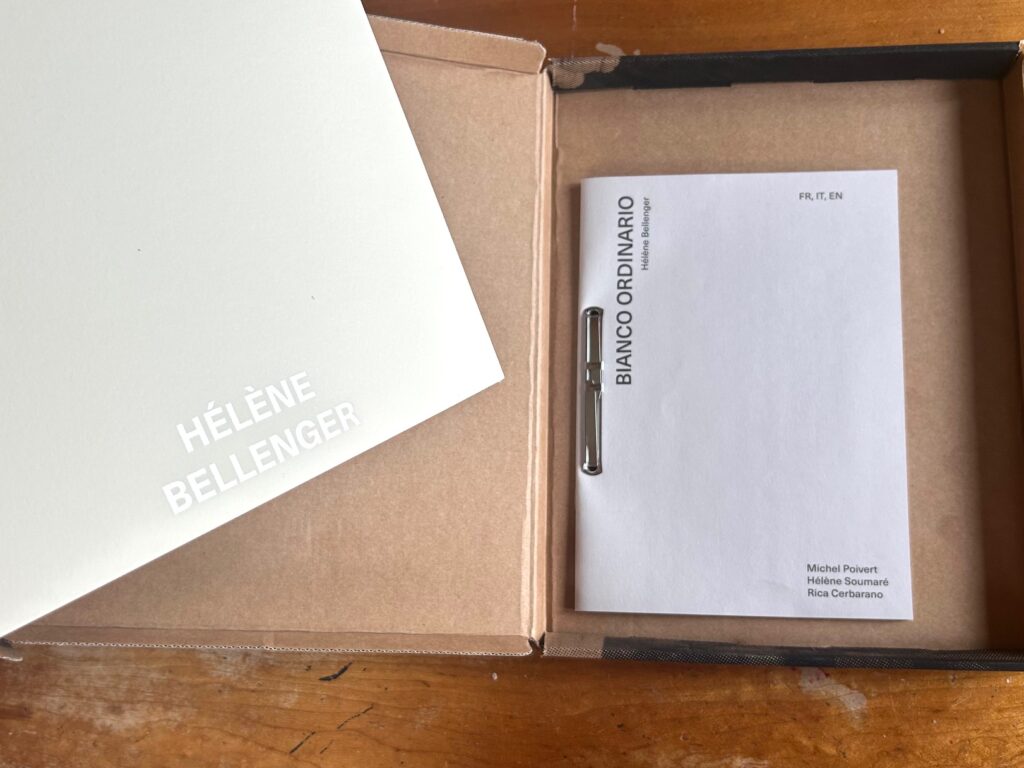
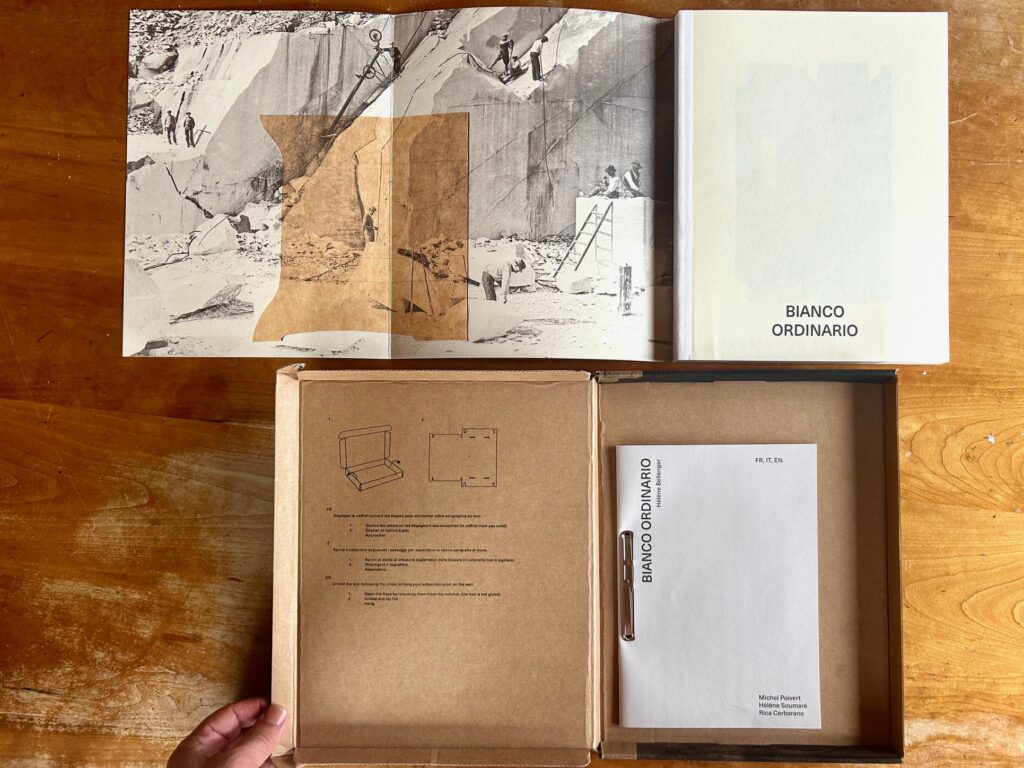
JTF (just the facts): Published in 2025 by Editions de l’Observeur (here). Softbound book with gatefold cover and Swiss binding, enclosed in silkscreened cardboard box (sized 9 x 11.5 inches), with written pamphlet attached, 118 pages, with 75 photographs printed on cardboard packaging, and numerous illustrated diagrams. With essays from Michel Poivert, Hélène Soumaré and Rica Cerbarano, in French, Italian, and English. Design by Hugo Berger and Eleonora Paciullo. In an edition of 500 copies. (Cover and spread shots below.)
Comments/Context: The world’s finest marble is found in the Apuan Alps near Carrara, Italy, in the northern corner of Tuscany. Prized for its tensile strength, creamy tone, and dense texture, the local statuario has been quarried since the ancient Roman Empire, who knew it as marmor lunense (Luna marble).
Some of the old Roman statues, columns, and buildings still survive, for example the Pantheon, Trajan’s Column, Augustus of Prima Porta, and the Belvedere Torso. Taking a wider sweep of extant artifacts, Carrara marble forms the bedrock of Michelangelo’s David, the Navy Monument in Washington, D.C., the Jefferson Rotunda in Virginia, the Oslo Opera House, Grant’s Tomb, Finlandia Hall in Helsinki, and the headstones of Normandy. As a symbol of fortitude, endurance, and the noble heritage of antiquity, statuario is in a league of its own.
Today the mountains of Carrara are still quarried for marble slabs. But they rarely survive long as intact blocks. In the industrialized global economy, marble is more useful refined into calcium carbonate (CaCO3), a snow-white compound with extraordinary versatility. Calcium carbonate is an ingredient in antacids and toothpaste. It is a component in road cement and building materials. It is used to purify iron, to drill for oil, to correct alkalinity in swimming pools, as a bulking agent, to refine sugar, for blackboard chalk, as a whitener, for latex glove production, for producing glossy paper, as a paint extender and adhesive sealant. It is used to make and seal ceramic tiles. It is a dietary supplement in many food products. It is a soil amendment, a household cleaner, and a plastic filler.
From majestic statues to generic manufacturing agent, Carrara marble’s prospects have dimmed in recent decades. It’s evolution presents a perfect case study for cultural critics. Count Hélène Bellenger in this bunch. The young French artist has interrogated received norms through a variety of platforms: sculpture, installations, performance, olfactory art, and photography. Her latest monograph combines several interests in a single tome. Its title Bianco Ordinairio (“Ordinary White”) is at once blandly descriptive and sharply incisive. In Bellenger’s view, statuario and calcium carbonate are not just natural resources, but metaphors for white hegemony, which is disseminated throughout the world like the fine marble powder coating the Carrara region.
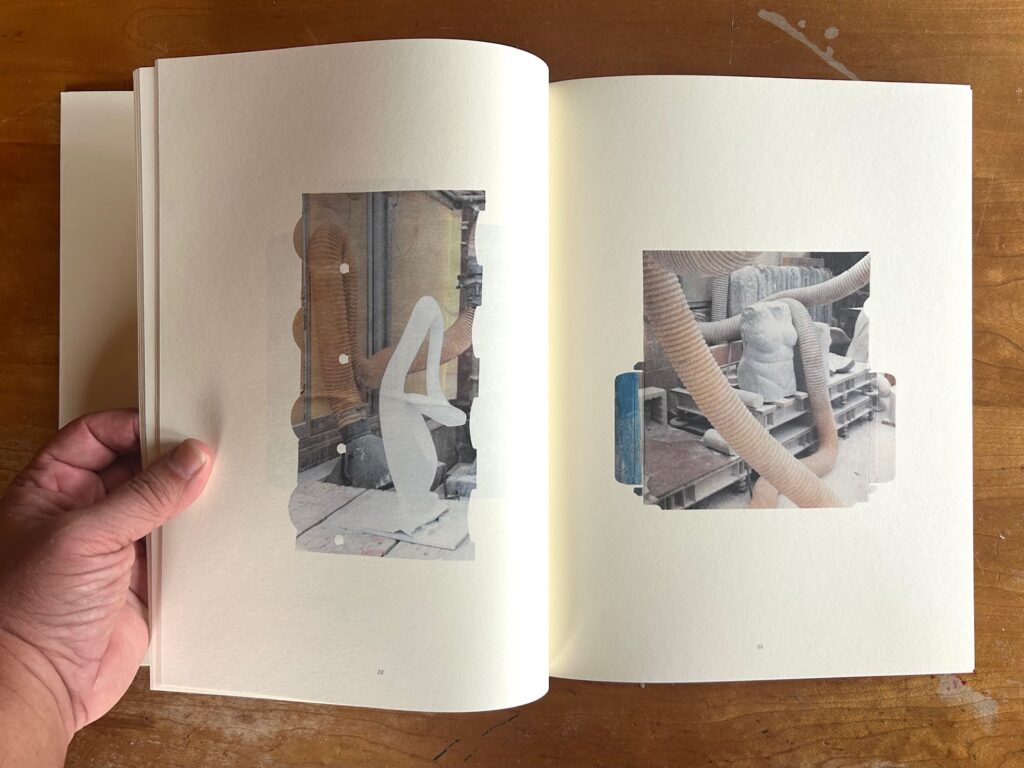
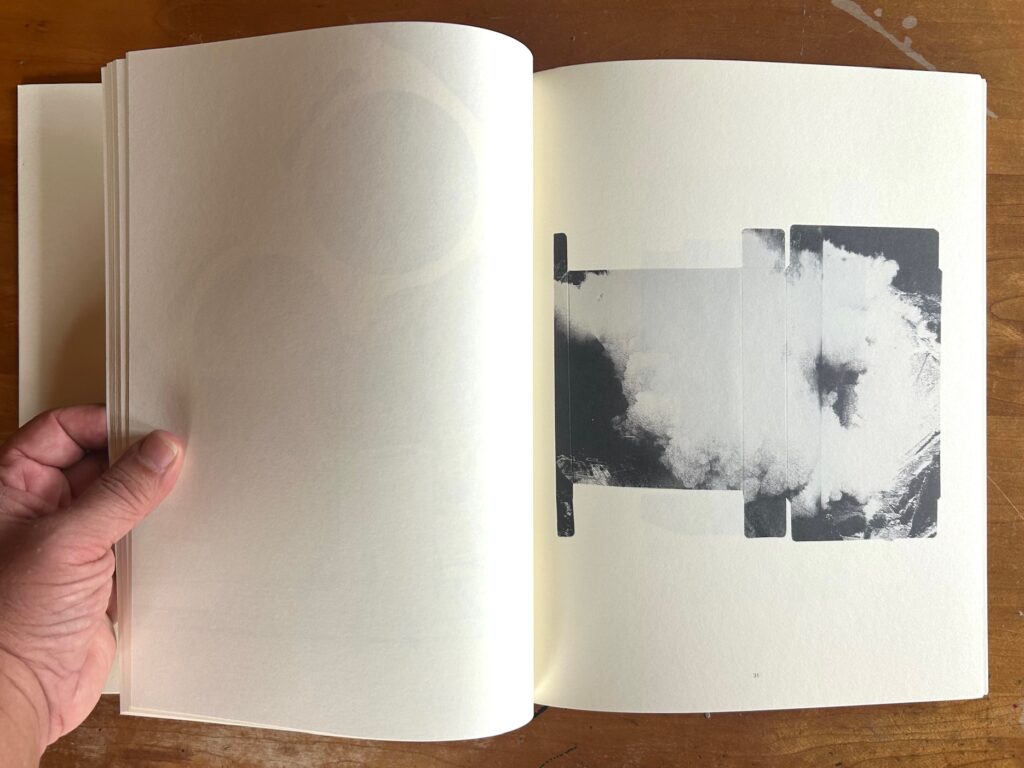
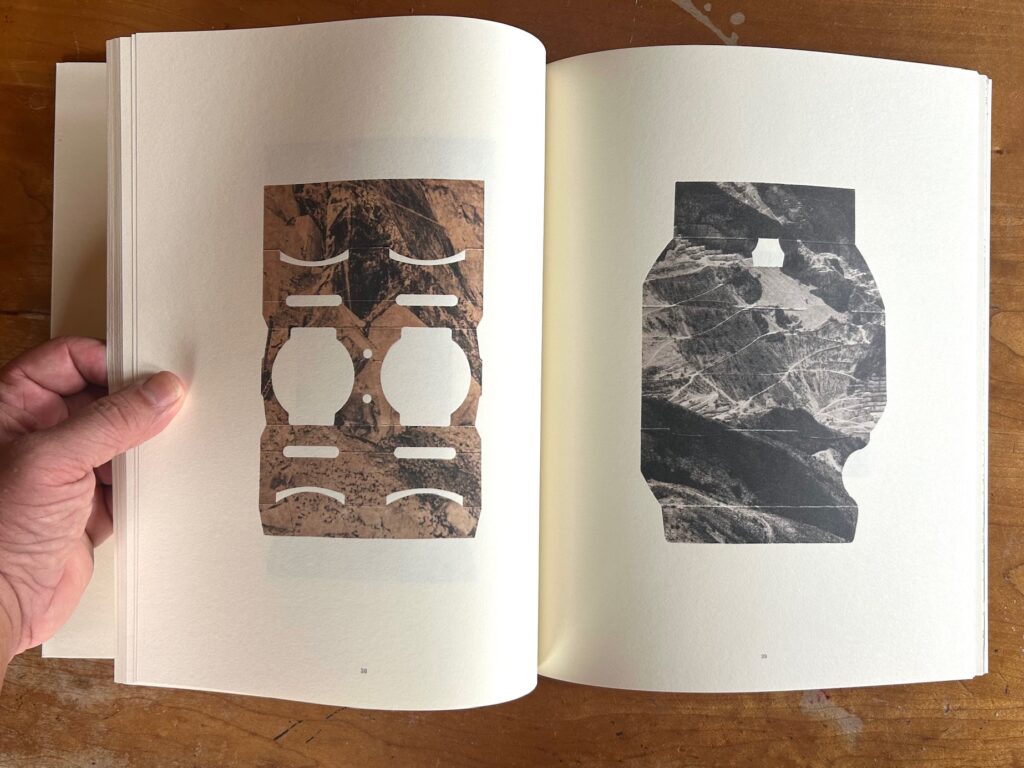
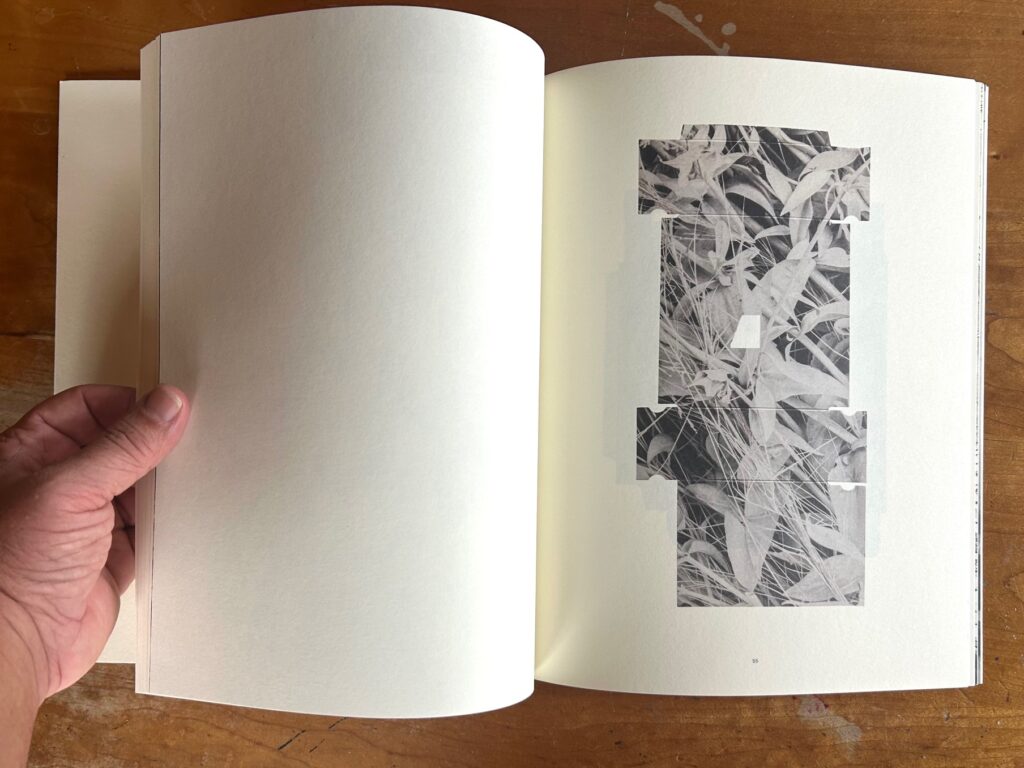
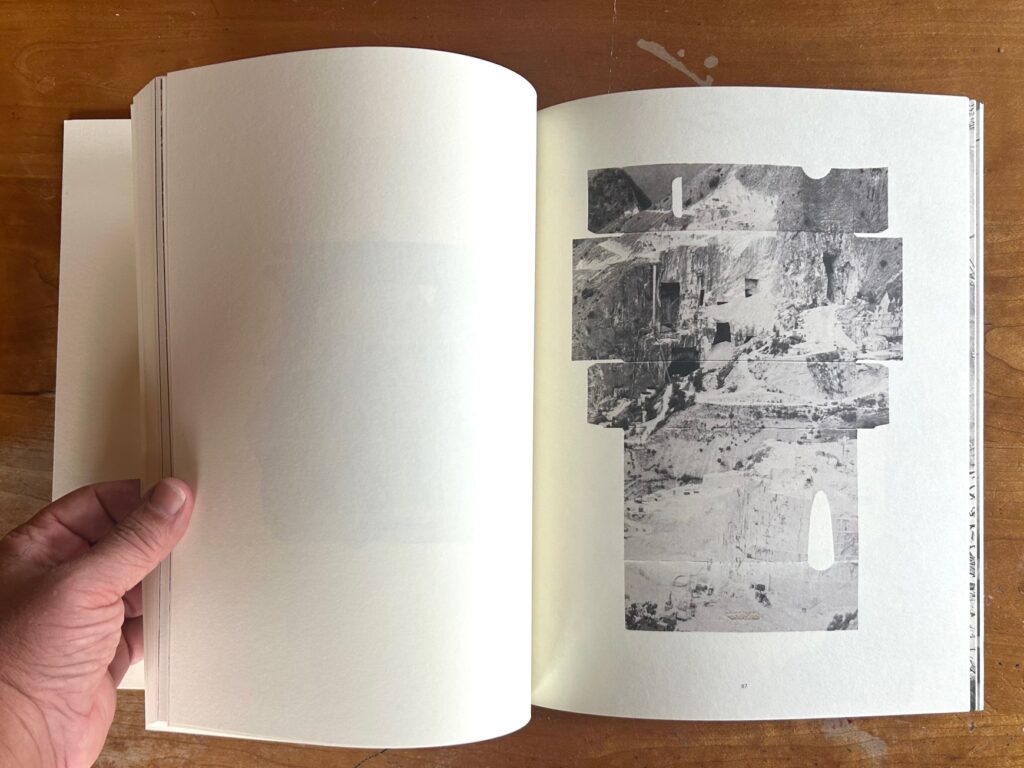
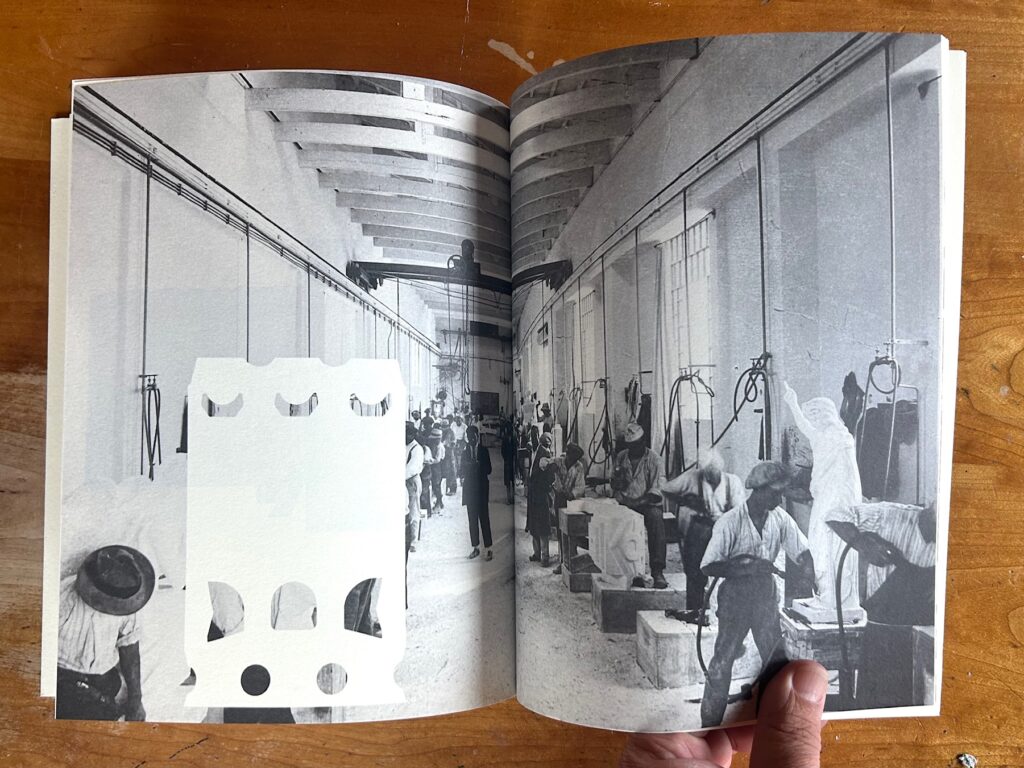
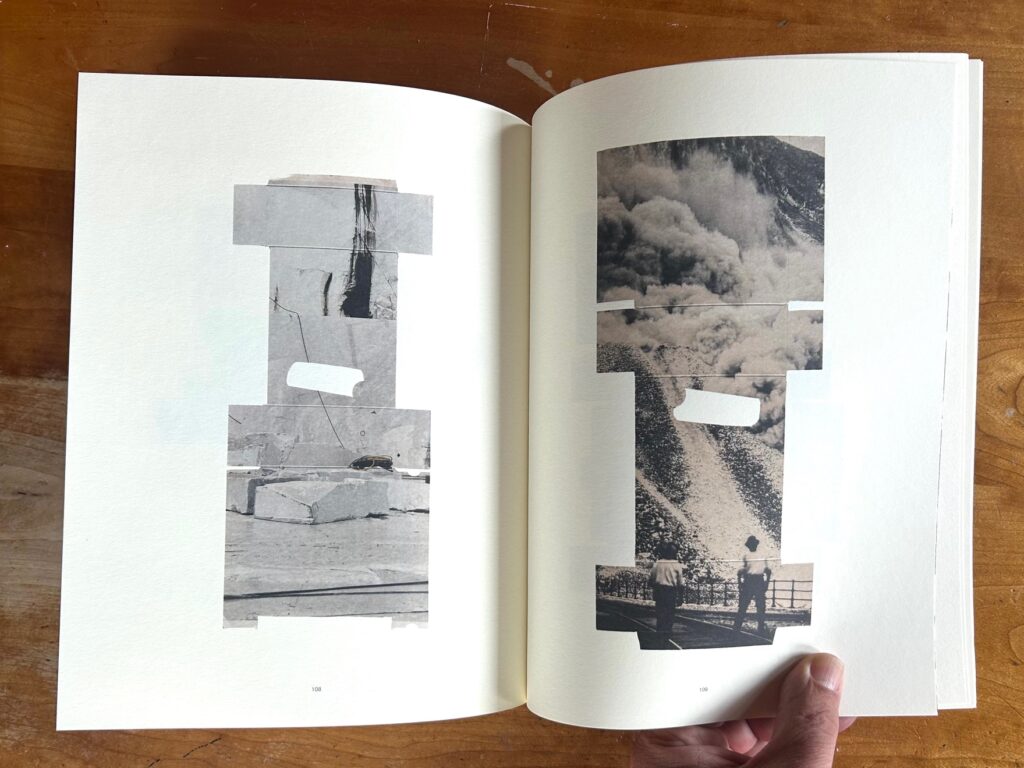
The book’s typology is blunt but effective. Each spread shares one or two photographs documenting the heyday of Carrara marble. The original image sources are not specified—a curious omission—but they cover a range of years, subjects, and styles, all centered on the glory years of the local quarries (out of 650 excavation sites, about half are still active). Some photos show overviews of mining operations, with roads and trails diagonaling across hillsides. Some show workers operating heavy machinery or observing distant explosions. Gigantic gears power conveyor belts, piping, and steel riveted contraptions. These industrial scenes occasionally give way to calmer photos of austere marble statues and quiet vegetation.
Throughout the book, tonalities shift between monochrome, sepia, and color images. Vantages, angles, and styles change as well. Regardless of subject or format, the overarching emphasis is clear: Carrara is and was a monumental operation, with serious man-power (no women are present in the photos) devoted to a singular purpose. Marble mining once epitomized the raw might of industrial extraction.
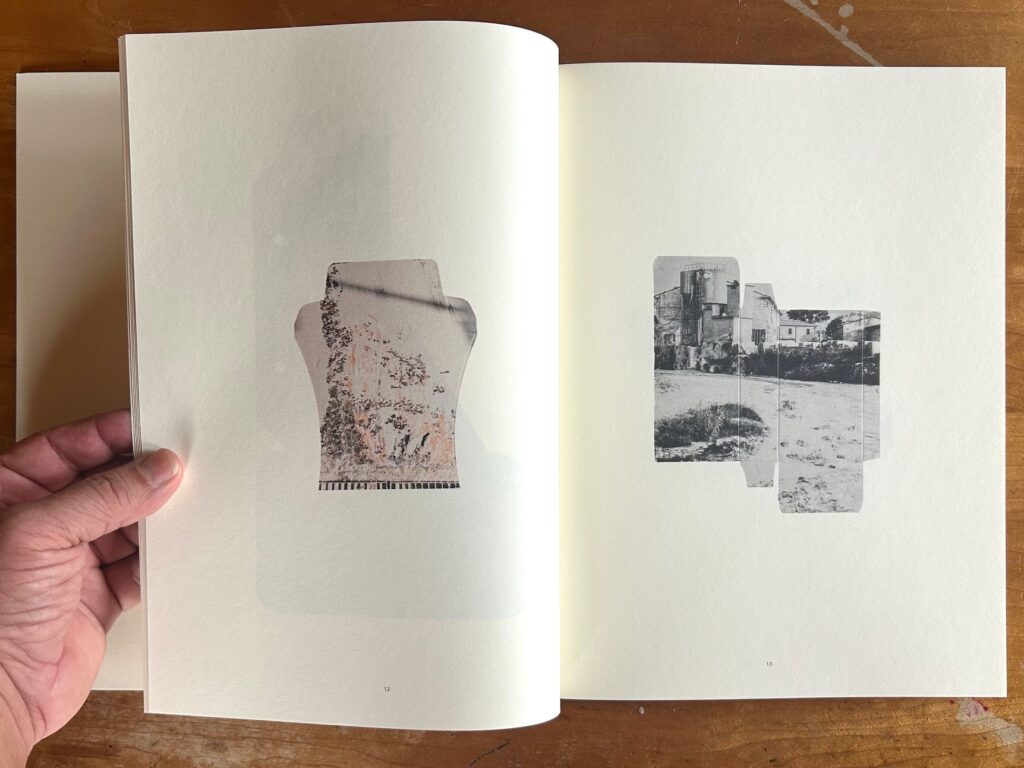
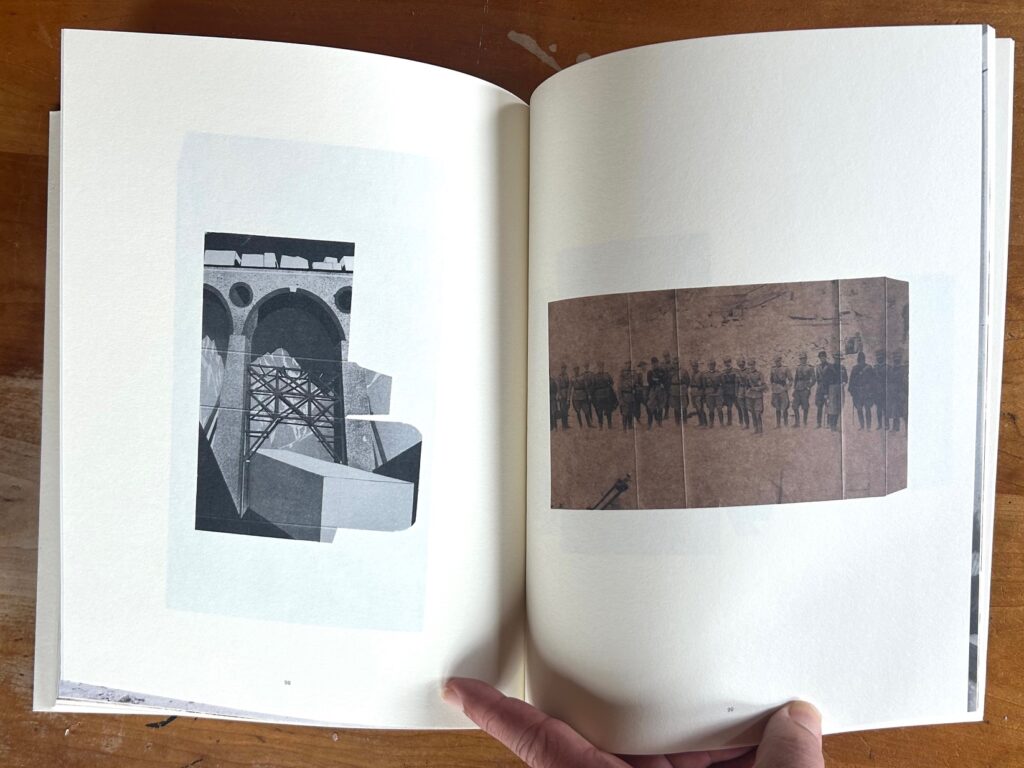
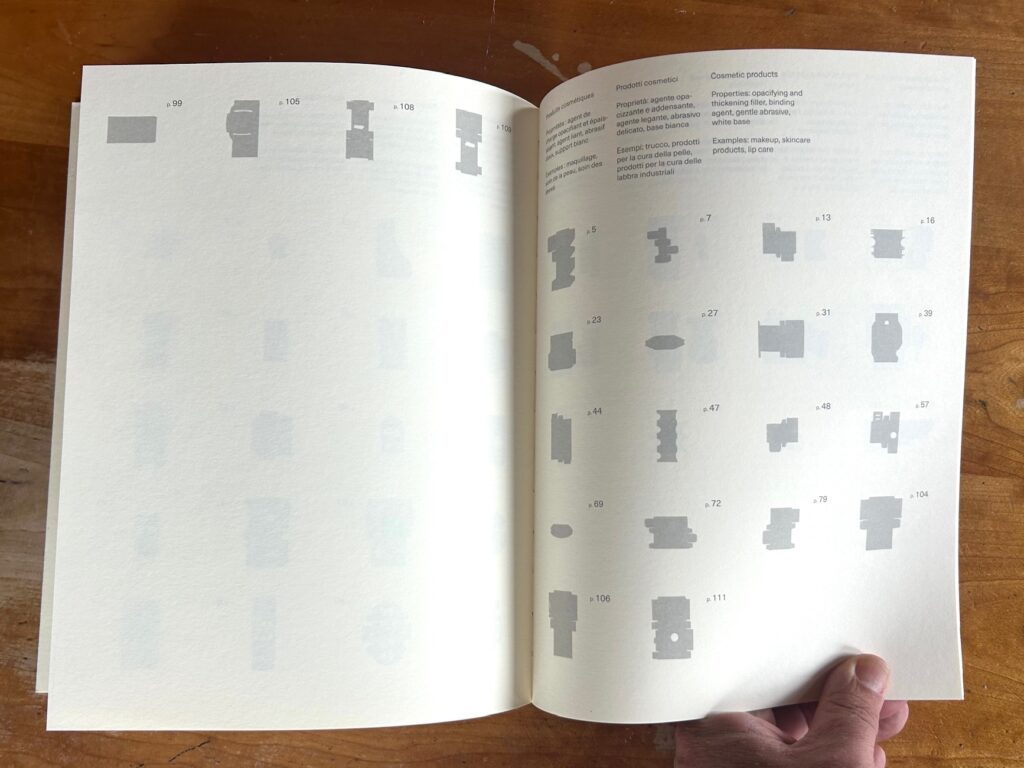
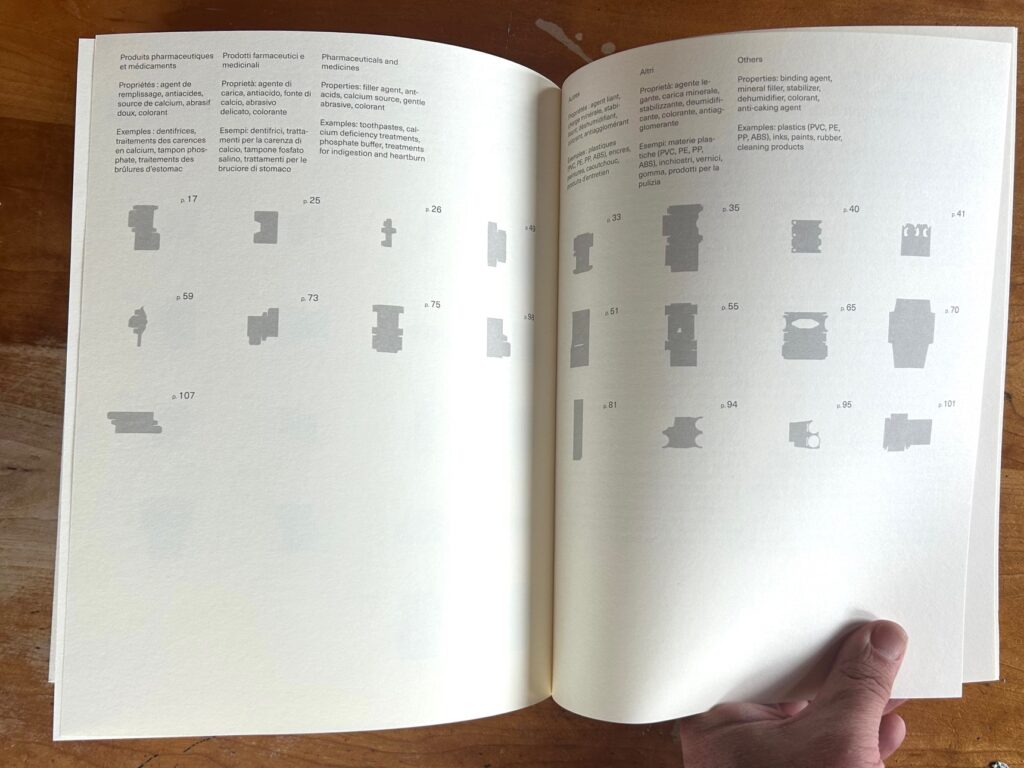
As quickly as it imposes itself, Carrara’s grandiosity is cut down to size—quite literally—by Bellenger. In a novel twist, each of her historic photographs is printed on the flattened cardboard packaging of a calcium carbonate product. As outlined above, the possibilities are almost boundless, and Bellenger has tracked down a dizzying array of boxes. They appear in various outlines, cutouts, shapes, and folds. Some containers can be roughly surmised in their 3D forms. The book’s index helps by listing images under general categories: food, cosmetics, and others. But even with these hints, most packages are too mysterious to identify. The labels are hidden, and the photos are printed on their plain interiors.
Most photos are similarly sized. We can only guess at the original package dimensions, but the general scale seems obvious. These are large photo subjects projected onto much smaller surfaces. As 2D stenciled forms, the cardboard packages offer yet another reminder of manufacturing’s assembly line logic. Harvest a resource, hone into the required shape, commodify, and repeat as necessary. Do this over the course of 100 odd pages, tuck the result inside its own foldable box, and you’ve created a nice monograph indeed.
Juxtaposing Carrara marble’s storied past with disposable cardboard is a clever idea. The brute comparison goes down easy, and Bianco Ordinario should appeal to a broad audience even beyond the photobook community (where it was nominated for a Paris Photo-Aperture PhotoBook in November). But there is more here than meets the eye. Bellenger’s intends her book as a verdict on white culture, whose insidious propagation is not unlike the spread of calcium carbonate. Once you look for it, whitey is seemingly everywhere and in everything. For much of the world, it’s in the food we eat, the messages we consume, and the air we breathe. “This marble powder,” she writes, “becomes part of the history of whitening, and by extension the Whiteness of contemporary Western societies.”
Viewed in this light, certain aspects of the book gain newfound importance. We notice the pale cover, for example, with its glossy white cover graphic and titling (perhaps printed using calcium carbonate?). The interior pages are off-white, standard practice for most photobooks. But in Bianco Ordinario these empty backdrops come alive as negative space. When geometric shapes are laid against the voids, the blank parts become interesting objects in their own right. Oddly shaped holes and cuts become activated. It’s a peek behind the industrial veil, for these beguiling forms were never intended to be viewed flat.
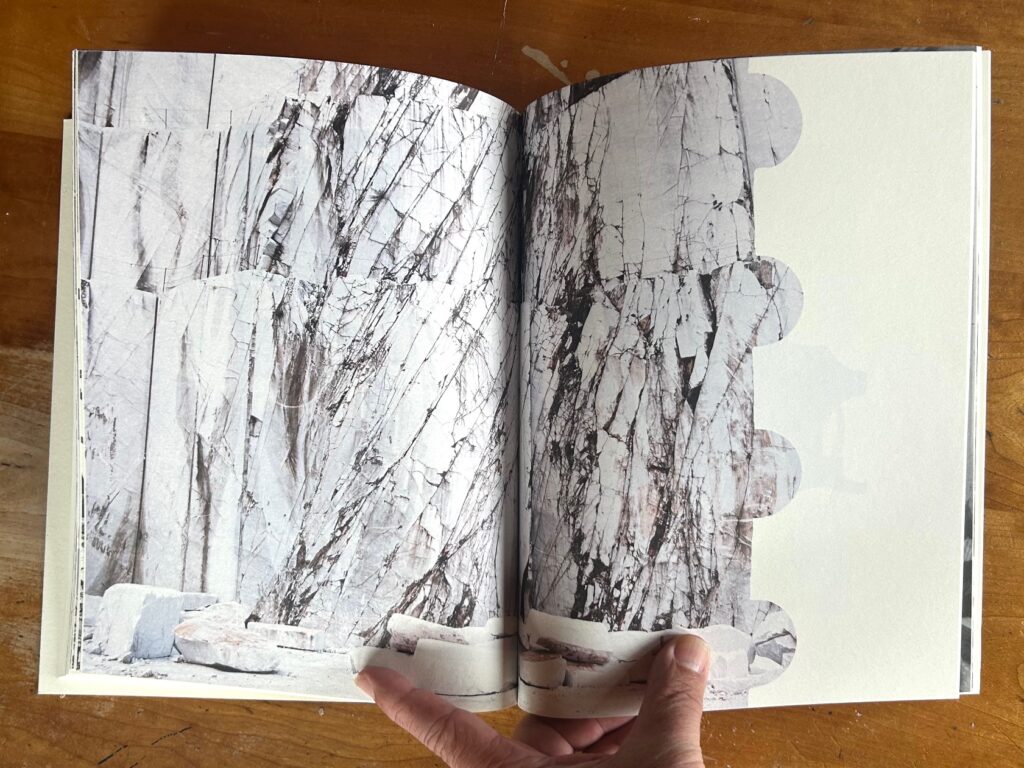
Bellenger occasionally exacerbates the visual effect with reversed cut-outs. These are full bleed photos taking up the whole page, with packaging parts chopped out like slabs from a quarry. They are deftly sequenced among the standard reproductions, so seamlessly they almost pass without notice. Maybe they operate like whiteness itself? The void rushes in to fill the void. White becomes the default, the expected, the “normal” color, bianco ordinario. For certain readers, white culture may feel as routine as a box of Tums or a tube of Colgate. Fertile soil for Bellenger’s project.
At this point, Carrara’s fate seems inexorable. Moving into the future, its marble will be increasingly refined and consumed as an industrial compound. The age of statuario sculptures is fading. But the age of books is very much alive. Ideas and lessons can still be extracted from Carrara’s mountains. With luck and good wind conditions, they might disseminate as widely as cardboard cutouts.
Collector’s POV: Hélène Bellenger does not appear to have consistent gallery representation at this time. Collectors interested in following up should likely connect directly with the artist via her website (linked in the sidebar).