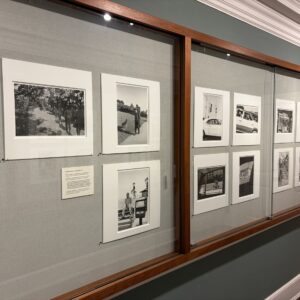
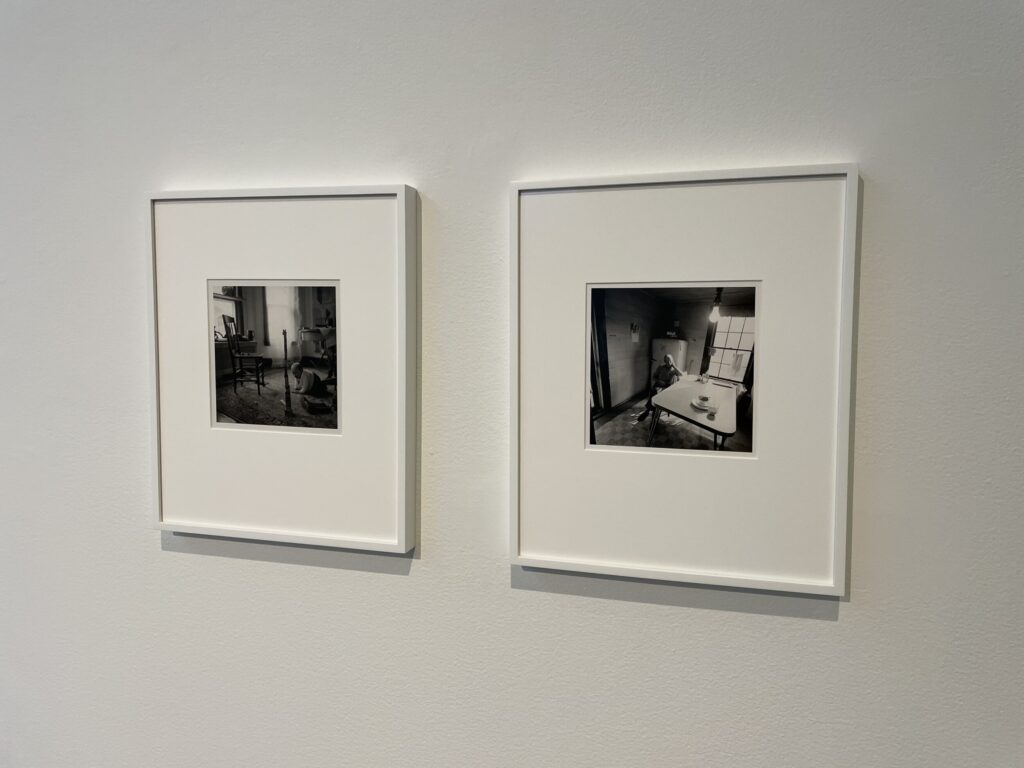
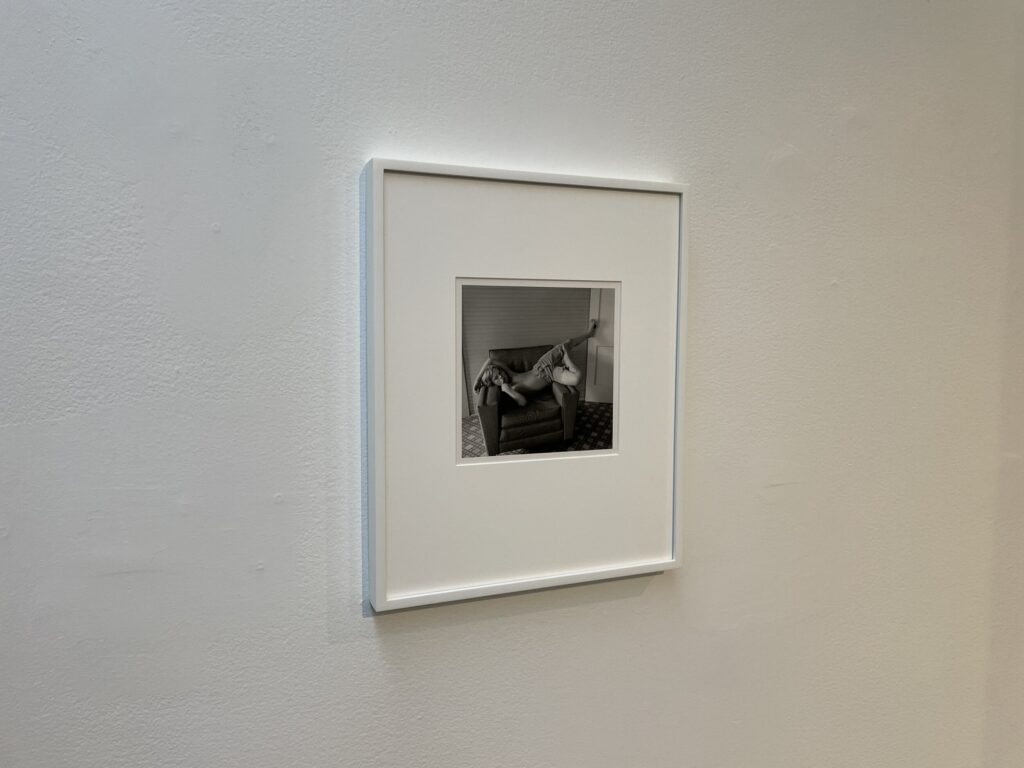
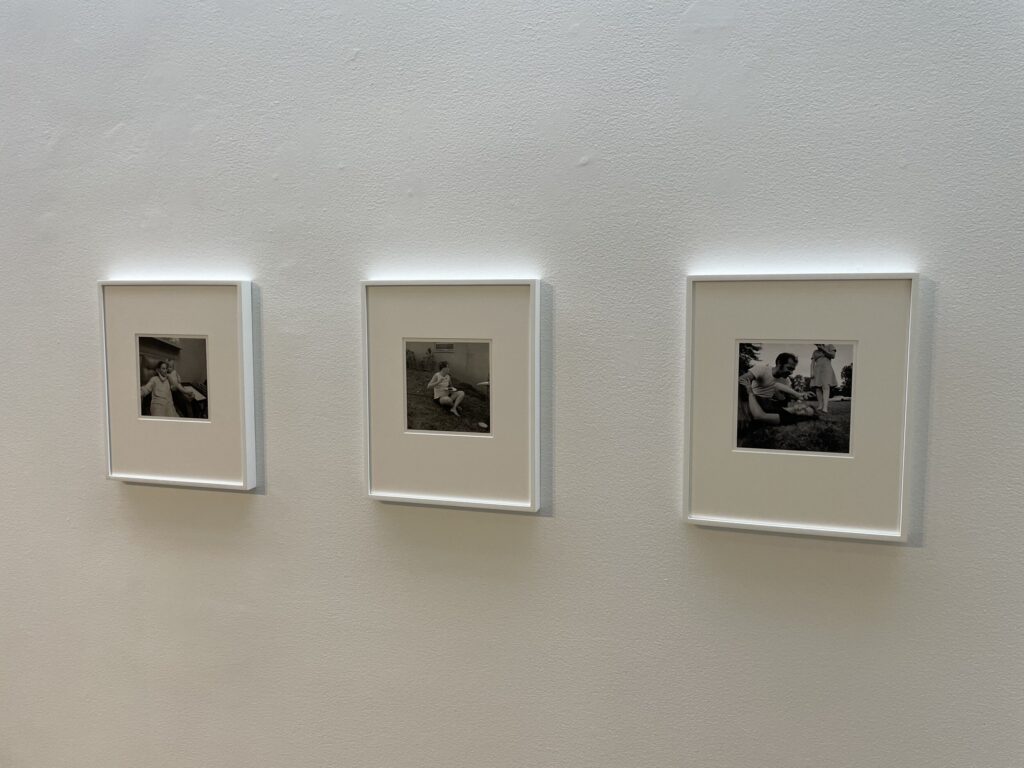
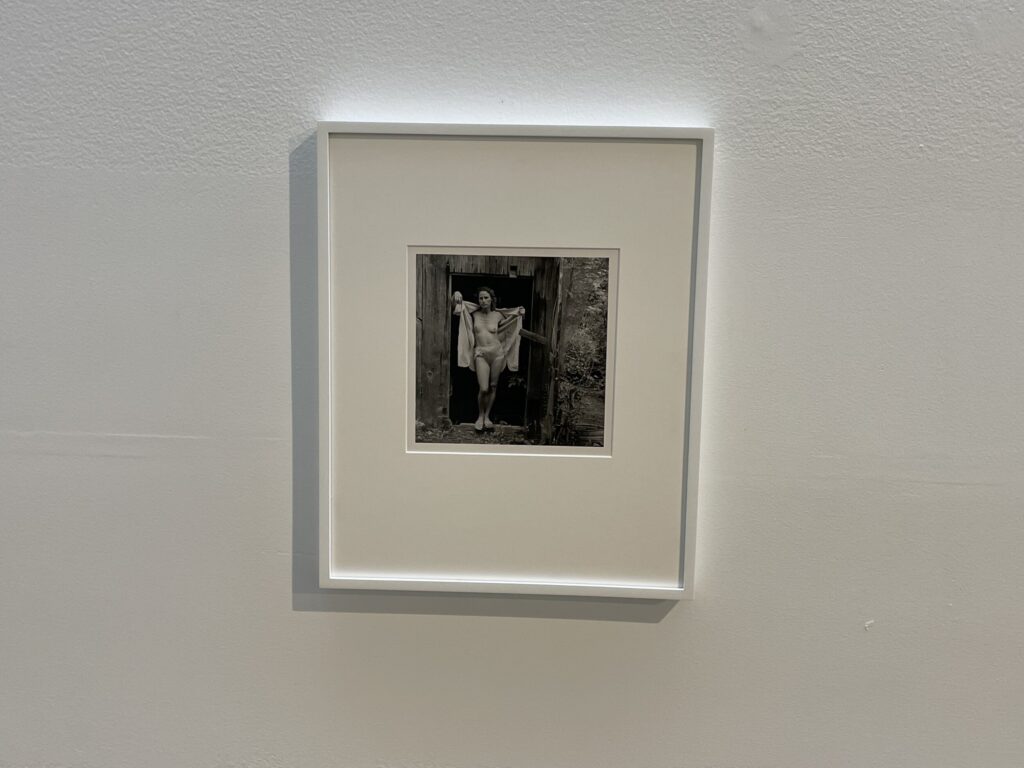
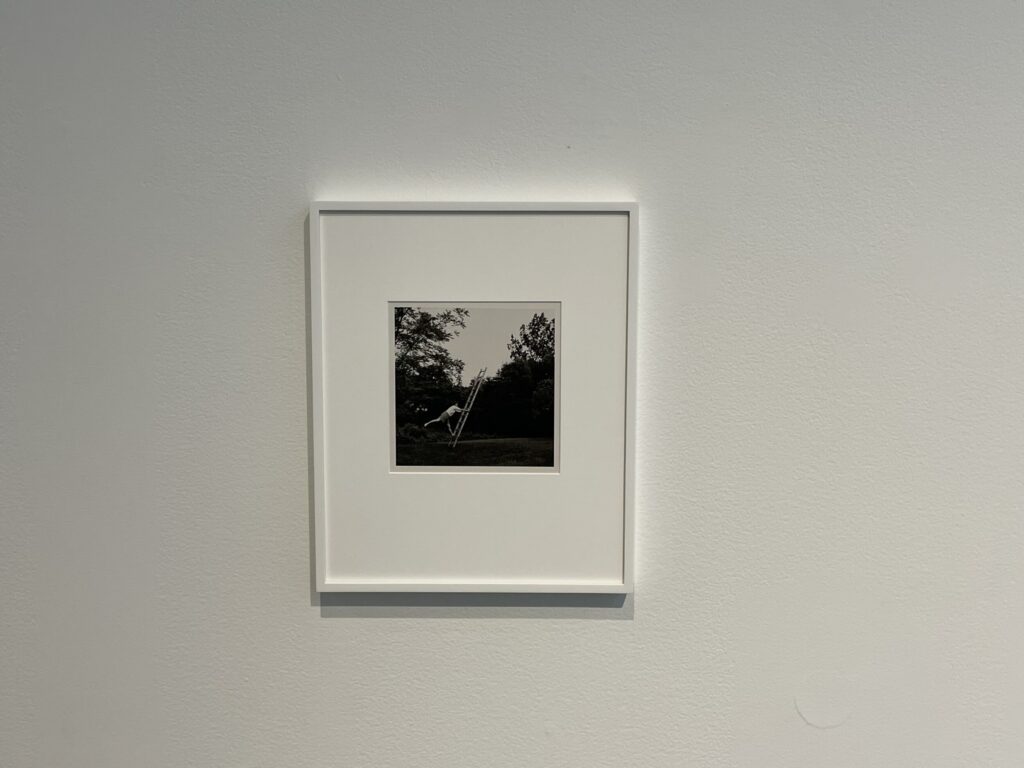
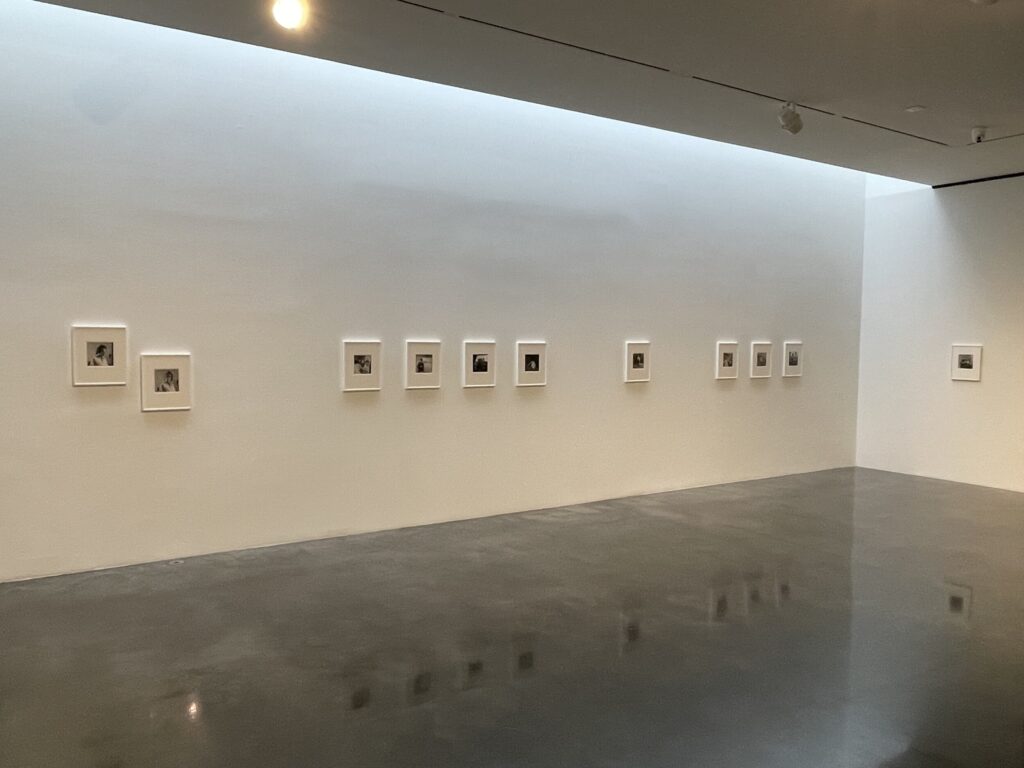
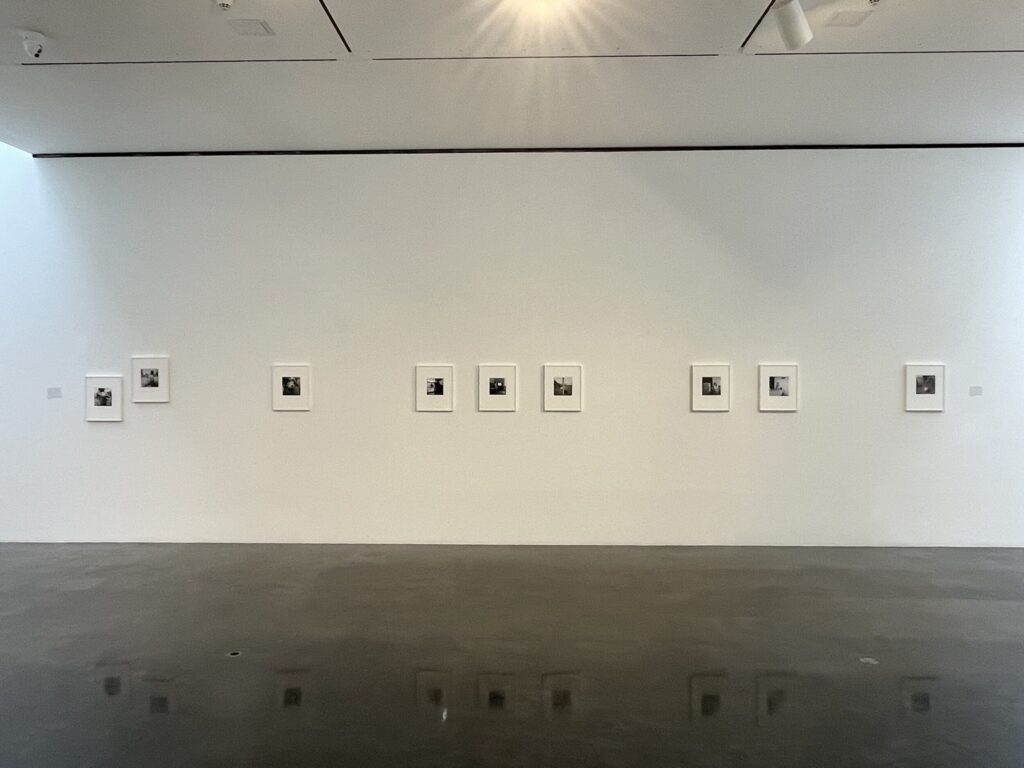
JTF (just the facts): A total of 41 black-and-white photographs, framed in white and matted, and hung against white and light green walls in the entry area and the main gallery space. (Installation shots below.)
The following works are included in the show:
- 36 gelatin silver prints, 1966, 1967, 1968, 1970, 1971, 1972, 1974, 1975, 1976, 1978, 1979, 1980, 1981, 1982, 1983, 1984, 1986, 1991, 1994, all printed later, sized roughly 6×6, 7×6, 7×7, 8×10 inches, uneditioned
- 5 pigment prints, 1966, 1971, 1974, 1975, 1976, all printed later, sized roughly 6×6, 7×7 inches, uneditioned
A monograph of this body of work was published in 2026 by Princeton University Press (here). Hardcover, 9.5 x 10.63 inches, 128 pages, with 70 tritone illustrations. Includes a preface by the artist and an interview with the artist and Edith Gowin. (Cover shot below.)
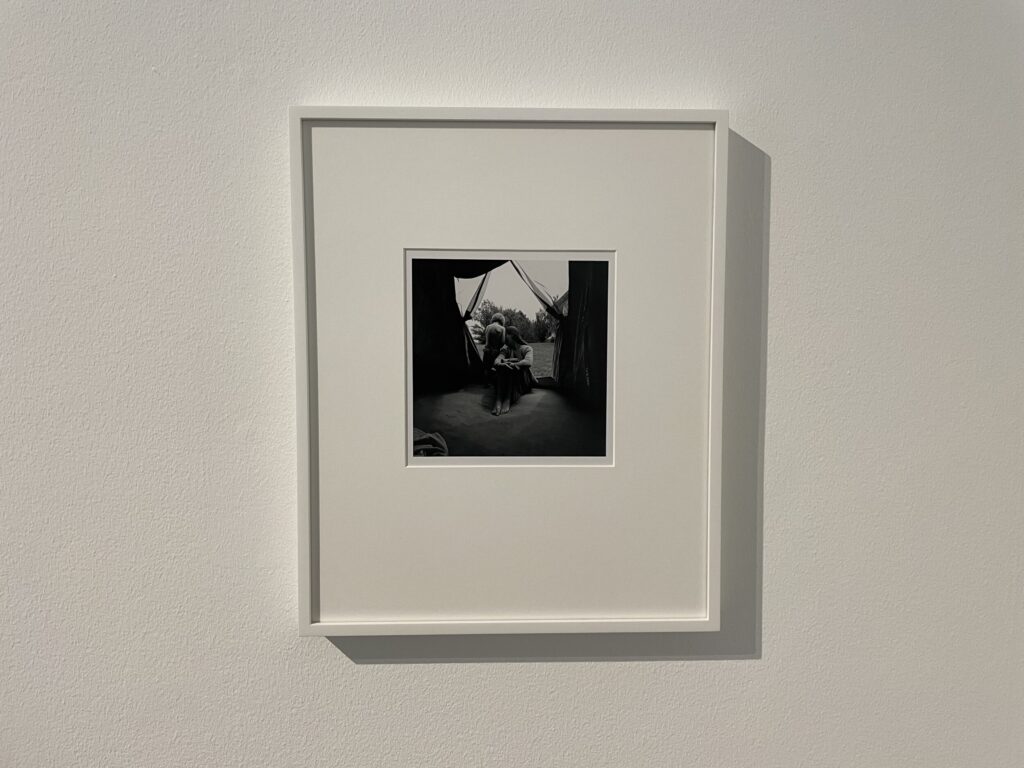
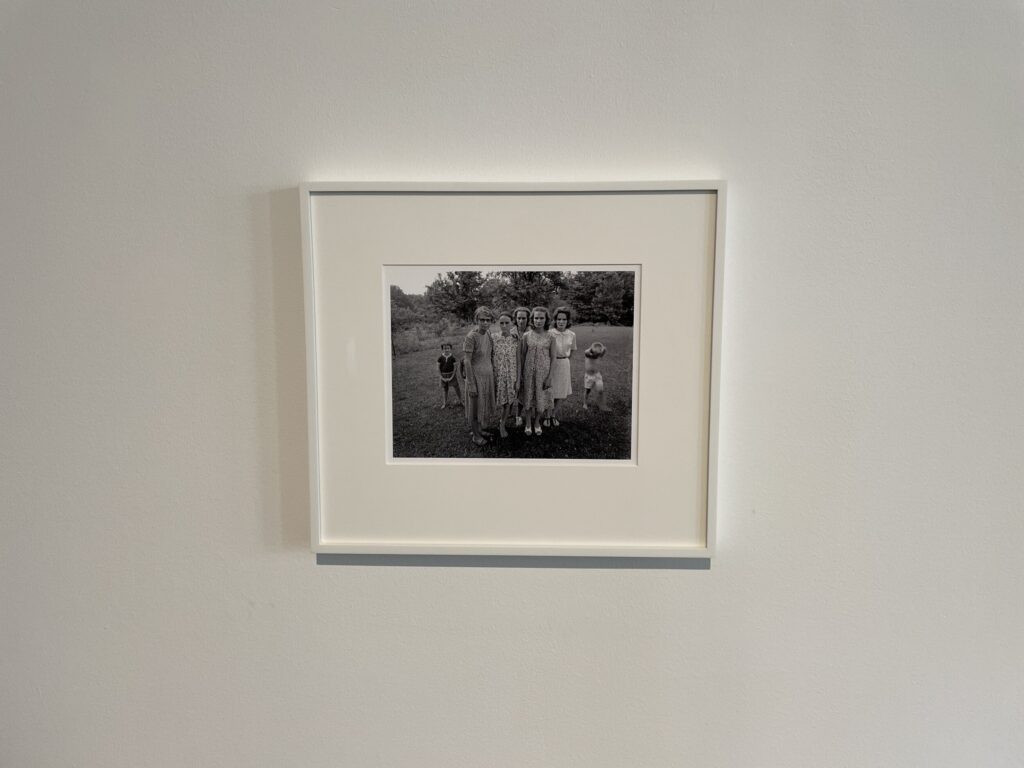
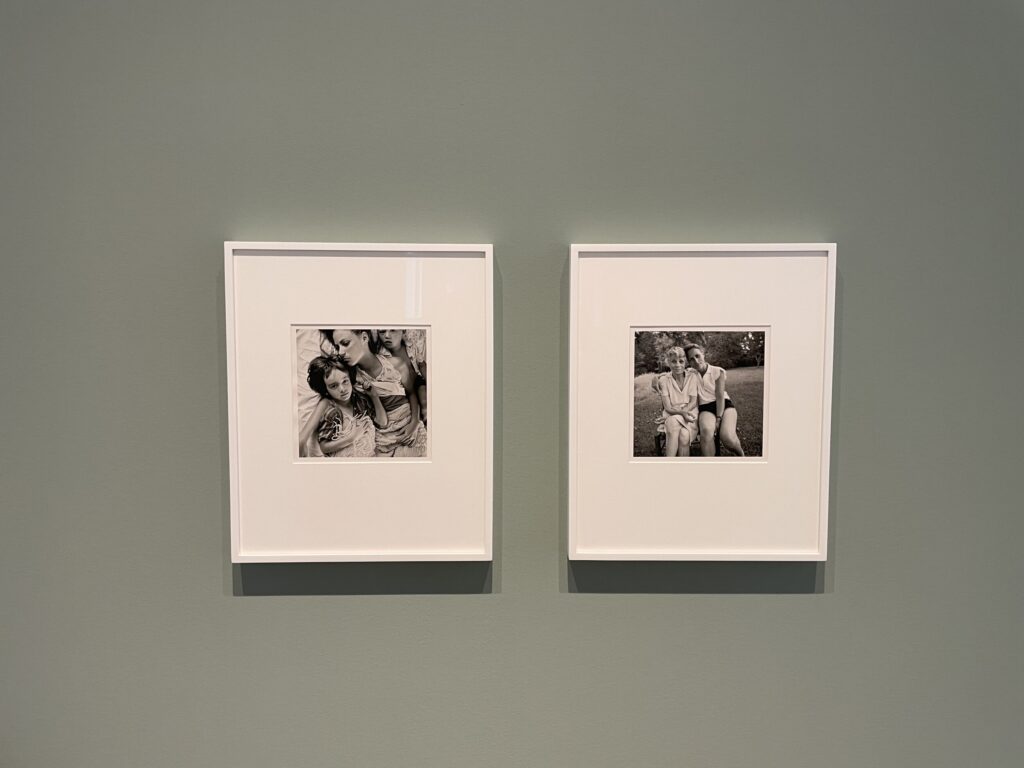
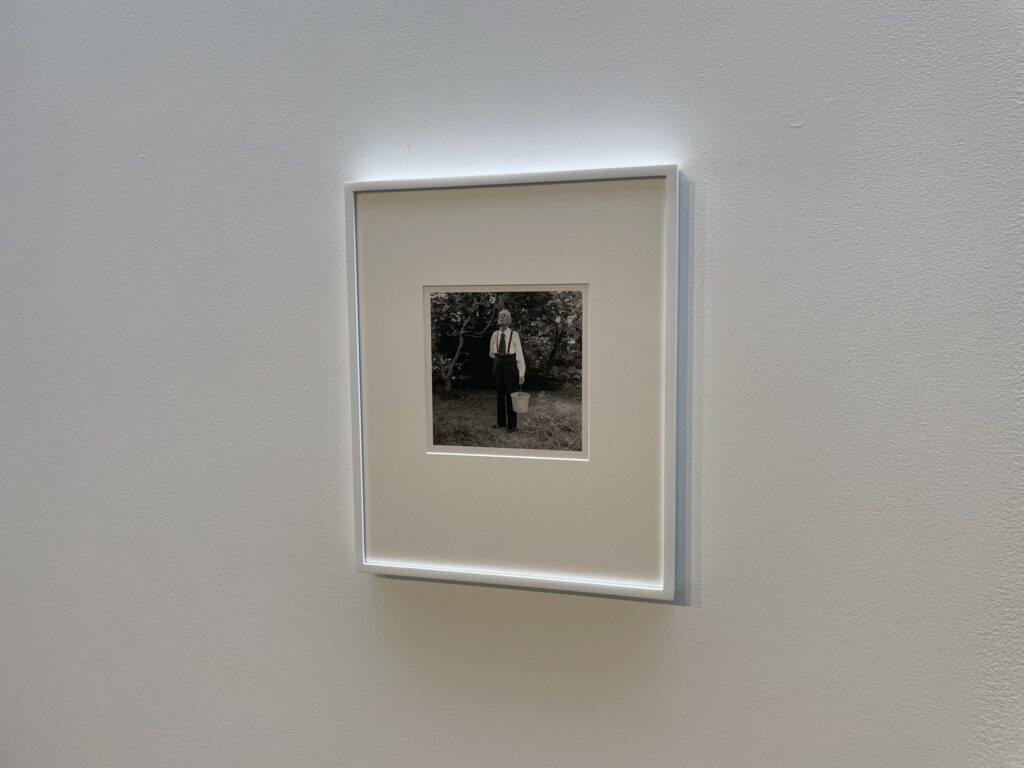
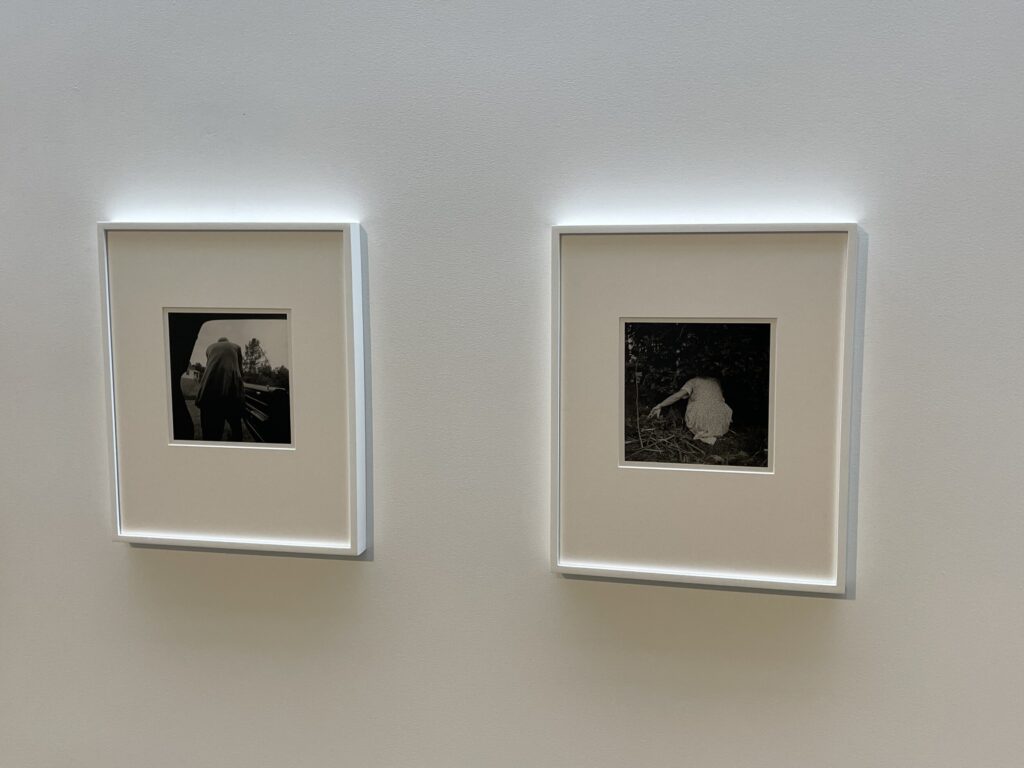
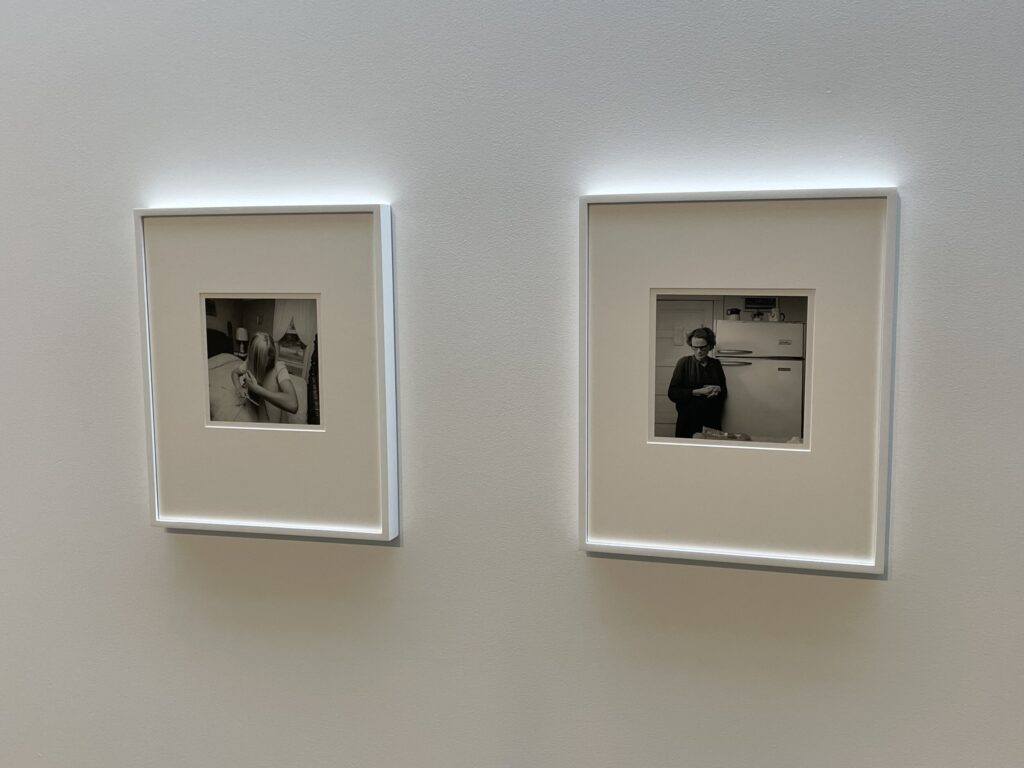
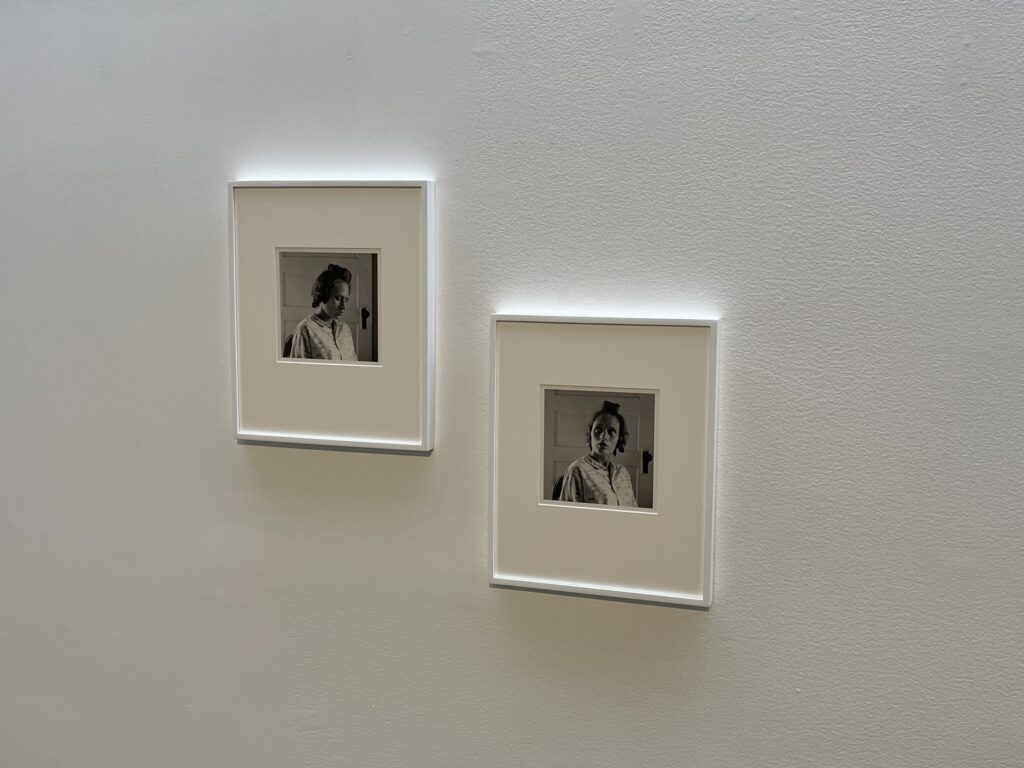
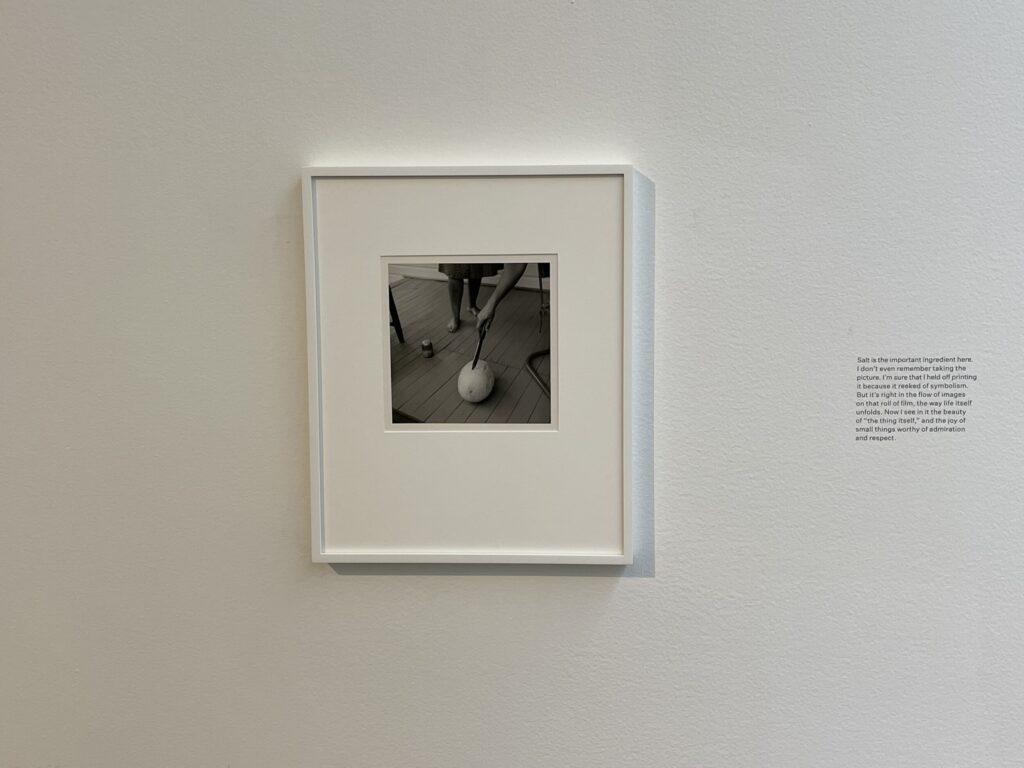
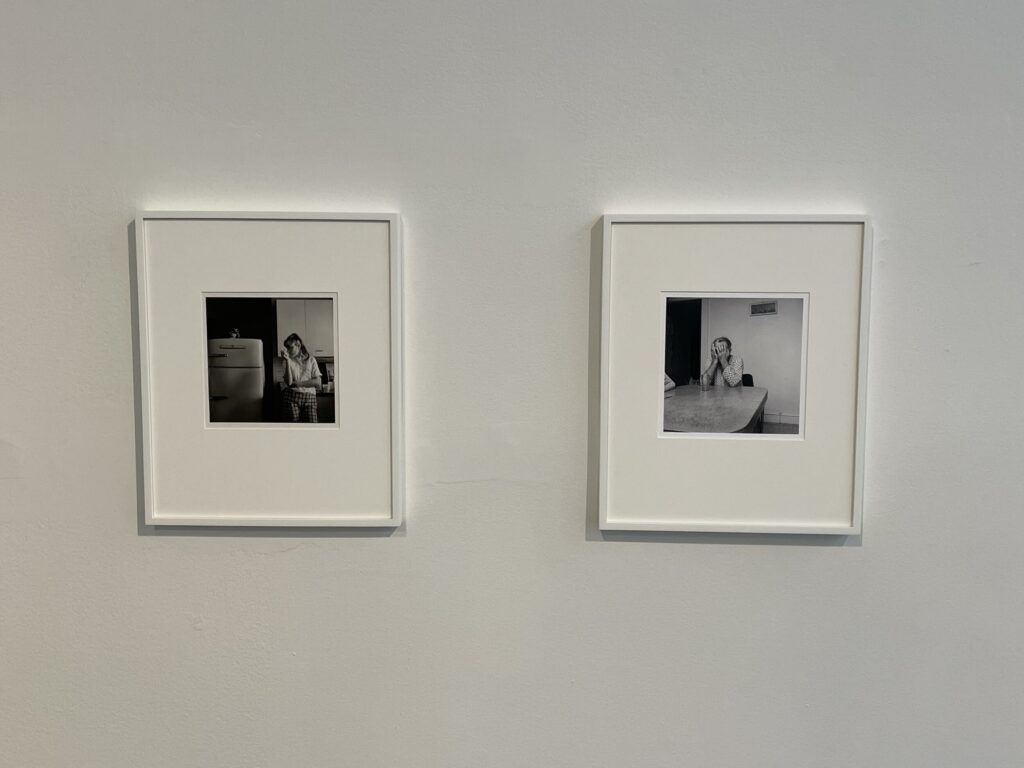
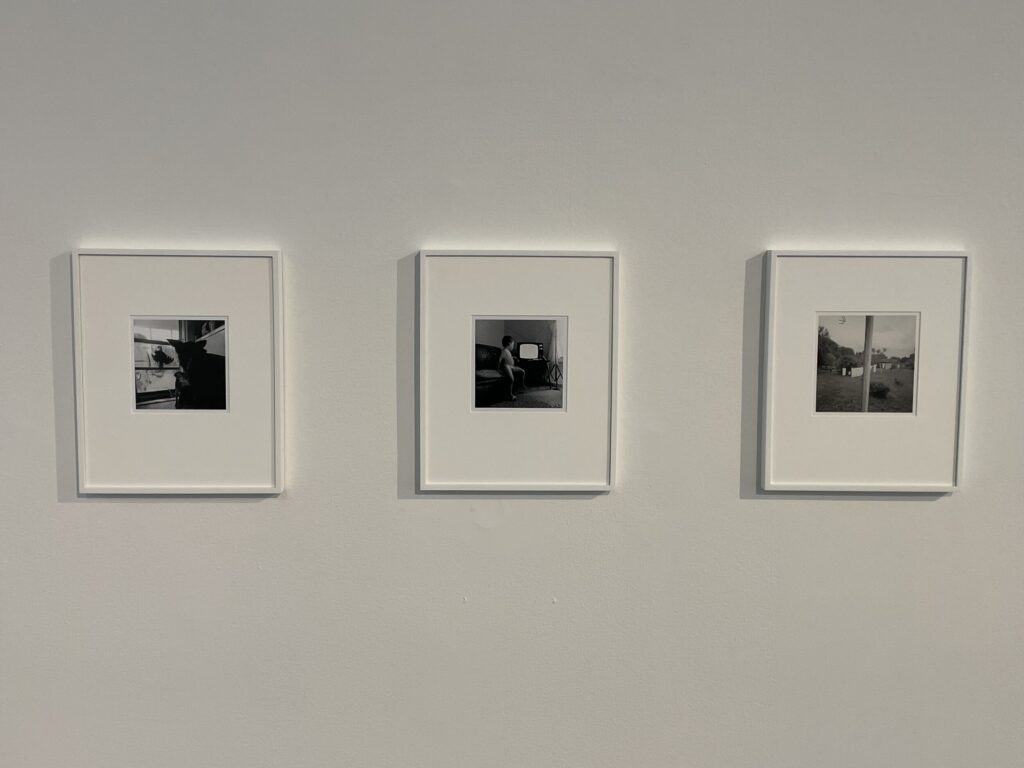
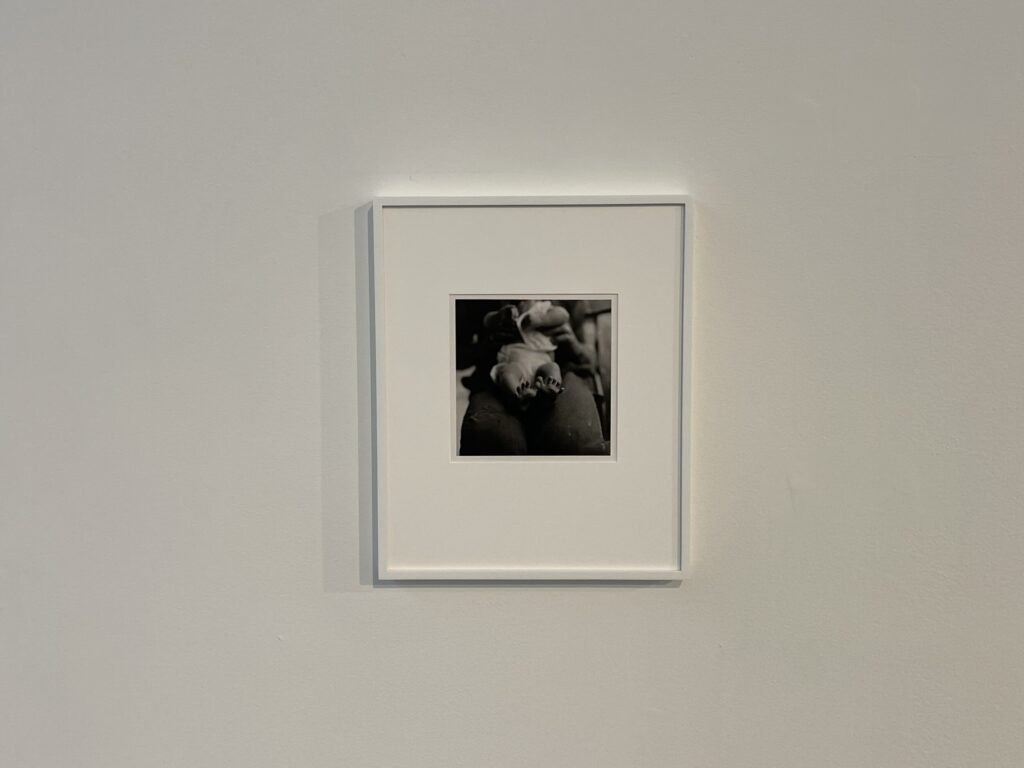
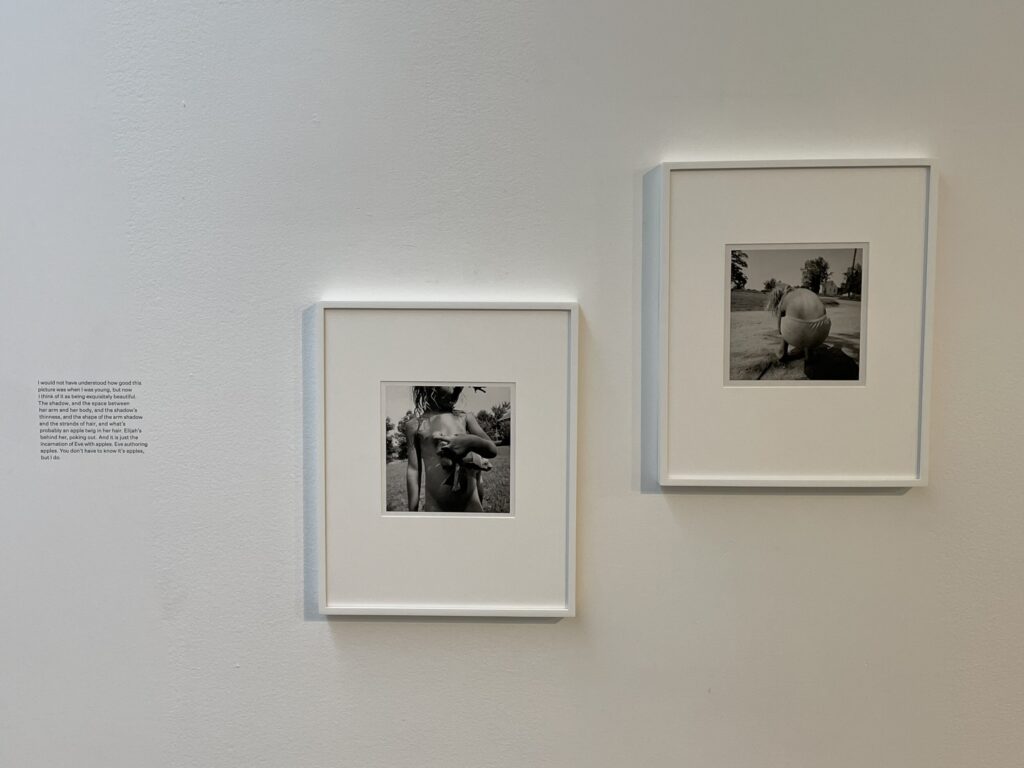
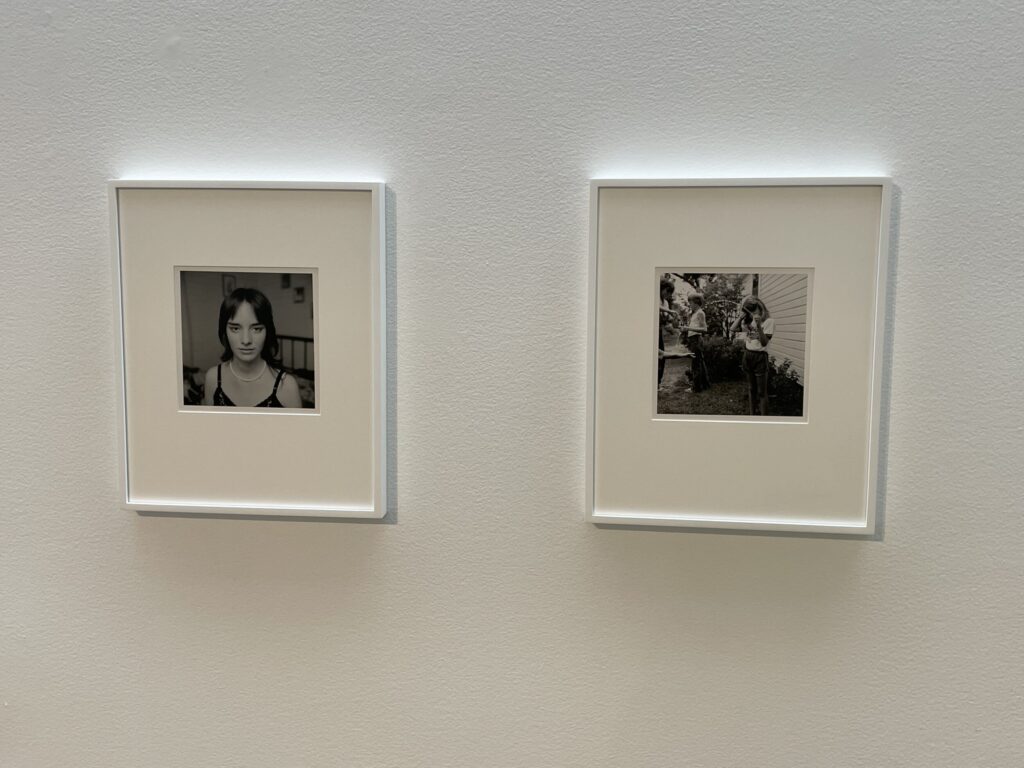
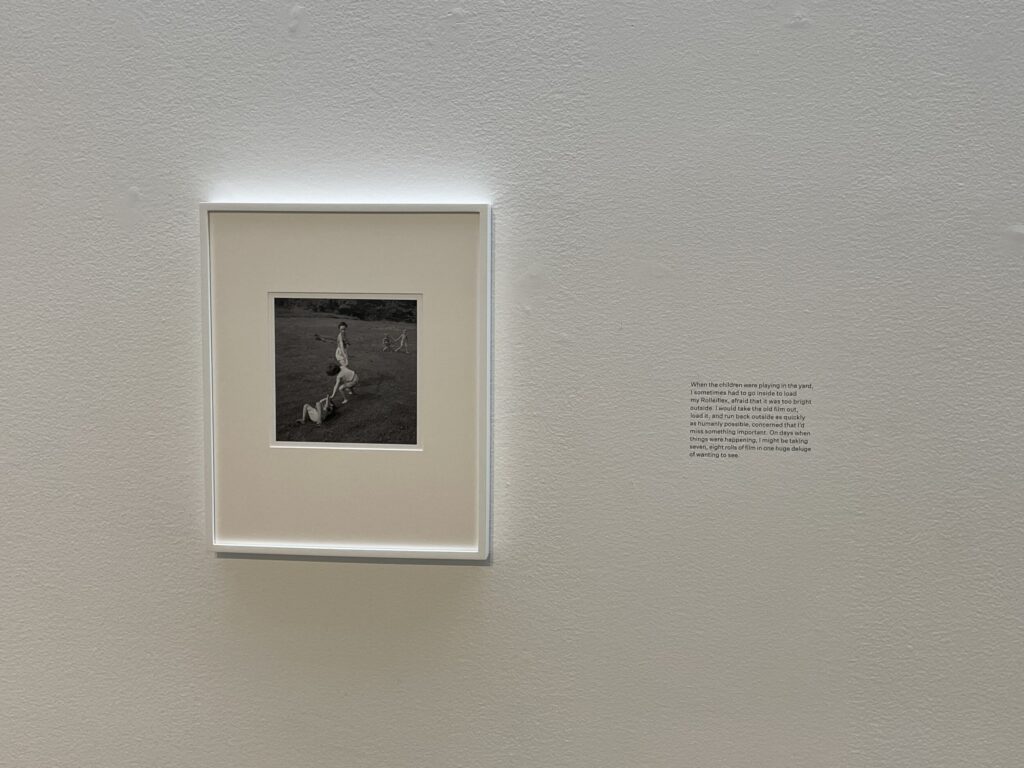
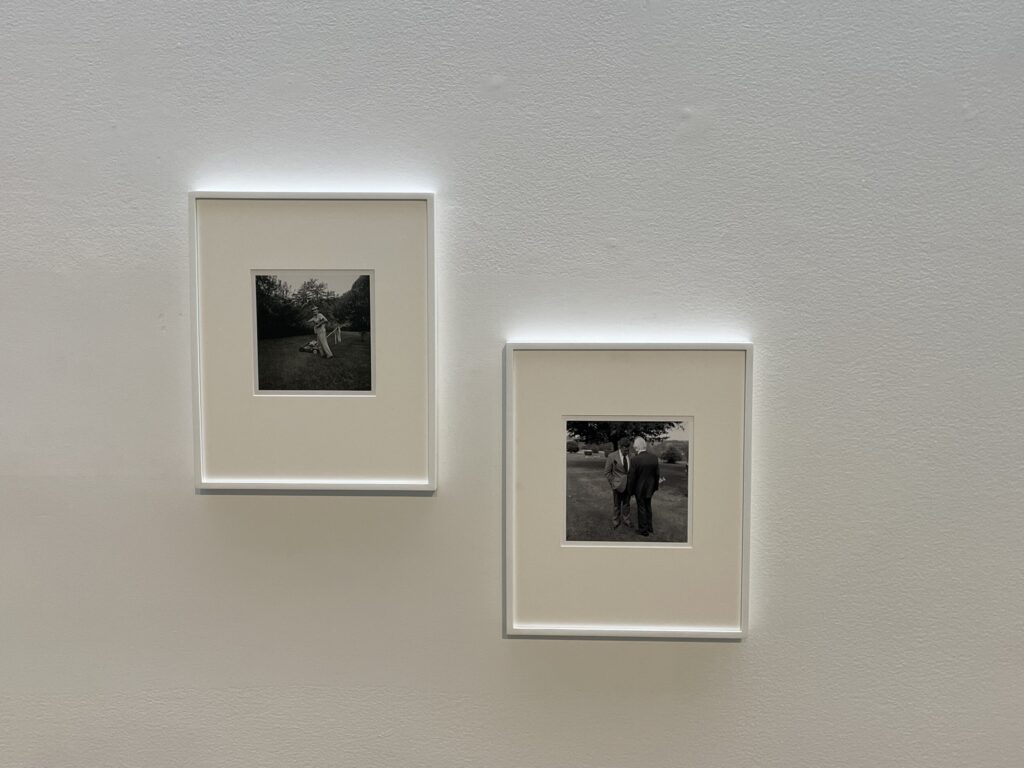
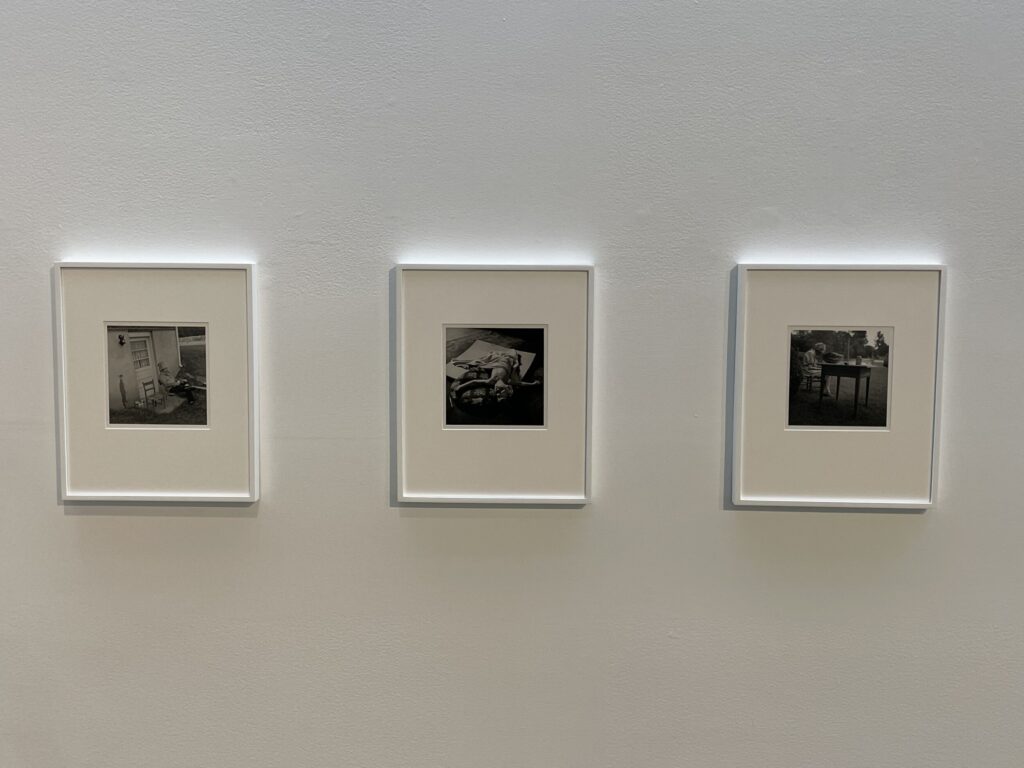
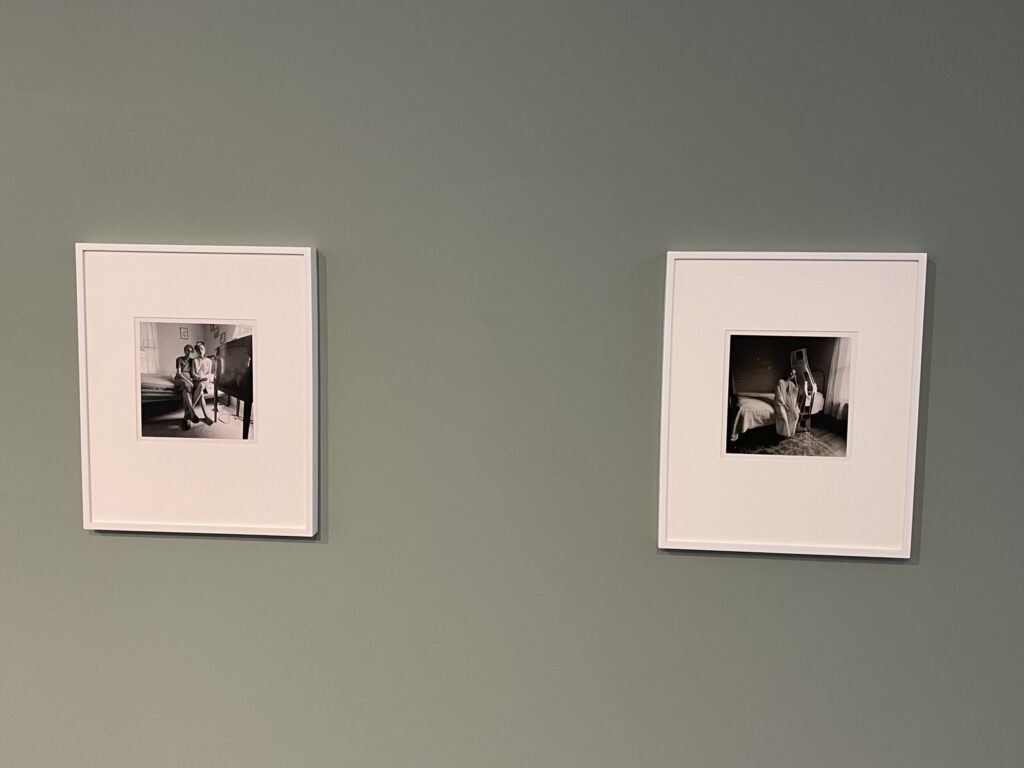
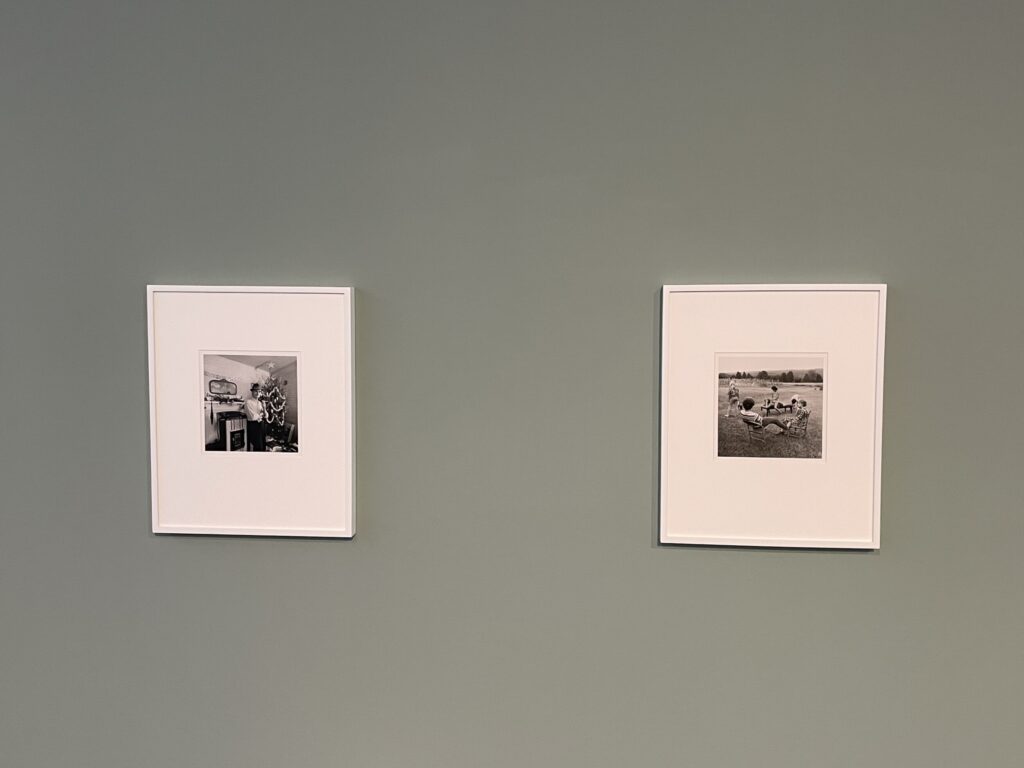
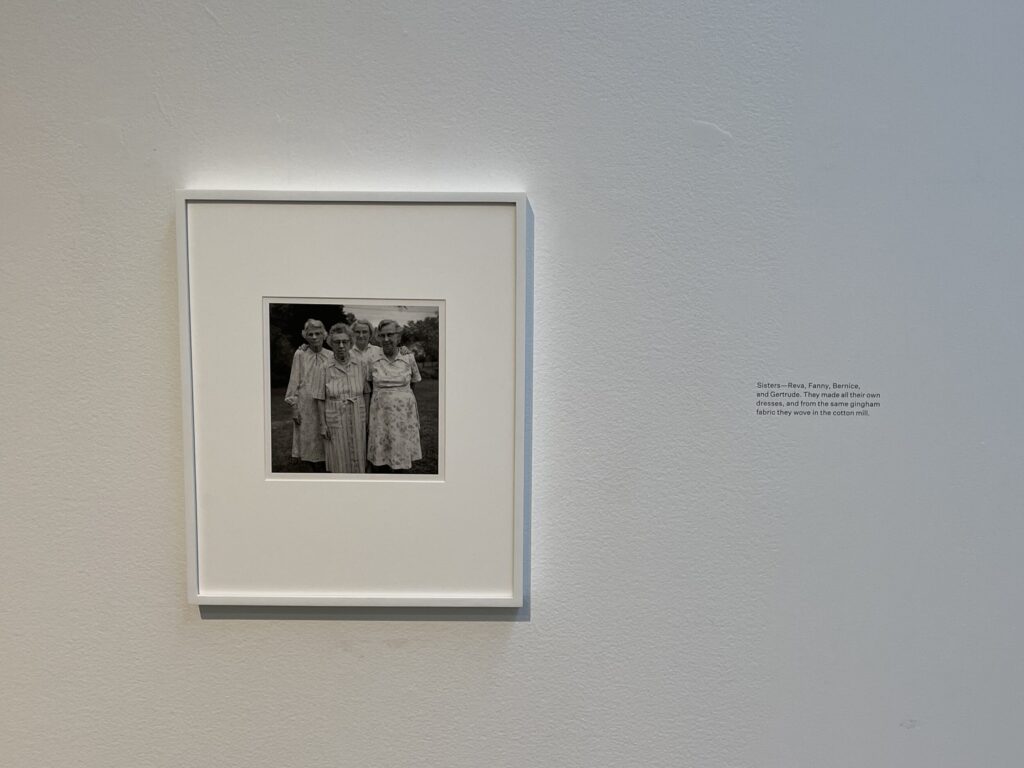
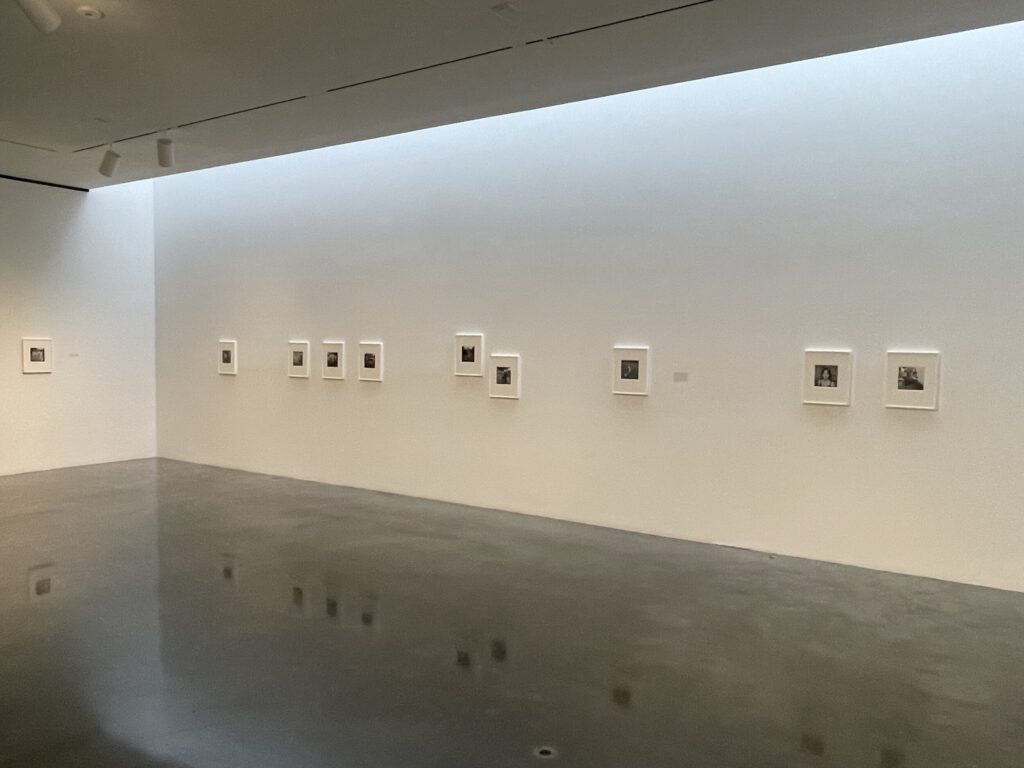
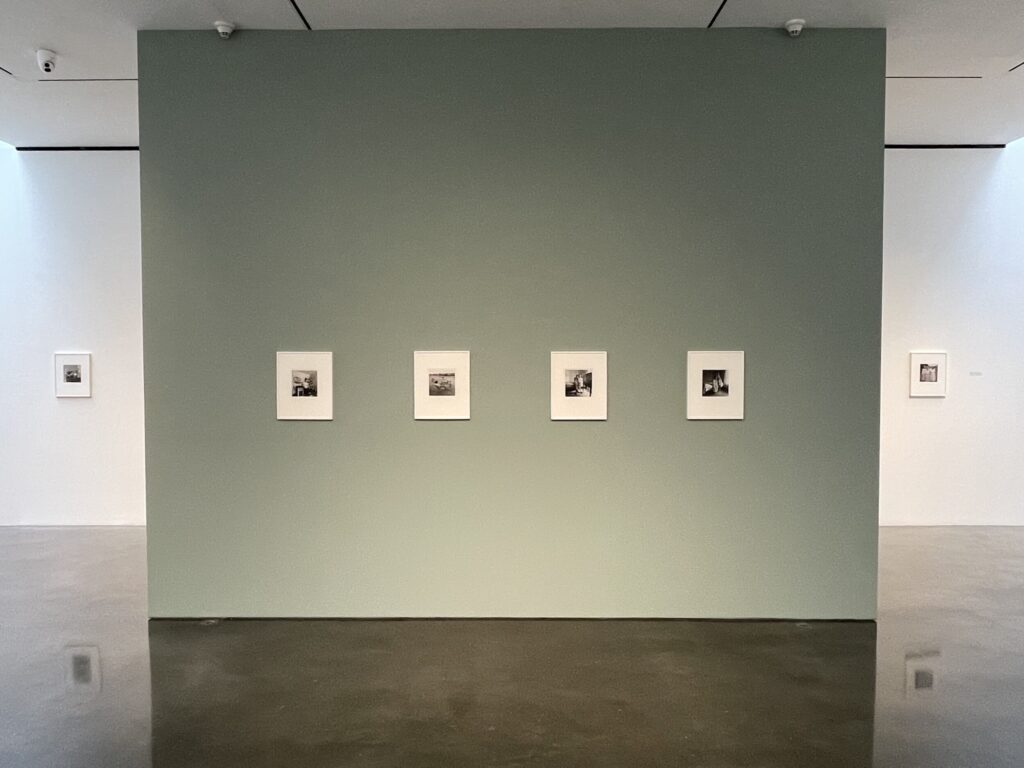
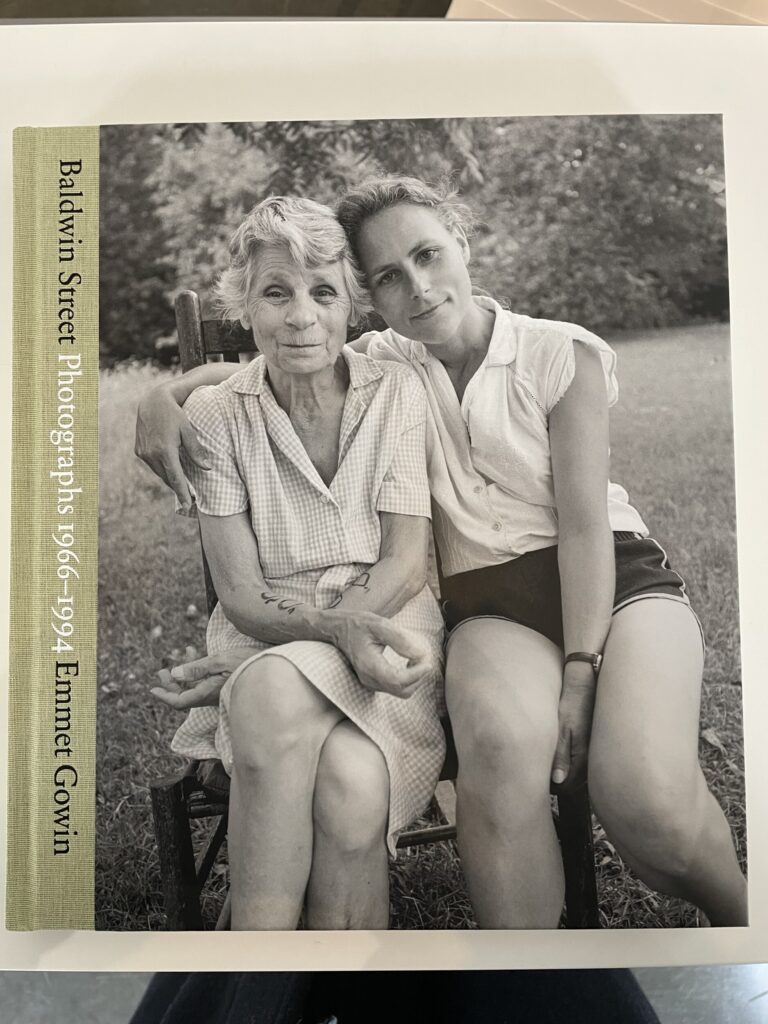
Comments/Context: Back in 1976, Emmet Gowin published his first monograph of photographs. It was modestly titled Emmet Gowin: Photographs and inside were a decade of black-and-white images of the everyday lives of Gowin’s extended family, including his wife Edith and their two children, and a sweeping collection of grandparents, aunts, uncles, cousins, and other multi-generational relatives, all seen in and around the houses and yards of Danville, Virginia, where Gowin was born. As it turned out, when Emmet married Edith in 1964 and was welcomed into her sprawling family, he inadvertently found his most resonant artistic subject, the rhythms, surroundings, and gatherings of that intimate life offering him a rich artistic terrain to explore. The pictures he made in Danville put Gowin on the photographic map, and although he has gone on to make thoughtful photographs around the world for more than six decades, these early photographs remain his most cherished.
In Gowin’s sensitive essay in that first monograph, one of his humble confessions was that “I soon realized that I was not able to foresee the best pictures and often could not identify the better negative until much later.” Fascinatingly, this show in 2026 puts that initial instinct from 1976 to the test. Like many artists who turned inward during the isolations of the pandemic, Gowin returned to his historical archive of images from Danville, and rediscovered many photographs that with the benefit of fresh eyes and passing years now seemed worth considering further. This exhibit (and a handsome accompanying monograph) bring us back to the beginning of Gowin’s artistic journey, where from a position of the present, he has been able to reevaluate what he originally left behind, leveraging the nuanced wisdom of the intervening decades to make some new choices. The title of the show Baldwin Street: Photographs 1966-1994 physically relocates us back to that street and those houses in Danville, places that Gowin has called “the center of my spiritual universe.”
In some sense, many of the images in this show can be considered variants of pictures we know already, particularly the standing groupings of Edith and her family, and some of the more experimental setups of Edith nude or more collaboratively posed. Part of what made Gowin’s original images of Edith so memorable was how entranced he was by his wife – again and again, he gazed at her with astonished wonder, finding beauty and complexity in even the simplest of her moments and movements. Aside from some quirky images of Edith posing with a car bumper and hanging from a ladder, when Edith appears in this expanded edit, she is seen with more subtle understated tenderness, where the gestures of touch, nearness, and togetherness tell us volumes about familial ties, and about the patience of Gowin’s attentive watchfulness.
Many more of the photographs in this show extend Gowin’s gaze outward to other members of the broader family. He often notices the timeless rhythms of repeated chores, like lawn mowing, weeding, and collecting figs, and spends time lingering in kitchens, where small conversations standing next to the fridge turn into more powerful moments of seeing and connection. Two images of solitary men at kitchen tables stand out (one of Raymond, the other of Willie), each one an inventory of silently intense emotions. Gowin is also attuned to the restrained gestures and somber suits of funerals, and the glories of summertime goofing around, as seen in David and Mae gently laughing in the grass and Luther with a paper bag over his head. The ritual cutting of shared watermelons is also given reverent attention by Gowin, the point of the knife and the residue on the table/deck captured with surprisingly poignant significance.
Some of Gowin’s strongest rediscoveries feature the worlds of younger children. A naked Donna Jo cradles a cluster of apples in her bent arm, her hair in a loose tangle. Dwayne upends himself on a side chair, the essence of awkward teenage comfort. Darlene combs out her long hair, pulling it down like a waterfall. And Isaac falls asleep on the floor, his arms outstretched with comfortable abandon. Gowin also finds himself in the right place at the right time to capture a lovely daisy chain of arms in a game of crack-the-whip and the perfect arc of droplets coming from a young girl’s water balloon. From the toes of an infant to the viewpoint of the dogs, Gowin feels present for it all, his photographs settling into an endearing sense of warm gratitude for each and every unexpected find.
Gowin is now in his mid 80s, so the process of reviewing his old negatives during Covid must have been laced with a very real element of nostalgia. And while there are plenty of American photographers who made images of their families in the 1970s, what these additional pictures remind us is that Gowin’s early viewpoint was always grounded in elemental human simplicity, never ironic or clever, just humbly and attentively thankful for the companionship of these people. The original photographs from Danville introduced us to the singular persona of Edith, who has now become an icon in the history of photography; what these rediscoveries do is add contour and context to the backstory of their larger family life. Gowin leans into the chaos and the joy of it all, applying his own organizing eye to separate out the unlikely moments of durable elegance. A measured look at these photographs reveals a remarkable consistency of mood and tone, not to mention a meticulous attention to the craft of printing to make the images function at their best.
Gowin’s Baldwin Street additions remind us of what it means to be located in the world, to be centered by the structures of place and family. It is the pace of life in Gowin’s pictures that strikes me most in this viewing, and the reminder of the richness that lingers in that space when we make time to really notice it. As a worthy companion to Gowin’s first monograph fifty years ago now, this revisiting smartly broadens the reach of the artist’s arms, drawing more of the nearby surroundings into his compassionate visual embrace.
Collector’s POV: The prints in this show are priced at $9000 each, with frame. Gowin’s work has only been intermittently available in the secondary markets in recent years, with just a handful of prints coming up for sale in any given year. Recent prices for single images have ranged from roughly $1000 to $10000, with portfolios and multi-print sets reaching $40000.