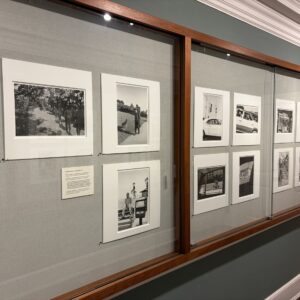
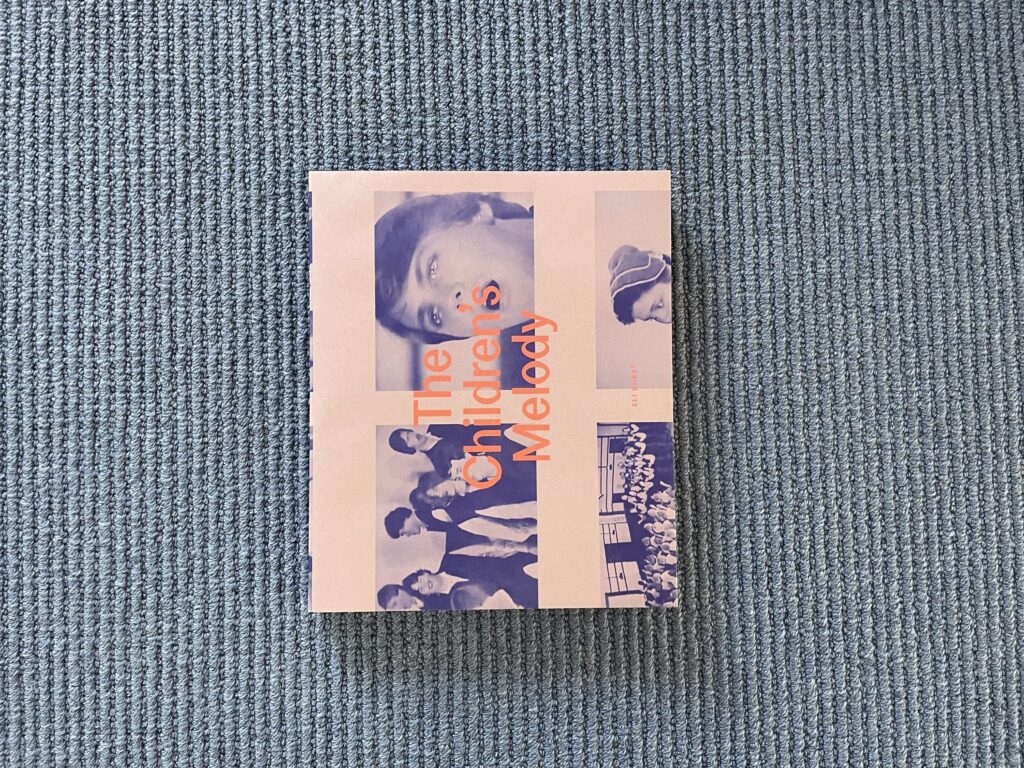
JTF (just the facts): Published in 2025 by Gnomic Book (here). Hardcover (24×29 cm) with folded paper jacket/poster (56×95 cm), 116 pages, with 60 black-and-white reproductions. Includes texts by Marcel Schwob and King Henry VIII. In an edition of 500 copies. (Cover and spread shots below.)
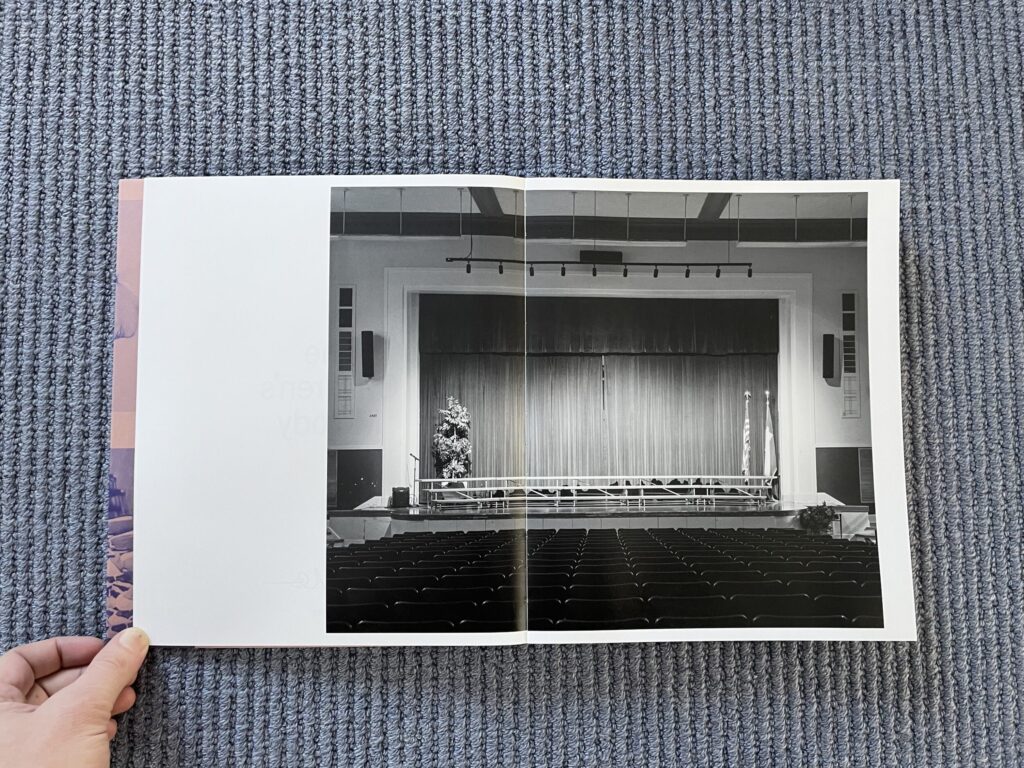
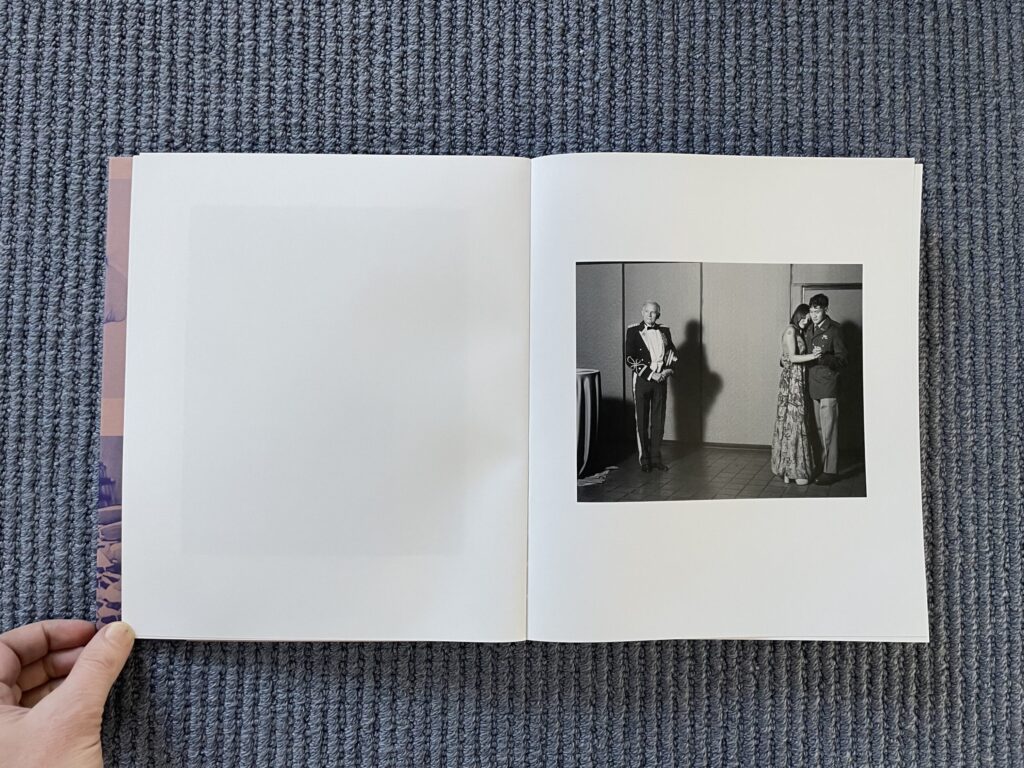
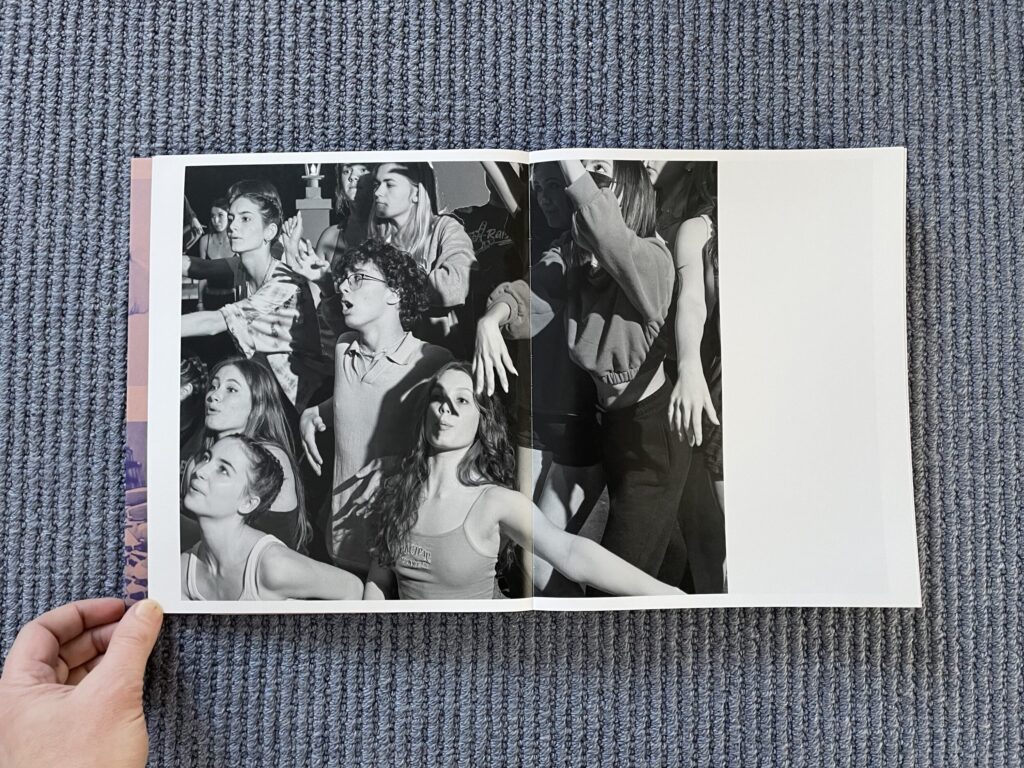
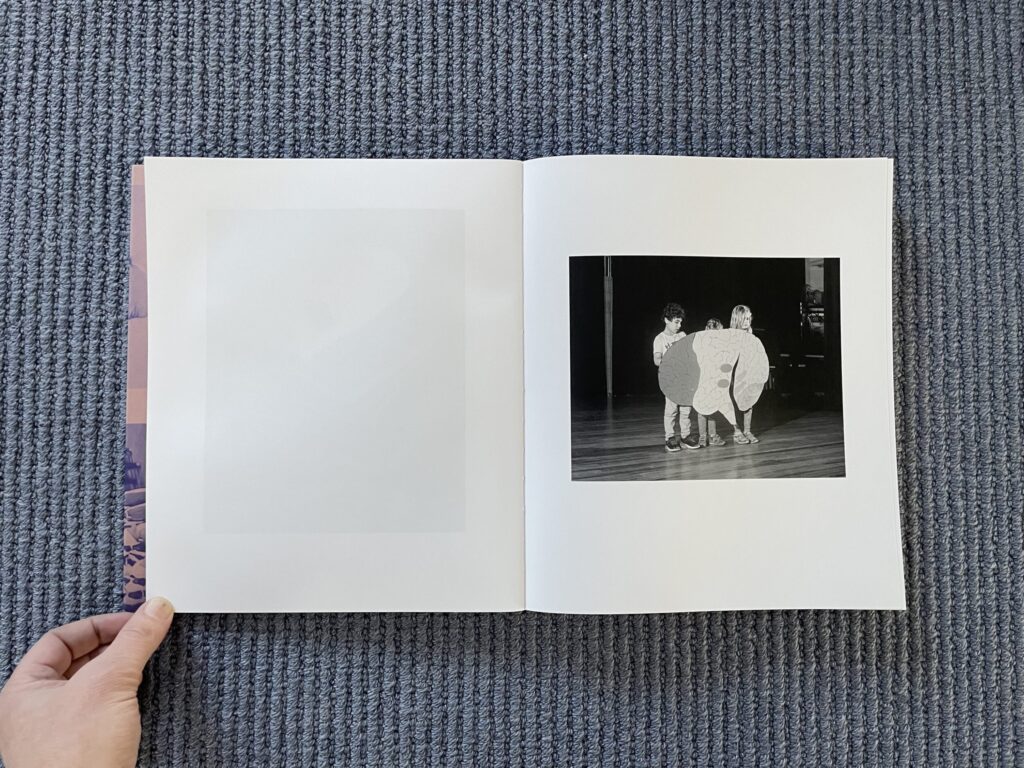
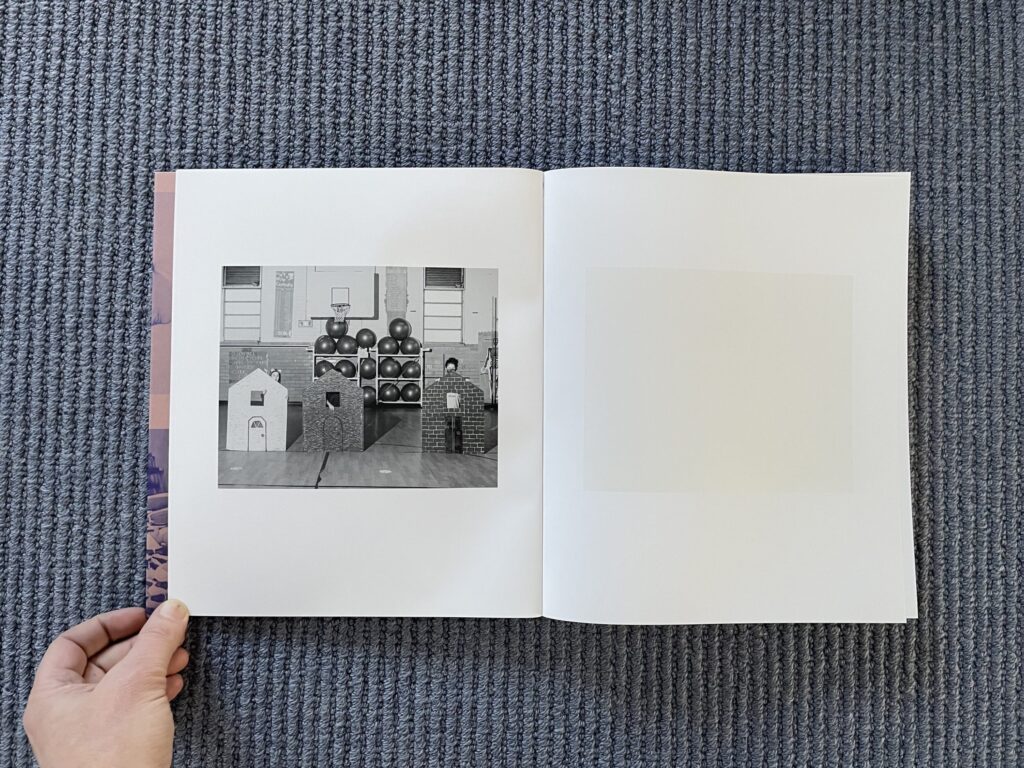
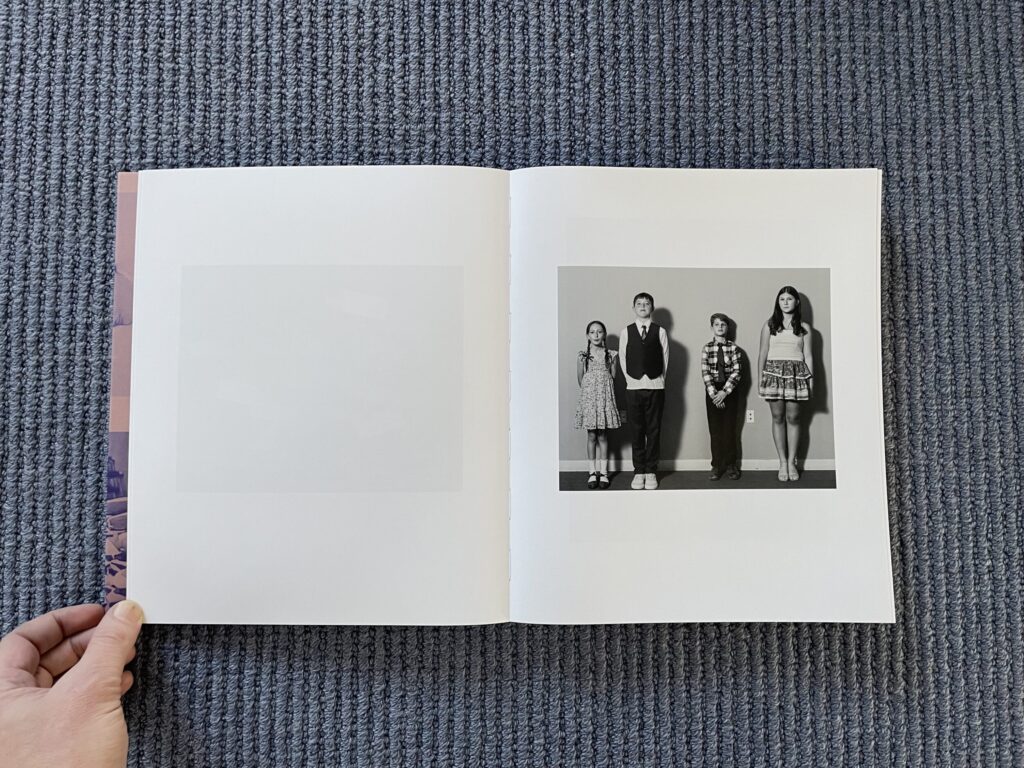
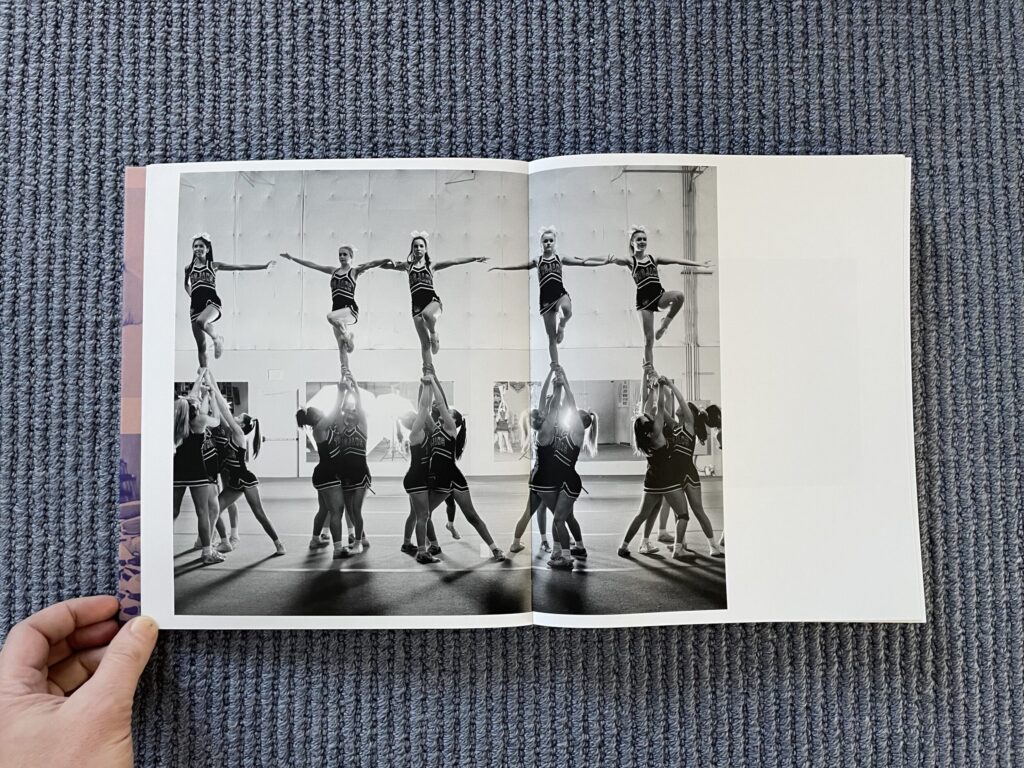
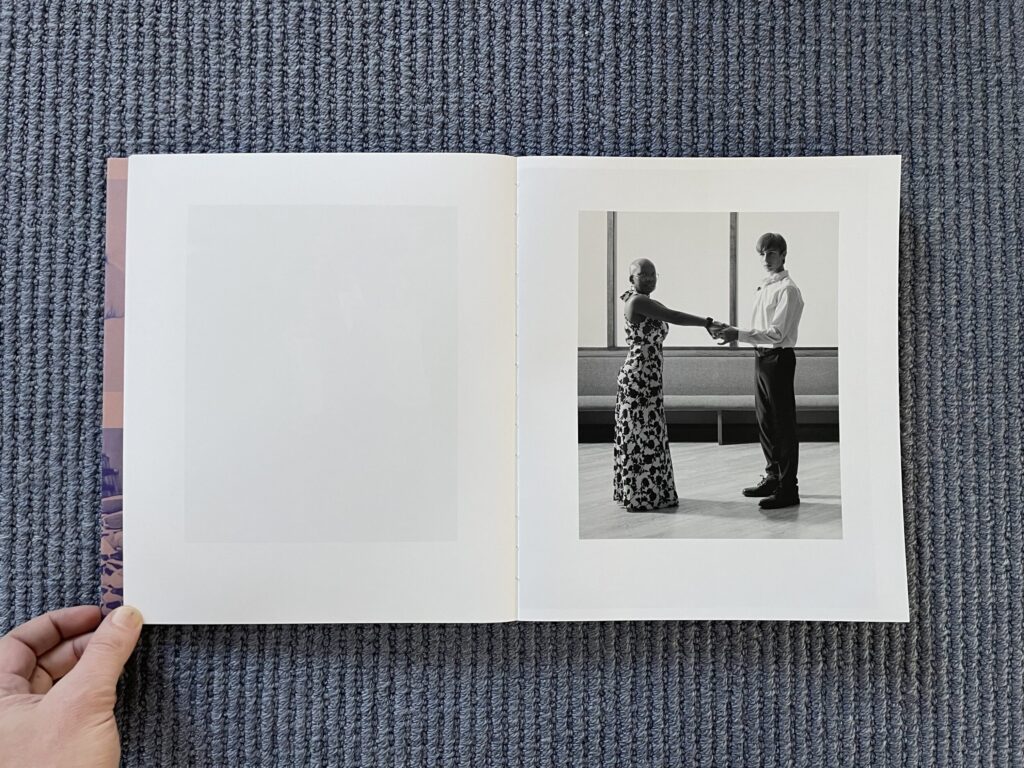
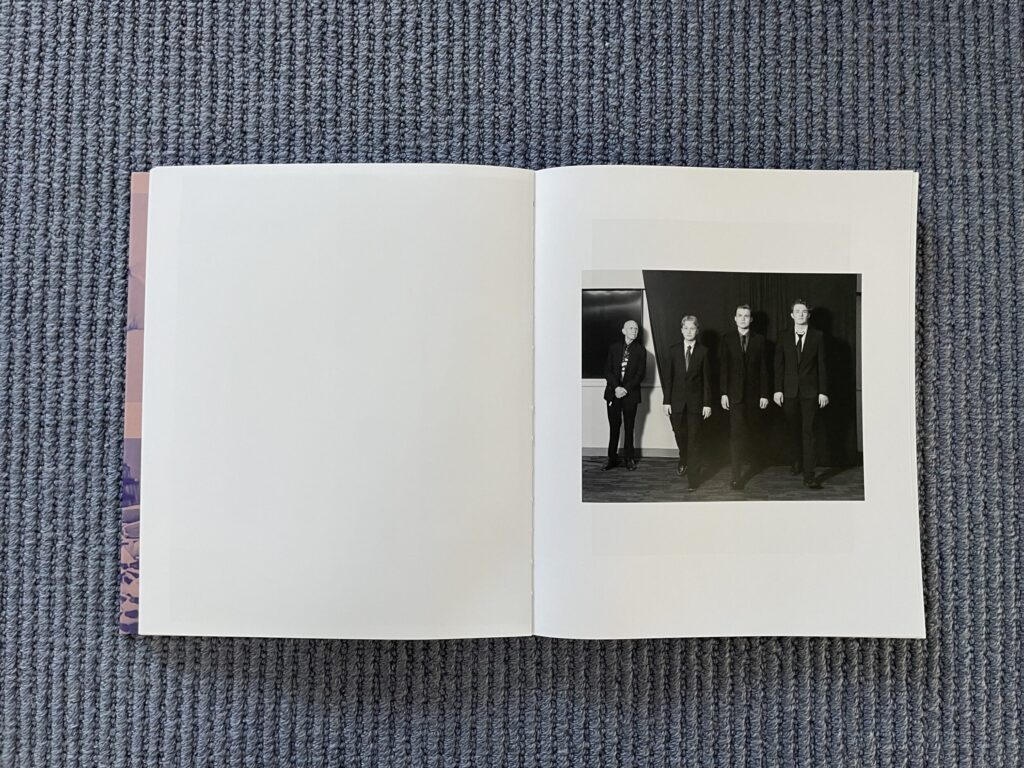
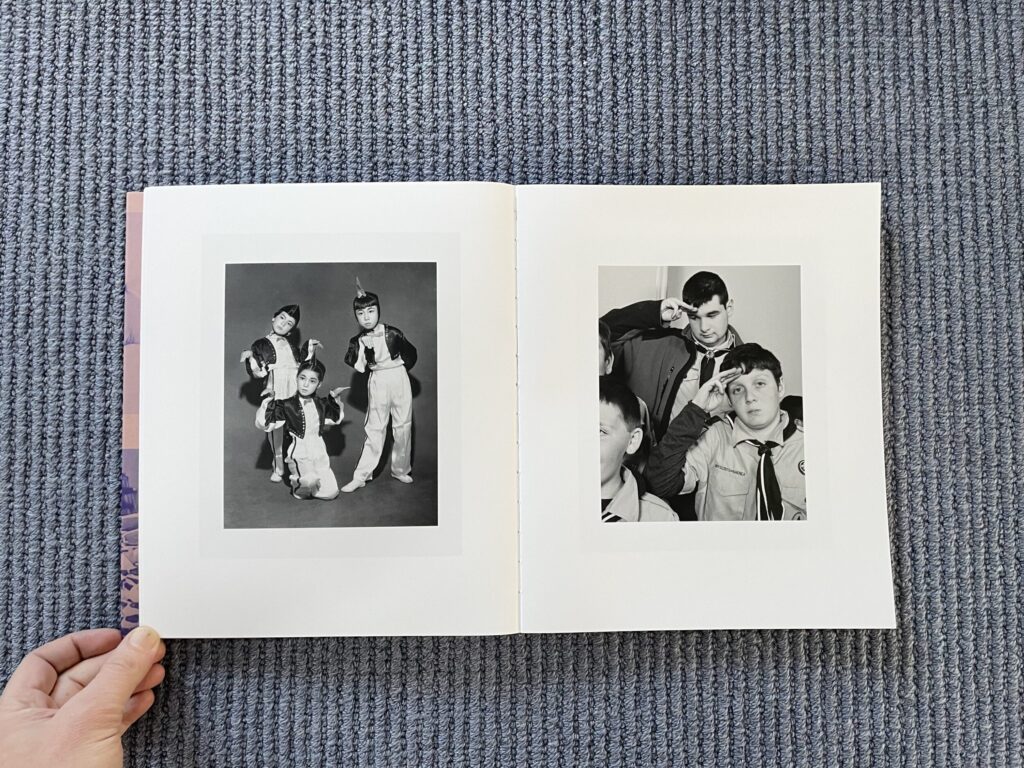
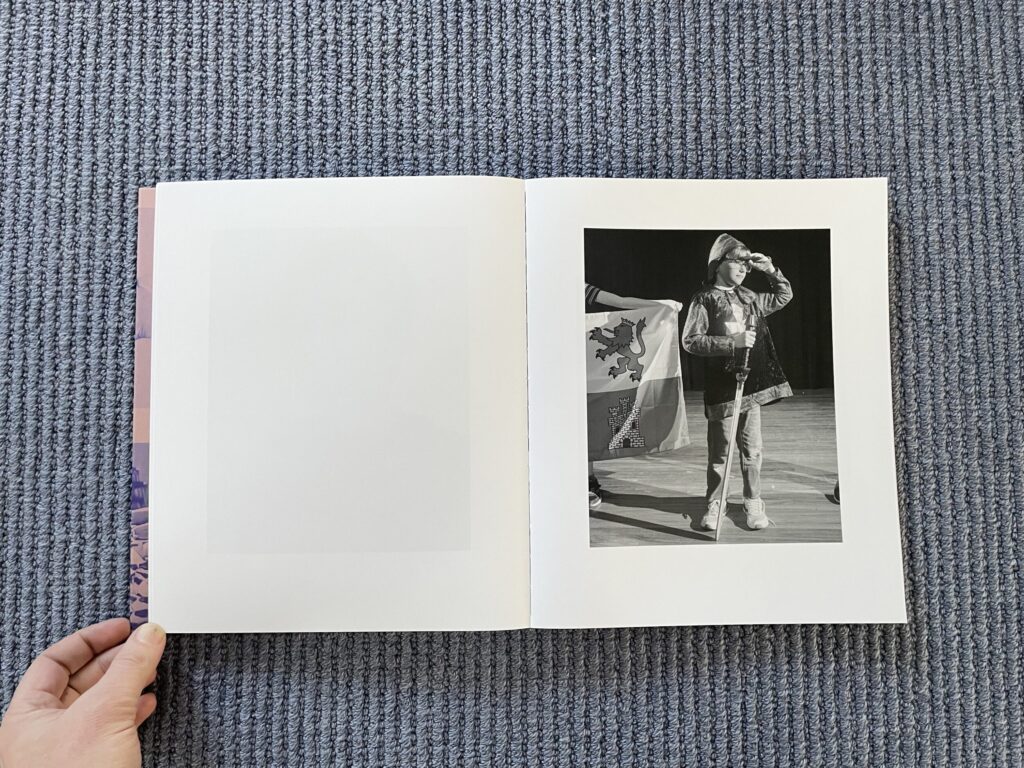
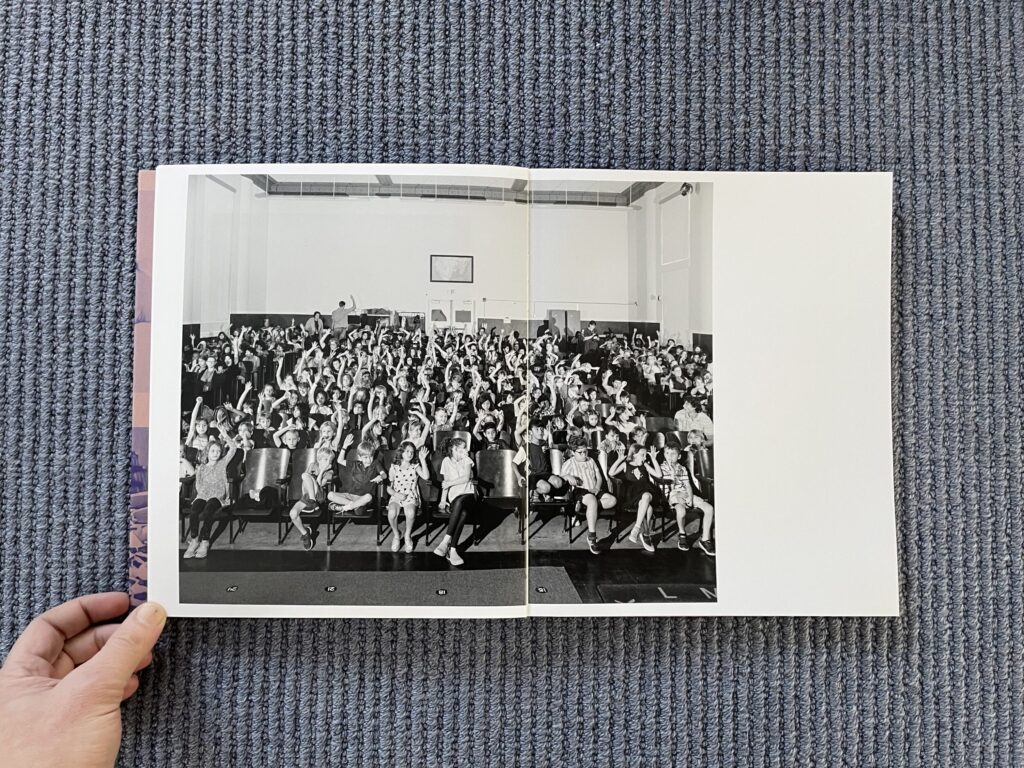
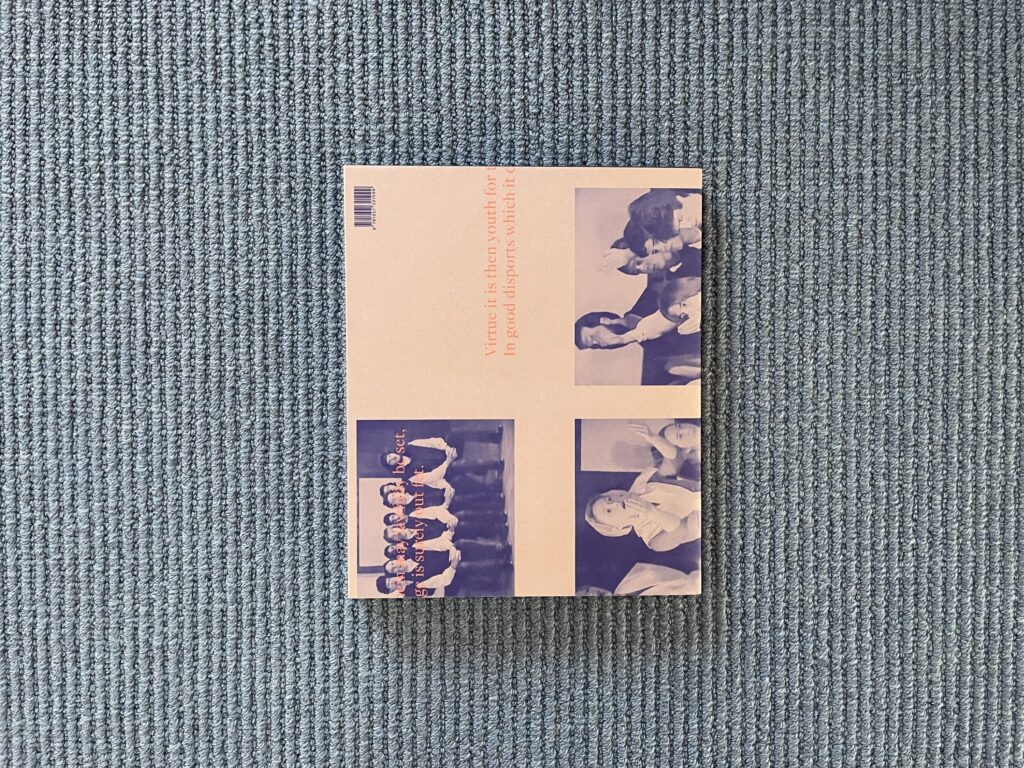
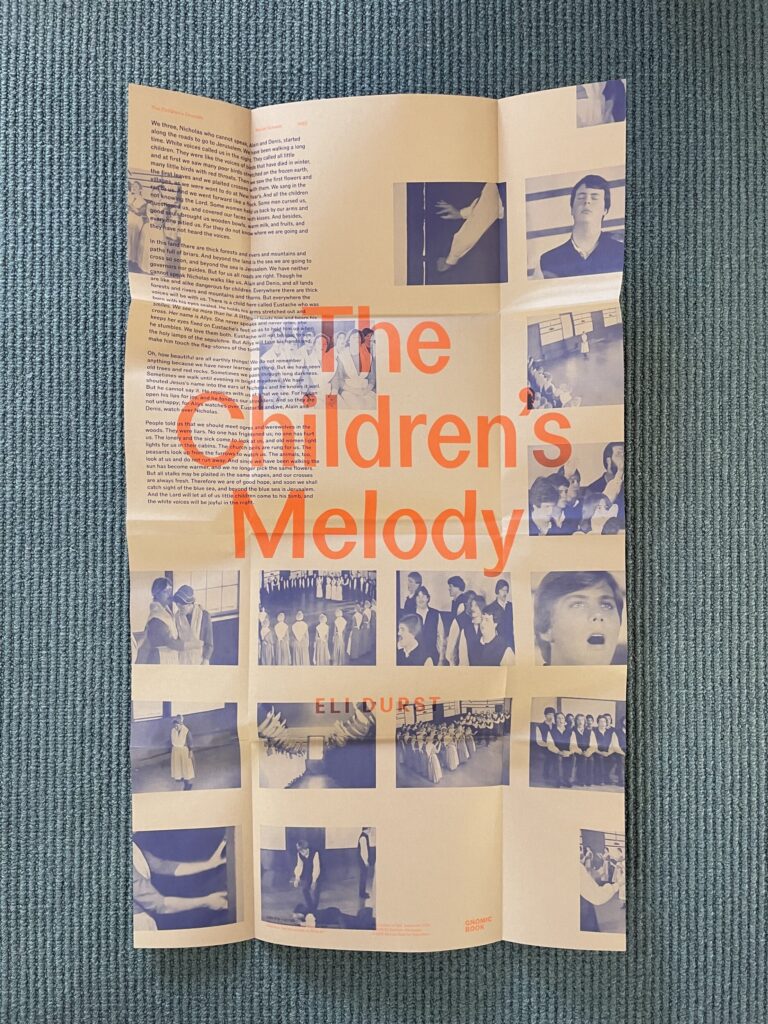
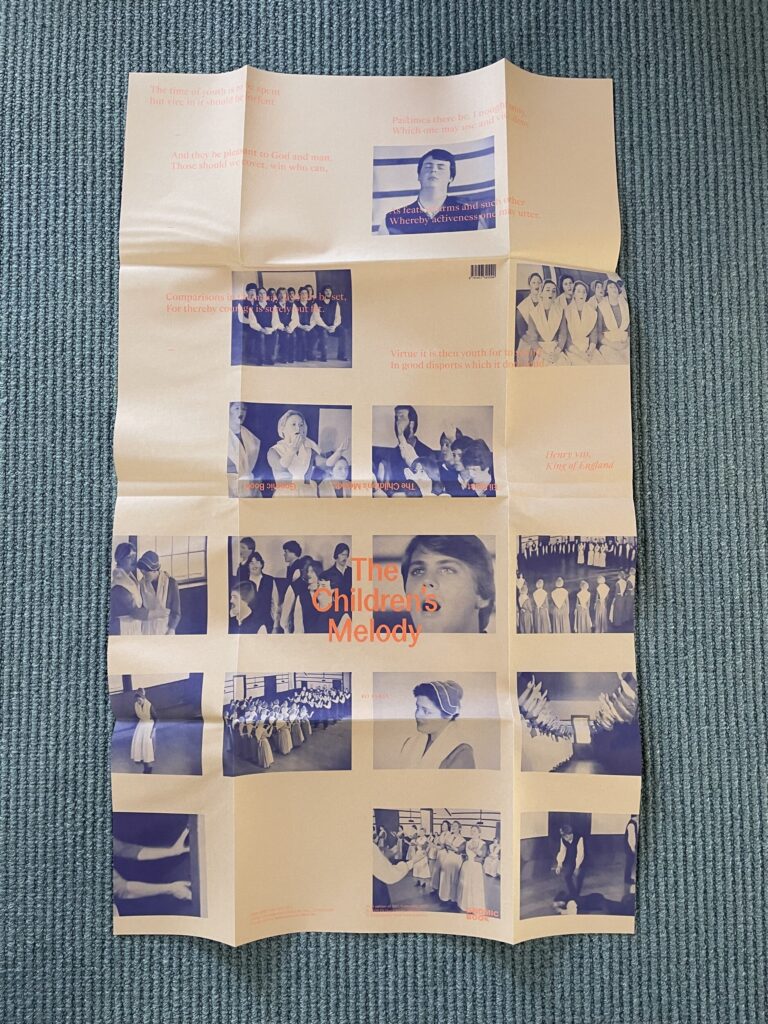
Comments/Context: Human beings are social creatures by nature, and wherever we go, we gather together in groups, and these groups help to give us a sense of identity and purpose. Schools, churches, clubs, and other social and community organizations all provide this kind of structure, and their rules and rituals (written and unwritten) guide us, offering frameworks for how to behave as an effective part of the larger whole. Within these institutions, individuals are shaped into people who belong, and the process typically includes the learning of shared beliefs and everyday codes of conduct.
This instinct to organize ourselves into affinity groups has been the main focus of Eli Durst’s photographic explorations in the past decade. Starting with his photobook The Community (from 2020, reviewed here), and continuing on through The Four Pillars (from 2022), and now to The Children’s Melody (from 2025), Durst has gone inside many community organizations (mostly in suburban American locales), and paid attention to who was there and what was taking place. Of course to outsiders who don’t know the related contexts, histories, or traditions, the specific behaviors of people inside any particular group might seem eccentric, puzzling, or even downright strange, and Durst has consistently made photographs that linger along that edge of surreal unease.
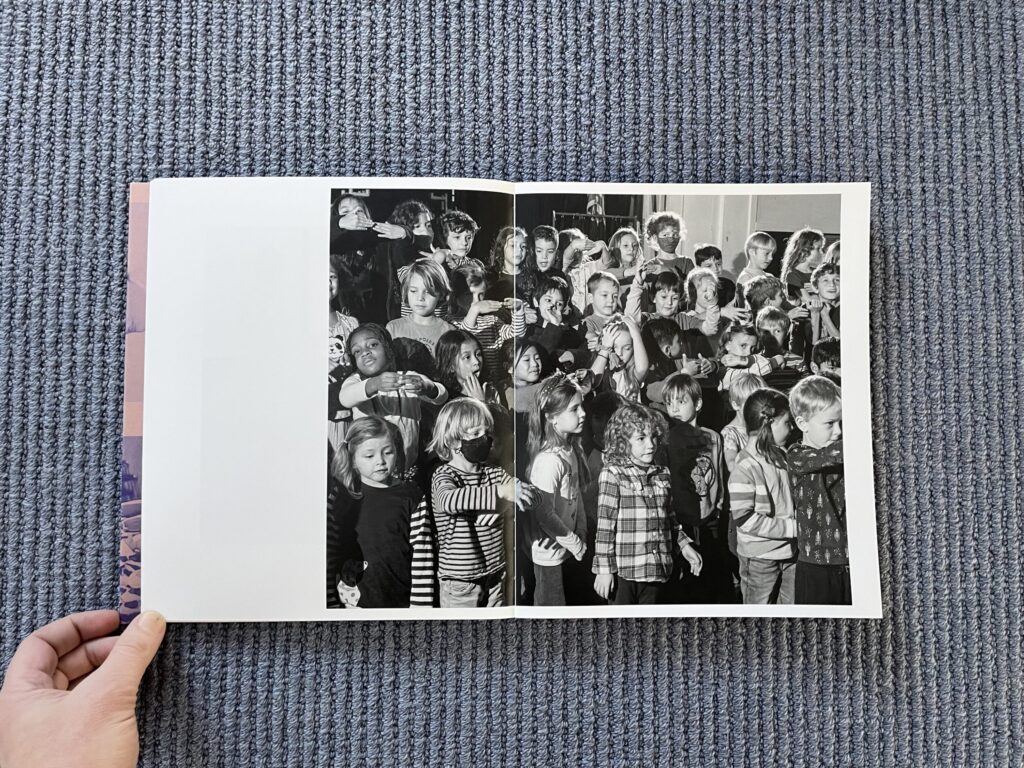
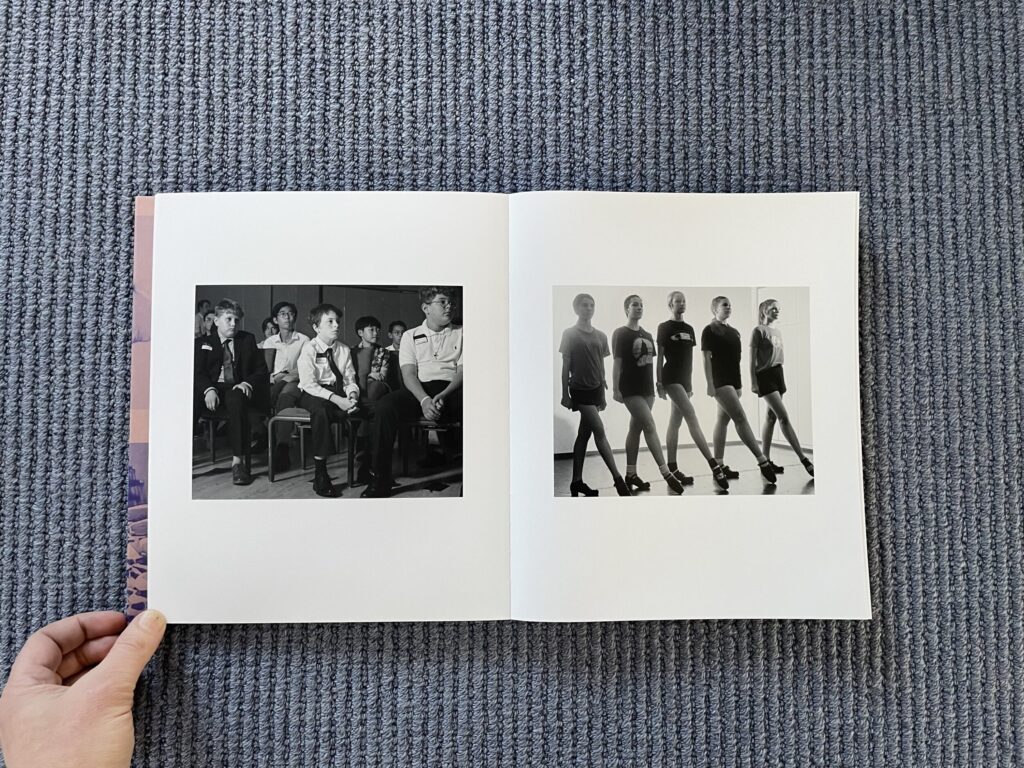
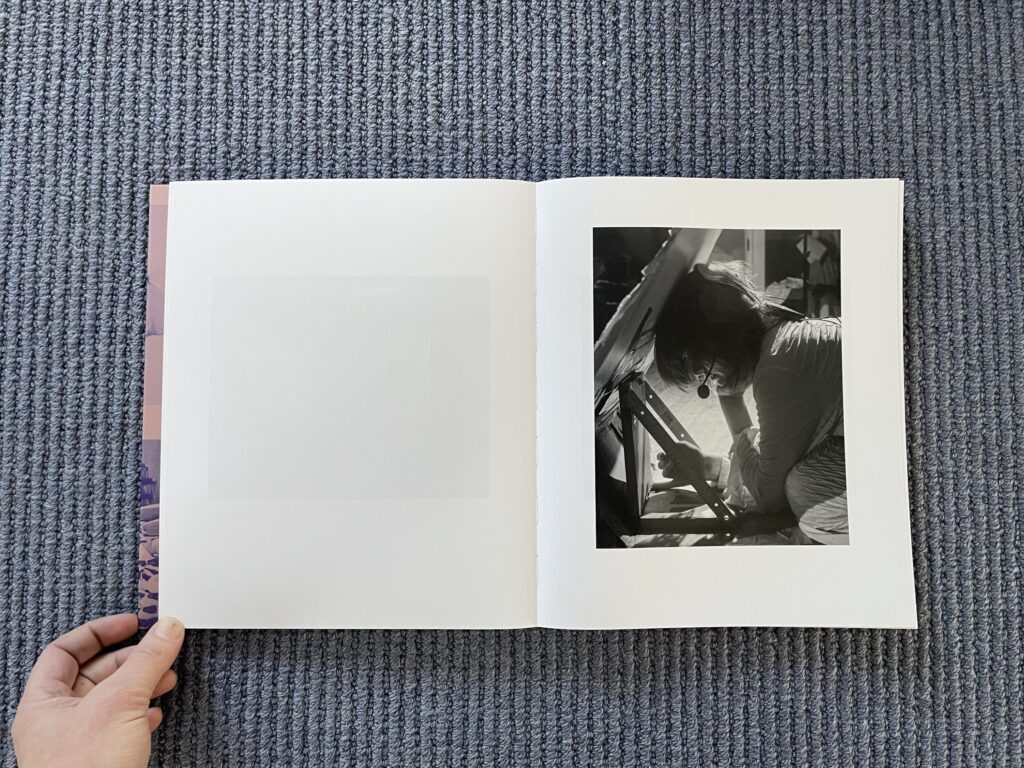
While Durst’s first two photobook projects centered on adults and their performative pathways of group identification, The Children’s Melody sets its sights on the younger generation, where personal identity is even more fragile, malleable, and in flux. Durst’s black-and-white pictures document moments at ROTC training, Boy Scout meetings, dance and cheer team practices, cotillion events, and various school plays and performances, paying close attention to the way the kids are taking part in the group situations. What he finds is a surprisingly consistent sense of earnestness and sincerity (with a few bored outliers here and there), the young people largely applying endearing seriousness and care to even the most mundane of activities.
Durst’s distanced vantage point is a very tricky one to deliver thoughtfully – standing back and observing that these awkward moments and rituals of young people’s lives are indeed quite strange (and making photographs that deliberately amplify that feeling) risks a kind of flippancy that might subtly undermine the genuine efforts of the kids. But with compassionate curiosity, Durst tries to see these everyday events with fresh eyes, and thereby discovers a range of aspirations, insecurities, and oddities hiding in plain sight.
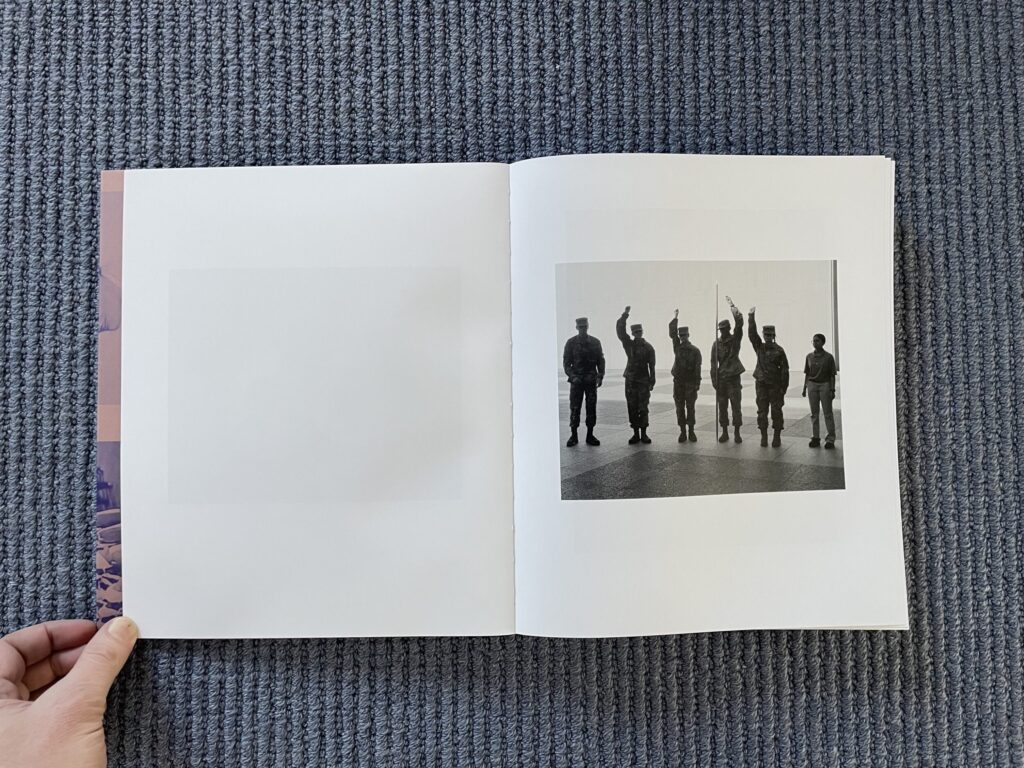
Part of what gives Durst’s images their surreal quality is the ways that staged events, particularly lineups of people in one form or another, seem to take on a mannered theatrical atmosphere in his presence. He sees this with ROTC members raising their hands or standing at attention, paired cotillion partners standing together (and boys sitting waiting to be paired up), graduates in cap and gown, student choirs (of various ages) posed on risers, dancers rehearsing steps in unison, young men striding forward in suits, and younger kids lining up for what looks like a spelling bee. From there, Durst gets in a bit closer, isolating unexpected and sometimes mysterious gestures and using them to anchor his pictures. He watches cotillion hand holding, Boy Scout (and knight) saluting, wing-like dancer hand motions, guitar strumming, Boy Scout first aid arm bandaging, tiny cup sipping, and hands held in prayer, and all of these pictures feel actively performative in one way or another – his subjects not directly performing for Durst’s camera exactly, but performing instead for themselves, for an unseen audience or authority figure, or just behaving as the social norms of the situation require.
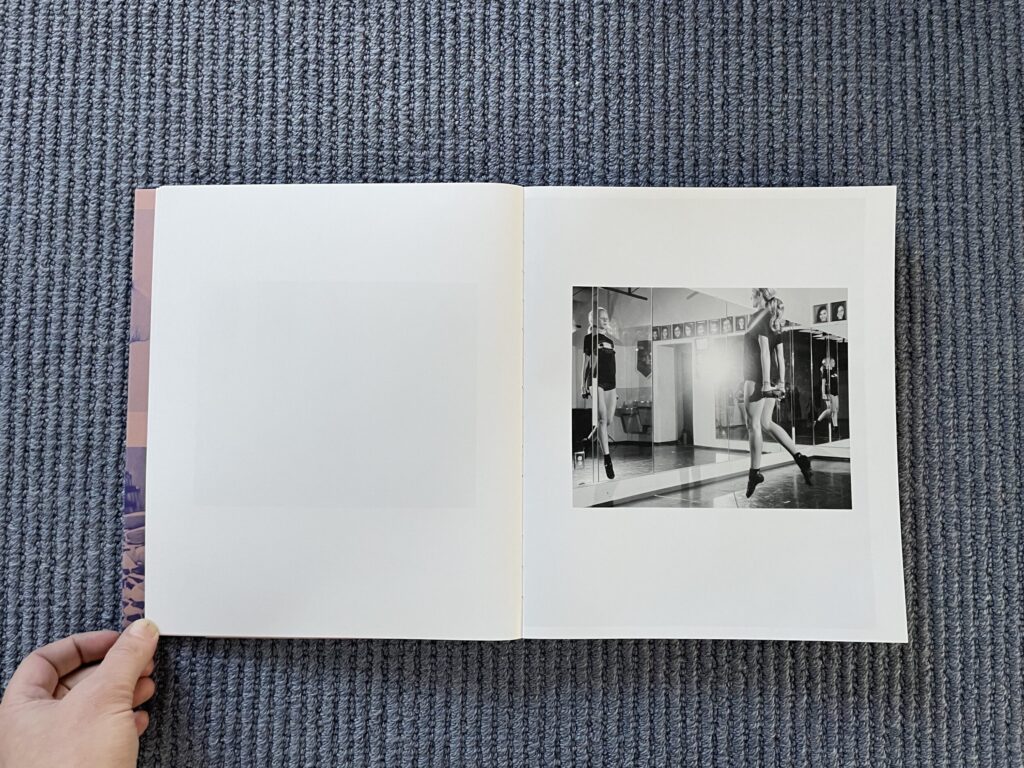
Durst isn’t afraid to employ some carefully placed flash to further heighten the energy of his scenes, as seen in two images that feature mirrors. In one, a young dancer jumps into the air in a mirrored dance studio, her form tripled by the nearby panes; the bright flare of the flash intrudes on this moment, reminding us of Durst’s presence, and of the strangeness of the girl caught hovering above the floor. Flash similarly animates an image of a cheer squad practicing a complex lift, with posing bow-haired girls held aloft by triangles of lifters below, with Durst’s flash equipment reflected in the nearby gymnasium mirrors. This is among the most complex and satisfying images in The Children’s Melody, as it documents the intricate coordination of many to create a singular moment of ordered celebration, the whole thing overtly precarious and reliant on supportive cooperation, in a way that feels emblematic of Durst’s whole project.
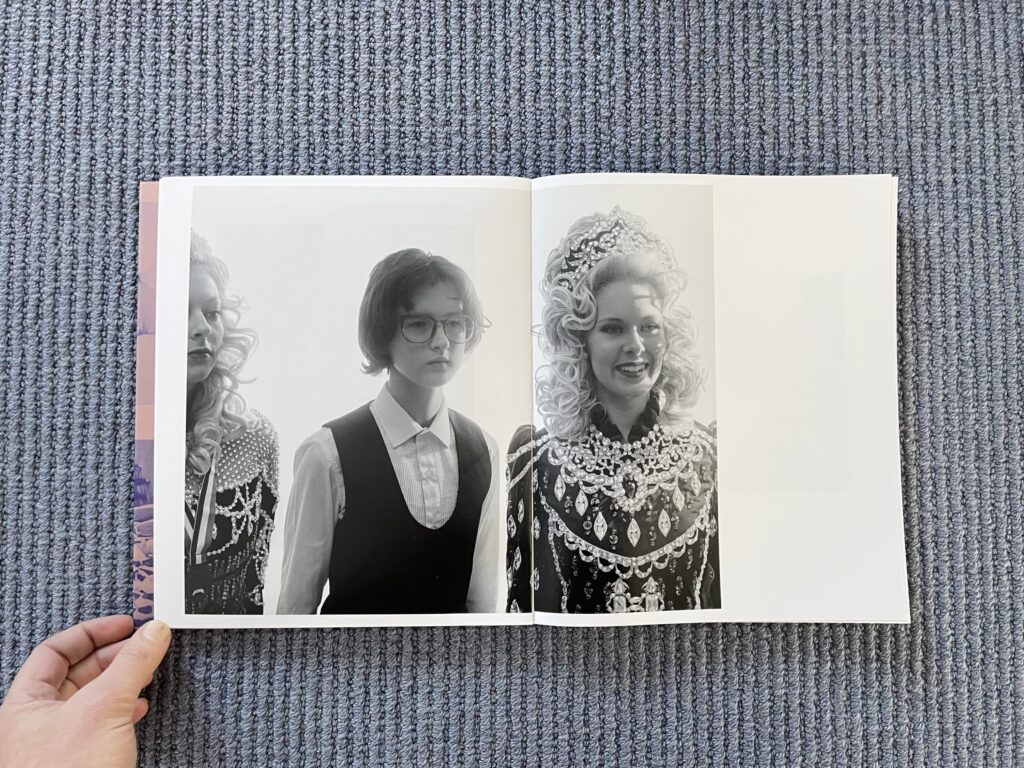
Intermingled among the group shots are a handful of well-seen portraits that bring us closer to individual young people and their moments of insecurity. Durst introduces us to a girl with a black eye and a broken nose, another standing somewhat dazed between two rhinstone-clad beauties, a third hiding behind some set design in a school production, an ROTC recruit in a moment of focus, and a boy pulling back a dark curtain to peer out at us. Each image seems quietly representative of the emotional roller coaster that these young people are riding, their search for acceptance and confident personal individuality requiring risk and struggle.
As a photobook object, The Children’s Melody is an unassuming no-frills affair that puts the photographs first. It features thick cardboard covers and an open spine, images that are generally presented one to a spread with plenty of white space, and a lack of other distractions, with no page numbers, captions, or other attributions offered anywhere. This is actually a body of work that might have benefitted from a child psychology or sociology essay, or even an uncanny short story, but we’re largely left to our own devices to figure things out. The one nod to decoration comes in the book jacket, which unfolds to reveal a two-sided design with images not included in the main body of the book, along with two short texts.
The longer term durability of The Children’s Melody lies in its focus on our universal human desire to be part of something. The strongest of Durst’s photographs capture the evocative instability of that longing, especially as experienced by younger people still discovering who they are, and who they want to be, in this world. His observations remind us how surreal it can be to try on different personas, and how risky it can feel to join a new group. As awkward as things get in these pictures, there is still plenty of optimism in Durst’s perspective, each image quietly rooting for its protagonists to find their own versions of validation and acceptance.
Collector’s POV: Eli Durst does not appear to have consistent gallery representation at this time. As a result, interested collectors should follow up directly with the artist via his website (linked in the sidebar).