The fifth and final group of photography discoveries from our Paris Photo 2025 summary can be found in the slideshow below. For more context on the general idea of “discoveries” and information on the structure of these slideshows, head back to Part 1 (here). Parts 2, 3, and 4 can be found here, here, and here.
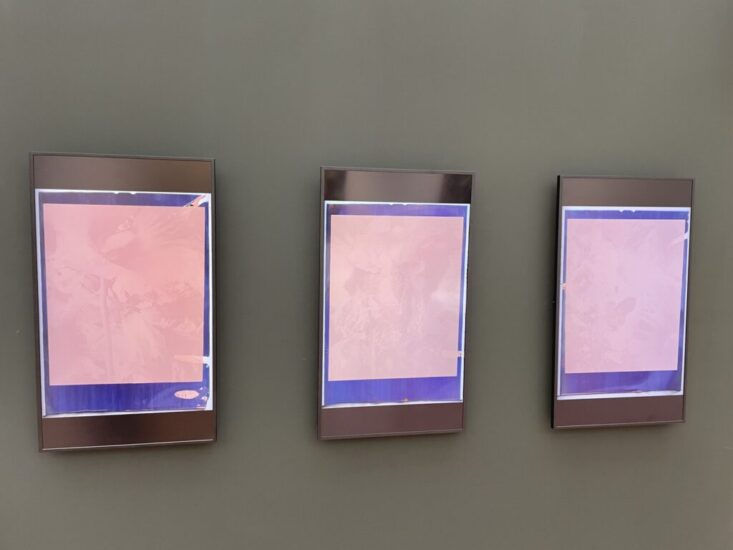
Nagel Draxler (here): Anna Ridler’s time-based project begins with three 20×24 Polaroids of a decaying flower bouquet, and the idea that these prints will slowly fade to a rose monochrome over time. The three screens on the other side of the wall have technically reversed this process, and will take between 8-10 years to slowly return scans of the same images to the original colors. The two triptychs are a thoughtful meditation on photographic aging, using digital technologies on the blockchain to facilitate the clever turnabout. Priced at 15Ξ for the entire installation (or approximately €45000 at the moment).
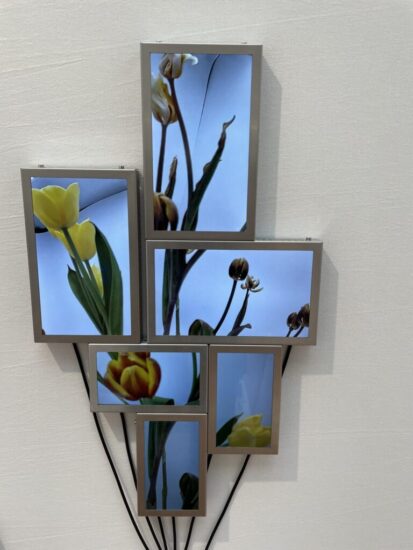
Rolf Art (here)/Tomas Redrado (here): Julieta Tarraubella’s multi screen video portraits of flower bouquets bring time-lapsed motion to the still life genre. Starting with videos made over two to three weeks as the flowers decay, via multiple cameras pointed at the same bouquet, Tarraubella then interlocks the videos on adjacent screens, running at different speeds. The effect is resolutely time-based and three dimensional (with a nod to Michael Wesely), the wilting flowers moving like a slow motion dance. Priced at €7500.
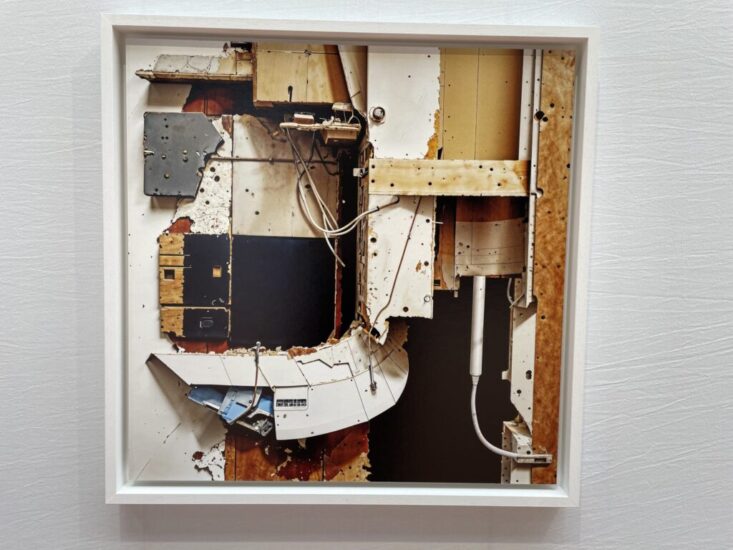
TAEX (here): At first glance, Kevin Abosch’s images look like close ups of built surfaces, architectural in some manner, but then not entirely recognizable or coherent. Using a very subtle form of AI, the Irish artist is creating synthetic structures that still look entirely photographic. It’s a testament to their fidelity that they feel related to Thomas Struth’s images of technology, Abosch’s false objects every bit as puzzlingly convincing as Struth’s incomprehensible finds. Priced at €6000.
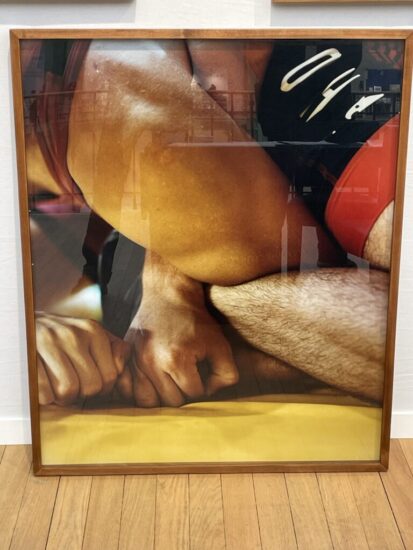
Obsession (here): The tangled limbs in this image by the Hungarian photographer András Ladocsi seem tensely intertwined, as though wrestling or fighting. Fists and muscles push and pull, the physicality of the movement becoming sculptural. Priced at €3200.
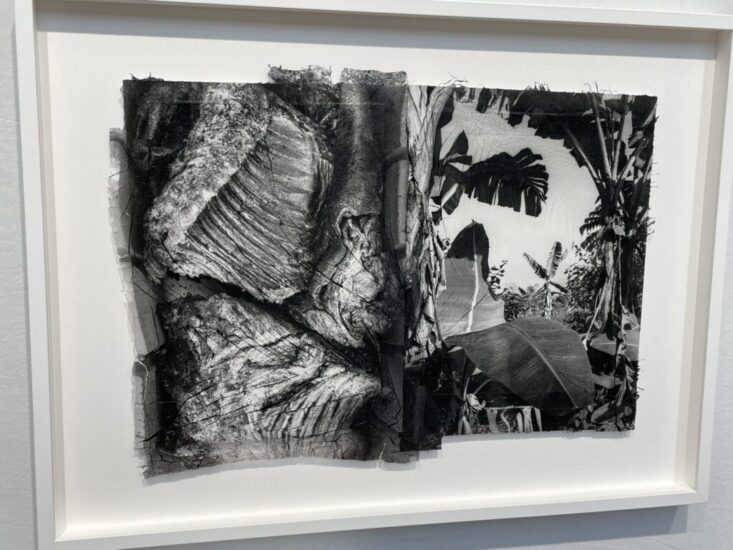
Hangar (here): Sylvie Bonnot’s black-and-white images of French Guyana are made using a molting process, where a thin membrane of photographic emulsion is first removed from the original print and then transferred to another paper substrate, where cracks, wrinkles, and other skin-like deformations create a textural surface. Here pig carcasses are juxtaposed with banana trees, highlighting a sense of displacement between traditional culture and colonial intrusion. Priced at €4800.
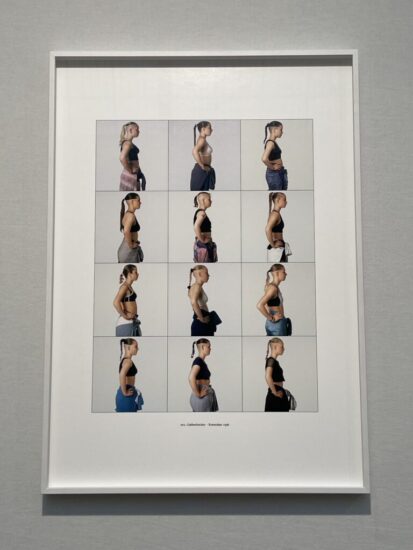
Madé van Krimpen (here): Street style fashion photography becomes rigidly ordered and typological in the work of Ari Versluis and Ellie Uyttenbroek. Their long term project “Exactitudes” finds the patterns in the common looks of subcultures, like the hardcore “gabberbitches” in their sports bras and half-shaved heads from Rotterdam in the 1990s. Priced at €1250.
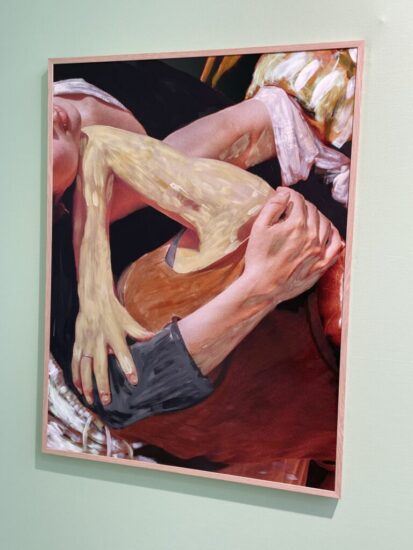
Hama (here): Melissa Schriek’s images are filled with gestural motion and movement, with the recent addition of overpainting, which transforms this interlocked group of arms and bodies into something less photographically precise. Skin and fabric shimmer and dissolve into painterly textures, softening crispness into luminous approximation. Priced at €3200.
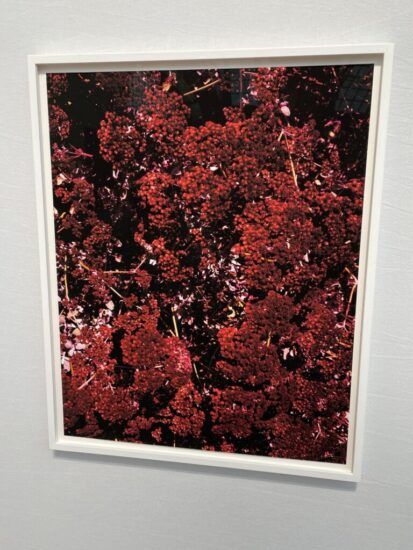
Espace Jörg Brockmann (here): This color tweaked plant specimen comes from Marine Lanier’s recent project “Le Jardin D’Hannibal”. Lanier spent time at Europe’s highest alpine garden, up in the mountains at the Col du Lautaret in France, where scientists are studying the biodiversity of this unique ecosystem and testing how it might adapt to more drastic temperature fluctuations from climate change. Her images expressively interpret these plants, imagining their place in a more hostile environment. Priced at €1900.
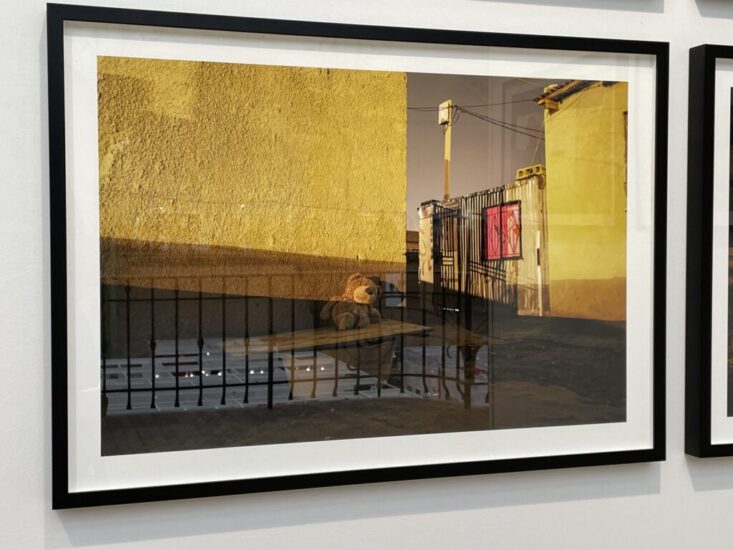
Afronova (here): Sibusiso Bheka’s images of dusk in the township of Thokoza in South Johannesburg, Africa, revel in the possibilities of light and color. In this work, powerful light blankets an interior courtyard, casting an eerie yellow shadow across the improvised buildings, mixing the realities of tin housing and surveillance lighting with an understated eye for overlooked beauty. Priced at €3150.
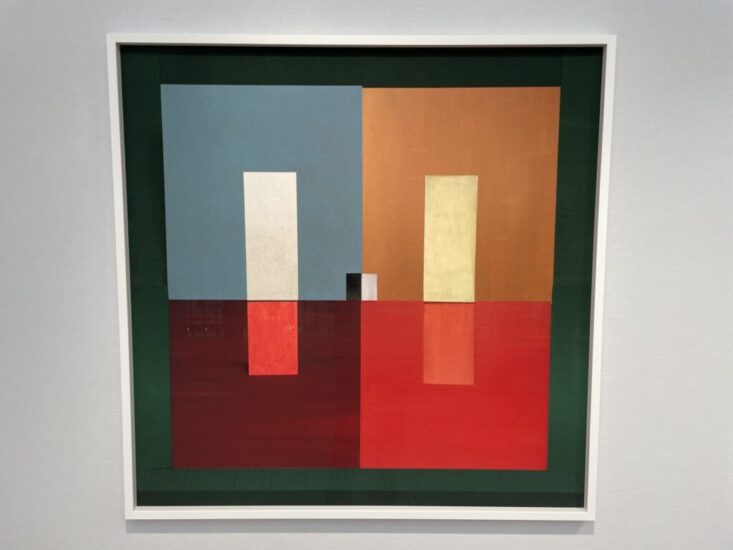
Concordia Studio (here): The Mexican photographer Rodrigo Chapa’s geometric abstractions are made from studio constructions designed to be photographed, in a similar manner to the work of Erin O’Keefe. Here the flattening eye of the camera collapses the space, creating precise alignments of squares and rectangles. Priced at €4250.
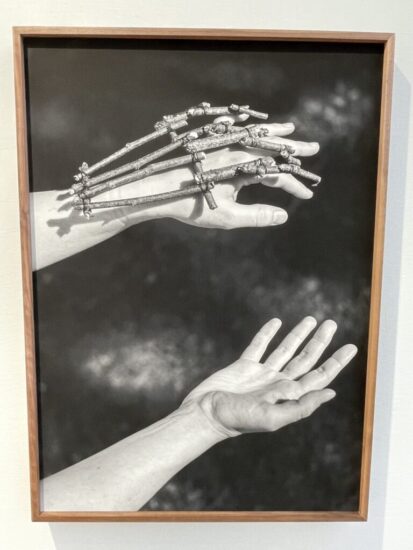
Fisheye (here): Chloé Azzopardi’s images reimagine technology as constructions of wood and other natural elements, particularly in conjunction with human bodies. Like a robot hand made from rudimentary sticks, her images question our technological dreams and fantasies with incisive wit and tenderness. Priced at €2400.
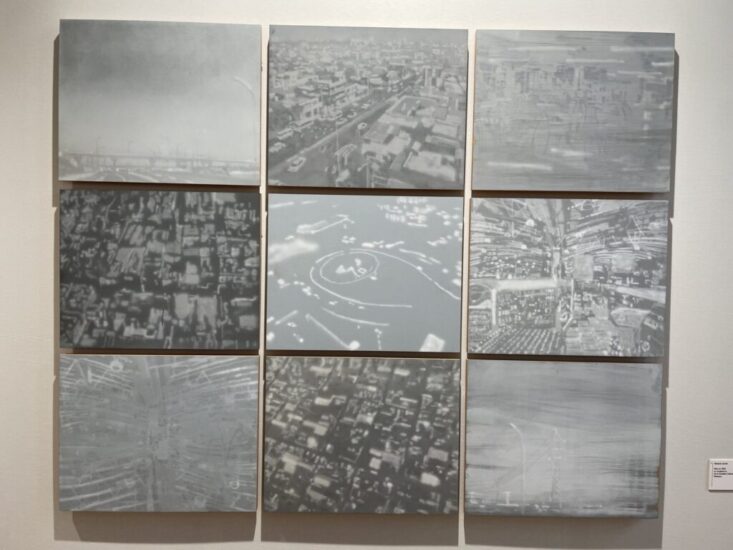
Estrellita Brodsky Collection (no website): This nine panel work by the British artist Melanie Smith (made in 2002) reimagines Mexico City as a series of wispy serigraphs. Aerial and street level views dissolve into smoky approximations and energetic movements, taking the pulse of a city reinventing itself. NFS.
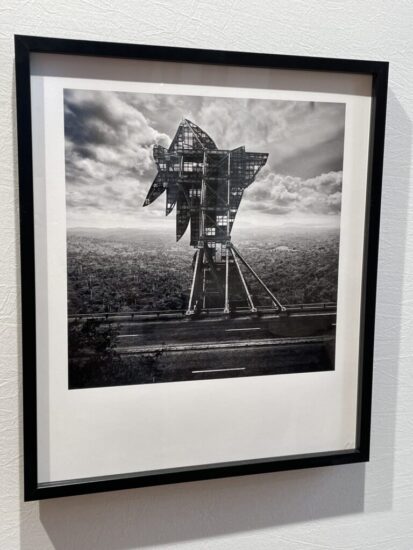
Estrellita Brodsky Collection (no website): This structural image of the back of a billboard (from 2017) comes from the Cuban photographer Adrián Fernández’s project “Pending Memories”. The conceptual twist in the series is that the artist has digitally relocated his billboards to various alternate landscapes, crafting a range of realities steeped in exhausted theatricality. Who might this decaying advertisement be reaching as it faces out into an expanse of rainforest? The questions of what is reality and what is a facade remain unanswered. NFS.
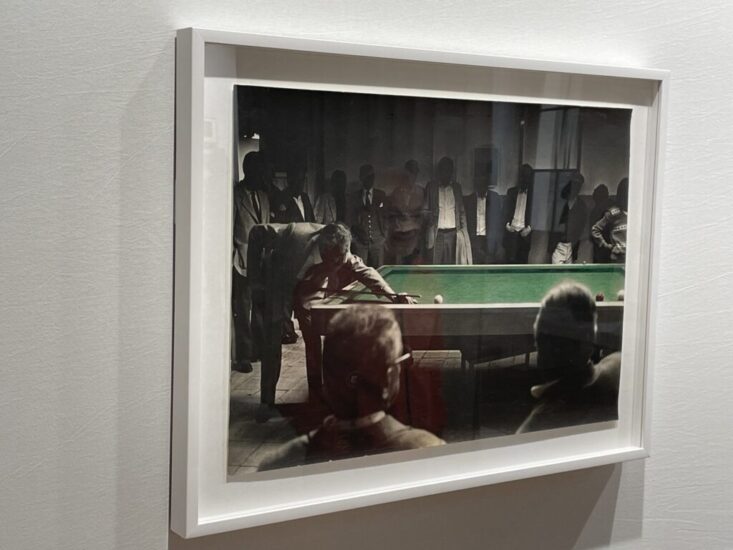
Estrellita Brodsky Collection (no website): This hand tinted image by the Colombian photographer Fernell Franco comes from his 1985 series “Billares”, set in the pool halls of Cali. It’s steeped in masculinity, with men circling the table and watching the playing of the game. The tinting of the green baise of the table gives the picture a kind of hyper reality, making the everyday moment all the more mysterious and magical. NFS.
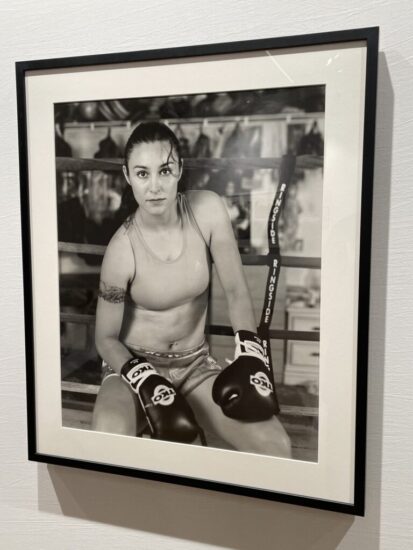
Estrellita Brodsky Collection (no website): This direct stare comes from the Chicana photographer Delilah Montoya’s 2008 series “Women Boxers: The New Warriors”. Seated on a stool in the ring, the young woman exudes physical strength and confidence, seemingly ready to go to battle. NFS.
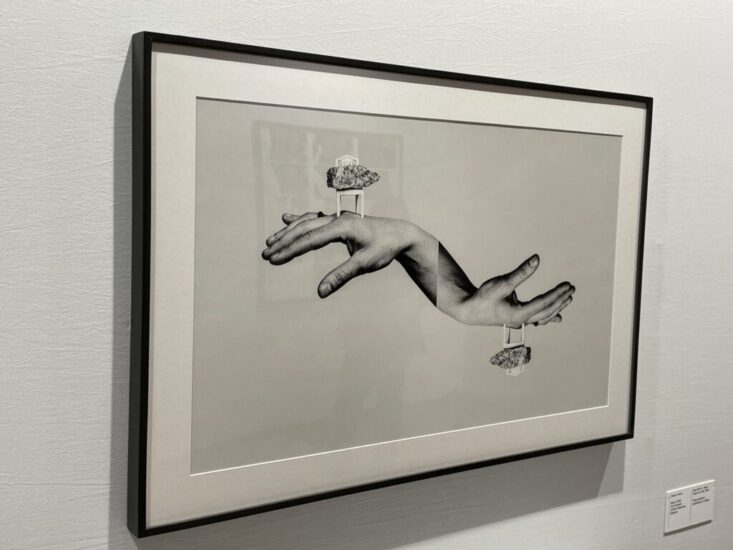
Estrellita Brodsky Collection (no website): Surreal mystery surrounds this doubled 1985 image of hands with tiny chairs and rocks by the Spanish performance artist Esther Ferrer. The curve of the gesture is lithe and gentle, but the balanced weight of the seated rock is more inexplicable. NFS.
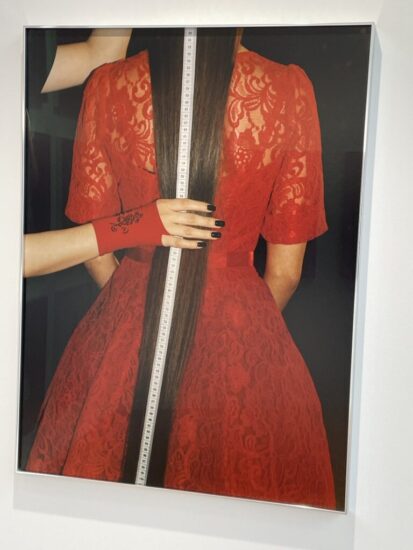
Chloé (partner booth): The gloved measuring taking place in this image was found by the British photographer Francesca Allen at an annual competition for the world’s longest hair held in Lithuania. The larger project, filled with portraits of women and girls with extremely long hair, wrestles with themes of coming of age, female roles, and individual expression in the context of tradition. A photobook from Steidl is forthcoming. NFS.
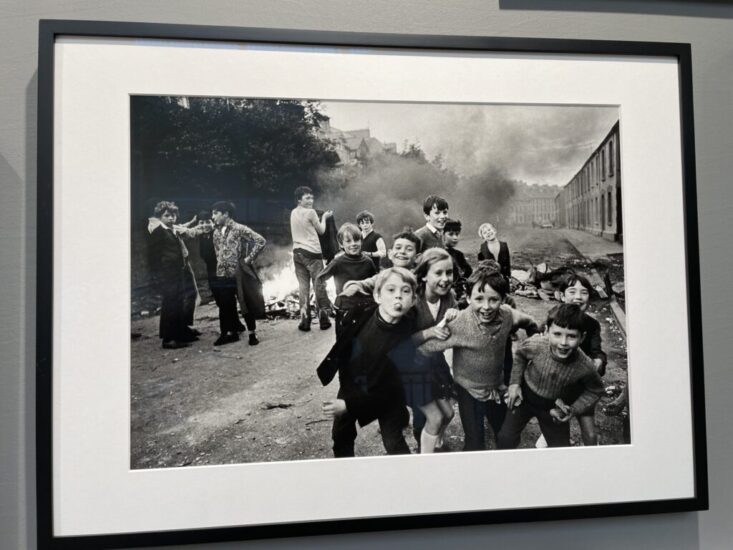
Deutsche Börse Photography Foundation (partner booth, here): The contrast between the raucous playfulness of the children and the burning debris in the background provides the uneasy tension in this 1972 image by the French photojournalist Christine Spengler. Taken in the aftermath of the Battle of the Bogside in Derry, Northern Ireland, it captures the release of irreverent youthful energy after the adult trauma of the riots. NFS.