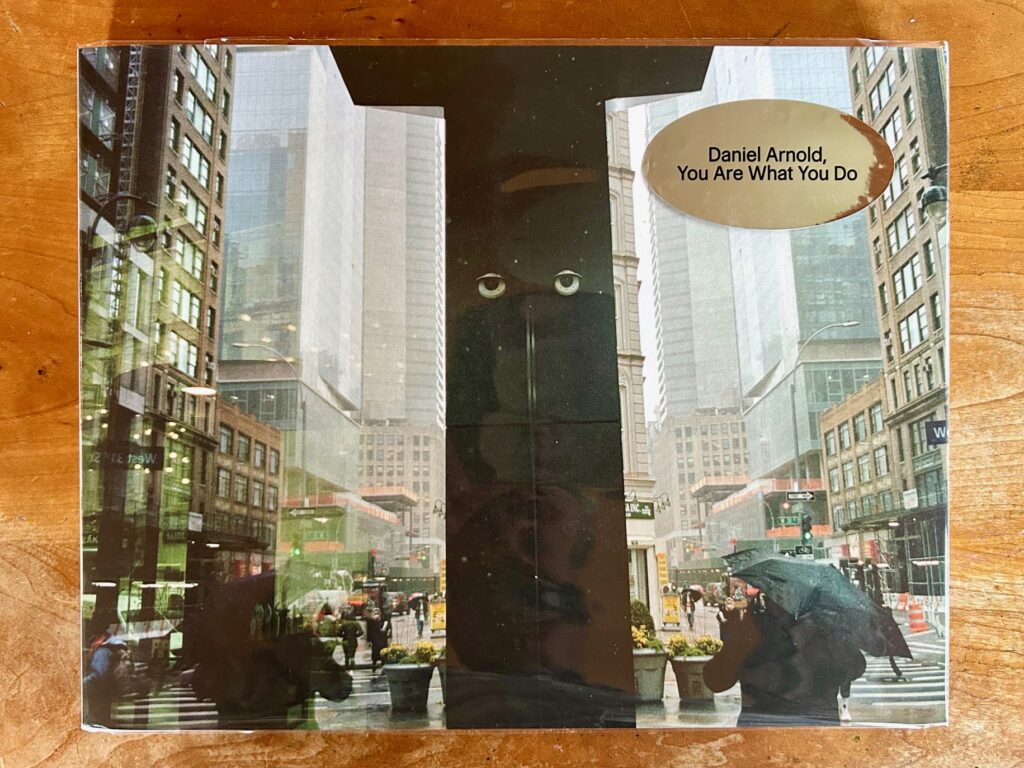
JTF (just the facts): Published in 2025 by Loose Joints Publishing (here). Hardcover with dust jacket and mirrored sticker, 275 x 225 mm, 184 pages, with 124 color photographs. Design by Loose Joints Studio. (Cover and spread shots below.)
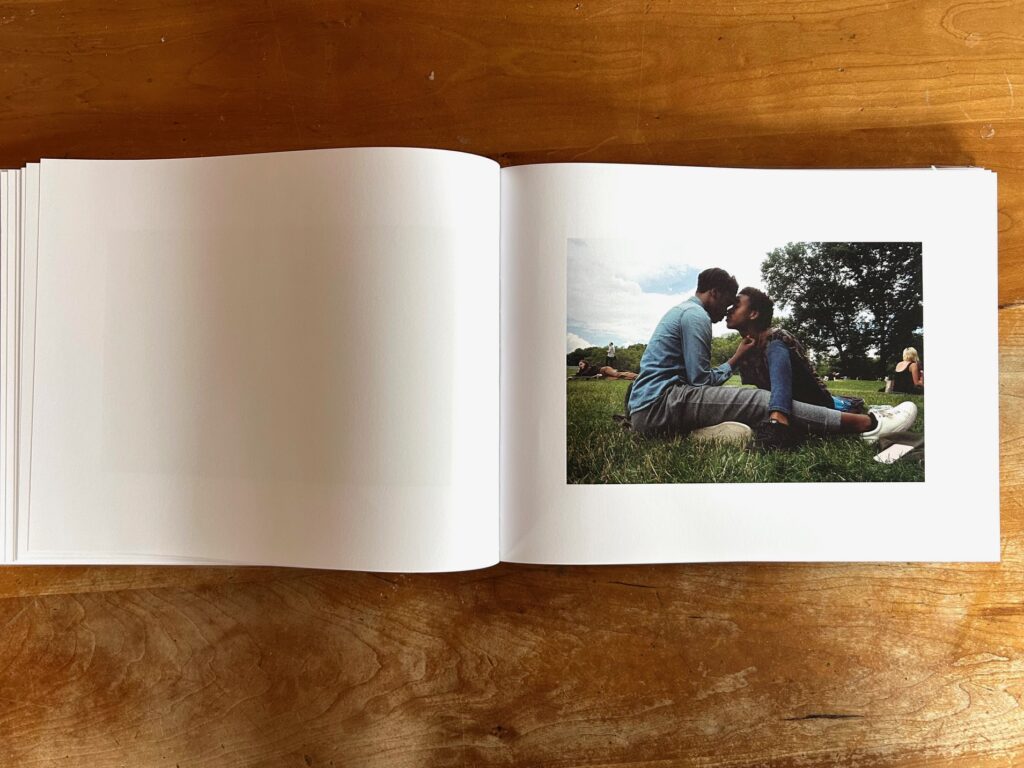
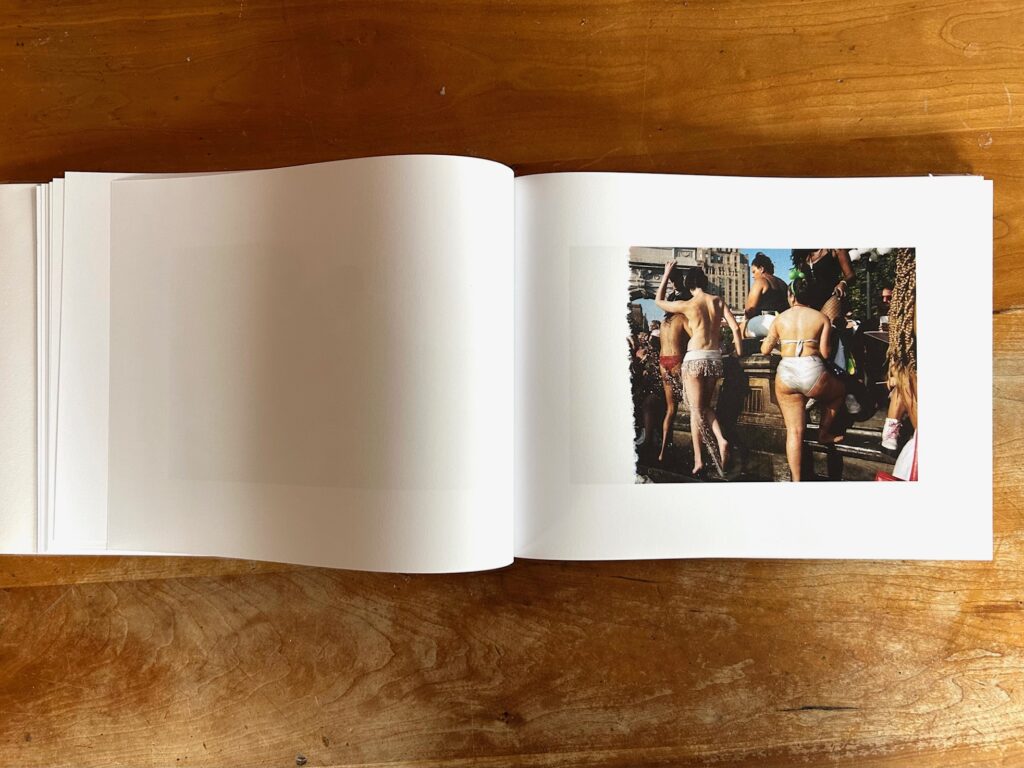
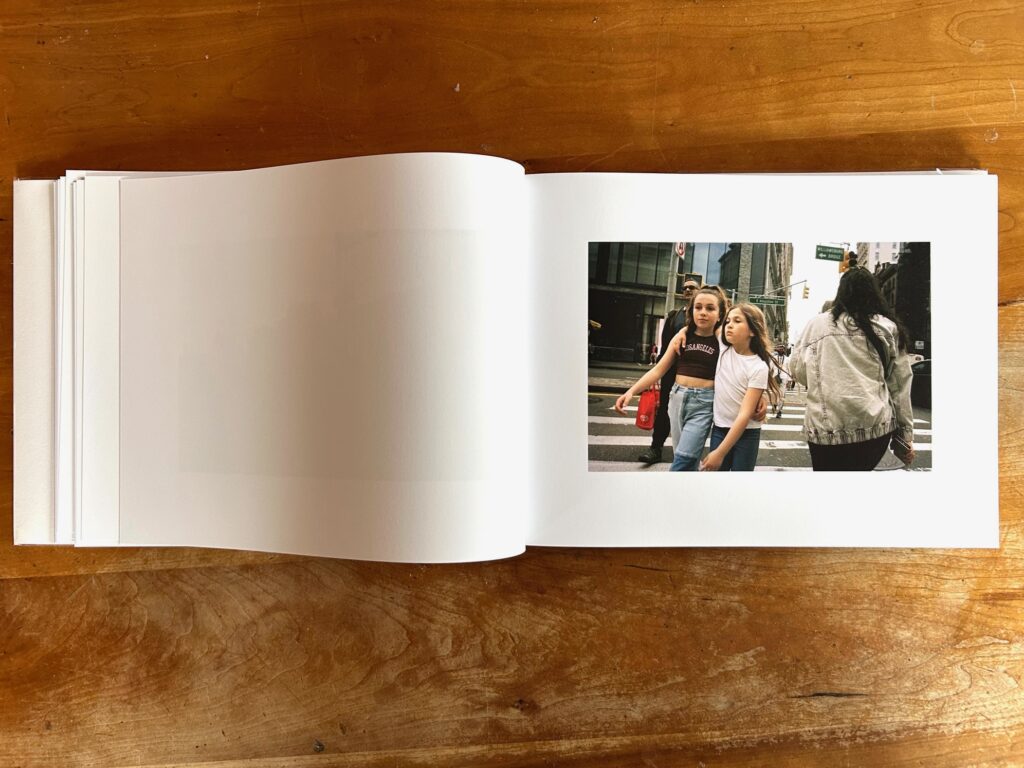
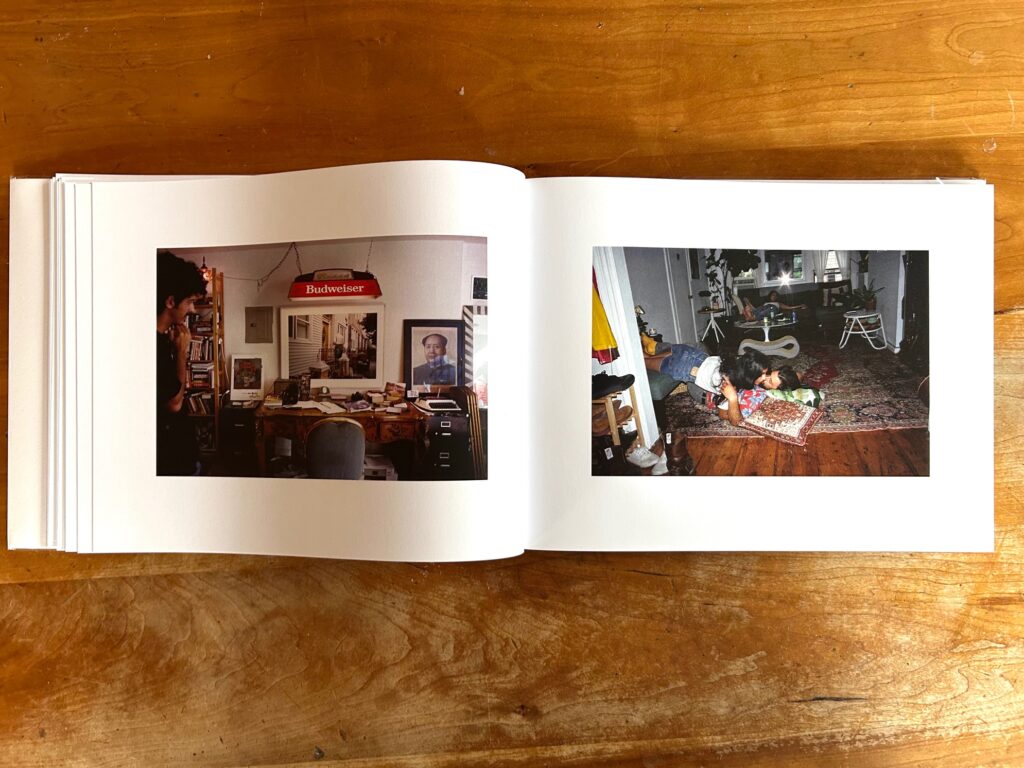
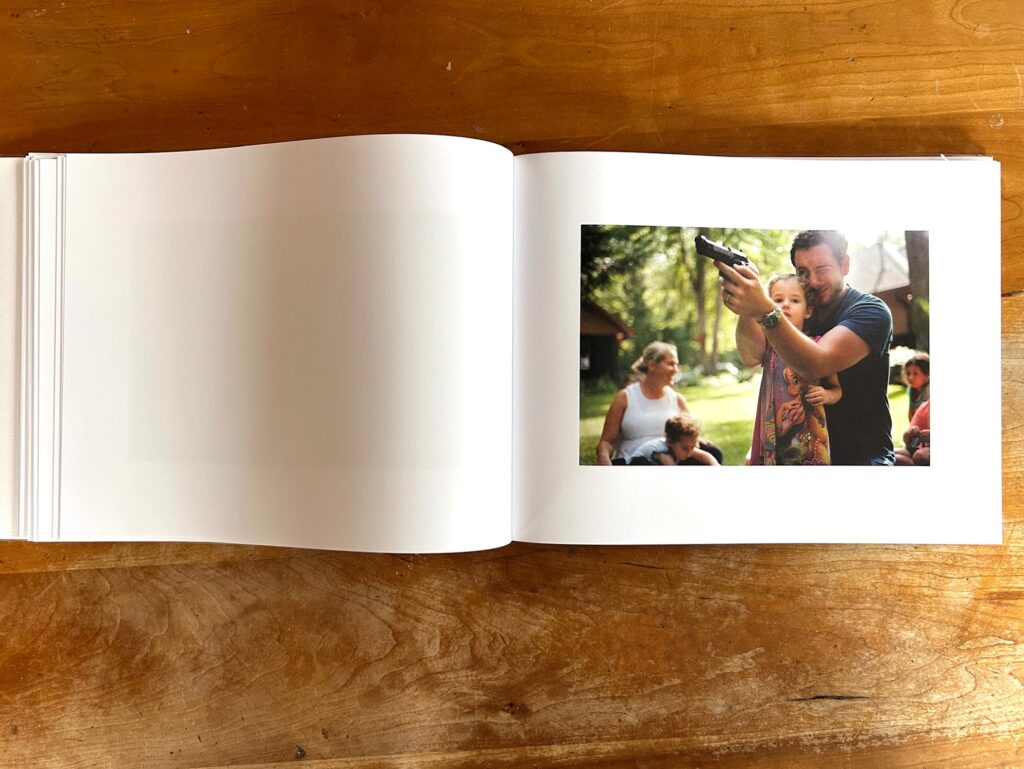
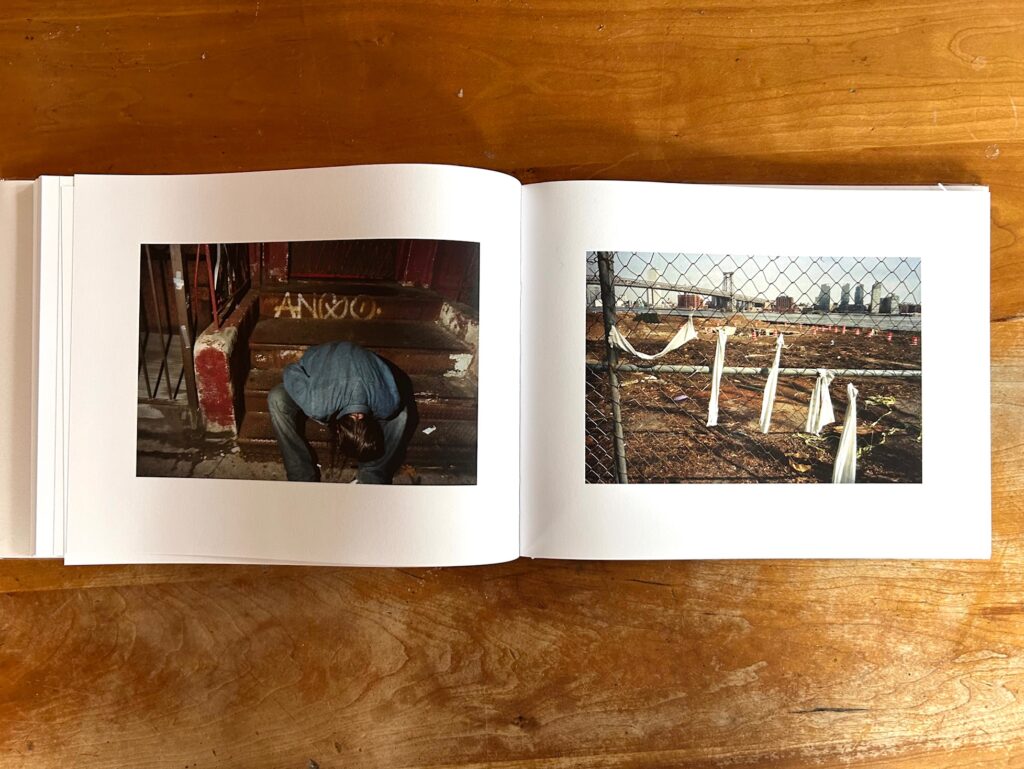
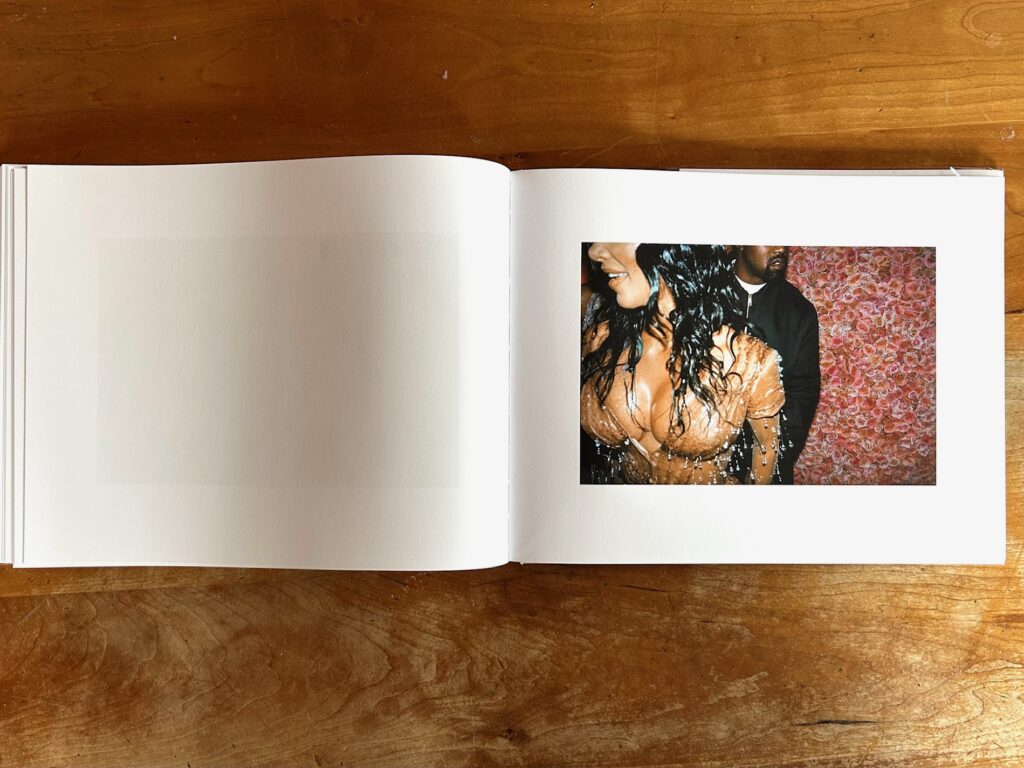
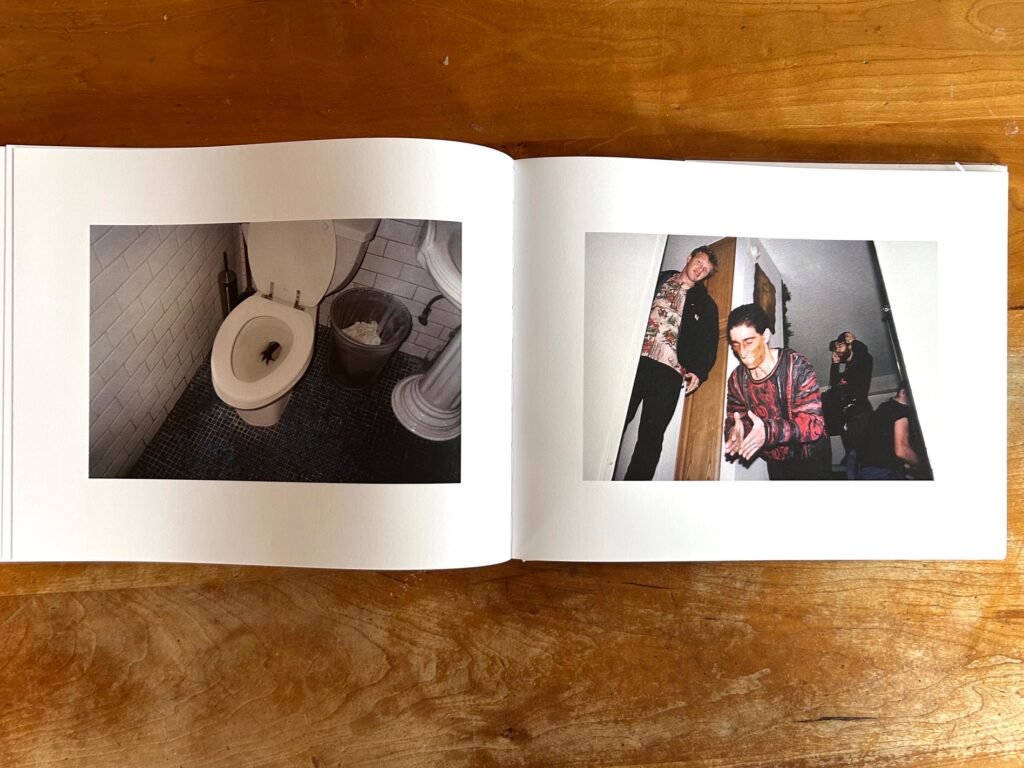
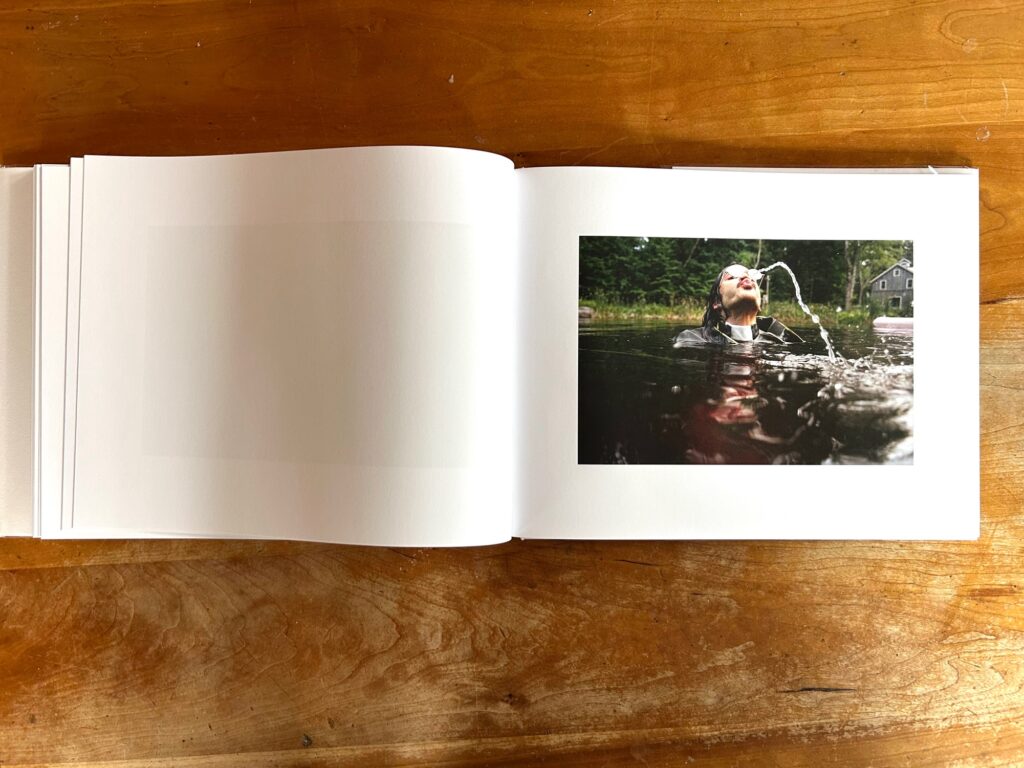
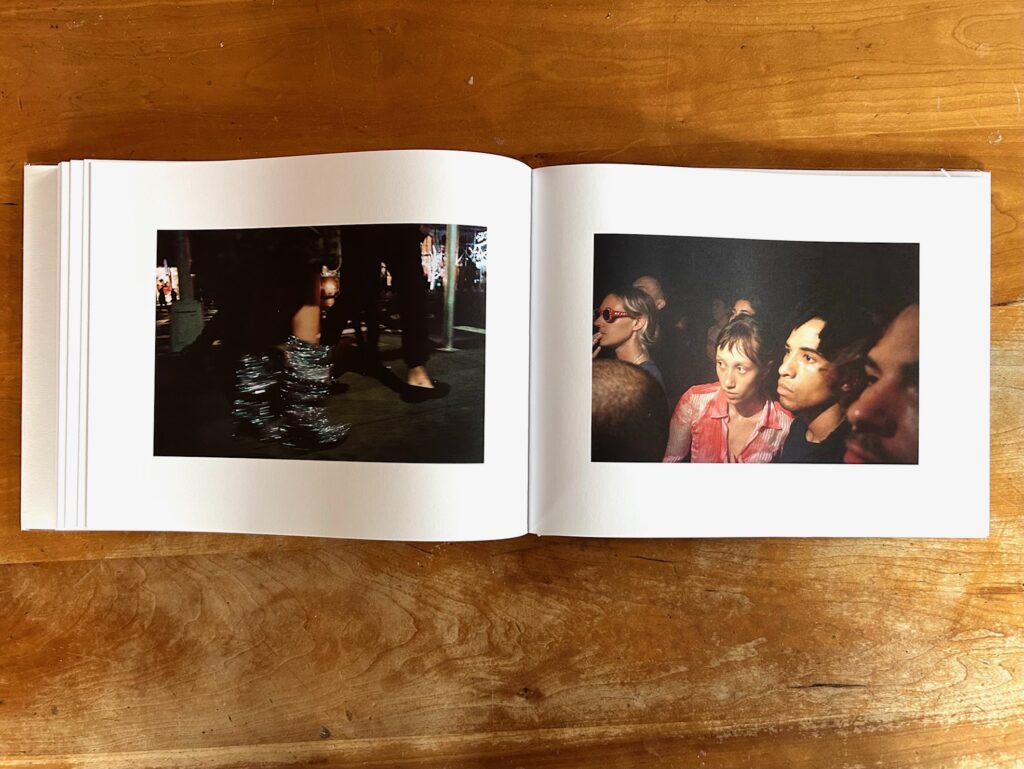
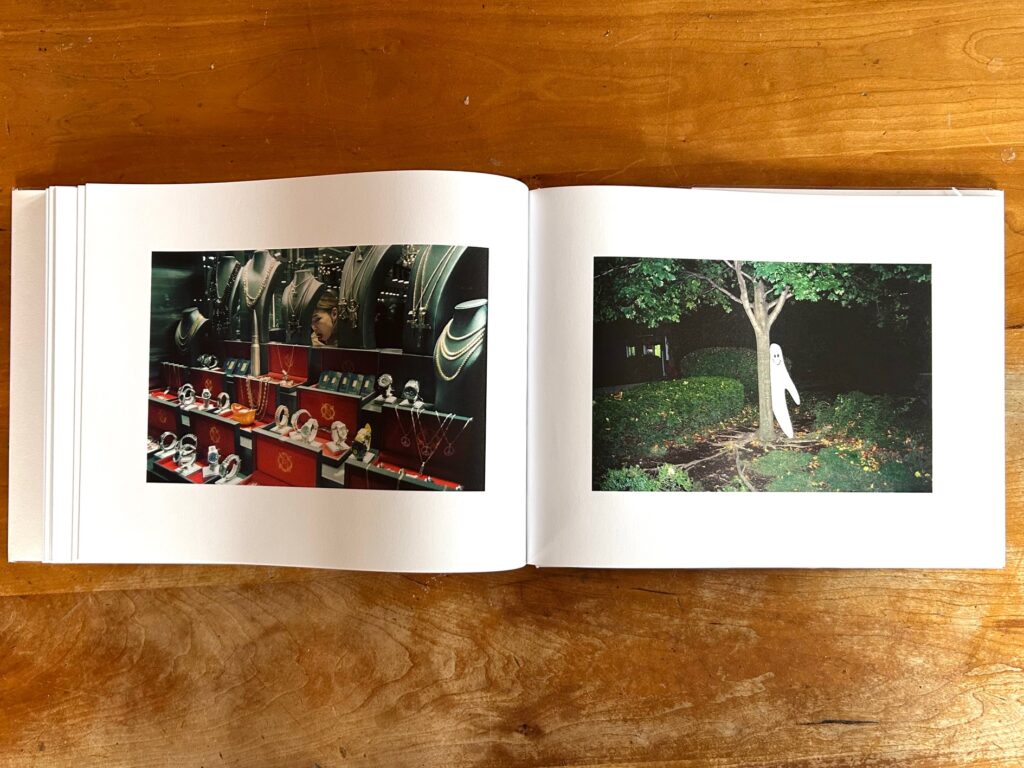
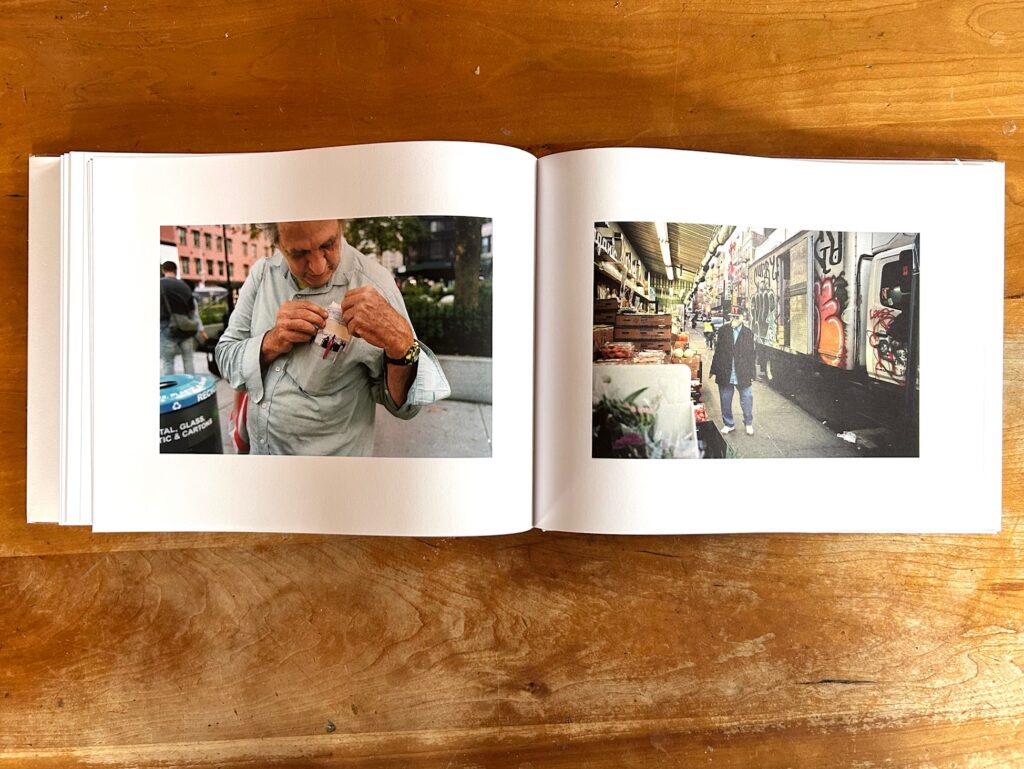
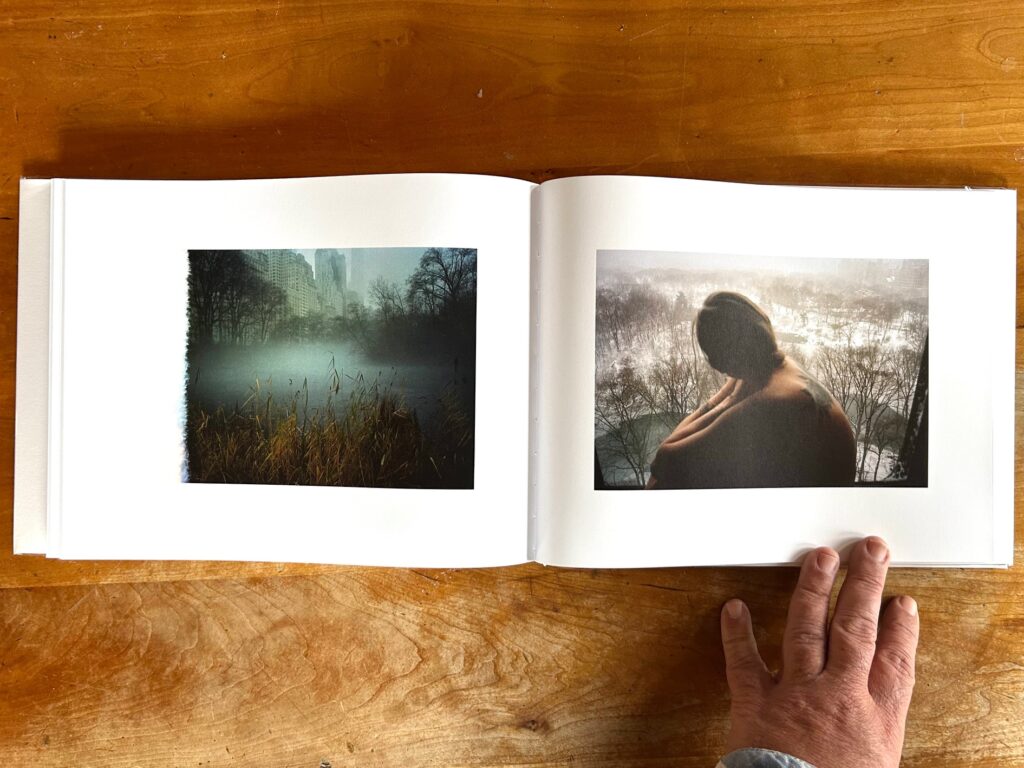
Comments/Context: My first real world encounter with Daniel Arnold’s photography occurred about ten years ago in Los Angeles. He was showing small prints in an impromptu space near Union Station, not far from Robert Frank’s displaced statue of St. Francis. Dispensing with glass and framing, the show exuded the insouciance of a watchcap and mustache. Hundreds of post-card sized snapshots were mounted directly to the wall in a horizontal strip circling the room. The general subject was New York City. Beyond that, Arnold’s interests were freewheeling. He had swept up nightscapes, friends, flowers, utility poles, posters, bums, taxis, and more, a stream of life caught in passing.
At that point I was not yet on Instagram. But Arnold had established a solid foothold there, and was posting new photos regularly. In hindsight, that LA show might be viewed as a physical cousin of IG’s doom scroll. It was breezy, punchy, fleeting, dispensable, and seemingly inexhaustible. There were some great photos to be sure, but they were lost in the deluge. Perhaps this was intentional? Arnold was a young upstart bypassing the medium’s gatekeepers. His presentation may have been a nod to social media’s leveling power. I’m all for liberation, but still I was flummoxed. I could find no entry point, thesis, or coherence. What his work needed more than anything, I thought at the time, was a good editor.
Arnold’s first true monograph Pickpocket (reviewed here) was a tentative step in that direction. Arnold laid his archive at the feet of two film directors, Ben and Josh Safdie. Their curation gave shape to the torrent, if just barely. In form and content, Pickpocket was an odd duck. It combined six books in one, the whole thing tucked into an oblong mylar package. It was sprawling, improvisational, witty, wordy, and packed with over 500 pictures. Arnold didn’t just fire off frames. He machine gunned them, along with countless neurotic witticisms. “This book embodies the wall-to-wall experience of living in New York City,” I wrote at the time. “The metropolis is in your face at all times, and so is Arnold.”
Four years later comes the followup. You Are As You Do is Arnold’s tightest curation to date. Note that “tight” is a relative term. The book is stuffed with more than 120 photos. For most photographers that would be excessive. In Arnold’s case, it feels honed. The selection was edited by Sarah Chaplin Espenon, the cofounder and co-editor of Loose Joints. The Arnold/Espenon partnership was something of a peanut butter and chocolate blend, two great tastes which don’t typically mix together. This is the purest street photography book yet from Loose Joints; for Arnold, it’s a step up to the publishing big leagues.
As with Pickpocket, Arnold threw a mountain of photos at Espenon. In this case it was close to 3,000 images, a mishmash of recent work, old favorites, and unpublished pictures stretching back 20 years. There was probably sufficient material for 40 different books. Where to even start? Espenon settled on a blend of street photography, quiet moments, and personal revelation, all set against the ever present backdrop of New York City. “Sarah had a very stubborn sense of how it should move, in energy and in color,” Arnold said in a recent interview. “I think the emotional rhythm we landed on is wavy. It comes in, goes out and comes back in again. No clever intros, explosive climaxes or meaningful finales. It moves like life.”
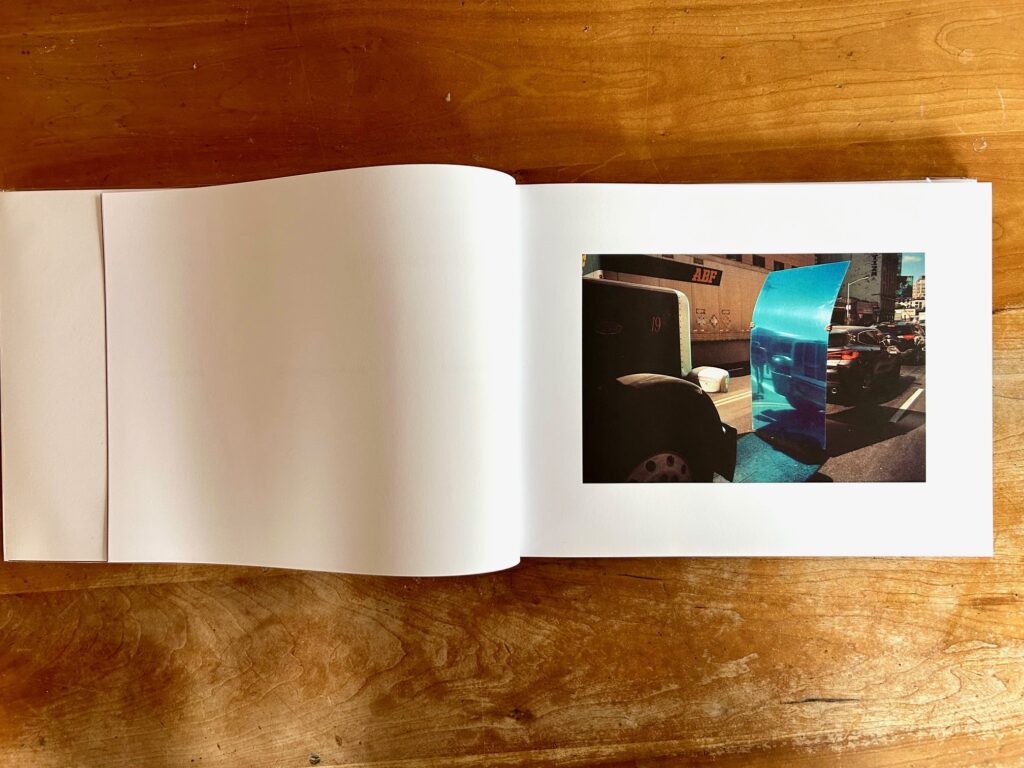
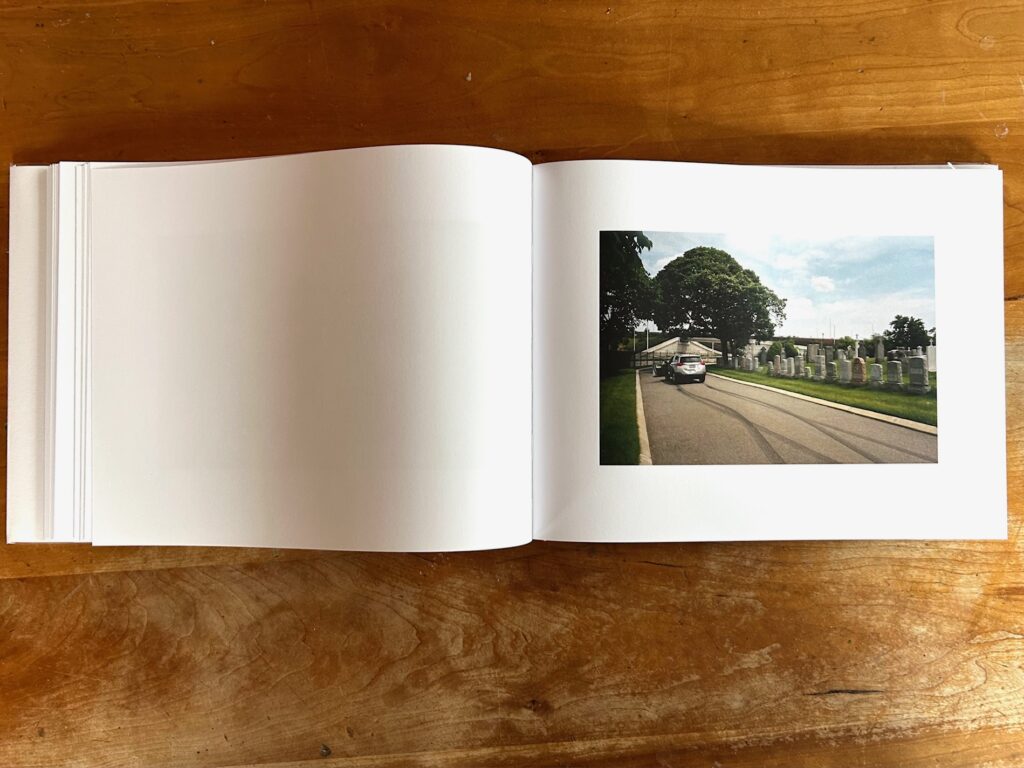
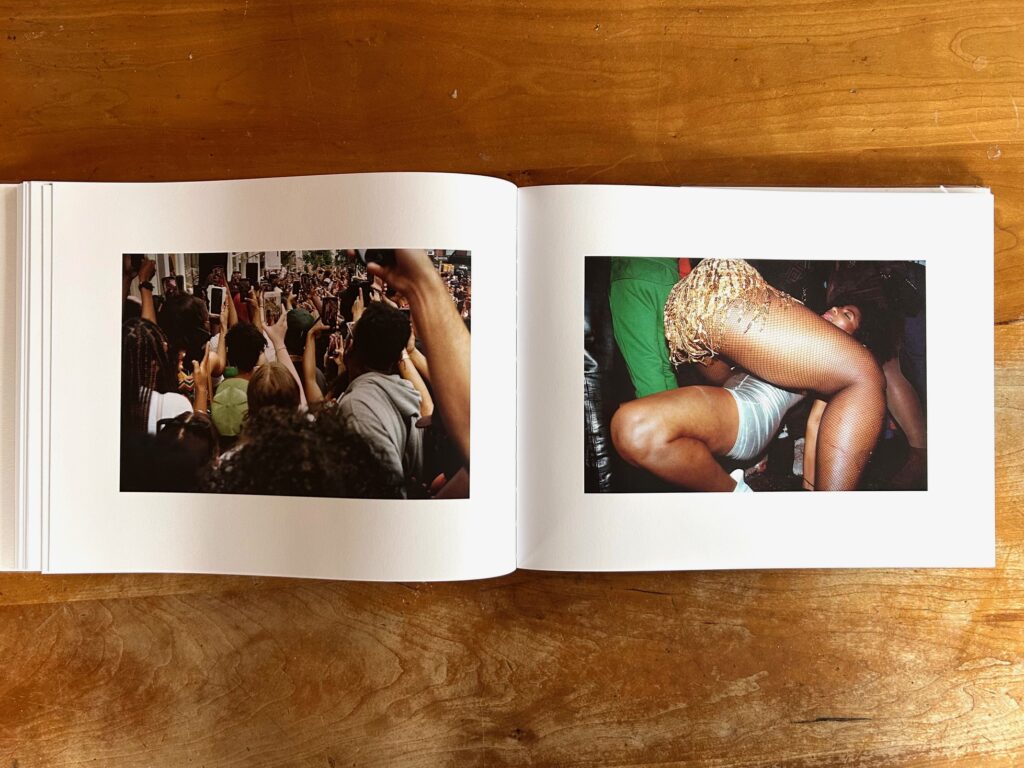
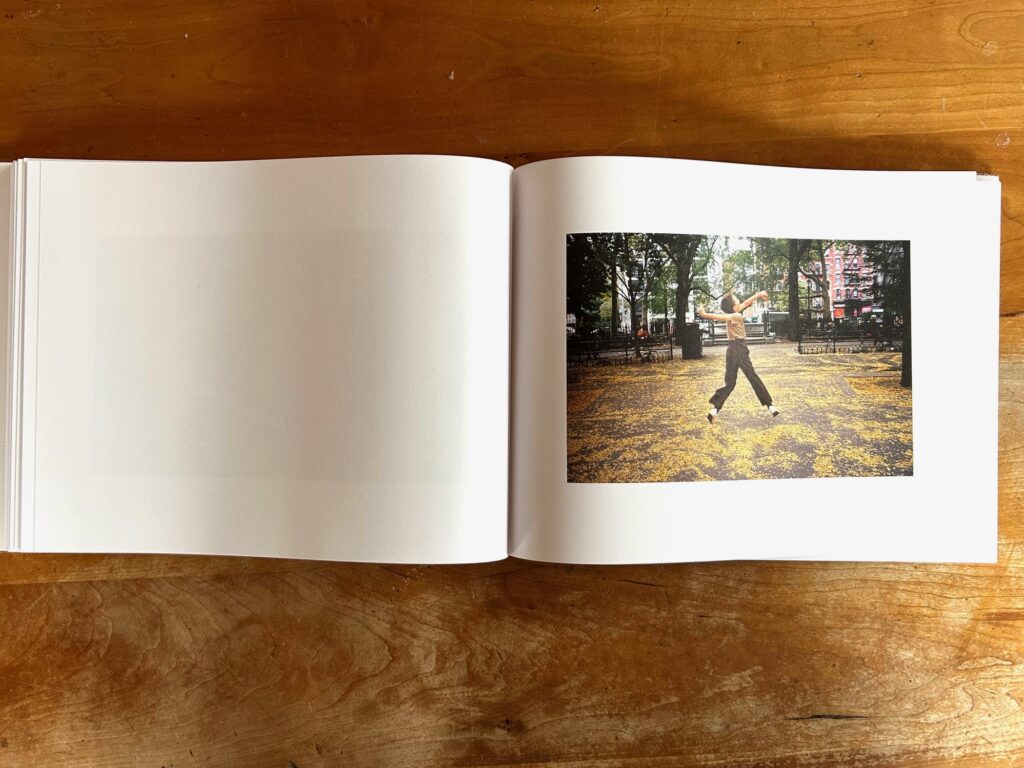
In contrast to Pickpocket, the production is conventional. It’s a simple hardback with dust jacket, presented in a landscape format to accommodate Arnold’s photos. There is no text or captions. If Pickpocket was rooted in the documentary impulse (and filled with explanatory anecdotes), You Are As You Do aspires to the realm of ineffable. Zine inserts, collaged layerings, and wild excess are in the past. Instead, the photos step forward in orderly fashion, one or two per spread, as if on a grand tour of Europe. “I definitely don’t work with the same energy that I used to,” he recently told Aperture, “which is not to say that I’m tired. It’s just that my priorities have changed. My appetites have changed.”
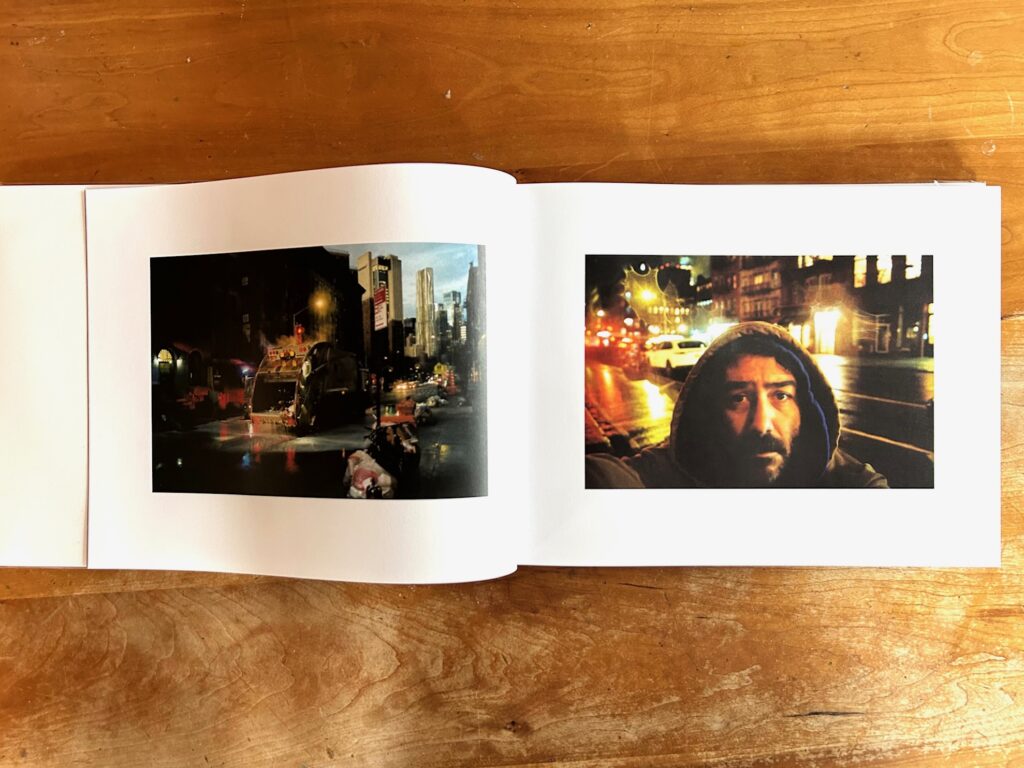
Maybe so, but the current feeding frenzy is as messy as ever. The book opens with a dim subway scene, a dismantled car hood, and a leaky garbage truck. The gritty vibe continues with an Arnold selfie on the next page. His grubby face is tucked under a wet hoodie. Out on the prowl, just another day in the Big Apple. And with that photo, we’re off. The sequence weaves like a busy commuter through smokers, cops, sunrises, old newspapers, a rainy pandemic corner, and more. A topless couple embraces for a romantic kiss standing in the Washington Square Fountain. Seagulls pester sunbathers at Coney Island. A woman catches her own reflection near the Brooklyn Bridge. A guttered headline touts the death of Osama Bin Laden. Partial frames cropped by end-of-roll margins signal Arnold’s ongoing commitment to film.
Eventually we come to the title image. It’s set up by a picture of kids holding a sign with an important question: “Does Life have a purpose?” The answer is revealed on the next page, in a scene of girls playing hide and seek. In the center of the photo is a large orange structure tagged with a handwritten quote from Carl Jung: YOU ARE WHAT YOU DO. Applied to Arnold, this phrase becomes the book’s through line. He is what he does. His sheer bustle is the protagonist, knitting together a thousand city subplots like Marty Supreme.
Most of the images in this book can be broadly categorized as street photography. They showcase Arnold as an obtrusive flâneur in the mold of Henri Cartier-Bresson, observing, experiencing, and capturing anonymous public situations. If they are sloppy and imperfect, chalk it up to the chaos of everyday life.
But not so fast. Before you can say decisive moment, Espenon throws a wrench into the genre with a slew of personal photos. Arnold’s partner Kay Kasparhauser turns up in a few, including a private moment at her hospital bedside. There’s Jason Polan in another frame (his hand drawn portrait is Arnold’s Instagram icon). Is that Robert Frank reaching into his shirt pocket in another frame? Hard to say for sure. Regardless, there are more intimacies in the mix. Snatches of Arnold’s apartment and photobook library offer clues to the wizard behind the curtain. Other pictures drop in on pets and paintings, a living room makeout session, a couple in bed with their infant, and other casual artifacts of domesticity and relationships. All must have involved some degree of interaction and consent. Finally there’s Arnold himself, caught in a moment of self-reflection on the very last page, a bookend to the opening selfie. Good luck finding such scenes in books by Garry Winogrand or Alex Webb.
You’d think there’d be more friction between these private scenes and Arnold’s pedestrian-caught-in-passing pictures. But they blend together in the book with surprising ease. This can be partially credited to Espenon’s subtle curation. Her sequencing is masterful, with only a few slight hiccups (two misplaced monochrome photos).
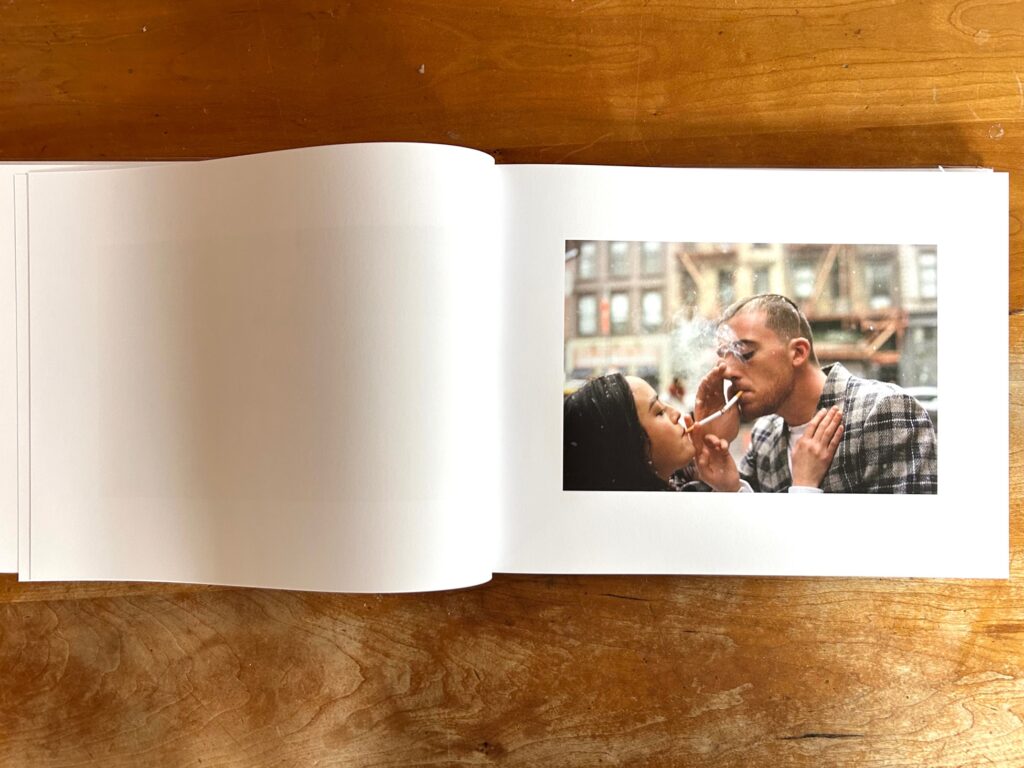
But Arnold’s visual style lends momentum and cohesion. Even when shooting anonymous strangers in public, he seeks out the tender underbelly. He finds people leaning into each other to light their cigarettes, or gazing at his camera like an old friend. A man in a convertible pauses to enjoy his flowers. A subway couple shares a kiss. An oddly blemished character shows off a rodent in a box. The guarded city has a million soft openings, if you know where to look. Arnold treats New York City like an extension of his living room, where strangers are just friends you haven’t met yet.
Add Espenon to the guest list (maybe she’ll appear in his future photos?). With her help Arnold has successfully leaped from the Instagram ghetto and into the upper echelons of photoland. You Are As You Do has been lauded in Aperture, The New York Times, Harper’s Bazaar France, and numerous year-end lists. His circuit now includes the Met Gala, Vogue, and Chico Review. Don’t let the paint-stained pants fool you. Arnold is a budding art star.
Now comes the tough part, staying true to his street roots while buffeted by eager influencers. Art world machinations are surely in the offing. It will be interesting to see what happens next. “I would hate to predict tomorrow because anything I guess will hem me in,” he told Aperture. “I don’t want a goal. I think that life is scary and stressful, and we’re in hard times. I would love to stay loose and stay open and, more than anything, keep surprising myself. But what will come next? I have no idea.” Where does Daniel Arnold go from here? What will future books look like? Who knows. The only certainty is that he is what he does.
Collector’s POV: Daniel Arnold does not appear to have consistent gallery representation at this time, although his commercial work is represented by Second Agency (here). Interested collectors should likely follow up directly with the artist via his website or Instagram page (both linked in the sidebar).



Nice review, Blake. Street photography, right up your alley.
A measured and beautifully written piece. Some of the pics are wonderful, congrats on the book DA.
Daniel Arnold has gallery representation in Berlin: Kominek – https://www.kominekominekominek.com/paris-photo/