JTF (just the facts): Published in 2025 by GOST Books (here). Hardcover (27 × 33 cm), 100 pages, with 58 black-and-white photographs. Includes an afterword by Richard Blair. (Cover and spread shots below.)
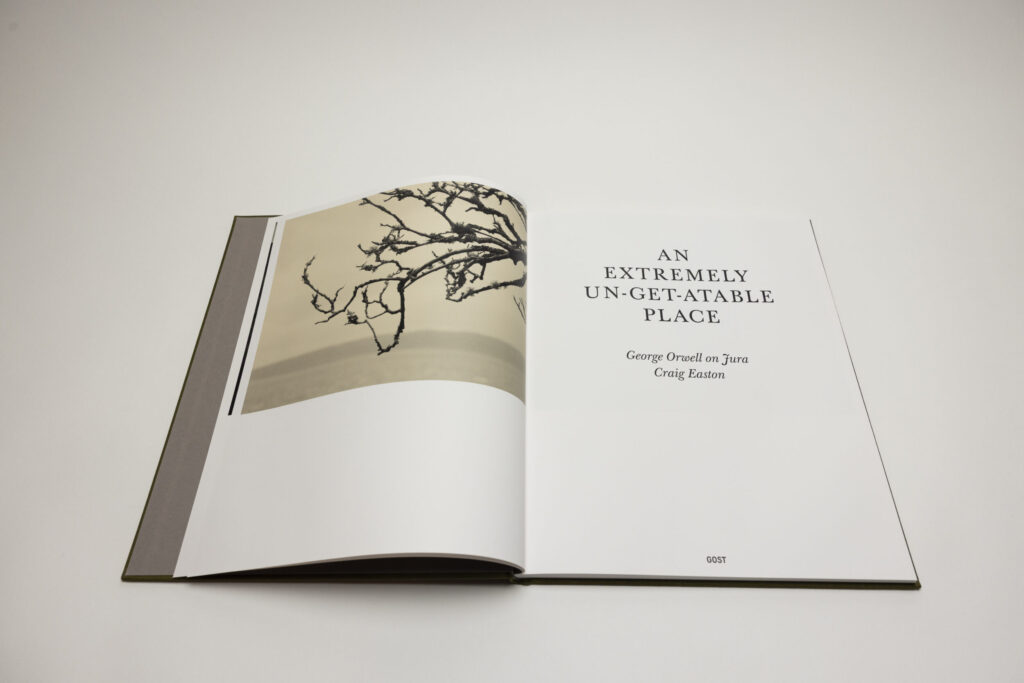
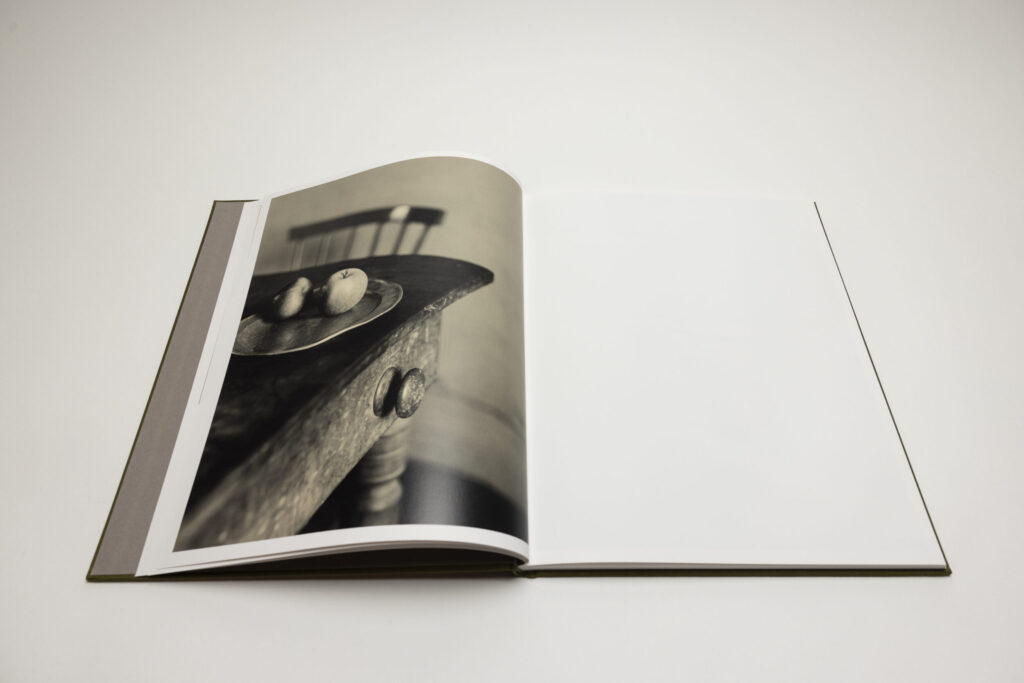
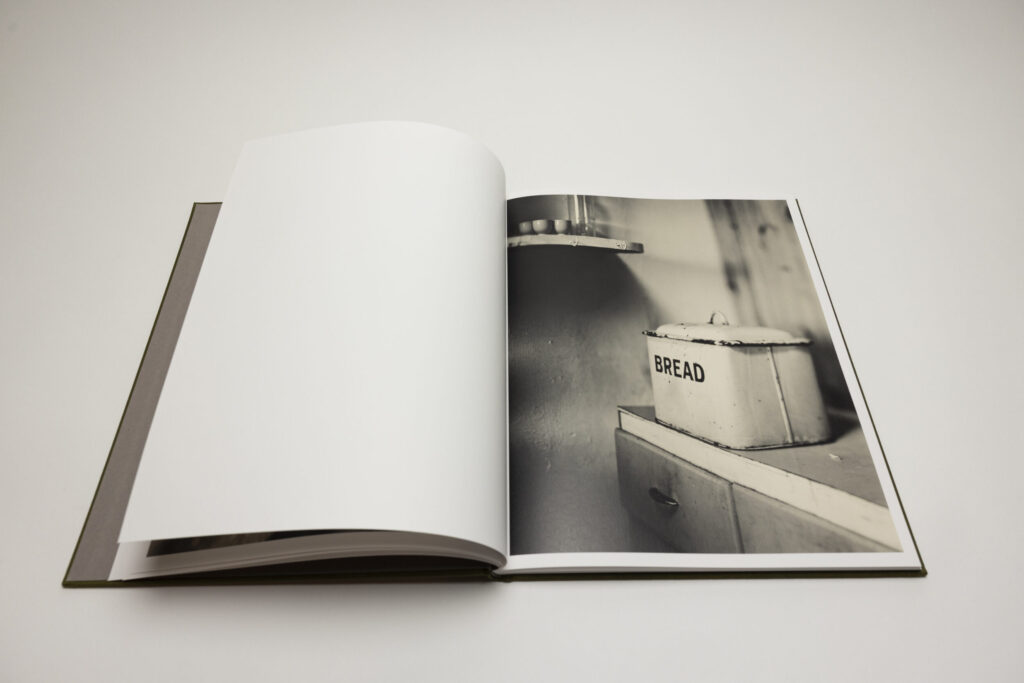
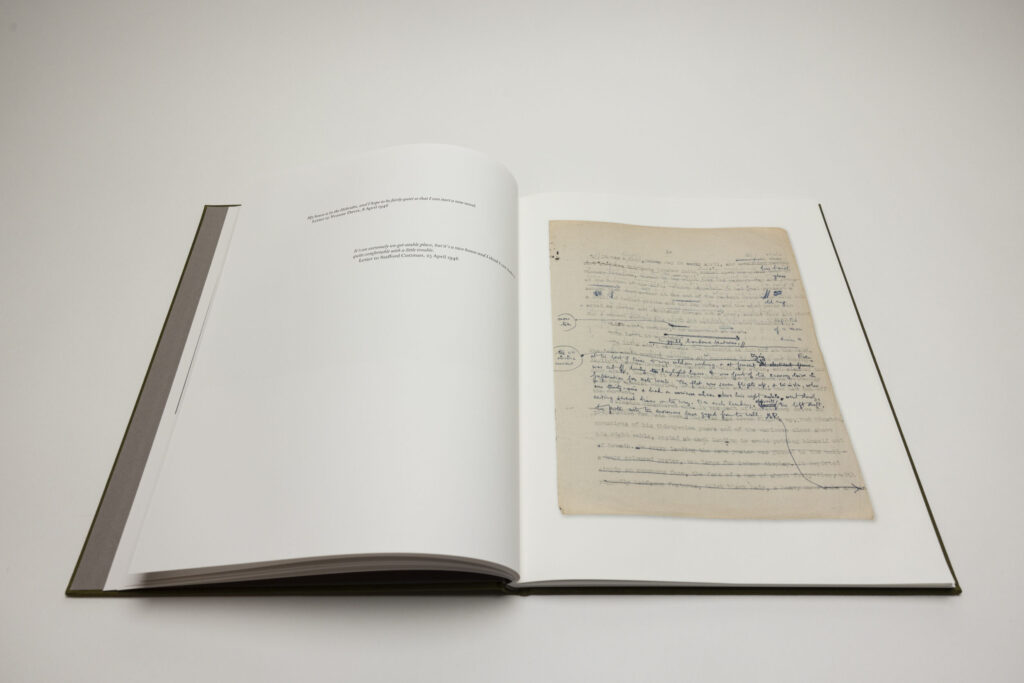
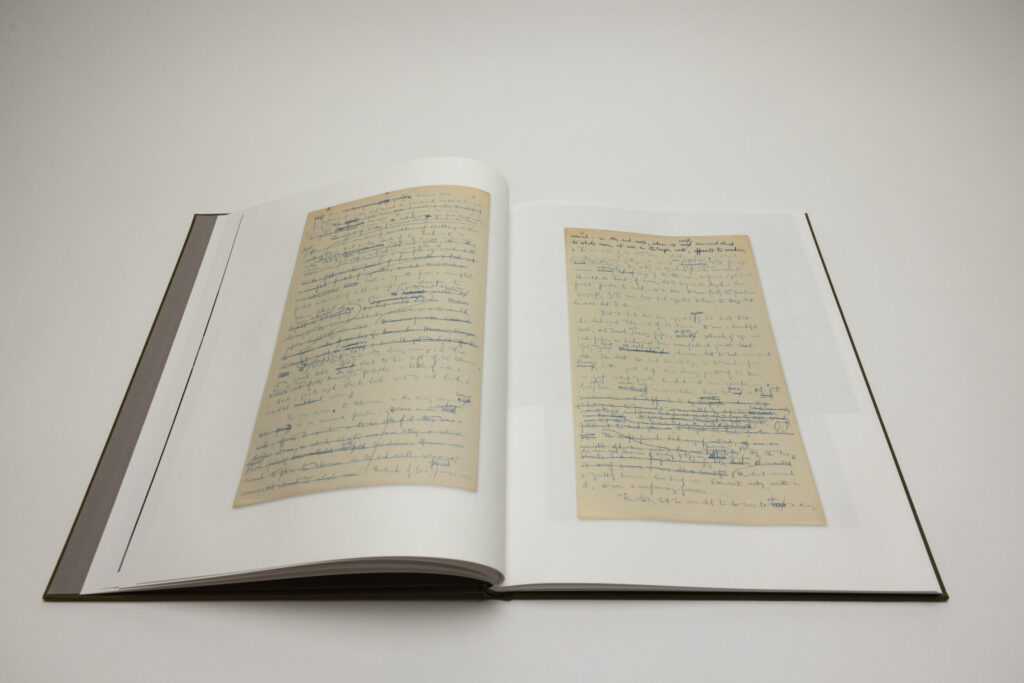
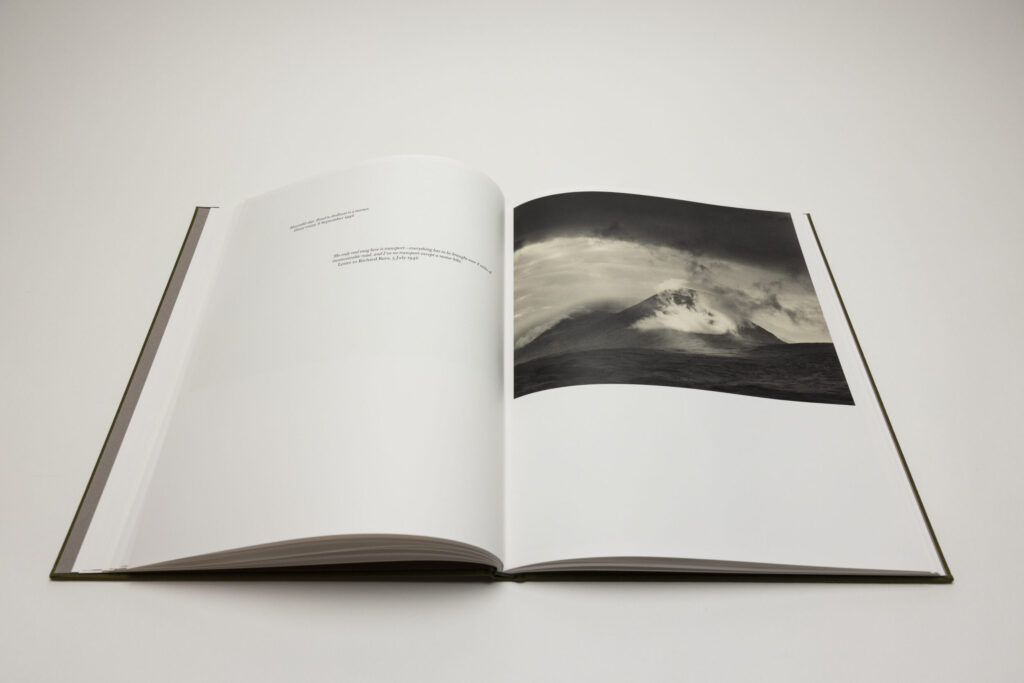
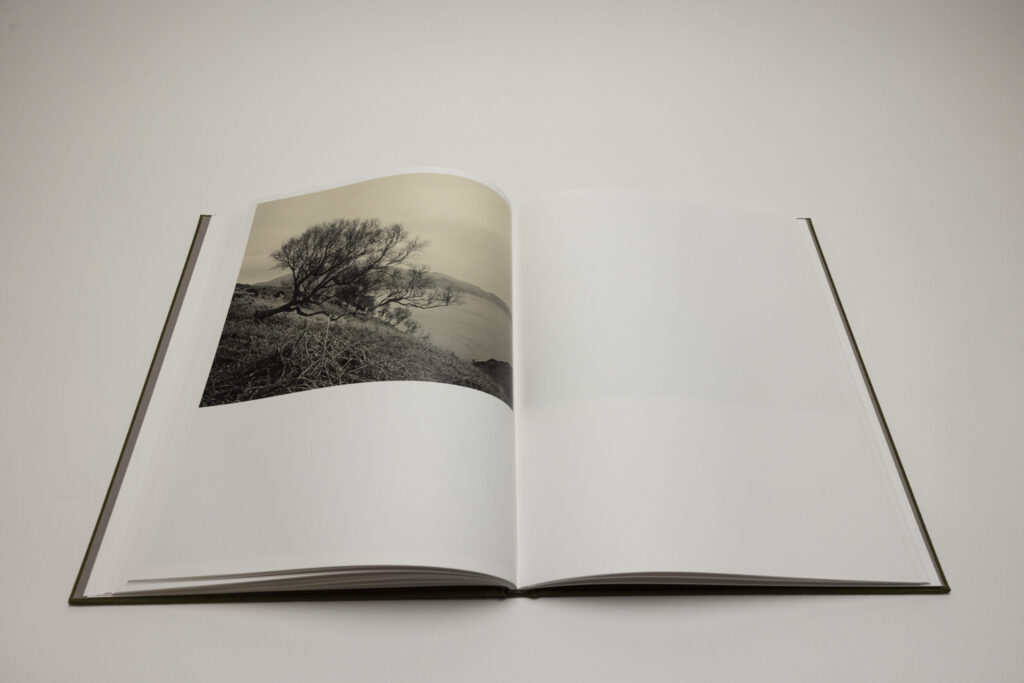
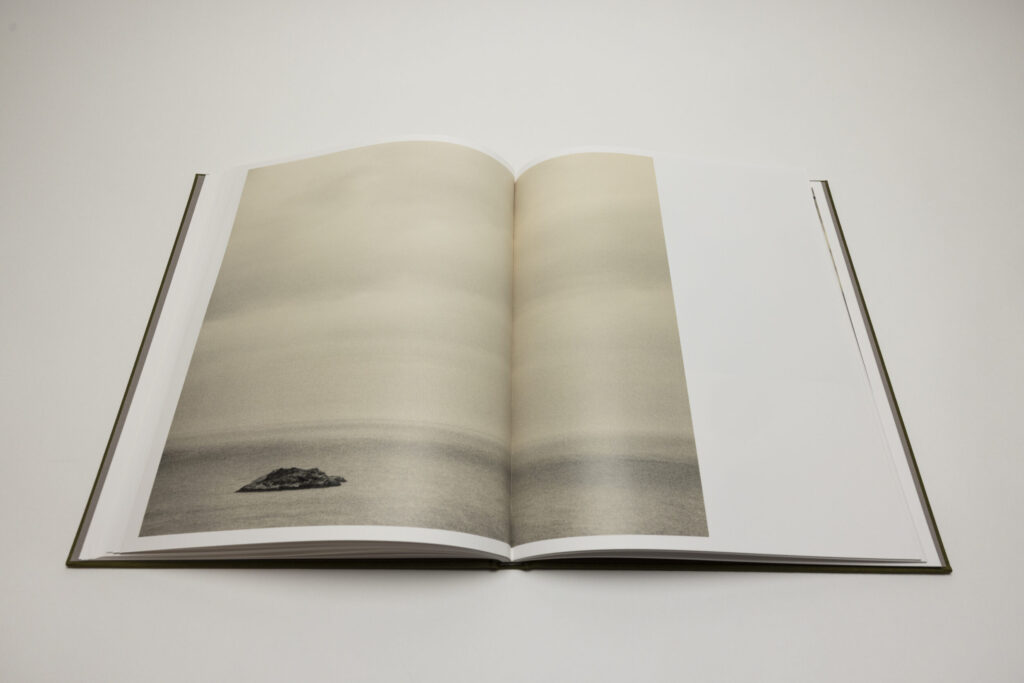
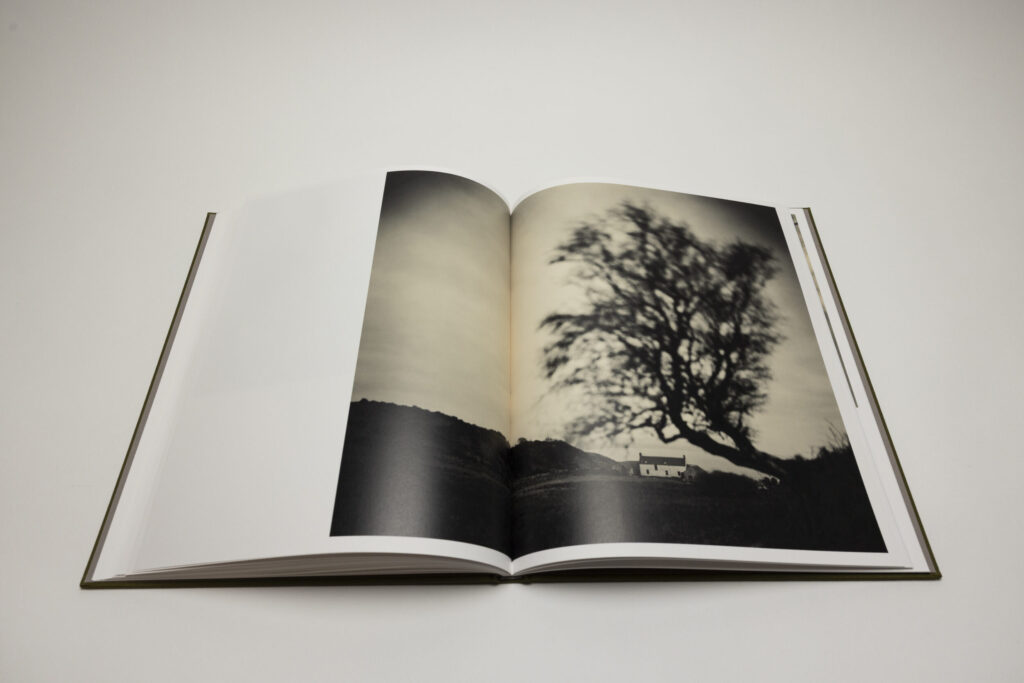
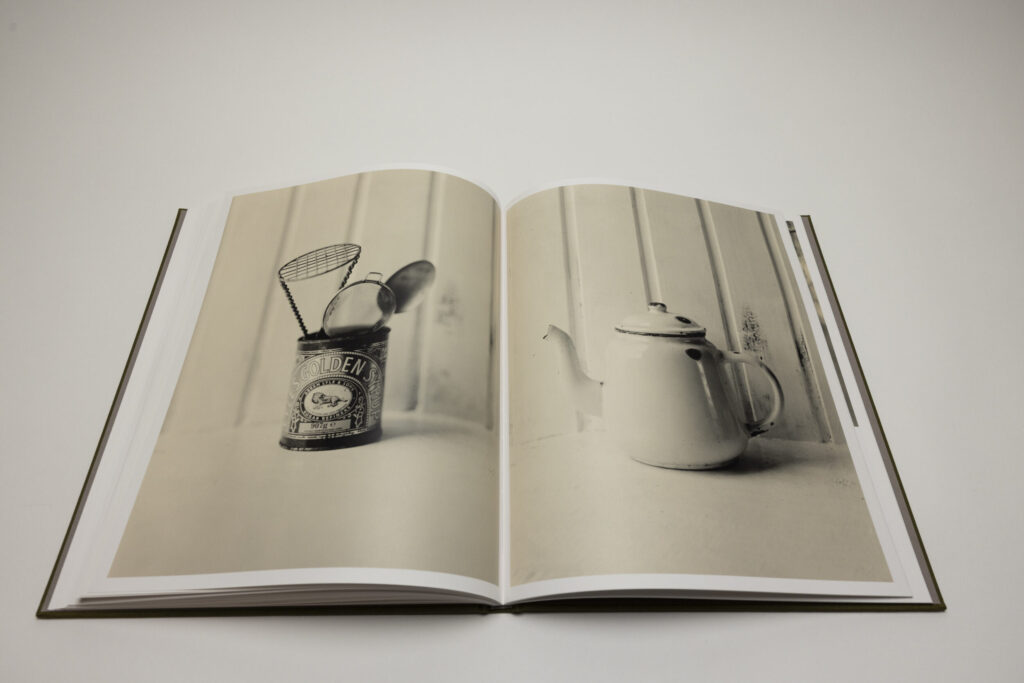
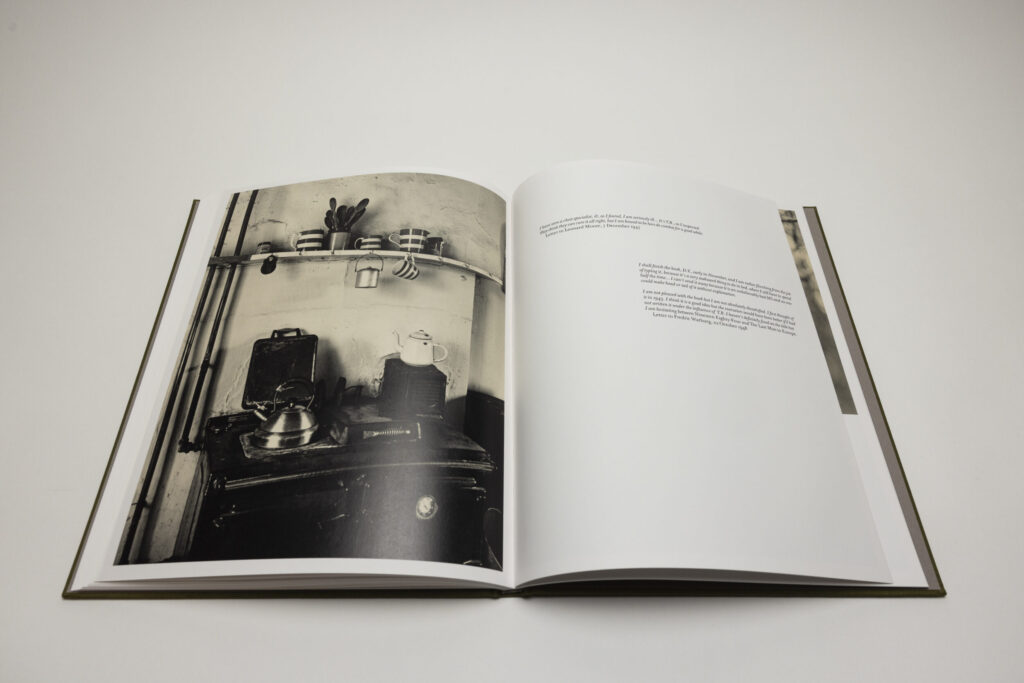
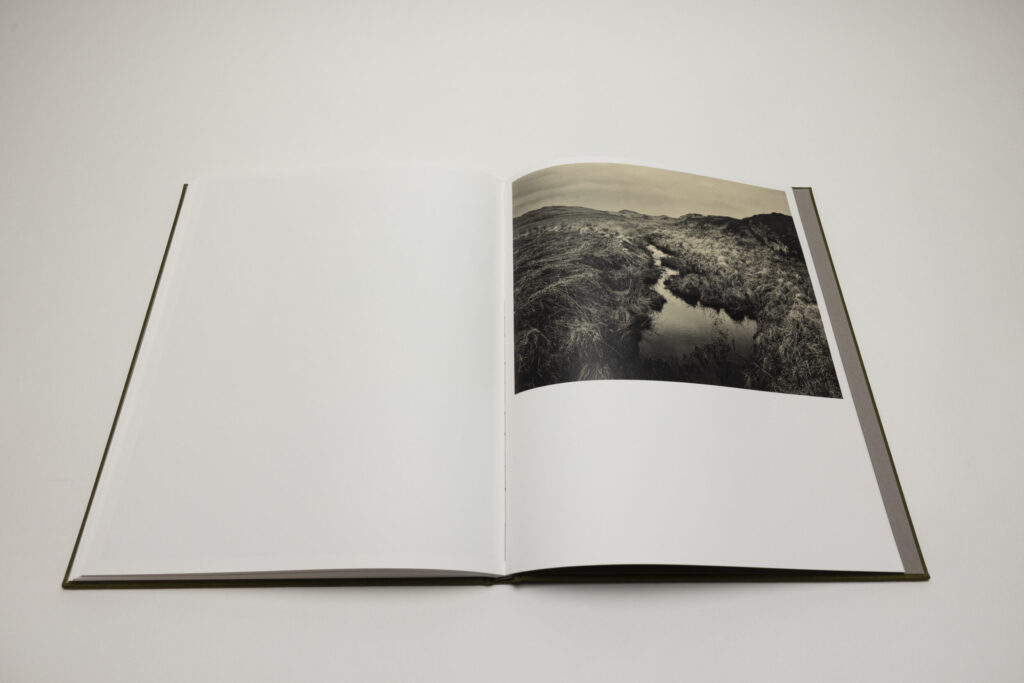
Comments/Context: An Extremely Un‑get‑atable Place reimagines the years that George Orwell spent at Barnhill, a wind‑scoured farmhouse on the remote Isle of Jura in Scotland. In this stark and isolated refuge, Orwell (afflicted by the tuberculosis that would soon kill him) wrote his dystopian masterpiece “Nineteen Eighty‑Four”, an enduring and urgent warning against totalitarian power and political tyranny. Decades later, the British photographer Craig Easton was invited to stay at Barnhill, a house left largely untouched by time. There, he created a quiet sequence of landscapes and still lifes shaped by the same solitude that once surrounded Orwell. In Easton’s new photobook, these images are interwoven with fragments from Orwell’s letters and diaries, written during his Jura years, allowing the past and present to speak to one another across the silence of the island. This volume opens “An Island Trilogy”, the first of three monographs Easton plans to publish over the coming two years, all born from his work across the Scottish islands.
The title of the book comes from a letter Orwell sent to his close friend Stafford Cottman on April 23, 1946: “I have taken a cottage in the Isle of Jura in the Hebrides… it’s an extremely un-get-atable place, but it’s a nice house and I think I can make it quite comfortable with a little trouble”. Getting to Orwell’s house remains difficult: Barnhill is separated from the Scottish mainland by a ferry, followed by 32 kilometers by car from the port, and a further six kilometers by foot along a dirt road. That “extremely un‑get‑atable place” was precisely the isolation Orwell needed to focus on his work. During his time on the island, he planted trees, tended vegetables, fished the surrounding waters, kept chickens, and welcomed a steady stream of visitors. His diaries and letters brim with plans for the future.
The sociological and political parallels between Orwell’s warnings of the 1940s and contemporary concerns are unmistakable; the term “Orwellian” recurs with striking regularity in today’s news coverage. While this ongoing relevance inevitably informed Easton’s thinking, it was not his only point of connection. Beyond the dystopian visions of “Animal Farm” and “Nineteen Eighty‑Four”, he was equally drawn to the question of what compelled Orwell to retreat to Jura in the first place. Easton took solace in the landscape and the quiet of the old house, enjoying its humble details. His photographs were made with a 1952 Deardorff large‑format wooden plate camera, printed in the darkroom, and toned with strong tea, a subtle homage to Orwell’s celebrated love of the drink.
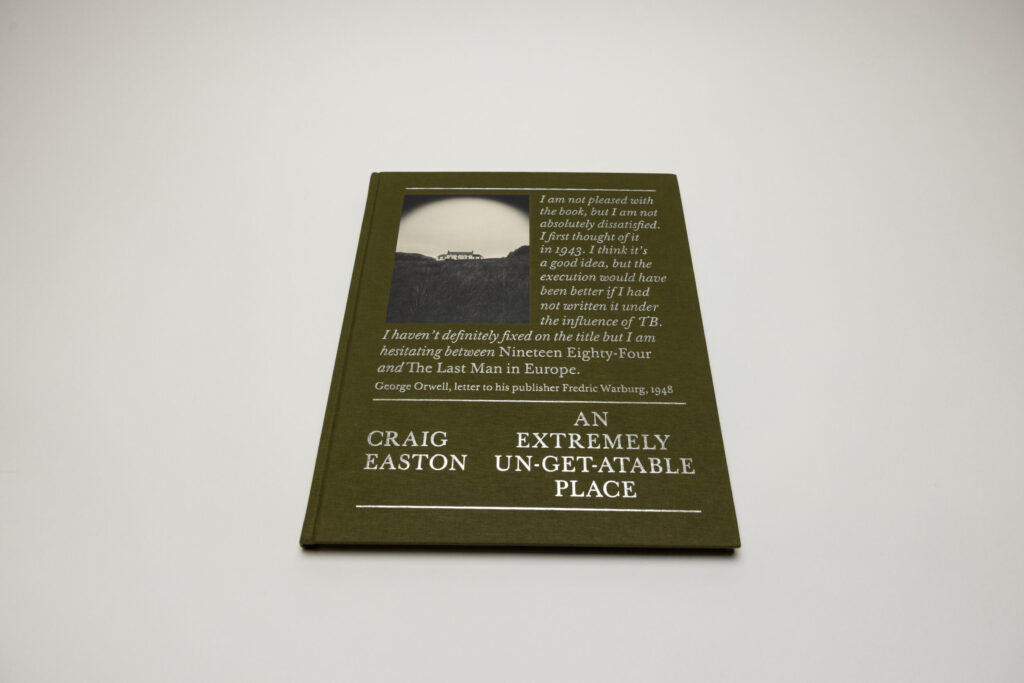
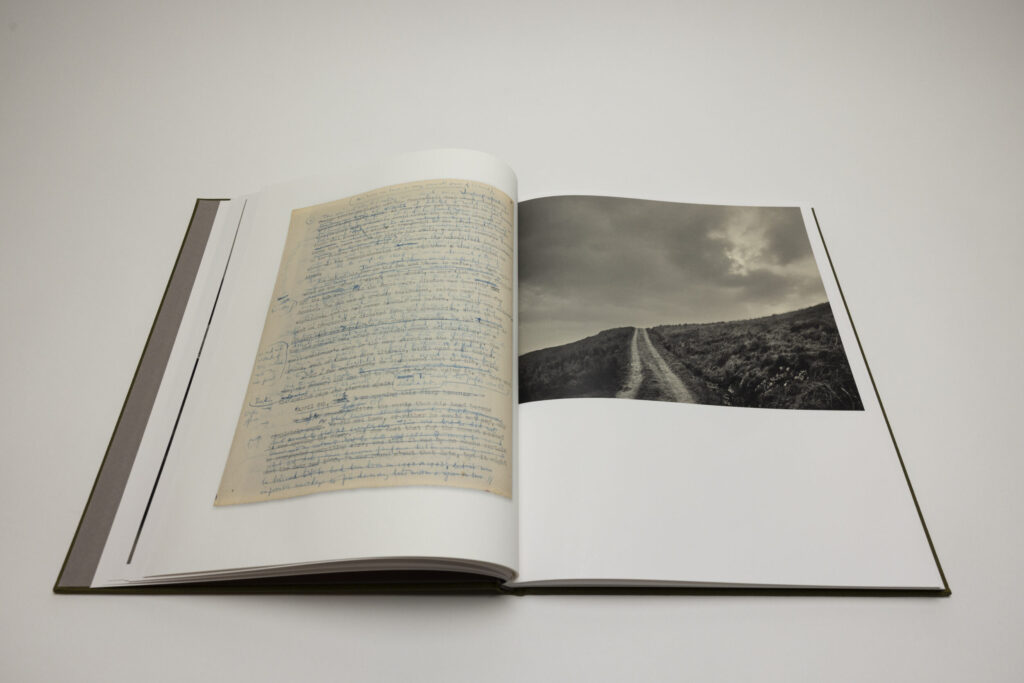
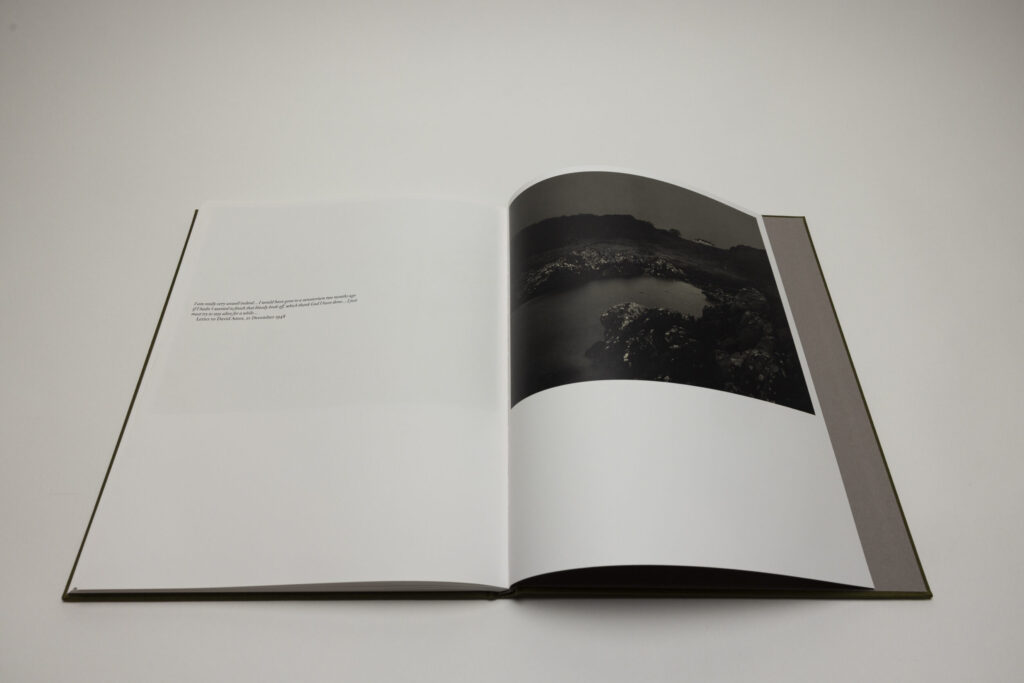
The cover features a textured olive-green background; on the left side, there is a darkly tunneled black-and-white photograph of a solitary house situated in a grassy landscape under a large glowing sky, creating a dramatic and atmospheric feel. To the right of the image, there is a block of text in white font, which features a quote from Orwell in a letter to his publisher Fredric Warburg (dated 1948). The name of the artist and the title are at the bottom in all capitals, separated by dividing lines. The cover right away presents the book as something remote, resistant, archival, and quietly political. Inside, the images are printed on matte paper, which softens them, absorbing light rather than reflecting it back. Pages from Orwell’s diary are reproduced throughout the book, and printed on a lighter paper. A short afterword by Richard Blair, Orwell’s son, who lived with him at the house, provides and endpoint to the story.
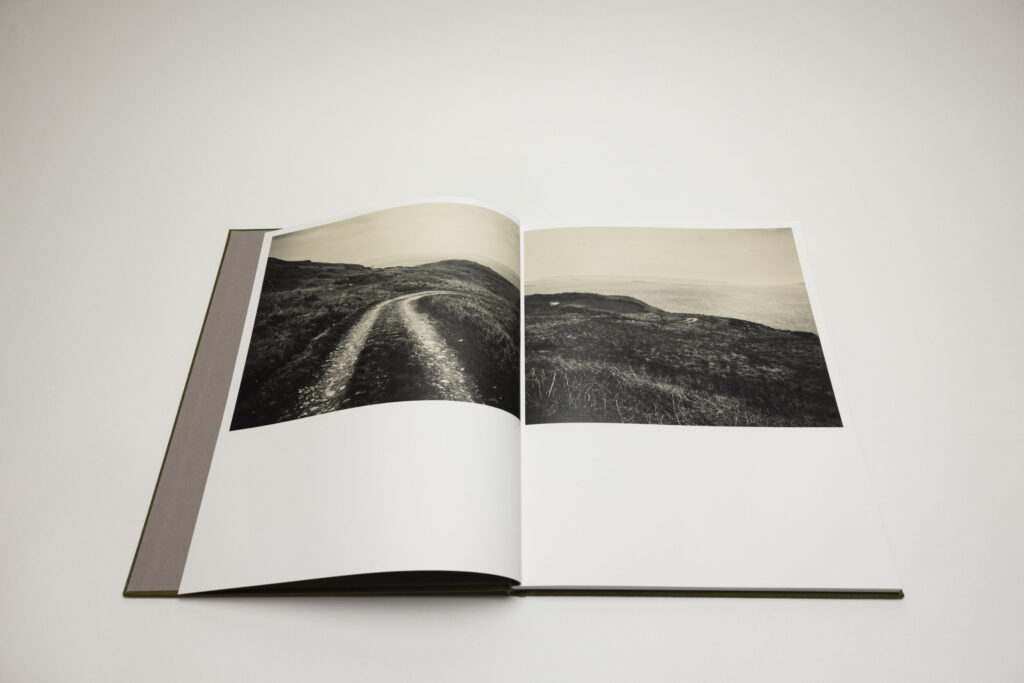
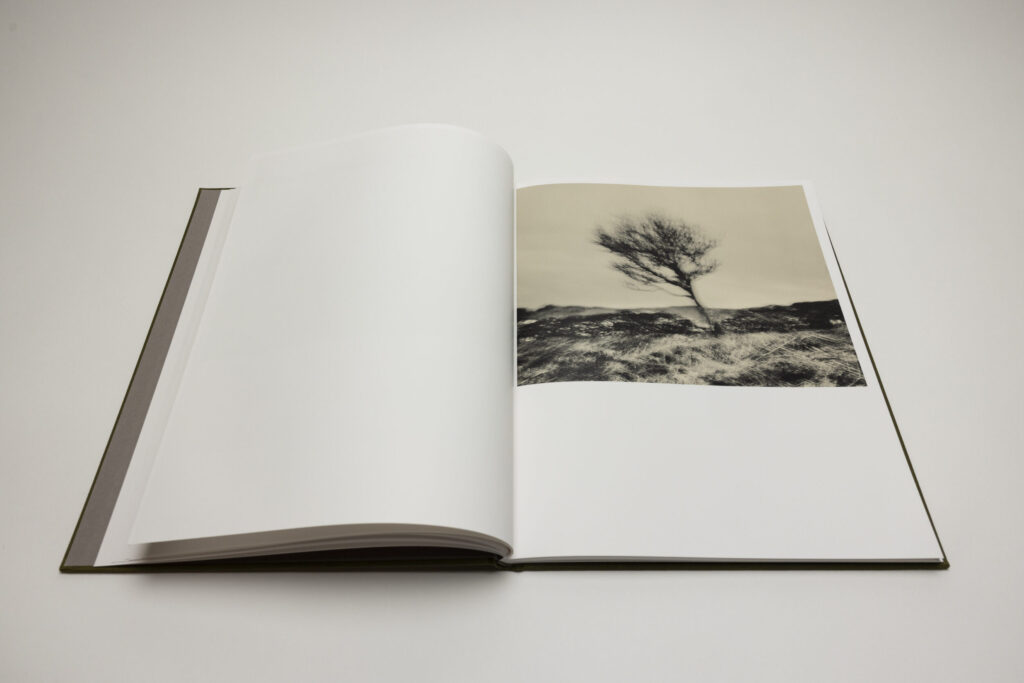
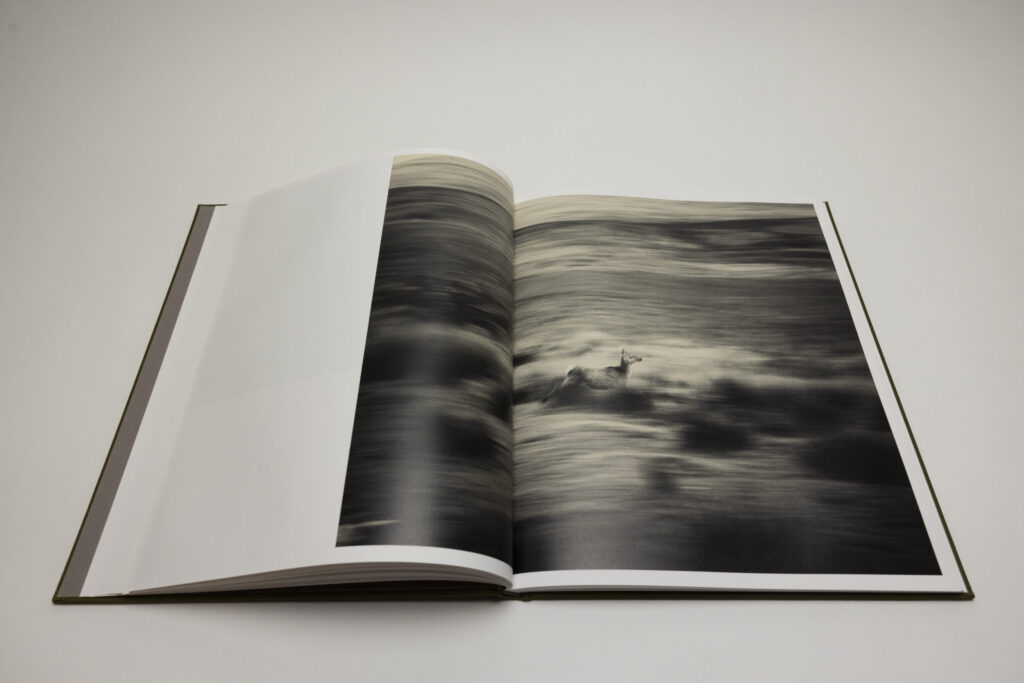
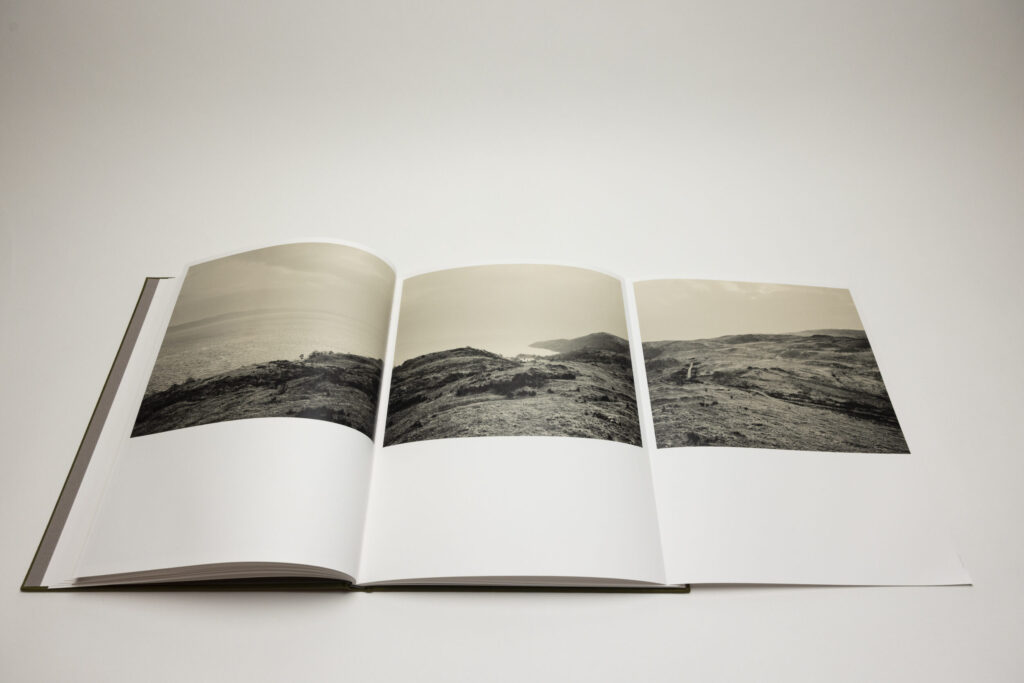
The book opens with excerpts from Orwell’s diary and letters, then shifts into a visual journey along the road that leads to his house. Images of wind-blown trees, scattered deer, mountains wrapped in fog, dramatic coastal scenery, and vast landscapes appear intermingled with more modest objects found around the house, such as cups, a metal bread box, some chipped teapots, carpeted stairs, and the corner of a table. Easton’s photographs are often quiet to the point of withholding, yet they accumulate a dense emotional charge. The color palette is muted without being desaturated, suggesting an atmosphere shaped by climate rather than aesthetic trend.
Easton’s photographs repeatedly capture harsh yet beautiful moody landscapes. In one photograph, a leafless tree growing on a sloping hillside, with a body of water in the background, conveys a sense of rugged natural beauty and solitude. Another shot depicts the dynamic and almost abstract scene of a deer in mid-motion, slightly blurred but still recognizable.
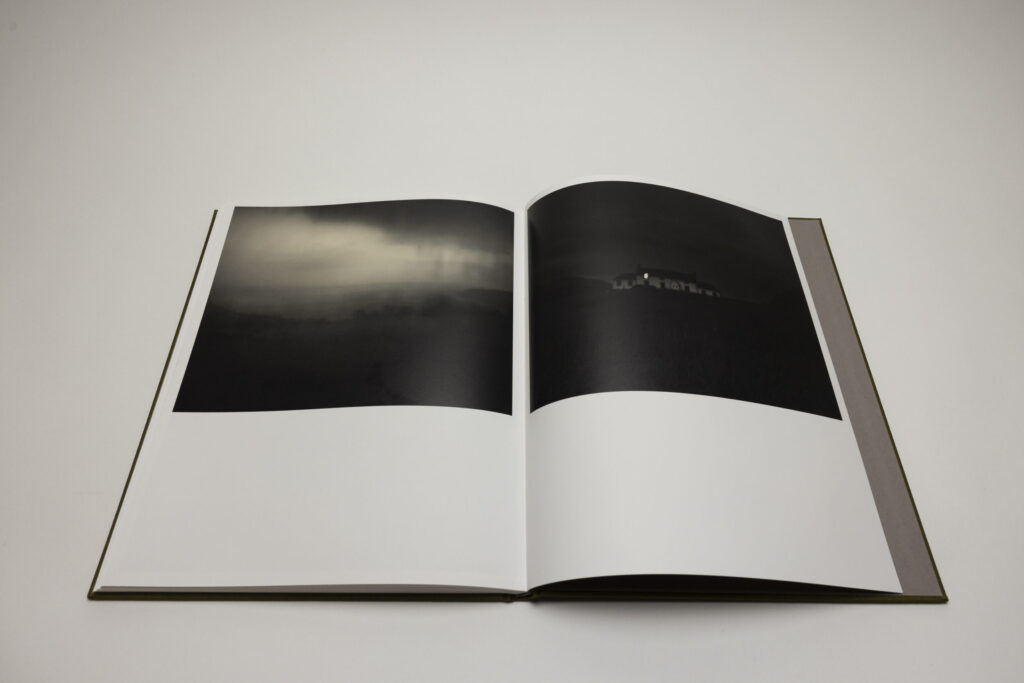
Near the conclusion, an expressive photograph of a fog-shrouded landscape, dissolving into gentle gradients of light and shadow, is paired with a nighttime view of the house, almost swallowed by darkness, marked only by a single light glowing from a window. This is followed by the final photograph, which returns to the house once more, now seen from a greater distance, as if receding from reach. On the left side, a quotation from Orwell’s letter to his close friend David Astor (and the owner of “The Observer”) alludes to being gravely ill yet postponing treatment in order to finish his book, ending with the line, “I just must stay alive for a while…”.
As an artistic residency project, An Extremely Un-get-atable Place is lyrically beautiful, authentic, and quietly political. The book’s format encourages slow looking, drawing the viewer into a sustained visual rhythm rather than offering moments of immediate resolution. In dialogue with Orwell’s writings, Easton’s photographs call attention to the restorative power of nature and the small, sustaining pleasures that endure in times of uncertainty. The result is a photobook that feels both thoughtful and genuinely compelling.
Collector’s POV: Craig Easton does not appear to have consistent gallery representation at this time. Collectors interested in following up should likely connect directly with the artist via his website (linked in the sidebar).