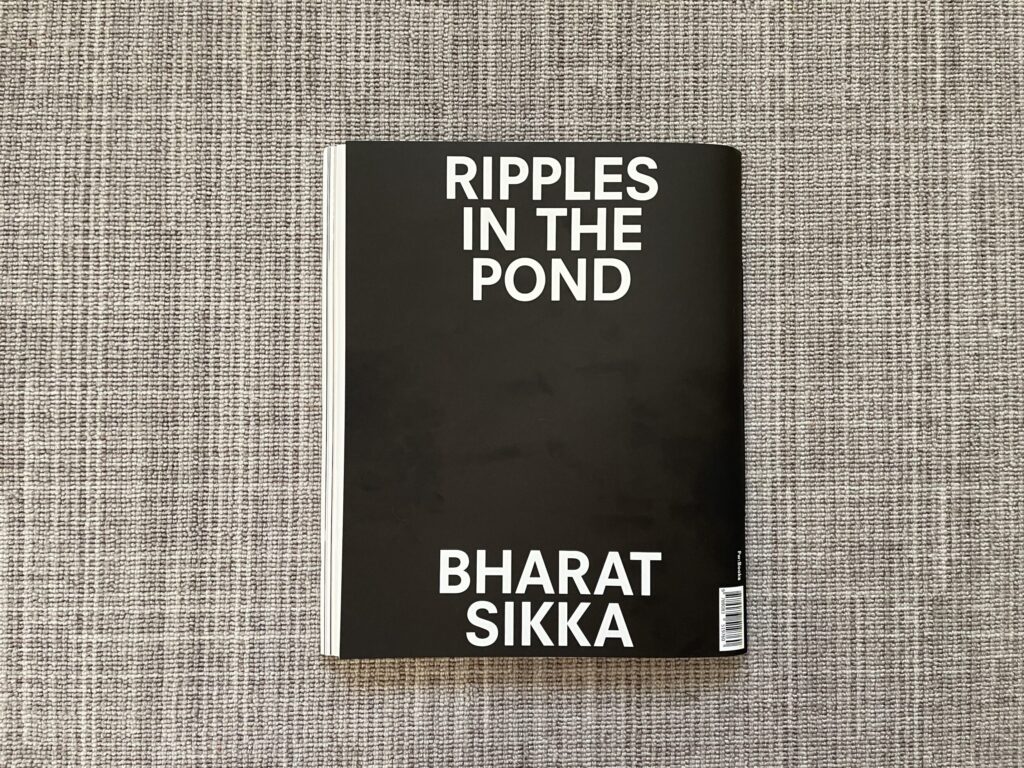
JTF (just the facts): Published in 2025 by Fw:Books (here). Folded softcover with stitched black thread binding, 26 x 32.5 cm, 152 pages, with 103 image reproductions. There are no texts or essays included. Design by Hans Gremmen. (Cover and spread shots below.)
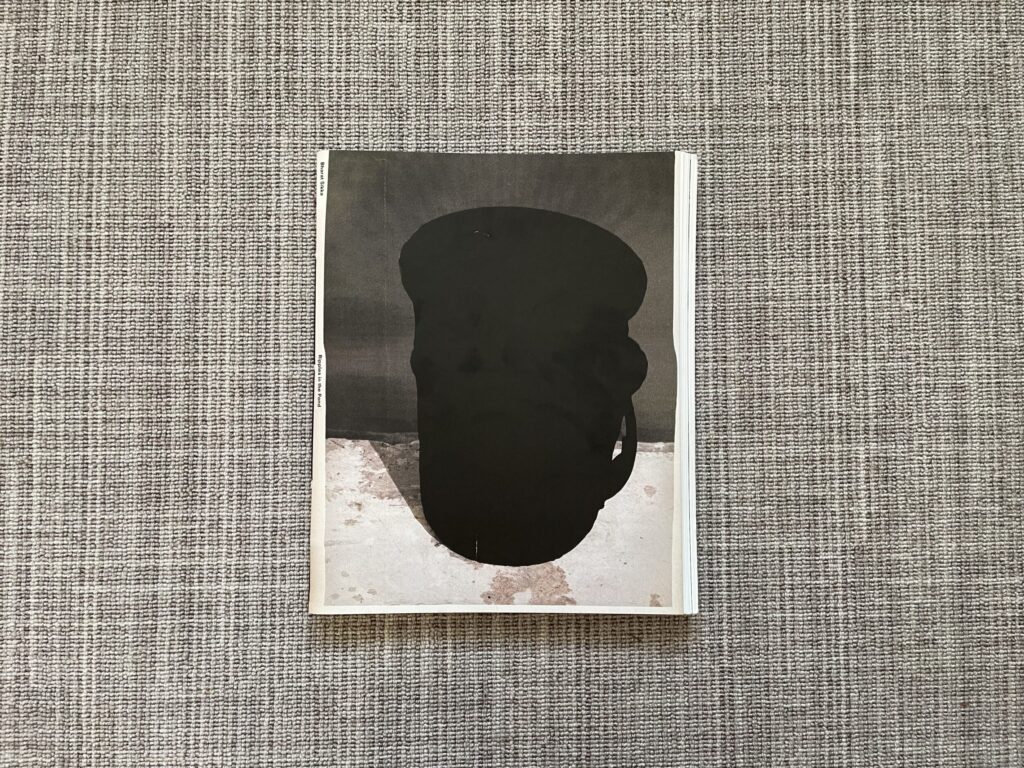
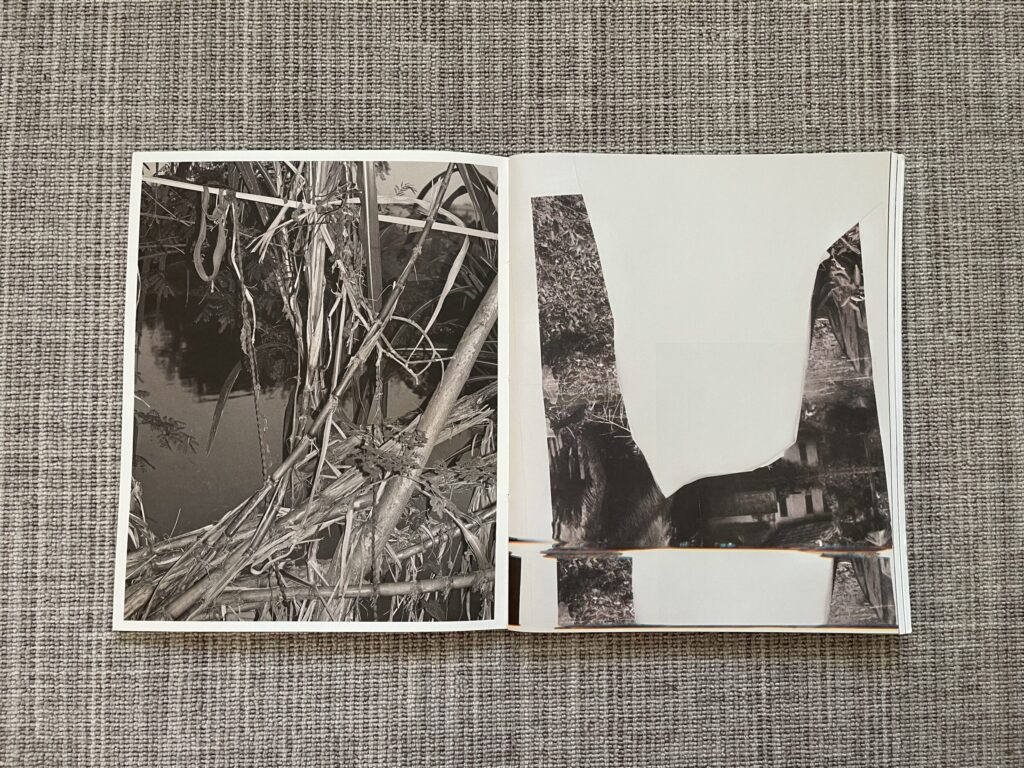
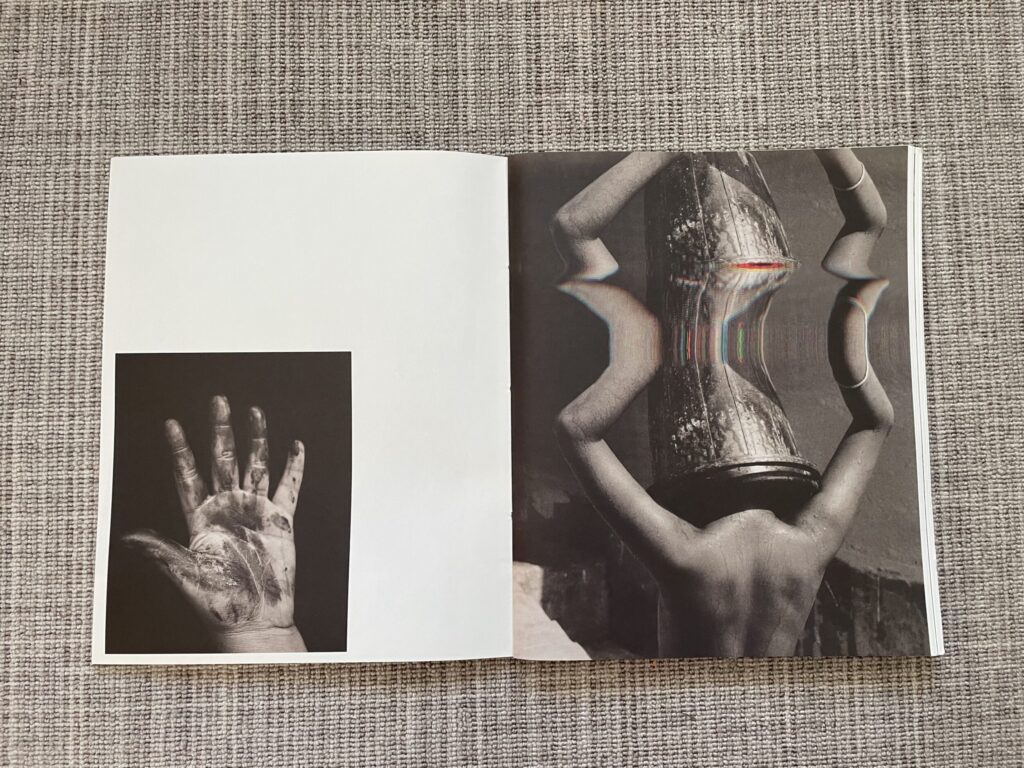
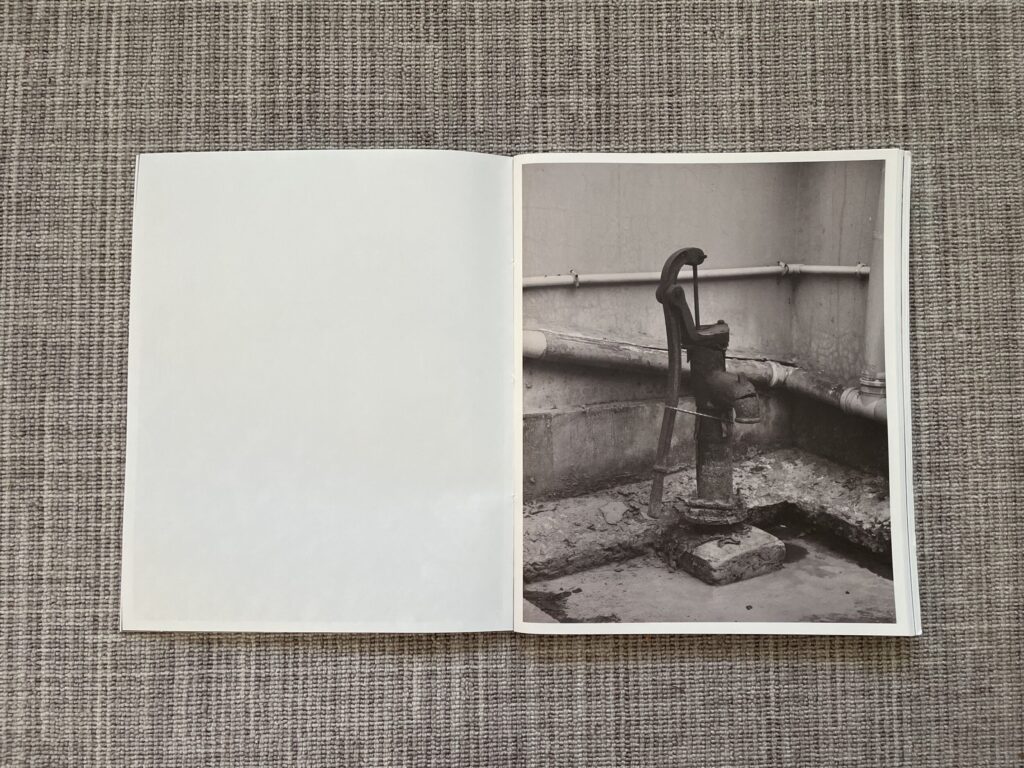
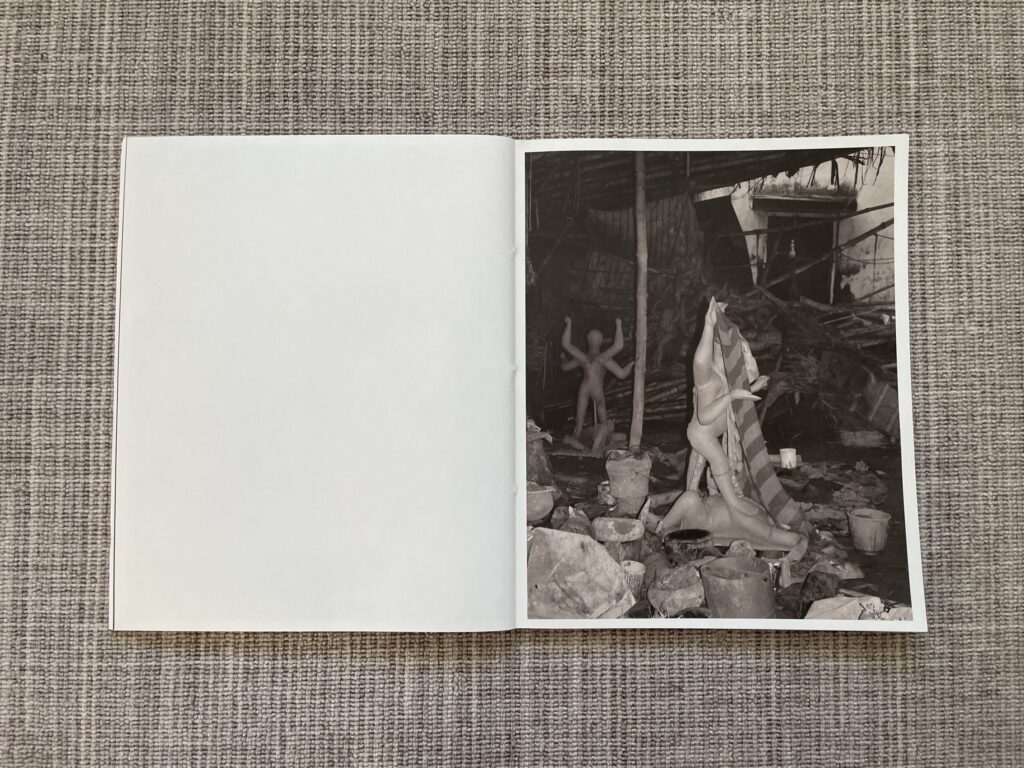
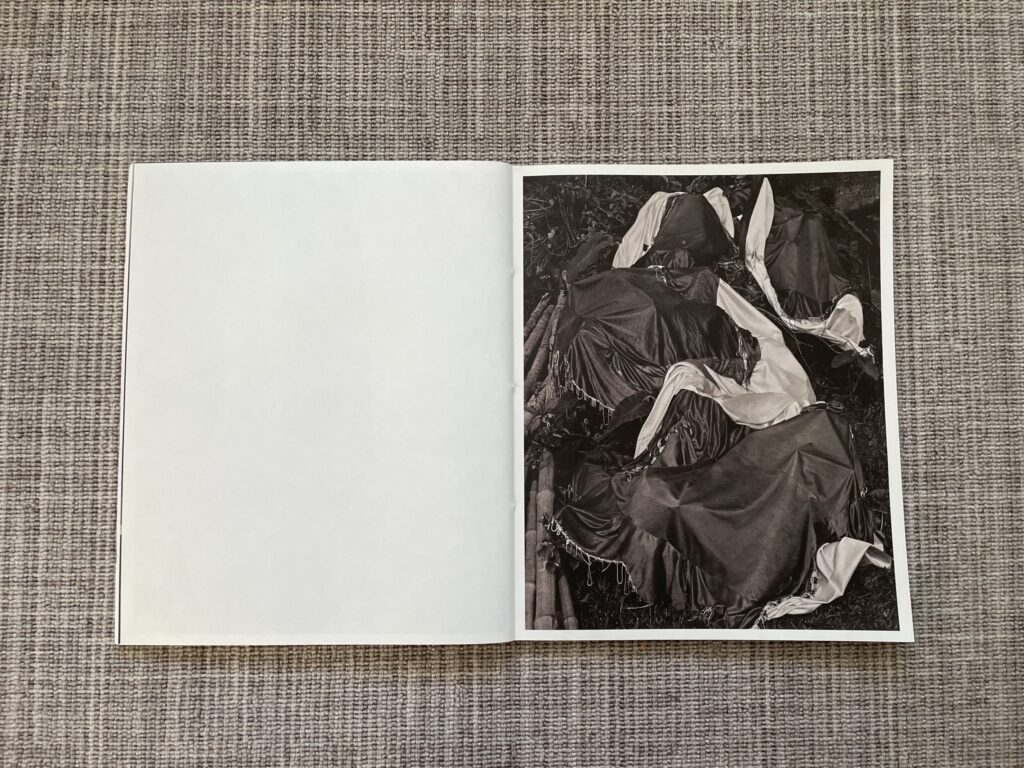
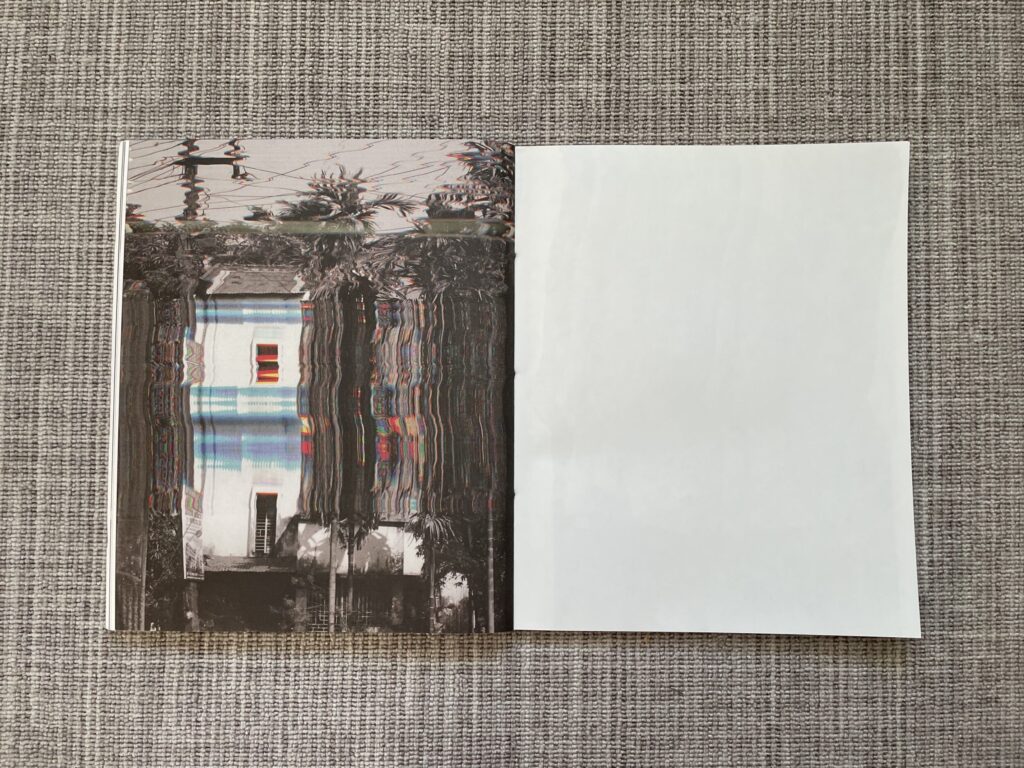
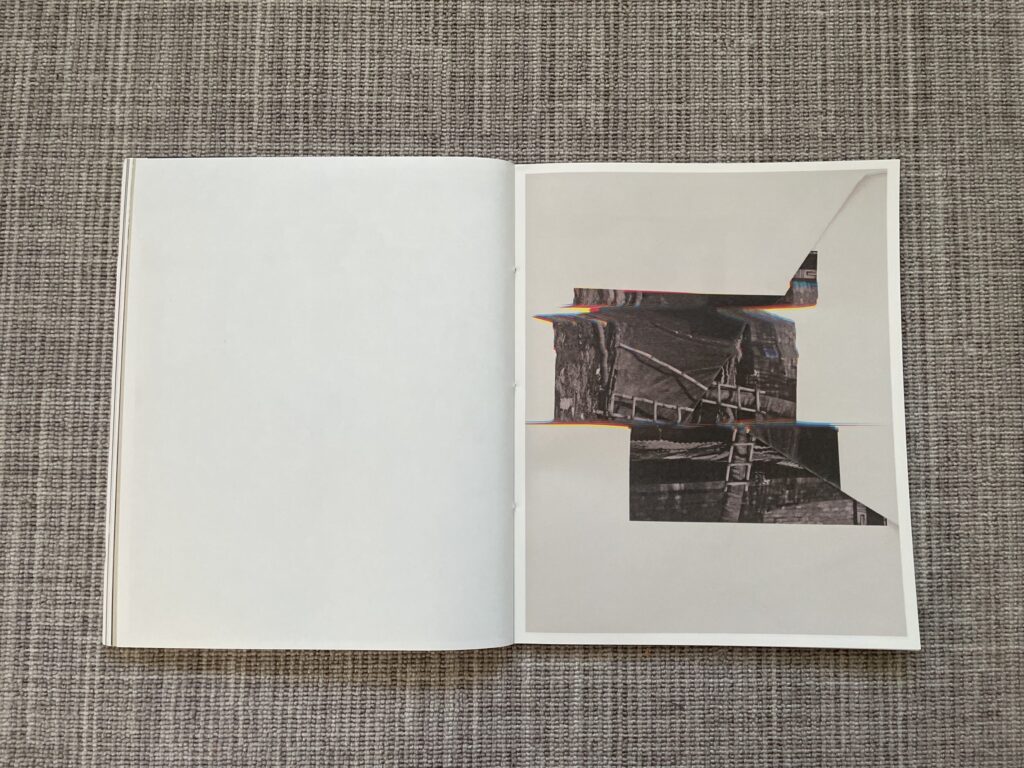
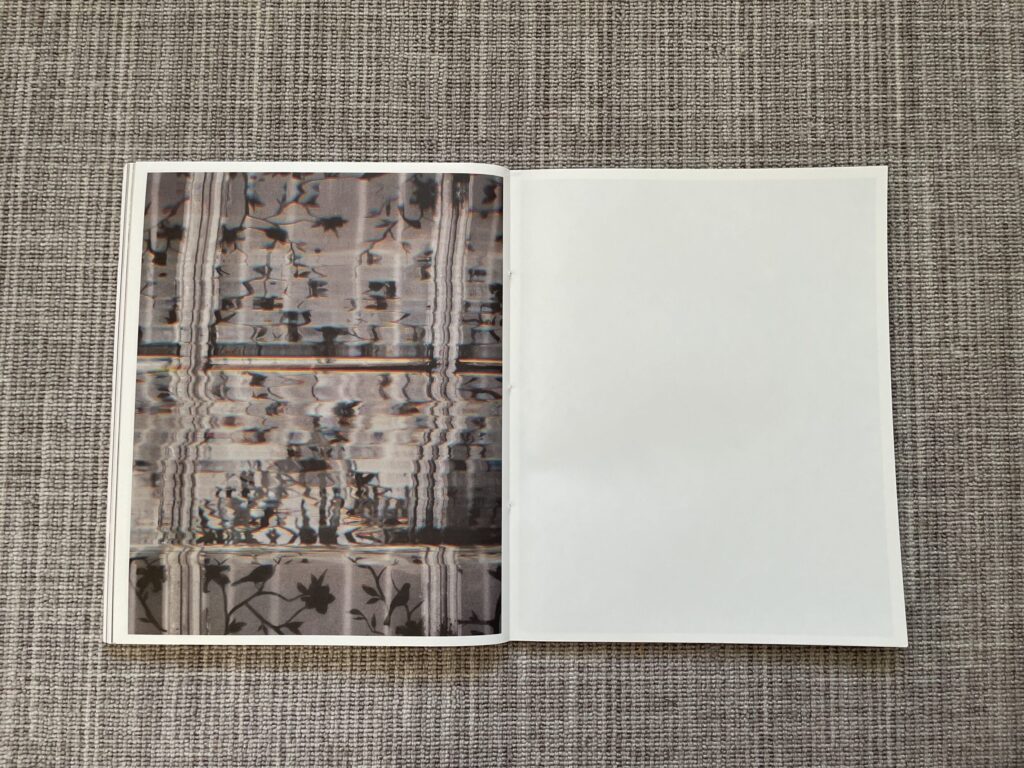
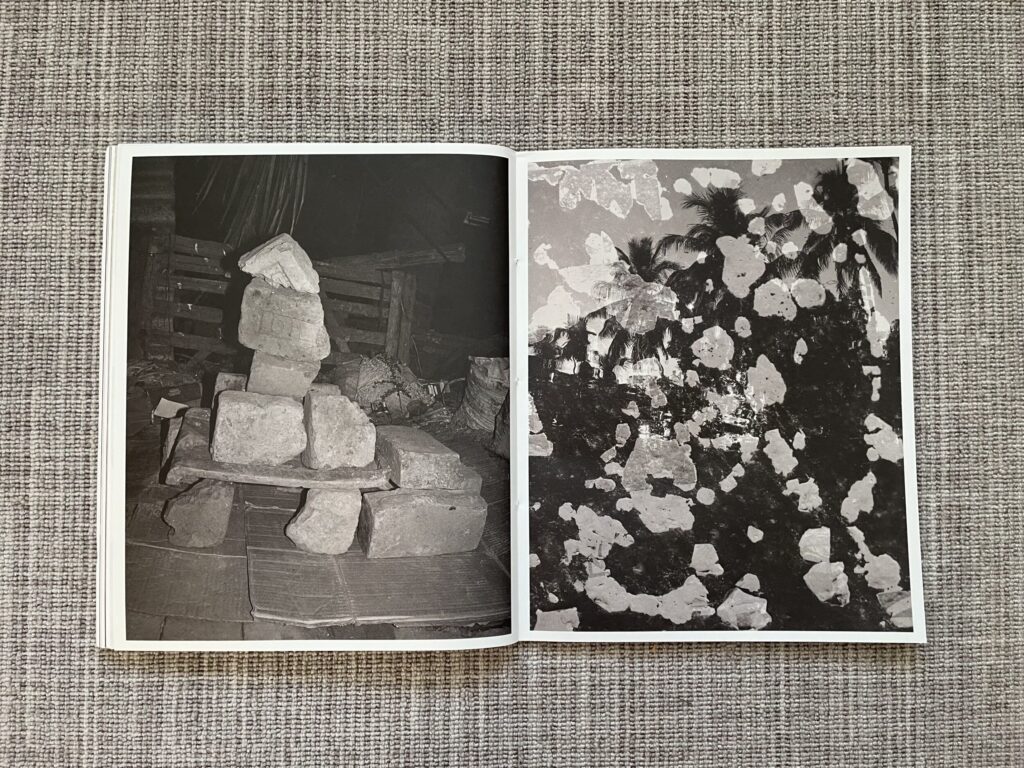
Comments/Context: The mysterious photograph on the cover of Bharat Sikka’s excellent photobook Ripples in the Pond offers a quiet challenge. The subject is a straightforward still life observation of what appears to be a bucket on a stone floor, except that the bucket has been entirely blacked out, becoming a kind of darkened absence or void. A close look around the background of the bucket reveals the tiny colored squiggles of scanned distortion, signaling that what we’re seeing is shifting and unstable, perhaps even dissolving right before our eyes. The picture seems to say that what is and is not there (or what we can see and what we can remember) may be malleable.
Born and raised in India and trained at Parsons here in New York, Sikka has begun to build some notable artistic momentum of late, largely through a series of recent photobook projects, including The Sapper (in 2022, reviewed here), Souvenir Shop (in 2024), and And Then (also in 2024). Ripples in the Pond is a further step forward in photographic sophistication, turning a trip to Makharda, a semi-rural township on the outskirts of Kolkata, into a layered exploration of place, presence, and memory.
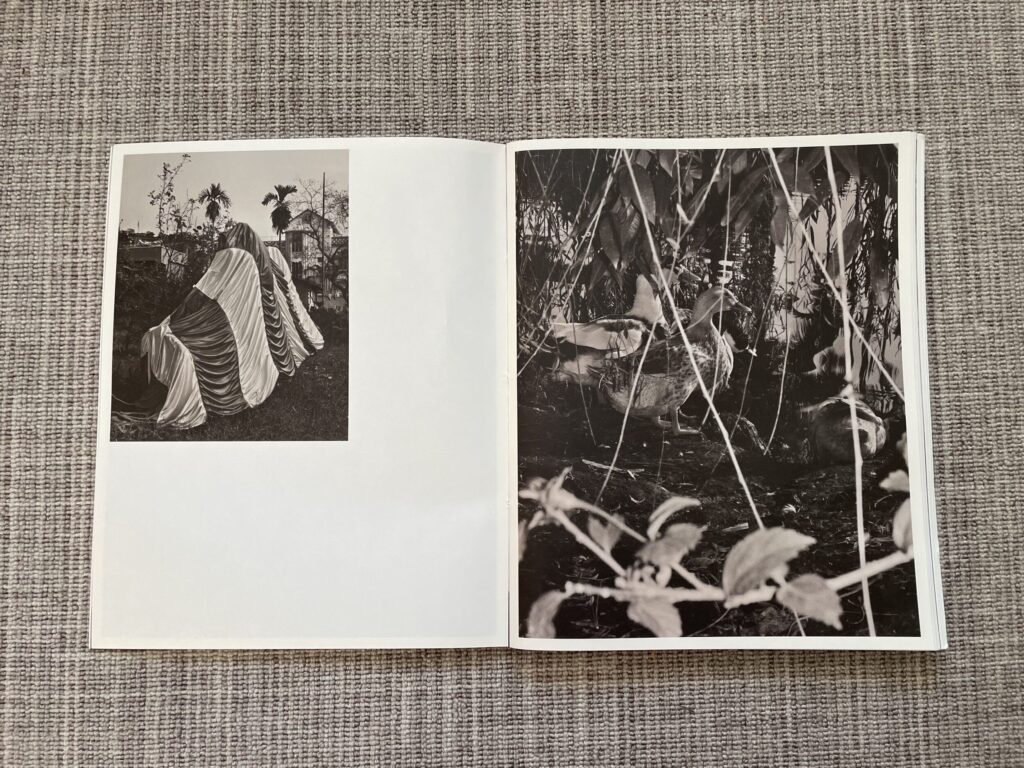
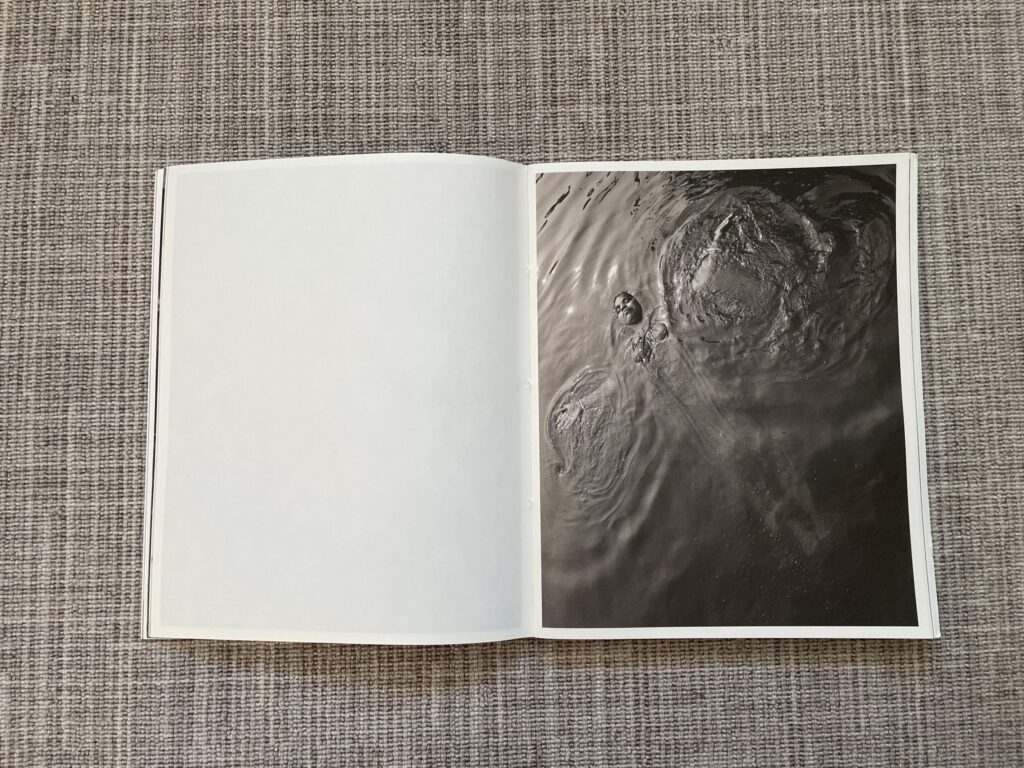
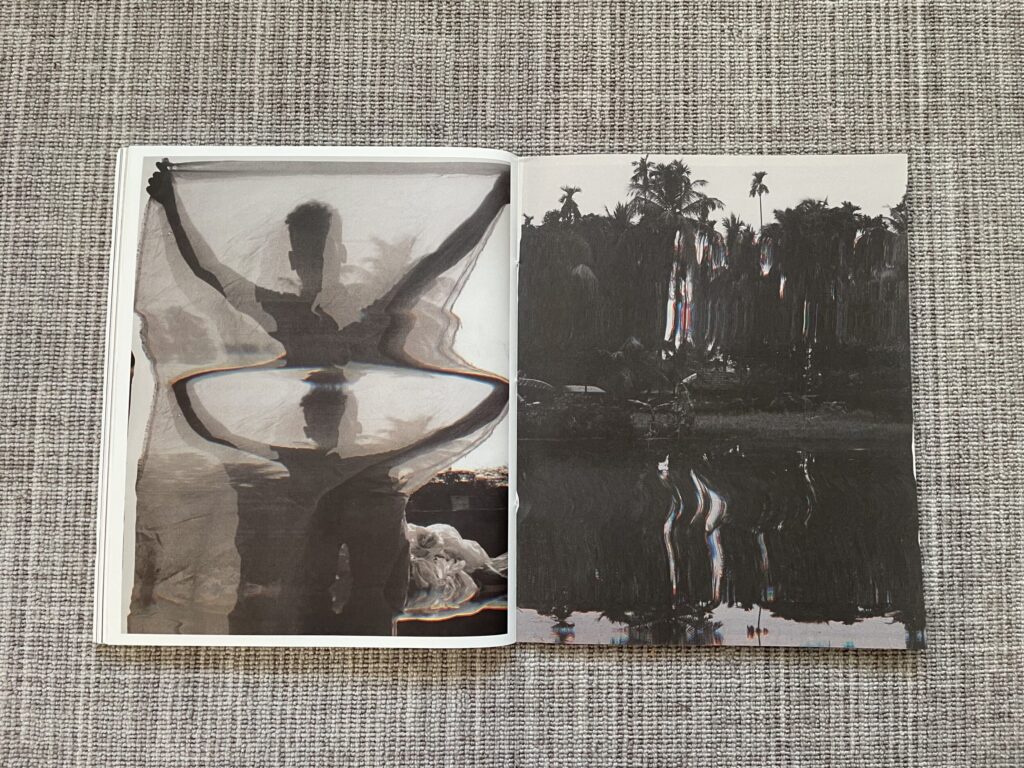
Makharda is dotted with over twenty ponds, so many of Sikka’s images capture the literal surface of the water, with dark ripples and reflections tucked in among the jungle greenery and the nearby structures. These pictures locate the slow rhythms of the tranquil setting, where ducks shuffle on the shoreline and a woman gently floats in the water with her arms peacefully outstretched.
But Sikka quickly moves away from this kind of straight documentation and digs much more deeply into the figurative and symbolic possibilities of the “ripples in the pond”, where surface realities are disturbed and distorted, traditional ways of living are interrupted by more modern intrusions, and straight memories get muddied by time and nostalgia. In this way, Sikka’s Makharda is infused with a kind of magical realism, and his photographs become increasingly layered, entangled, and complex.
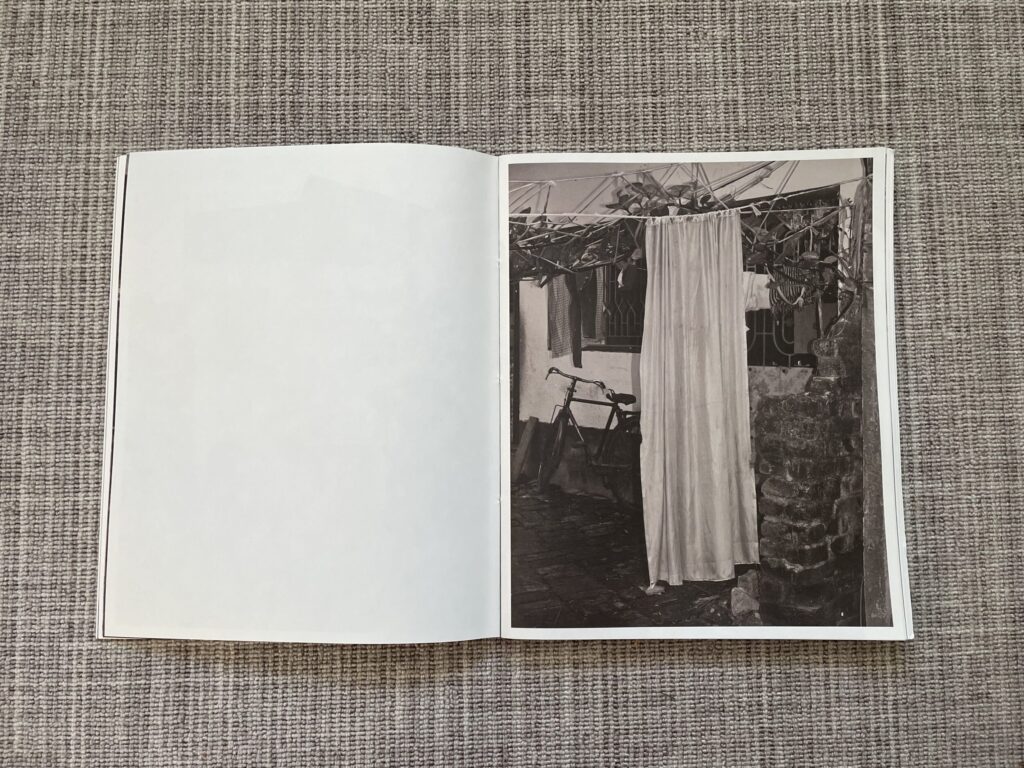
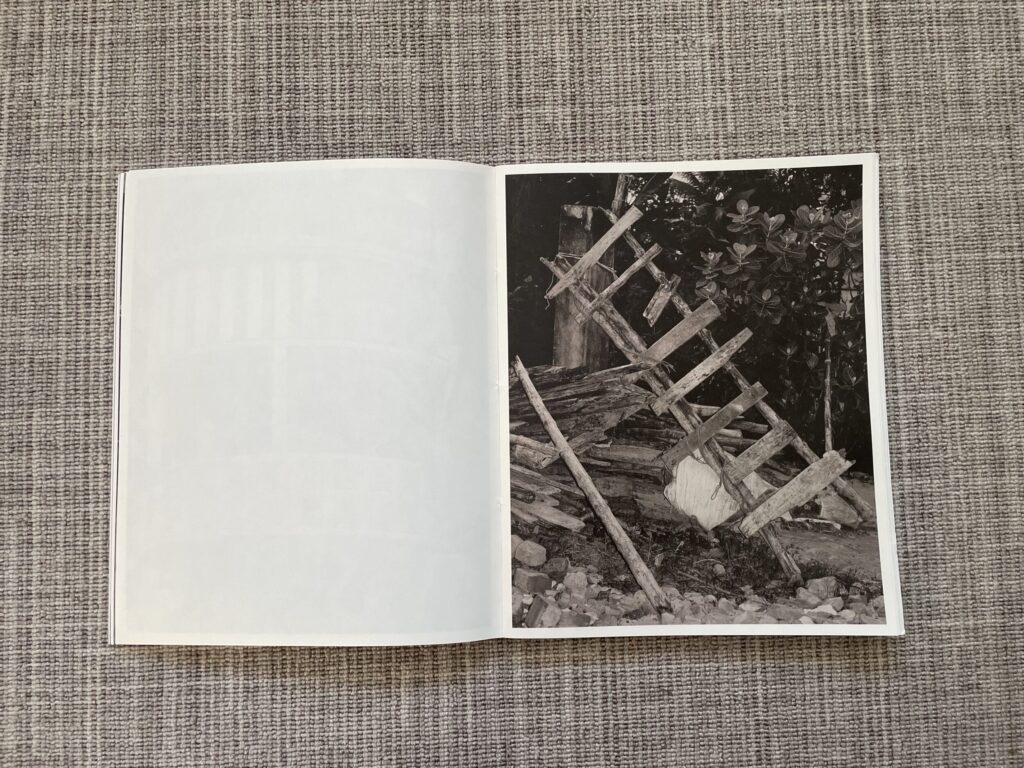
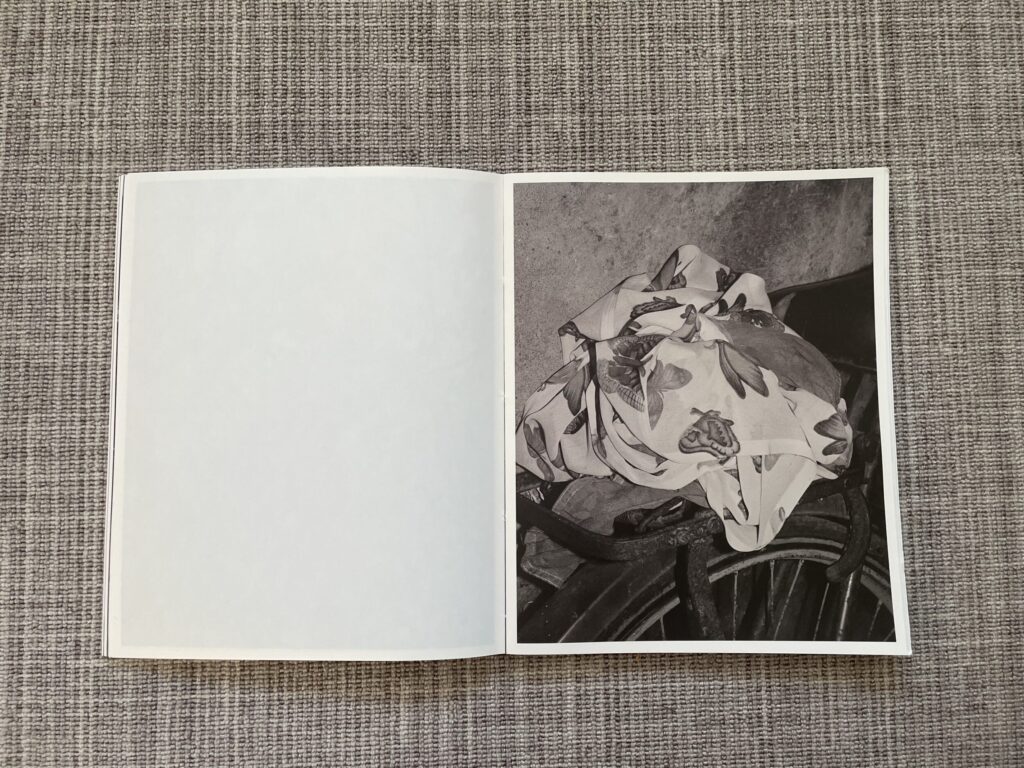
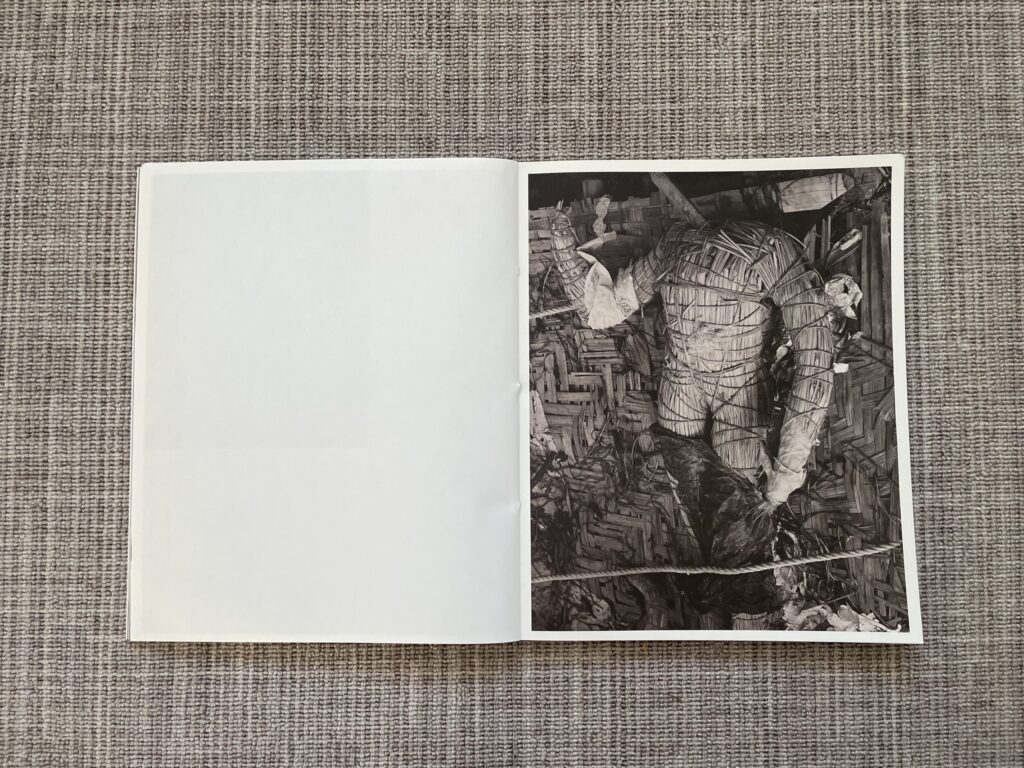
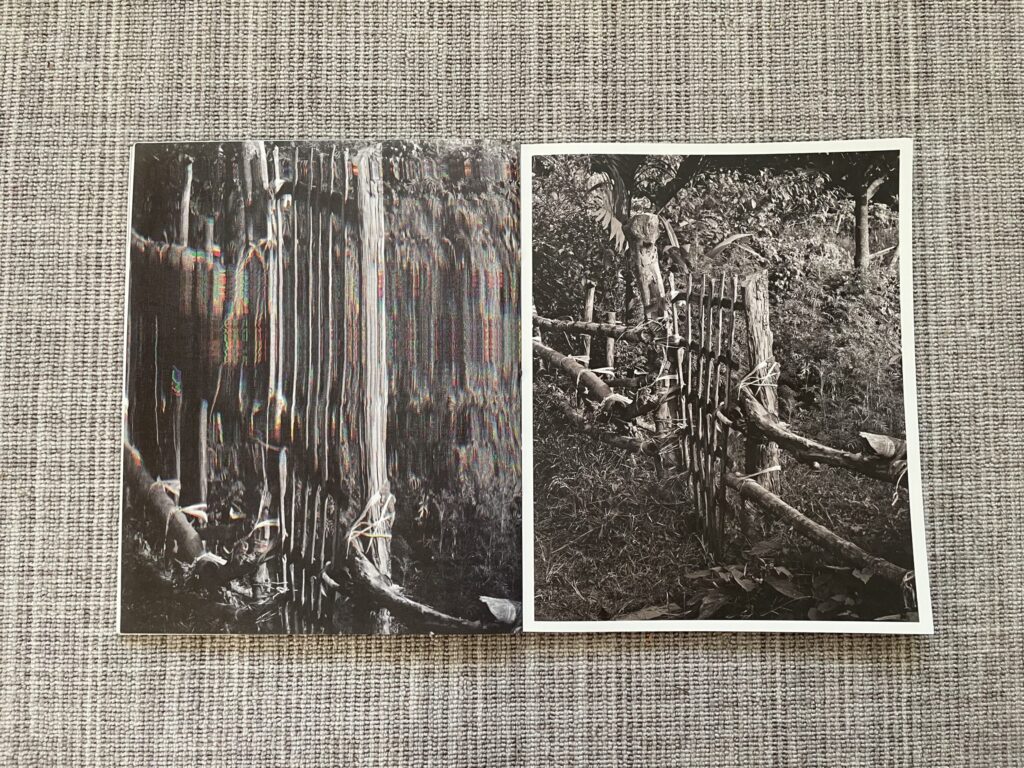
There is a heightened attentiveness to Sikka’s gaze that amplifies even the most mundane of village subjects, making their textures and structures jump out, often with the addition of some clarifying flash. He notices the scratchiness of thickets, dry grasses, tied bamboo, branches, and stumps, and then doubles down on woven and arranged patterns, as seen in tied straw, stacked wood, woven mats, a skewed ladder, a headless body made of straw and rope, and a wooden gate and nearby fence tied together. Fabrics provide a billowy alternative to the roughness of the natural materials, and Sikka pays careful attention to each fold, drape, and shimmer, noticing tarps, curtains, netting, the butterfly fabric on a bike seat, the undulations of silky piles, and still other fabrics hanging on a clothesline. Sikka’s eye turns every one of these overlooked objects into an energized standout, like a found still life worthy of unexpected appreciation.
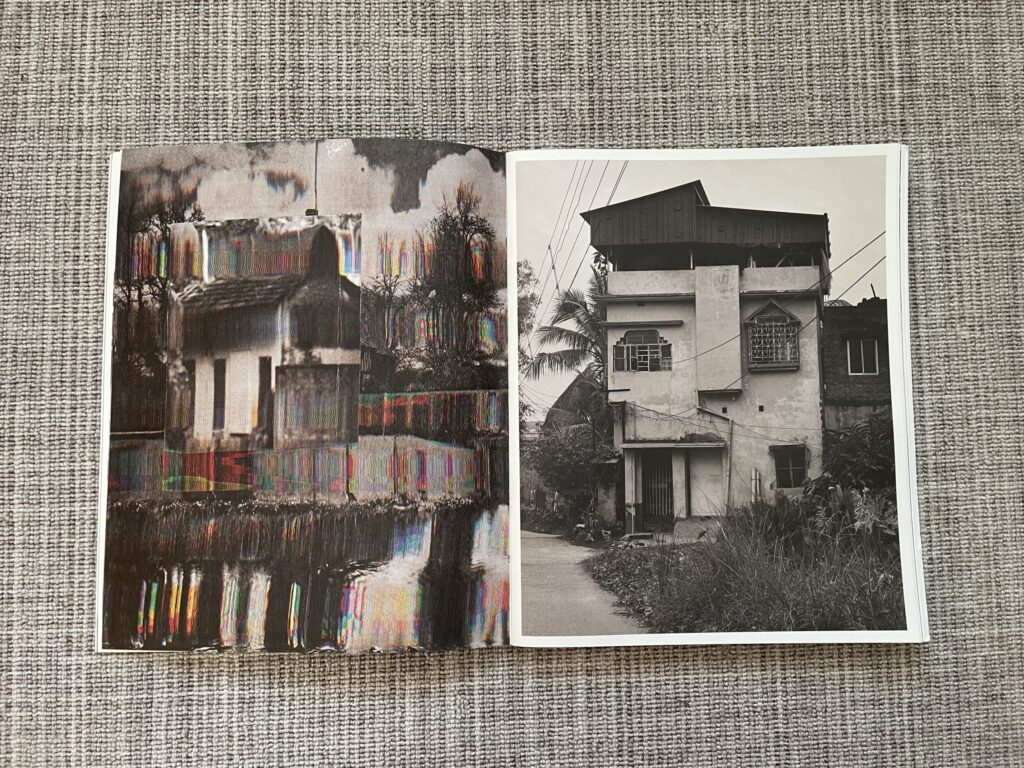
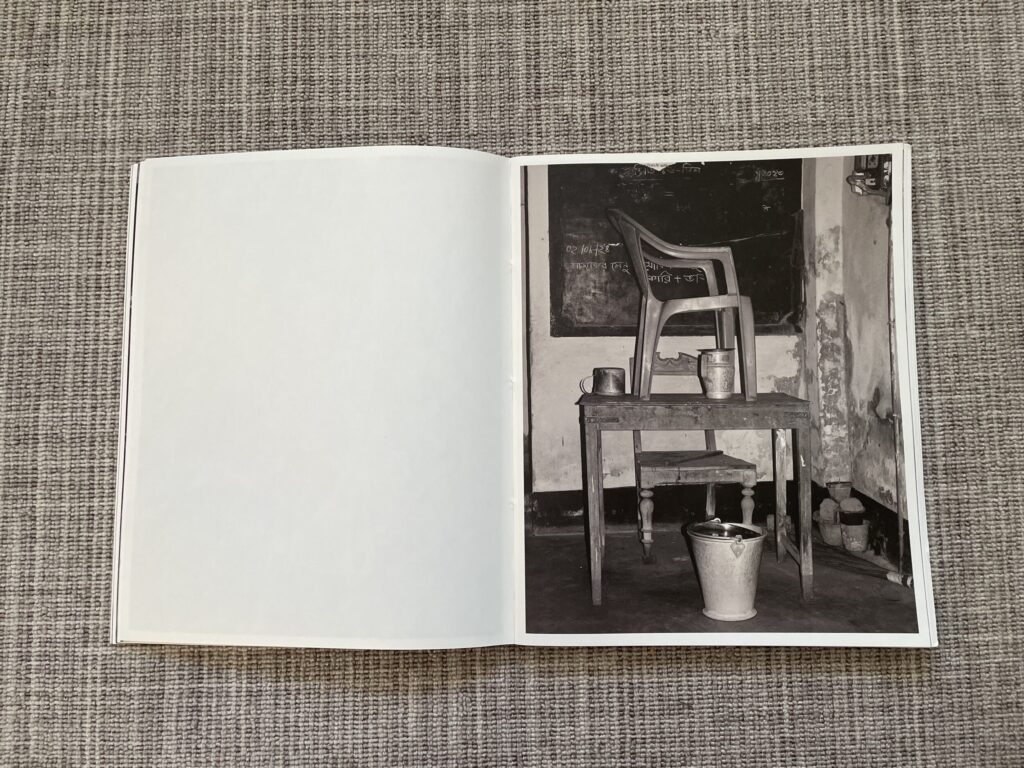
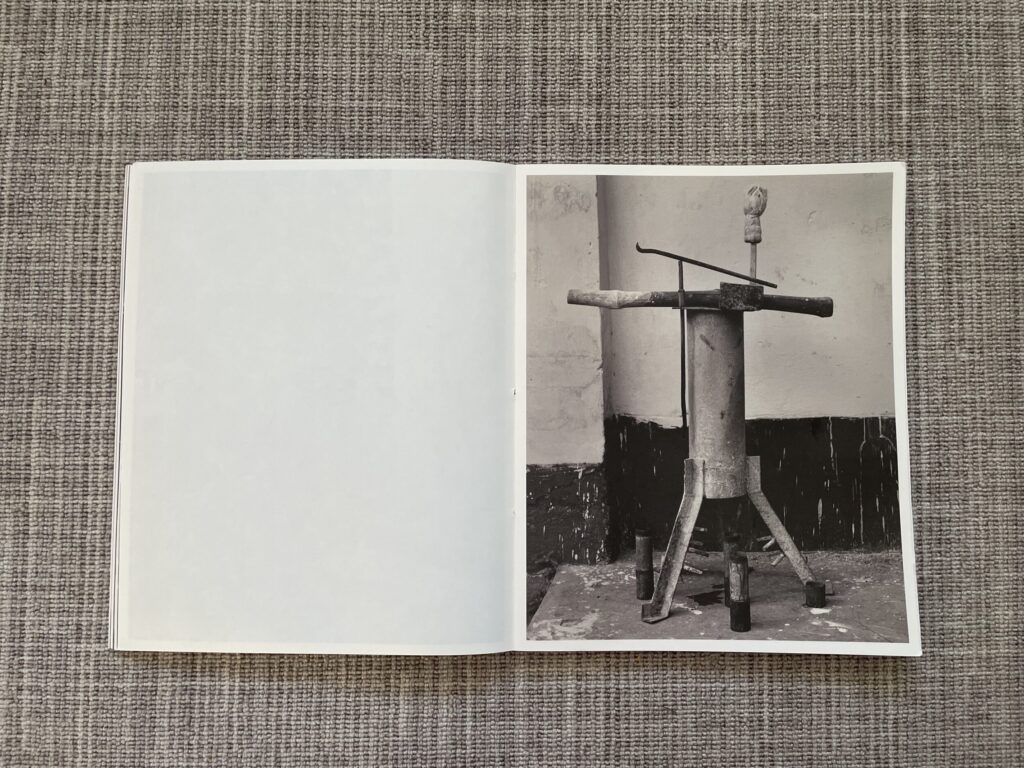
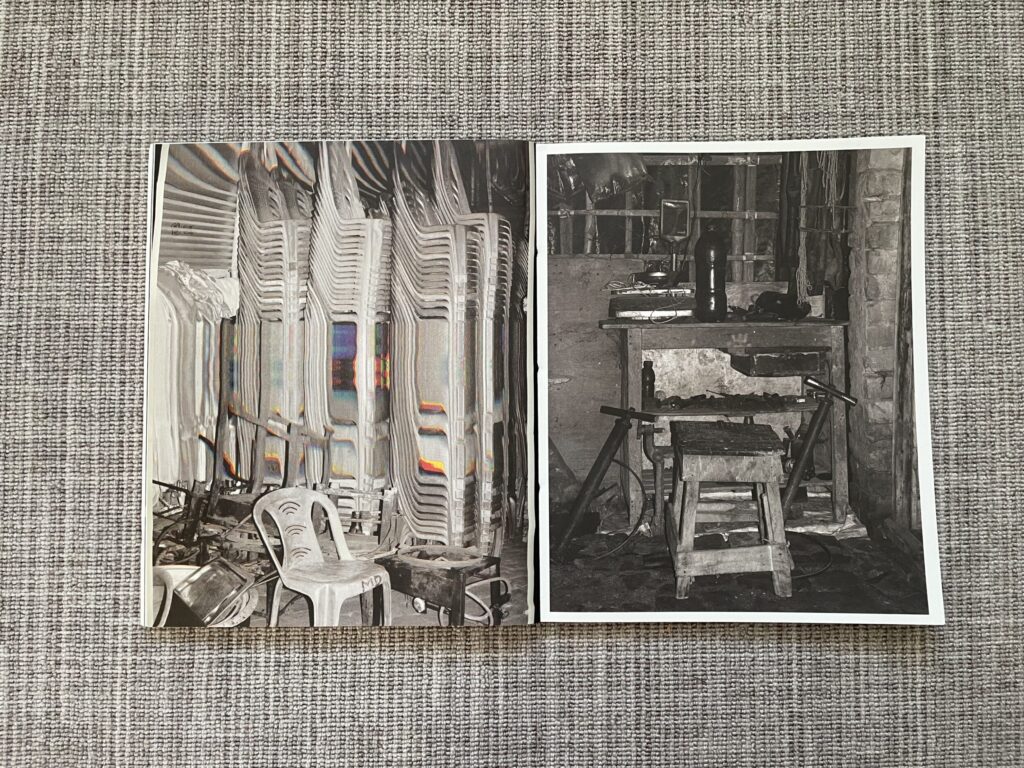
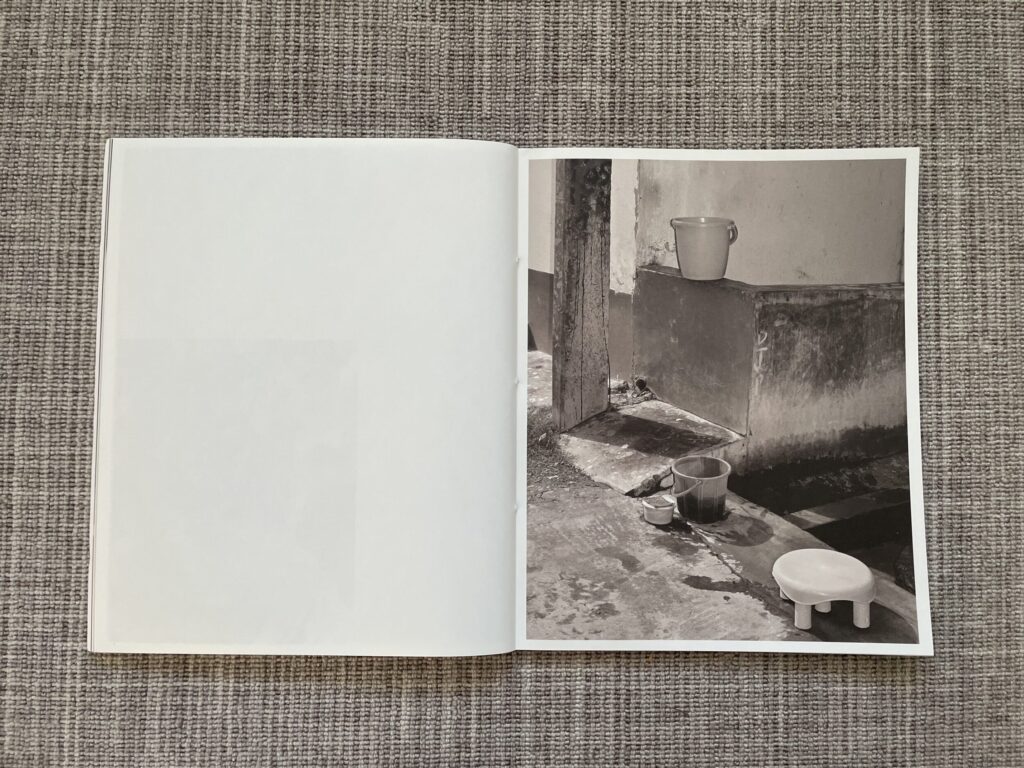
When an artist looks this intensely at the world, a process of unraveling can occur, and normal things start to look a little more strange and surreal – in this metaphorical case, the typically calm surface of the “pond” has been disturbed, revealing a new sense of reality. Many of Sikka’s compositions seem to uncover a mysterious sculptural ordering taking place, offering arrangements that defy easy explanation but somehow coalesce into spatial harmony. A stacked classroom setup consisting of a table, two chairs, a bucket, and a tin pitcher and cup somehow comes together, as do a tiered arrangement of wash buckets, a workshop with a bench, a stool, a scale, two bicycle pumps, and various tools; a window grate interrupted by a hanging bag; an angled pile of curved woven baskets and bricks; and even several stacks of rocks. More puzzling are the structures that seem to mimic a well pump but then continue to build up with more pipes, bars, tubes, and braces, like makeshift rockets. Sikka then steps back from these constructions to examine examples of the local architecture, his images of homes and buildings steeped in this same uneasiness, the geometries of the facades (as seen in window grills, stone work, brick decoration, stripes, squares, walls, open doors, and concrete blocks) making them feel like empty castles amid the dense greenery.
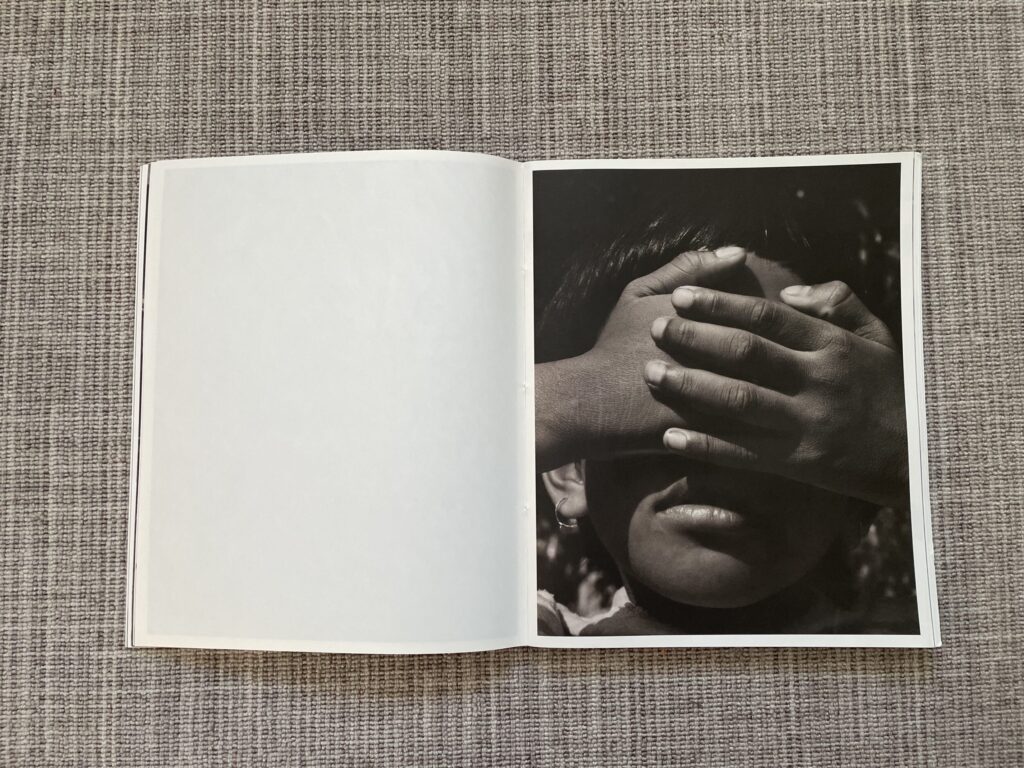
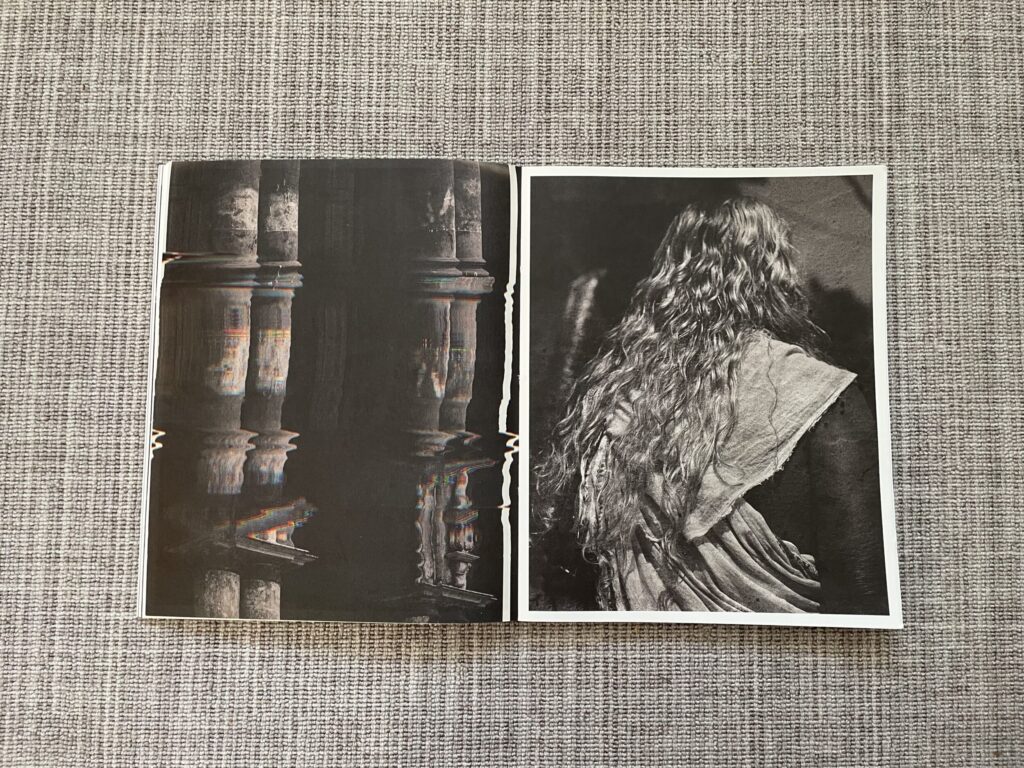
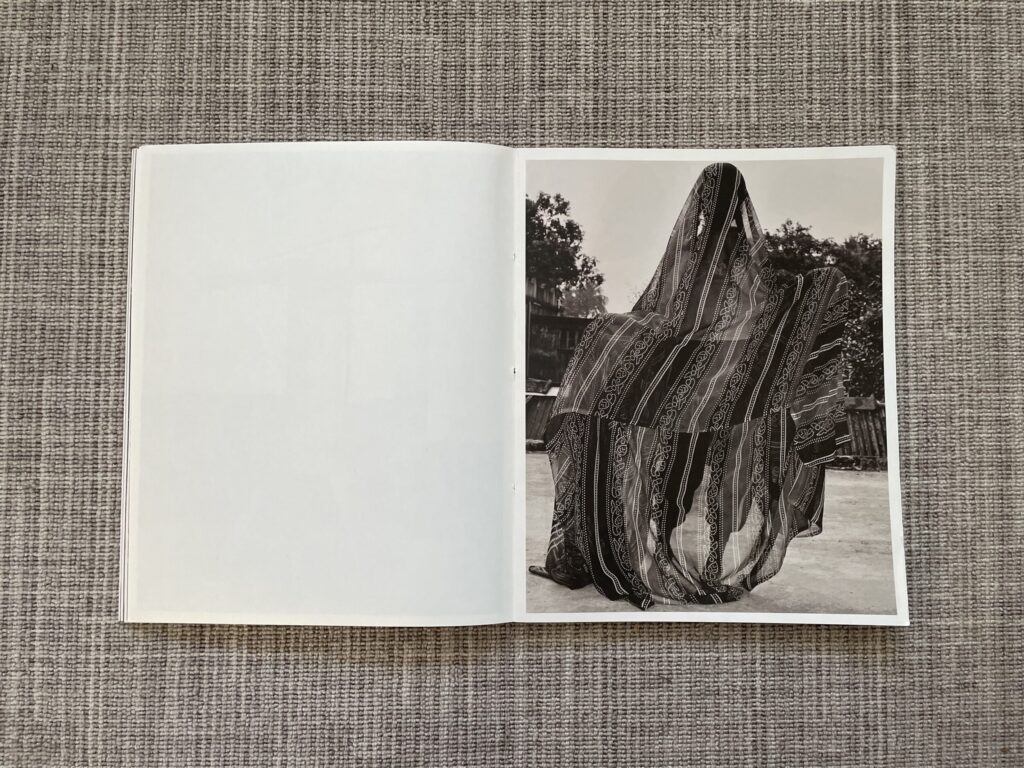
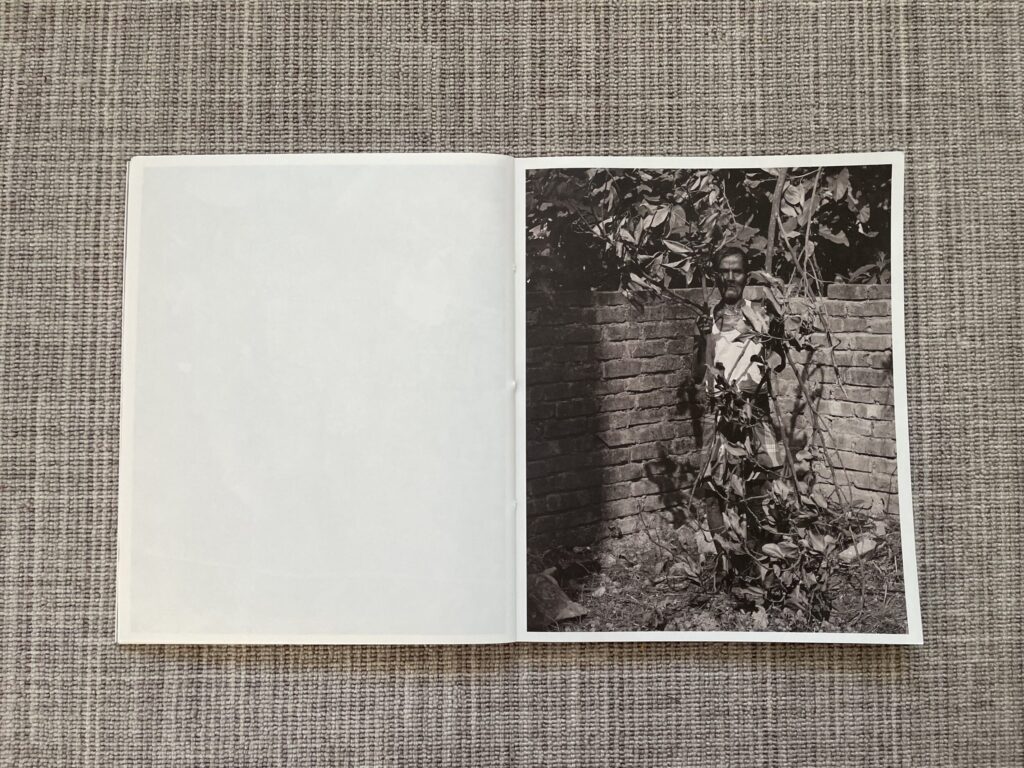
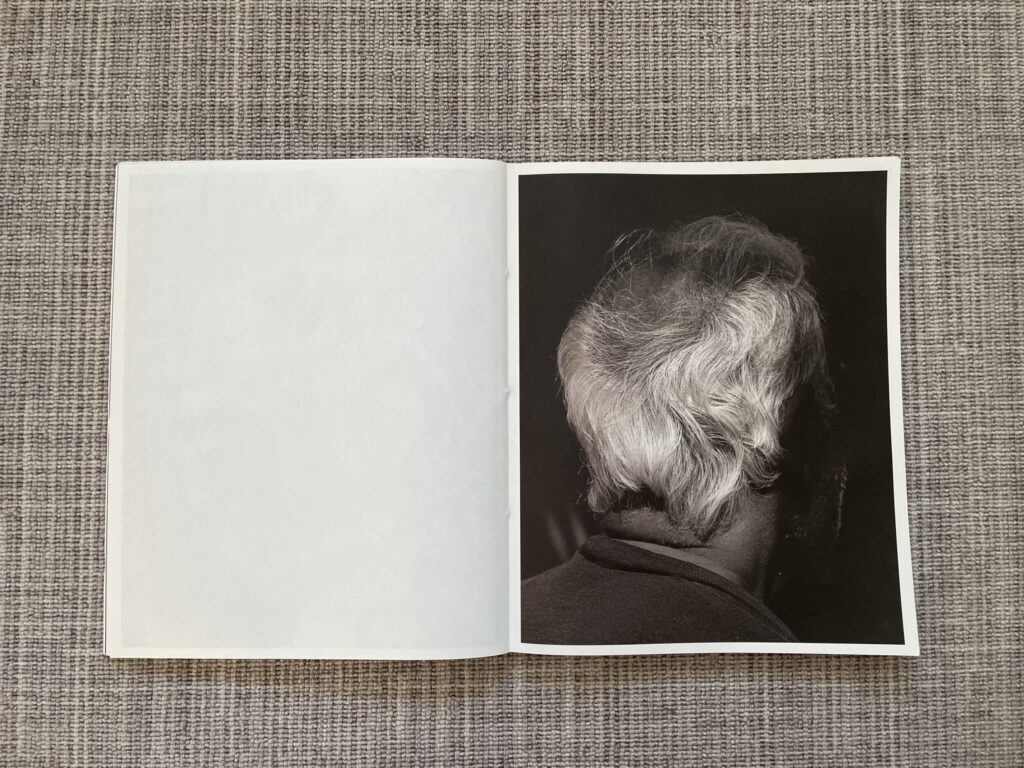
When Sikka casts his eye across the local residents, he brings a similar kind of indirectness. Most of his portraits are built on a gesture or an expression – rather than a deadpan stare into the lens – leading to images that are open ended rather than definitive. Over and over again, Sikka considers looking (or not looking): a girl covers her eyes with her fingers; a boy blocks his face with folded arms; a man peers out from behind some trees in a bricked corner; a boy looks out from atop a ladder; a older woman covers her face with a fan; and a young man peers through a badminton net. Then the looking gets more disrupted, in images of women fully wrapped in linens and patterned fabrics, and in seen-from-the-back portraits of hair, from the long flowing locks of a woman to the grey curves of an older man, with lyrical twists and even one bright spot of glare animating still other heads. These photographs are essentially fleeting impressions rather than portraits, where a bit of uncertainty is introduced into an everyday moment.
Sikka blends the scanner motif from the cover into images throughout the flow of Ripples in the Pond, bringing disrupting smears and squiggles of rainbow color into his otherwise black-and-white world. This mimics the effect of watching an old television program as the signal breaks down, the frames stuttering and blurring before reforming, or simply dissolving into static, just like the rippled surface of the water in the photobook’s title. Sikka’s scanned images seem to offer a peek into an alternate reality, where glimpses of fantasy, imagination, and confusion wiggle into view. It’s as if the world has come unglued – ladders become unstable and fold back on themselves; pillars and ornate archways shimmer; fences and legs elongate; stacked chairs are stretched; piles of pots are shaken; thin branches are extended; fabric patterns and wallpaper are twisted; and leaves and fish are doubled, the whole world seeming to rumble as though overtaken by an earthquake. Faces, arms, and bodies are similarly tweaked, creating eerie spectres and ghosts, and Sikka then goes one step further with a selection of double exposures, layering textures into veils, reflections, and combinations that flatten time and experience into one interlocked plane. The whole aesthetic of these modifications makes the images feel permeable, intimately offering more than what the surfaces might document. The last photograph in the book makes this duality clear, with the face of a boy shrouded in darkness then overpainted with gestural white brushstrokes, further dividing and obscuring his face.
Ripples in the Pond benefits from a crisp Hans Gremmen design that puts the photographs first. The photobook is large (while not quite oversized), and the images are presented either full bleed, with a thin white border, or much smaller surrounded by white space, with all white pages used to break up the flow. The pages of the book are folded and simply stitch-bound, creating a feathered front edge, and the sequencing makes smart use of visual pairs and echoes, leading to an overall flow that feels well integrated. Overall, it’s an understated and well-made photobook, with few distractions.
Ripples in the Pond should bring Sikka to another level of art world attention, as it impressively mixes a handful of subtly executed photographic strategies into a deftly integrated whole. He did this back with The Sapper, but his level of stylistic and compositional confidence has risen even further in the years since, pushing each of the diverse component images here to its precise endpoint. As seen in Ripples in the Pond, Sikka’s evolving photographic vision is becoming increasingly rich and refined, making him a photographer to track with excitement and anticipation.
Collector’s POV: Bharat Sikka is represented by Nature Morte in Delhi (here) and Industry Art in London (here). His work has little secondary market history at this point, so gallery retail likely remains the best option for those collectors interested in following up.