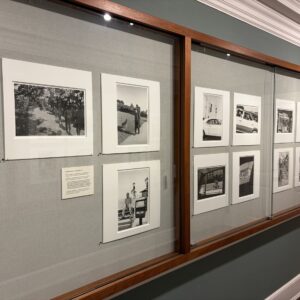
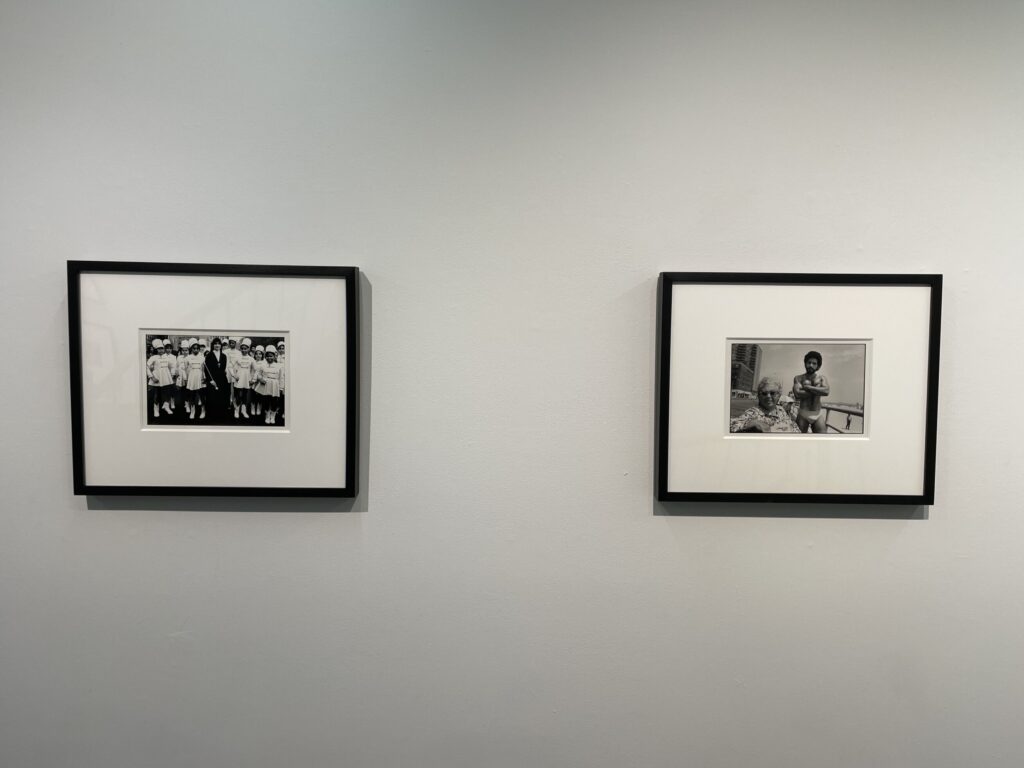
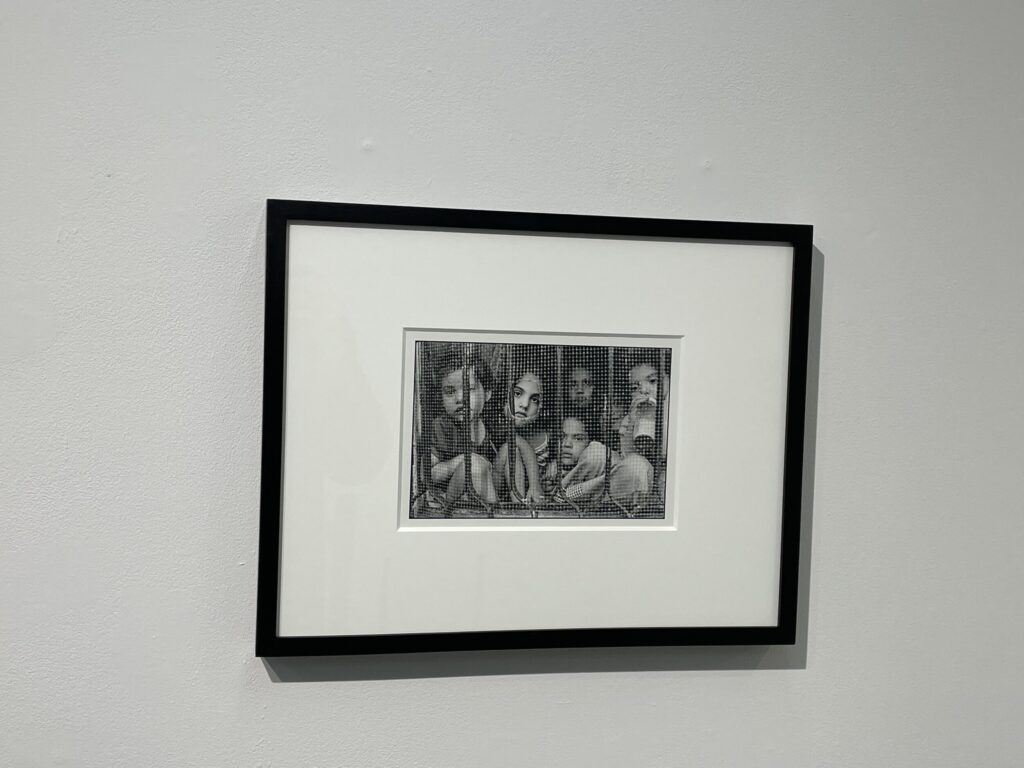
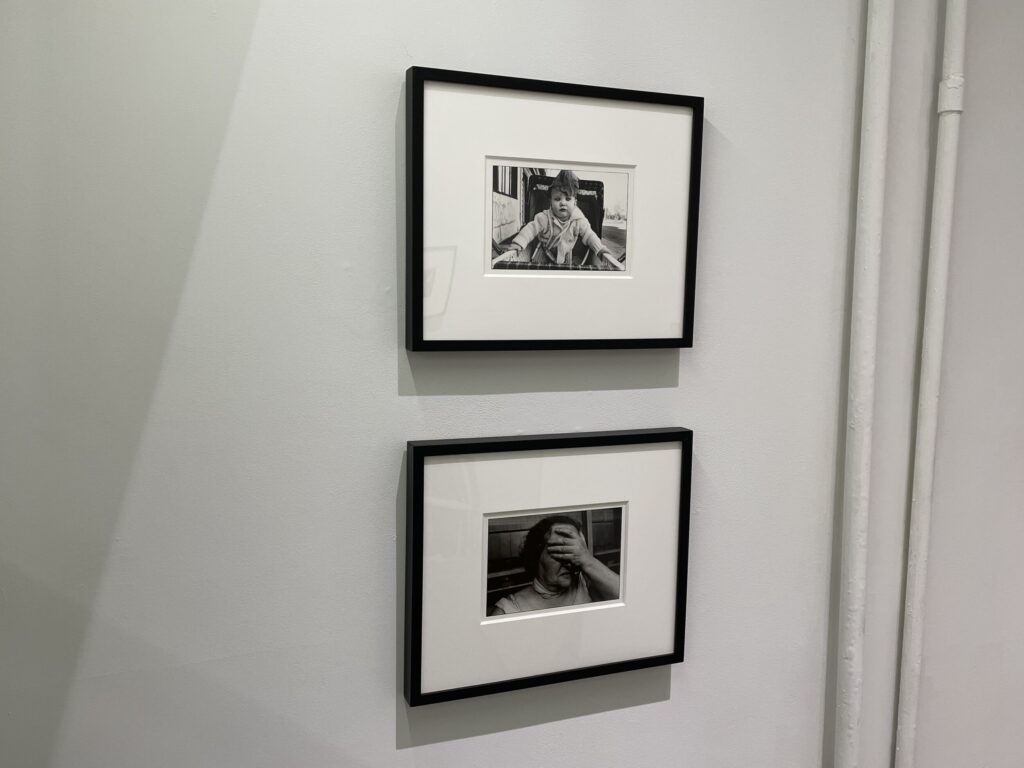
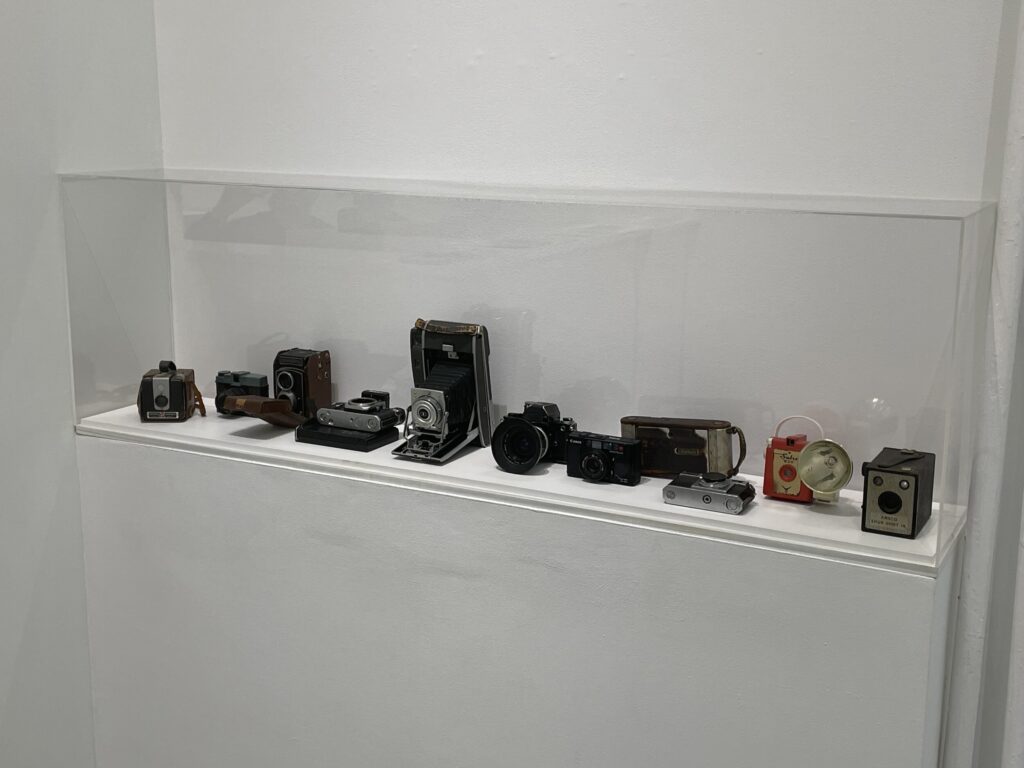
JTF (just the facts): A total of 22 black-and-white photographs, framed in black and matted, and hung against white walls in the main gallery space. All of the works are gelatin silver prints (some mounted to museum board), made in c1970s, 1972-1979, 1973/1981, 1974, 1975-1976, 1976, 1977, 1978, 1979, and 1980. The vintage prints are sized 14×11 or 11×14 inches, and are uneditioned. The show also includes one enlarged image and a vitrine filled with the photographer’s cameras. (Installation shots below.)
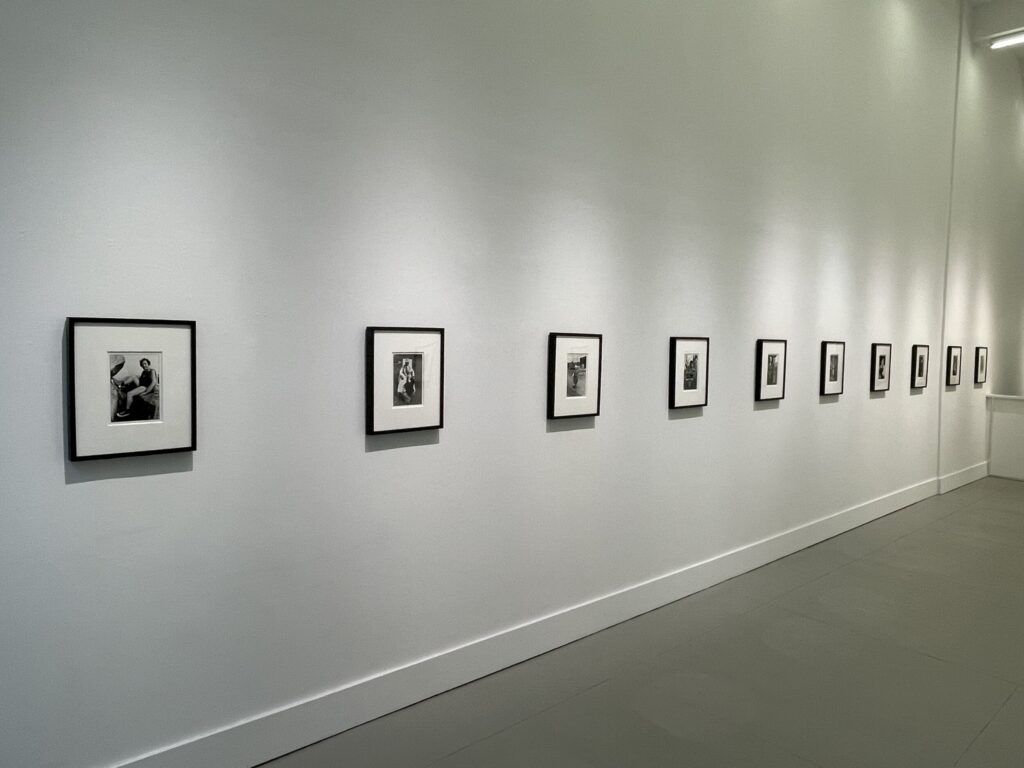
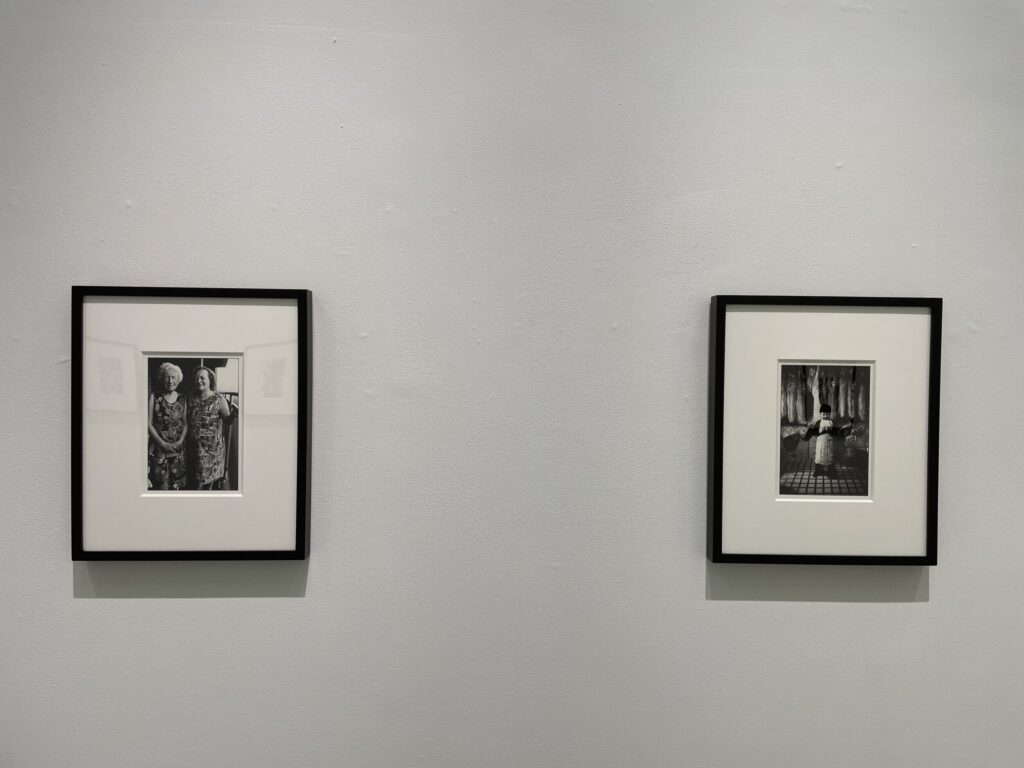
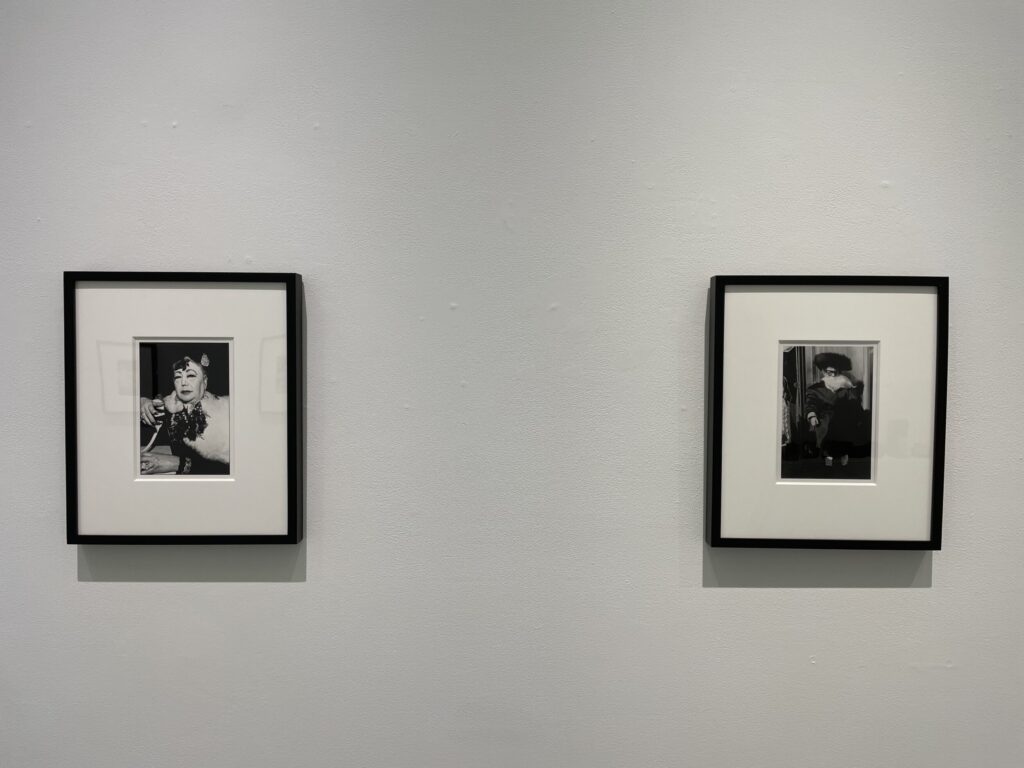
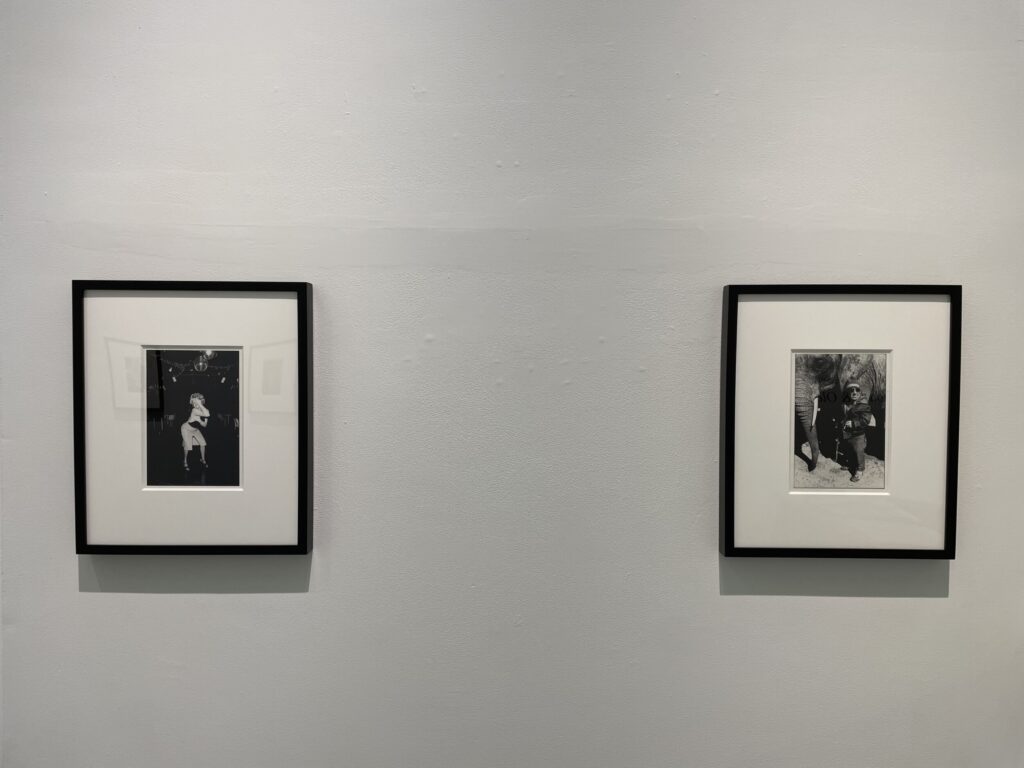
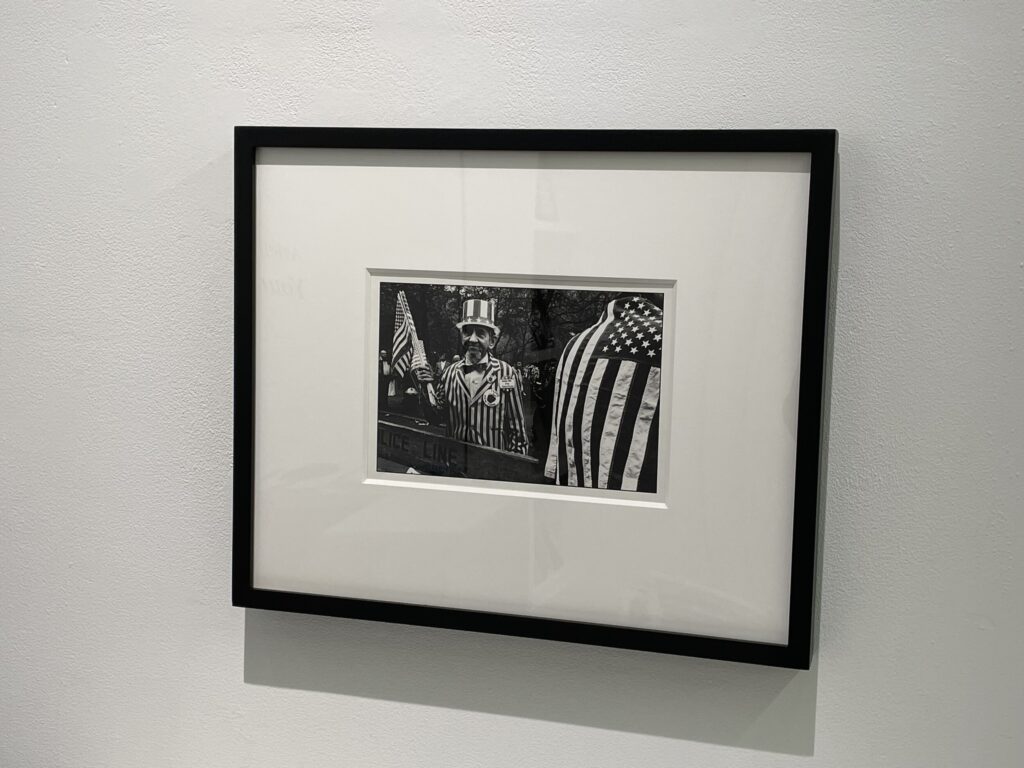
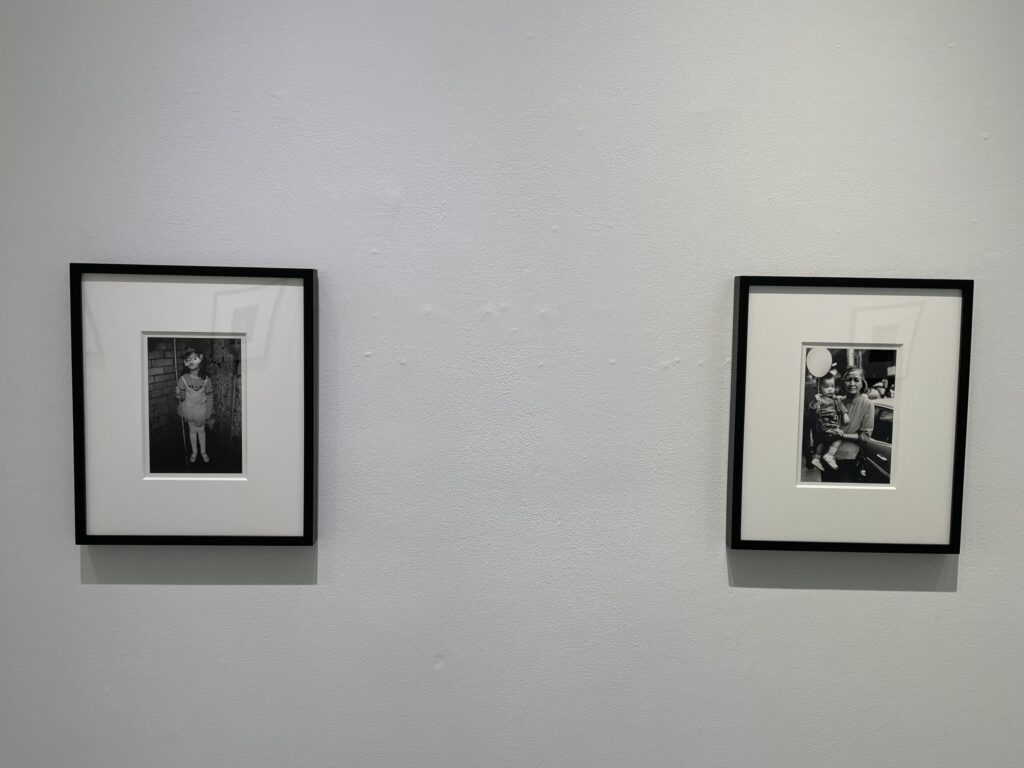
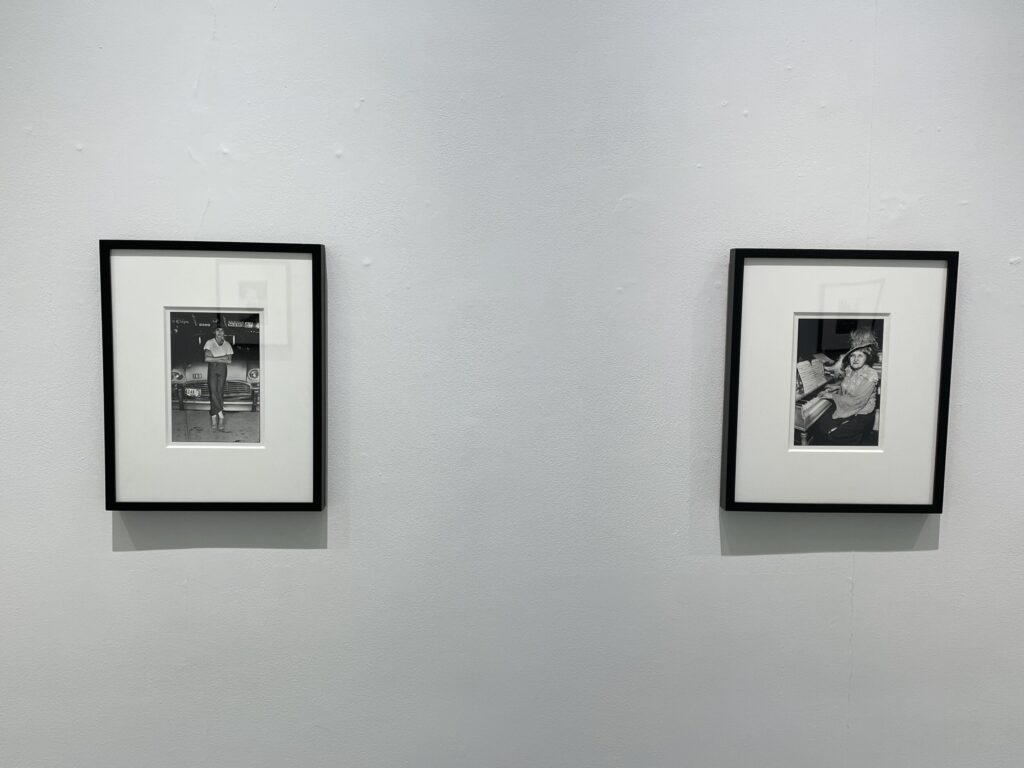
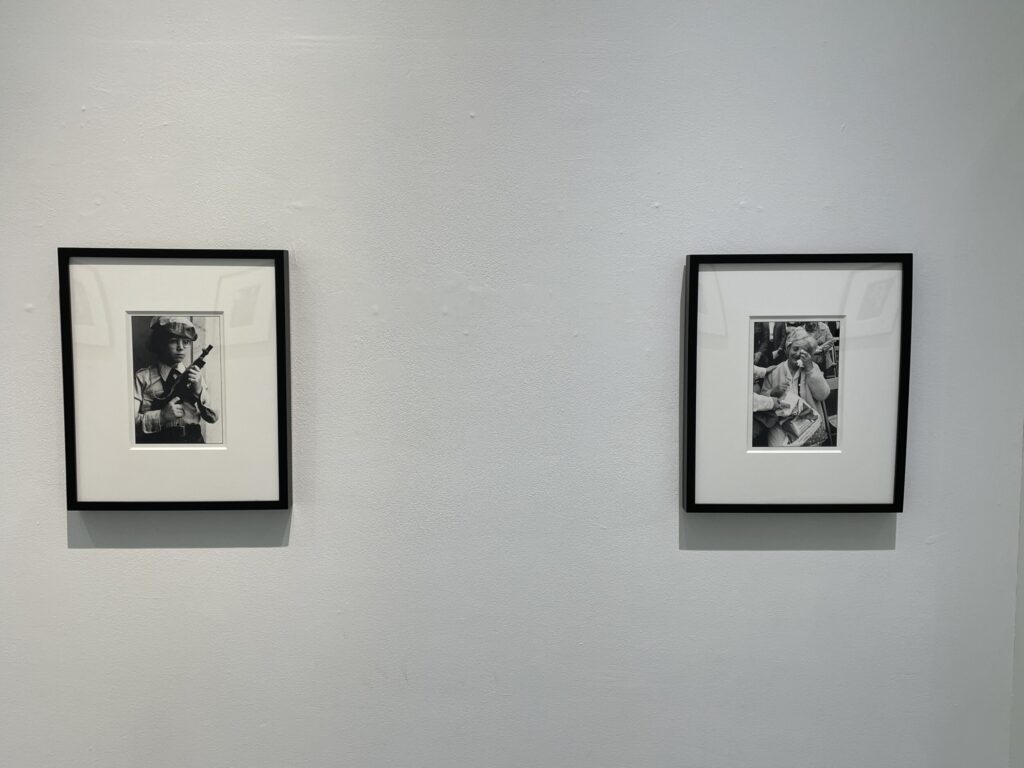
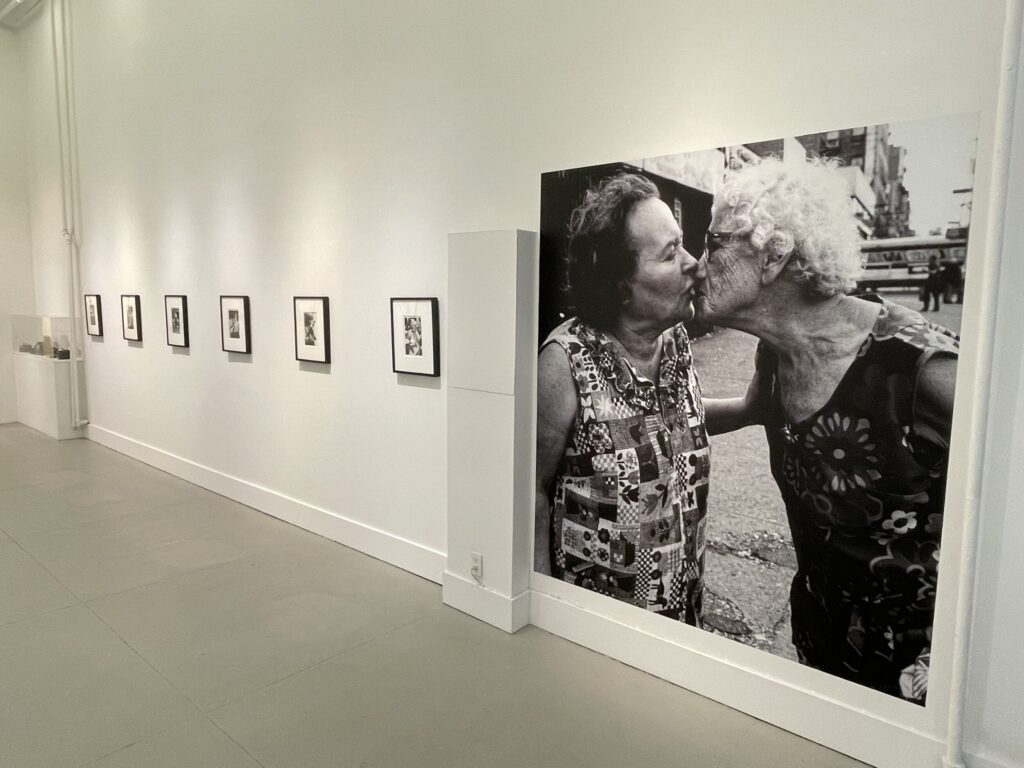
Comments/Context: In the years following an artist’s death, there is always a period of careful reconsideration, as the complete arc of the artist’s work slowly comes into clearer view. The New York street photographer Arlene Gottfried died in 2017, and soon after her death, she was thoughtfully memorialized in a 2018 gallery show (reviewed here), and just last year, the process of synthesis and consolidation continued with a tight institutional exhibit at the New York Historical (Daybook here). And just when we thought this process might have wrapped up, this show offers us an unexpected curatorial missive from the artist herself, in the form of a box of prints she gathered together before her death.
In amongst the archival storage boxes in her Westbeth studio was a portfolio box labeled “Young & Old”, and as its caption implies, it’s a selection of Gottfried’s prints made of children and elders, sometimes alone and sometimes in groups. Gottfried had a particular talent for street portraiture, always seeming to find the warmth and trust that would allow an elusive or even eccentric stranger to become a subject. Her image choices reached across New York City (and nearby Connecticut) in the 1970s, providing a sensitively seen cross section of kids and adults, all seen with Gottfried’s embracing eye.
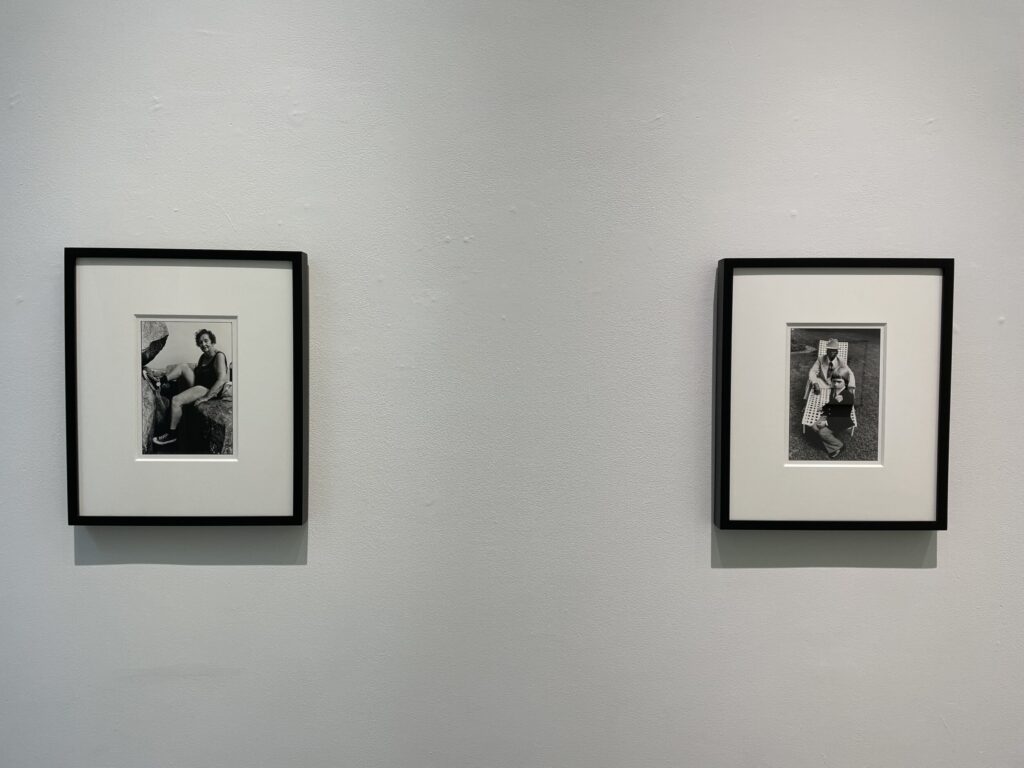
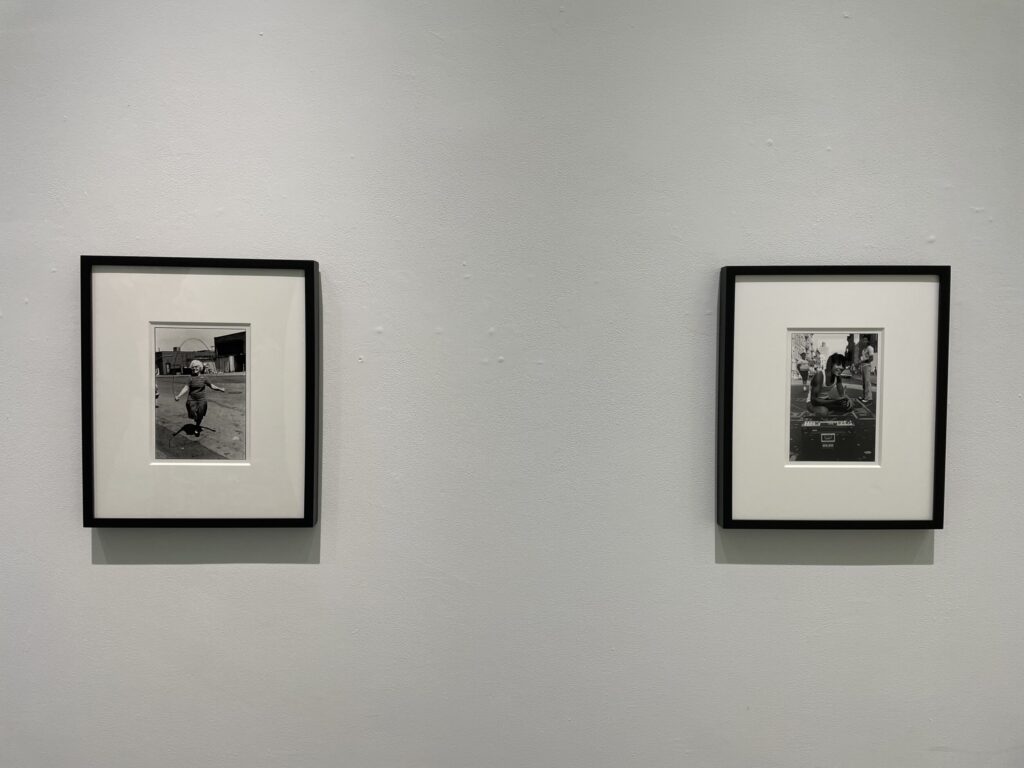
The show is hung in an alternating rhythm, with young and old subjects in repeating succession circling the gallery space. Gottfried’s images capture many of the nuances of aging, seemingly just as interested in ebullient and resilient joy as in the truths of anguish and despair. Older women in particular are consistent subjects here, mixing the matter-of-fact confidence of a swimsuit and high tops or an unexpected sidewalk rope jumping exercise with the quirky playfulness of piano playing, disco dancing, and a flashy evening wear. More modest patterned dresses bring us back to the everyday companionship of friends, and Gottfried’s compassionate attention to the hand over a face or the dabbing of a teary eye bringing the challenges of aging into sharper view.
When Gottfried turned her attention to the younger generation, the mood was even more casual and playful. Costumes make several appearances – a rabbi, a soldier, a ballerina – creating the awkward appearance of age on tiny bodies. An image of a young boy in an apron at a butcher’s shop, surrounded by hanging carcasses of meat, has a similarly unexpected mood, as we wouldn’t expect to find a small happy boy in such surroundings. Gottfried seems to have been particularly good at putting young people at ease, as hints of confidence and swagger emerge from toddlers and teens alike, particularly boys posing with a boom box or in front of a taxi, their contagious New York energy caught on film.
Gottfried also had repeated success pairing the old and young. One of her best known images brings together an older woman sitting on the boardwalk at Brighton Beach with with a young muscled man in briefs, the unlikely juxtaposition of the two coming together in a classic New York moment. Other pairings connect a nun and a group of majorettes, a young boy in a blazer and a man in a suit sharing a lawn chaise, and a Chinatown grandmother with an infant in her arms holding a balloon. Gottfried documented this multi-generational mixing with sensitivity, making it feel like part of the fabric of life in the city.
With the help of easy-to-like shows like this one, Gottfried’s reputation as a key figure in New York street photography seems destined to solidify further. It wasn’t easy to wander the streets of a bustling urban place like New York in the 1970s and come away with such consistent warmth and empathy. Even at their most incisive and honest, Gottfried’s photographs always find a vein of collective humanity that makes her work relatable. Even decades later, we can follow along and viscerally feel that connection, linking the past and present with humor and grace.
Collector’s POV: The prints in this show are priced at $5500 each. Gottfried’s work has little secondary market history, so gallery retail likely remains the best option for those collectors interested in following up.