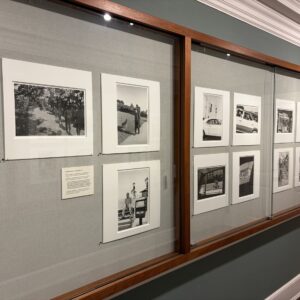
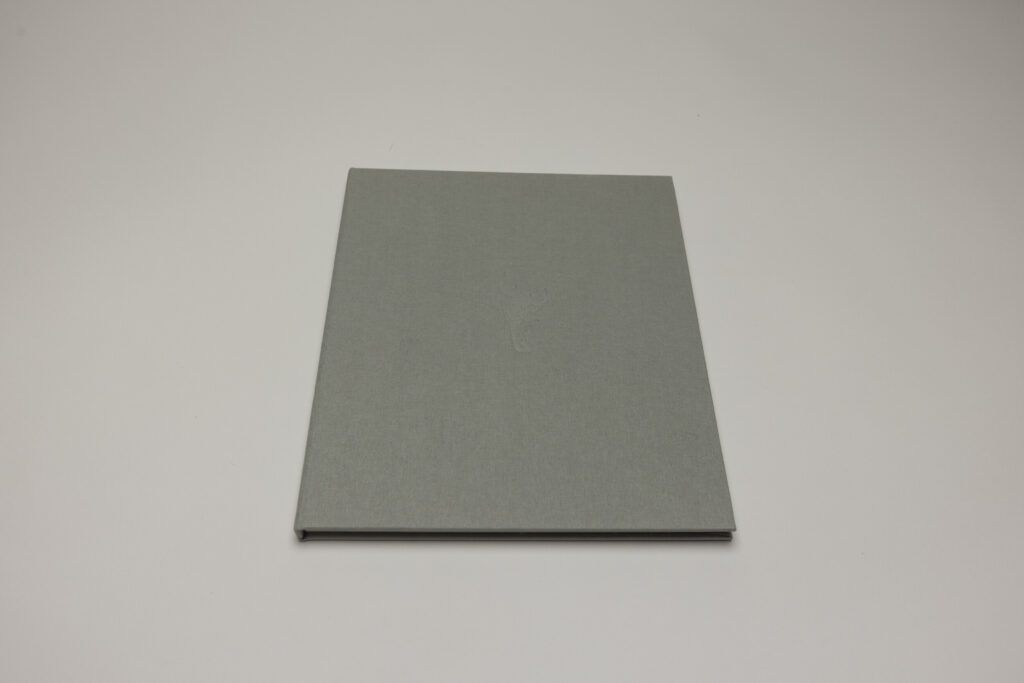
JTF (just the facts): Published in 2025 by RUST Publishing (here). Hardcover (22.5 × 26.5 cm), with 36 black-and-white photographs. Includes a poem by J. Michael Yates. Design by Jakub Szachnowski. In an edition of 250 copies. (Cover and spread shots below.)
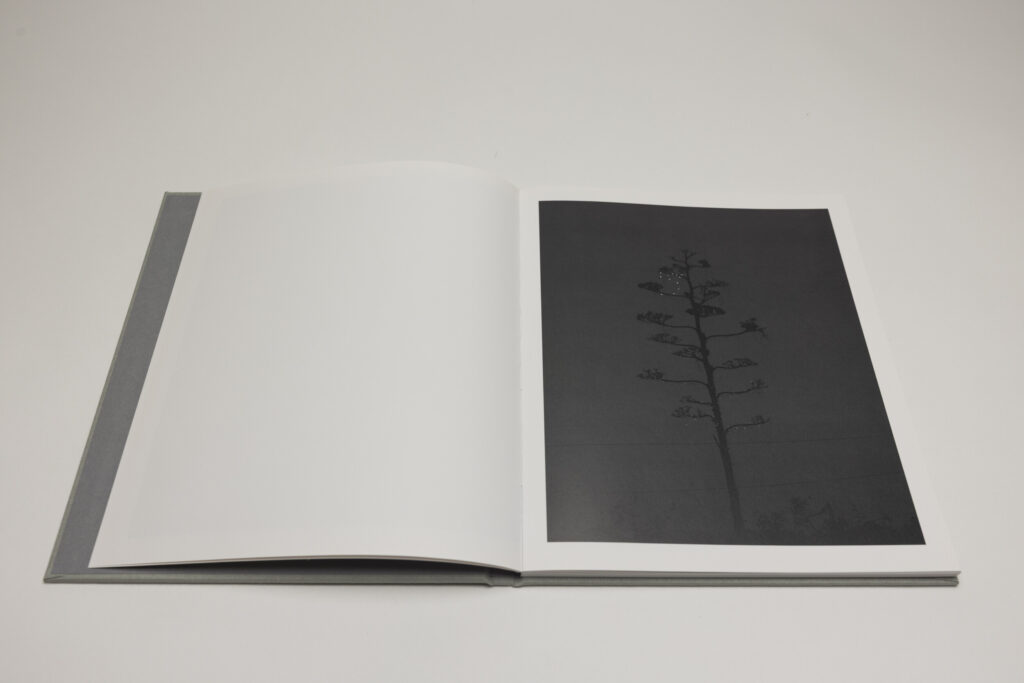
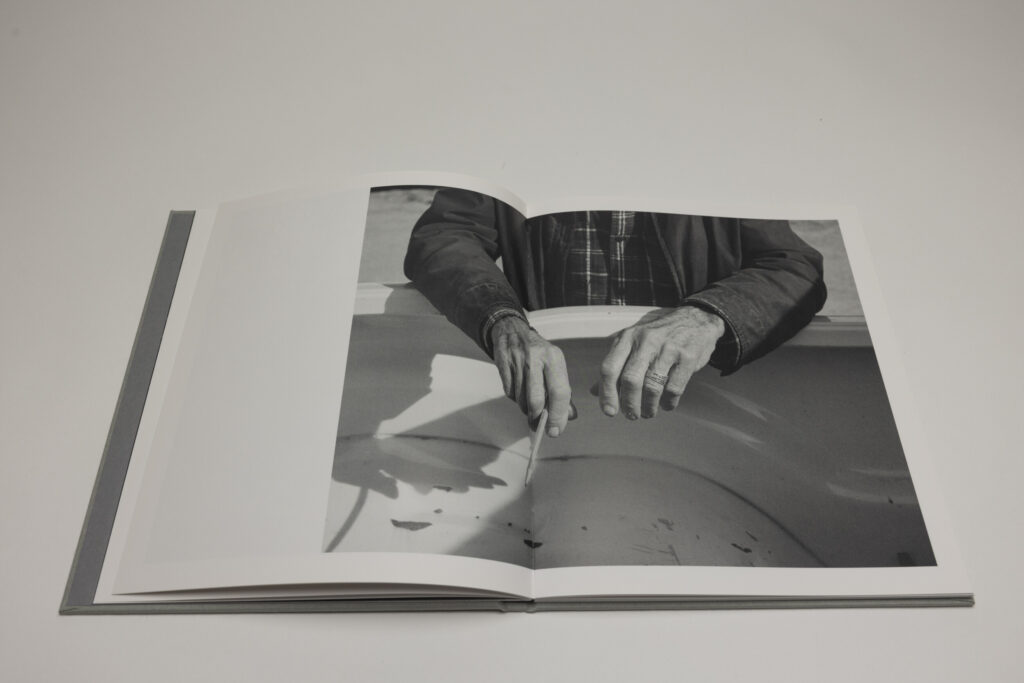
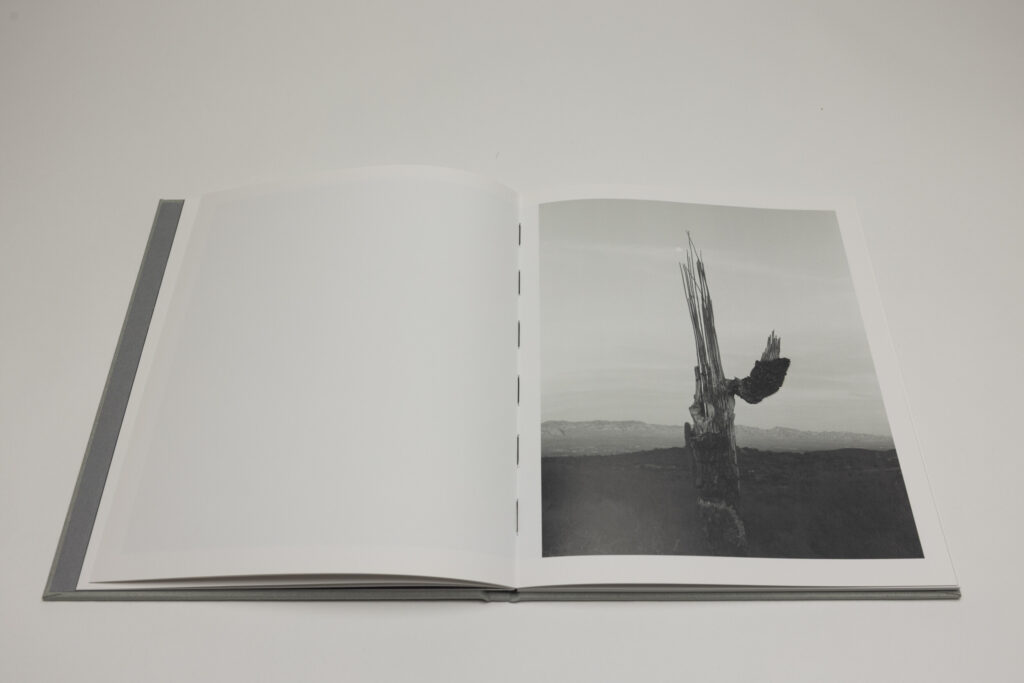
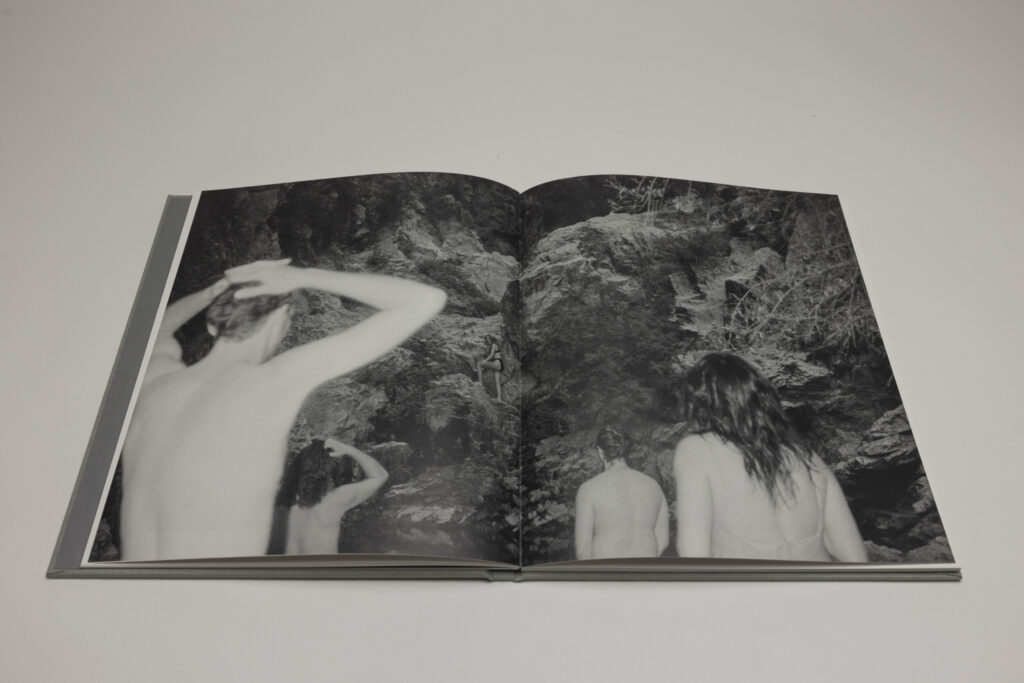
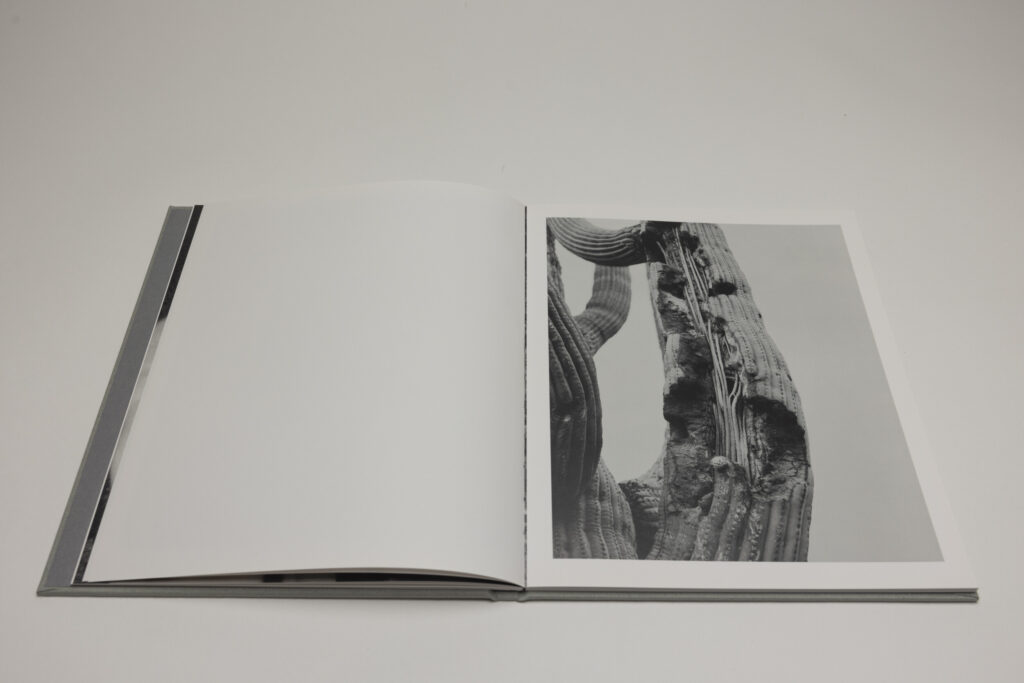
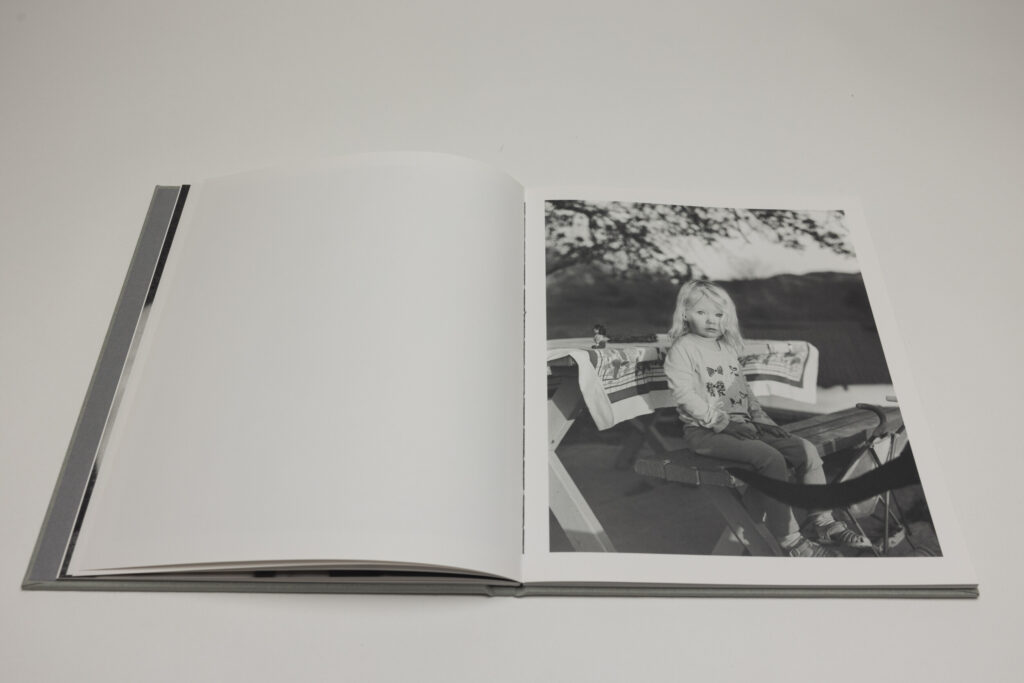
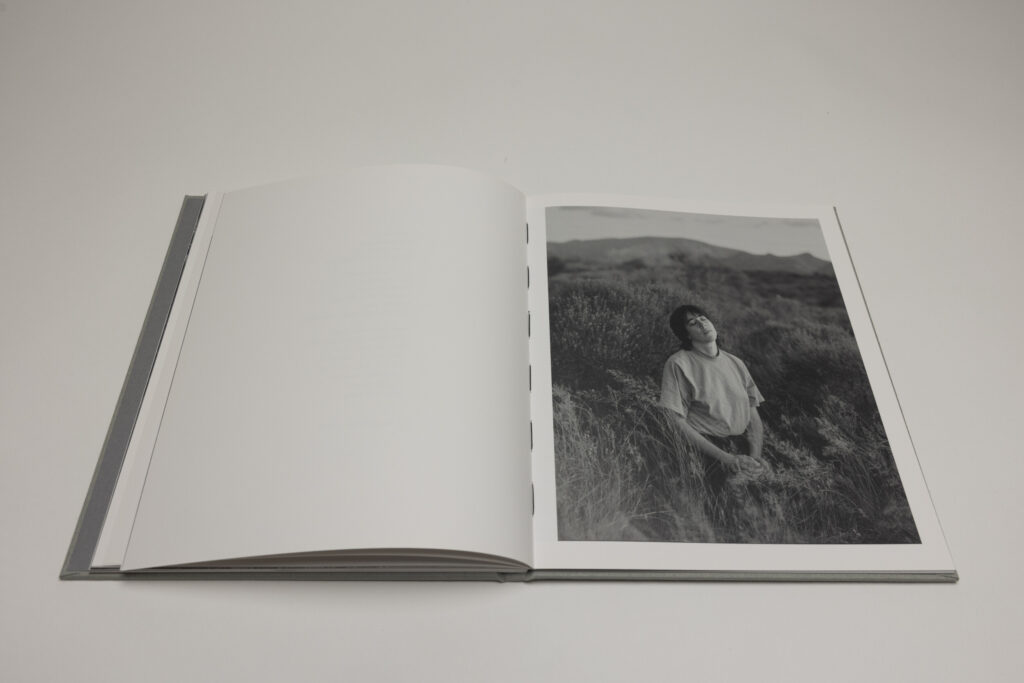
Comments/Context: Andrea Koesters’s photobook Oracle is a measured, quietly resonant study of life in the Sonoran Desert, photographed over six years in and around the small town of Oracle in southern Arizona, where she currently lives. In this project, she revisits the same areas over time, observing the small shifts that occur, and letting their stories emerge gradually. At its heart, Oracle explores the delicate balance between life and death in an unforgiving environment, revealing how communities, terrain, and memory intertwine.
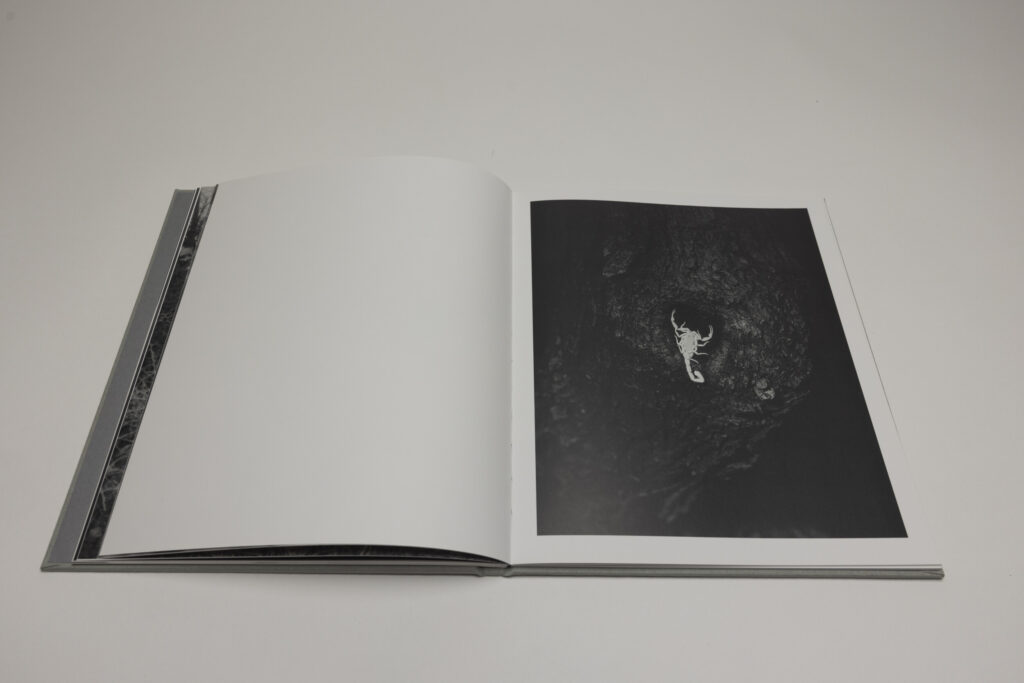
Oracle is a hardcover book in a light grayish cloth cover, with a small silhouette of a scorpion, commonly found in the Sonoran Desert, embossed right in the center. The title and the artist’s name are elegantly placed on the spine in a light grey font, and the book features an open spine, an understated design element. In general, the design is restrained, with no captions or page numbers on the pages, allowing the images space to breathe, while a short poem by J. Michael Yates appears near the end. The photobook is also beautifully printed, making the interaction even more enjoyable.
The title of the book, Oracle, seems to function not as a literal reference, but as a metaphor for the landscape itself. Koesters frames the desert as a place that “continually unveils its cryptic history,” shaped by geology, people, animals, and time. An oracle is traditionally a source of insight; something that reveals truths indirectly, gradually, or through signs that require attention. That is exactly how Koesters approaches the desert: not as a straightforward subject, but as a landscape that holds memory and meaning beneath its surface. The desert is an entity with its own wisdom, shaped by forces far older and larger than any single human viewpoint. The presence of animal life and death, the shifts in terrain, and the traces left by people all function like signs or omens, revealing the desert’s ongoing story if one is willing to look closely.
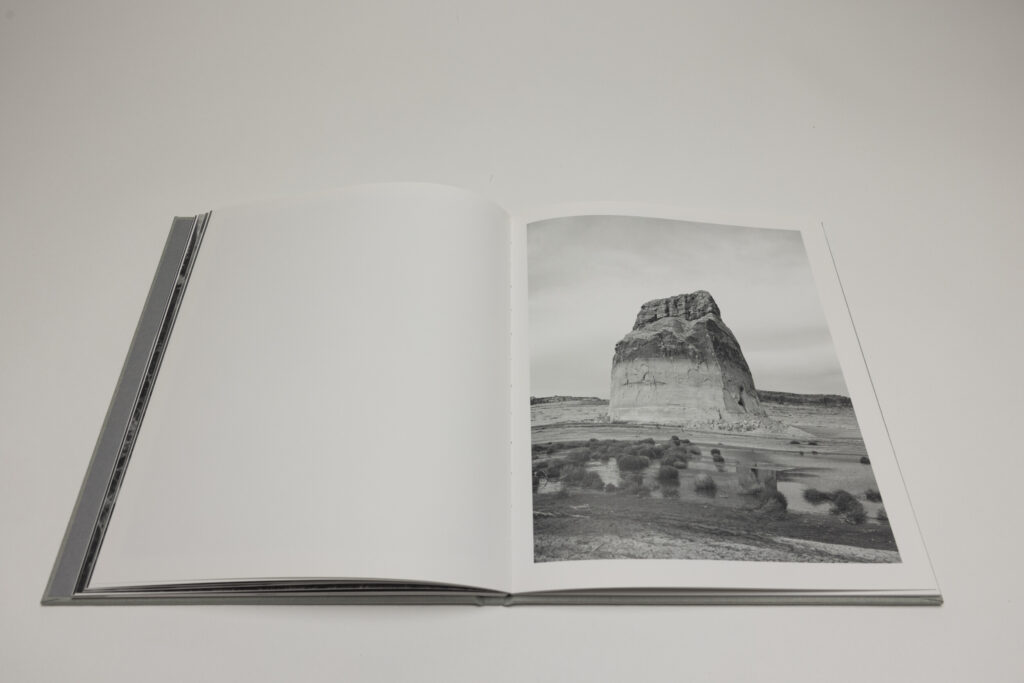
In her photographs, Koesters returns repeatedly to the same sites (rural dwellings, shifting desert terrain, traces of wildlife) capturing subtle seasonal or temporal variations that might otherwise be missed. This cyclical approach gives the work a meditative rhythm, echoing the slow pulse of the desert itself.
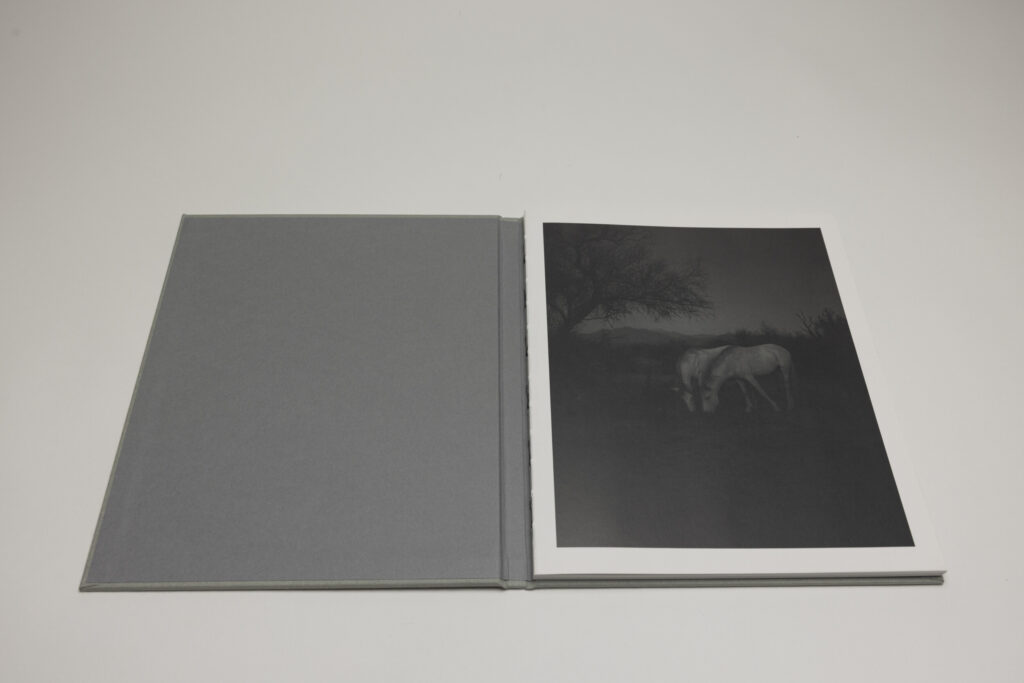
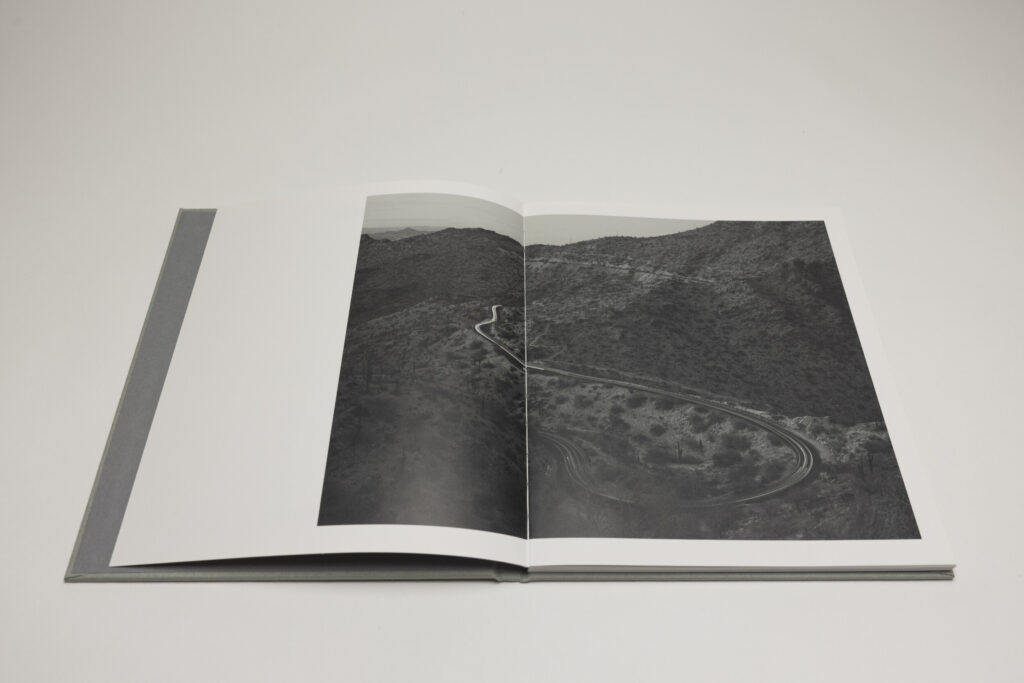
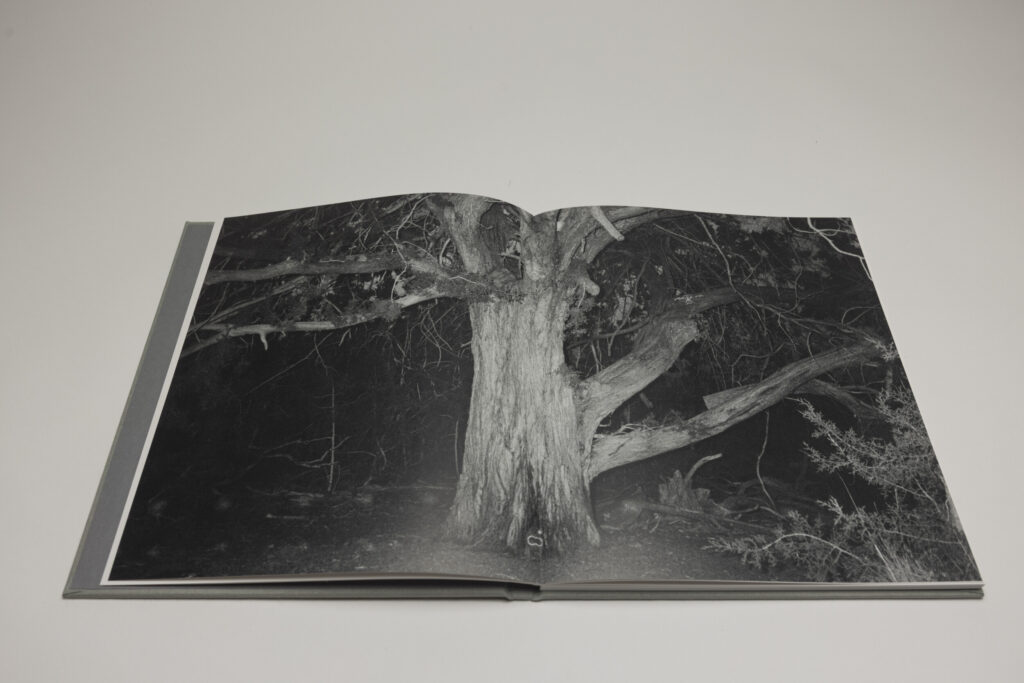
The opening image sets the atmosphere. It is a striking photograph of two white horses grazing with heads down towards the ground; the deep shadows and limited tonal range makes the moment feel mysterious and calm. Koesters then moves to an aerial shot (spread across two pages) of a rugged mountainous landscape as a winding narrow road cuts through the terrain. In another photograph, a massive, timeworn tree trunk stretches horizontally across the entire spread, its tangled branches and roots weaving together into a dense, almost chaotic network. The scene carries a sense of timelessness, and is quietly powerful and slightly haunting.
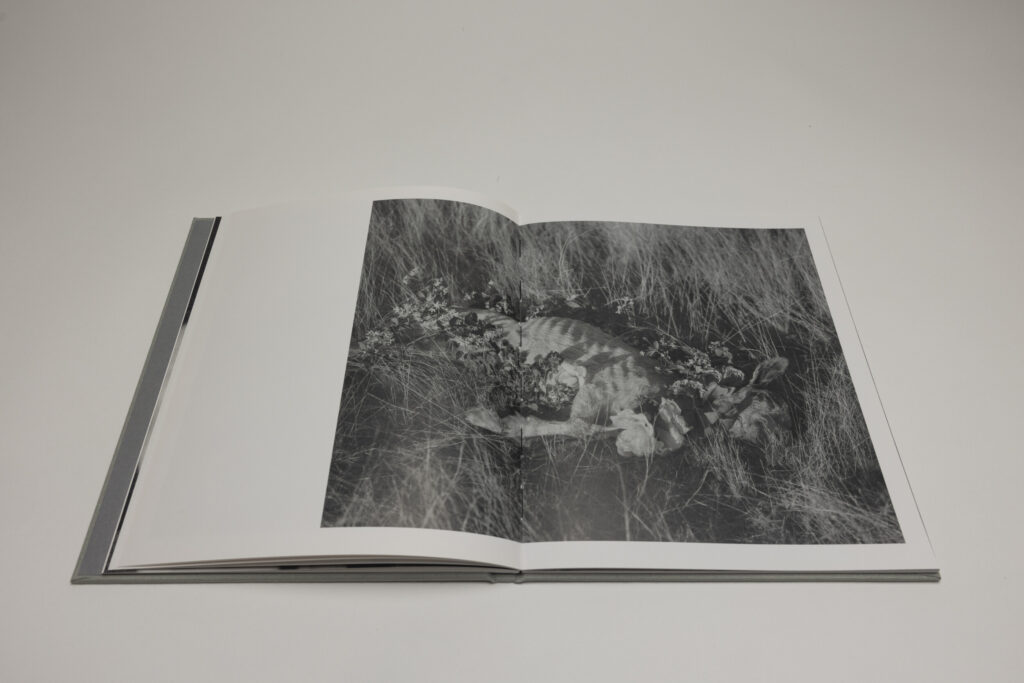
Pictures of dead animals along with decaying trees and cacti function less as shocking symbols and more as quiet markers of the natural cycles of this place. A young deer rests lifeless in the grass, surrounded by flowers, and even in black‑and‑white, the sunlight seems to seep through, touching the scene with a quiet, haunting clarity. Another animal’s carcass lies in the open desert, its presence stark against the vast, unforgiving landscape. In the desert, where survival is precarious and the environment is harsh, death becomes a central part of the ecology, rather than an anomaly.
Rather than depicting the desert in harsh midday light (where everything is sharp, exposed, and dramatic), Koesters uses a muted, dusk‑leaning palette that slows the viewer down. Dusk is a moment of transition, and so is her entire project: a study of life, death, memory, and the spaces in between. The dusky mood holds space for these quieter transitions allowing them to appear as naturally as the desert’s own cycles. It softens the harsher edges of an environment that is, by description, “unforgiving,” and instead draws the viewer toward its vulnerabilities: the fragility of a carcass absorbed into the sand, the tenuous bloom of desert flowers, the slow erosion of a weathered structure.
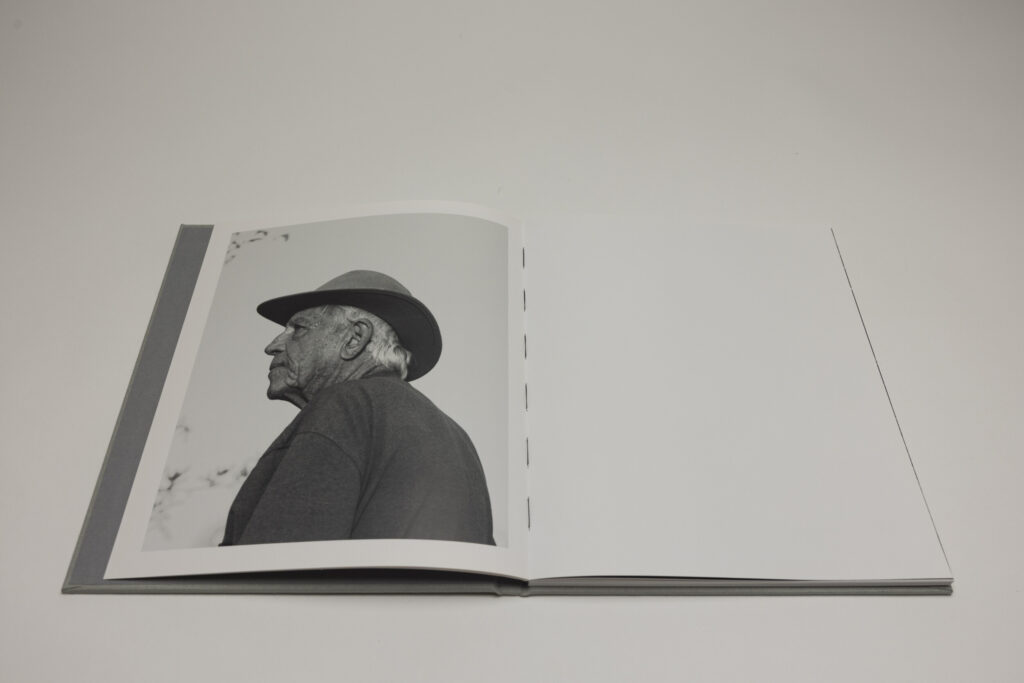
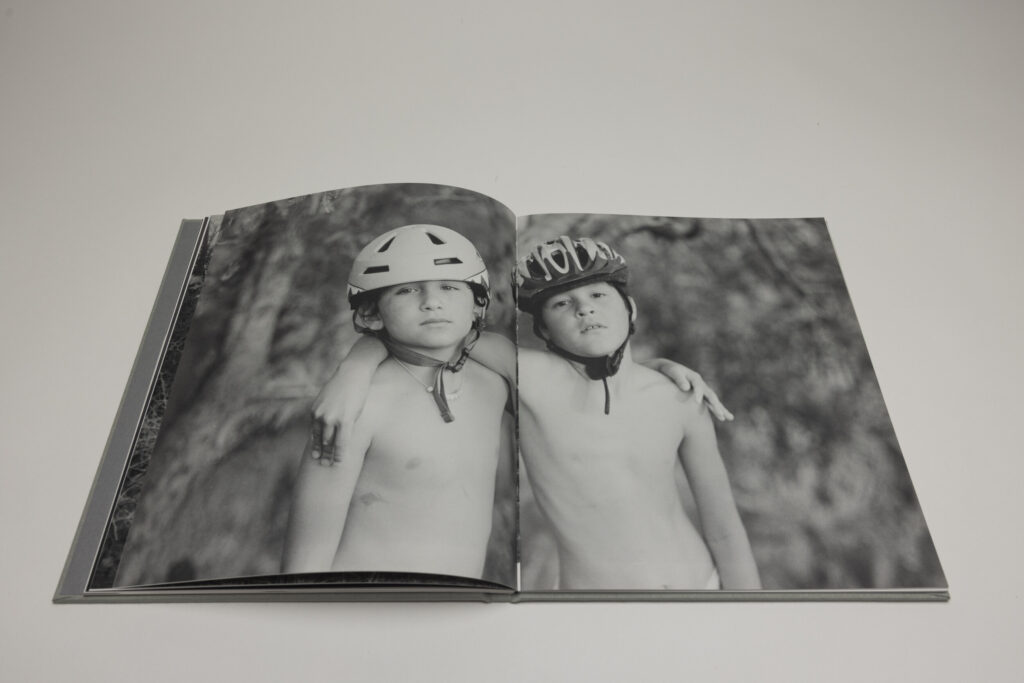
People are also integral parts of the desert’s larger ecological and emotional landscapes. The first portrait we encounter is of an older man in a wide‑brimmed hat, his face weathered and calm, photographed outdoors against a simple, unobtrusive backdrop. Later, a full‑spread image depicts a young woman in a swimsuit standing poised on rocky terrain, seemingly preparing to leap into the water while others, their backs to us and illuminated by flash, watch her. In another photograph, a young blond girl sits at a picnic table, meeting the camera’s gaze directly. Together, these portraits quietly remind us that the desert is inhabited and experienced by people across generations.
A number of recent photobooks thoughtfully examine the intricate relationship between people and the landscapes they inhabit. In The Crick (reviewed here), Jim Mangan portrays the lives of boys growing up in a fundamentalist community in Utah, capturing the profound connection they forge with the rugged terrain and the horses they train. In För (reviewed here), Agnieszka Sosnowska offers a gentle, attentive look at rural Iceland, depicting both the land and its residents through scenes of daily life rendered with simplicity, quietude, and deep intimacy. These works reveal how landscapes are shaped by, and in turn shape, the lives and sensibilities of the people who move through them.
Koesters’s delicate black-and-white photographs, shot with a large format view camera, portray the land and its inhabitants with a gentle, attentive touch. The photographs feel both raw and delicate, revealing the desert’s beauty without softening its severity, and creating a space where time moves slowly and meaning accumulates in small, almost imperceptible changes.
Collector’s POV: Andrea Koesters does not appear to have consistent gallery representation at this time. Collectors interested in following up should likely connect directly with the artist via her website (linked in the sidebar).