While it’s certainly possible to jump right into our third (and last) group of portraiture selections from Paris Photo 2026 without any further preamble, if you haven’t been there already, it likely makes better sense to go back to Part 1 (here) and begin there, as that first post has more context on the logic behind the thematic choices made below as well as information on the general structure of these slideshows. Part 2 can be found here.
Wherever you start, it’s a wide-ranging survey of photographic portraiture at the fair, with Part 3 found below.
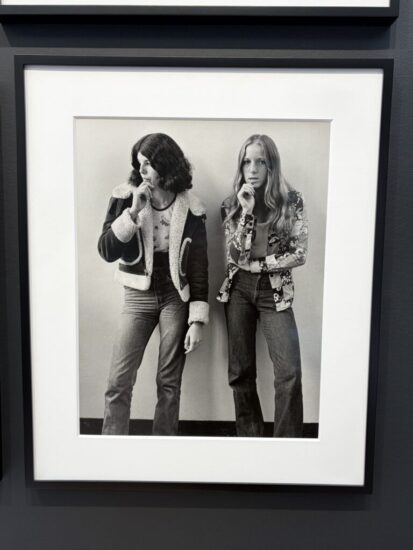
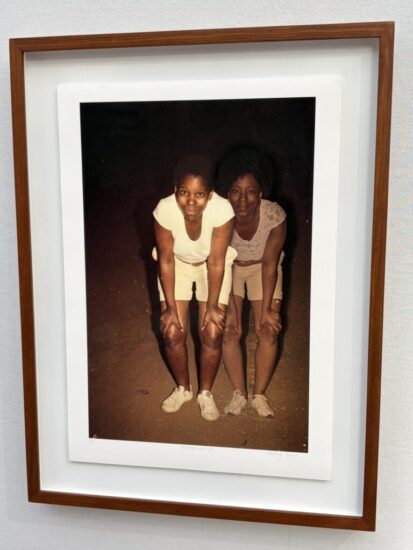
Jackson Fine Art (here): This booth was a solo presentation of the work of Joseph Szabo, featuring a mix of vintage, later, and exhibition prints. This 1975 image of Irene and Lena uses a blank wall backdrop to isolate his two teenage subjects, the echo of their pulling stick/lollipop hand poses and hip shifted stances offering a glimpse of age old performative coolness. Priced at $5250.
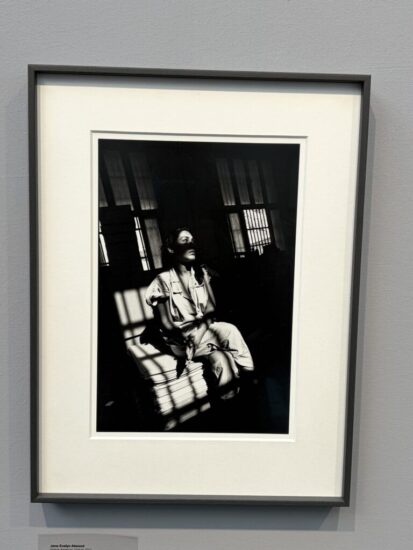
In Camera (here): One clear subsection of the population that isn’t widely seen or photographed is people in prison, which is why Jane Evelyn Atwood’s decade long study of incarcerated women around the world (from 1989-1999) is so noteworthy. This 1991 portrait made in Marseille uses the dark shadows of the bars to remind us not only of the woman’s particular location, but alto to amplify her lack of visibility. Priced at €7000.
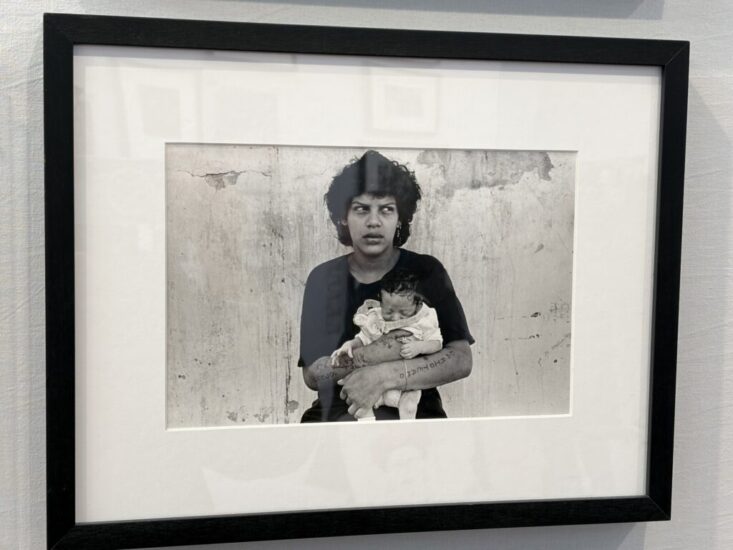
Rolf Art (here): Adriana Lestido’s 1992 image of a mother and daughter recalls Jane Evelyn Atwood’s women’s prison project, but with an emphasis on the children born inside prisons in Argentina. The eyes in this well-known portrait are particularly striking, capturing a maternal wariness and hardened skepticism mixed with aching vulnerability. Priced at €8000.
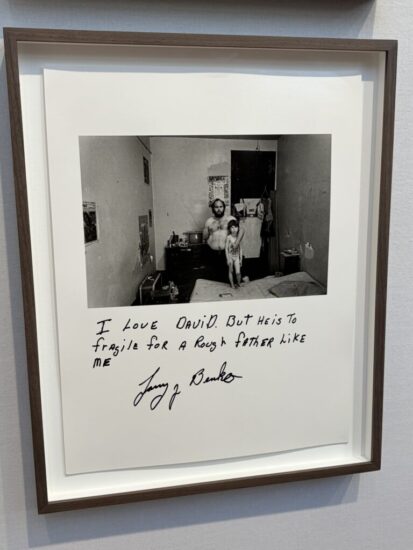
Casemore (here): This portrait from Jim Goldberg’s landmark series “Rich and Poor” from 1977-1984 leverages the powerful idea of letting the portrait subjects speak in their own voices via hand written captions on the physical photographic prints. Here a father shares his worries and vulnerabilities in a shared portrait with his young son, bringing us inside his life and mindset in a way that the image on its own could never provide. A vintage print, priced at $20000.
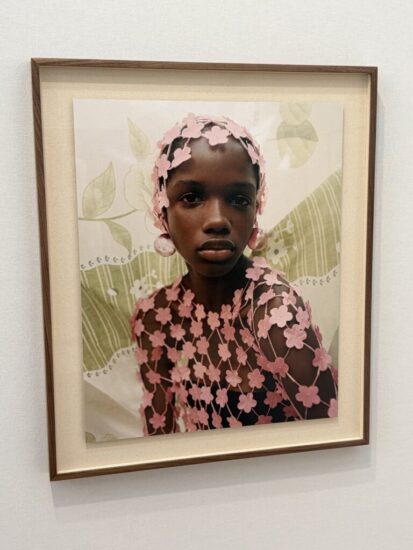
Huxley-Parlour (here): Delicate pink flowers blanket a fashion model in this strikingly elegant 2020 portrait by Nadine Ijewere. Ijewere is part of a contemporary cohort of young and talented black photographers rethinking how black models are seen and how black stories are told, the softness of the details in this image balanced by the directness of the young woman’s gaze. Priced at €7000.
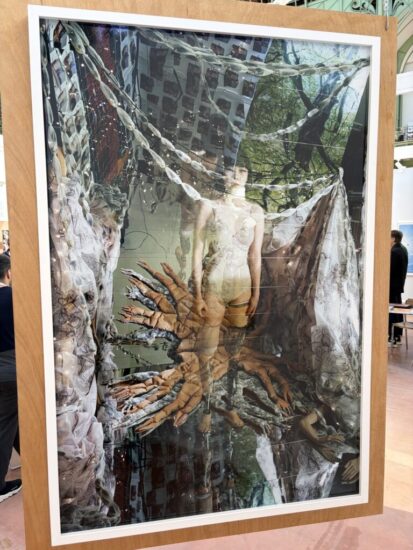
Suzanne Tarasieve (here): Mari Katayama’s recent self portraits place her in a magically mirrored and mysteriously eerie space, filled with hanging drapery and multiplied limbs. Katakama’s self-portraiture is rooted in her own body and its limitations, this image creating a mood of almost romantic uncertainty, as the self she is depicting morphs and transforms beyond its usual boundaries. Priced at €22000.
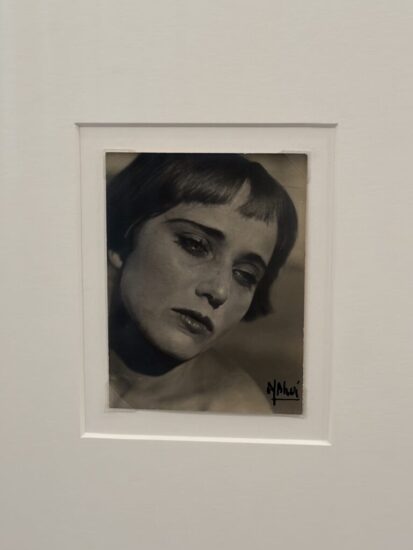
Grégory Leroy/Nuevo Impulso (here): I was keeping my eyes peeled for a classic Modernist portrait for this survey, and ultimately found it in the form of a vintage Tina Modotti portrait of Nahui Olin from 1923. Some keen detective work clarified this print (with a poem on the back and Olin’s signature on the front) as made by Modotti not Edward Weston (he too made a famous portrait of Olin seemingly at this same sitting), based on the aspect ratio of the two cameras they were using at that time. The closely cropped head feels both strictly precise and surprisingly emotional. Priced at €48000
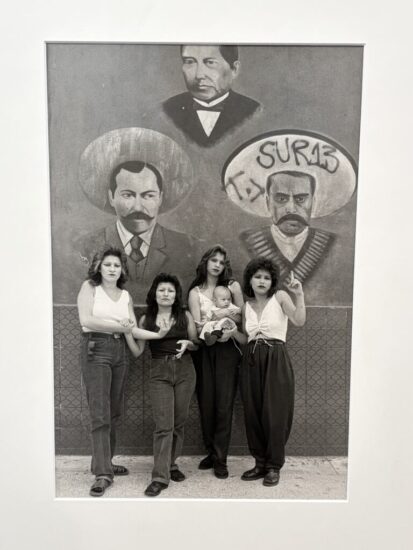
Grégory Leroy/Nuevo Impulso (here): This 1986 Graciela Iturbide portrait of Chicano women in the White Fence gang is among the most powerful in her whole series on the lives of the gang members. Set against a backdrop of revolutionary history (in the form of the mural above the women), they flash gang signs while posing and holding babies, their confident swagger mixed with the practical realities of motherhood. In an extra large exhibition print, priced at €22000.
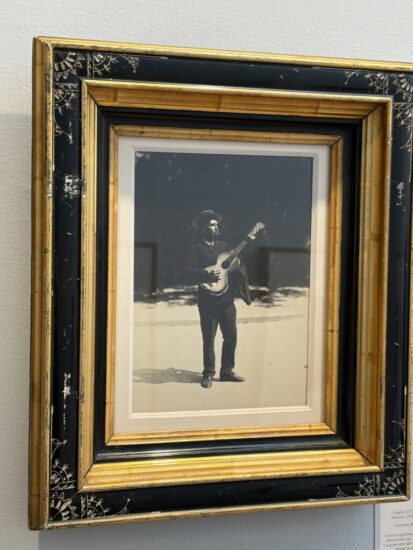
Lunn (here): Eugène Atget didn’t make a large number of street portraits in his late 19th and early 20th century documentation of Paris, but those he did make of overlooked street vendors, workers, and prostitutes were consistently empathetic and well seen. Here a street musician strums a guitar, isolated by the photographer in the bright sunlight. From 1899, in a 1950 print by Berenice Abbott, priced at €17500.
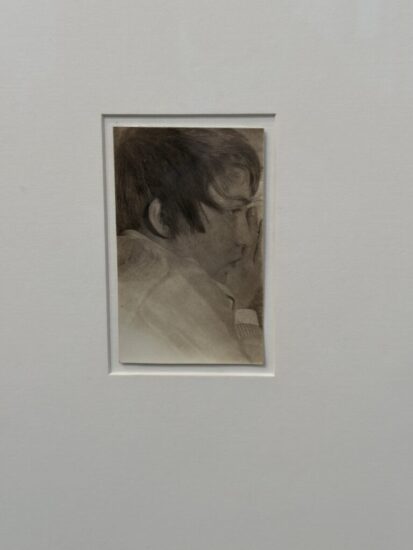
Lunn (here): Walker Evans made several portraits of Berenice Abbott in 1929-1930 when they both were in New York, and this one is perhaps less well known than others that have Abbott facing the camera more directly. That element of compositional misdirection gives this profile portrait a softness and vulnerability that is missing from the directness of Abbott’s usual gaze. Priced at €9500.
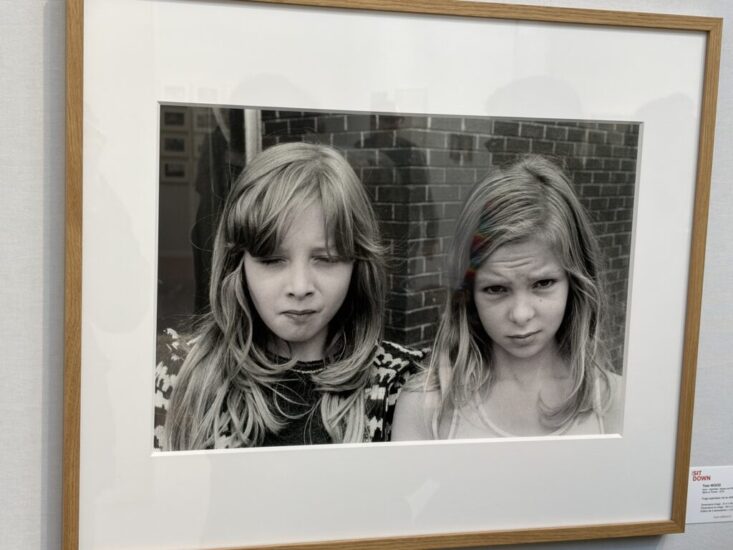
Sit Down (here): The Irish photographer Tom Wood should be included in many more surveys of portraiture than he is, given the number of standout street portraits he made during his long career. This black-and-white image from 1975 (relatively early in his photo life) pairs the blink and a frown of two young girls, elegantly capturing an awkwardly fragile sense of developing self. Priced at €7700.
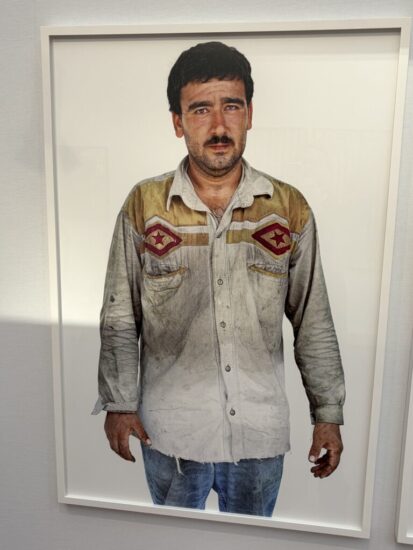
Patricia Conde (here): This booth was a deserving mini-survey of the career of the Mexican photographer Alejandro Cartagena, as a follow up to his SFMOMA retrospective earlier this year. This early portrait (from 2005) isolates the subject against a white backdrop (like many others have done before), but still finds a deep vein of compassion and empathy. The Monterrey tomato picker’s dirty shirt is perhaps predictable given his work, but the clean pulled out tail changes our sense of his understated honor. Priced at $4500.
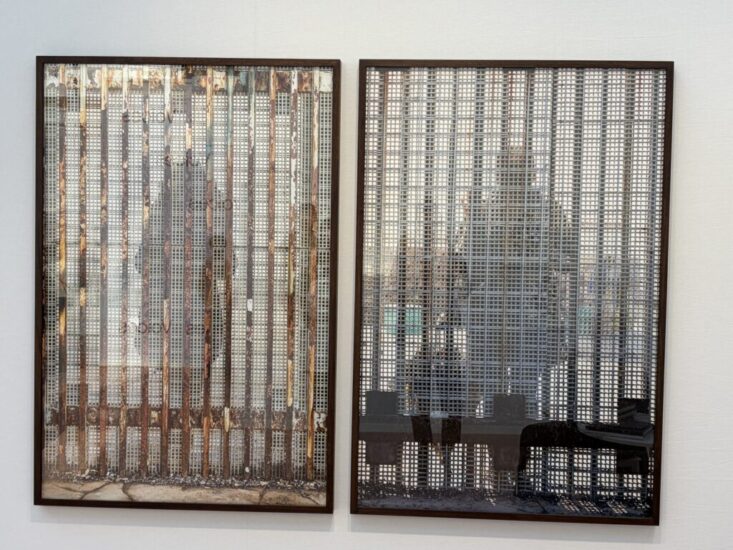
Patricia Conde (here): In a whirlwind survey of portraiture with an emphasis on those not being seen, I couldn’t held but add in a second work by Alejandro Cartagena, this time from 2017, depicting a mother and daughter on either side of the US/Mexico border. The gridded metal mesh of the border prevents us from seeing much of either person, which is of course the agonizing point; here are family members trying to connect through the literal wall between the two countries. It’s a deliberately interrupted and obfuscated portrait, driving home the physical and emotional separation of those divided by the border, and likely the most powerful contemporary portrait I saw at this year’s fair. A diptych, priced at $30000.
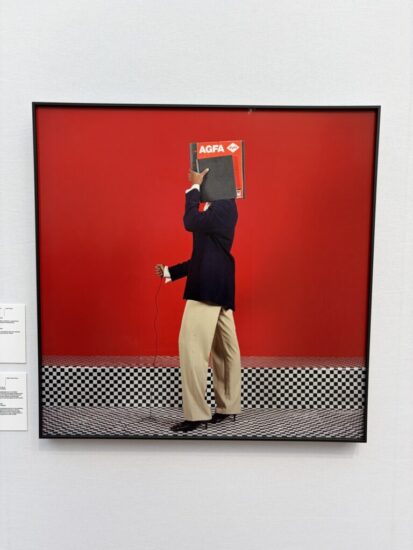
Southern Guild (here): This 2024 self-portrait by Silvia Rosi is filled with identifiers, from her father’s clothing to the patterns of African studio portraiture and the Agfa paper of James Barnor. The image subtly locates the Italian/Togolese artist in her hybrid diasporic existence, even though she doesn’t show us her face. Priced at $19000.
Southern Guild (here): It’s been more than a decade since Lebohang Kganye made her doppelganger portraits with the ghost of her mother, but they still pack the same punch as they did when they first hit the photo scene. Digitally inserting herself into family snapshots (wearing her mother’s clothes after her death and standing in similar poses), Kganye creates a powerful doubling effect, where mother and daughter seem to inhabit the same space. It’s a straightforward artistic idea, but one that smartly wrestles with ideas of kinship, mother/daughter relationships, and ongoing grief. Priced at $12500.
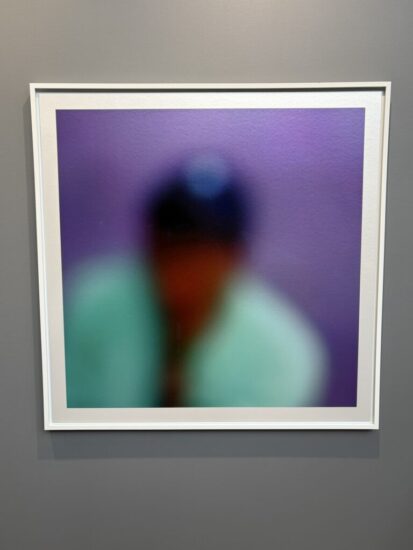
Deutsche Börse Photography Foundation (here): Mame-Diarra Niang’s blurred portraits are another perfect fit for a portraiture survey of those not seen. This 2021 image deliberately frustrates our ability to identify a specific individual, leaving us wondering about how we might identify character or persona with so few details or perhaps about how the dissolving fogs of memory abstract people into approximations. (No price.)
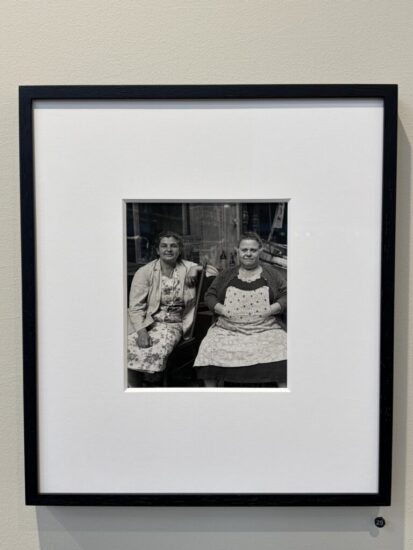
MUUS Collection (here): This 1948 Mott Street portrait of two women by Todd Webb brings us all the way back to mid 20th century New York City. These are the faces of hard working immigrant women, their patterned aprons and humble work dresses a kind of everyday uniform. Their calmly warm smiles reinforce our sense of their lives and their outlook, providing personal historical context for the evolution of the city. (No price.)
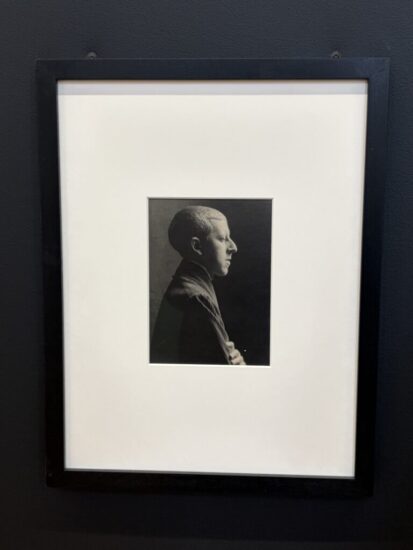
Centre Pompidou Collection (here): While Claude Cahun took on many personas in her self-portraits, here (in 1919) she opts for the soberly androgynous look of a short haircut and a corduroy jacket. Seen in profile, it’s a quietly radical visual statement for its times, asking us to look beyond the usual signifiers of gender. (No price.)