JTF (just the facts): Published in 2025 by SPBH Editions (here), an imprint of MACK Books. Casebound hardcover, 24.5 x 30 cm, 192 pages, with 178 photographic images in black-and-white and color. Design by Brian Paul Lamotte. (Cover and spread shots below.)
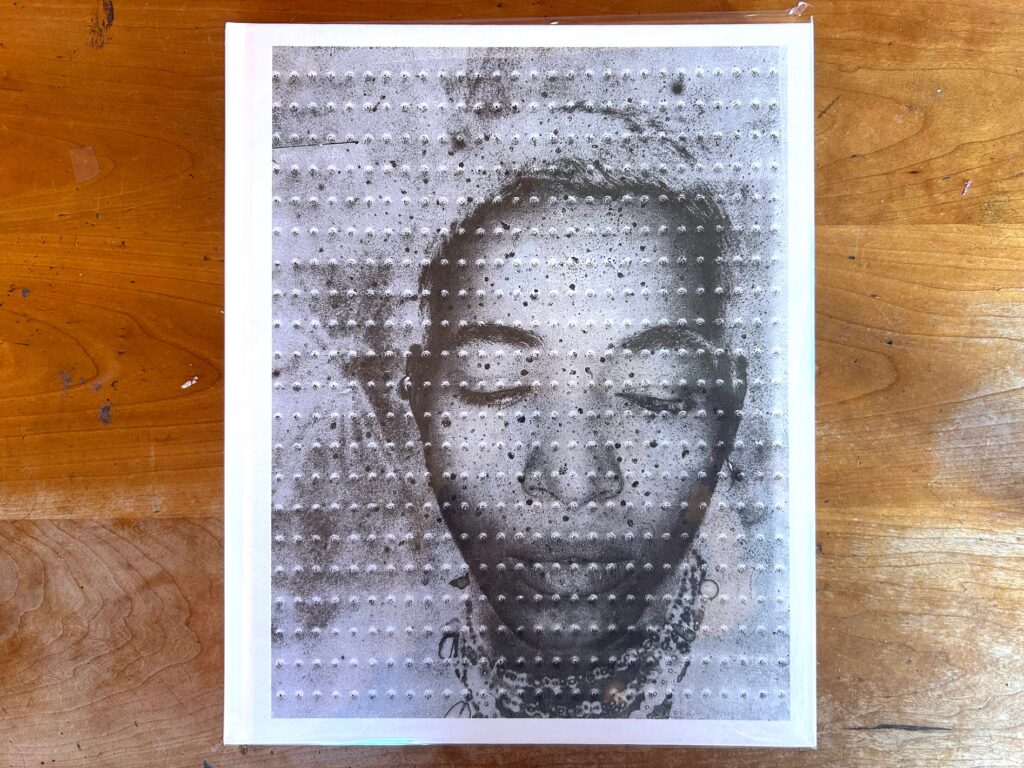
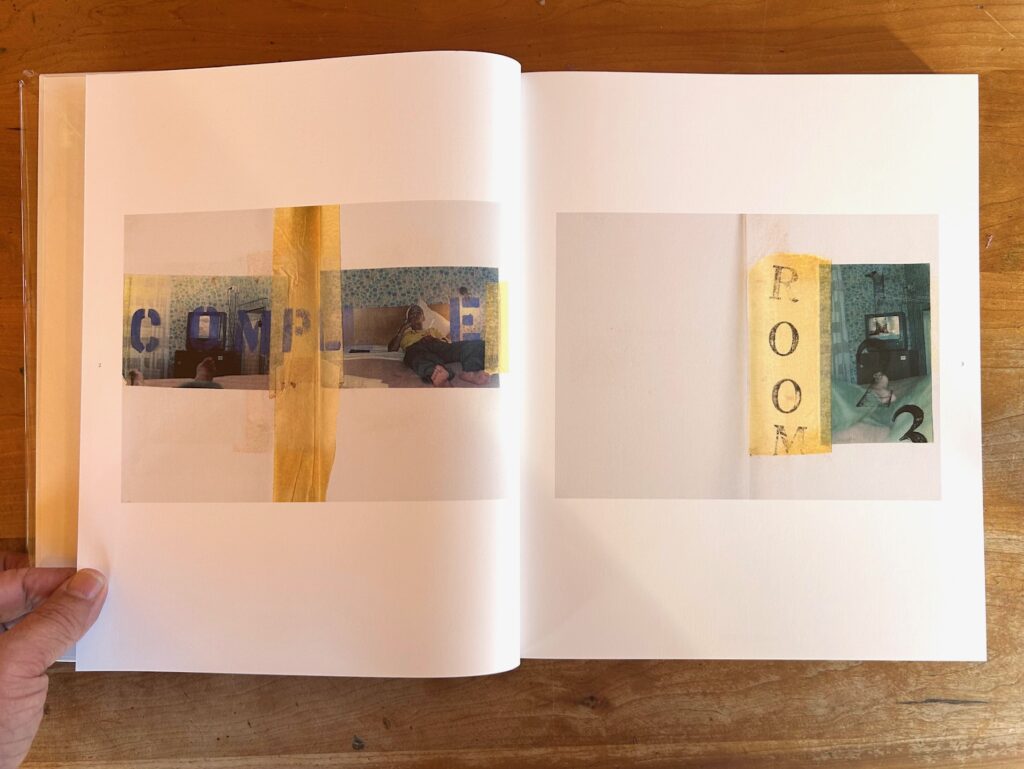
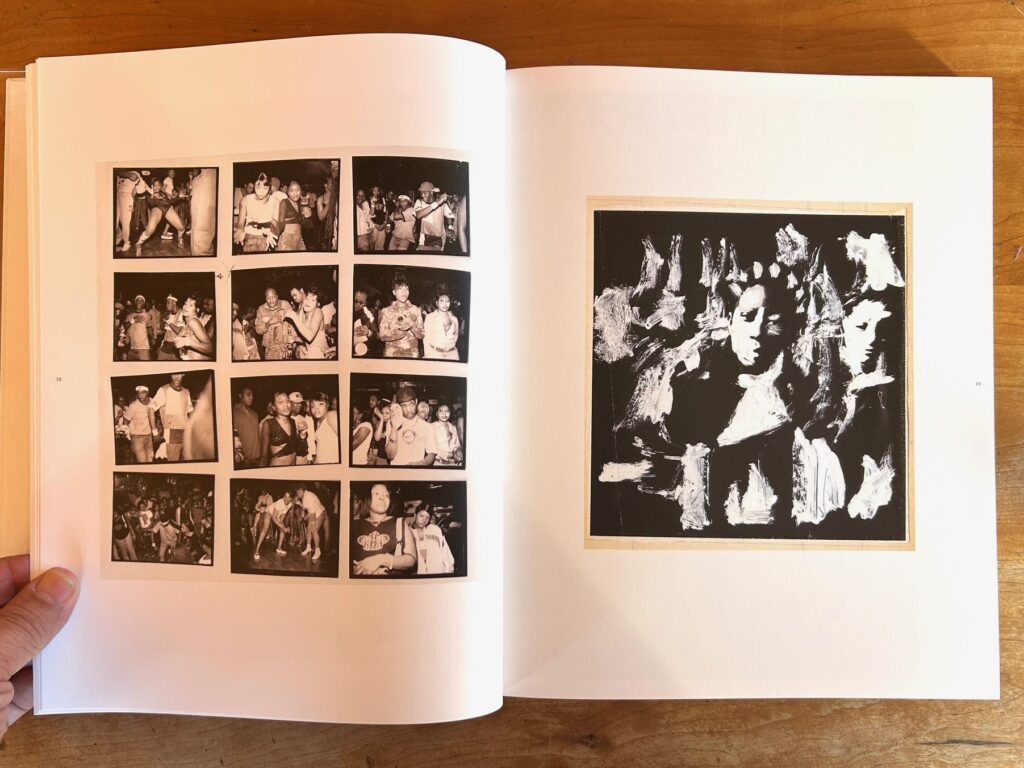
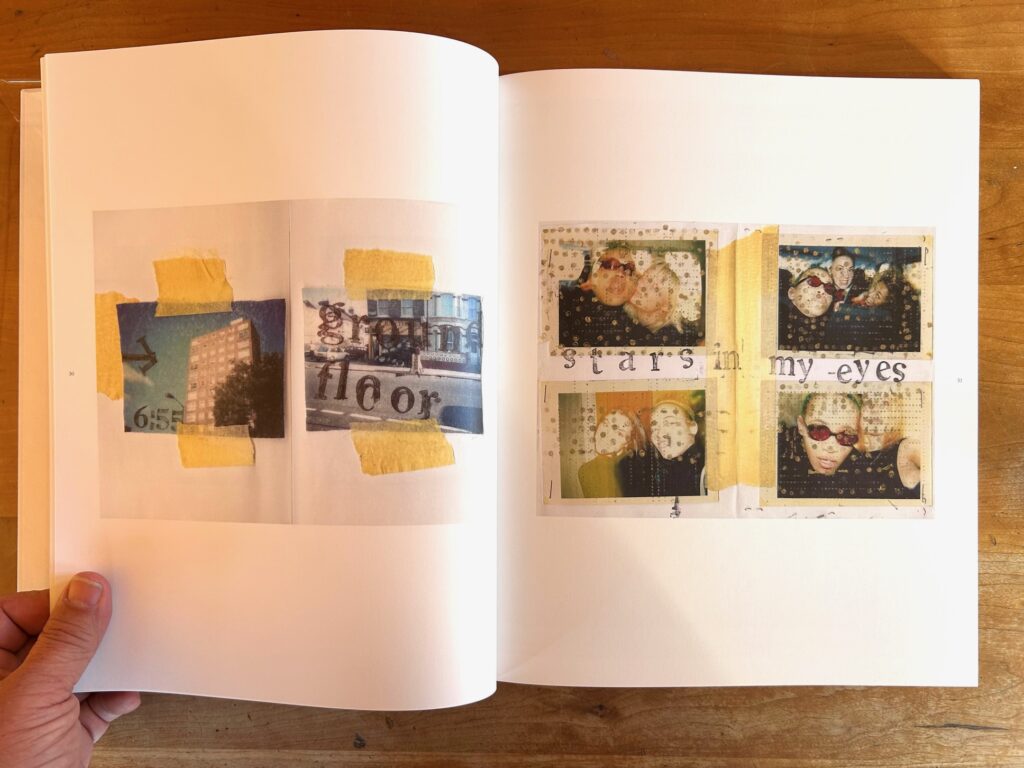




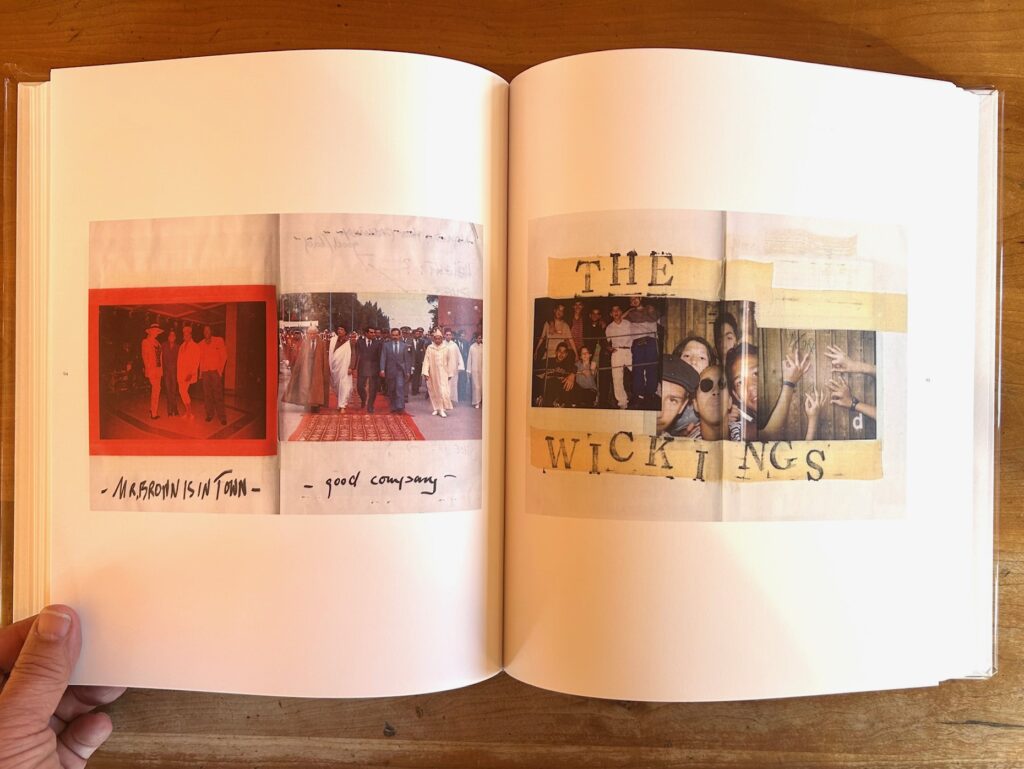
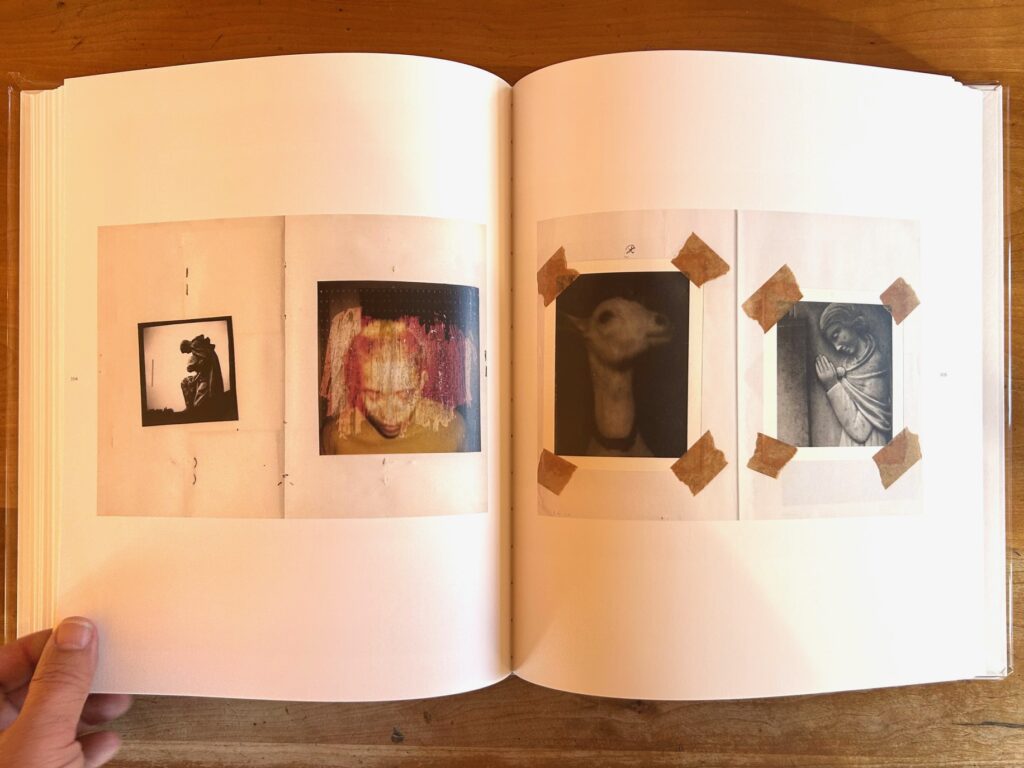
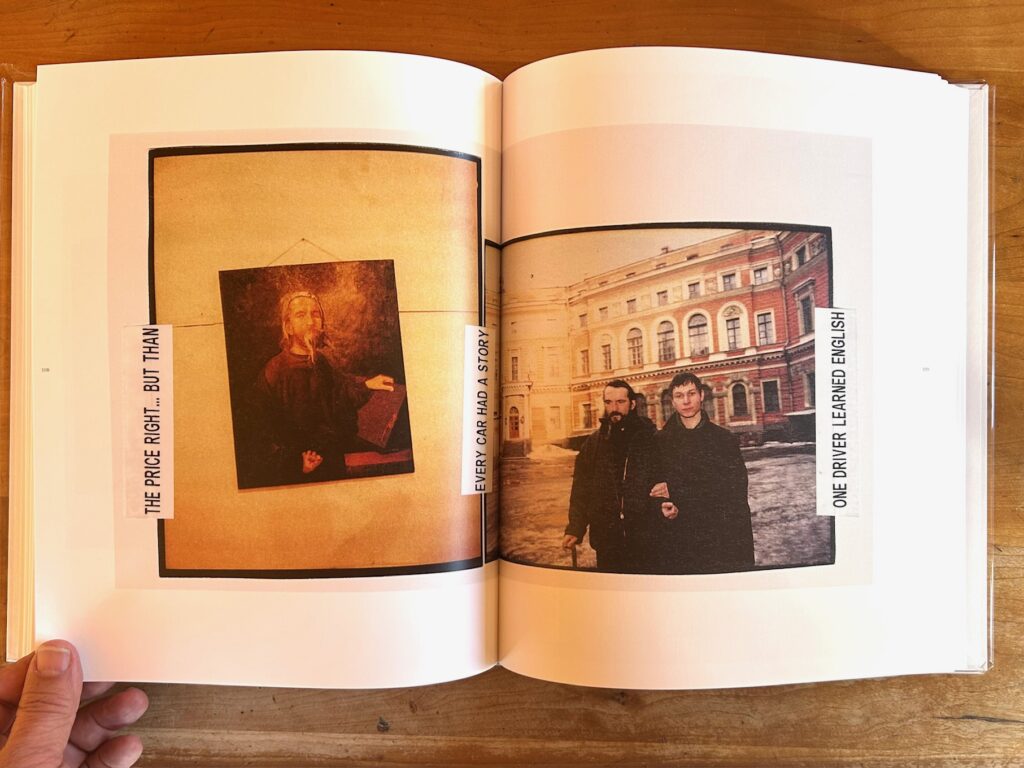


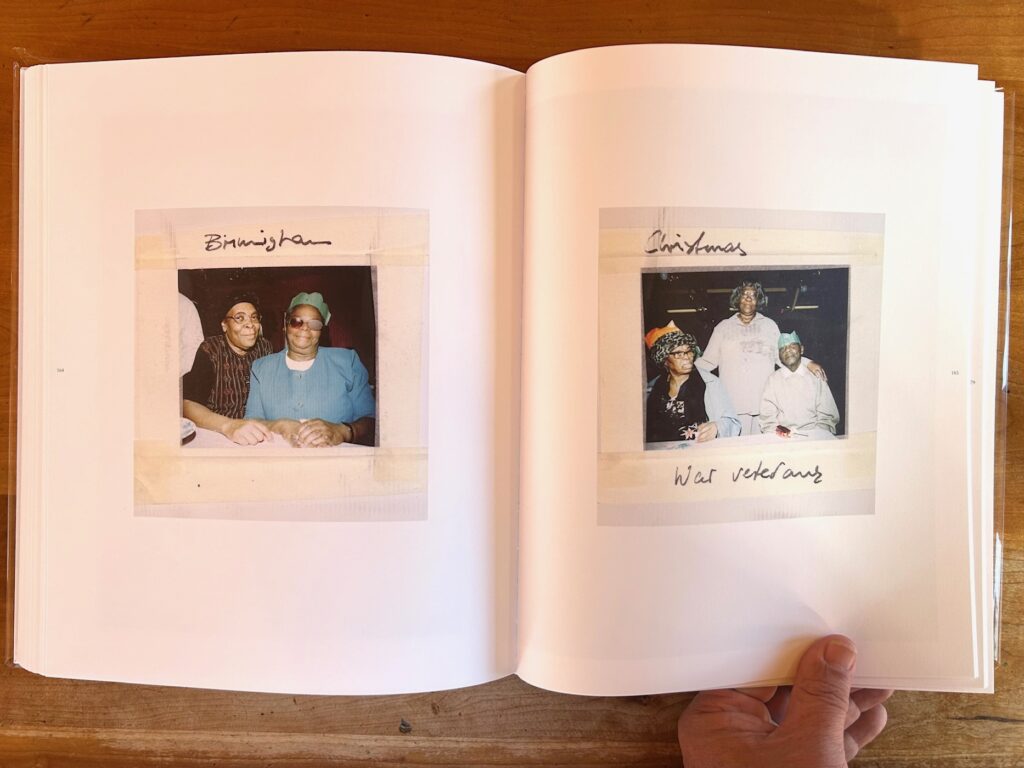
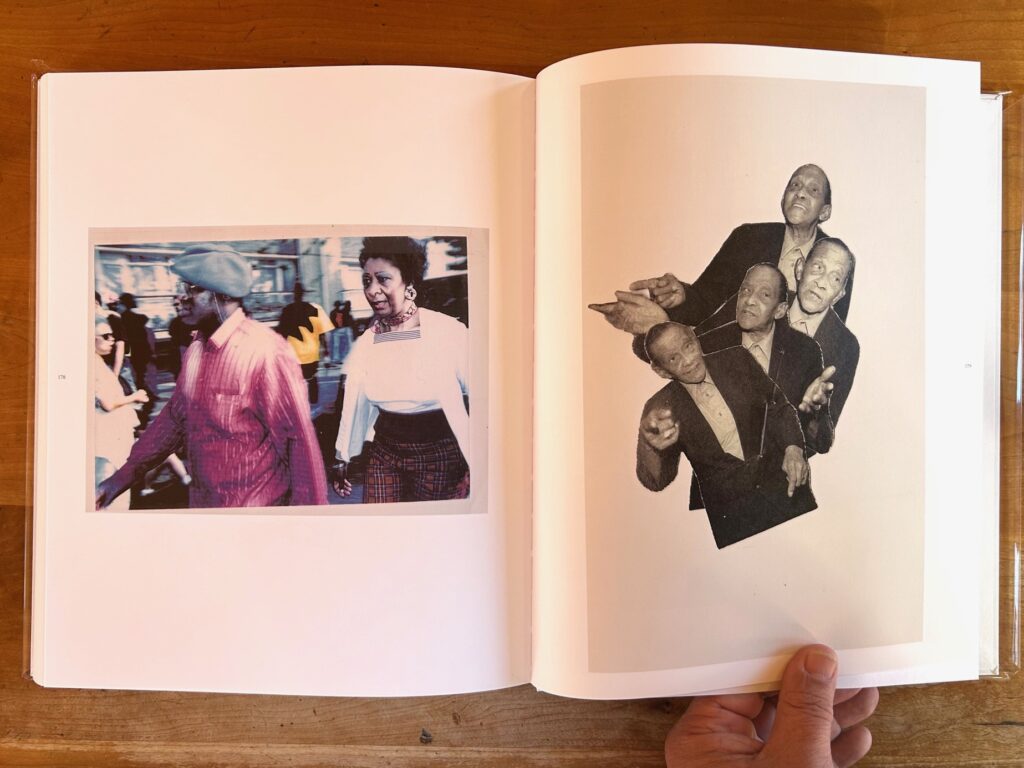

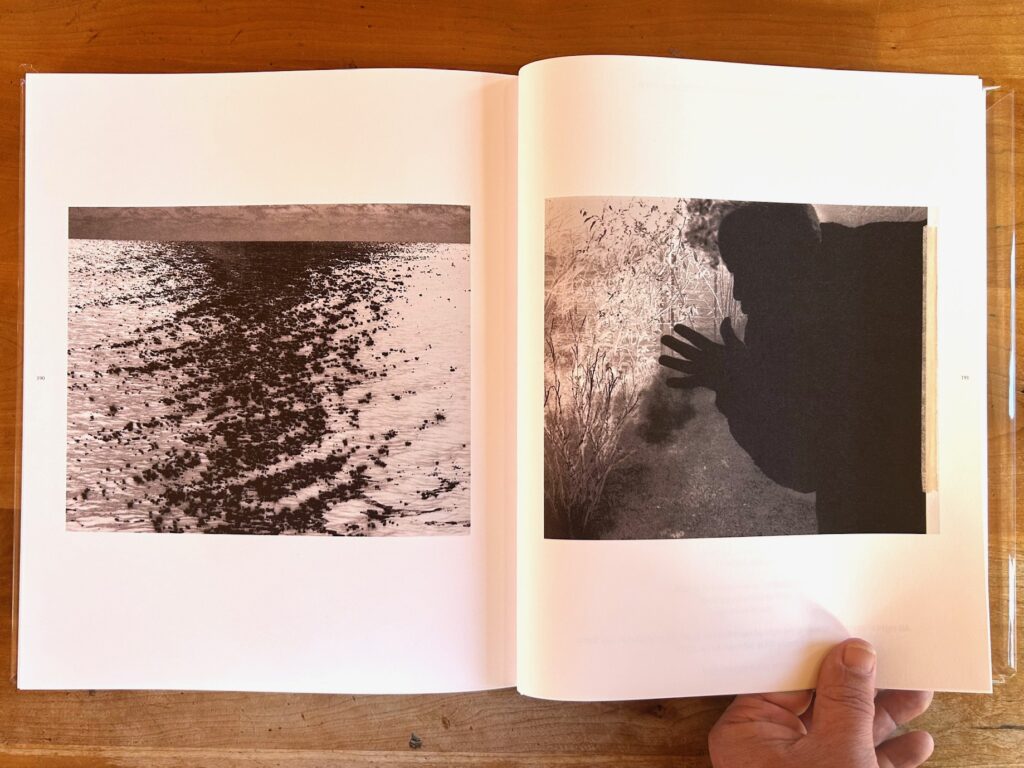
Comments/Context: London-based photographer Liz Johnson Artur has enjoyed a long professional career engaged in photojournalism, editorial gigs, and fashion shoots. In the past decade or so, her commercial success has carried over into the fine art world, with a slew of stellar gallery and museum shows in London and New York City. These exhibitions have been multifaceted, with Johnson Artur’s personal workbooks featured as a regular component. Selected spreads have been displayed at the Brooklyn Museum (noted briefly here in our Daybook), Tate Modern, and other locales, each iteration excerpting a loose selection of photos, scraps, techniques, collages, and notes.
Johnson Artur began to make these workbooks in the early 1990s, around the same time she was finishing up her Master’s in Photography at the Royal College of Art in London. Their blank pages provided a photographic sandbox, an informal space for her to work through ideas and solidify projects. When she came to the end of one book, she stored it away and began another. Taken collectively, they housed a thirty year record of various ideas, initiatives, and sketches. Some were later developed into full projects. Others were abandoned. At this point, Johnson Artur has created dozens of books, and they remain central to her daily practice. Originally intended for her own private use, they assume a new dimension when displayed in public. They unveil an id-level view into her creative process, and perhaps a Rosetta Stone key to unlock her more polished images.
Johnson Artur’s fans can now acquire some of these workbooks for their own libraries. The recent monograph I Will Keep You in Good Company offers a dense trove of selected pages. The book was initiated by Bruno Ceschel, the creative director of SPBH. He first encountered Johnson Artur’s workbooks by chance on a studio visit. He asked to see more and she complied, gradually unearthing decades of boxed up journals. One thing led to another, and eventually I Will Keep You in Good Company was published.
The book takes its title from Johnson Artur’s methodology, and her typical interactions with potential subjects. “A lot of what I do depends on people trusting me, giving me their picture,” she explained in a recent interview. “I say that I keep people in good company because I’ve been doing this for so long that I have created a certain kind of company, because I put one person next to the other.” True to her word, her photo subjects are packed together side by side in the book, spilling across every spread. All seem to be in good company with their surrounding pages.
Johnson Artur’s primary focus is humanity. “What I do is people,” she told Aperture recently. “But it’s those people who are my neighbors. And it’s those people who I don’t see anywhere represented.” With no captions or supporting texts, precise identities are unclear—apart from the artist herself, who appears in a few selfies. SPBH has deliberately shoved specifics to the background. Instead the reader’s attention falls to technique, craft, and raw physicality. The book offers these in spades. Even isolated, scanned and set like specimens against blank backdrops, Johnson Artur’s journals bristle with energy. She is restless and prolific, and this book is a blizzard of experiments. In page after page, she tinkers with one alt-process after another.
A quick inventory: photographs overpainted with stenciled text, motion picture stills, masking taped snapshots, faxed images, 4-panel photobooth verticals, and contact sheets. There are Polaroids, hole punched prints, typewritten graffiti, duct-taped borders, handwritten notes, and drugstore prints mounted in lined scholar’s books. There are stapled photos, wrinkled photos, prints soaked in color washes, photograms, and fuzzed pictures of video monitors. There are sepia toned prints, screen prints, watercolored backdrops, papier-mâché, collage, inverted negatives, and textile impressions. There are various combinations of these effects, and probably more. And these are just the processes I can easily identify. Others are tougher to decode, but certainly alt-something. Is there any photographic process that she hasn’t tried?
The majority of Johnson Artur’s subjects are Black, and this collection is largely an outgrowth of her Black Balloon Archive. Named after an old song lyric by Syl Johnson, the BBA is a loose collection of prints and negatives—Johnson Artur is a dedicated film shooter and darkroom printer—of the global Black diaspora, as photographed and collected over 30+ years by Johnson Artur. She began the archive in 1991, around the same time as the workbooks. The two endeavors are not quite synonymous, but they are closely interlinked.
Johnson Artur’s exploration of Black culture is rooted in her own path of self discovery. Her father was from Ghana and her mother from Russia. They met in Sofia, Bulgaria, where Artur was born in 1964 and raised as “a product of migration” as she describes it. She and her mother then moved to West Germany, scraping by as undocumented immigrants. Like many adolescents, she struggled for a while to find her place in the world. Her Black identity was initially awakened, alongside the photography bug, on a trip to New York City in 1985. She stayed in Brooklyn with Russian family friends. “I’d never been in a black neighbourhood before..,” she recalls. “But my memory of what I saw made me want to start taking pictures.”
She explored and photographed in Brooklyn, notably avoiding the artsy trappings of nearby Manhattan. After returning to Europe, and later to grad school in London, her photographic journey commenced in earnest, centered on daily encounters with strangers in passing. Eventually she transitioned to commercial work, and then galleries. Coming thirty-something years later, her 2019 show “Dusha” at the Brooklyn Museum represented a full-circle moment.
So far so good. But museum exhibitions are by nature refined and goal-oriented. I Will Keep You in Good Company is delightfully messy and improvisational. It captures Johnson Artur’s extemporaneous approach in a way that more genteel presentations do not. In fact one wonders if these scrappy experiments reflect her true vision better than any carefully trimmed photo.
Johnson Artur has always leaned into chance and serendipity. Even her polished frames have a liberated edge, with jostling figures frozen in the moment. Alt-processes merely extend the toolkit of chance. Perhaps the process itself is the product? Note how Johnson Artur describes herself on her website. There is no CV, academic rhetoric, or formal presentation. Instead, she offers a poetic mumble in lower case: “the only way for me to understand…why I took all these pictures…I was hungry…but I didn’t know…that I was…it’s like when you start eating…you realize how hungry you are…and when it came down to pictures…I now realize…how hungry I was…”
The new monograph reflects a sizable appetite, and it follows a minor tradition of photobooks tapping into the creative process. They mine original scrapbooks, hoping to capture ideas in primordial form. Nigel Shafran’s recent Workbooks comes to mind, along with Robin Maddock’s England!? les anglais ont débarqué! (reviewed here). Both are eclectic and colorful. If Peter Beard and Bill Burke helped pioneer this style, Dan Eldon’s The Journey Is The Destination might be its contemporary fountainhead, a diaristic collage with tactile punch.
These are just a handful of the countless photographers whose work process has involved private sketchbooks. More than forty were showcased in the 2014 survey Photographers’ Sketchbooks by Stephen McLaren and Bryan Formhals. Most of the time these private drafts remain private. But on occasionally they are released for public consumption, for example in the published scrapbooks of Gregory Halpern, Henri Cartier-Bresson, Max Pam, and Ruth Orkin (reviewed here).
I Will Keep You in Good Company finds itself in good book company. It can hold its own with any of these predecessors. This is a large hardback bathed in white. Every single page contains at least one image, and there are almost 200 of them. But the effect never feels crowded. The broad white margins provide space for contemplation, with room to breathe. Readers can dive in at the beginning, or at any midpoint, and browse in any order they want. As with Johnson Artur’s original workbooks, the possibilities are endless. Just walk down the street, strike up a conversation, and let it seed a new project.
Collector’s POV: Liz Johnson Artur does not appear to have consistent gallery representation at this time. Collectors interested in following up should likely connect directly with the artist via her website (linked in the sidebar).