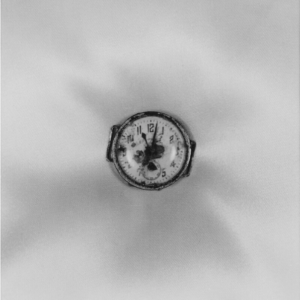
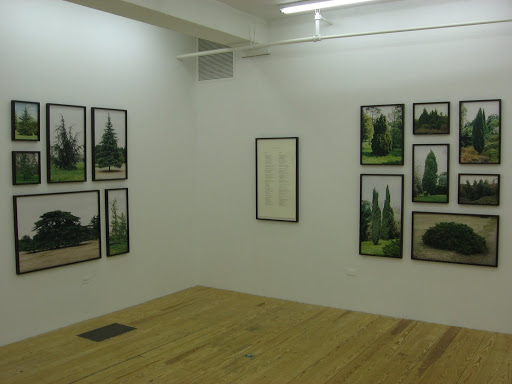
 JTF (just the facts): A total of 9 works, both color and black and white, hung in the reception and main gallery spaces. 3 of the works are from the Typus series and consist of groups of c-prints (either 5, 6, or 7 individual prints) framed in brown and not matted, and hung in tight groups that each measure 67×59. Each group of prints is also accompanied by a printed list of scientific names. These works are made in editions of 3+1, and were taken in 2005. 3 additional works come from the Life among beasts series and consist of gelatin silver prints mounted to aluminum (2, 3, or 4 prints) hung together without frames. The works vary in size from 36×40 to 58×65, are made in editions of 3+1, and were taken in 2009. The final 3 images are all single gelatin silver prints mounted to aluminum and not framed, ranging in size from 13×12 to 24×17. These prints are made in editions of 5+1, and were taken in 2009. (Installation shots at right.)
 Comments/Context: When the title “conceptual photographer” is overtly bestowed upon someone, as a collector, I read this as secret code for “in this case, the actual pictures don’t matter at all; it is the ideas that underlie them that I should be concerned with”. While one might conclude that all conceptual photography will therefore be cerebral, intellectual, and oftentimes indecipherable, in my experience, conceptual photography can also be quite witty and subversive, assuming you get the inside jokes. But when the word “German” is added in front of the term “conceptual photographer”, it’s hard not to think of the serious deadpan objectivity of the Bechers.
The Life among beasts series is altogether more unsettling. In these images, Gebert has taken appropriated photos of humans interacting with domesticated animals (many of them dated veterinary shots I would guess), cropped them down to fragments, and blown them up to a size that exposes the halftone printing dots. Animals of various kinds (horses, pigs, even a possum) are poked, prodded, groped, fondled and handled in a weirdly disturbing way. Hung in combinations and groups, the concept of man doing what he wants with the natural world comes through powerfully, and is more than a little ridiculous and creepy.
All in, the show delivers what was promised: a thought-provoking and sometimes quirky use of photography to explore deeper ideas and hidden truths.