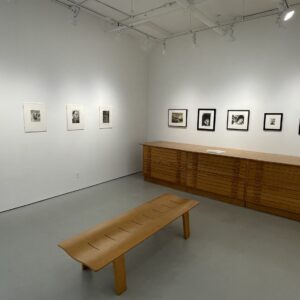
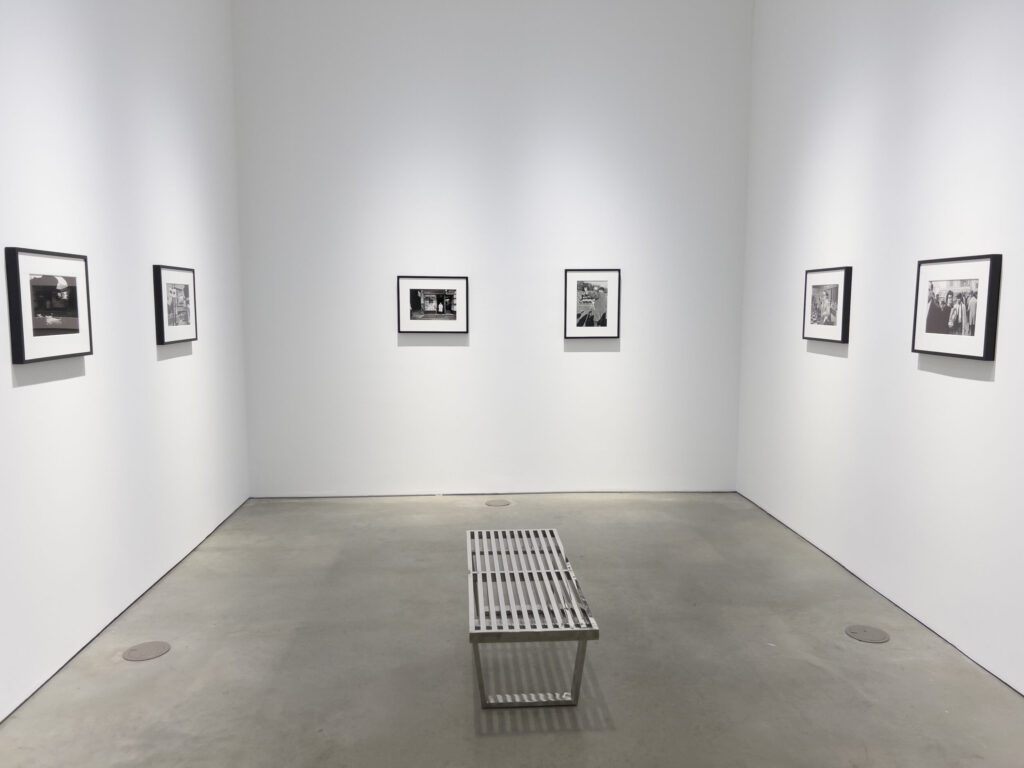
JTF (just the facts): A total of 8 black and white prints, matted and framed in welded black frames, and hung against white walls in the back project room. All of the works are silver gelatin prints, made in 1960, 1963, or 1964 and printed in 2025. Each is sized roughly 9×14 inches (or the reverse) and is available in an edition of 5+2AP. (Installation shots below.)
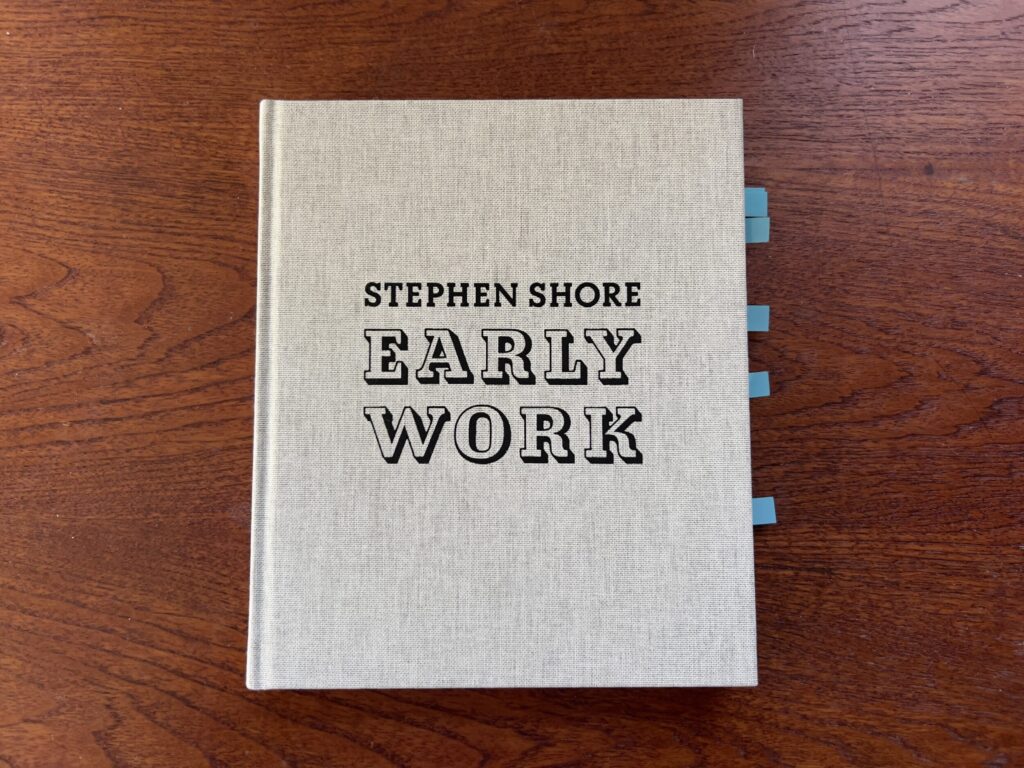
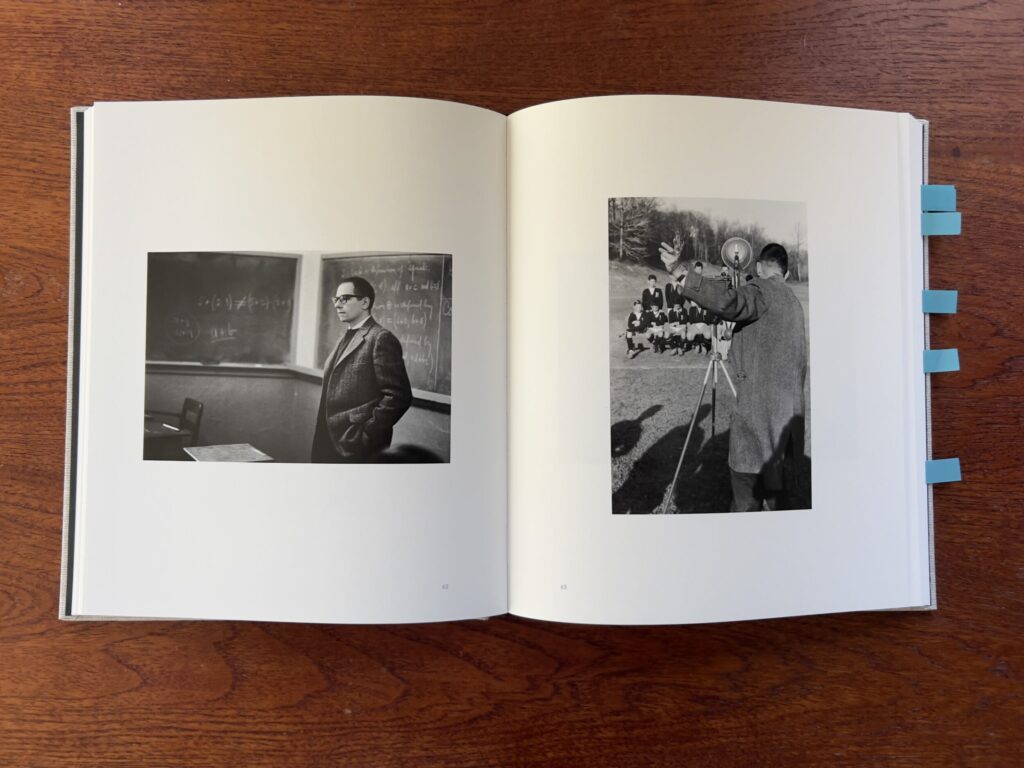
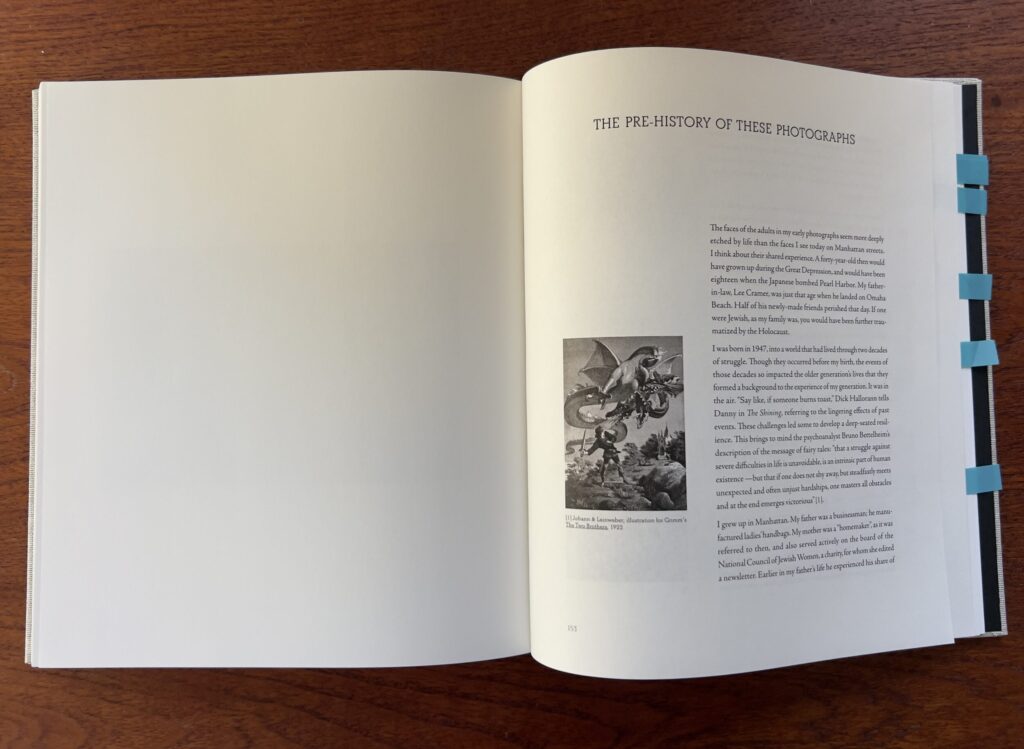
A monograph of Early Work was published in 2025 by MACK (here). Embossed linen hardcover with tipped-in image (21.5 x 25.5 cm), 172 pages, with 130 black and white images. Includes an essay by the artist. Designed by Morgan Crowcroft-Brown and edited by Michael Mack. (Cover shot and select spreads below.)
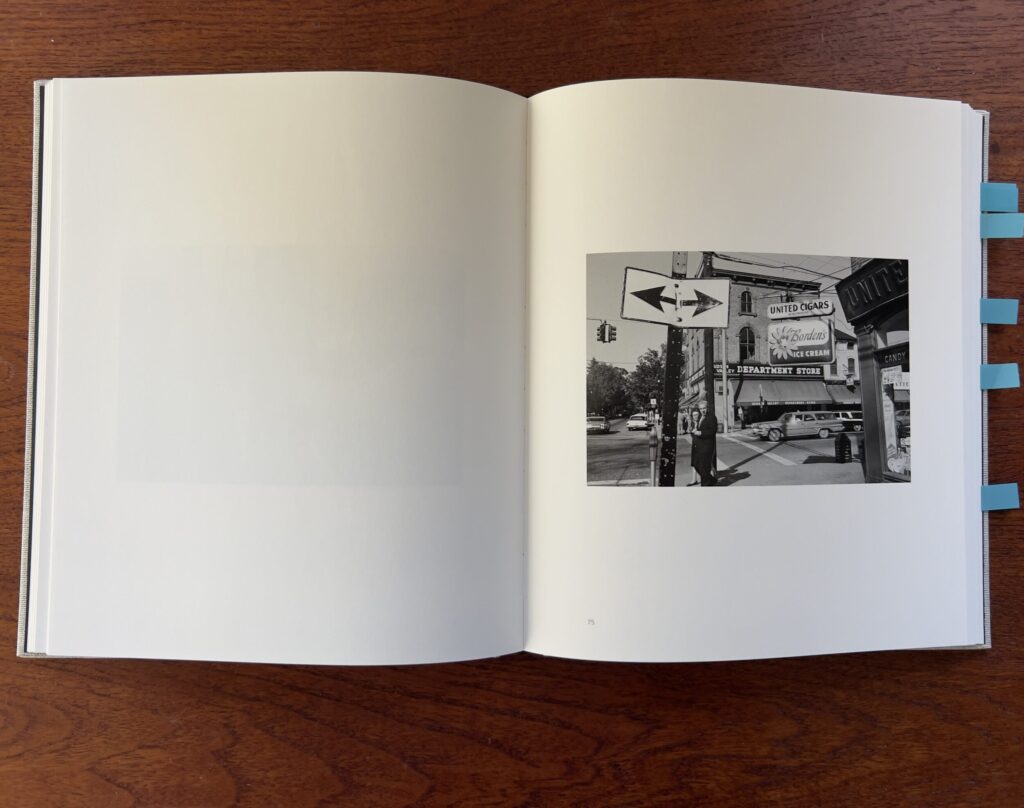
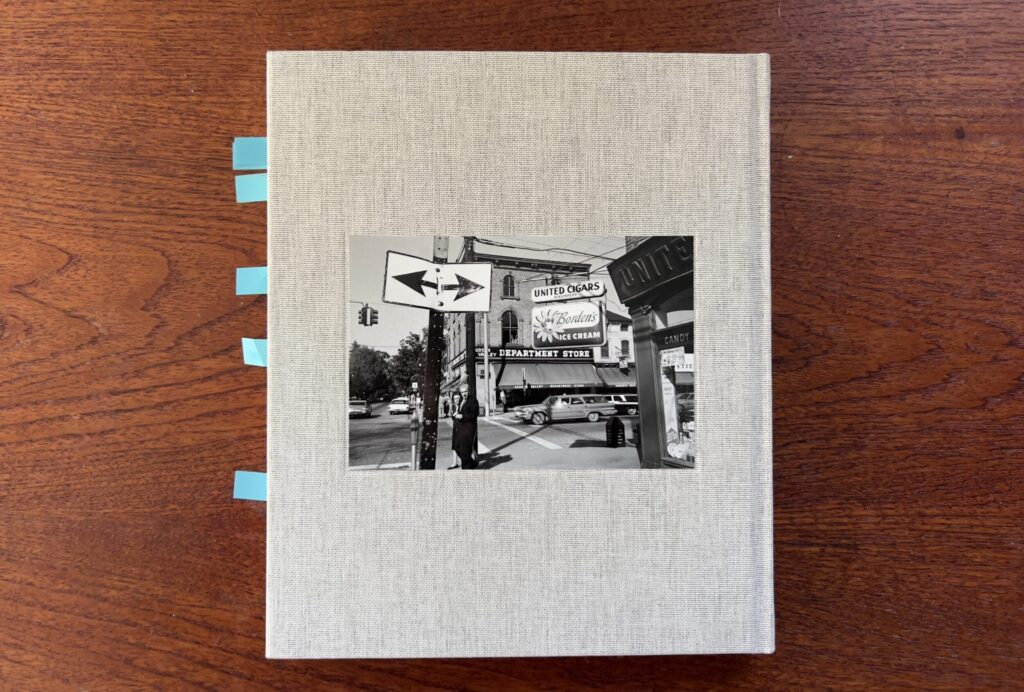
Comments/Context: Stephen Shore’s Early Work, published by MACK as a monograph in the fall of 2025, and now on view as a tight installation of eight stunning black and white silver gelatin prints in the project room at 303 Gallery in Chelsea, presents work made by the photographer in his adolescent years, before he became the photographer of Andy Warhol’s Factory scene and then much more. These formative years reveal a rigorously curious young artist immersed equally in the photographic medium and the post-war world of his youth in Upper Manhattan and the nearby Hudson Valley. While honing his early technique, he experimented with various early instruments including a Nikon FM and a Leica M2 and M3, a variety of lenses, and tested numerous negative developers to fully understand how their various combinations and permutations affected the highlights and shadows. The result is a collection of bold photographs, marked by confident street portraiture and assured compositional arrangement, demonstrating the teenage artist’s fearless determination.
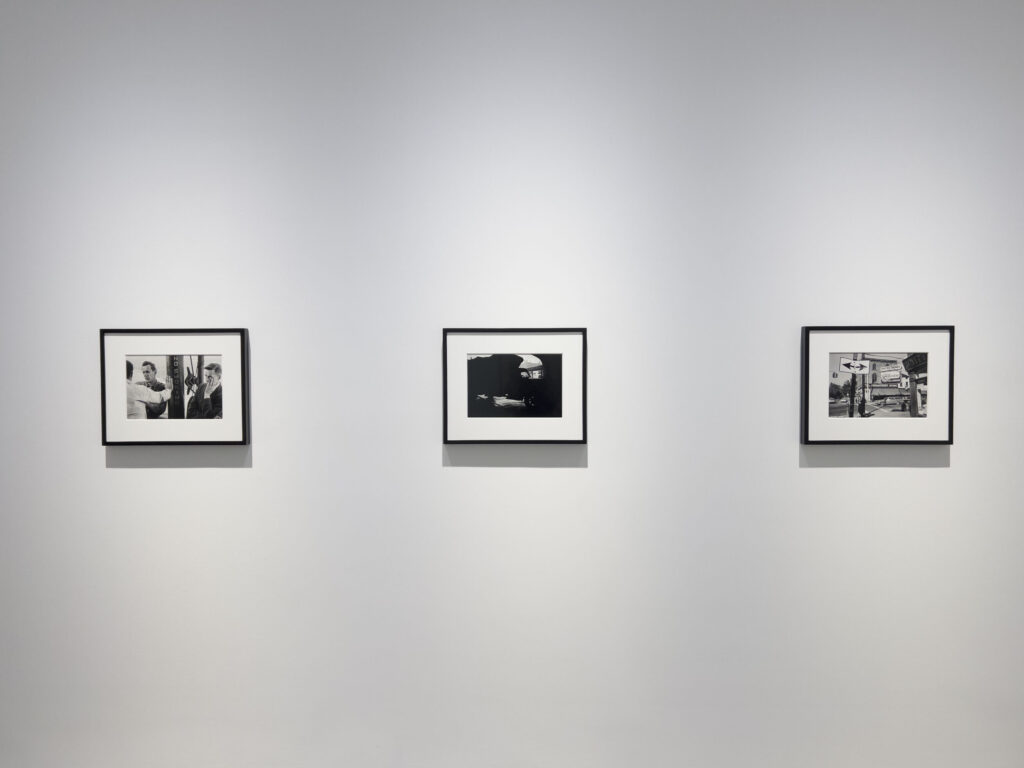
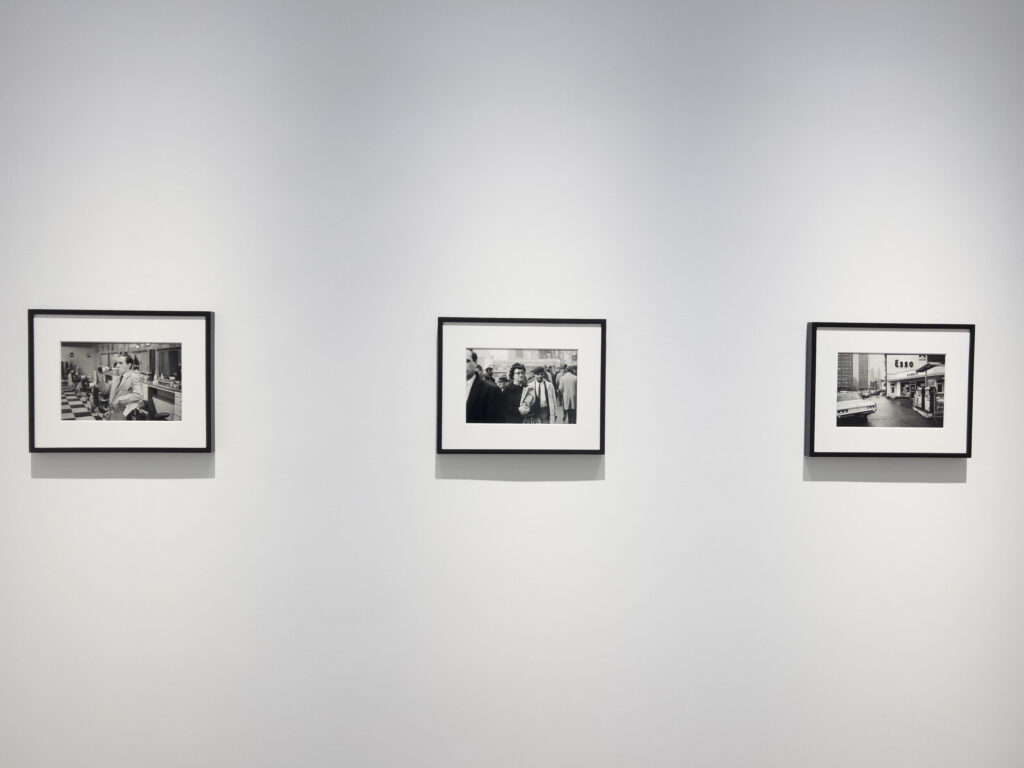
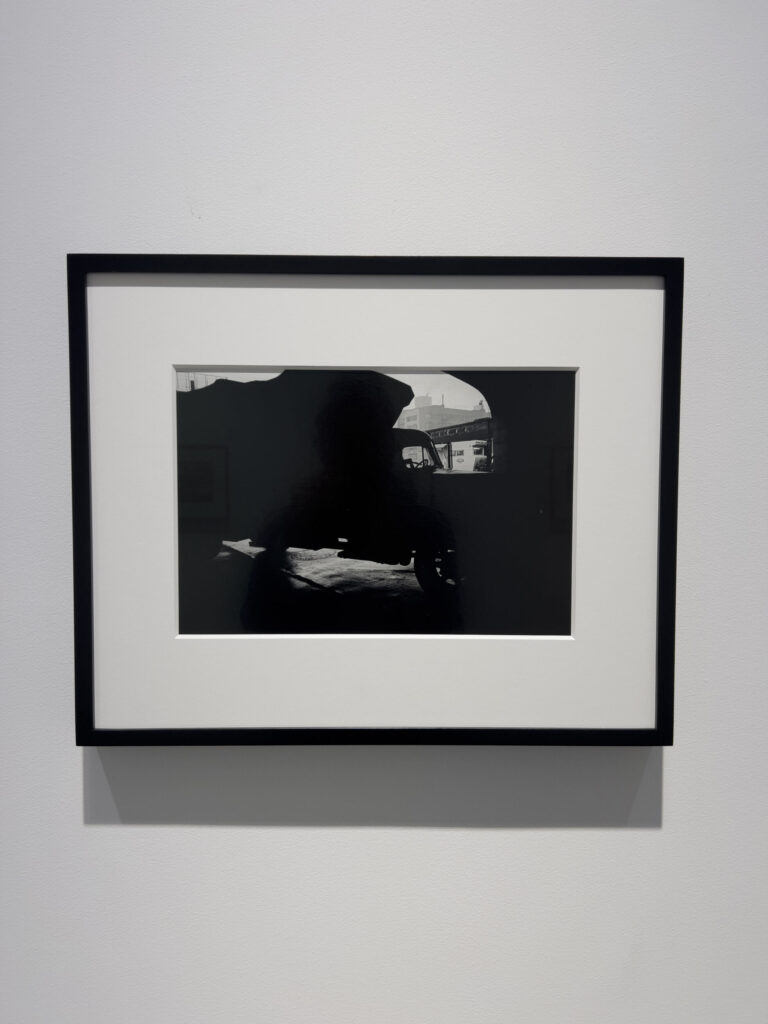
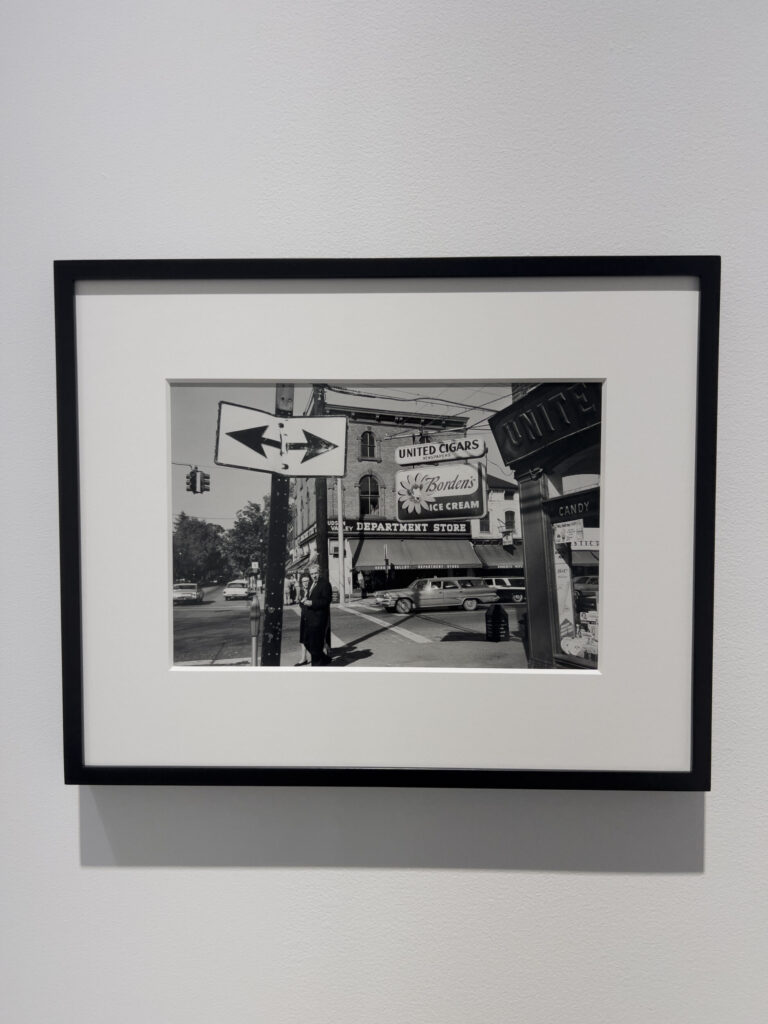
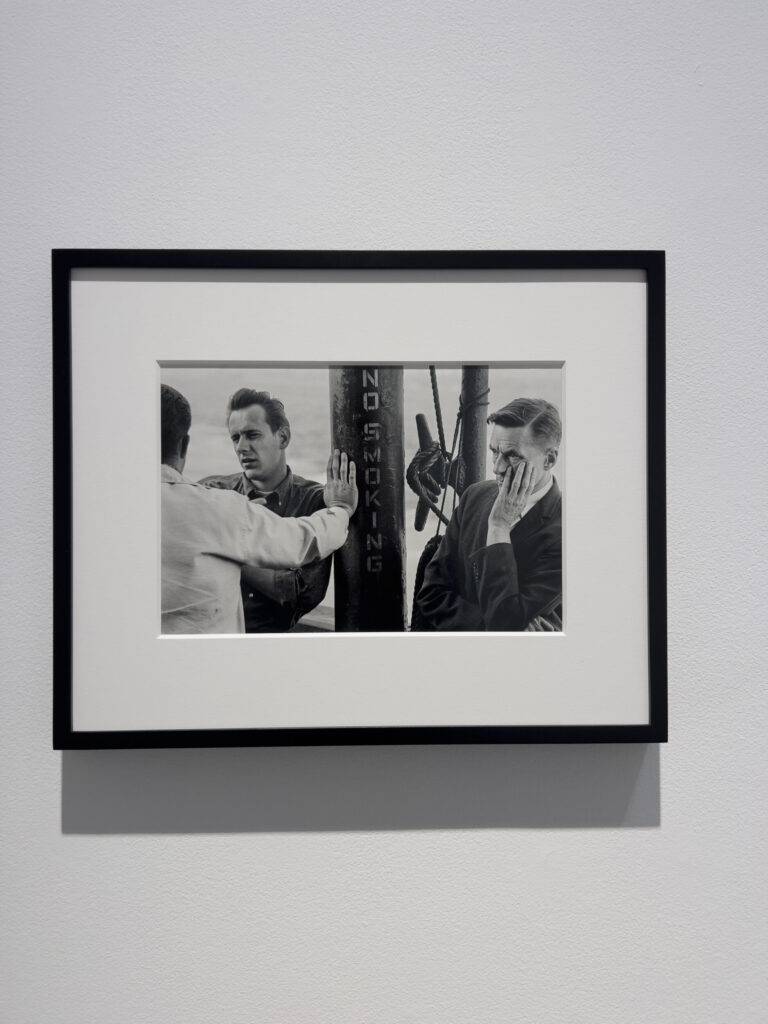
Walking around the gallery, from left to right, we first see a wall of three prints. The first, from New York, is a horizontal image of three men on a ferry, all facing away from the camera’s lens with a pole cutting right through the center of the frame and the words “no smoking” scrawled onto the beam that is center stage in the image. The second, also from New York, is an unusual and rather profound image of a truck seen at close range, almost entirely in shadow. The bed of the truck appears distended, and as I expressed enthusiasm about this photograph with a colleague, Tanya Marcuse, she revealed to me its incredible echoes of a Robert Motherwell painting. The third photograph on this wall, from Rhinebeck, is a photograph that seems to have been made during a family trip upstate, as the artist’s parents are depicted in the foreground looking directly at the photographer with an array of signage, architecture, and of course, the four way intersection moving in every direction around the frame.
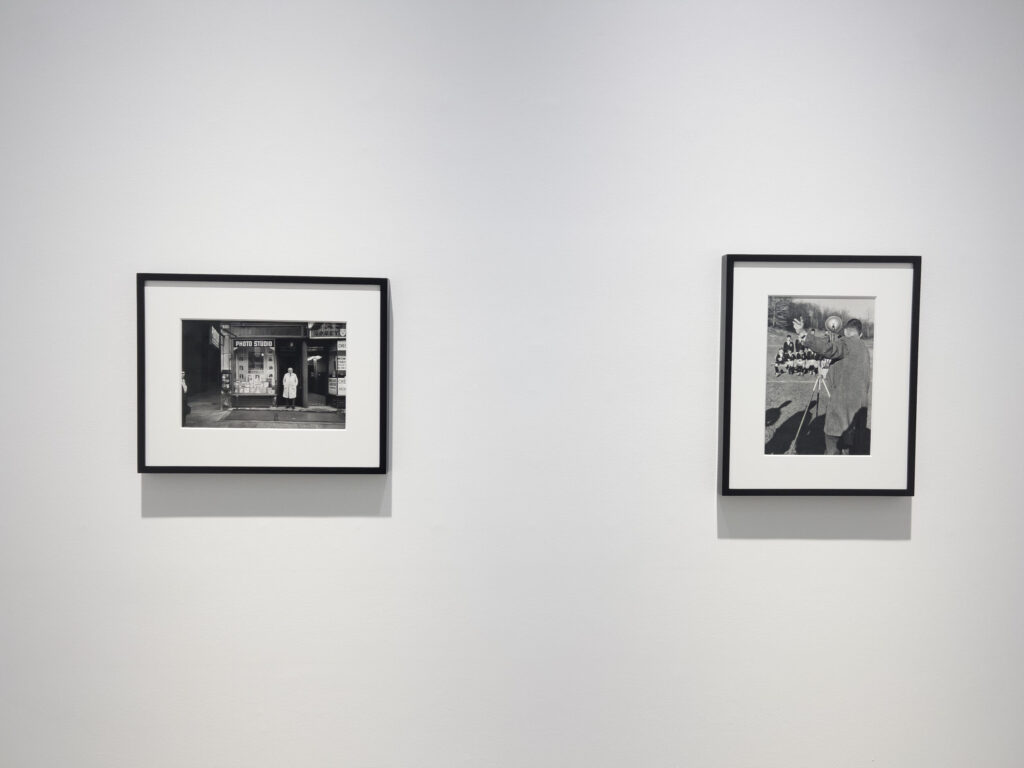
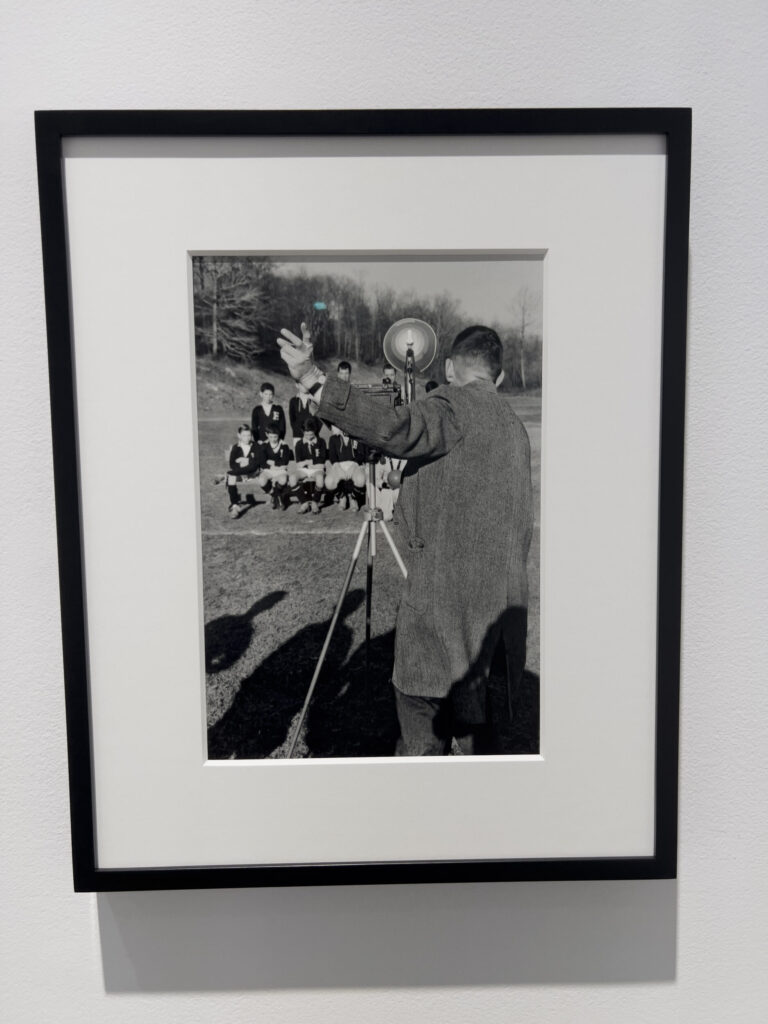
On the far wall are two photographs, both charged with conceptual richness in the ways they engage the aboutness of photography. The first, a horizontal image from New York is a street view of a photography studio (known by its sign in the window), with a variety of signage interestingly cropped on the top and right edges of the frame. Two figures appear in the image: the first in the left foreground, framed both in and outside of the frame, just on the edge, and then a second, perhaps the photo studio technician, who appears just off center to the right. While the arrangement of the storefront is depicted asymmetrically, it holds a balance between the blacks on the left side of the image and the signage on the right side that feels incredibly well composed. The second image on the wall, from Tarrytown, is a vertical made during Shore’s school days as a student at the Hackley School. This photograph seems the most adolescent to me, as it showcases the shadow of the photographer (Shore) on top of the photographer photographing his class. There are four shadows in the foreground, with the shadow to the right being the one indicative of the artist, as we can see the vantage point and the elbow that symbolizes the ubiquitous photographer’s stance.
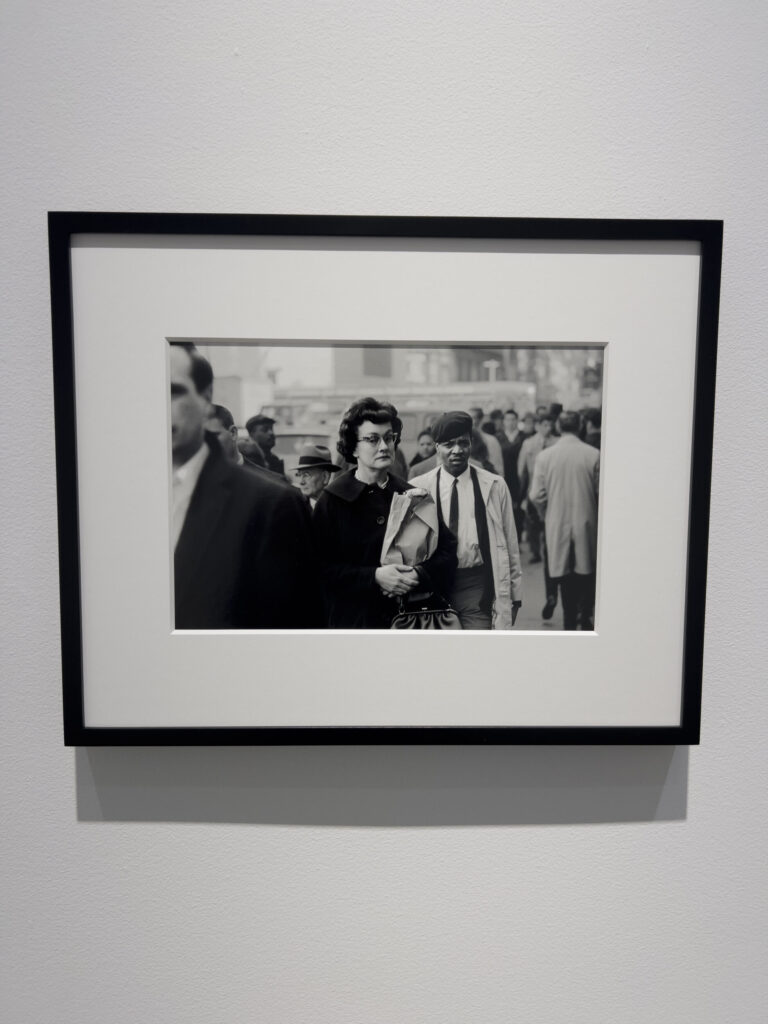
The rightmost wall, the third and final in the room, also holds three formally mounted horizontal photographs. The first, from New York, depicts the interior of a period barber shop with the attendant in the center foreground, leaning against one of the barber chairs and drinking from a bottle. The second, also from New York, is an interestingly observed street scene. Everyone on the street appears to be a man dressed in a suit and coat with the exception of the person at the very center: a woman in horn-rimmed glasses, her hair painstakingly curled, holding a brown paper bag and pocketbook that is half out of frame at the bottom of the image. Three other figures in the street scene are particularly intriguing. The man on the very left of the frame who is half in and half out, as well as out of focus, another man whose head emerges from between two shoulders of other figures, and the third, an African-American man in a beret, suit, and tie, who is squinting at the photographer. The final image in the gallery and on the wall is a carefully seen Manhattan gas station street scene that is a poignant precursor to the frames that would come later from Shore out west in his “American Surfaces” work. Many of the same familiar trappings are present: the cars, the gas station, the signage, and uniquely in this early work, the people walking on the Manhattan sidewalk in the distance with the high-rises in the background.
These eight photographs by Shore were made between 1960 and 1964, a period when the future high school dropout was focused on teaching himself how to “see” photographically. This seems to be the first period where everywhere he looked, he saw the potential for pictures. Though diverse in content, these images, created when the artist was only 14 to 18 years old, are unified by a lucid, definitive vision and a keen attention to the world. They are clear efforts to decipher the everyday life of his youth, a world dense in the particularity of its time, and, in retrospect, an erstwhile dream compared to today’s culture. For those who have followed Shore’s career, nearly all of his later thematic concerns are strikingly present in these early years of discovery, including vernacular detail, architecture, street intersections, and a strong sense of pictorial structure.
Shore’s recent book Modern Instances: The Craft of Photography (MACK, 2022) is an experimental memoir in which the artist wrote in great detail about the variety of people, events, and various touchstones that influenced his path as an artist. That book, now available in a second extended edition, is generous in its offerings of insight into the maker’s mind, and its writing was the start of the artist looking back at his life and putting the story together. This is where some of his early pictures were widely seen for the first time, unearthed from the author’s archive to craft his story of becoming. Early Work feels like an apt outgrowth or extension of Modern Instances, particularly in the way that the essay in Early Work titled “The Pre-History of These Photographs” is designed and formatted much like his aforementioned memoir, adding still more detail and richness to the story of the artist’s life.
As we prepare to enter 2026, Stephen Shore is now a household name. Perhaps some became aware of him for the first time during his 2018 MoMA retrospective (reviewed here), others have likely followed along since the Warhol Years (via a 2009 exhibition of “The Velvet Years 1965-1967” at 303 Gallery, reviewed here), and perhaps a younger audience became aware of his contributions to the medium during his foray into Instagram (in 2020, again at 303 Gallery, reviewed here). I have thought of Stephen in different ways throughout my own life as an artist. As an undergraduate student, he was one of the fathers of art color photography that I was in conversation with in my own work. As a graduate student, I thought more of his pedagogical influence on the whole enterprise of photographic education, and the exacting and rigorous ways that one teaches others to think and see like a photographer. Now he is my supervisor and colleague at Bard College and I see his wide-ranging contributions to the medium as abundant in their wisdom, attention, and care, always reminding us that the photographer doesn’t merely point at the world but instead frames it.
While this is a small exhibition, I see neither fluff nor filler. I am fascinated to imagine the artist I know, now almost eighty, looking back at the nearly forgotten work of his early years with fresh searching eyes, as both author and observer. I find that these photographs by Shore made in his teenage years are surprisingly rigorous and effective, and likely better than what many others could ever hope to frame in an entire lifetime.
Collector’s POV: The prints in this show are priced at $15000 each. Shore’s work (both vintage and later prints) is routinely available at auction, generally ranging in price between roughly $1000 and $45000.