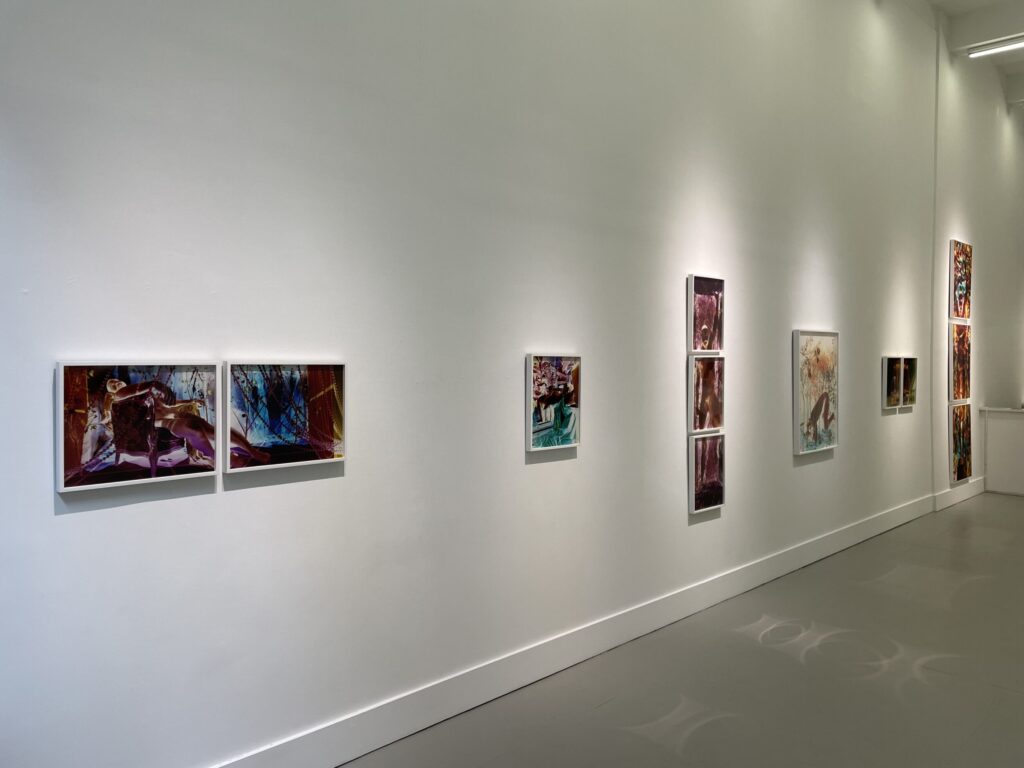
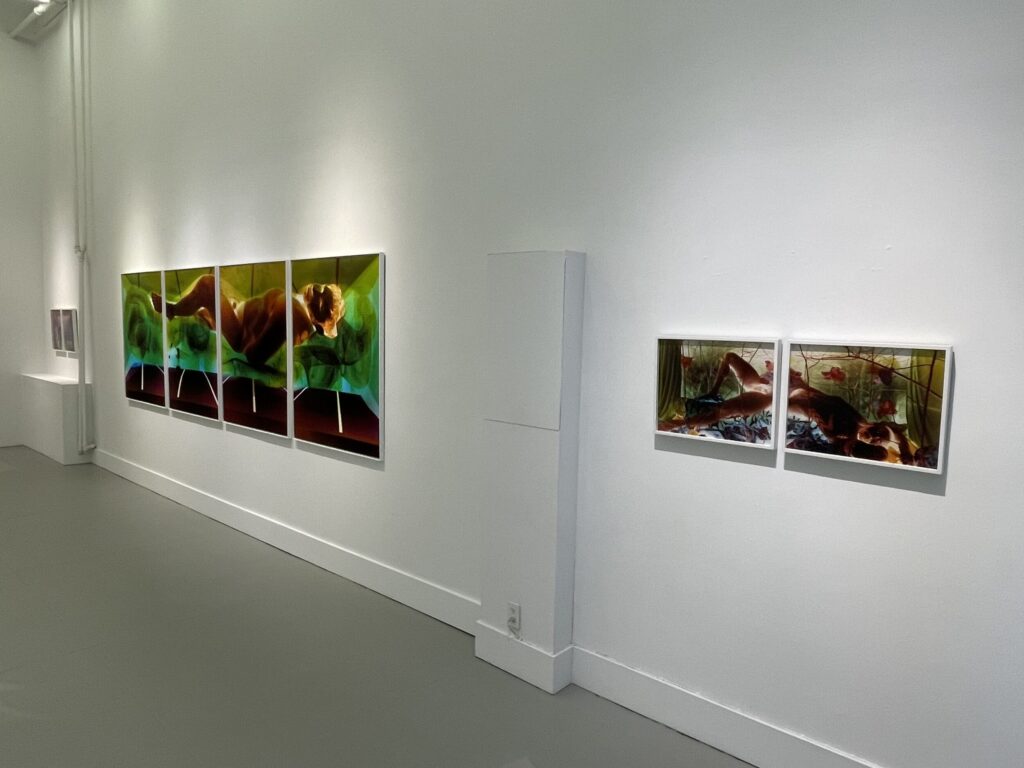
JTF (just the facts): A total of 14 color photographic works, framed in white and unmatted, and hung against white walls in the main gallery space and the office area. (Installation shots below.)
The following works are included in the show:
- 1 chromogenic print, 2116, sized 40×30 inches, unique
- 5 chromogenic prints, 2024, 2025, sized 16×20 or 20×16 inches, unique
- 4 sets of 2 chromogenic prints, 2024, each sized 16×20 or 20×16 inches, unique
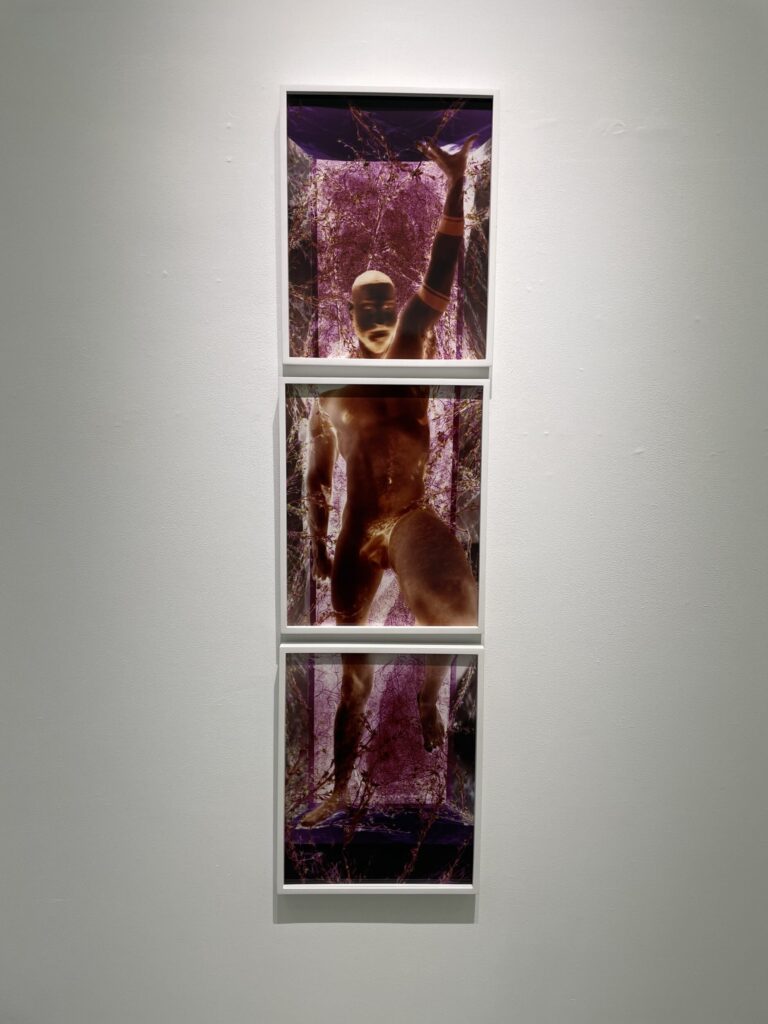
- 2 sets of 3 chromogenic prints, 2024, each sized 20×16 inches, unique
- 1 set of 3 chromogenic prints, 2024, each sized 33×30 inches, unique
- 1 set of 4 chromogenic prints, 2019, each sized 50×40 inches, unique
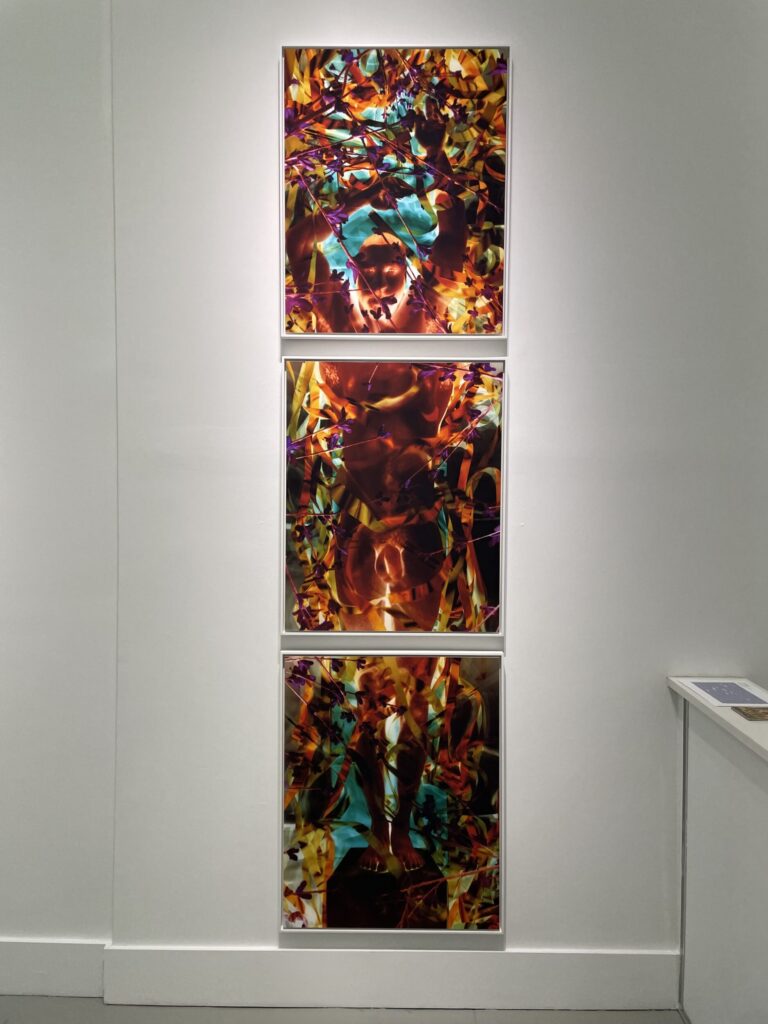
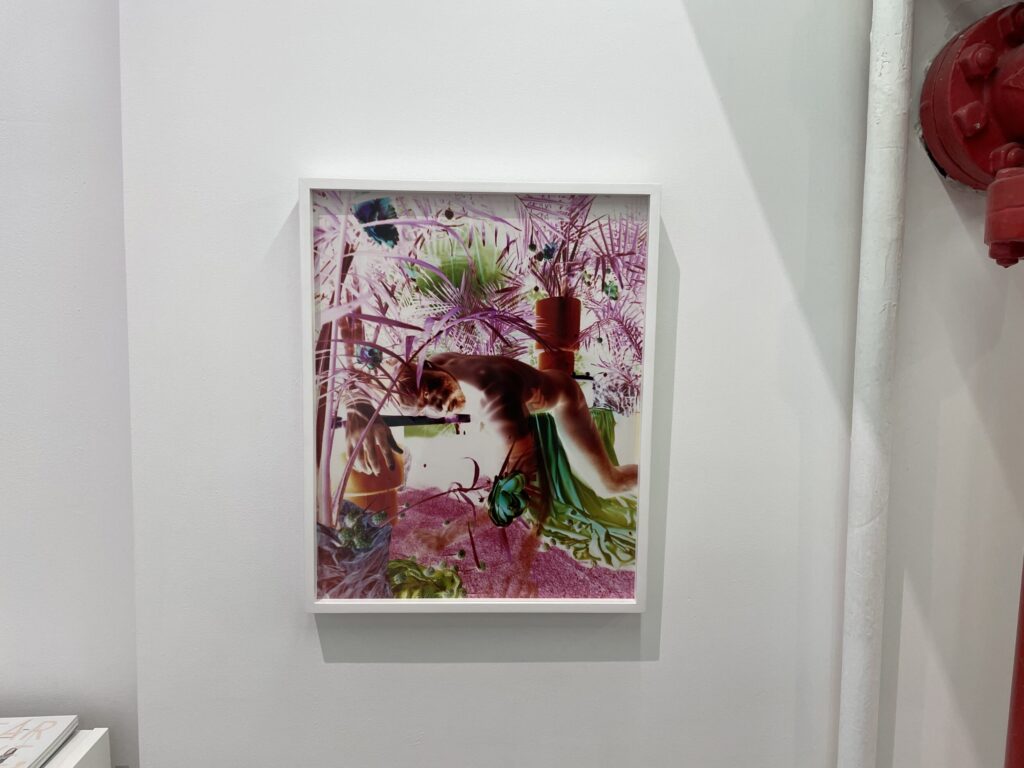
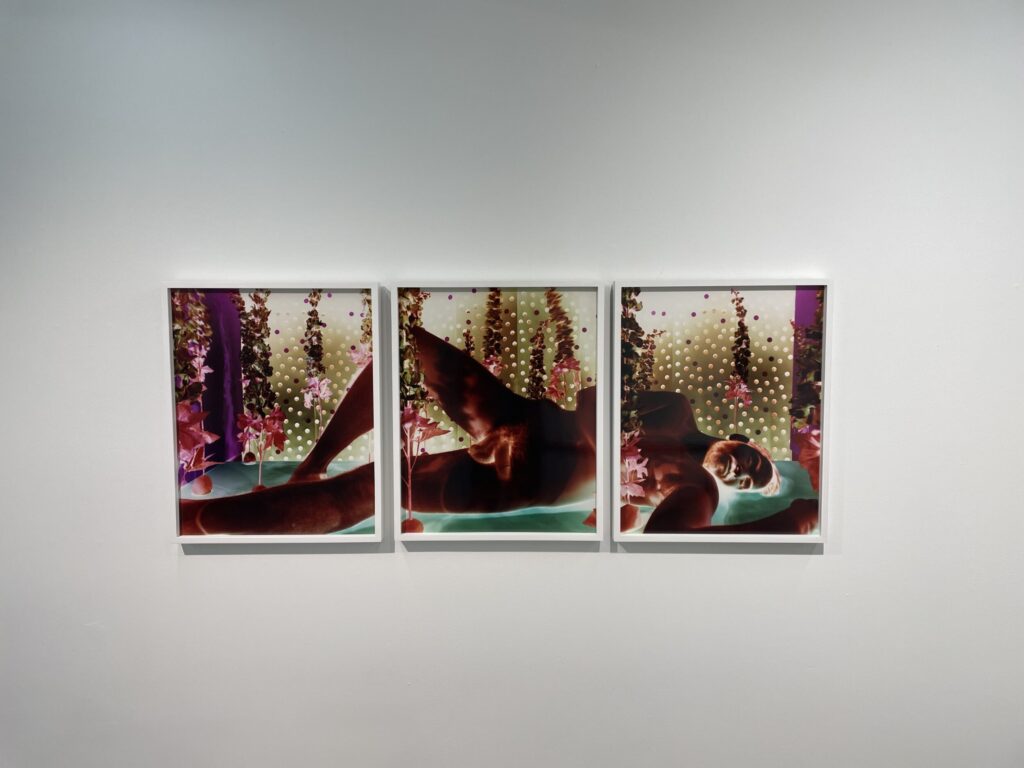
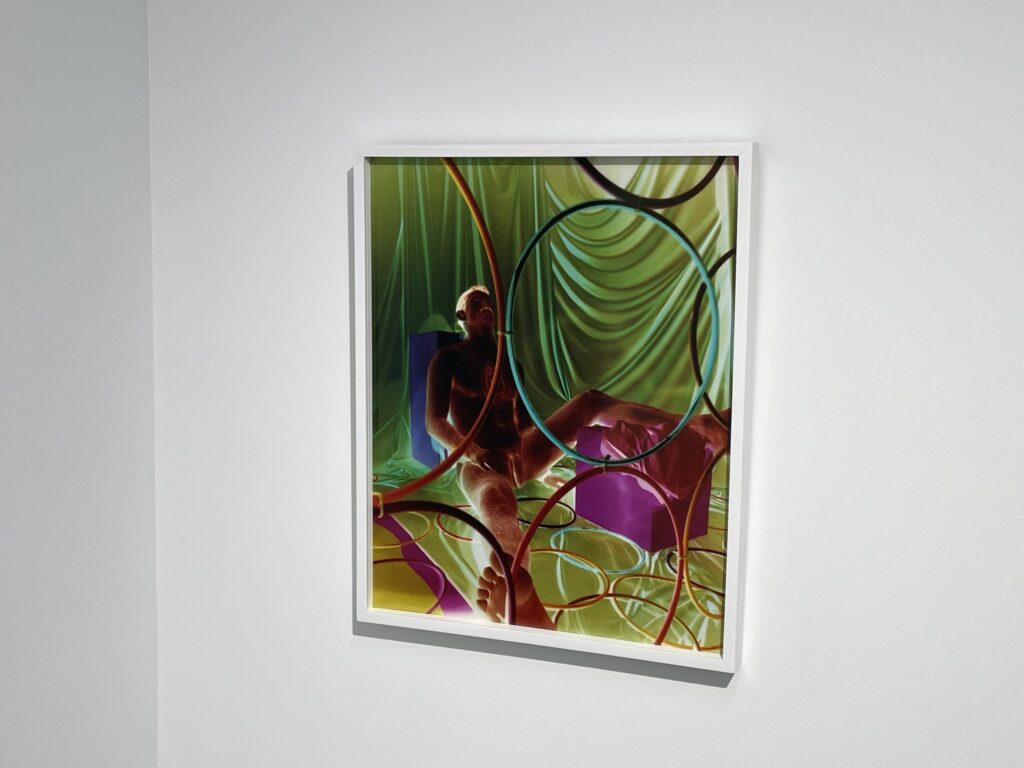
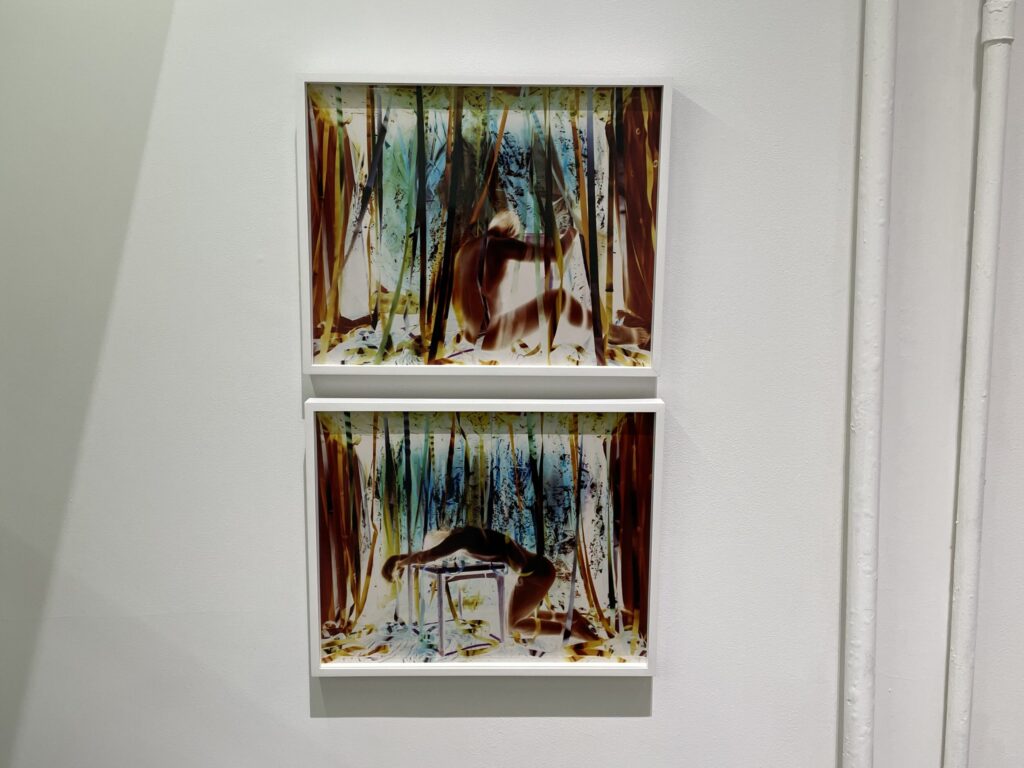
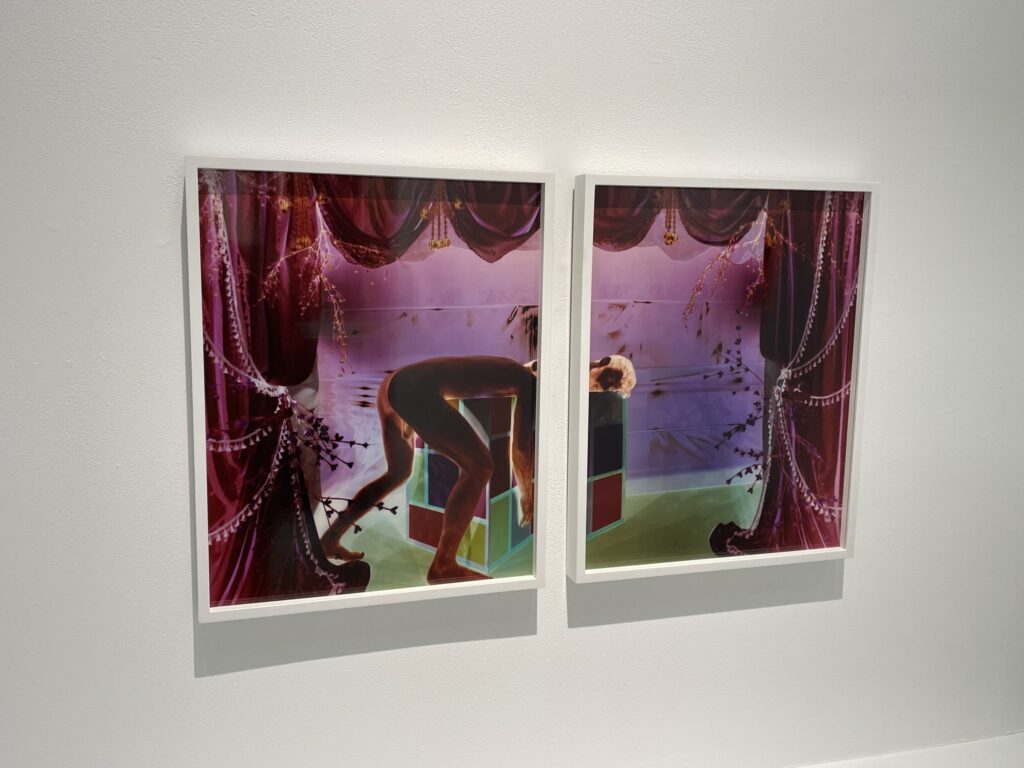
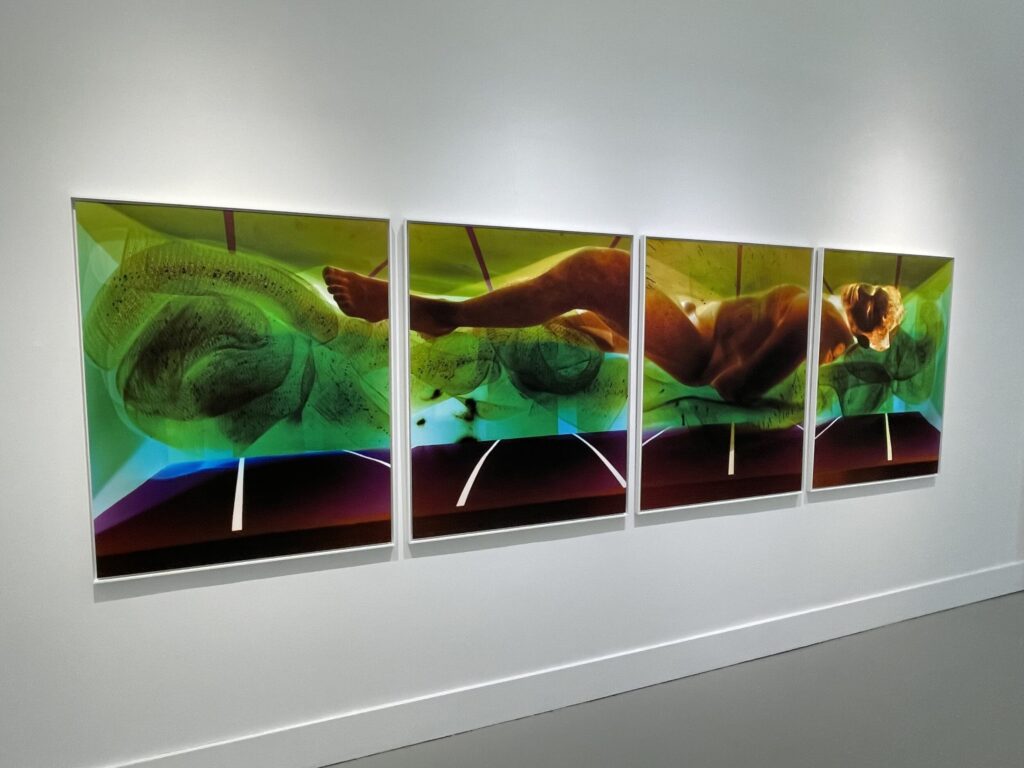
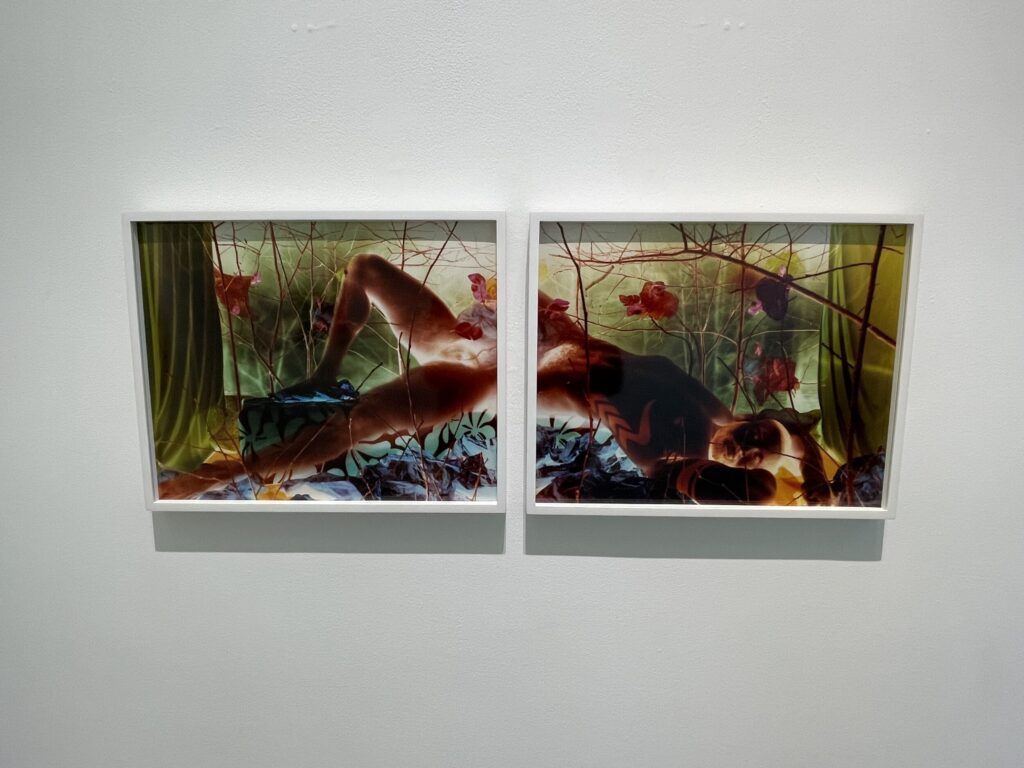
Comments/Context: With every successive smartphone release making digital photography even more ubiquitous and powerfully easy, there is a sense among a growing subgroup of photographers that we’re rapidly losing our physical connection to the medium. The most obvious response to this evolving reality is to conceptually reject the digital workflow entirely and to intentionally reach back to earlier photographic processes and technologies that require more hands-on knowledge and engagement. In some sense, this is a deliberately contrarian stance, a stepping back from the current computational trends and saying no to the dumbing down and filtering of the prevailing flow. But in another, it is simply an urgent reach for more human control over the creative process, even when that means that the image making potentially becomes more difficult, chance-infused, and complicated. For most of the artists who have come back around to embracing a more analog mindset, an effort to reclaim artistic authenticity often lies at the center of their thinking, as well as a desire to stem the erosion of craft and technique that they see happening inside the digital version of the medium.
Part of the intellectual back-and-forth taking place is a struggle around the fundamental notion of speed, with digital photography seemingly staking out the immediate, the instantaneous, and the viral, and other forms of the medium (particularly the more hand crafted, chemistry based ones) encouraging a much slower and more deliberate kind of engagement. For Robert Calafiore, this sense of slowness is not only intentional, he has amplified and extended it, elongating the way we read (and decode) his pictures and forcing us to linger in his world with more attentiveness.
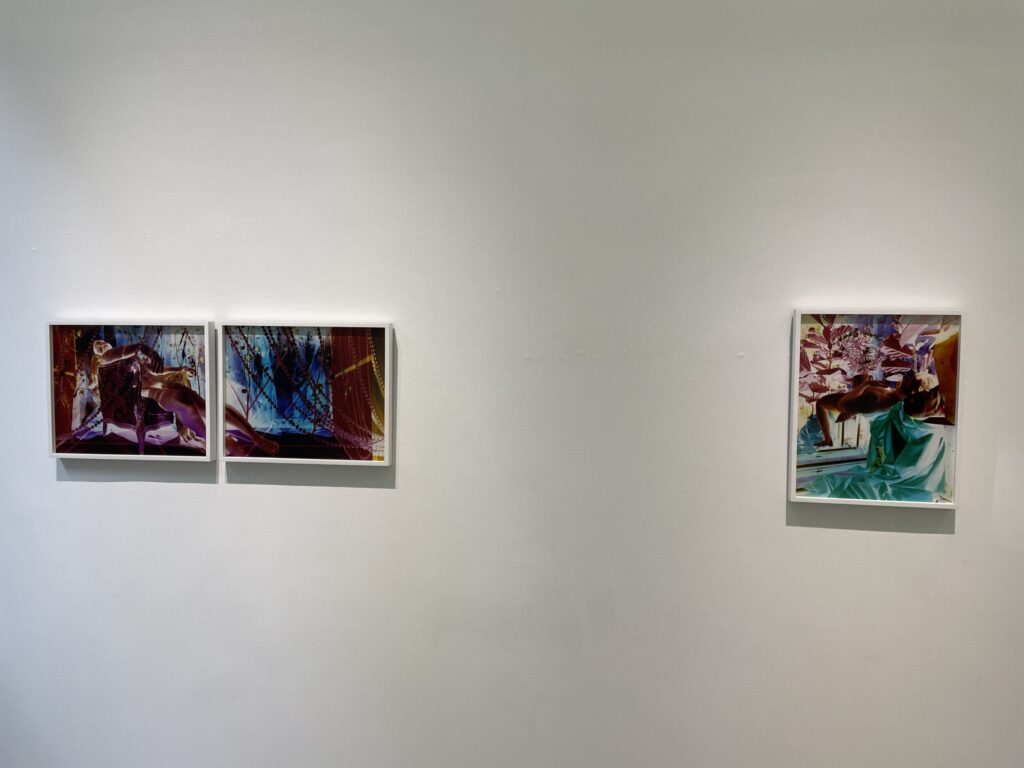
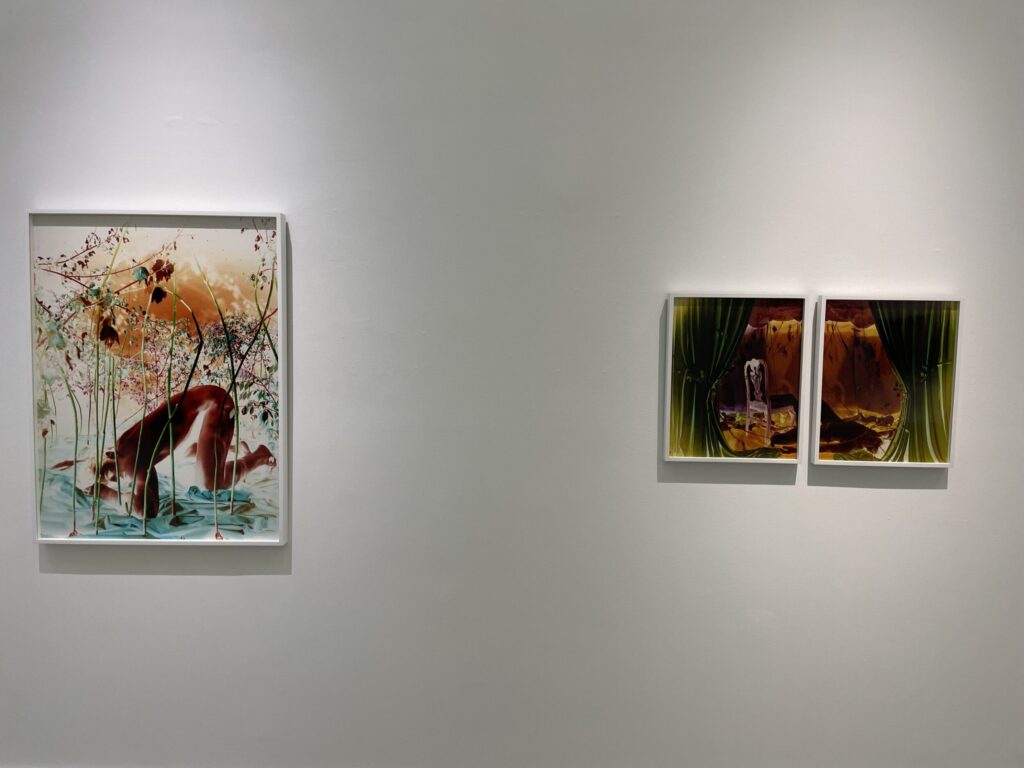
At many of the critical pivot points that structure Calafiore’s photographic efforts, he has chosen the road less traveled. He uses his own custom-made pinhole cameras, making long exposures (ranging from minutes to hours) of staged studio setups, the hints of movement of his models often introducing a ghostly blur. Male nudes populate most of his recent compositions, surrounded by lush arrangements of drapery and other decor, their languorously reclining poses recalling ancient statuary and harem-like odalisques. Calafiore then uses his pinhole exposures to make unique analog prints that are presented as color negatives – with the tonalities reversed – creating a perplexing color environment that sparkles with eerily saturated drama. When brought together, these choices result in pictures that actively (and intelligently) reference the past, but do so in a resolutely contemporary way.
While there were a few reclining male nudes in Calafiore’s 2018 gallery show (reviewed here), those images now feel like an aesthetic stepping stone to a much fuller exploration of the available possibilities. Several of the new works push the earlier festive atmosphere of flowers and polka dots toward further extremes of exhausted celebration, with sets overstuffed with cascading streamers, ribbons, palm leaves, hula hoops, curtains, pillows, upholstered furniture, and other draped fabrics. Most of the bodies in these pictures seem to have fallen into a satiated slumber, their nude forms slumped over tables, passed out in armchairs, and crumpled on the floor, surrounded by the decadence of the decorations. There is a conscious theatricality to these setups, especially when the colors are tweaked and twisted and the curtains frame the stages, that makes them feel almost hallucinogenic, like the swirling dreams (or memories) of Edenic party goers left limp by the surrounding pleasures.
Calafiore similarly expands his sense of scale in these recent images, moving from single image setups to works that include two, three, and even four large prints. In a few cases, this allows him to present bodies at life-sized or larger-than-life-sized, changing the viewing dynamic from a kind of jewel-box viewing or voyeurism to something more muscular and admiringly participative. The largest of these multi-panel works actively recalls the towering presence of classical Greek and Roman sculpture, with men standing, reaching, and reclining with confident physicality, their chiseled male bodies celebrated as examples of idealized beauty and formal elegance. Dark closely cropped hair, beards, and tattoos all show up as spots of light in Calafiore’s tonal reversals, making these figures look even more like mysterious ancient warriors and god-like beings.
The strongest of Calafiore’s compositions push and pull on visual notions of desire and masculinity, using the theatrical colors and settings to upend our expectations for how male bodies are typically presented or seen. There is a consistent hulking grace to his resting men, where hardness and softness are forced to coexist within the stylized environments of empty luxury, with a mood of satisfied lethargy filling the available space; these are indeed slow pictures, that celebrate the relaxed rhythms of the aftermath of extended revelry. It is this sense of extended pause that gives these pictures their seductive air, with time stretched out to accommodate a long moment of drowsy gratification.
Collector’s POV: The works in this show are priced between $3500 and $15000, based on the number of prints in the work and their size. Calafiore’s work has little secondary market history, so gallery retail likely remains the best option for those collectors interested in following up.