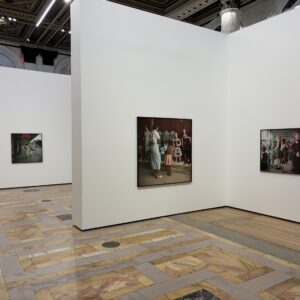
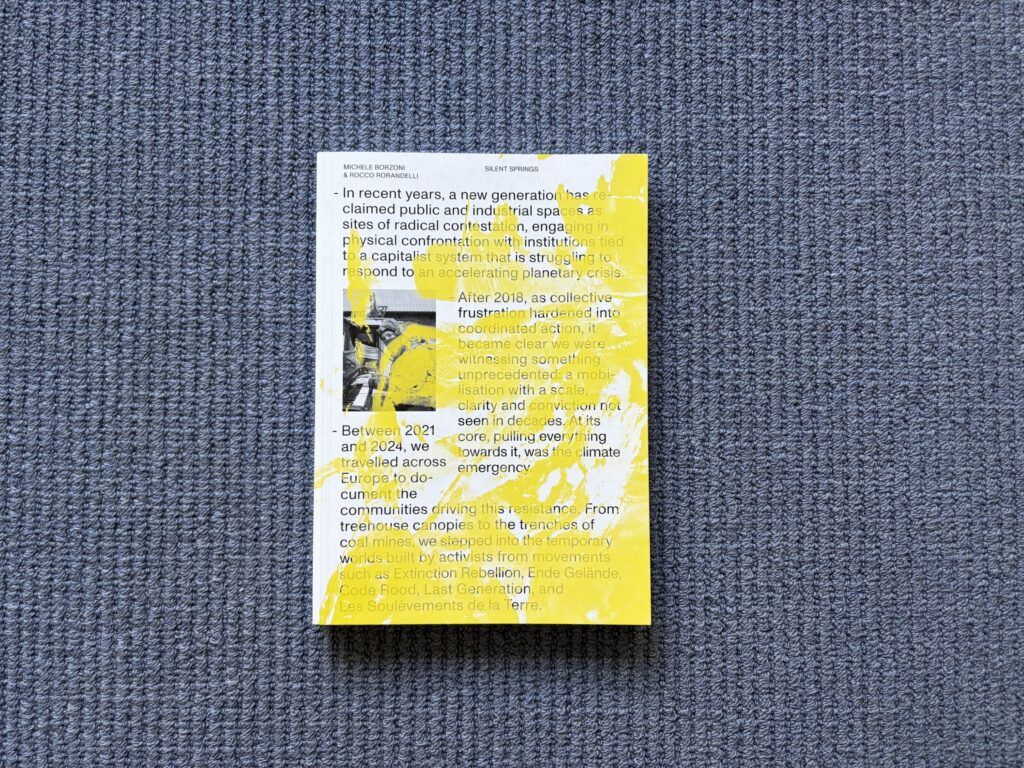
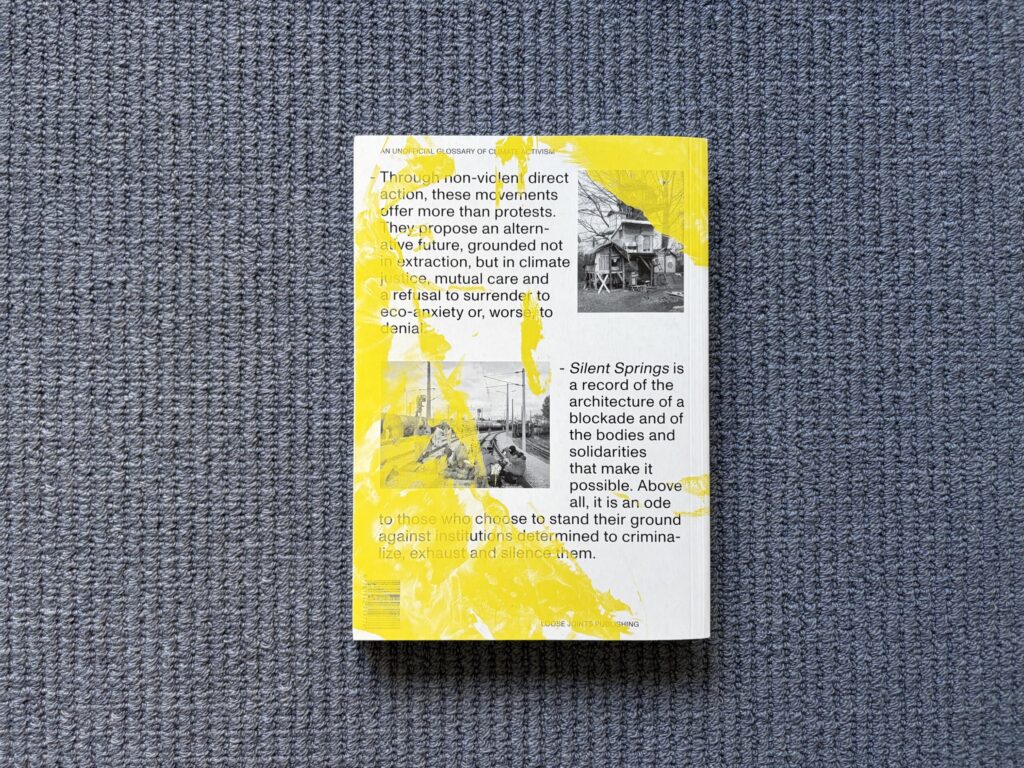
JTF (just the facts): Published in 2026 by Loose Joints Publishing (here). Section-sewn OTA bound silkscreened softcover, 210 x 295 mm, 208 pages, with 127 color and 81 monochrome plates. Includes a short text (on the front and back covers), a quote from Rachel Carson, a glossary with illustrated definitions, and an annotated image index. Design by Tommaso Tanini. (Cover and spread shots below.)
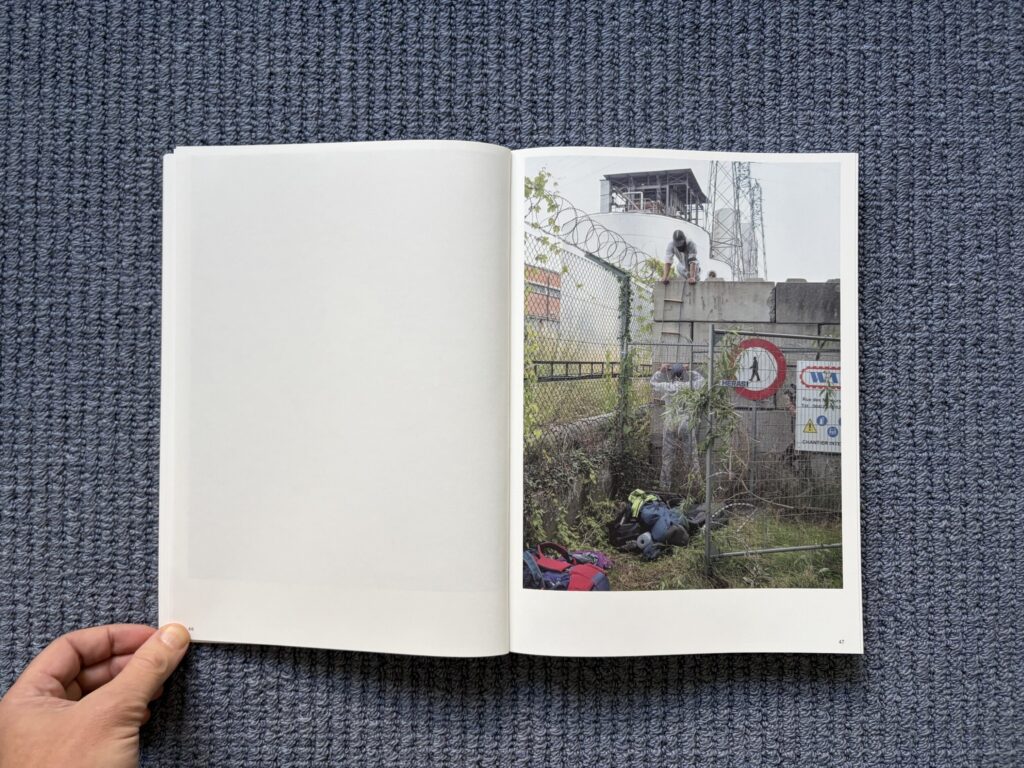
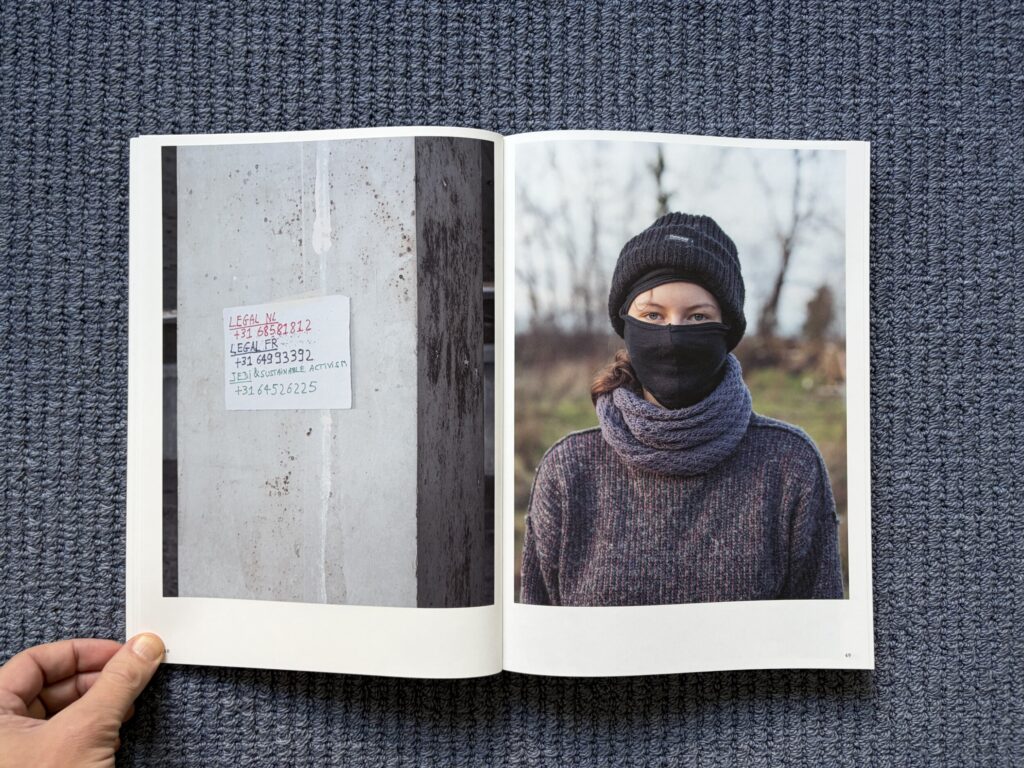
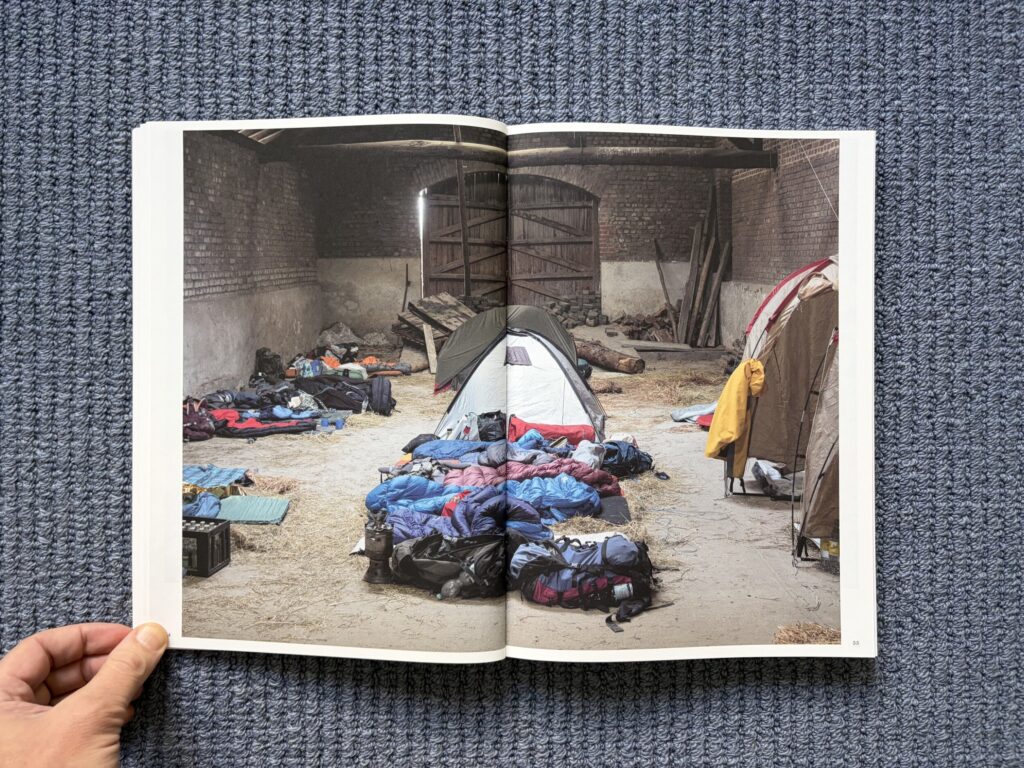
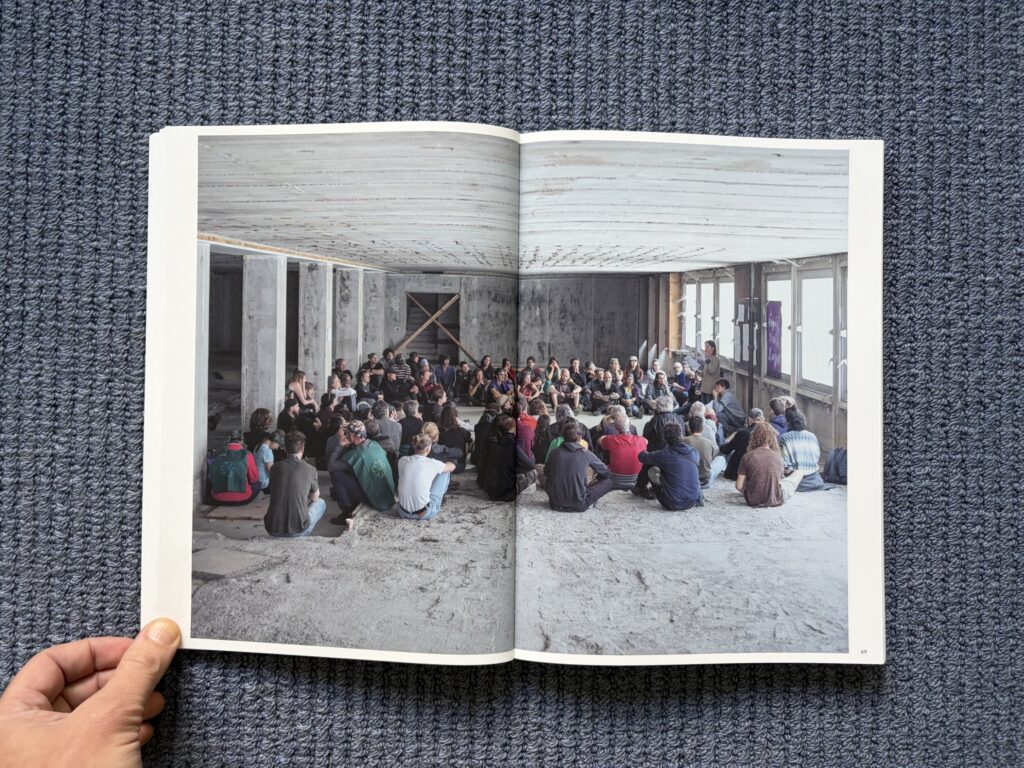
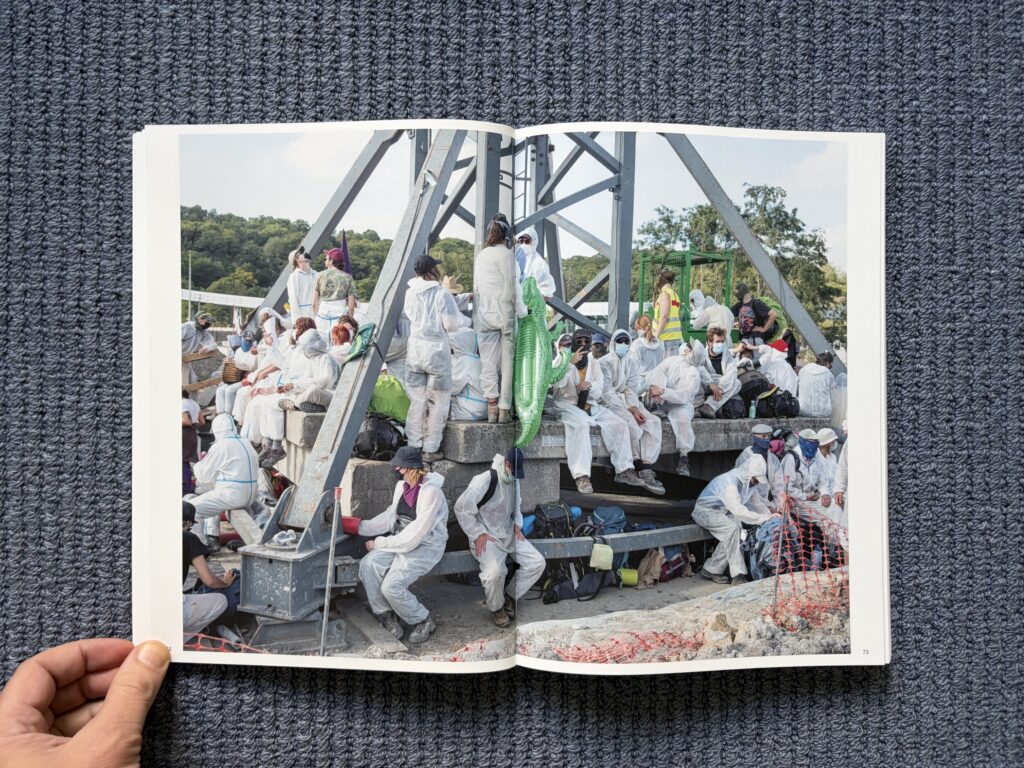
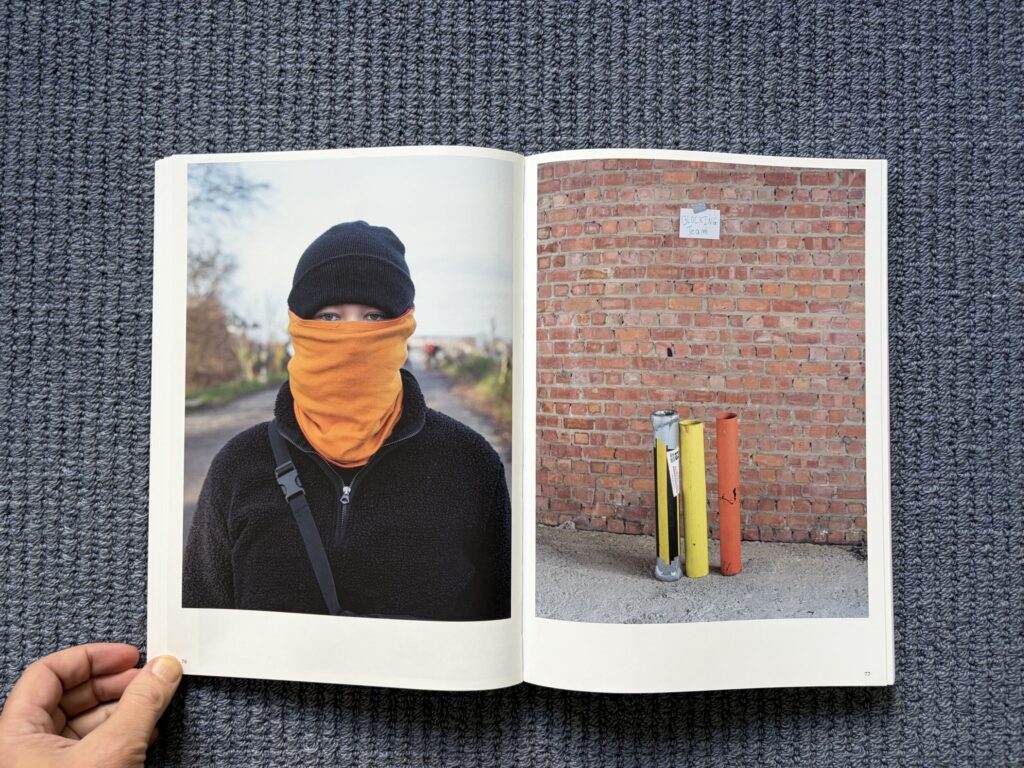
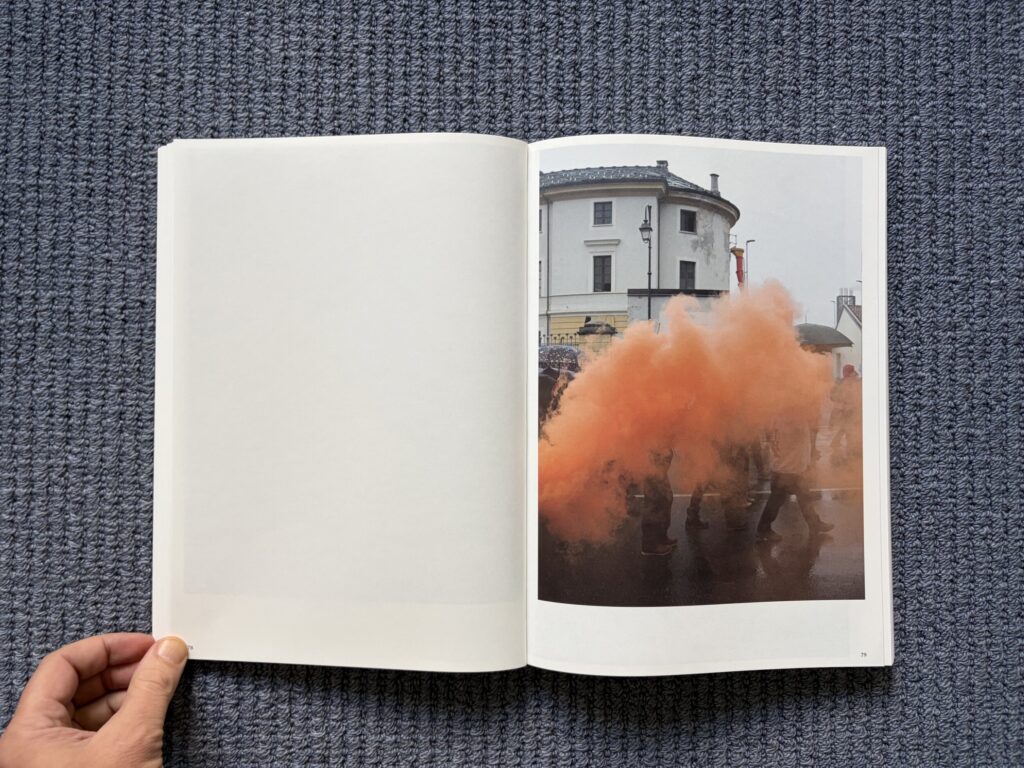
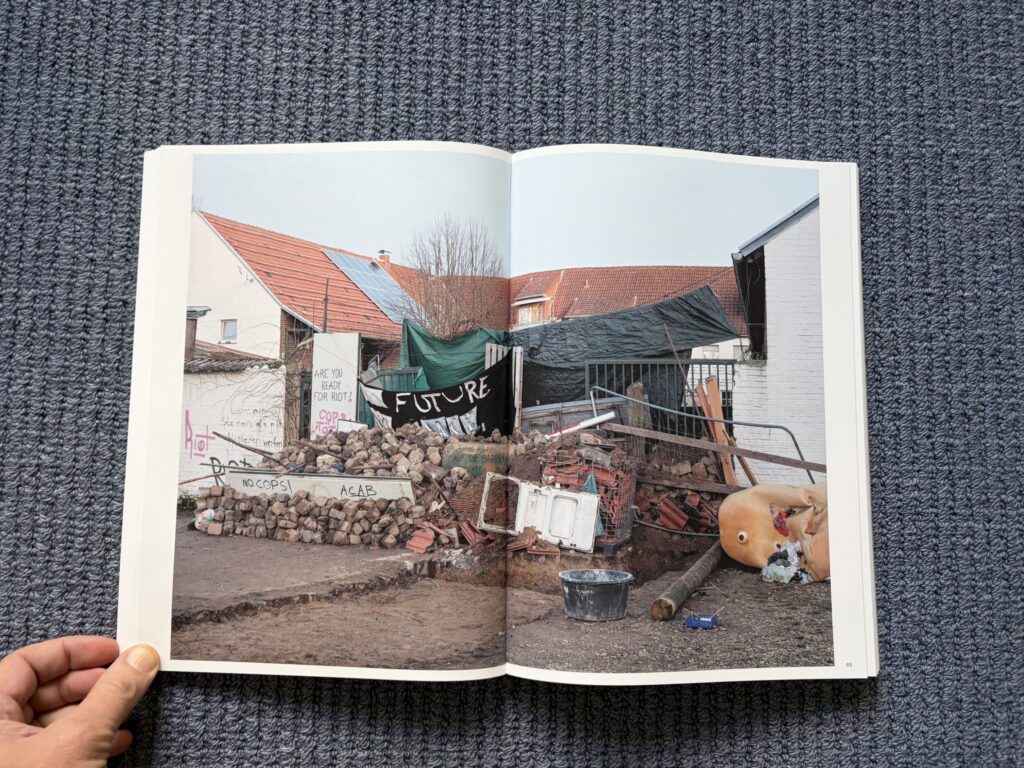
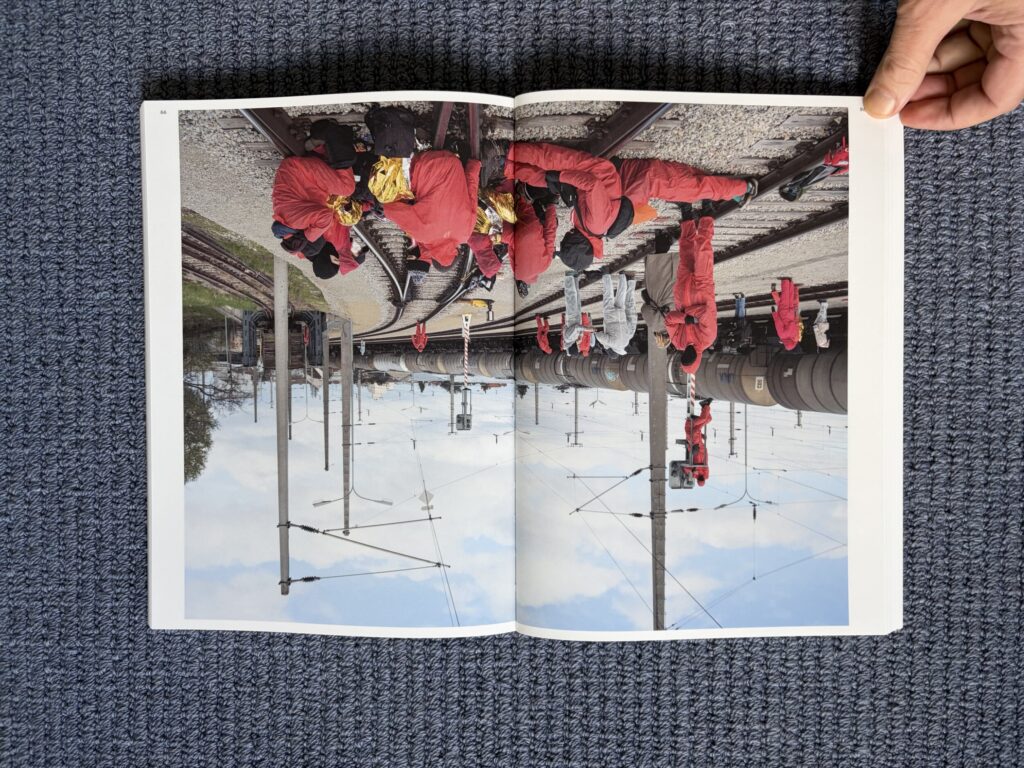
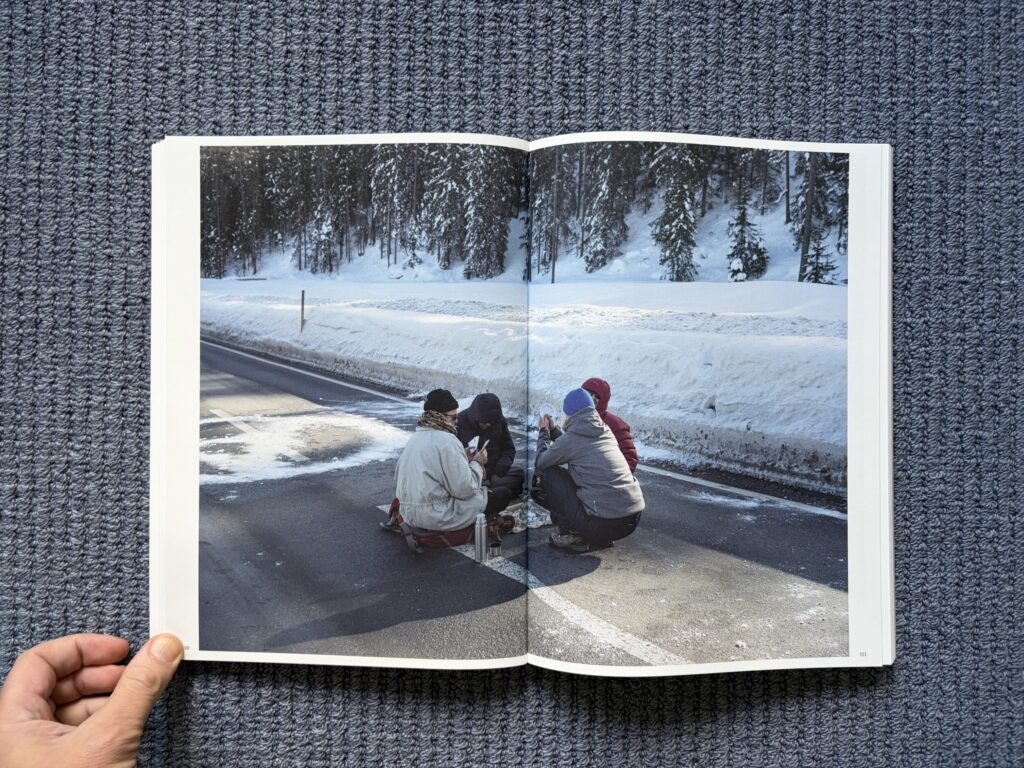
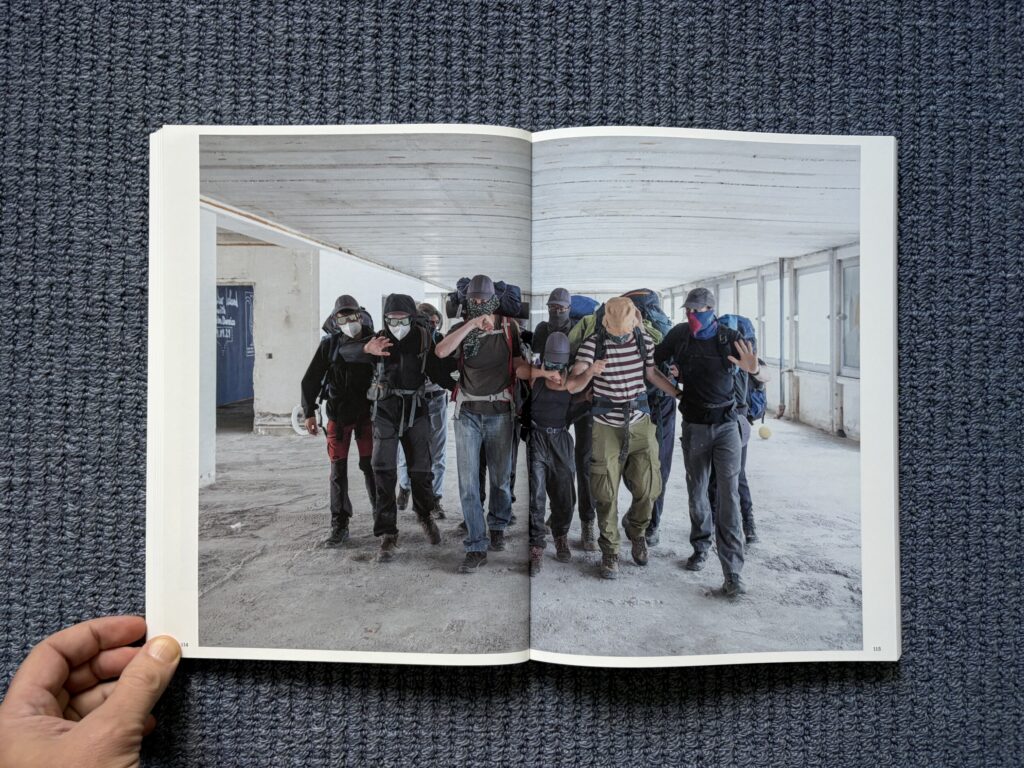
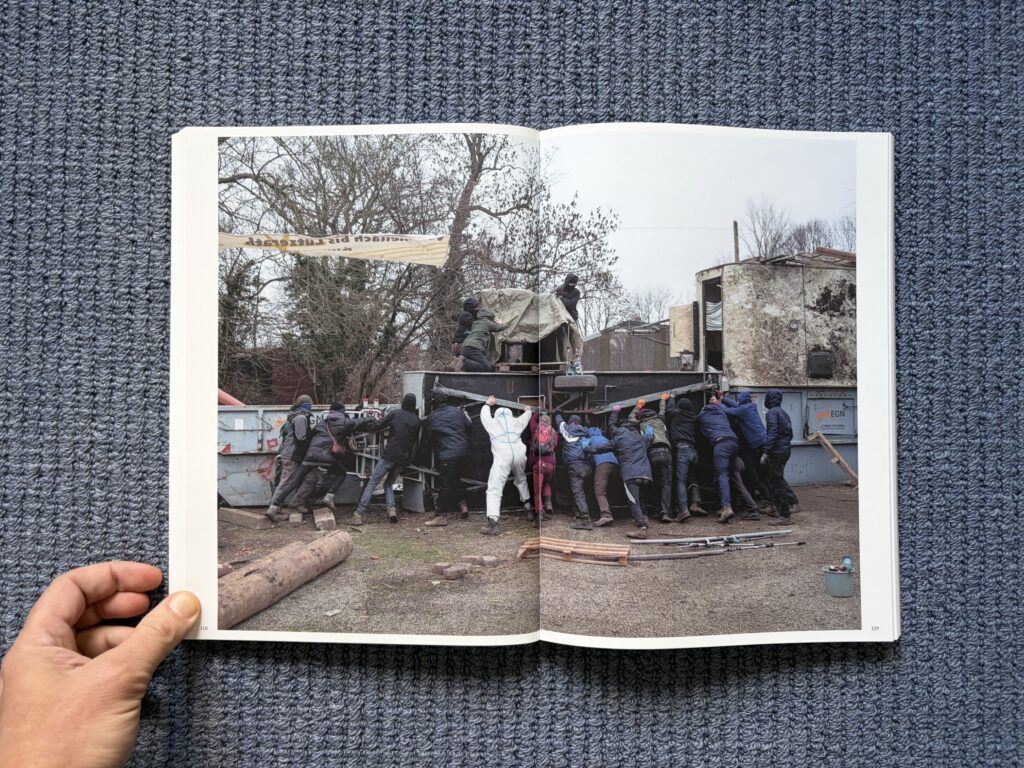
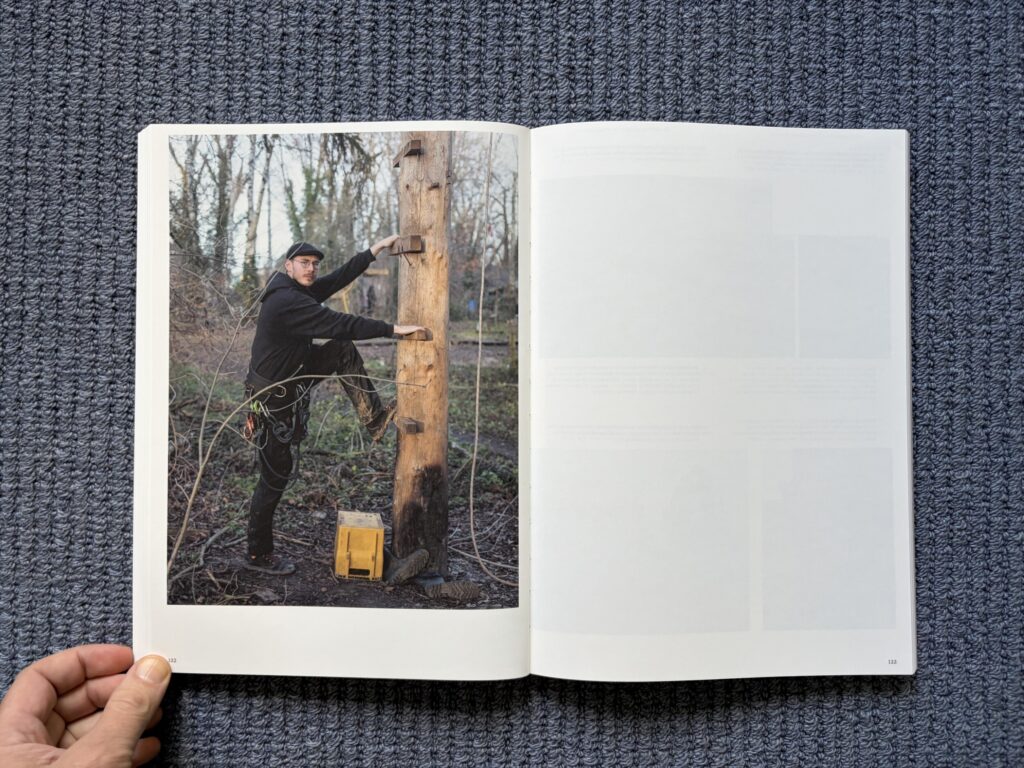
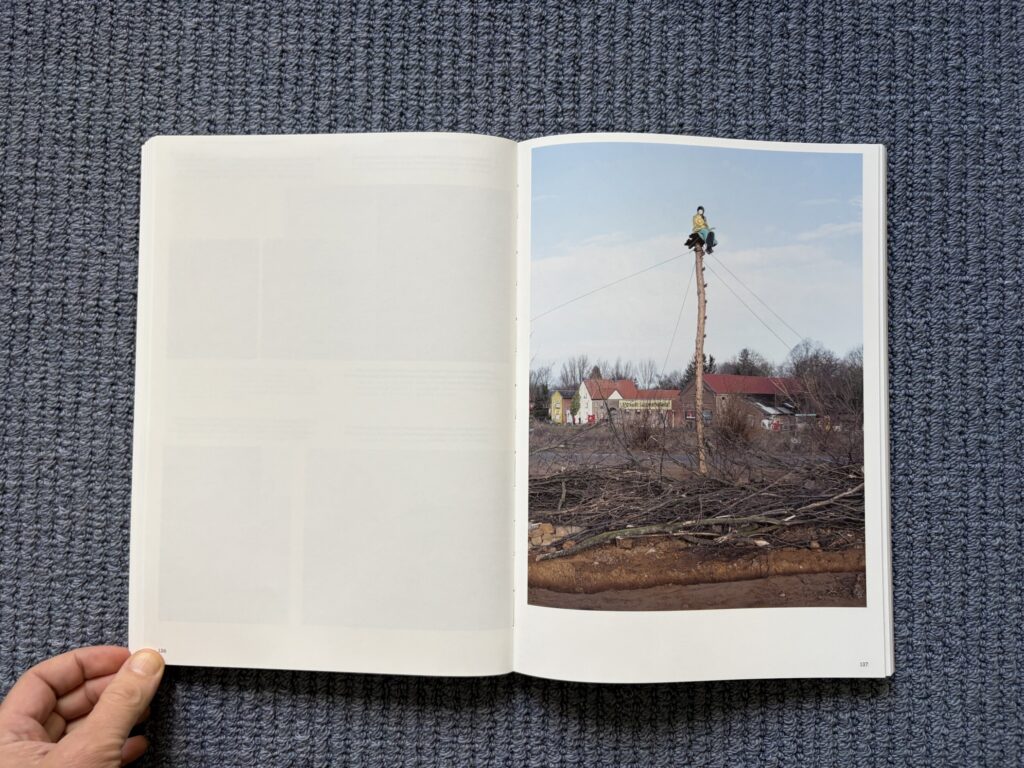
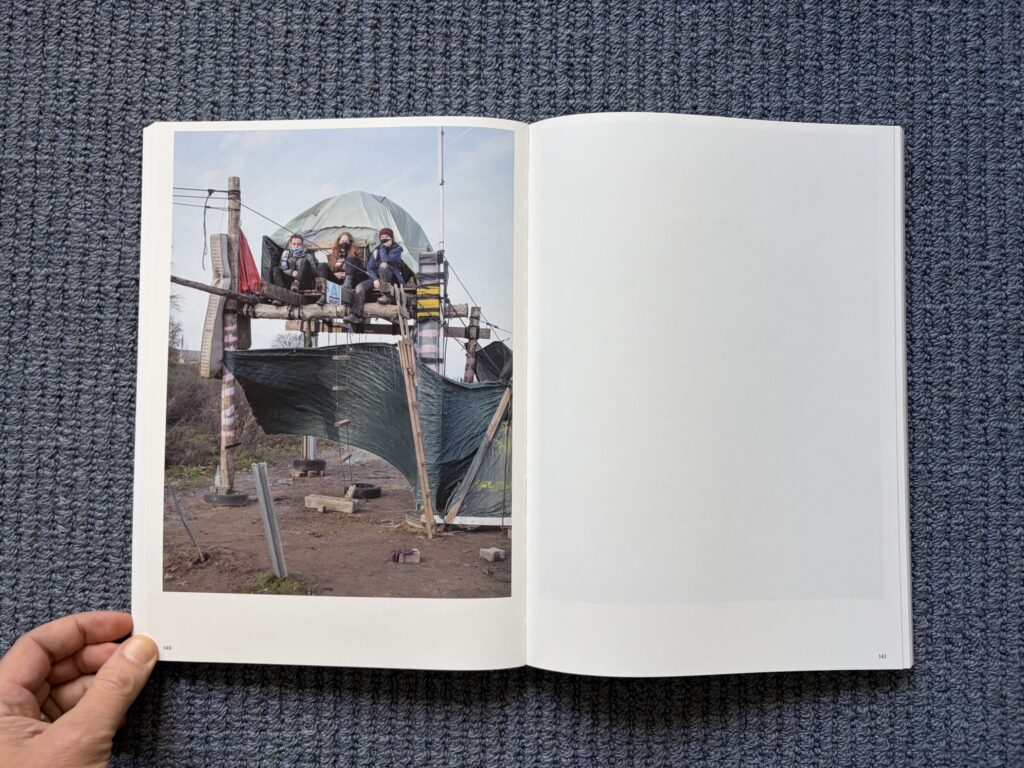
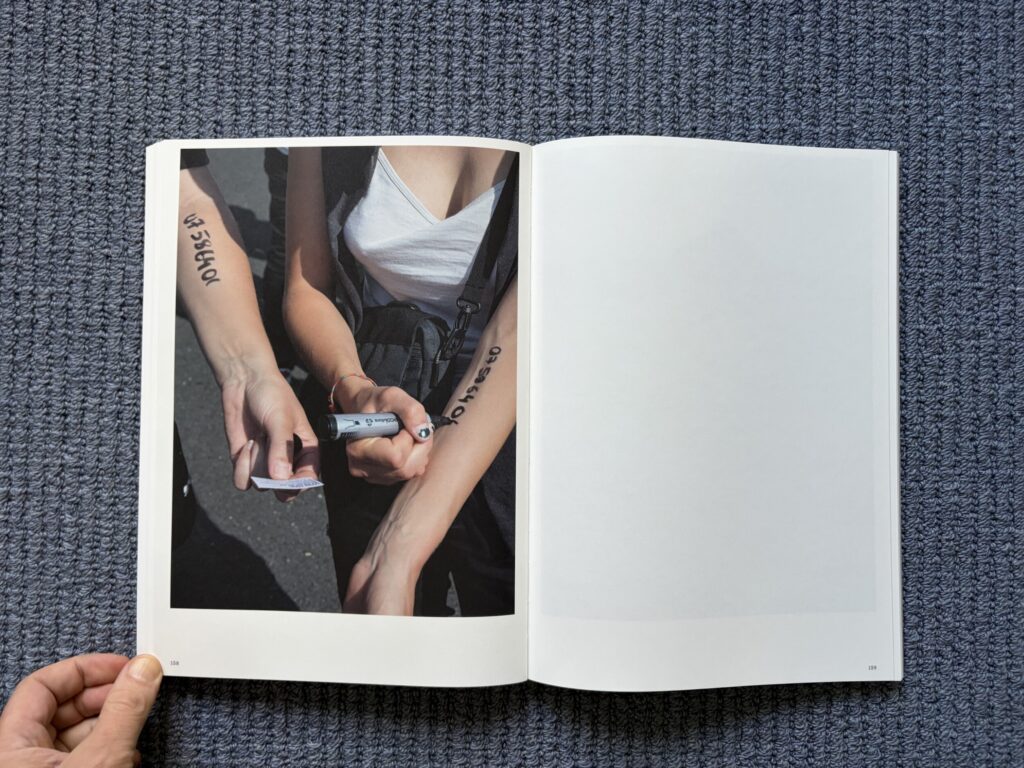
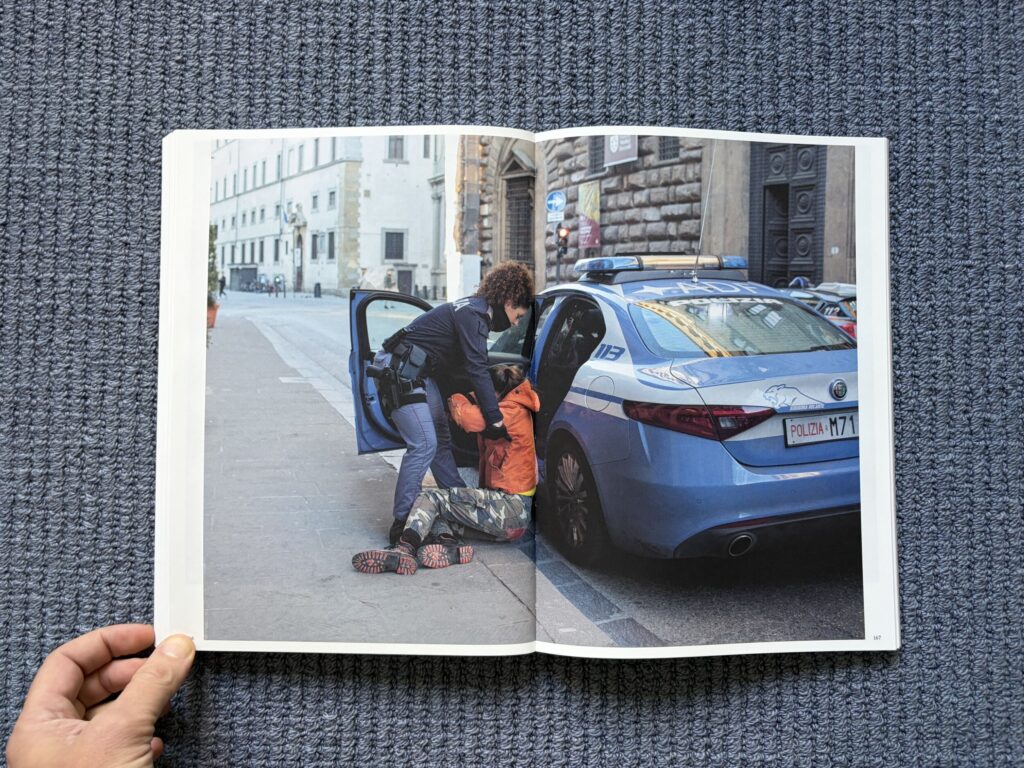
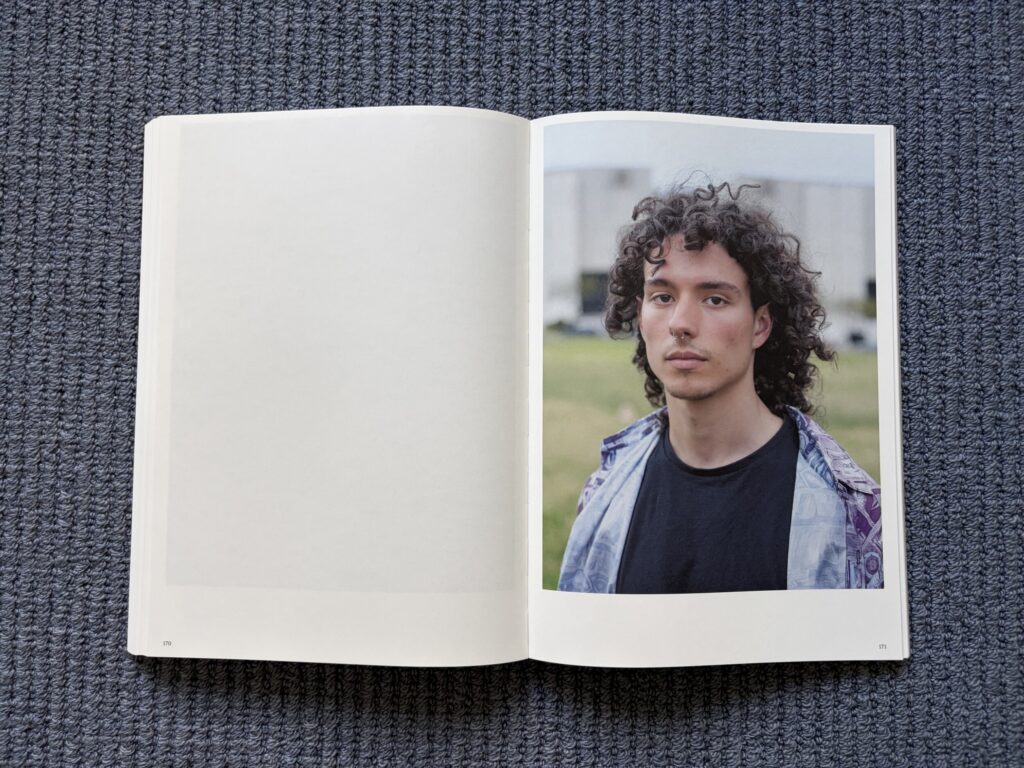
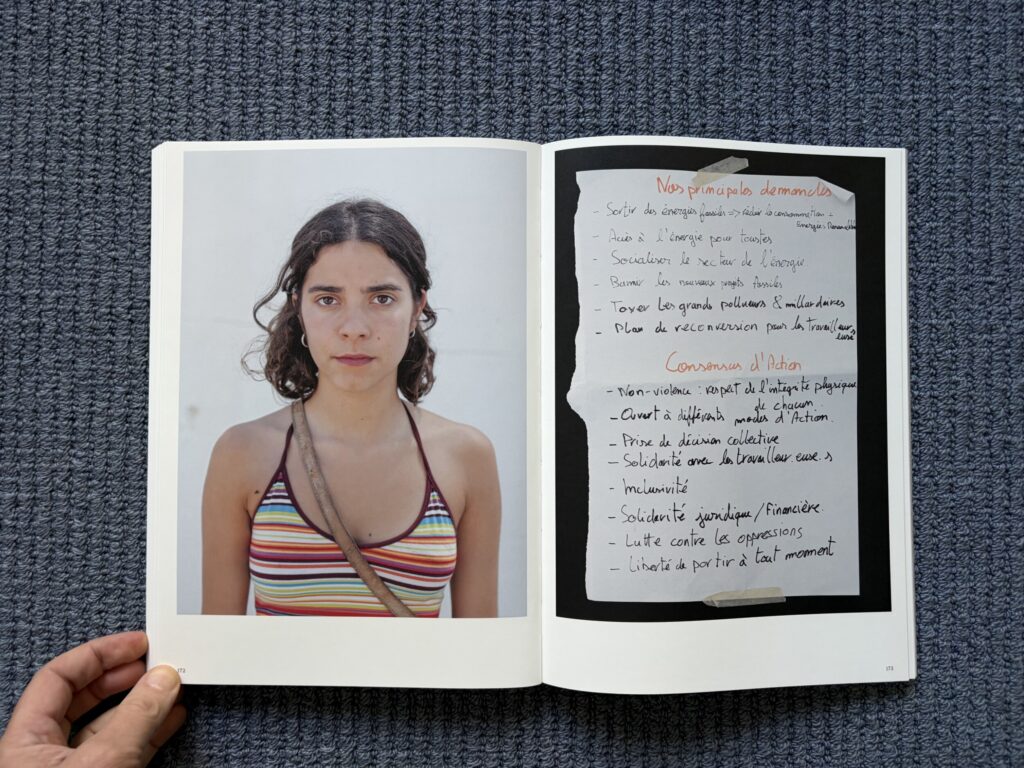
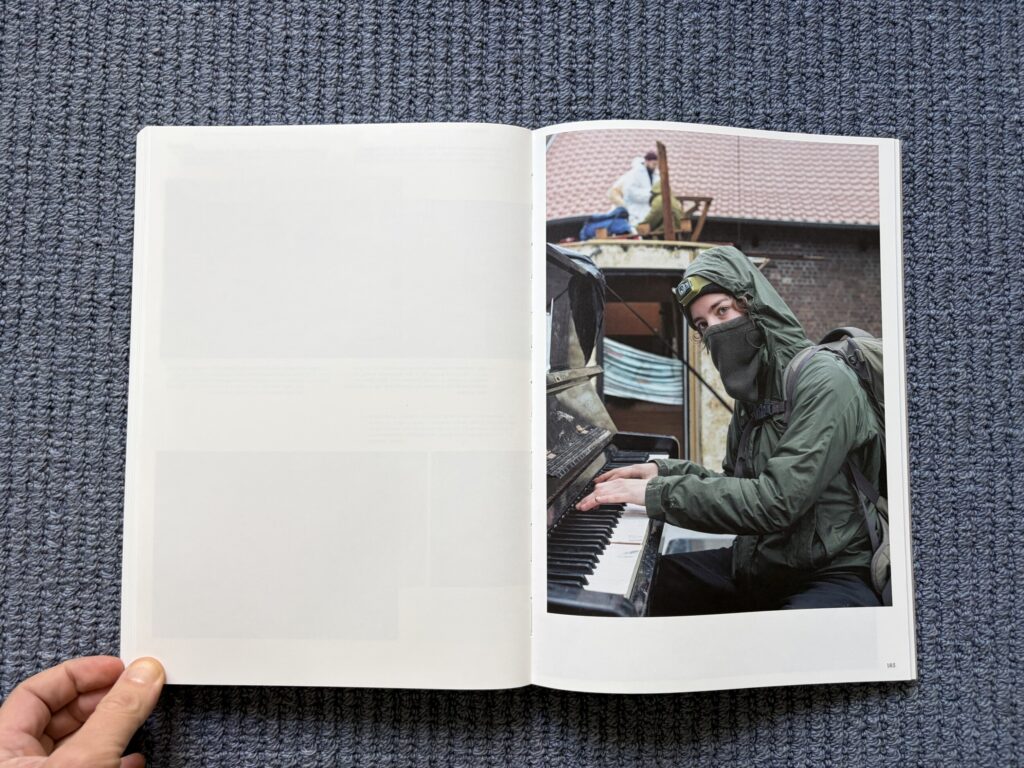
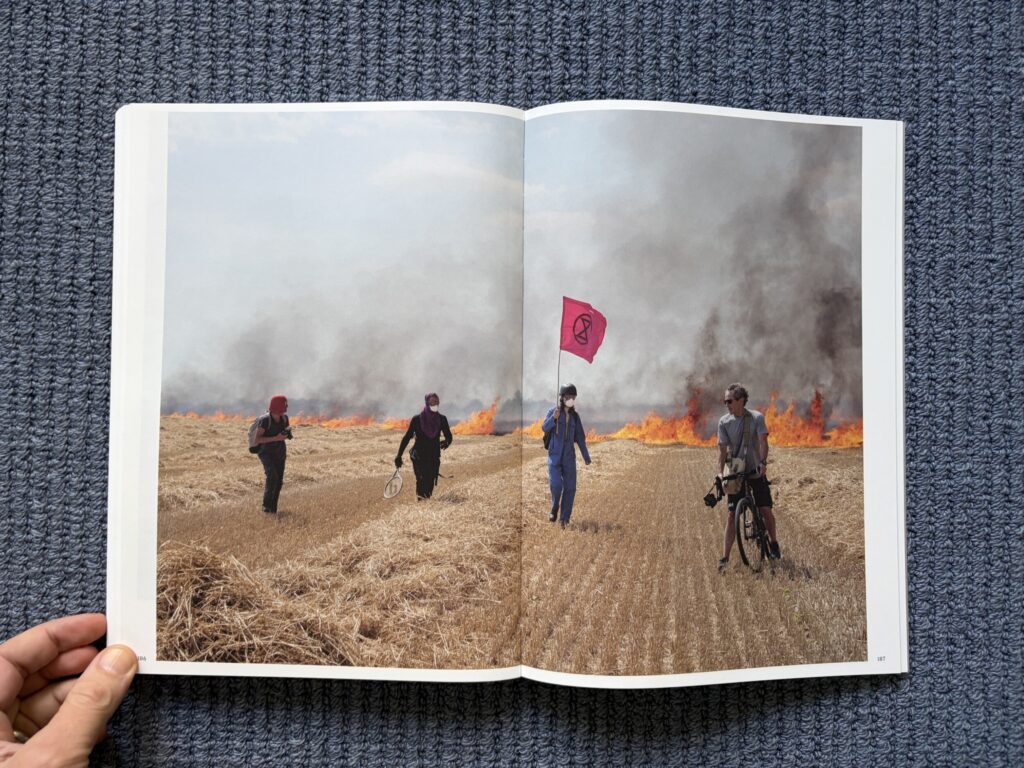
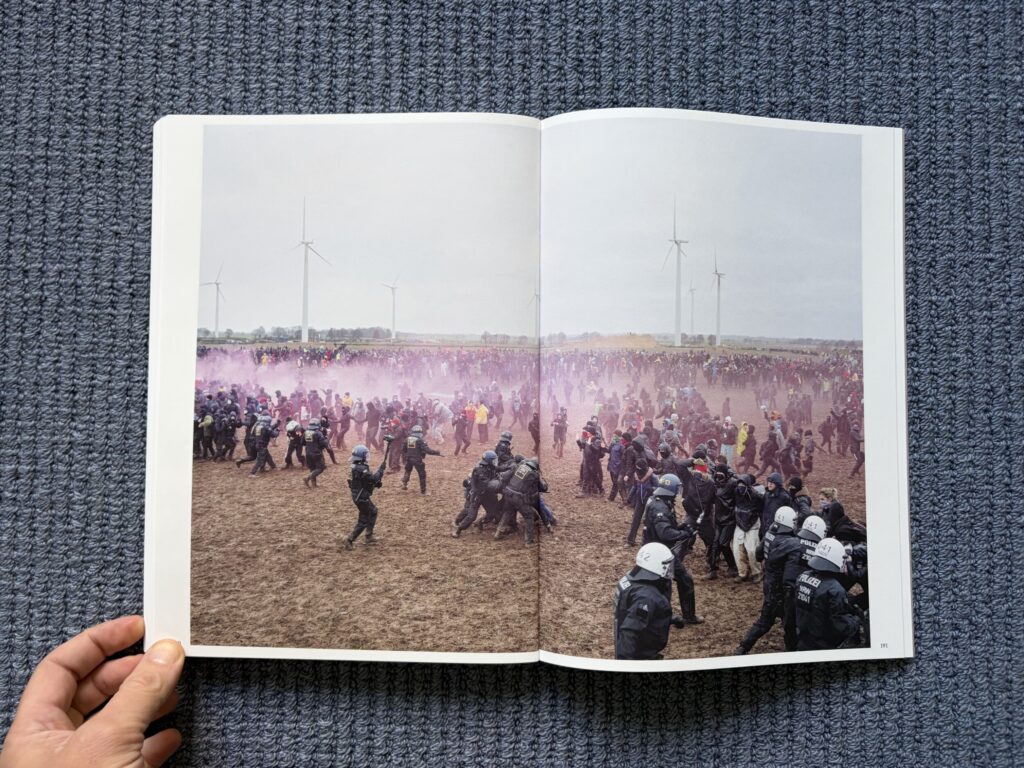
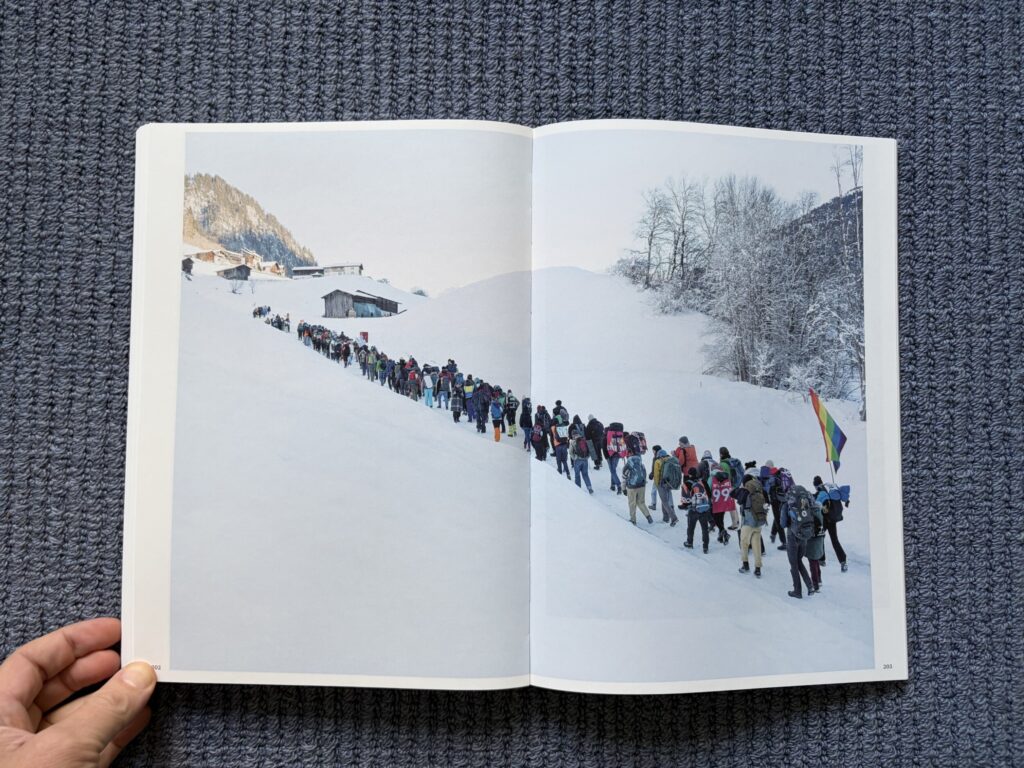
Comments/Context: When the history books are ultimately written about the global pandemic, its effects on the international environmental movement will be complicated to unravel. On one hand, the data from those locked down years immediately proved that widespread changes in human behavior, like much less travel and commerce, could indeed slow the precarious temperature rise that was occurring. On the other, when the pandemic ended, those lessons were quickly forgotten by leading politicians (and their constituents) focused on slowing down inflationary prices, kickstarting economic growth, and controlling disruptive immigration – in aggregate, we learned we could indeed change, but then chose not to. In fact, there was an unexpectedly wide swing back against the truths and realities of climate science, leading to renewed fossil fuel expansion and outright climate change denial, particularly in the United States.
As the deliberate inaction has continued, it has become increasingly clear to those frustrated by the lack of progress, especially the younger generations who will be most affected by the consequences of delay, that we have reached a climate danger point where altogether different approaches to environmental engagement have become required. This realization has led to the formation of more activist groups, particularly across Europe, that have embraced collective resistance, protest, and mobilization tactics with even more hardened conviction. From 2021 to 2024, the Italian documentary photographers Michele Borzoni and Rocco Rorandelli followed several of these groups (including Code Rood, Last Generation, Extinction Rebellion, End Fossil, Ende Gelände, and others), creating a compelling documentary record of their ideas and activities.
While Silent Springs obviously takes spiritual inspiration from Rachel Carson’s groundbreaking 1962 book on the harms of chemical pesticides (particularly DDT), Borzoni and Rorandelli’s book isn’t a scientific study of environmental degradation aimed at informing the public about a specific issue or problem – in a sense, in the photobook world, that has already been done many times over, in images of melting glaciers and icebergs, dried up and contaminated lakes, massive mines, coal plants, and oil refineries, and more recently, the aftermath of intense storms, wildfires, and other climate-amplified disasters. Their book takes none of the now-usual approaches, neither visually reminding us of the fragile and precious beauty of the disappearing natural world, nor shocking us with the ugliness of climate failures and the ferocity of recent damage.
Silent Springs is instead conceptually crafted like a handbook of non-violent environmental resistance – an inspiring how-to guide and educational resource for those wanting to learn from others already out on the front lines. Of course, it sensitively documents various protests, marches, rallies, and other engagements (AKA “reclaiming public and industrial spaces”), gets behind the scenes to watch as plans and preparations are made, and captures many of the faces (both masked and visible) of the individuals involved. But the resulting images aren’t presented at arms length, as something we are encouraged to observe from an abstracting distance; they are organized in ways that bring us inside and activate their content. As artful as many of the compositions are, the underlying intention feels much more practical – to communicate what we did, where we did it, how it was executed, who participated, what was successful (and not), and most importantly, how you can do the same thing somewhere else using the same tactics. At its heart, Silent Springs is an instruction manual, which feels altogether refreshing and radical.
Borzoni and Rorandelli (and their broader collective TerraProject) have been documenting issue-driven subjects for two decades now, leading to well-made photobooks about the evolving state of labor in Italy (Workforce, in 2019) and the global tobacco industry (Bitter Leaves, also in 2019), so they aren’t strangers when it comes to embedding themselves within contested or charged situations and getting inside the nuances that exist there. The brilliance of Silent Springs lies in its intentional conceptual switch from passive to active, in seeing climate activism as something to be participated in, rather than watched and judged from the sidelines. Each photograph is therefore transformed, not just a visual document of 21st century climate activism in Europe, but also a teaching tool to be studied and copied.
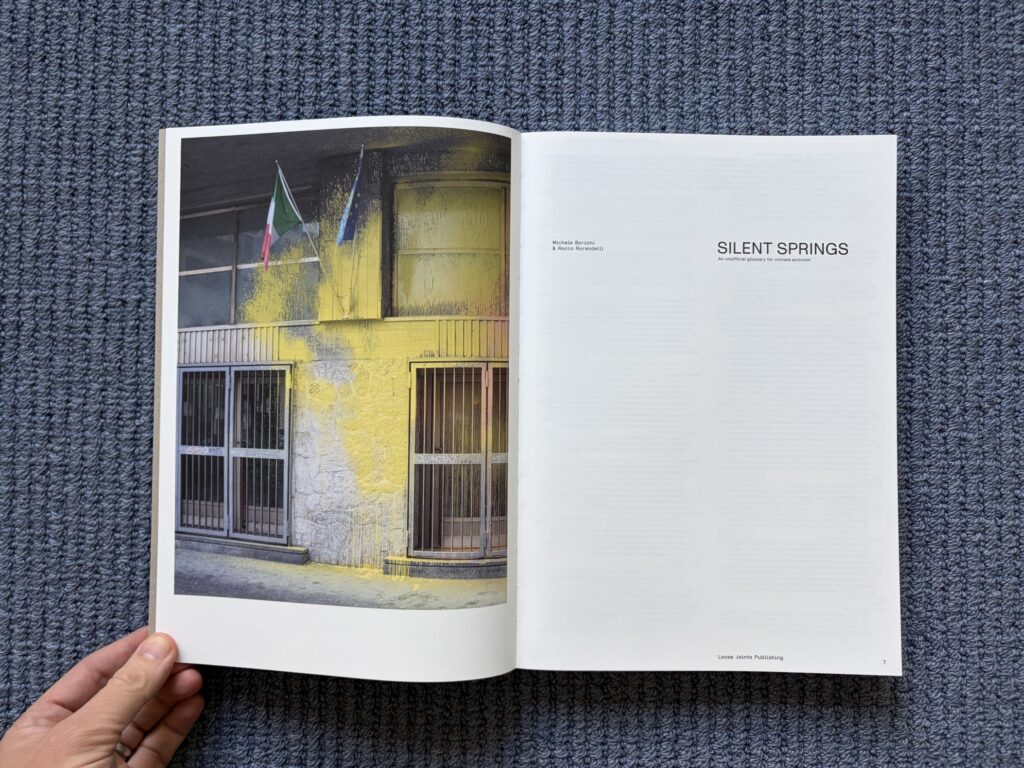
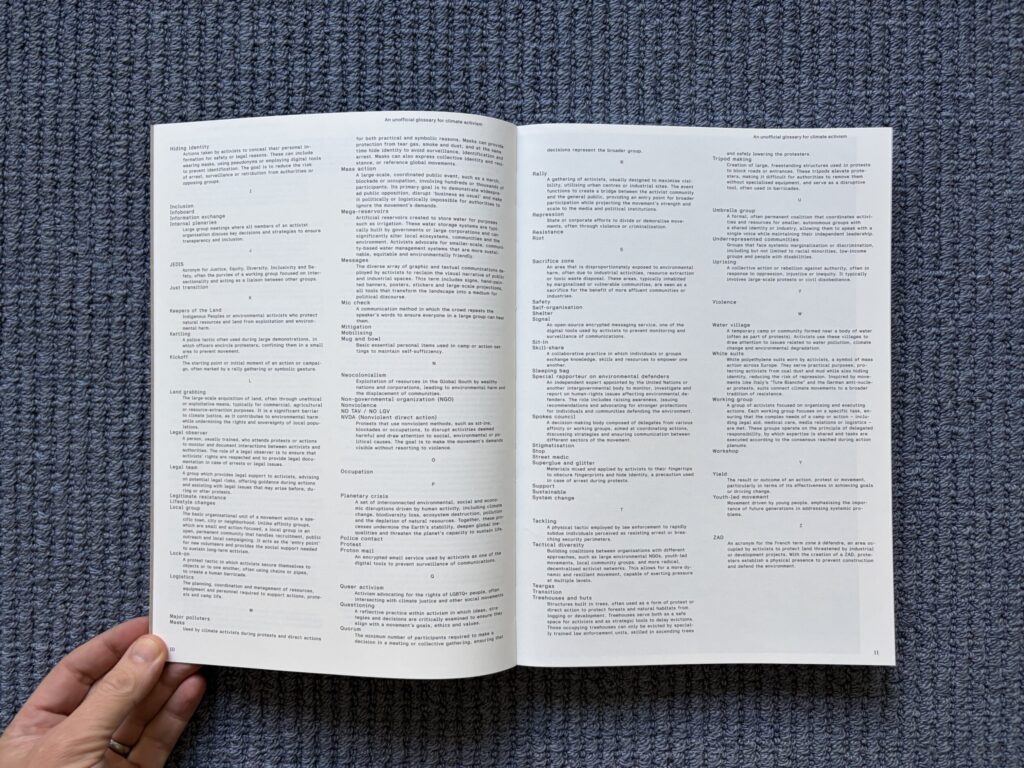
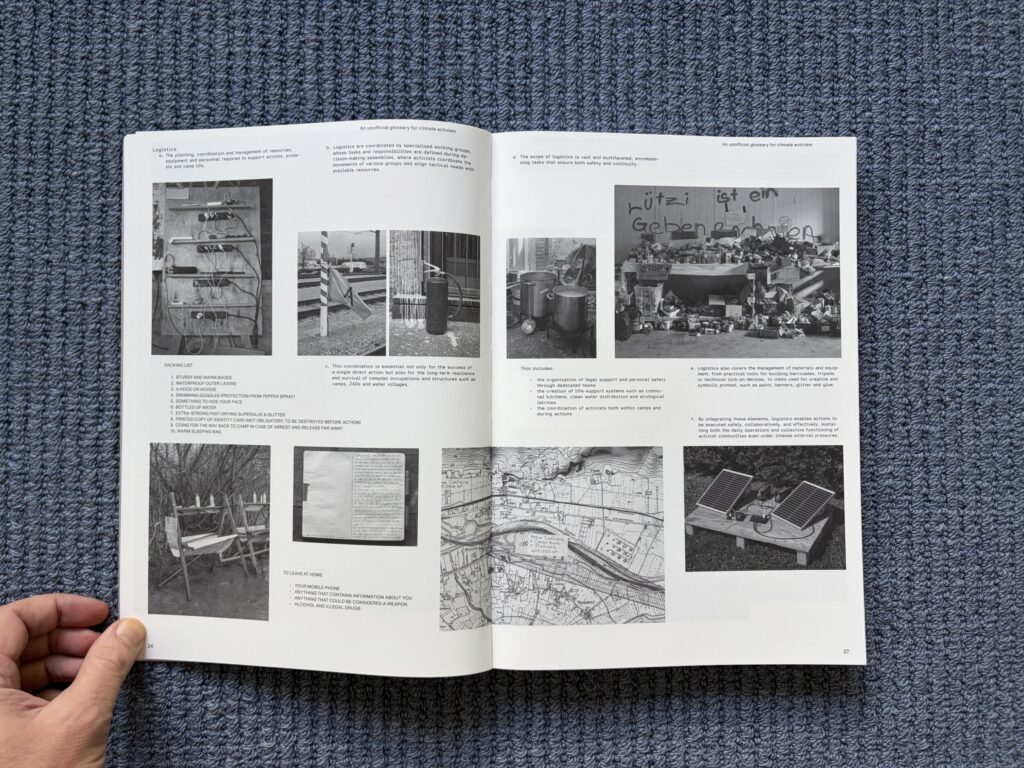
The design and construction of Silent Springs reinforce this get-involved educational approach. An introductory text blankets the front and back covers, with a silkscreened splash of yellow imagery that is hard to identify but offers echoes of the washable paint sprayed on government offices as seen a few page turns into the book. Inside, the vertical photographs are presented one or two to a spread with the wider horizontal images filling both sides, creating sequences of large enveloping color pictures, with information-rich captions collected at the end of the book in an index. A glossary of eco-activist terms comes near the front, with some words like demands, major polluters, equity, health risk, mitigation, and fossil-free society left intentionally blank to reflect the changing nature of what they can and might mean. Further along, a number of terms are given deeper full spread definitions with multiple black-and-white pictures, with words and ideas like logistics, working group, masks, white suits, barricades, blocking team, tree houses and huts, and messages expanded and explained in straightforward practical language that seems designed to be easily actionable. As the pages turn, we move back and forth between presence and intention, mixing on-the-ground experiences with need-to-know textbook information.
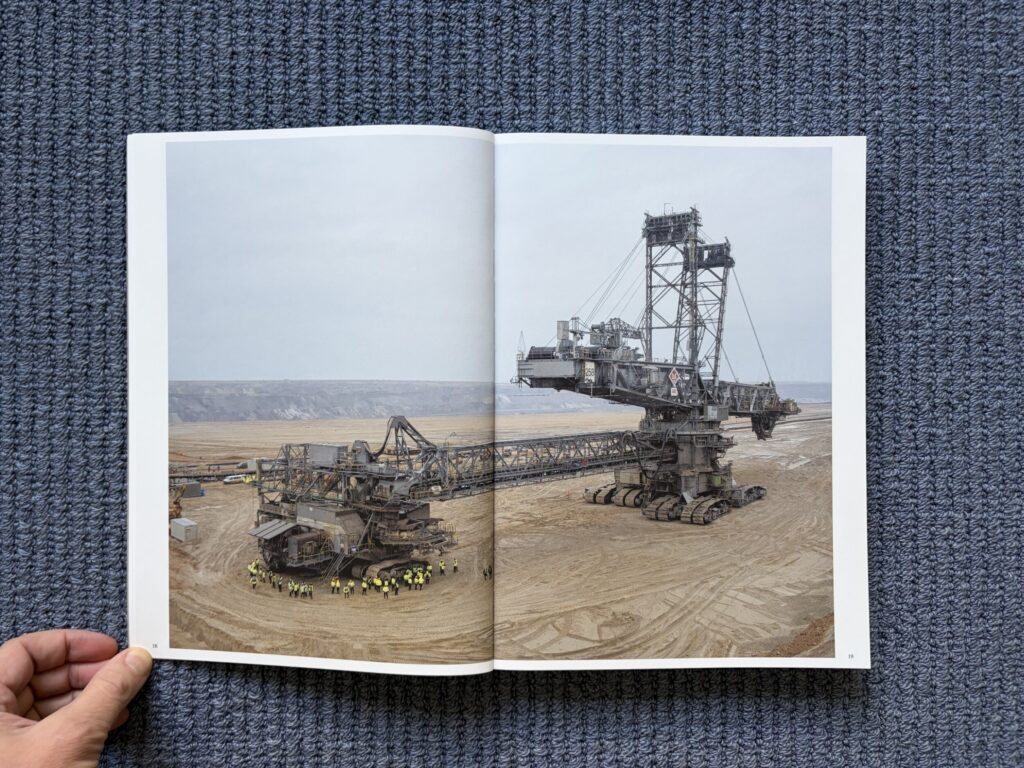
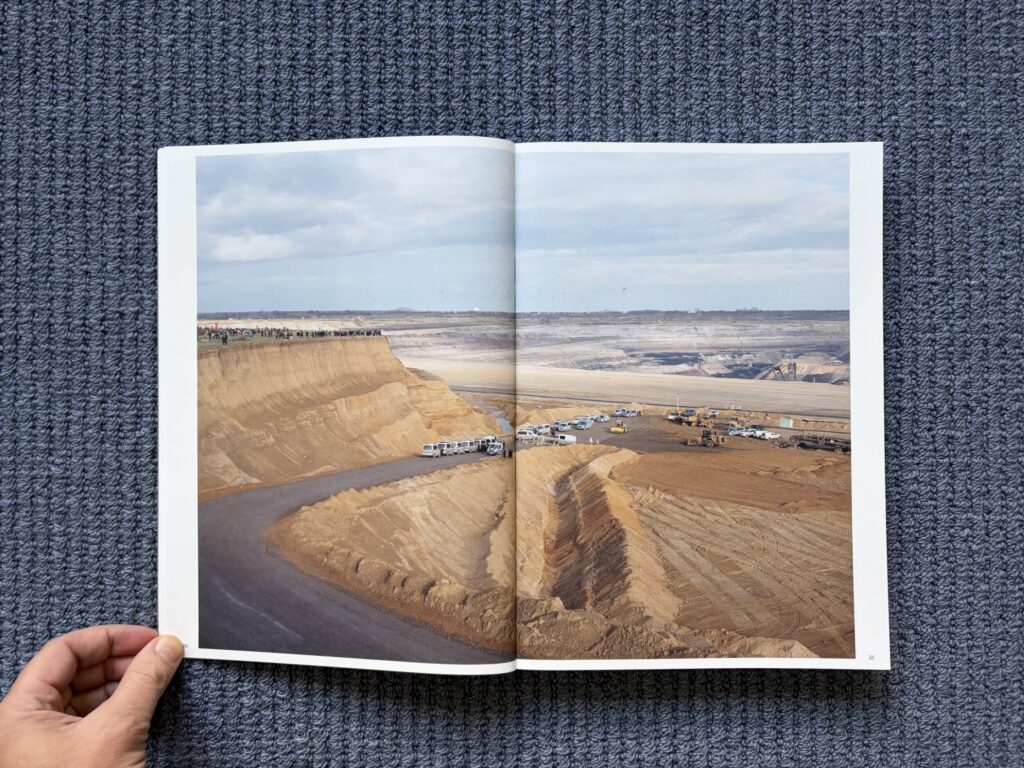
A more predictable photojournalistic approach to climate activism would give us a steady stream of images of protestors clashing with police, and while this type of confrontation does pop up in the photographs of Borzoni and Rorandelli here and there (how could it not?), it feels less like evidence of the fundamental conflict between opposing ideologies and more of a teachable moment about what to expect when the law arrives to your protest. The photographers are particularly adept in their management of large scale in these situations, where elevated or overhead views place tiny figures and tent camps against the hulking expanse of mines, windmills, construction sites, and power stations; similarly, makeshift barricades are seen placed across roadways, bridges, and entrances, and peaceful marches are shown traversing contested sites. In each case, the immensity of existing systems of extraction and exploitation visually dwarfs the insistent presence of the protestors.
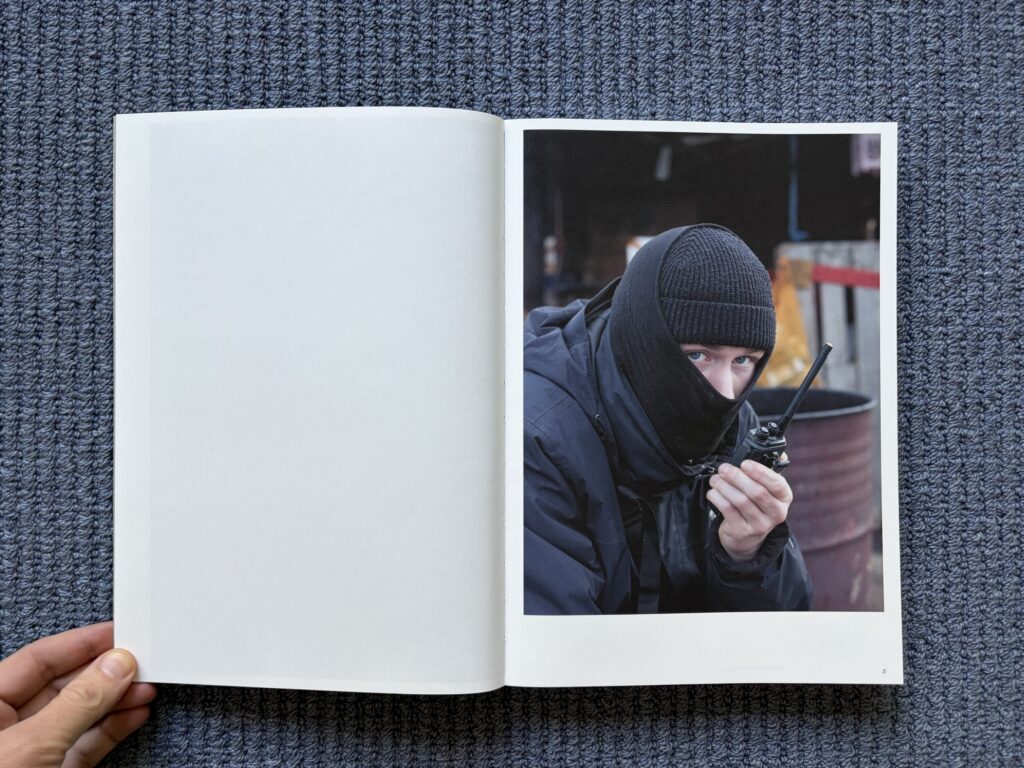
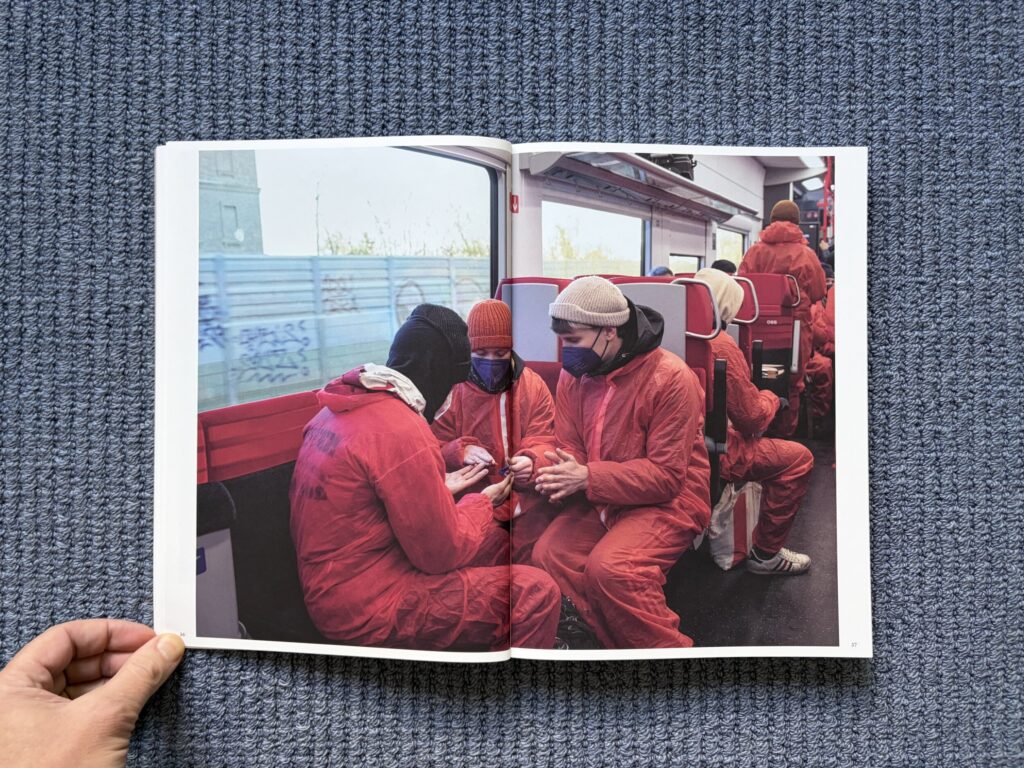
Much more often, the photographic duo linger nearby during the less dramatic moments before any march or rally, as meetings are held, information is communicated, preparations are made, and infrastructure is built, where there is plenty of waiting, watching, resting, talking, and sleeping before the action really begins. These pictures help communicate that activism is a slow methodical process not series of moments, and a community rather than a temporary gathering of individuals. Down at the detail level, they document walkie-talkies, ladders, and loudspeakers being tested, tents being assembled, food being gathered, white and red suits being worn, glitter and super glue being placed on fingers (to prevent the taking of fingerprints), bricks being cut in half, legal phone numbers being written on arms with markers, and tight marching being practiced. And in the relative calm, a piano is played, people keep warm, and games of cards fill the waiting time.
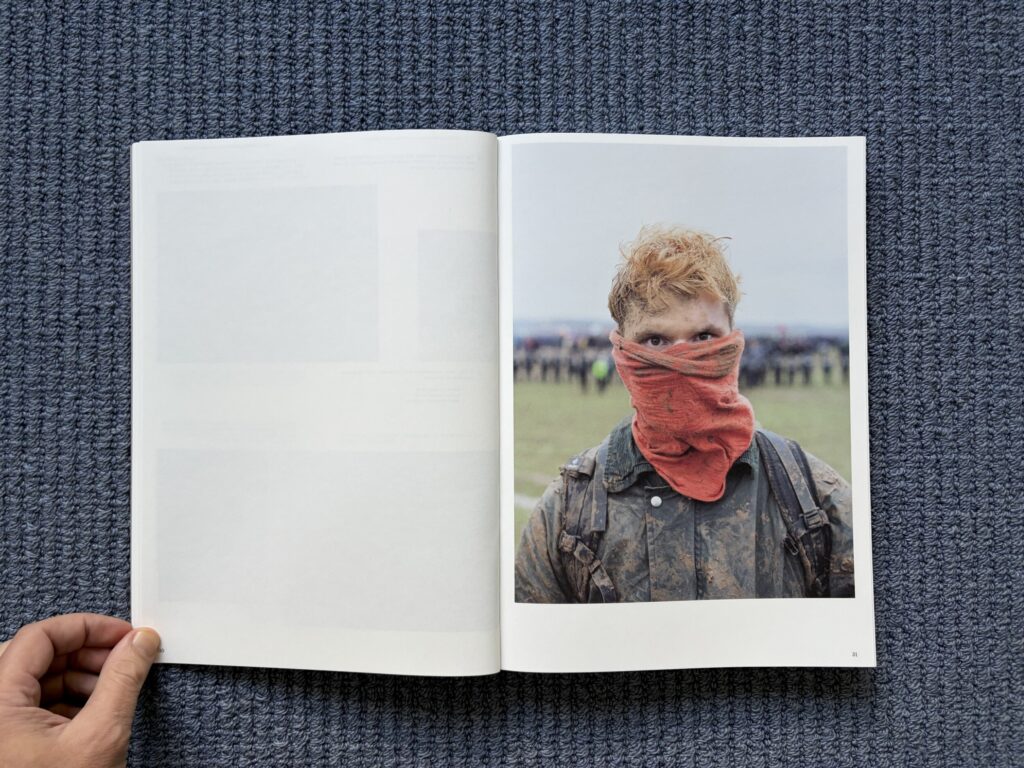
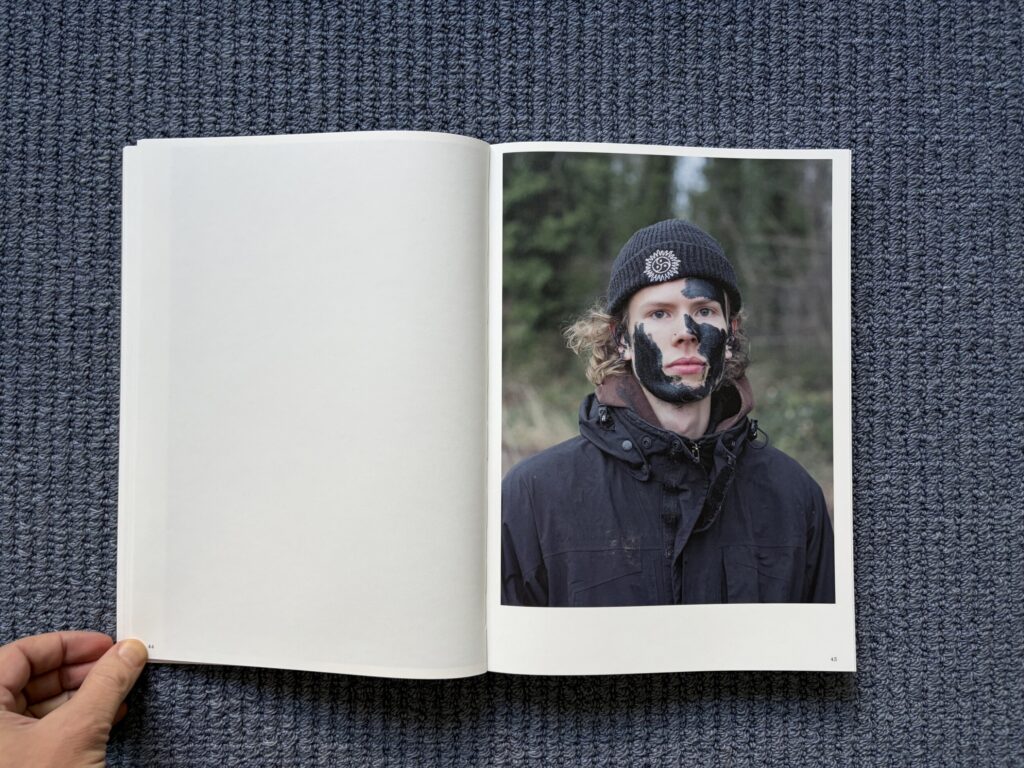
Portraits are a highlight of this photobook, even though most are centered, squared up, and utterly straightforward. What makes these images resonate is the strength of their eye-to-eye contact and the authenticity of the gazes we confront – these young activists are consistently resolute, determined, and serious, even when flickers of anxiousness or uncertainty appear, and there is something powerfully inspiring about these faces and the optimism, caring, and commitment they represent.
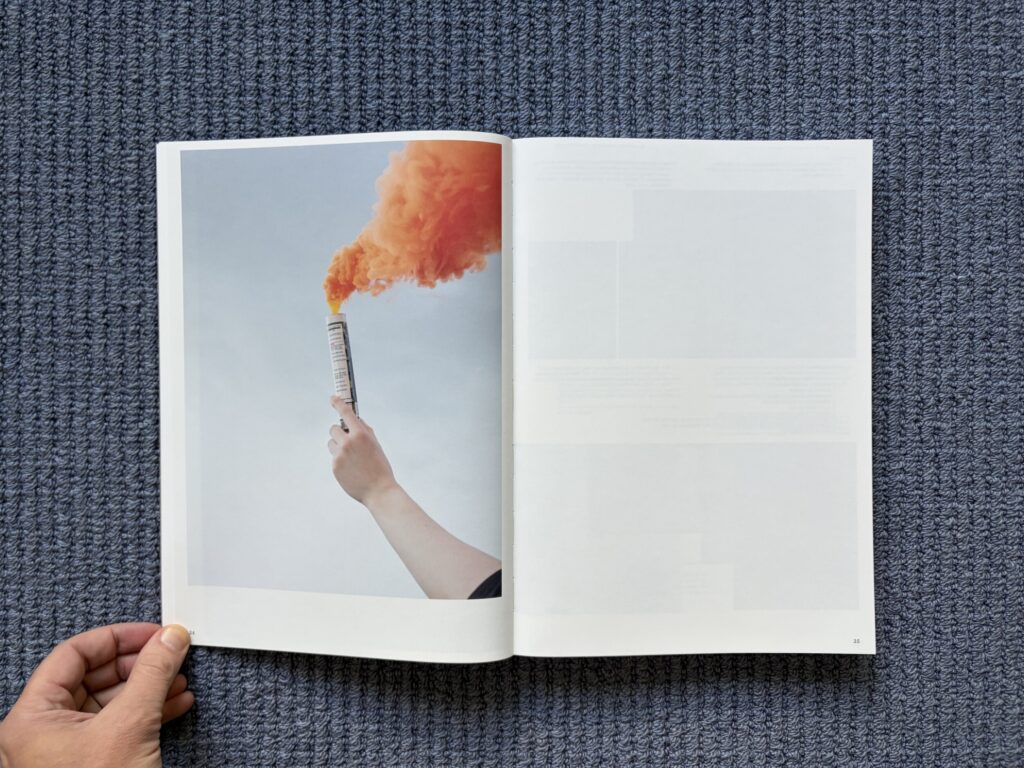
Borzoni and Rorandelli are also aware of the potential visual symbolism that often presents itself out on the road. They understand the visual punch of a defiant hand raised with a smoky orange flare, a flag carried in front of a burning field, a lone activist calmly sitting atop a high treetop perch, a protestor tent camped out underneath the sculptural agony of Laocoön and his sons in a museum, and a row of white suits spread out on a fence to dry, each an incisive visual shorthand for the larger forces and emotions at work.
What stands out about Silent Springs is its can-do vantage point of engaged personal risk in the face of numbed climate denial – it celebrates those who are admirably refusing to give up and trying to force change, and lays out concrete steps for replicating their efforts. Photographically, Borzoni and Rorandelli have done an admirable job of framing this activity with grace and respect without distracting from the main messages of the larger effort. In this way, Silent Springs is a memorably powerful photobook about passionate mobilization in the face of emergency, and a book that aims to inform and instruct in equal measure.
Collector’s POV: Michele Borzoni and Rocco Rorandelli do not appear to have consistent gallery representation at this time. As a result, interested collectors should likely follow up directly with the artists via their TerraProject website or via their individual Instagram pages (linked in the sidebar.)