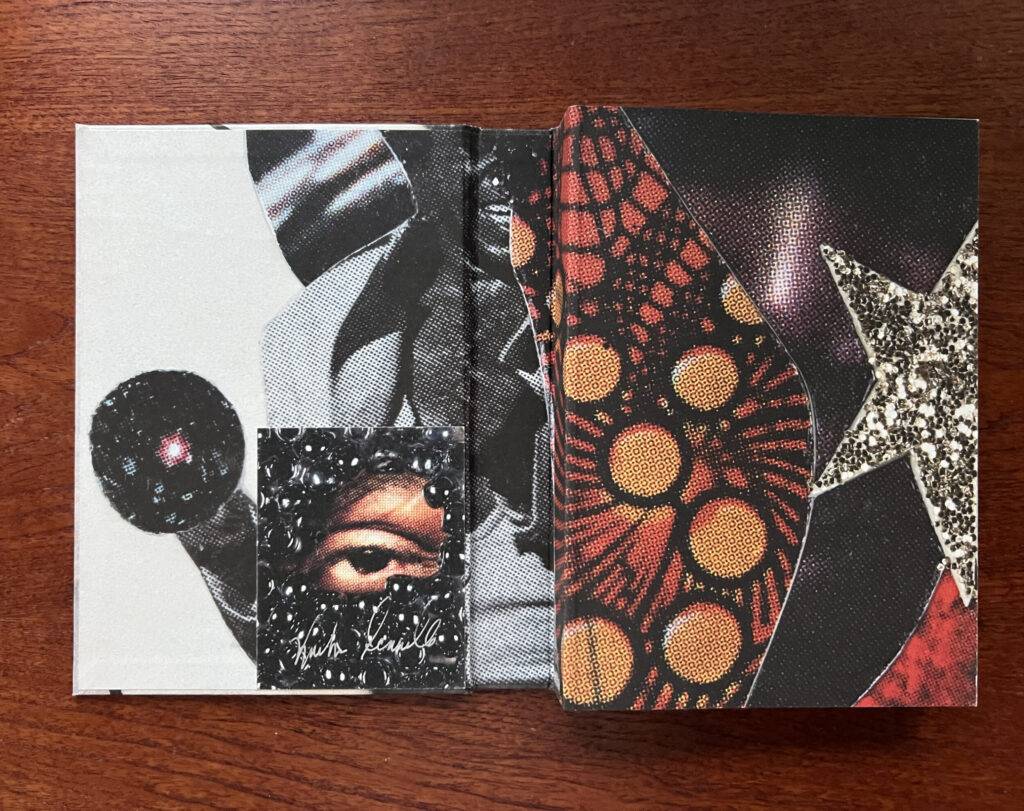
JTF (just the facts): Published in 2026 by MACK Books (here). Debossed Swiss hardcover (15×21.6 cm), 280 pages, with around 160 black-and-white and color photographs. Includes an essay by Tina M. Campt. Design by Morgan Crowcroft-Brown and the artist. (Cover and spread shots below.)
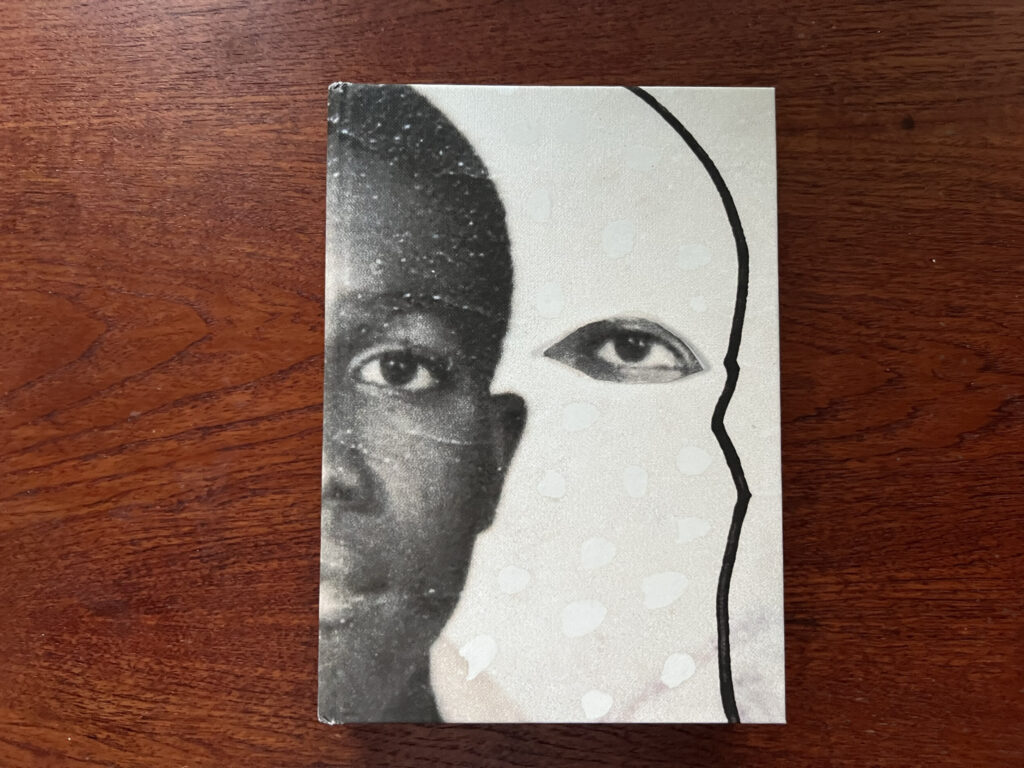
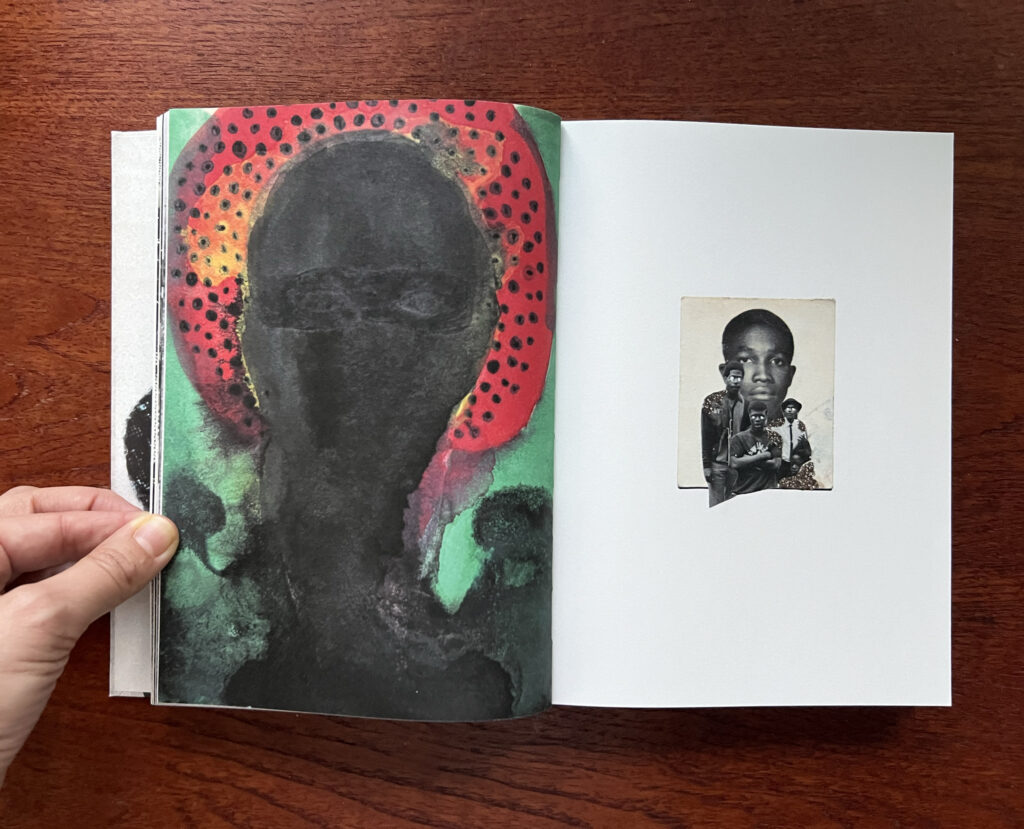
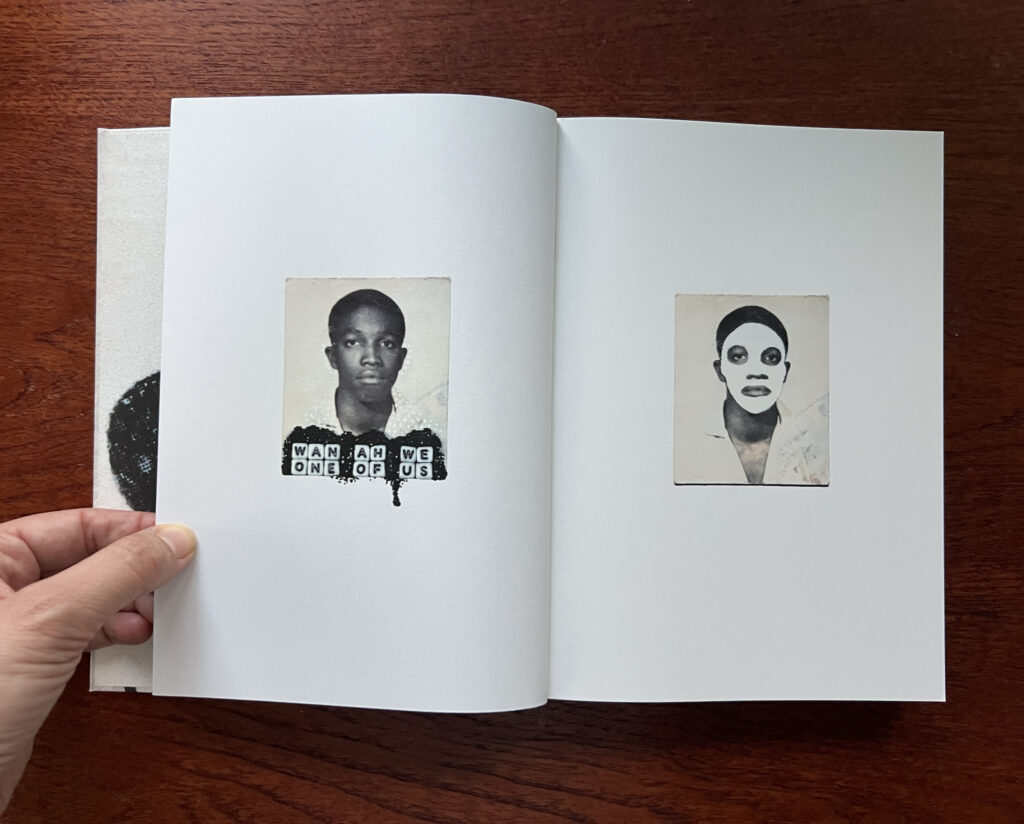
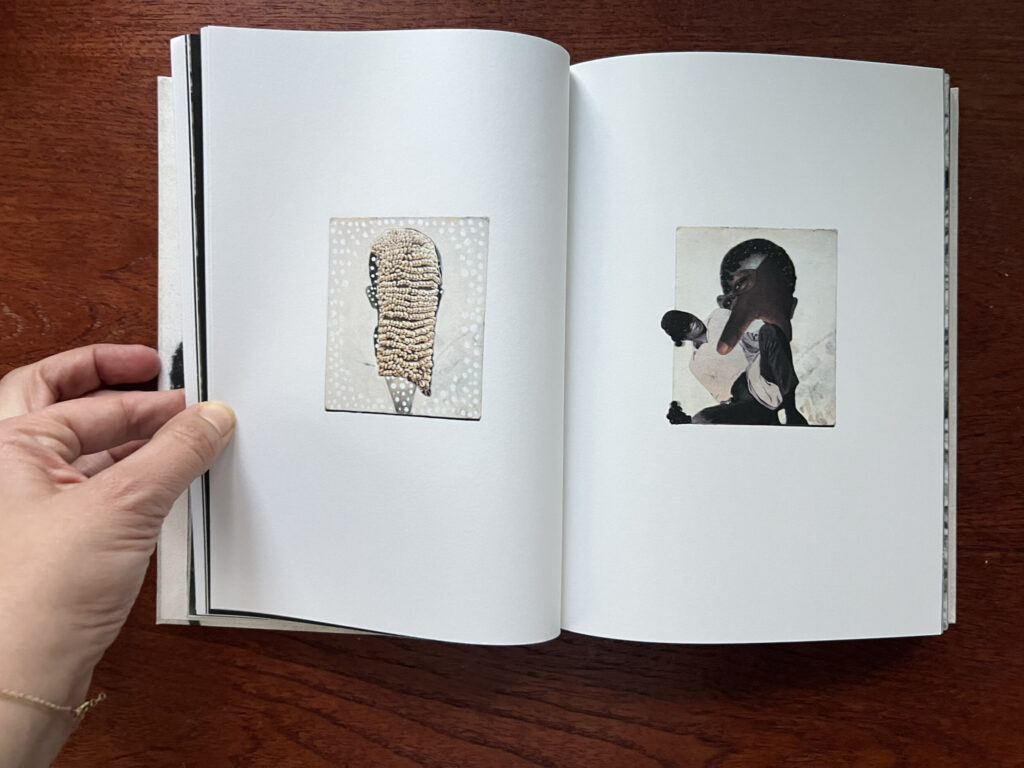
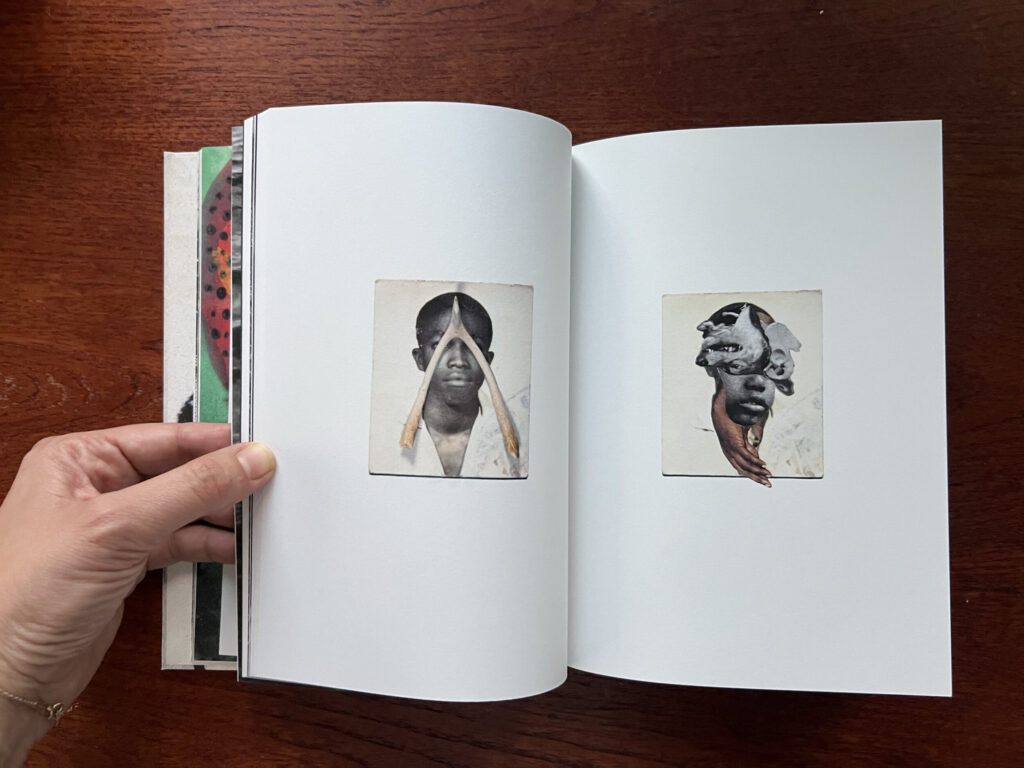
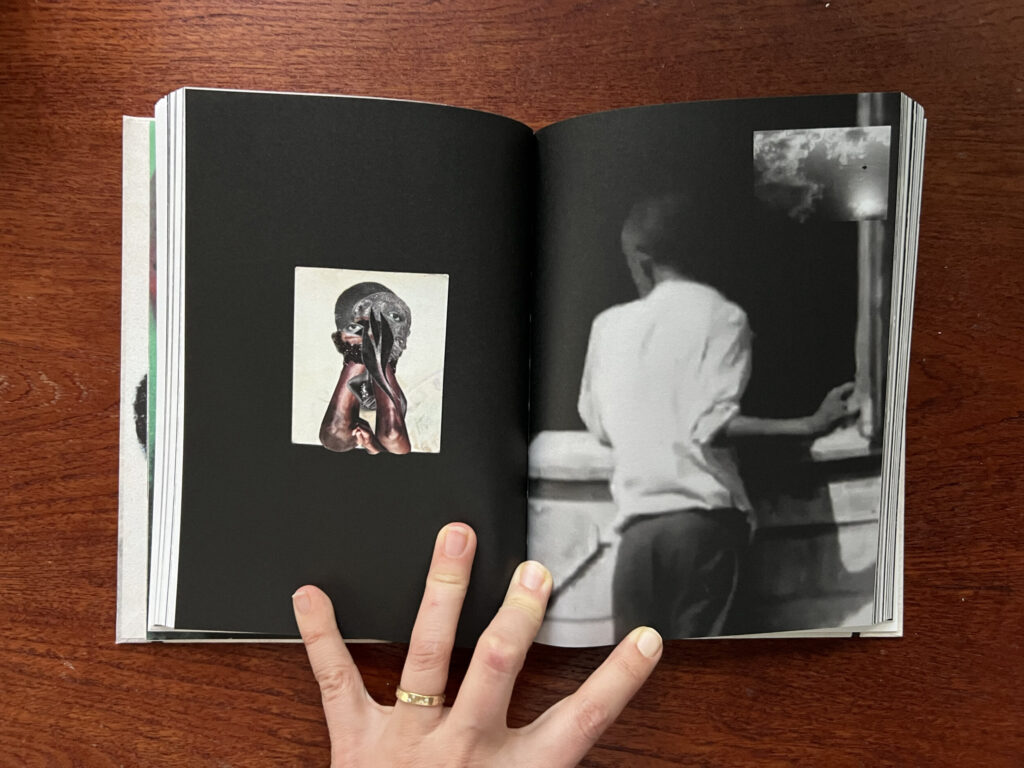
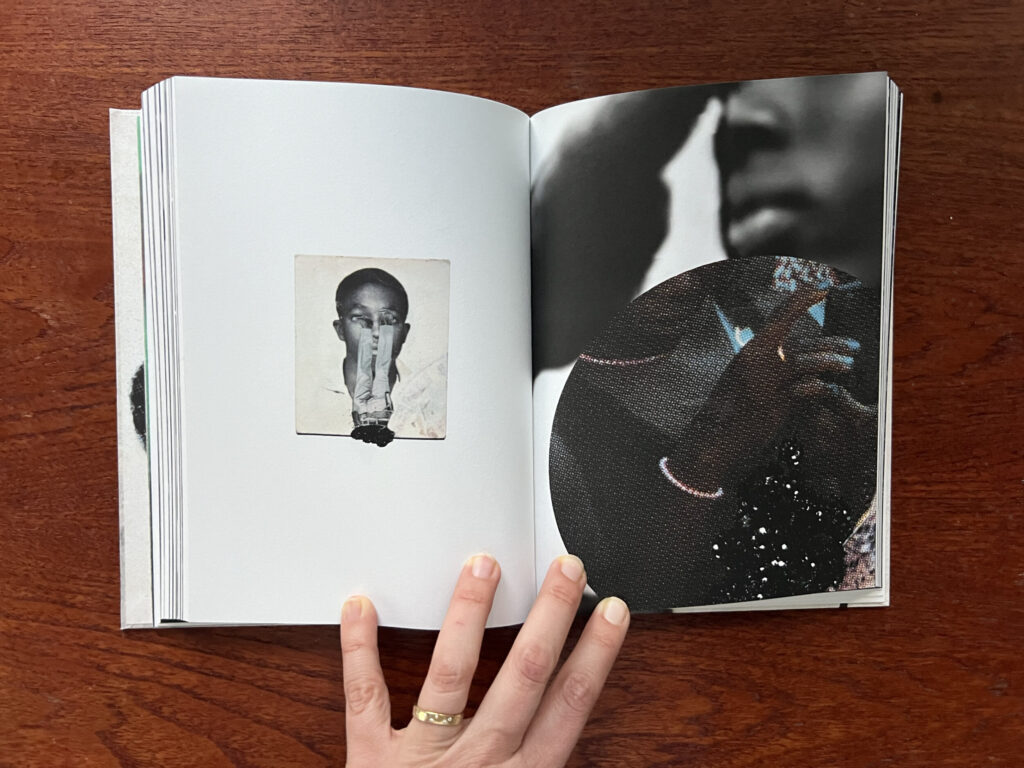
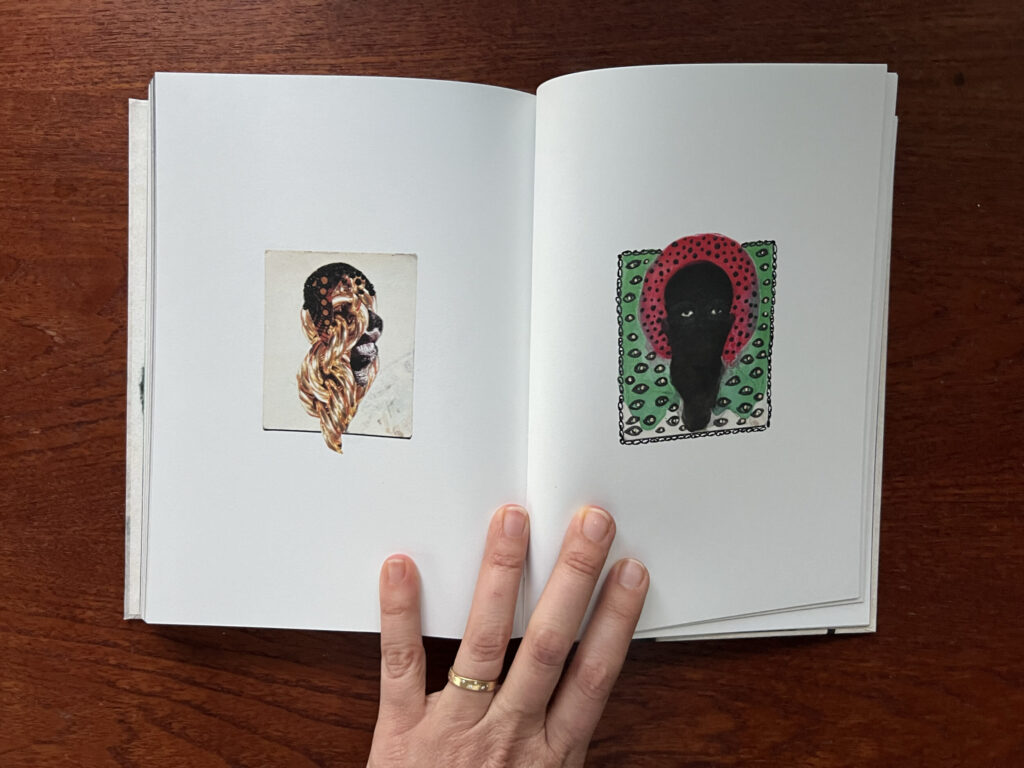
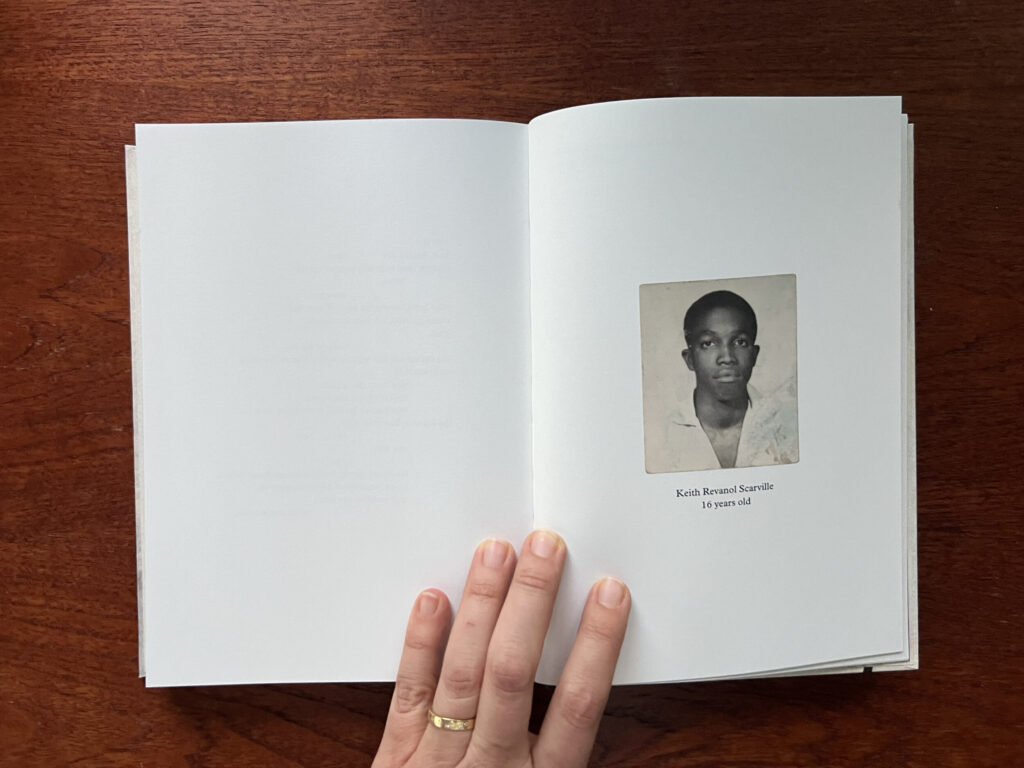
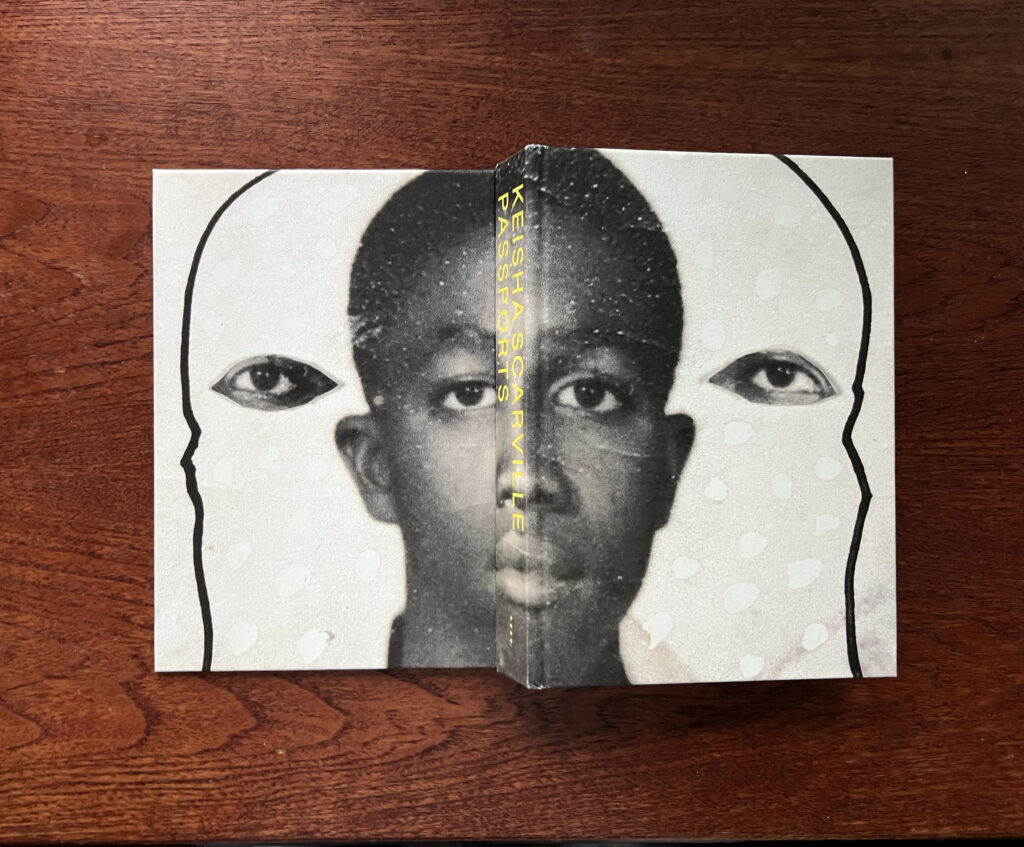
Comments/Context: Keisha Scarville’s monograph, Passports, presents roughly 160 transformed passport photographs of her father—selected from a serial collection of over 300 iterations she had completed by 2025—that incorporate elaborately intricate collage interventions, including watercolor, paint, ink, gold leaf, glitter, beads, as well as other images cut and composited onto facsimiles of the original portrait. The portrait at the heart of this extensive study is her father’s first passport photograph, made when he was 16 years old and still living in Guyana, before he emigrated to the United States.
Interwoven alongside these reworked passport images, and reproduced within the photobook to scale, are other materials: archival family photographs taken between the 1960s and 1980s, environmental portraits of Scarville’s father, the artist’s own contemporary photographs documenting Guyana’s landscape, as well as excerpted transcripts from conversations between the artist and her father. Together, this multi-layered content excavates personal and familial histories that lay at the core of the passport personas, questioning what it means to understand a loved one while confronting and interrogating the meaning of identity. Through rich visual strands, and smart design and sequencing, Passports offers a meditation on the concepts of citizenship, identity, family relationship, migration, diaspora, and intergenerational connection to place.
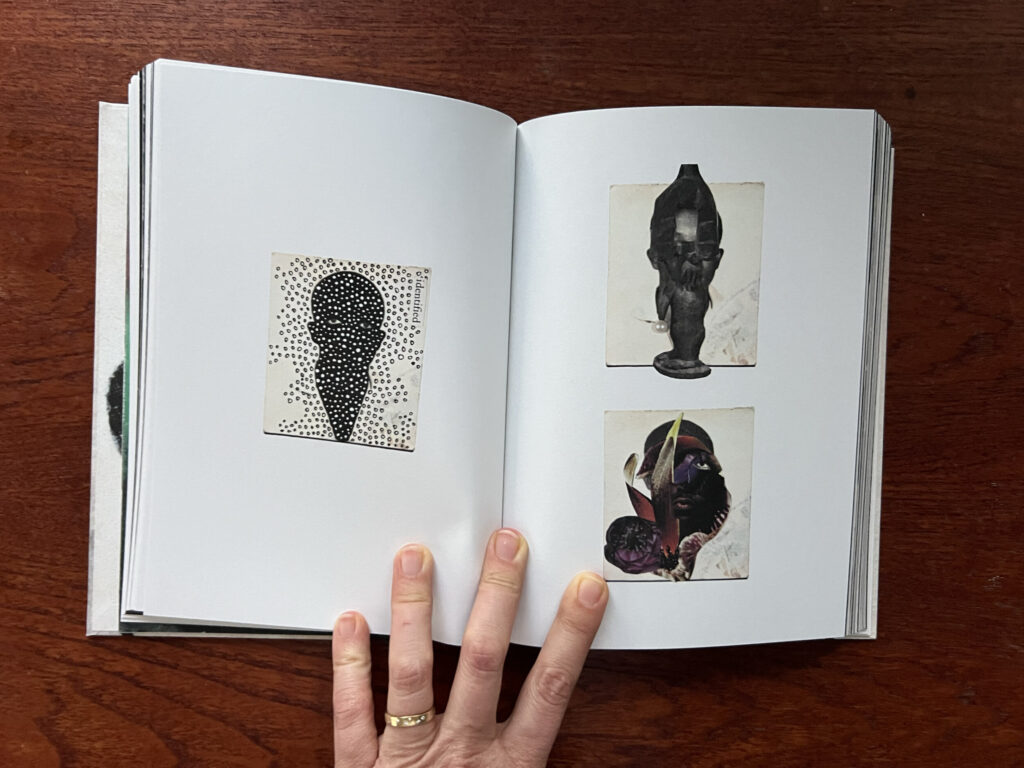
It is important to note that this photobook is not simply a catalog of the 2025 gallery show of “Passports” at Higher Pictures (reviewed here), where the full series of Scarville’s translated passport portraits was on view. The photobook is instead a deliberate book-centric curation of the project, expanding the many individual portraits into a broader meditation. Typically set against generous negative space in the center of a page, each palm-sized passport portrait, painstakingly modified by Scarville, invites careful contemplation. The tactile quality of her collage work is captured effectively in this format, giving readers a tangible connection via the high quality of the passport image reproductions.
The photobook’s chunky size—the footprint of a large Moleskine hardback journal, but three times as thick—encourages the reader to spend an extended amount of time, intimately reviewing page by page, the person, the family, and the diaspora at the heart of this story. Holding the physical book allows readers to inspect the detailed interventions applied to his portrait at their own pace, analyzing the subtle differences and parallels across each reimagined portrait. To convey the sense that every image rests directly on the book’s paper stock, the passport photographs are printed at scale, some even complete with a subtle shadow cast along the bottom edges of the image that make it look like the image is merely floating atop the page.
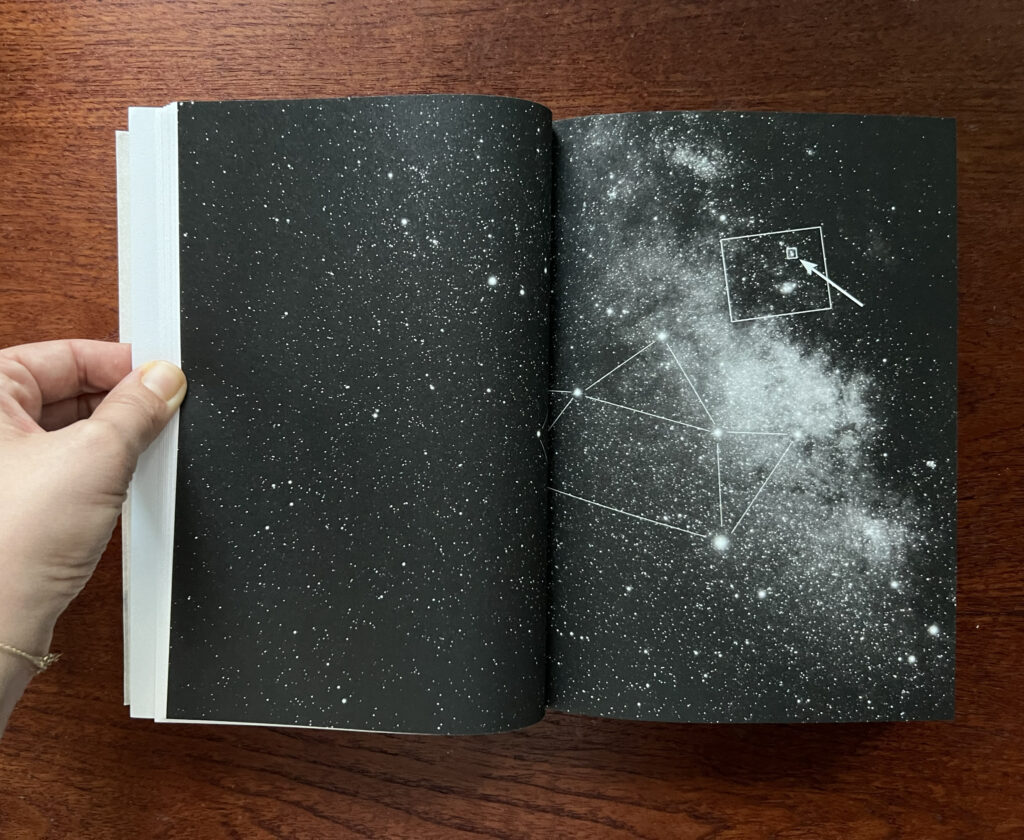
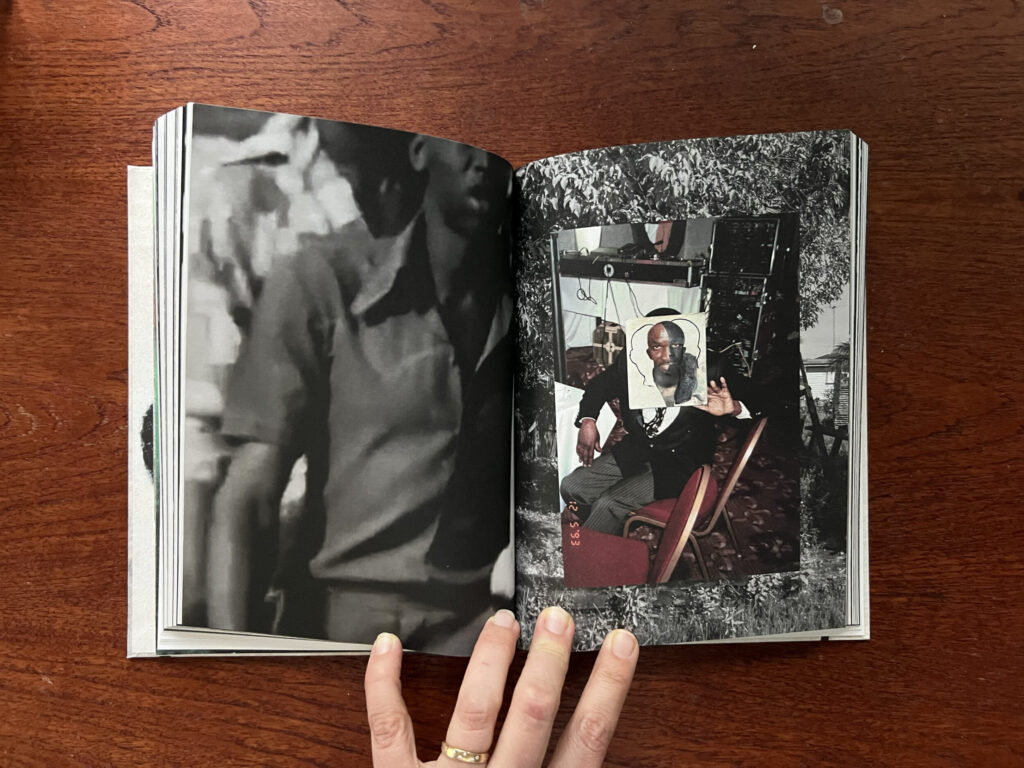
Driven by rhythm rather than a linear narrative, the photobook’s sequencing places the passport photographs of the artist’s father, Keith Revanol Scarville, repeatedly front and center—typically one per page, and in a few cases, an altered passport photograph is stacked one over another on the right-hand side of a spread. In one striking instance, a full-bleed view of a starry night sky spans across the gutter, showing Keith’s passport image off in the distance, matched to the scale of the stars, his face subtly dissolved as if blown out by stardust. Another standout composite that differs from the usual passport footprint is a 4×6 color portrait of Keith laid on top of a black and white archival picture. The topmost layer of the collage is the iconic passport photograph with the face cut out so that the vissage of Keith from 1993, as time stamped and dated on the print, can peek through.
The nuanced progression of landscape, layered compositions, and intimate portraiture fosters a thoughtful reflection on identity and the intricate dynamics of migration. This is further emphasized when composited portraits are paired with magnified details of select altered portraits. Running across single pages from gutter to edge, these cropped views invite the reader to inspect Scarville’s careful craftsmanship up close, mirroring the experience of stepping nearer to a gallery wall.
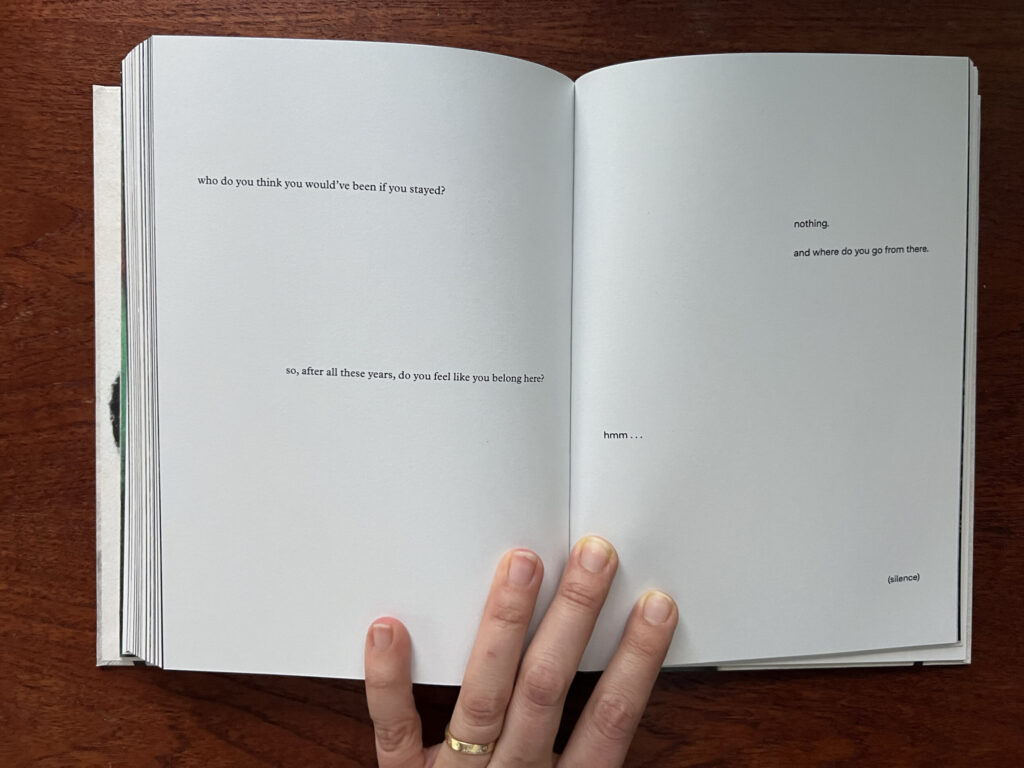
Sprinkled throughout the book are excerpts of texts between artist and father. All are printed in lower case, and while no one is credited with question or answer, based on what we can assume as readers, it can be inferred that the artist’s questions are regularly printed on the left facing page with the father’s response trailing across the gutter on the right facing page:
Left: “what do you think you would’ve been if you stayed?”
Right: “nothing. and where do you go from there?”
Left: “so, after all these years, do you feel like you belong here?”
Right: “hmm. . . (silence)”
The tempo and pulse of these sequencing choices builds a sustained flow that is unique to the grammar of the photobook form. There is the opportunity to analyze individual portraits, over and over, and just when it’s needed, the break of a full bleed landscape, or a close-up view of one of the collaged portraits, offering a visual rest. This continues again, through another series of portraits–of more imagined fathers–then a landscape with a composite burrowed in, and finally an essay that reinforces the ideas that have been brewing in the reader’s mind.
In Scarville’s interest to understand and really know her father, she’s imagined him in hundreds of ways, all drawn from the underlying portrait of a young man who has a whole life ahead of him–a symbolic tabula rasa. The larger project is not just an imagined manifestation of who he was, but a creative imagining of the possibilities of who he could have become. The transcribed conversations between the artist and her father amplify this feeling–the feeling of longing to retrace a parent’s journey to tease out who they were, what they wished, and where child and parent might find common dreams. The sum of this photobook is a nuanced examination of Scarville’s father, and the intricate realities of migration and circumstance that ultimately shape a person and their first generation children. If this layered examination of self is not fully gleaned by readers on their own, an essay at the end of the photobook by Tina M. Campt helps connect the dots.
This photobook fully merits the praise and accolades it has received, including PhotoBook of the Year at the 2026 Paris Photo–Aperture PhotoBook Awards and the Author Book Award at the 2026 Rencontres d’Arles Book Awards. With its smart design and sequencing, intermingling photomontage with intimate excerpts of dialogues, the photobook provides a space for deep contemplation on the lingering meaning of a portrait across time and geography. What emerges is a nuanced examination of the artist’s ongoing collage interventions, offering an engaging meditation on concepts of citizenship, identity, and generational connection to place.
Collector’s POV: Keisha Scarville is represented by Higher Pictures in New York (here). Her work has little secondary market history at this point, so gallery retail likely remains the best option for those collectors interested in following up.