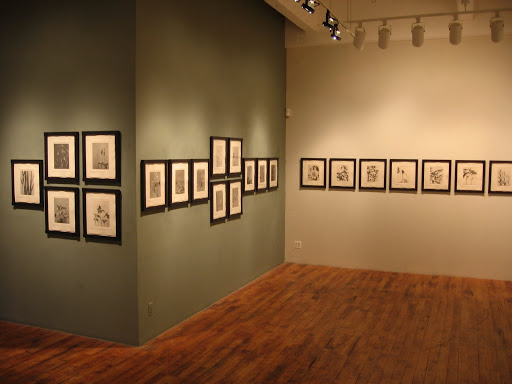
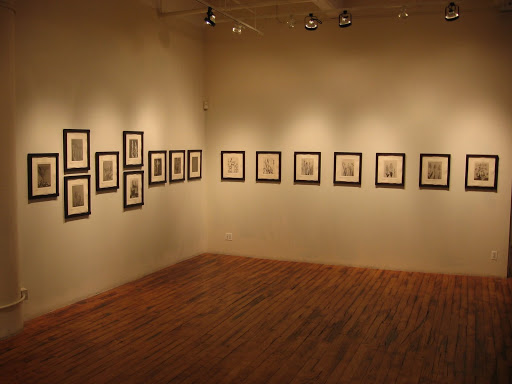
 JTF (just the facts): A total of 65 platinum prints, framed in black wood and unmatted, hung in the main gallery space and the smaller viewing alcove, against white and green walls. All of the images are 10×8 and were made in 1914, as part of the 6 volume, 400 image series Wildflowers of New England. (Installation shots at right.)
 While many of his images are pleasingly decorative, the real reason Lincoln is important is that he was a transitional figure in the history of floral photography. Going back to William Henry Fox Talbot, photographers from the very beginning of the medium have pointed their cameras at flowers and leaves, mostly because many early photographers were amateur scientists and naturalists in their spare time. Throughout most of the 19th century, most floral and botanical images were made in a quasi-scientific or documentary manner, starting with the stunning cyanotypes of Anna Atkins, and continuing on through the botanicals made in exotic lands by Scowen & Co, Fratelli Alinari and many others. (We’ll leave out some of the more decorative floral images made in France during this same period by the likes of Adolphe Braun and Charles Aubry for the sake of brevity.) At the turn of the century, the general approach was still mostly the same, as exemplified by the intimate cyanotypes of Bertha Jaques.
 Collector’s POV: The prints in this show are all priced at $1500, including the frame. Lincoln’s prints have come up for auction from time to time in the past few years, generally selling under $1000. Given our position as flower collectors, it shouldn’t be surprising that we already have two excellent Lincolns in our collection (here), which we purchased from the Lee Gallery (here) some years ago. If we were to select another print to add from this exhibit, it would be Lychnis Abla – White Campion, Evening Lychnis (shown at right), as its all-over composition has more visual interest than many of Lincoln’s usual straight up groupings.